Direct Inaction – Tony Abbott’s climate strategy on behalf of the coal industry
 View from the Street: So, who lost the NSW election the most?, Canberra Times March 29, 2015 – Andrew P Street “…….There have been many, many, many many many many many many many criticisms of Direct Action, the non-climate-change-addressing centrepiece of the government’s climate change policy.
Some have criticised the cost – $2.5 billion – rather than the non-cost of the previous policies such as emissions trading and the carbon not-actually-a-tax; systems which relied on market forces rather than government funding – which is odd, since historically that’s been the Liberal Party’s preferred solution for just about everything esle.
There have been criticisms based on the fact that the planned handing of this public money to private polluting concerns in order that they then reduce emissions does not appear to come with any clear conditions, such as having to give that money back if they then decide to not use it to reduce emissions.
And now “Environment” Minister Greg Hunt has proposed one better: that the energy industry shouldn’t be expected to do anything like, say, reduce the amount of pollution they create in order to get their hands on the cash.
It’s an interesting take on the whole “emissions reduction” model. Climate Institute deputy chief executive Erwin Jackson expressed that more bluntly: “It’s a climate policy you have when you don’t want to reduce emissions.”
The argument from the government is that asking the energy sector to reduce emissions would be just unfair, since it might force them to use more expensive methods to generate electricity which would make power more expensive. Of course, that $2.5 billion fund was entirely designed to compensate companies for the costs of making exactly those sorts of changes, but now Hunt appears to be arguing that asking polluters to actually do something after they’d gone to the trouble of accepting all that free money would seem churlish.
And, of course, we might politely point out – yet again – that Australia could go all-renewable pretty much tomorrow if we wanted. And, of course, that we’re going to be forced to do so at some point anyway.
Still, there’s no reason to rush into doing something sensible and necessary. And hey, what have future generations ever done for Australia’s bottom line, huh?……http://www.canberratimes.com.au/comment/view-from-the-street/view-from-the-street-so-who-lost-the-nsw-election-the-most-20150329-1mafpd.html
Abbott govt’s climate paper for Paris is likely to be a disgrace
 Australia ‘at risk of failing’ biggest climate test in a decade say climate groups, as government releases Paris discussion paper, The Age March 28, 2015 Lisa Cox National political reporter The Abbott government says it will be a constructive player in global climate talks, but environment groups have warned it is laying out a path that puts Australia at risk of failing the most important climate test in a decade.
The government has published an issues paper ahead of public consultation on Australia’s post-2020 emissions reduction targets ahead of a new global climate deal in Paris at the end of this year.
Australia’s targets are under review and the government has promised it will announce new targets mid-year…….the Greens said the paper puts Australia on track for a repeat of 1997 Kyoto talks, where then environment minister Robert Hill argued Australia should be made an exception because of the economy’s high dependence on coal…….. Continue reading
Wiluna uranium project not viable due to flooding risks
Lake Way flooding proves Wiluna unviable http://www.robinchapple.com/lake-way-flooding-proves-wiluna-unviable 27 Mar 15, (Good photos) After yesterday flying over Lake Way to see the extent of flooding in the area, WA Greens spokesperson on uranium Robin Chapple MLC has expressed deep concern about the future of proposed uranium mining on the lake bed.
GetUp and Powershop join forces to switch Australia to renewable energy
 Powershop was ranked by Greenpeace as the greenest power company in Australia. As a generator, the company only produces renewable energy through its wind farms in Victoria and South Australia. It buys carbon offsets from UN-certified projects for all the electricity it creates and sells at no additional cost to the end user. It also lets consumers buy certified Green Power from projects such as the Hepburn Wind Farm (a community project in Victoria), LMS Energy (which creates gas from landfill), and CSR’s renewable energy project.
Powershop is a disruptive player because it offers customers greater visibility and control over their electricity use with no lock-in contracts.
Why GetUp activists are the new sales agents for electricity retailer Powershop Business Review Weekly Caitlin Fitzsimmons Online editor 26 March 2015 Online electricity retailer Powershop has a novel way of winning new customers – getting online activist group GetUp to do the sales and marketing for them.
Powershop Australia chief executive Ben Burge says more than 6,000 of Powershop’s 38,000 Australian customers – about 16 per cent – have come directly via GetUp to date.
“Of course it’s helpful to have someone other than the power company talking to customers about what’s a good choice of power company,” Burge says. “The great thing about working with GetUp is they are incredibly enthusiastic and that passion comes through – we don’t ever want it to be a scripted thing.”
GetUp chief executive Sam McLean says the goal is to get 50,000 people to switch before the annual general meetings of the big three power companies, Origin, Energy Australia and AGL, later this year. As of 11.30am on Thursday, GetUp’s internal figures showed it had switched 6,902 customers in total and was adding about 150 a day via both online and telesales.
The switching campaign is part of GetUp’s Better Power push to champion climate change action and renewable energy. The big three energy companies, which control 75 per cent of the energy retail market between them, are campaigning heavily to abolish or reduce the Renewable Energy Target. By contrast, Powershop strongly supported retaining the target in its submission to the recent government review. Continue reading
John Hewson calls on Australians to switch from Origin, AGL and Energy Australia electricity companies
The more of us that switch to companies that genuinely support the RET and oppose CSG, the better we will make things for all Australian consumers, our communities and our environment
 Extensive ‘advice’ from AGL, Energy Australia and Origin on the Renewable Energy Target has been a disaster – except for the companies’ profits “……Let’s hope Bill Shorten and the opposition have the courage to stand firm. The Greens and most of the Senate crossbenchers would back them to block the government’s attempts to make the necessary legislative amendments to the RET.
The real villains here, however, are Australia’s three biggest energy companies: AGL, Energy Australia and Origin.
Abbott has been extensively “advised” by these companies. Surely it is in no small part their influence that led to the coalition setting up an inquiry into the RET, headed by climate change sceptic Dick Warburton.
Interestingly, the inquiry found that the RET will drive down the price of power for consumers. Continue reading
New South Wales govt funds Byron Bay’s renewable energy trading plan.
 NSW Govt tips $15,000 into Byron renewable energy trading , Courier Mail, JOHN CONROY MARCH 25, 2015 The Baird Government in NSW has announced $15,000 in funding to back Byron Bay’s renewable energy trading plan.
The Byron Bay council trial in collaboration with the Australian Renewable Energy Agency, the Institute of Sustainable Futures at the University of Technology Sydney and the NSW Renewable Energy Advocate, will allow the allow the local sports centre to sell renewable energy generated by their solar panel array to the council’s sewage treatment plant.
“This trial will mean we have two facilities using renewable energy from one site, allowing the sewage plant to run off clean, sustainable power and achieving greater use of energy generated by the sports centre’s solar panels,” Environment Minister Rob Stokes said……
Unprecedented Aboriginal stand to stop $16bn Carmichael coalmine, Australia’s largest
Queensland lawyer Stephen Keim, who is not acting in the case, said the complete rejection of the mine was the first of its kind and sets up a “significant event in the history of native title”.
“This is the first case with such a strong impasse, where the native title party has said ‘well we don’t want to negotiate compensation, we don’t want the action to go ahead,’” he said. “The native title act doesn’t give the right of veto, you’ve just got to keep working until you get an agreement.
“This situation does allow the arbitration process to say no, so perhaps for the first time we’ll see that happen. The impression has been that the arbiter has always seen mining as very important, but maybe this is the one.
 Aboriginal group fights to stop $16bn Carmichael coalmine, Australia’s largest Indian firm Adani has appealed to the native title tribunal to bypass the traditional owners’ rejection of the Queensland mine. Guardian, Oliver Milman, 26 Mar 15 An Aboriginal group in central Queensland is attempting to prevent Australia’s largest mine from being established on its ancestral land, in what is shaping up to be an unprecedented test of the country’s native title laws.
Representatives for the Wangan and Jagalingou people have formally rejected an Indigenous land use agreement that would see Indian mining firm Adani develop its huge $16bn Carmichael mine in the coal-rich Galilee basin region.
However, Adani has turned to the national native title tribunal to override this objection, which would allow the state government to issue a lease for the mine.
Wangan and Jagalingou elder Adrian Burragubba has written to the Queensland premier, Annastacia Palaszczuk, to uphold what he sees as the clan’s native title rights, warning that the mine would “tear the heart out of our country”. Continue reading
Remote Aboriginal communities in distress over W.A. moves to get them off their land
“And those remote communities stand there waiting for their verdict but don’t know what they’ve done to appear before the Liberal Government’s jury.”
Remote community residents frightened they will be forced off their land: Aboriginal elder ABC News 26 Mar 15 By Lucy Martin People in remote Indigenous communities are panicking about their future, say an Aboriginal elder and MP, as the Western Australian Government maintains no community will close without consultation.
Pintupi elder Bobby West said life was good in the isolated community of Kiwirrkurra in Western Australia’s Gibson Desert.
“It’s a friendly and safe community, much better than close by in the town area. We’re not planting marijuana or selling drugs in small communities. Yeah, we got a good life out here,” he said.
It has remained that way for decades, but Mr West said residents were growing increasingly frightened they would soon be forced off their land. Continue reading
Abbott’s “Direct Action” climate policy – a gift to the big polluters
Top polluters to set own limits virtually penalty free, according to Direct Action policy paper ABC News 27 Mar 15 By the National Reporting Team’s Lisa Main Australia’s 140 top polluters will set their own limits for future pollution virtually penalty free, according to the Government’s latest Direct Action policy paper.
The Federal Government is building towards the launch of its flagship climate change initiative, the Emission Reduction Fund (ERF), in mid-April. As part of that it has released a consultation paper outlining “safeguards” to ensure the big polluters do not offset emissions saved through the ERF.
Companies subject to the safeguards will select a baseline, or limit, for future pollution. That baseline will be set according to the highest peak of emissions from the past five years.
Grattan Institute energy program director Tony Wood said the ideas proposed in the paper simply would not work. “The safeguard mechanism was always a critical element of the Direct Action plan, but there is nothing in this safeguard mechanism that puts any absolute limit on a whole range of sectors,” he said.
There is also significant wiggle room for companies, according to the paper. Changes to the baselines can be made if there are changes to the company size or if the company has a “limited ability to control such emissions”. “All of the flexibility seems to be in the hands of the emitter and that runs counter to the fundamental principal of the paper,” Mr Wood said.
System designed as a toothless tiger, economist says Continue reading
Disappearance of Submissions from the Nuclear Royal Commission website
The very short time allowed for people to submit for the draft Terms of Reference nevertheless was enough for over 1000 submissions to be sent – the overwhelming majority raising issues that I bet the
 nuclear lobby would not want raised. No surprise then that the promised web page of all these submissions just vanished within a day or two.
However, here below is a sample of some of these excellent submissions. It is from DR. PETER BURDON ASSOCIATE PROFESSOR ALEXANDER REILLY MR. PAUL LEADBETER of the University of Adelaide
To Whom It May Concern, RE: Royal Commission – Our role in nuclear energy
Thank you for the opportunity to contribute to the terms of reference for the Royal Commission into South Australia’s nuclear industry potential. Continue reading
NARROW Terms of Reference for Royal Commission on South Australia’s further participation in the nuclear fuel chain
Below are the Terms of Reference. You will note how very few related issues are included.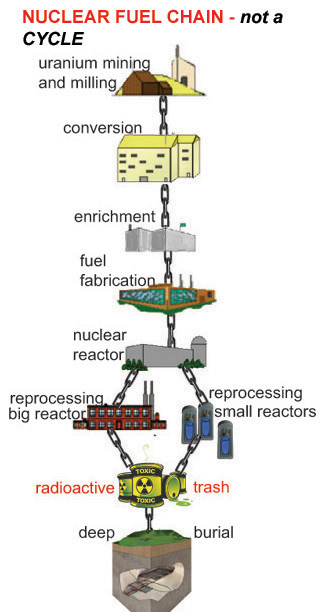
The Terms cover:
- feasibility of expanding mining of radioactive materials
- feasibility of conversion, enrichment, fabrication or re-processing in South Australia
- feasibility of generating electricity from nuclear fuels
- feasibility of establishing facilities in South Australia for the management,
storage and disposal of nuclear and radioactive waste - and a little nod to the impact on economy, environment, and community
(TO WIT)
HIS EXCELLENCY THE HONOURABLE HIEU VAN LE, Officer of the Order of
Australia, Governor in and over the State of South Australia:
TO
REAR ADMIRAL THE HONOURABLE KEVIN JOHN SCARCE, AC, CSC, RANR
GREETING Continue reading
Flooding danger to uranium tailings at proposed Wiluna uranium mine
 Chapple says water could increase the risk at Toro, Kalgoorlie Miner, 26 Mar 15 Mining and Pastoral MLC Robin Chapple has expressed concerns about plans to mine uranium in Wiluna after the “flooding” of Lake Way.
His comments came this week after a flyover revealed what Mr Chapple termed flooding on the lake bed. Toro Energy plans to store radioactive tailings from the proposed Wiluna uranium mine — up to 100 million tonnes — in the mined-out Centipede and Millipede pits, which will also be on the lake bed and are now underwater. The company has cited flooding as a non-issue, claiming the lake to be a natural drainage point, according to Mr Chapple.
Mr Chapple said the extensive flooding at Lake Way raised serious concerns about Toro’s ability to manage water effectively while mining on a lake bed. “I do not believe this company has properly accounted, nor planned, for potential flooding to the extent we have seen this week at Lake Way,” he said
“Not only would floodwaters of this magnitude carry radioactive material to other parts of the ecosystem, but on drying out could potentially release large quantities of oxidised uranium … into the atmosphere.
Mia Pepper Nuclear Free Campaigner Conservation Council of Western AustraliaAbout the flooding of Lake Way – the proposed site for the “Wiluna uranium project” including three pits on Lake Way. We’ve raised the issue that Toro Energy want to store about 100 million tonnes of radioactive tailings in two mined out pits on the lake bed (Centipede and Millipede) – the Department of Mines and Petroleum haven’t yet approved or even seen a tailings management plan from the company. We are focused on making sure the tailings don’t end up in this lake!
Conservation Council of Western Australia (Inc.) City West Lotteries House, 2 Delhi St, West Perthmia.pepper@ccwa.org.au www.ccwa.org.au M 0415 380 808 T (08) 9420 7291 F (08) 9420 7273
Grave consequences could result from Australia’s unwise uranium deal with India
Australia and India face a graver test than cricket Against the backdrop of Australia and India squaring up in the World Cup cricket, the two nations now face a test with much graver consequences, write Dave Sweeney and Jim Green. SBS News, 26 Mar 15 When Prime Minister Tony Abbott signed a uranium deal with Indian Prime Minister Narendra Modi last  September, he praised India’s “absolutely impeccable non-proliferation record”. This praise came despite the reality that India is actively expanding its nuclear weapons arsenal and its missile delivery capabilities.
Mr Abbott declined to answer serious questions about India’s nuclear weapons program or the inadequate safety standards in and inadequate regulation of its civil nuclear program. Instead, he offered a cricketing cliché, declaring that Australia and India trust each other on issues like uranium safeguards because of “the fundamentally ethical principle that every cricketer is supposed to assimilate – play by the rules and accept the umpire’s decision”.
Gaining comfort from clichés while ignoring inconvenient truths might work for those in Canberra and mining company boardrooms but it fails any real world test.
The proposed India uranium agreement is currently being considered by federal parliament’s treaties committee, and it has yet to be ratified by parliament. Submissions to the treaties committee have raised many serious concerns − and not just from the usual suspects.
Those raising concerns and objections include John Carlson, former Director-General of the Australian Safeguards and Non-Proliferation Office; Ron Walker, former Chair of the International Atomic Energy Agency (IAEA) Board of Governors; Prof. Lawrence Scheinman, former Assistant Director of the US Arms Control and Disarmament Agency; Princeton University physicist Dr M.V. Ramana; and nuclear arms control expert Crispin Rovere.
The uranium agreement with India weakens Australia’s nuclear safeguards standards, increases the chances of Australian uranium finding its way into Indian weapons and would lead to further undermining of nuclear checks and balances. If the uranium agreement is approved there will be sustained pressure for Australia to apply equally inadequate standards to other uranium customer countries. As John Carlson notes in his submission: “If the Government does compromise Australia’s safeguards conditions, inevitably this will lead to other agreement partners asking for similar treatment.”
Mr Carlson’s critique carries particular weight given that for over two decades he was the head of Australia’s nuclear safeguards office……..http://www.sbs.com.au/news/article/2015/03/26/comment-australia-and-india-face-graver-test-cricket
Getting Aboriginals off their land, to facilitate mining industries
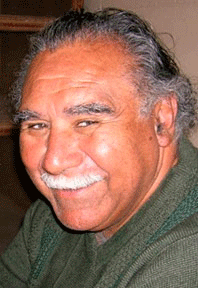 Ghillar Michael Anderson, leader of the Euahlayi people and ambassador of the Aboriginal Tent Embassy in Canberra, wrote an open letter to the United Nations on March 3, in which he states that the proposed closures of remote communities are to open up the land for mining.
“For the Western Australian government to now dispossess and displace the peoples of these homelands is designed to facilitate an expeditious expansion of mining interests and other developments,” he wrote.
The announcement of the closures coincides with the introduction of the Aboriginal Heritage Amendment Bill by the Barnett government last November. The bill, which is about to be debated in state parliament, proposes changes to the Aboriginal Heritage Act 1972. These simplify the process of gaining permission to develop Aboriginal sites, as the chief executive of the DAA will have sole discretion over whether to deem heritage protection. This would continue a DAA trend over recent years of site assessment which is beneficial to industry.
Are Mining Interests Behind Western Australian Remote Aboriginal Community Closures? http://www.vice.com/en_au/read/are-mining-interests-behind-western-australian-remote-aboriginal-community-closures March 20, 2015 by Paul Gregoir Yesterday, 18,000 people turned out at rallies across Australia in protest of the Western Australian government’s proposal to close up to 150 remote Aboriginal communities.

Australian farmers lobbying Abbott government for emissions trading scheme
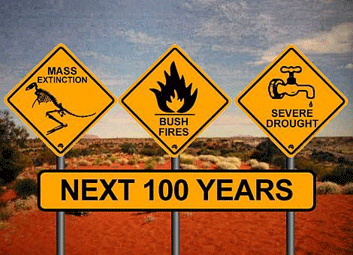 Climate change: farmers urge Coalition to restore emissions trading scheme, Guardian, Gabrielle Chan, 26 Mar 15 Failure to acknowledge the problem is ‘doing the industry a disservice’ and harming Australia’s international standing, says farming group A delegation of farmers has called for the Abbott government to act on climate change by restoring an emissions trading scheme, maintaining the current renewable energy target and spending on rail infrastructure to improve inland transport and reduce carbon emissions.
The farmers have spent two days lobbying the Coalition to start implementing a suite of policies to deal with the effects of climate change, warning of dire consequences for the agriculture sector if the threat was not addressed.
They have told the government MPs, including John Cobb and the staff of the treasurer Joe Hockey, that the Direct Action policy, which provides incentives for polluters to reduce carbon emissions, will not work to ameliorate climate change, “but if the government wants to give away money, people will keep taking it”.
The delegation said the lack of climate policies was being exacerbated by the cuts to research and development funding for applied climate science and the Bureau of Meteorology.
The visit came as intense negotiations between the government and Labor continued over the RET, which currently requires the government to source 41,000 gigawatt hours of energy from renewables by 2020. The latest government offer to Labor is 32,000GWh.
It also follows a report by University of Melbourne researchers called Appetite for Change, which charted the detrimental effects of climate change on Australia’s food production.
The farmers, organised by Earth Hour Australia, said the Abbott government needed to show leadership on the issue and it could start by using the term climate change, rather than “climate variability”………http://www.theguardian.com/environment/2015/mar/26/climate-change-farmers-urge-coalition-to-restore-emissions-trading-scheme
1 This month
17 October, Free Public Talk on Nuclear Issues in South Australia
David Noonan will speak on public interest concerns over the new Roxby Downs Indenture Act 2026 on BHP copper-uranium mining and ore processing in SA, and on how AUKUS may face SA with a High-Level nuclear waste agenda.
Dr Jim Green will discuss international developments in the field of nuclear power including ‘small modular reactors’ and Generation 4 ‘advanced’ nuclear reactor concepts.


Help Aunty Sue Protect Her Land and Sacred Sites From Destructive Rocket Testing.
.

Australians deserve the truth
about
AUKUS – https://aukuspublicinquiry.com/

PETITION – To: Prime Minister Anthony Albanese and the Australian Labor Government

of the week – Australians for War Powers Reform (AWPR)
To see nuclear-related stories in greater depth and intensity

