News South Wales report on Renewable Energy progress in 2014
 NSW Gov releases progress report on renewables http://ecogeneration.com.au/news/nsw_gov_releases_renewables_annual_report/090661/ Thu, 8 January 2015 The NSW Government has released its annual report, Progressing the Renewable Energy Action Plan for 2014, which confirmed approximately 13 per cent of the state’s energy generation came from renewables in 2013.
The Annual Report, which details the progress of the NSW Government’s Renewable EnergyAction Plan found that the share of renewable energy in NSW’s electricity generation mix has almost doubled in the past 5-6 years.
Other key findings include:
- There are currently estimated to be more than 13,000 jobs supported by renewable energy in NSW. This includes 4,400 direct renewable energy jobs.
- Over 2,900 megawatt (MW) of projects with an estimated investment value of $5.9 billion and the potential to support around 14,000 construction jobs and 1,000 operational jobs, currently have development approval. All of these projects are located in regional NSW (August 2014).
- Total investment in small-scale solar photovoltaic (PV) in NSW has been $1.3 billion. 298,000 households have installed small-scale PV.
The report also identifies the key achievements from the period since implementing the Plan, which include construction commencing on AGL’s $450 million, 155 MW Solar Flagships project in Nyngan and Broken Hill, which the Government has played a key role in supporting and facilitating.
Dive in renewable energy investment in Australia, contrasting with global rise
 Renewable investment dives in Australia, bucking global trend, SMH January 10, 2015 – Peter Hannam Environment Editor, The Sydney Morning Herald Investments in renewable energy rose to record levels globally in 2014 but fell sharply in Australia because of uncertainty triggered by the Abbott government’s review of the industry, Bloomberg New Energy Finance said.
Worldwide investment in wind farms, solar photovoltaics and other clean energy sources jumped 16 per cent last year to $US310 billion ($383 billion), or more than five times the tally of a decade earlier. Solar investments accounted for almost half the total.
China led the way, with investment soaring almost one-third to $US89.5 billion, while US investment gained 8 per cent to $US51.8 billion, and Brazil’s almost doubled to $US7.9 billion.
Australia, though, went the other way, with investment sinking 35 per cent to $US3.7 billion. BNEF said the amount was the “lowest since 2009, as wind and solar project developers delayed decisions while they awaited the government’s response to its Renewable Energy Target review”.
The Australian tally in fact masks a much steeper dive for large-scale renewable plants as small-scale solar PV largely held its own in 2014 even as state-based support schemes were wound back further.
“Four wind farms are currently under construction, but these signed contracts before the last RET review,” said Darren Gladman, the acting policy director for the Clean Energy Council.
“No more projects in the country have imminent construction plans.
“Australia is not just at risk of falling behind the rest of the world on renewable energy, we have already slipped off the back of the wave. We have some of the best sun, wind and waves in the world, but this new research shows that we are squandering some of our huge natural advantages.”
Fairfax Media sought comment from Industry Minister Ian Macfarlane, who has sought to cut the country’s renewable energy target from the current goal of 41 terawatt-hours annually by 2020 to as low as 27tWh.
So far, the Senate has blocked such a move but uncertainty over whether and when the goal will be reset has made it almost impossible to raise financing for new projects………..http://www.smh.com.au/business/renewable-investment-dives-in-australia-bucking-global-trend-20150109-12kqhk.html
Australian govt policy uncertainty leads to scrapping of Burdekin hydro power project
Meridian Energy Australia announced on Friday it would not proceed with the Burdekin hydro power generation project, which was intended to “harness the otherwise wasted power of the largest dam in Australia at Burdekin falls”………… Burge said regulatory uncertainty over the RET was the reason for not proceeding with the Burdekin project.
The project would have improved energy security in north Queensland, meeting the growing needs of agricultural and mineral businesses, and provided about 150 jobs during development and construction, the company said.
“Sadly, the decision to undermine the long-term investment signals of the RET makes it more difficult to realise these benefits for Queensland businesses and households,” Burge said.
The opposition leader, Bill Shorten, and the environment spokesman, Mark Butler, said the Meridian decision showed the government’s stance on the RET was costing jobs. Shorten and Butler said Labor would reopen RET negotiations if the government moved away from its position.“Australian families will have Tony Abbott to thank when their power bills rise because of his ideologically destructive approach to renewable energy,” they said in a joint statement.
Meridian is not the first company to cite RET uncertainty as a reason for shelving or cancelling projects. Silex Systems announced in August it was suspending a project to construct a large solar power station in Mildura, Victoria.
Keppel Prince Engineering, a wind turbine manufacturer based in Portland, Victoria, notified workers in October that 100 staff would be made redundant.
Other renewables companies have said the uncertainty has stopped them making long-term investment decisions. http://www.theguardian.com/environment/2014/dec/12/burdekin-hydro-power-project-scrapped-over-renewable-energy-target-concerns
Western Australia’s dramatic drop in indigenous sites receiving heritage listing
 Slump in recommended indigenous sites receiving heritage listing VICTORIA LAURIE, THE AUSTRALIAN JANUARY 10, 2015 A STEEP drop in Aboriginal sites being added to Western Australia’s heritage register is leading to “a vast sea of ignorance” that will thwart heritage protection, according to Carmen Lawrence, the chair of the Australian Heritage Council.
The dramatic drop in Aboriginal sites being registered — from 80 per cent of sites recommended to the Department of Aboriginal Affairs to only 6 per cent — has occurred over three years, from 2011 to May last year.
At least 27 sites registered under the Aboriginal Heritage Act have also had their status cancelled in the past year.
Ms Lawrence said the failure to register sites would make it even harder to identify the state’s heritage, lore and culture, which needed protection. “I’m concerned that we’re going back in time to a place we’d abandoned, the respect and protection levels of the 1950s,” she said.
“In the case of Burrup rock art in the Pilbara, it was unprotected for many years because nobody knew anything about it and Aboriginal voices weren’t heard.”………
Ms Lawrence said amendments to the Aboriginal Heritage Act, now before parliament, removed the requirement for a specialist anthropologist to assess sites. She was also concerned a “sacred” site applied only to those places where religious activity was conducted.
“I’m deeply concerned that song cycles and dreaming lines are explicitly excluded from consideration in this state due to a narrowing of definition,” she said. “Leaving that out is a major part of indigenous heritage. James Price Point is a good example: there are middens and burial sites along the Lurujarri Heritage Trail near Broome, but a lot of the significance relates to songs and dreaming tracks.”
She said a 2011 State of the Environment report found indigenous heritage was neither well protected nor well recorded……..http://www.theaustralian.com.au/national-affairs/indigenous/slump-in-recommended-indigenous-sites-receiving-heritage-listing/story-fn9hm1pm-1227180010783?sv=dc1f2218356b75c3fbcaafe8c6f6e071
Three Australian States pushing Fed govt for climate change action
Victoria’s environment minister, Lisa Neville, said she was seeking “urgent” talks with the NSW and SA governments to forge a united front against Tony Abbott’s stance on climate change.
Neville told Guardian Australia the states would seek greater clarity on how the federal Emissions Reduction Fund, which will provide grants to businesses, would work. The federal government’s leadership on climate change would also be questioned.
“I’m looking to have urgent conversations with NSW and South Australia on the role they can play with us,” she said. “We’ll look at whether there’s a shared view on emissions reduction and also national advocacy so we can put climate change back into public debate.
“Each state has a responsibility to push the federal government in this area. National action will have the most impact on climate change, so we need a unified voice to get the federal government, first of all, to acknowledge climate change.
“The Abbott government has, unfortunately, walked away from its responsibility to act on climate change. We’d prefer strong national and international action, but if we have to play a leadership role in Victoria, we will do that.
“We need to put pressure on the federal government as well as build a proper community conversation about climate change again.”
Neville, who will have her first meeting with the federal environment minister, Greg Hunt, this month, said the federal Coalition needed to resolve the “mess” surrounding its attempts to cut the national renewable energy target and ensure its ERF grants were spent effectively to bring down emissions……….
South Australia’s renewable energy investment has forged ahead of Victoria and NSW, at a time when all states are experiencing a trend of rising temperatures…….
The NSW government, while keen to not publicly criticise its Coalition counterpart in Canberra, has indicated that it wants stronger action on climate change…….“The NSW government also has a renewable energy action plan to increase the proportion of renewable energy in NSW and has made its position on the renewable energy target clear.”
….Hunt’s office did not respond to a request for comment. http://www.theguardian.com/environment/2015/jan/08/climate-change-victoria-seeks-join-nsw-south-australia
Global warming contributed to Sydney’s record warm year
 Sydney weather: Record warm year with few cold spells January 6, 2015 Peter Hannam Environment Editor, The Sydney Morning Herald
If you thought Sydney had been warm over the past year or so, you’d be right.
Last year was the city’s equal warmest for overnight temperatures and its second-warmest for means and maximums in 156 years of record keeping at Observatory Hill.
For some temperature measures, such as for NSW heat, the previous record had been set only a year earlier.
Agata Imielska, senior climatologist at the Bureau of Meteorology in Sydney, said it was “quite surprising” to see last year eclipse 2013 given the bar had been set so high.
“We just didn’t have the cool periods,” Ms Imielska said. “There was a real persistence in the warmth.”
Globally, 2014 was the hottest year on record, the Japan Meteorological Agency declared this week. Land and sea-surface temperatures were 0.27 degrees above the 1981-2010 average, easily eclipsing the previous highs set in 1998, 2010 and 2013.
“Global warming is contributing to these heat records, and it’s very unlikely that we would have seen the proliferation or the frequency of these heat records around the world without the influence of global warming,” Karl Braganza, head of climate monitoring at the bureau, said.
“The climate system we live in … that’s all about 1 degree warmer than it used to be,” Dr Braganza said.
Warm and dry
For NSW, 2014 was the hottest on record for mean temperatures and the equal warmest for maximums. Among the other states, only the Northern Territory failed to notch a year among the four warmest on record……….http://www.smh.com.au/environment/climate-change/sydney-weather-record-warm-year-with-few-cold-spells-20150106-12ikgr.html
Hottest daytime temperatures on record – Victoria in 2014
Victoria experienced hottest daytime temperatures on record in 2014, BOM annual report reveals, ABC News By Loretta Florance 5 Jan 15 Victoria recorded its hottest year on record for maximum daytime temperatures in 2014, the Bureau of Meteorology’s (BOM) annual report has revealed.
The state also recorded the second warmest year on record for mean temperatures, and the third warmest for minimum temperatures. The mean maximum temperature was 1.53 degrees Celsius above average, the Bureau of Meteorology found………
climate modelling showed that an El Nino effect on both the atmosphere and the ocean might progress over the summer, which would mean warmer temperatures in Victoria.
“We know that the year an El Nino event gets going tends to be the warmer years, so globally you’d expect 2015 to be at least as warm as 2014 if not warmer – and 2014 globally is actually looking like it’s going to be the warmest year on record,” he said.
“For eastern Australia, you tend to have the warm conditions persist through the financial year, so at least until the middle of next year, is what you’d be expecting for average conditions.” http://www.abc.net.au/news/2015-01-06/victoria-swelters-through-its-hottest-year-on-record-2014/6002710
Australian companies uranium miner Paladin, and OceanaGold will be forced to come clean on tax matters
 Canada transparency laws force ASX companies to disclose tax bills, The Age December 26, 2014 Georgia Wilkins Business reporter Two Australian mining companies will be forced to disclose how much tax they pay in every country around the world by new transparency laws introduced in Canada.
Paladin Energy and OceanaGold, both dual-listed in Australia and Canada, will have to comply with new Canadian laws requiring all oil, gas and mining companies to report payments they make to governments overseas, including taxes, royalties, bonuses, regulatory charges and licence fees.
The Australian government is being pushed to introduce similar rules. Continue reading
Abbott’s Direct Action policy threatened by cuts to CSIRO
CSIRO cuts threaten Abbott’s direct action policy http://www.smh.com.au/technology/sci-tech/csiro-cuts-threaten-abbotts-direct-action-policy-20140716-zti20.html Phillip Thomson Government budget cuts continue to bite at Australia’s premier science organisation and one union says it threatens Prime Minister Tony Abbott’s direct action policy.
The CSIRO Staff Association said internal documents from the research organisation revealed dozens of scientists specialising in ecological research were now at risk while experts devoted to new carbon capture techniques could also be on shaky ground. Continue reading
Health of Australians already threatened by global warming
As shepherds watched, it got hotter and hotter December 24, 2014 Peter Hannam Environment Editor, The Sydney Morning Herald Human health – and that of other animals and even plants – is likely to become an ever more pressing public issue as temperatures rise with global warming, cities grow and populations age………
Until recently, public health authorities would issue a warning whenever the temperature was likely to exceed a certain level.
However, heatwaves are also related to the conditions people are accustomed to. To reflect that, the Bureau of Meteorology last year pioneered a heatwave service that predicts the severity of coming heatwaves based on both how far temperatures are likely to deviate from historical averages but also taking into account the previous month’s weather.
In a further tweak, the bureau has added charts to assess the impact of each heatwave after it’s hit. That’s needed because people often don’t realise the damage to health can come from exposure to prolonged warmth rather than a particular temperature spike. Continue reading
Once again, Aboriginal Land Rights are Under Attack
WGAR News: Land Rights Act is under attack… yet again: Land Rights News – Central Australia 3 January 2015
Contents:
* Analysis / Opinion: Ian Viner AO QC, Land Rights News – Northern Edition: The plan to undermine the Land Rights Act
* Analysis / Opinion: Dr Murray Garde, Land Rights News – Northern Edition: Lost without translation: what the Bininj missed
* News: Land Rights News – Northern Edition: Land Rights under attack
* News: Land Rights News – Central Australia: Land Rights Act is under attack… yet again
* Analysis / Opinion: Northern Land Council: Land Rights News – Northern Edition: In response to the Forrest Review
* Timeline: Respect and Listen: Land Rights: Timeline
* Northern Land Council Background: Land Rights News-Northern Edition
* Central Land Council Background: Land Rights News-Central Australia
* Respect and Listen Background: Land Rights under attack
* Respect and Listen Background: Dismantling the Land Rights Act – 99 year leases
* WGAR Background: Undermining the Aboriginal Land Rights Act (NT) through 99 year leases and privatisation
* Analysis / Opinion: Central Land Council: Land Rights News – Central Australia: Nuke dump dilemma
* WGAR Background: Proposals to dump nuclear waste on Aboriginal lands
WGAR News Public Google Group: https://groups.google.com/forum/?hl=en-GB#!forum/wgar-news
WGAR News – Working Group for Aboriginal Rights (Australia)………… https://indymedia.org.au/2015/01/02/wgar-news-land-rights-act-is-under-attack-yet-again-land-rights-news-central-australia
Canberra’s Majura Valley solar farm will use advanced sun-tracking technology
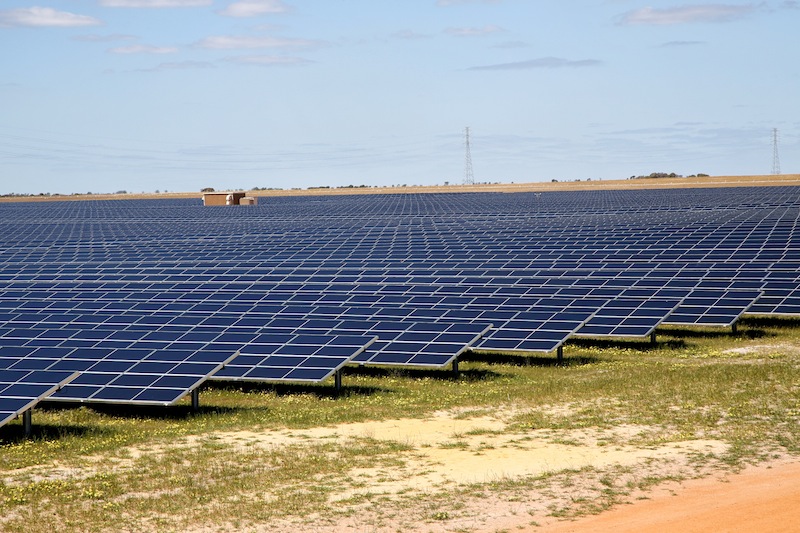 Majura Valley solar farm system tracks sun January 4, 2015 John Thistleton Reporter for The Canberra Times. Sun-tracking technology for solar panels will be deployed for the first time in Australia at a new solar farm in the Majura Valley on Canberra’s eastern fringe.
Solar Choice is developing and will operate the $6.5 million solar farm, which will feature a QBotix robotic tracking system, developed in California in 2012. The system is used in the United States, Japan and Europe.
Self-charging, track-mounted robots adjust the tilt and orientation of individual solar arrays throughout the day to gain maximum exposure to the sun.
Solar Choice, a brokerage firm which develops and manages solar projects throughout Australia and Britain, is finalising details for the 2MW first stage of its Canberra venture, which will generate about 3 million kWh of clean energy………http://www.canberratimes.com.au/act-news/majura-valley-solar-farm-system-tracks-sun-20150104-12hitb.html
The Ugly Australian: Paladin uranium miner discharging radioactive sludge into Lake Malawi?
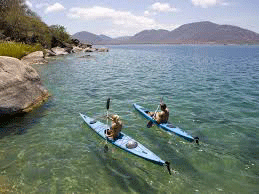 The lake provides water for drinking and domestic use to millions of Malawians. Part of the lake is protected as a national park, and it is inhabited by more than 850 cichlid fish species found nowhere else on Earth.
Malawi: Paladin Accused of Discharging Uranium-Contaminated Sludge in Lake Malawi http://allafrica.com/stories/201412301012.html A coalition of Malawi civil society organisations (CSOs) has accused Paladin Energy Ltd, a company that is mining Uranium ore at Kayerekera in the northern district of Karonga over reports the mining company is secretly discharging into Lake Malawi uranium contaminated sludge from the tailings dam at the mining site.
Renowned human rights activist, Rafiq Hajat shared a report compiled by a members of the Natural Resources Justice Network (NRJN) in which it is alleged paladin is discharging uranium sludge from Kayerekera into Lake Malawi.
“A radius of 35 km from the Boma, you will be shocked to see fish of different species dead with some communities along the lakeshore collecting [the fish]. Collectiong as part of their relish. The cause not yet known. Reports from the Beach Village Chairman indicates that this started in late November but Government was not forth coming (sich)” reads part of the post. Continue reading
The Maralinga nuclear bomb test scandal lingers on
Lingering impact of British nuclear tests in the Australian outback http://www.bbc.com/news/world-australia-30640338 Jon DonnisonSydney correspondent 1 Jan 2015, “It seems remarkable today but less than 60 years ago, Britain was exploding nuclear bombs in the middle of Australia. In the mid-1950s, seven bombs were tested at Maralinga in the south-west Australian outback. The combined force of the weapons doubled that of the bomb dropped on the Japanese city of Hiroshima in World War Two.
In archive video footage, British and Australian soldiers can be seen looking on, wearing short sleeves and shorts and doing little to protect themselves other than turning their backs and covering their eyes with their hands.
Some reported the flashes of the blasts being so bright that they could see the bones of their fingers, like x-rays as they pressed against their faces.Much has been written about the health problems suffered by the servicemen as a result of radiation poisoning.
Far less well-documented is the plight of the Aboriginal people who were living close to Maralinga at the time.
“Every night I cry for them,” Hilary Williams tells me as she sits around a campfire for an impromptu picnic of kangaroo tails laid on for our visit.
Her mother and grandparents all witnessed at least one of the explosions from just a few kilometres away.
Ms Williams said all three of them died young after suffering lung problems.
“It’s so sad. They’re not here anymore,” she said, adding that she had heart problems she believes were also linked to the bombs.Locals around Maralinga spoke about a black mist of radioactive dust over their communities following the explosions.
“A lot of people got sick and died,” said Mima Smart, an aboriginal community leader.
“It was like a cancer on them. People were having lung disease, liver problems, and kidney problems. A lot of them died,” she said, adding that communities around Maralinga have been paid little by way of compensation……….
Robin Matthews, caretaker of the Maralinga Nuclear Test Site. “They thought they’d pick a supposedly uninhabited spot out in the Australian desert. Only they got it wrong. There were people here.”

During the 1960s and 70s, there were several large clean-up operations to try and decontaminate the site. All the test buildings and equipment were destroyed and buried. Large areas of the surface around the blast sites was also scraped up and buried.
But Mr Matthews said the clean-up, as well as the tests themselves, were done very much behind closed doors with a high level of secrecy. “You’ve got to remember that this was during the height of the Cold War. The British were terrified that Russian spies might try and access the site,” he said.
The indigenous communities say many locals involved in the clean-up operation also got sick..
‘Sick land’
Maralinga has long been declared safe. There are even plans to open up the site to tourism. But it was only a few months ago that the last of the land was finally handed back to the Aboriginal people. Most, though, say they have no desire to return there.
Mima Smart told me she regards Maralinga as sick land. “I don’t want to go back. Too many bad memories.”
And even almost 60 years on, the land still hasn’t recovered. Huge concrete plinths mark the spots where each of the bombs was detonated.
Around each, the blast area would have stretched for several kilometres.The orangey red soil of the outback sparkles strangely green.If you look closely, you can see the ground is covered with what looks like broken glass, where the soil got so hot it literally melted and turned to silicon.
And even after all this time, the natural vegetation still won’t grow back. “The grass here only ever grows a few inches,” said Mr Matthews. “Even the birds and the kangaroos still stay clear of this area.”
More than half a century on, most people here still regard Maralinga as a dark chapter in British Australian history
Abbott government must hate Powershop – it’s making renewable sourced electricity cheaper!
 No wonder that the Abbott government is keen to wreck the Renewable Energy Target. Clever renewable electricity suppliers like Powershop are providing cheaper electricity – threatening Abbott’s backers – the polluting industries
Burge said that Powershop’s service was challenging the view put forward by major energy retailers that renewable energy would drive power bills up.
Miles George chairman of the Clean Energy Council and managing director Infigen Energy said that second tier generators had captured a “healthy” share of the retail energy market by offering discounts
“If we didn’t have a [target] those businesses wouldn’t be operating the way they are now and likely
Ben Burge, the man hoping to re-ignite the electricity market http://www.theage.com.au/it-pro/business-it/ben-burge-the-man-hoping-to-reignite-the-electricity-market-20150101-12fojw.html January 2, 2015 Andrew Colley Meet Ben Burge, the math whiz trying to shake up the staid retail energy market with a smartphone app and a good dose of analytics.
When he is away with the family, his mother-in-law pops by discreetly to do a load of washing. Her only explanation for his seemingly clairvoyant ability to know when to send her thank-you flowers is strategically placed web cams.
It’s a powerful tool and one he wants to put in the hands every Australian in a bid to take on the major energy retailers with cheaper and cleaner electricity.
 The truth is far more prosaic. Burge, chief executive of online retail energy challengerPowershop, knows when she’s there because the company’s app on his smartphone registers an unmistakeable spike in his home’s energy consumption. Burge, once Australia’s youngest CEO of a listed company, eMitch, at 25, and keen skateboarder, has already picked up 30,000 customers in Victoria whilst at the helm of what Powershop claims is the world’s first retail online energy market.
It lets consumers use a smartphone app (on iPhone and Android) or the web to monitor their energy consumption at home and choose the source of their electricity – from alternative energy projects including wind, solar or even sugarcane processing and landfill generation. A move that could help increase demand for renewable energy.
Some time early in 2015 the service will launch in NSW. Continue reading
1 This month
17 October, Free Public Talk on Nuclear Issues in South Australia
David Noonan will speak on public interest concerns over the new Roxby Downs Indenture Act 2026 on BHP copper-uranium mining and ore processing in SA, and on how AUKUS may face SA with a High-Level nuclear waste agenda.
Dr Jim Green will discuss international developments in the field of nuclear power including ‘small modular reactors’ and Generation 4 ‘advanced’ nuclear reactor concepts.


Help Aunty Sue Protect Her Land and Sacred Sites From Destructive Rocket Testing.
.

Australians deserve the truth
about
AUKUS – https://aukuspublicinquiry.com/

PETITION – To: Prime Minister Anthony Albanese and the Australian Labor Government

of the week – Australians for War Powers Reform (AWPR)
To see nuclear-related stories in greater depth and intensity

