Aboriginal culture preserved and shared along New South Wales far South Coast
In the 1840s Ben Boyd, as he was developing a settlement on Eden’s Twofold Bay, wanted to see some of his vast land holdings on the Monaro.
He needed to find a way up from the coast to the high country and it was Aboriginal people who showed him how to get there along the Bundian Way.
The 265km track had for generations connected Bilgalera (which non-Aboriginal people now called Fisheries Beach) with Targangal (now called Mt Kosciuszko).
Ben Boyd, with a young artist, Oswald Brierly, were guided to the high country by a young Aboriginal man, Budginbro, on horseback from the coast, along river flats and over some of the wildest and most rugged and beautiful parts of Australia.
For a large part of the journey they travelled along the Bundian Way and deviated along connected pathways.
The pathway has been surveyed and is now being rehabilitated, section by section, to be opened again for walkers, both Aboriginal and non-Aboriginal, as a shared history experience celebrating that first joint expedition.
It’s a shared history which encapsulates the heritage of the early settlers and the heritage of our people who were here for many generations before the settlers came,” said Aboriginal elder Ossie Cruse as we spoke at the community’s Keeping Place………
Aboriginal work teams are currently clearing the pathway around Twofold Bay, a stunning walk around the undeveloped shoreline, little changed from Boyd’s time.
Above a beautiful beach on Eden’s Twofold Bay and looking across to the tree lined southern and eastern shores the Bundian Way project manager Noel Whittem says that the walk will emerge as a major tourist attraction especially for the visitors arriving on the cruise ships that are increasingly visiting the picturesque harbour, and where a new wharf is to be built.
The full 265km track he says will also be an attraction for bushwalkers and for those walkers who travel the world to walk ancient cultural heritage roads and tracks.
The Bundian Way is one that would predate most and tells a poignant story of the two cultures.
“We have people who want to walk the Bundian Way already.”
See the related audio for a fascinating insight into the Bundian Way project as we journey from Twofold Bay to the Keeping Place with Noel Whittem, Franz Peters, and Ossie Cruse. http://www.abc.net.au/local/stories/2014/06/02/4017106.htm
AUDIO: Muckaty Nuclear waste case in court today – puts scrutiny on Northern Land Council
 Muckaty nuclear waste proposal in Federal Court today, ABC Rural By Lauren Fitzgerald , 2 June 14, A row over the future site for Australia’s first nuclear waste dump hits the Federal Court today. Muckaty Station, 600 kilometres north of Alice Springs, was nominated by the Howard Government as its preferred site for storing low and intermediate level nuclear waste in 2007.
That policy, continued under Labor, has been met with vocal resistance from some traditional owners since its inception. Muckaty Station was declared Aboriginal land under the Land Rights Act in 1997, with seven different clans identified as part of the Muckaty Land Trust.When the Northern Land Council nominated a small part of that property to host a nuclear waste facility, they did it on behalf of the Ngapa clan.
But four other groups say they also lay claim to that particular area.
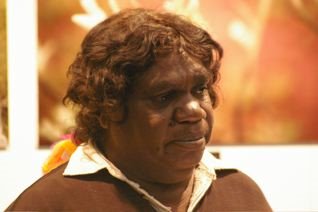 Dianne Stokes is one of the traditional owners opposing the dump. She says she has waited a long time to have her case heard in court.”While I was waiting we went around to all the big cities to protest, went to public meetings to let everyone know that we’re still going ahead on this court challenge,” she said.
“The Commonwealth and the Northern Land Council weren’t talking to the traditional owners and they weren’t consulted properly at the beginning.”………
Maurice Blackburn Social Justice Practice will represent the Traditional Owners opposing the facility, on a pro-bono basis. Lawyer Elizabeth O’Shea says the case is significant for a number of reasons.
“There’s also some provisions about misleading and deceptive conduct, which is traditionally consumer protection and we’re alleging that the Northern Land Council was engaged in that behaviour. “And it will test some provisions as well that the Commonwealth is relying on, so some technical legal stuff.
“But mostly I think it’s interesting because the Northern Land Council is never usually put under this level of scrutiny, and we’re ready to undertake that process and give traditional owners the opportunity to be heard.” She says that if the case is successful, she hopes the decision will give Traditional Owners more say over particular land use proposals…….. http://www.abc.net.au/news/2014-06-02/muckaty-nuclear-waste-federal-court/5492958
Secret agents hired to spy on anti-coal activists in New South Wales
 Undercover: Spies hired to infiltrate anti-coal campaign The Age, June 1, 2014 Tom Allard National Affairs Editor Former soldiers and intelligence operatives have been sent to infiltrate a network of anti-coal protesters aiming to thwart a multibillion dollar expansion of coal production in northern NSW. Using false identities, the spies-for-hire have attempted to penetrate the inner sanctum of a group of environmentalists and local landowners who have vigorously attempted to stop the coalmines at Maules Creek and Boggabri.
In what represents a significant escalation of a heated battle between Whitehaven Coal and Idemitsu Australia Resources and anti-coal activists, a Fairfax Media investigation has uncovered a clandestine campaign of significant scale but ham-fisted execution.
Several undercover agents were discovered by the activists, including one alleged spy Marnie Tisot, who was confronted on camera. The operation raises questions of its legality given the outright deception to disrupt protest movements.
Fairfax has interviewed individuals directly involved in the espionage and multiple sources with detailed inside knowledge of the surveillance have independently alleged it was orchestrated by a company run by a former Australian military intelligence officer, Tony Groves, and his partner, Maria Topia. While their firm, the Centre for Intelligence and Risk Management, had direct operational responsibility for the espionage, it is only one link in a chain of companies believed to be involved.
Who the ultimate client was remains a mystery. Spies in the field were not told, although it was clear the Centre for Intelligence and Risk Management was acting for another party or parties.
Several leading corporations and prominent Australians are also involved in the coal expansion in northern NSW and the security operations that protect them……. http://www.theage.com.au/national/undercover-spies-hired-to-infiltrate-anticoal-campaign-20140601-39ci6.html
Our fool of a Prime Minister connects World War 2 ‘s dead soldiers with business investment!
 Tony Abbott raises eyebrows after linking WWII D-Day memorial with policies on mining and carbon taxes, Brisbane Times Alexandra Back June 2, 2014 Prime Minister Tony Abbott has courted controversy by linking a commemoration of the 70th anniversary of D-Day to his government’s policies.
On Sunday afternoon the Prime Minister released a video which he began by saying the D-day landings had changed the course of human history. Seconds later Mr Abbott makes an odd segue into a message for overseas investors, that Australia is open for business.
- He goes on to talk about the government’s commitment to repealing the carbon tax and the mining tax, then returns to D-day.
“The United States, Canada and France are long standing friends. We stood together at D-Day, we trade every day and we have always shared a commitment to democracy, to enterprise and to people’s right to be free,” he says in the video.
The conflation of the two messages raised eyebrows on Twitter with Greens leader Christine Milne, political commentator George Megalogenis and comedian Charlie Pickering among those criticising the PM.
Each week Mr Abbott posts a video detailing ”important events for the week”.
On this most recent post, and after Fairfax Media became aware of the video on Sunday night, someone changed the title from ”A message from the PM – 70th Anniversary of the D-day landings” to ”A message from the PM – Visit to France, Canada and United States”.
Unfortunately for the Prime Minister’s office the opening graphic on the video retains the original title. The link to the transcript of the video can no longer be accessed……….
Over 3000 Australians were involved – including 2500 air force personnel who provided air support for the Allied landings. Following the D-day commemorations, I will be travelling to Canada and the United States – and will be joined by Australian business leaders.
”My message to overseas investors is that Australia is open for business.”……..http://www.brisbanetimes.com.au/federal-politics/political-news/tony-abbott-raises-eyebrows-after-linking-wwii-dday-memorial-with-policies-on-mining-and-carbon-taxes-20140602-39cuy.html
Ian Dunlop on how Tony Abbott is gutting science in Australia

Grandees such as John Howard and Cardinal George Pell parade cynical climate denialism before international audiences, putting more peer pressure on the current incumbents to toe that line and providing rare insight into the widespread denialist groupthink within conservative ranks.
Literally and figuratively, we are witnessing a “burning of the science books”, the like of which has not been seen since medieval times. It did not work for the Catholic Church in the days of Copernicus and Galileo, nor in Nazi Germany in the 1930s. It will not work today.
Tony Abbott is gutting science just when we need it most, SMH, Ian Dunlop, June 1, 2014 Australia has an enviable reputation for scientific research, extending long before the heyday of the CSIRO in the 1950s under the visionary leadership of Sir Robert Menzies and Sir Ian Clunies-Ross. On the hottest and driest continent on Earth, our prosperity would be non-existent had it not been for the enlightened application of science. So it has been of mounting concern over recent years to see governments of all persuasions adopt increasingly anti-science agendas.
The federal government is taking anti-science to new heights. Its scorched earth approach discards virtually everything not in line with narrow, free-market ideology, centred on sustaining Australia’s 20th century dig-it-up and ship-it-out economic growth model. Continue reading
Mark Willacy’s book “Fukushima” – essential reading
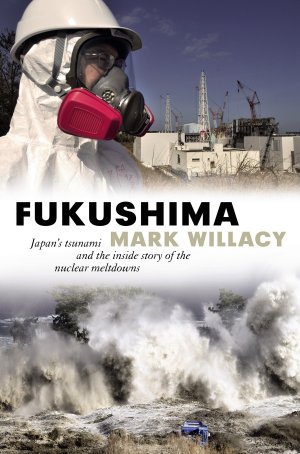 The case for Mark Willacy’s Fukushima, The Conversation, Ashley Ng, 2 June 14,
“……….Willacy is a meticulous investigative journalist. Invariably questions would arise as to whether the disasters of the Tohoku earthquake and tsunami could have been mitigated or, in the case of the Fukushima disaster, prevented.
Willacy distilled hundreds of hours of interviews from ordinary people to the ex-Prime Minister which, together with official reports, provide compelling arguments that this indeed could have been the case at every level. Such is the benefit of hindsight.
Fukushima underscores the importance of Australia’s correspondents for bringing veracity to the reporting of events affecting our region. Perhaps with the exception of a cadre of Japanese freelance journalists, Willacy outlines why the Japanese kisha kurabu press clubs, formed from the dominant Japanese news organisations, would not have subjected Japan’s power companies and government officials to the same degree of relentless scrutiny leading up to and following March 11, 2011.
Willacy’s Fukushima stands as a strong historical document. But like the ancient granite stones that warned generations of Japanese of the dangers of tsunamis of times past, the lessons contained within the book’s pages are perhaps at risk of being ignored at peril.
The distaste for the Japanese nuclear industry has receded. In 2012, the pro-nuclear Liberal Democratic Party was swept back into power and plans to restart nuclear power plants across the country have commenced. Notably, this includes the Hamaoka nuclear power plant, which sits directly above a fault line in a region where a large undersea earthquake is expected within the next 30 years.
This reason alone makes Willacy’s Fukushima essential reading.http://theconversation.com/the-case-for-mark-willacys-fukushima-24980
Obama might mention climate change – how embarrassing for Tony Abbott!
 Obama describes climate change as ‘creeping national security crisis’ LAURIE OAKES THE DAILY TELEGRAPH
MAY 31, 2014 WHILE Australian politicians continue to debate the Budget, Barack Obama has been talking about national security.In a speech to cadets at the West Point military academy, the US President outlined a new foreign policy doctrine based on more soft power diplomacy and less recourse to military might.
One section of the speech in particular would have attracted the attention of those involved in planning Tony Abbott’s visit to Washington in a couple of weeks. Obama described climate change as “a creeping national security crisis”.
Politics watchers in Washington were already predicting climate change would be “the elephant in the room” when the leaders meet in the Oval Office.
The Washington Post reported the President “routinely brings up climate change in closed door meetings with world leaders”.
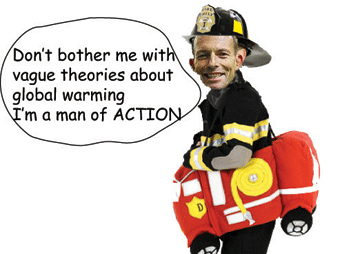 But with Abbott, there will be little common ground — and considerable potential for embarrassment.
Even if Abbott and Obama tiptoe around the issue, journalists might not co-operate at the customary joint media conference afterwards. One skilfully framed question could expose the deep differences between the Australian Prime Minister and his host on a matter that has become a key focus of the White House.
Now that Obama has made the problem of global warming part of America’s national security agenda, the subject will be even more difficult to avoid……..
The President and his advisers are all too aware that Abbott once described climate change science as “crap” — even though his public line these days is that “climate change is real”.
The White House is presumably well briefed on the way the Abbott government has been winding back action on climate change, including Budget cuts to research and renewable energy programs.
It would also know about the efforts of Australian diplomats to have climate change references removed from agendas and communiques at various international forums.
In the West Point speech Obama attacked political leaders who deny that global warming is taking place.
He was referring specifically to American politicians, but it is not hard to see why his view of Abbott is said to be unflattering.So even though it will be summer in Washington, the temperature could be a little cool when Abbott sits down in the Oval Office. “I don’t think we’d care,” a senior Liberal said yesterday — reflecting the fact that the Abbott government is not overly fond of Obama either……
Obama, as his West Point speech shows, is convinced that climate change is a factor in major fire, drought and flood events.In another speech on climate change a few weeks earlier he said: “It’s causing hardship now. It’s affecting every sector of our economy and our society — more severe floods, more violent wildfires.”
When a senior United Nations official suggested last year’s big NSW fires were linked to global warming, the PM accused her of “talking through her hat”.
If the subject comes up in Washington he’ll presumably be a little more diplomatic. http://www.dailytelegraph.com.au/news/opinion/obama-describes-climate-change-as-creeping-national-security-crisis/story-fni0cwl5-1226937966154
VIDEO: a warning from China that Australia could scuttle global carbon emissions trade
VIDEO: China warns Australia risks scuttlling global emissions trade Lateline Australian Broadcasting Corporation Broadcast: 30/05/2014 Reporter: Stephen McDonell
The head of China’s most advanced carbon emissions exchange says australia could scuttle the creation of a global system of carbon trading by dumping its scheme at a crucial time.
Transcript
EMMA ALBERICI, PRESENTER: The Vice President of China’s most advanced carbon emissions exchange says Australia could scuttle the creation of a global carbon trading system.
As Australia prepares to dump its emissions trading scheme, the world’s largest carbon emitter has set up a pilot plan, designed to form the basis of a China-wide network with the potential to link to those in other countries.
China correspondent Stephen McDonell reports from Shenzhen.
STEPHEN MCDONELL, REPORTER: Shenzhen was at the forefront of China’s opening up in the 1980s. It was given special economic status to spring board the country into a market system.
Today, the city is again being used as a Guinea pig but this time for carbon trading.
The Shenzhen carbon exchange is the first of a series of seven pilot schemes around the country to test how China might run a domestic trading system.
GE XING’AN, VICE PRESIDENT, CHINA EMISSIONS EXCHANGE: Carbon trading is going to have a huge impact on the economy and the companies. We have to first test whether the carbon trading suitable for different, each economic development area…….STEPHEN MCDONELL: Ge Xing’an is Vice President in Shenzhen. His organisation possibly hoping to one day run the entire national system goes by the English name China Emissions Exchange………
STEPHEN MCDONELL: Really, the entire global market might be jeopardised by Australia pulling out?
GE XING’AN: Of course. Of course. Australia is a very important player in the climate change issues and also the carbon market.
STEPHEN MCDONELL: Beijing and Shanghai have also just opened their exchanges but even the most optimistic observers say it could be more than five years until a China-wide trading system is established.
Stephen McDonell, Lateline. http://www.abc.net.au/lateline/content/2014/s4016127.htm
Australia’s role in renewable energy across the globe
 Renewable Energy Across the Globe: Australia Wind and hydroelectric leaders Green Action News, May 21, 2014 by Kathryn Hannis Great steps have been made across the globe toward adopting more environmentally conscious energy sources. How each continent makes use of their varied resources is what sets them apart from each other.
Here’s what’s happening in Australia:
By the end of 2012 Australia was producing almost 30,000 GWh of electricity from renewable energy sources annually. The main renewable sources utilized in Australia are hydroelectric, and wind, with some smaller amounts produced from bioenergy, solar, and geothermal sources.
Currently in Australia there are over 3.2 GW of solar panels installed. Two commercial-scale PV power plants have been opened since 2011 with 1 MW and 10 MW capacities, respectively, and there are plans for many new solar power farms and stations in the future.
There are over 50 wind farms in Australia, with over 1000 turbines between them, which produce 5,000 gigawatt-hours (GWh) of electricity each year, representing 2% of Australia’s total electricity, 23% of electricity from renewable sources, and enough to power over 700,000 homes. The largest wind farm in the southern hemisphere, in terms of area, the Waubra Wind Farm in Victoria, was completed in 2009 and produces 192 MW of electricity. The largest capacity wind farm is Lake Bonney Wind Farm, which produces around 240 MW, despite having 30 fewer turbines. An even larger farm was set to open in 2013 with a capacity of 420 MW.
Hydroelectricity represents almost 60% of renewable energy production on Australia, with several tidal energy projects in the works for the future.
Currently, a geothermal power plant in Queensland produces 80 kW of electricity. Geothermal energy is otherwise underutilized as a source of power. There are recorded potential locations with detectable geothermal activity with further exploration planned, however. It was the goal to have at least three power generation demonstration projects running by 2012.
Energy from biomass in Australia generally takes the form of ‘Bagasse’, or burning sugar cane waste. Together with burning wood, this accounts for 8% of renewable energy production in Australia……. http://greenactionnews.net/blog/renewable-energy-across-the-globe-australia/#
Uranium miners and others will have to deal with some very savvy Aboriginal landowners in the Kimberley
 Protests, jailing pay off as elder finally sees native title granted VICTORIA LAURIE AND PAIGE TAYLOR THE AUSTRALIAN MAY 31, 2014 JOHN Watson stood on an Aboriginal picket line at Noonkanbah 36 years ago opposing the mining industry and earned himself a place in Australia’s land rights history. The respected Kimberley elder vividly remembers the drilling rigs advancing, the police convoy that held objectors back, and the moment when drilling began on sacred ground at the remote Fitzroy Crossing cattle station.
The dispute had gathered pace after the land rights of Aborigines in the Northern Territory had been recognised in parliament in 1976, a development Mr Watson and other Noonkanbah protesters highlighted as they tried to block company AMEX at Pea Hill.
Mr Watson and others were eventually carted off to jail in Fitzroy Crossing, an experience he describes as terrifying……..
This week, Mr Watson took centre stage in a new chapter in the Kimberley’s land rights history.
He watched as state Attorney-General Michael Mischin and Federal Court officials handed native title rights over about 26,000sq km of land to his Nyikina Mangala people.
Their land is a new frontier for exploration, mining and drilling. There are 96 pending and granted mineral titles and 20 pending and granted petroleum titles on it. Mr Watson said his people were willing to talk to miners and oil and gas companies but that did not mean the companies could have everything they wanted.
“The door is not open for mining, not open for mining but open to sit down and talk and get a good feeling,” he said. “We want to get a good outcome.”
Thursday’s determination means Western Australia has reached a landmark of one million square kilometres to have been recognised as Aboriginal land………..
Investors flee as uranium price collapses even further
 A uranium price collapse has made mining companies radioactive to investors, Quartz By Jason Karaian May 28, 2014 Here’s the latest sign that uranium-mining doesn’t pay: Paladin Energy, an Australian uranium mining group, announced today that it was ceasing production(pdf) at a key mine in Malawi. The move will take 3.3 million pounds of uranium per year off the market.
Paladin is far from alone. As uranium prices have tumbled, others have been feeling the pinch. Indeed, for some 60% of global uranium production, the cost of extraction is higher than the market price for the commodity, the firm says.
Uranium prices have been hit by a series of setbacks in recent years, from a global financial crisis that put a big dent in nuclear power demand, to a glut ofdecommissioned weapons-grade uranium, to the Fukushima nuclear disaster in Japan, which led to the shutdown of all that nation’s nuclear power plants and inspired nuclear phase-outs in places such as Germany and Switzerland.Investors in uranium mines have seen their assets plunge in value:……http://qz.com/213889/a-uranium-price-collapse-has-made-mining-companies-radioactive-to-investors/
New South Wales Premier Baird backs Renewable Energy Target, in defiance of Federal Liberals
 Mike Baird gives backing for renewable energy target, SMH, Peter Hannam ENVIRONMENT EDITOR, THE SYDNEY MORNING HERALD May 29, 2014 The NSW government has broken ranks with conservative counterparts in Canberra and the other states by declaring its strong support for the national renewable energy target.
Unlike other Coalition leaders, including Prime Minister Tony Abbott, Mike Baird makes clear in his government’s submission to the federal RET review that renewable energy benefits consumers, helps energy security by diversifying sources and cuts greenhouse gas emissions.
The NSW submission notes the fixed target – now at 41,000 gigawatt-hours of clean energy sources by 2020 – last year cost households in the state about $40. That sum, though, was offset by the effect renewable energy had on driving down wholesale electricity prices, the report said. ”The RET is good for NSW consumers and households – it ultimately saves money,” said Amy Kean, the state’s renewable energy advocate, who helped prepare the submission
The state also has a lot of jobs and investment at stake – some 8395 megawatts of capacity worth about $13 billion are ”progressing through the planning system”, the report said……….
The submission says projects that have met certain conditions – such as having progressed to a financial close by a particular date – could be given special consideration in any reformed RET, ”given the significant amount of effort that has already been expended in good faith”. Further reviews should also be held only every five years to bolster certainty, the NSW government said.
Analysts such as Hugh Saddler at Pitt & Sherry warn that any tinkering of the target is likely to stall new investments.
”The problem about postponing to an undefined date [is it] makes it uncertain again as to when the investments will be required,” he said. ”Once you get away from a fixed amount of gigawatt-hours in a fixed year, you’re immediately bringing back uncertainty because it depends on demand growth.”
The declaration of support is likely to be welcomed by an industry which has few outspoken supporters in conservative ranks.
Mr Baird’s predecessor, Barry O’Farrell, did not make a submission to the previous RET review less than two years ago, and was no fan of wind farms. http://www.smh.com.au/environment/climate-change/mike-baird-gives-backing-for-renewable-energy-target-20140528-394ri.html#ixzz33Fp4KnBR
New South Wales Greens introduce Bill to promote renewable energy to benefit Hunter Valley
 The Greens say renewable energy bill will benefit the Hunter http://www.abc.net.au/news/2014-05-30/the-greens-say-renewable-energy-bill-will-benefit-the-hunter/5488224 The New South Wales Greens are confident new jobs will be created in the Hunter Valley if state MPs back its legislation to transform the energy sector. The party has seized on the Baird Government’s support for the national renewable energy target with a Bill calling for at least one 500 megawatt coal fired electricity generating unit to be shut down by 2017.
It also wants sensible, science-based wind farm planning guidelines introduced.
Green’s energy spokesman John Kaye says the move away from coal fired base load power will not hurt the Hunter.”There’s a whole lot of studies out there that show pushing up the renewable energy target, moving out of coal into wind, bring three or four times the number of jobs that already exist,” he said. “We can create new jobs, high quality jobs, unionised jobs in the wind industry, in the solar industry that will more than compensate for any loss of jobs in the coal industry.”
Plans for two Upper Hunter wind farms could benefit from the Greens push to make renewable energy a bigger part of the state’s energy mix.Scone’s Kyoto Energy Park is already approved while planning continues on the proposed Liverpool Range Wind Farm.
Mr Kaye says the government should support his party’s legislation. “What the Baird government is going to do to remove the barriers for renewable energy, what they’re going to encourage public and private investment,” he said. “Hopefully Mike Baird is turning a corner, he’s taking his government to new days where some of these Hunter wind farms can go ahead.”
Tasmania’s Upper House stalls the progress of Aboriginal land rights
Tasmanian Aboriginal land rights stalled on the road to reconciliation, ABC 936 Hobart 28 May 14 This week celebrates the process of reconciliation between Tasmania’s traditional owners of the land and the broader community. While significant land has been returned, and in a recent example purchased, the most recent efforts to transfer two significant sites via an amendment to the Aboriginal Lands Act has stalled with the change of state government earlier this year.
Since then, the process of returning land of special significance to the traditional owners has been a gradual one.
Currently 55,606 hectares of land has been returned to the Aboriginal community, comprising 16 separate areas.
Ten parcels of land were returned in 1995, and since then Parliament has twice approved the transfer of further lands, in 1999 and 2005.
In 2012, the former state government successfully moved to amend the Tasmanian Aboriginal Land Act(1995) to include the areas of Rebecca Creek, on Tasmania’s West Coast, andlarapuna*, on the East Coast.
The amendment to the legislation has since stalled in Tasmania’s upper house, the Legislative Council…………
Significance
The two sites earmarked for return are on opposite sides of the state.
Rebecca Creek, several kilometres inland from Temma on the West Coast, is the richest Aboriginal stone working area known in Tasmania.
It is a source of spongolite which was used for the production of stone tools, and archaeological evidence shows it was traded by Aboriginals further than any other raw material in Tasmania.
larapuna is located in Tasmania’s North East near Ansons Bay, and now houses the Eddystone Point Lighthouse and lighthouse keeper cottages.
The area was a rich hunting ground for fish, kangaroo and seals while the broader area contains middens, artefact sites and burial grounds.
While there is no part of Tasmania, apart from some outer lying islands, that Tasmanian Aboriginals did not regularly inhabit, the return of especially sensitive lands by successive governments is a recognition the cultural significance of land to the Aboriginal community, and an important step in the process of reconciliation.
The most recent land that has been acquired on behalf of the Tasmanian Aboriginal community was made possible through a combined purchase, rather than a transfer from the state.
Gowan Brae
Gowan Brae, a property of more than 6,000 hectares in the Central Highlands, was collaboratively purchased by Aboriginal groups, the Tasmanian Land Conservancy and the Australian Government.
It is the largest parcel of land acquired for Aboriginal people on mainland Tasmania, and contains quarry sites, evidence of long term habitation, and provides an opportunity for Tasmania’s Aboriginal community to reconnect with culturally and environmentally important land.
The Chairman of the Aboriginal Land Council of Tasmania Clyde Mansell described the purchase as a milestone for reconciliation in Tasmania.
The unique collaboration for the purchase means the Aboriginal Land Council of Tasmania is now the freehold owner of the land, the Tasmanian Aboriginal Centre is the reserve manager and the Tasmanian Land Conservancy will provide ongoing support and assistance to manage the property for its conservation values.
The long legislative road
While the Legislative Council Sessional Committee concluded its public hearings into the amendments late last year, a change in government has halted the process. The Liberal party in opposition supported the amendment’s passage back in 2012, but new legislation will have to be presented before the Legislative Council can again consider it.
Any change to the amendments could mean the process of consultation may have to be taken all over again, with still no guarantee that it will pass in the final vote in the upper house.
Premier Will Hodgman has reiterated his government’s support for the legislation that will complete the handing over of the two land returns………..http://www.abc.net.au/local/photos/2014/05/28/4014001.htm?site=hobart
Australia needs a new and independent approach to radioactive waste management
 Comment: Australia’s radioactive waste management on trial Australia has never had an independent examination of the best way to manage our nation’s radioactive waste. It’s time for that to change. By Dave Sweeney 28 MAY 2014– “…….Internationally the industry thinking has been evolving to a series of approaches that seek to achieve both the isolation of the waste and inclusion of the community.
In a 2006 report, an expert UK committee on radioactive waste management stated:
“It is generally considered that a voluntary process is essential to ensure equity, efficiency and the likelihood of successfully completing the process. There is a growing recognition that it is not ethically acceptable for a society to impose a radioactive waste facility on an unwilling community.”
The current Muckaty plan and process is at sharp odds with this common sense and common decency approach.
It is also in conflict with Australia’s international obligations under the UN declaration on the rights of Indigenous peoples which explicitly requires that “states shall take effective measures to ensure that no storage or disposal of hazardous materials shall take place in the lands or territories of Indigenous peoples without their free, prior and informed consent.”
It is the end result of over two decades of non-transparent and non-inclusive policy making that has been determined by unaccountable departmental representatives and driven with various degrees of enthusiasm by a chain reaction of successive politicians.
Unlike most comparable nations, Australia has never had an independent examination of the best way to manage our nation’s radioactive waste. A dedicated, open and expert National Commission into responsible radioactive waste management would help address a long standing federal policy failure.
The process behind the Muckaty plan will soon be examined by the Federal Court but what is missing and needed is to put Australia’s radioactive waste management on trial.
It is time for a new approach — one that reflects and is informed by best practise, sound science and respect — a public National Commission into responsible radioactive waste management.
As a nation we need to move from the flawed and failed push to find a vulnerable postcode for a dumpsite to a credible process that actively explores the range of management options and which one ticks the most boxes.
Dave Sweeney is the Australian Conservation Foundation’s nuclear free campaigner. http://www.sbs.com.au/news/article/2014/05/28/comment-australia-s-radioactive-waste-management-trial
1 This month
17 October, Free Public Talk on Nuclear Issues in South Australia
David Noonan will speak on public interest concerns over the new Roxby Downs Indenture Act 2026 on BHP copper-uranium mining and ore processing in SA, and on how AUKUS may face SA with a High-Level nuclear waste agenda.
Dr Jim Green will discuss international developments in the field of nuclear power including ‘small modular reactors’ and Generation 4 ‘advanced’ nuclear reactor concepts.


Help Aunty Sue Protect Her Land and Sacred Sites From Destructive Rocket Testing.
.

Australians deserve the truth
about
AUKUS – https://aukuspublicinquiry.com/

PETITION – To: Prime Minister Anthony Albanese and the Australian Labor Government

of the week – Australians for War Powers Reform (AWPR)
To see nuclear-related stories in greater depth and intensity

