Julian Assange’s family tirelessly advocate for his freedom
https://independentaustralia.net/politics/politics-display/julian-assanges-family-tirelessly-seek-his-freedom,16208 By John Jiggens | 31 March 2022,
The fight for Julian Assange’s freedom goes on in the face of Western intransigence, writes Dr John Jiggens.
FRESH FROM attending the marriage of his son Julian Assange to partner Stella Moris, Assange’s continent-hopping father, John Shipton, will address the Palm Sunday rally in Brisbane on 10 April and attend a Q&A at a preview screening of the film Ithaka.
Produced by Julian’s brother Gabriel Shipton, Ithaka was directed by multi-award-winning director Ben Lawrence. The yet-to-be-released documentary will be a special thank-you to Julian’s many Queensland supporters.
Filmed over two years across the UK, Europe, the U.S. and Australia, Ithaka follows John Shipton’s punishing schedule to save his son.
We witness John embark on a European odyssey to rally a global network of supporters, advocate to politicians and cautiously step into the media’s glare, where he is forced to confront the events that made Julian a global flashpoint.
In marked contrast to the war in Ukraine, the Iraqi war was covered by journalists embedded with the invading forces.
Civilian deaths were dismissed as “collateral damage”.
When WikiLeaks showed us what “collateral damage” looked like from the perspective of Iraqi civilians, releasing a video of a massacre by an Apache helicopter gun crew of Iraqi civilians and two Reuter journalists, Julian Assange called it Collateral Murder.
This intervention played an important role in ending the illegal UK, U.S. and Australian invasion of a sovereign nation, and because of this, the war criminals he exposed are destroying Julian Assange with the consent of the Australian Government, claiming he is the criminal.
But Assange was a hero for peace.
For the Apache helicopter crew, the civilians on the ground were dehumanised. Like boys playing a computer game, they exclaimed “light ‘em up!” as they blew apart their victims from their unseen platform a mile in the sky.
When a good samaritan stopped to help those still living, he and his children were ruthlessly machine-gunned. The crew blamed their father, saying he shouldn’t have brought children to a war zone.
Ithaka tracks John Shipton’s journey alongside Julian’s then-fiancée, Stella Moris, as they join forces to advocate for Julian.
Stella and Julian’s marriage was a rare joyful moment for this embattled family. The mainstream media, of course, presented it as a bizarro celebrity wedding. Knowing which details to ignore, they focussed on the bride and groom’s clothes, rather than the politics.
We learned that Julian, his brother Gabriel, and Stella and Julian’s two sons, Gabriel and Max, wore tartan kilts in honour of their Scottish heritage.
Vivienne Westwood, a long-time supporter, designed and made Stella a full-length wedding dress, which was adorned with graffiti and one of Westwood’s signature corsets.
The largest contingent of the wedding party were prison guards and one of them was given the task of being the official photographer. Before saying “I do”, Stella was searched multiple times and had to pass through security scanners and sniffer dogs.
She was patted down in her wedding gown and fingerprinted four times.
Two of the couple’s six guests, U.S. journalist Chris Hedges and Scottish journalist Craig Murray (who was to be one of the witnesses) were denied entry. They stayed outside with 150 supporters.
Craig Murray, who was the British Ambassador to Uzbekistan until he was fired for exposing the CIA black sites and torture centres in that country, was told that he could not enter because he would “endanger the security of the prison”.
As Stella admitted:
“It’s not the wedding we would have planned.”
She also said:
“But we’re choosing to take control of our lives. We’re doing it for love, for each other, for our sons and because Julian’s life has been put on hold for long enough, robbing him of years with his family.”
Belmarsh’s Governor Jenny Louis ordered the couple’s family out of the prison the minute the service was over and Julian was taken back to his cell, knowing he may never get to live with his family.
As their own bizarro wedding present, the UK Supreme Court dismissed Assange’s appeal against the High Court’s decision to allow his extradition to the USA.
With Julian facing a 175-year sentence if extradited to the U.S., his family members are confronting the prospect of losing Julian forever to the abyss of the U.S. justice system.
Dr John Jiggens is a writer and journalist currently working in the community newsroom at Bay-FM in Byron Bay.
You can book tickets to the screening of Ithaka in Brisbane here.
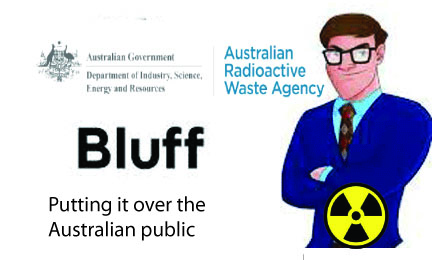
Australian Radioactive Waste Agency – a couple of English nuclear waste officials conning the Australian public?
This should send shivers up any Australian’s spine! Nuclear Fuel Cycle Watch Australia, https://www.facebook.com/groups/1021186047913052 Kazzi Jai 28 Mar 22
This has scary echoes of Maralinga…..
We have the newly appointed CEO of Australian Radioactive Waste Agency – Sam Usher – who comes from the UK after working at Dounreay and Sellafield, and is now appointed to the newly created role of the CEO of ARWA in Australia, but has returned back to the UK to come back mid year…..doing a Memorandum of Understanding….. with the CEO David Peattie of Nuclear Decommissioning Authority Cumbria!
Sellafield is in Cumbria UK by the way…..
Despite the Memorandum of Understanding NOT being released to the Australian Public….we have an English man from Cumbria, doing a deal with an English man from Cumbria regarding AUSTRALIA’S INTERESTS!
And it will ALL LAND IN THE TINY COUNTRY TOWN OF KIMBA – in a TOTALLY ALL ABOVE GROUND NUCLEAR DUMP!
NO, NO, NO! ….They say – The nuclear dump won’t take nuclear waste generated from overseas!
Really? Then what is the SUBSTITUTED NUCLEAR WASTE or what they now call RADIOACTIVELY EQUIVALENT NUCLEAR WASTE called which landed in Port Kembla a couple of weekends ago in a second TN-81 CASK!
Whatever name you want to call it – it IS Nuclear Waste generated from overseas – from nuclear power and nuclear weapons generation from overseas! It is not our nuclear waste – it is overseas generated waste!
As much as ARWA wants to appear “established” it isn’t. It still remains bluff and bravado – acting as if everything is going as it should…..but it isn’t, and may never get there.
Antarctic heat – a horrifying reminder of the future with global heating
“Shocking,” said the Met Office head; “bonkers,” according to an Antarctic researcher. The heat at both ends of the planet this week has scientists straining for adjectives. 40°C above normal in Antarctica,
30°C hotter than usual in the Arctic.
With temperatures so much above anything on record, scientists had to confirm that, no, it isn’t a typo:
this is really happening.
Last week, the Conger ice shelf, which sits off the East Antarctic coast and is around 1,200 square kilometers across, collapsed completely. Ice sheets hold back the flow of ice into the sea.
“If they collapse, then ice flow from inland accelerates and leads to sea level rise,” said Andrew Mackintosh, a scientist at Monash University in Australia.
A natural reaction to such news is to fear the ice sheets might collapse entirely. If the West Antarctic ice sheet collapsed into theocean, global sea-levels could rise several metres – much faster and
further than expected – swamping coastal cities. That is not likely to happen soon, but the polar heat is a horrifying reminder of the stakes involved.
Independent 25th March 2022
https://www.independent.co.uk/climate-change/opinion/higher-food-prices-climate-crisis-b2043988.html
Gigantic Antarctic ice shelf collapses into the sea
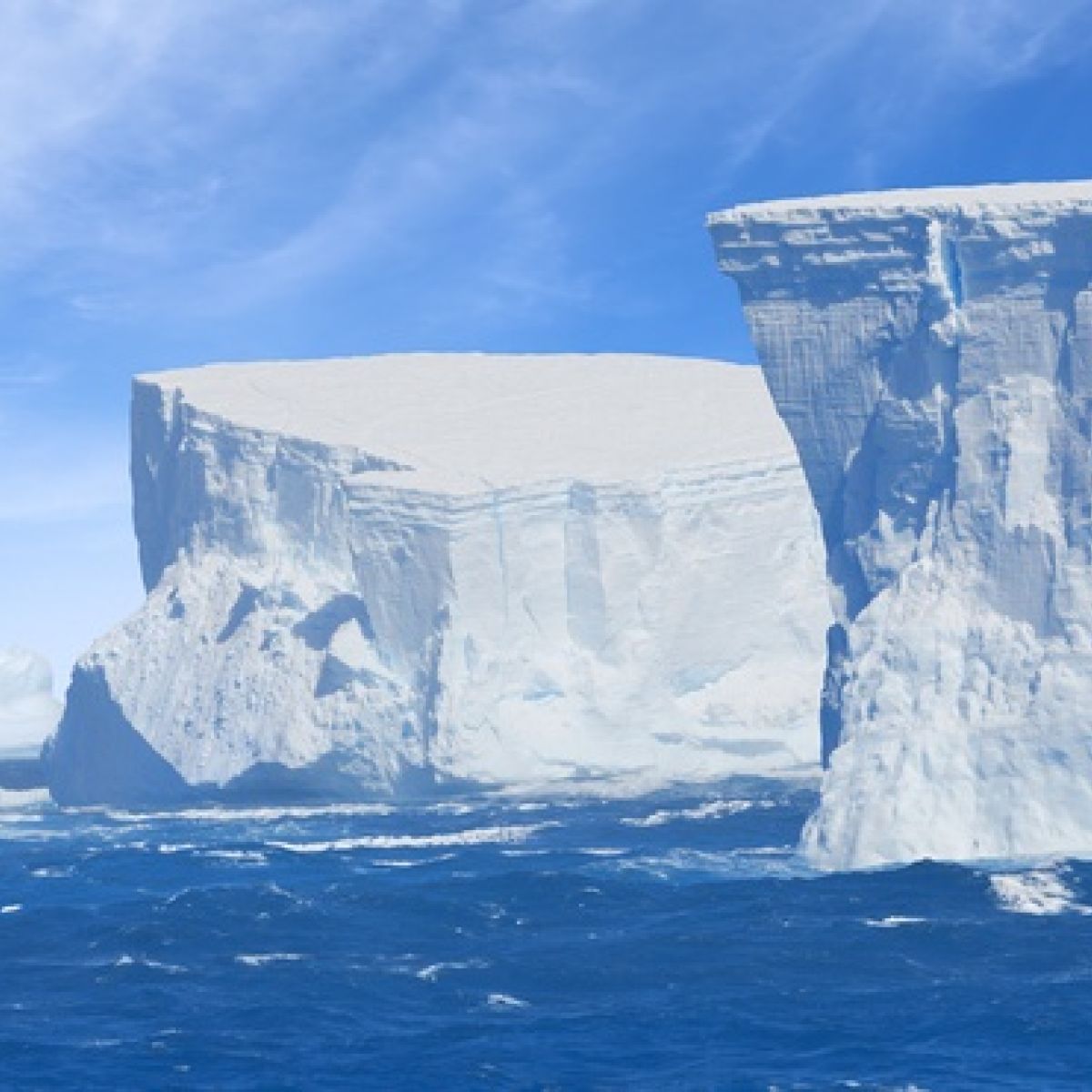
An ice shelf about the size of Rome has completely collapsed in EastnnAntarctica within days of record high temperatures, according to satellite data. The Conger ice shelf, which had an approximate surface area of 1,200 sq km, collapsed around 15 March, scientists said on Friday.
East Antarctica saw unusually high temperatures last week, with Concordia station hitting a record temperature of -11.8C on 18 March, more than 40C warmer than seasonal norms. The record temperatures were the result of an atmospheric river that trapped heat over the continent.
Guardian 25th March 2022
Scott Morrison has no plan for the economic growth that would needed to pay for all his touted ”Defence – Security” stuff

What is Australia building? If the Morrison government were serious about the threat, you’d expect it to have a plan to increase the county’s economic vigour. To generate much greater economic growth, to generate much greater revenue, so that the country can manage the national debt and invest in the transformation of Australian security. In every dimension – in cutting-edge research and development, in military capability, in diplomacy and economic assistance. As well as the next generation of submarines.
Security money must match our political posturing, SMH, Peter HartcherPolitical and international editor 25 Mar 22,
The Morrison government’s favoured election policy themes will be the showpieces of next week’s federal budget. They are twofold. The Coalition claims to be the better party to build a stronger economy. And to strengthen national security.
One especially topical example. Before the US agreed to last year’s AUKUS arrangement to help Australia acquire nuclear-powered submarines, the Biden administration took a hard look at whether Australia could afford them in the years to come. The US didn’t want to entangle itself in any future Australian budgetary disaster. So judging whether to trust Australia with the so-called crown jewels of US military advantage demanded a judgment on whether to trust Australia to be able to pay for them. Crown jewels are expensive.
Recollecting the internal debate, an administration official told me: “This will be very expensive for Australia, perhaps more expensive than the French subs it will be replacing and there will be maintenance costs for decades.”
It was likely a correct assumption. The lifetime cost of the French conventional subs was estimated to be $90 billion while a preliminary guess at the price of merely acquiring the nuclear subs ranges from $116 billion to $171 billion, including anticipated inflation, according to the Australian Strategic Policy Institute.
The question we asked,” said the US official, “was, ‘Can Australia sustain the cost, which will be a not inconsiderable percentage of national GDP?’ And Australia’s force structure may need to be changed.”
Ultimately, Washington decided that Australia could manage the cost, but it was an act of faith in Australia’s future economic strength……………………………
So what’s the Morrison government’s plan? So far, we have nothing. There is no economic reform plan. Australian productivity growth has been falling for the entire nine-year term of three Liberal prime ministers and is now stagnant.
…………….. the Morrison-Frydenberg reform effort is desultory. And we can safely assume that next Tuesday’s budget will not change this sorry picture. How so? Because the Treasurer tells us he’s commissioned a report from the Productivity Commission to guide the reform agenda for the future.
But isn’t that exactly what the government should do? Well, yes, but it already did it. Five years ago. The Productivity Commission delivered its Shifting the Dial report to the then treasurer, Scott Morrison. Who did absolutely nothing. The commission’s website forlornly notes: “There has not been a government response to this inquiry yet.”
And Frydenberg’s request last month for a new report next year puts it safely on the post-budget, post-election never-never. The request for a new report is merely a fig leaf to cover the government’s studied inaction.
The measures that the government likes to declare as “reforms” are nothing more than housekeeping. Shuffling tax brackets is helpful but hardly transformative. This week’s fanfare about a change in cash flow arrangements for small business paying PAYG taxes is helpful but doesn’t actually cut their taxes. It’s all marginal.
Morrison and his ministers like to emphasise that Australia’s security is facing its most severe test since World War II. And fair enough.
The problems press in on Australia on many sides. The chief scientist, Cathy Foley, last month warned that Australia is at risk of losing its research edge on the serious tech frontier of quantum computing and quantum communication, an area which China has named a national priority with $US25 billion committed for research.
While Australia dithers over a national quantum strategy, China already can send unhackable communications. The signal can’t be intercepted because, in the eerie world of quantum communication, there is no signal. Imagine how that will transform future war. The US is scrambling to catch up.
The inaugural head of the Australian Defence Department’s Space Force, Air Vice-Marshal Catherine Roberts, this week warned that Australia has no way to protect its essential communications satellites from Russian or Chinese attack. If China decided to “take out the NBN”, all Australia could do would be to ask the US for help, she said. “We need to be able to protect our assets in space, otherwise it will change Australians’ way of life.”
………………………………………… What is Australia building? If the Morrison government were serious about the threat, you’d expect it to have a plan to increase the county’s economic vigour. To generate much greater economic growth, to generate much greater revenue, so that the country can manage the national debt and invest in the transformation of Australian security. In every dimension – in cutting-edge research and development, in military capability, in diplomacy and economic assistance. As well as the next generation of submarines.
To put its security money where its political mouth is, in short. If the government is serious about the security threat, it must be serious about the economic response.The post-pandemic recovery should be a springboard into an economic rejuvenation. Instead, it’s going to be designed as a springboard into an election campaign. The two needn’t be mutually exclusive. But Morrison and Frydenberg are only interested in drawing from the well of national prosperity, not replenishing it…………
. What do Morrison and Frydenberg propose as Australia’s national motto? “Stagnant country, feeble army” perhaps?
Until and unless an Australian government supercharges its economic prosperity to power its security, no Australian government can be taken seriously on either. https://www.smh.com.au/politics/federal/security-money-must-match-our-political-posturing-20220324-p5a7rm.html
Jim Green busts the spin of the (two-member) party ”Greens for nuclear energy Australia”

Jim Green, Nuclear Fuel Cycle Watch 23 Mar 22, ‘Australian Greens for Nuclear Energy’ claim that the ‘real’ name of their group is ‘Greens for Nuclear Energy Australia’ but they can’t change their facebook group name ‘Australian Greens for Nuclear Energy’! Evidently the group has tried to change its name, an implicit acknowledgement that they have been falsely misrepresenting themselves as a sub-group of the Australian Greens political party. Furthermore, they are shifting their propaganda over to new sites called ‘Australians for Nuclear Energy’ … another implicit acknowledgement that they have been falsely misrepresenting themselves as a sub-group of the Australian Greens political party.
What to make of the new name ‘Greens for Nuclear Energy Australia’? As far as we know there are only two members in the group, so it should be called ‘Two Greens for Nuclear Energy Australia’. Or to use their own terminology, ‘A Relatively Small Number of Greens for Nuclear Energy Australia.’ #greenwashinghttps://nuclear.foe.org.au/fake-greens-group/
And FoE has for many years exposed the misinformation of ‘pro-nuclear environmentalist’ Ben Heard, who consults for the Minerals Council, the most aggressively anti-environment organisation in Australia, which is really saying something. https://nuclear.foe.org.au/ben-heard-secret-corporate…/ As John Quiggin notes: “In practice, support for nuclear power in Australia is support for coal. Tony Abbott understands this. It’s a pity that Ben Heard and others don’t.”
No chance of a fair trial for Julian Assange in America

Daniel Ellsberg: “It is outrageous that Biden has continued to pursue Julian Assange’s prosecution”, il Fatto Quotidiano, 23v Mar 22,
”…………………………………………….. Julian Assange was charged with Espionage Act violations. Did you expect that the United States, for the first time in its history, would charge a journalist for publishing truthful information in the public interest?
DANIEL ELLSBERG. The lawyers who were following this at the American Civil Liberties Union (ACLU), were predicting that Donald Trump would prosecute journalists. No president had done that yet, it’s a blatant violation of the First Amendment. It’s obviously unconstitutional, which of course doesn’t slow down Trump, and it is outrageous that Biden has continued to pursue that prosecution. He should have withdrawn the appeal Trump made for extradition of Julian, for prosecution. Biden could just drop it any time, he could do it the next hour. It was very arguably unconstitutional even in my case: I was the first to be indicted under those charges, for leaking, but I had been a former official. I was a source, not a journalist – they don’t regard sources as journalists. You could argue either side in my case, as to whether it was constitutional. In Julian’s [case] there is no argument on the other side: it’s obviously unconstitutional, in America, under our First Amendment. Obama had considered indicting Julian, but had backed off for that very reason, that if they went after Julian on those grounds, they would have no excuse for not going after the New York Times. And they didn’t want to take that on, in part because the New York Times is extremely useful to them, to successive administrations. It basically supports the empire, and doesn’t object to endless amounts of money for so-called defense. It’s a very useful outlet for them, even though it occasionally prints things they would rather not have out.
Why do you think the Biden administration doesn’t drop the case?
ELLSBERG. Biden, when he was vice president, at the very beginning, in 2010, called Julian Assange a high-tech terrorist, which is absurd. He is very much against leaks, and actually all presidents get very angry at leaks that they don’t want out, but they recoil from the prospect of clearly unconstitutional action. Trump didn’t, and Biden should have, but he hasn’t so far. It’s still not too late for him to correct that, but I don’t expect that he will. He shows so much animus toward Julian, that I don’t expect it. I don’t know why entirely, by the way. In general, in foreign policy, he has not shown anything progressive or favorable. In domestic policy, in many ways he has acted better than almost anyone expected, but on foreign policy, there is nothing to be said for him: it’s the same as Obama’s, which was not good, and pretty much the same as Trump’s.
According to Yahoo! News, the CIA tried to poison Julian Assange or kidnap him. If the United States can extradite him, do you expect a fair trial?
ELLSBERG. A fair trial? Oh, there’s no chance for him to have a fair trial, any more than any of the other people charged and convicted under the Espionage Act, or even me. I am the only one who, in a way, ‘got away with it’, in the sense of not being put in prison for life or for a long time by the administration, and that was because of a very unusual set of events, but they’re the same as we’ve learned about Julian. Just as they were considering kidnapping him from the Ecuadorian embassy, possibly killing him, possibly poisoning, but also even considering shoot-outs of various kinds that would get him, I [too] had thirteen men, twelve or thirteen, brought from Miami, CIA assets, one of them at least a CIA agent right at that time, but they had all worked for the CIA in the Bay of Pigs. They were brought up with orders to ‘incapacitate Daniel Ellsberg, totally’. When I asked the prosecutor: ‘What did that mean? Kill me?’, he said: ‘Well, the words were ‘incapacitate you totally’, but you know, those who work for the CIA never use the word ‘kill’. But they were killers, those people had been involved in efforts to assassinate Castro, and even Trujillo. They didn’t [kill me]. Again, I escaped that fate, because at the last moment they thought they were being set up to be caught, so I was lucky, over and over again. None of the other people indicted have been lucky, they all have been convicted essentially, in many cases by plea bargains, because they have been threatened with much greater sentences. Life [sentences] for treason or espionage, and they have accepted smaller charges, but that still kept them in prison for years, in many cases……………
So you think there is no chance at all of a fair trial for Julian Assange…
ELLSBERG. Because under the Espionage Act, the defendant has no chance to tell the Jury why they did what they did, or what they were hoping to achieve, what the benefits to the public were hoped to be and in some cases were realised, and what harm there really was, which was usually nothing, to the national security. That is aside from the fact, as you mentioned, that in his case, as in mine, there were crimes against him: conspiracies to harm him, totally, criminally, as was true in my case. But in my case, when it came out, the case was dropped…………..
in the case of Julian Assange, the revelations that the CIA tried, had plans to kill him didn’t make the judge drop the case…
ELLSBERG. She didn’t really consider them, seriously, which seems shocking. I mean, British law is different from American, in the sense: they don’t have a First Amendment………………… in Britain – their Act is much tougher against free speech and against the press there. So maybe the judge couldn’t take that seriously, being British. But the idea of illegally overhearing a defendant’s discussions with his attorneys, and with his doctors, and everything he said with every visitor – I visited him twice in the Ecuadorian embassy, and I am sure it was recorded – that, obviously, even in Britain [he smiles], or anywhere else, should lead to the dropping of the case, except in a clear-cut police society, let’s say, like East Germany used to be, for example.
……………….. If Julian Assange is extradited and prosecuted in America, I would say, with the mood now, since 9/11, with these last twenty years, he might well be convicted, although he shouldn’t be. The First Amendment would then be eliminated. What that means is: not only sources, but journalists would then have to fear being prosecuted and convicted for doing their job in questioning the government, putting out information the top government doesn’t want. This is a government that we know conducts aggressive wars, criminal aggressive wars, as in Iraq, absolutely, clear-cut aggression, and has very, very little concern for the people of those areas, as they are showing in Afghanistan, right now…………..
In short: it’s a government that needs to be exposed, and it won’t be very much if…if Julian’s case is a real turning point here, then we will essentially have a press like that of Stalin’s Russia.
Friends of the Earth Australia’s Submission to Environment Minister calls out the dishonesty in the proposal for a national nuclear waste dump at Kimba, South Australia
Provide reasons for why you believe this is/is not a controlled action.
As a significant “nuclear action” under the EPBC Act this Nuclear Radioactive Waste Management Facility (NRWMF) Referral is a “Controlled Action”.
IT REQUIRES A FULL ENVIRONMENTAL IMPACT ASSESSMENT / STATEMENT (EIA/EIS) AT THE HIGHEST LEVEL OF PUBLIC ASSESSMENT.
In a nuclear action “the whole environment” is the “Matter of National Environmental Significance” protected under the EPBC Act. An EIA/EIS is warranted to cover the scope of this protected matter.
The behaviour of the Morrison government and the Australian Radioactive Waste Agency (ARWA) in relation to the imposition of a national nuclear waste dump in SA has been disgraceful. If Minister Sussan Ley is minded to require anything less than a full EIA/EIS at the highest level of assessment, she should consider the following:
1. The new South Australian government is clearly opposed to the dump, primarily because of the crude racism of the Morrison’ government’s willingness to impose a dump on Barngarla country despite the unanimous opposition of Barngarla Traditional Owners. Expect a hardening of that opposition if anything less than a full EIA/EIS is required.
2. Media silence is far from guaranteed as evidenced by the extraordinary recent coverage in The Australian and The Advertiser ‒ both Murdoch publications ‒ regarding BHP’s mismanagement of the Olympic Dam mine and in particular its mistreatment of Traditional Owners:
https://www.theaustralian.com.au/business/mining-energy/dam-busters-aborigines-battle-bhp-over-water-rights/news-story/5771234ab2fca122009e83720ecbaf01
https://todayspaper.adelaidenow.com.au/infinity/article_popover_share.aspx?guid=23a5b7bd-e6d5-4a82-972e-347f65874b3a
And also widespread national and international media coverage of Rio Tinto’s crimes at Juukan Gorge.
3. Community opposition to the dump in South Australia is building. Expect it to build further if anything less than a full EIA/EIS is required.
Australian Radioactive Waste Agency (ARWA) is the ‘proponent’ in this NRWMF Referral, as a non-independent office of the Industry Department. The Environment Minister must not make a decision to approve and allow the nuclear dump to proceed on the inadequate limited basis of non-independent input by the proponent, or on the basis of anything less than a full EIA/EIS at the highest level of assessment.
A public impact assessment must be carried out under the Environmental Protection and Biodiversity Conservation Act ( EPBC Act). ARWA wants something less than a full EIA/EIS due to a separate ARPANSA licensing process, but the ARPANSA process covers different issues, under different legislation, and in no way could substitute for a full EIA/EIS under the EPBC Act. The ARPANS Act does not protect nor assess ‘the whole of environment’ protected matter involved here under the EPBC Act.
ARWA’s claim there is no alternative to the proposed dump is dishonest and Minister Ley is obliged to call out that dishonesty. Many alternatives are available. See for example the proposals in the paper online at:
https://nuclear.foe.org.au/wp-content/uploads/Responsible-Radioactive-Waste-Management-The-need-for-an-Inquiry-Final.pdf
In particular, the implicit claim that there is no alternative to ongoing storage of intermediate-level waste (ILW) at ANSTO is absurd and dishonest. Clearly ILW should remain at ANSTO because: a large majority of ILW is already stored there (well over 90 percent measured by radioactivity); Australia’s nuclear expertise is concentrated at ANSTO; security at ANSTO is vastly superior to that proposed at the Kimba dump site; it avoids unnecessary transportation; it avoids unnecessary double-handling given that the final disposal site for ILW will not be at Kimba (and could easily be in NSW or any state/territory).
The proposal to store ILW at Kimba is absurd and must be clearly rejected by Minister Ley.
Minister off-target with claim Labor cut billions from defence
AAP.com, William Summers March 14, 2022,
WHAT WAS CLAIMED Labor cut billions of dollars from the defence budget when it was last in government.
OUR VERDICT Misleading. Labor cut defence spending in two years while in office, but overall real-term spending went up while in government.
Defence Minister Peter Dutton has questioned the opposition’s commitment to national security by claiming Labor cut “literally billions” from the Defence budget when the party was last in office.
The claim is misleading. Labor increased overall spending on Defence when in government between 2007 and 2013, both in nominal terms and real terms. However, Labor did cut $1.9 billion from the portfolio in 2012/13, its last full year in office.
Mr Dutton made the claim during an appearance on ABC’s Radio National on March 8 in response to comments made by Labor’s shadow defence minister Brendan O’Connor about the need to consider the future role of Australia’s military during natural disasters.
Mr Dutton said: “Defence has record funding. A bit ironic to hear that from Brendan (O’Connor) when (Labor) pulled literally billions out of defence when they were last in government.” (audio mark 6 min 45sec)
When contacted by AAP FactCheck about the basis of the claim, Mr Dutton’s office pointed to budget papers from Labor’s time in office without providing further information. By that measure, Mr Dutton’s claim does not stack up.
Historical Defence portfolio budget papers provide detailed figures on projected spending as well as actual spending that took place in the previous budget year.
The Australian Strategic Policy Institute (ASPI) – a think tank majority-funded by the Department of Defence and other federal government agencies – has collated these figures going back to 1997/98 (see here). Its figures include spending on the Australian Signals Directorate, which provides cyber intelligence and other capabilities and falls under the Defence portfolio.
The previous Labor government was elected on November 24, 2007, and lost office on September 7, 2013. Therefore, to judge Labor’s spending record, AAP FactCheck looked at spending from 2007/08 – the fiscal year Labor first came into office – to 2012/13, Labor’s final full year in office.
……………………… Misleading – The claim is accurate in parts but information has also been presented incorrectly, out of context or omitted. https://www.aap.com.au/factcheck/minister-off-target-with-claim-labor-cut-billions-from-defence/
Temperatures in eastern Antarctica are 28 degrees Celsius warmer than usual
Temperatures in eastern Antarctica are 70 degrees warmer than usual https://thehill.com/policy/energy-environment/e2-wire/598842-temperatures-in-eastern-antarctica-are-70-degrees-warmer BY SARAKSHI RAI – 03/18/22
Eastern Antarctica on Friday recorded temperatures that are 70 degrees higher than normal for this time of the year, The Washington Post reported.
Temperatures in the eastern part of the continent have soared 50 to 90 degrees above normal, raising concern from the scientific community.
The Post reported that instead of temperatures being between minus 50 and minus 60 degrees Fahrenheit, they’ve been closer to zero or 10 degrees Fahrenheit, which is considered to be a massive heat wave by Antarctic standards.
BY SARAKSHI RAI – 03/18/22

Temperatures in eastern Antarctica are 70 degrees warmer than usual
BY SARAKSHI RAI – 03/18/22 06:28 PM EDT 818

© istock
Eastern Antarctica on Friday recorded temperatures that are 70 degrees higher than normal for this time of the year, The Washington Post reported.
Temperatures in the eastern part of the continent have soared 50 to 90 degrees above normal, raising concern from the scientific community.
The Post reported that instead of temperatures being between minus 50 and minus 60 degrees Fahrenheit, they’ve been closer to zero or 10 degrees Fahrenheit, which is considered to be a massive heat wave by Antarctic standards.
“In about 65 record years in Vostok, between March and October, values above -30°C were never observed,” climate journalist Stefano Di Battista told the news outlet in an email.
A researcher studying polar meteorology at the Université Grenoble Alpes Dr. Jonathan Wille also tweeted that this heatwave was “never supposed to happen.”
March marks the beginning of autumn in Antarctica, when temperatures usually tend to fall, The Post noted.
Willie tweeted that the warmer than usual conditions over Antarctica were caused by an extreme weather system.
“[T]his is not something we’ve seen before,” he said. “This moisture is the reason why the temperatures have gotten just so high,” he told The Post.
Nuclear testing in Maralinga, sixty years on

Nuclear testing in Maralinga, sixty years on, First Nations communities have borne the brunt of nuclear testing carried out by the British Government in the 1950s. Forced off their land for 30 years, they have since been tasked with monitoring operations as part of their bid for land back. http://honisoit.com/2022/03/nuclear-testing-in-maralinga-sixty-years-on/?fbclid=IwAR3I0PK-6iZhEgsBzkE4ojkVf9PjgS7h0xJ1fLubi2raItB6A by Katarina Butler. March 17, 2022 In the wake of Hiroshima, every major power on Earth scrambled to develop nuclear weapons to maintain military relevance. One such country was Britain, and in a bid to strengthen Australia’s relationship with Brits, the Menzies government offered swathes of land for nuclear testing. The areas chosen were predominantly inhabited by First Nations people.
Testing in Australia was carried out in three locations: Montebello Islands, Emu Field, and Maralinga, between 1952 and 1957. A total of twelve major atomic detonations occurred, creating large fireballs and mushroom clouds that released radioactive debris that is still detectable today. The explosions were similar in size to those seen at Hiroshima and Nagasaki.
March 17, 2022 In the wake of Hiroshima, every major power on Earth scrambled to develop nuclear weapons to maintain military relevance. One such country was Britain, and in a bid to strengthen Australia’s relationship with Brits, the Menzies government offered swathes of land for nuclear testing. The areas chosen were predominantly inhabited by First Nations people.
Testing in Australia was carried out in three locations: Montebello Islands, Emu Field, and Maralinga, between 1952 and 1957. A total of twelve major atomic detonations occurred, creating large fireballs and mushroom clouds that released radioactive debris that is still detectable today. The explosions were similar in size to those seen at Hiroshima and Nagasaki.
For the surrounding communities, the testing also posed, and poses, significant health risks.
Nuclear fallout is a mix of unfissioned material and radioactive material produced during the explosion (such as cesium-137). Radioactive chemicals do not degrade the way that other explosives byproducts do. Instead, they have ‘half-lives’ which denote the time taken for half of the radioactive material to decay and become inactive (or decay into another lower-weight radioactive compound). Large amounts of plutonium-239 were dispersed during these tests.
Initially, unfissioned plutonium-239 was thought to be relatively harmless. However, recent research from Monash University indicates otherwise. When larger plutonium particles enter the atmosphere, they can release radioactive nanoparticles which spread across the environment attached to dust or rain. As wildlife take up this plutonium from the soil, it is believed to slowly release into other flora and fauna — with dangerous implications for people living on Country. This is particularly concerning considering the 24,100 year half-life of plutonium-239.
In the lead up to the tests, British Armed Forces failed to warn First Nations people of the dangers associated with the program. Only one officer was responsible for covering the thousands of square kilometres to inform whoever he could find. The officer, Walter MacDougall, was then criticised by the Chief Scientists, who wrote that “he is apparently placing the affairs of a handful of natives above those of the British Commonwealth of Nations.”
From 1955 to 1985 the Anangu people of Maralinga Tjarutja were displaced to the nearby Lutheran Mission. While the British’s Operation Brumby attempted to dilute the high concentrations of radioactive material now embedded in the land, concerns about remaining contamination lingered.
In 1985, the McLelland Royal Commission proved that further decontamination efforts were needed. The Royal Commission also criticised the complicity of the Australian Government and its lack of safety concerns. Eight years later, the British Government made a $35 million payment to the $101 million cleanup cost. The process involved the removal and off-site decontamination of hundreds of thousands of cubic metres of soil before its reburial.
The Maralinga Technical Advisory Committee was thus formed to oversee remediation. Decontamination efforts were hindered by the reluctance of the British to accurately disclose the location and extent of testing. Fortunately, only 120 square kilometres of the contaminated 3200 remained unremediated in the year 2000, with clean up and monitoring efforts ongoing today.
Between 2001 and 2009, the South Australian and Federal governments entered negotiations with the Anangu people, ensuring that they would be able to safely return to Country. Anangu people had to prove that they could monitor for erosion, damage or contamination before being officially granted land back.
The disaster of Maralinga is disturbingly familiar. Today, just like in the 1950s, the settler-colonial state of Australia is abusing Country, leaving it victim to climate change-induced fires and floods. We see the deferral of responsibility to Traditional Owners who, yet again, are cleaning up the mess of ongoing colonial violence. In both cases, the struggle for Indigenous land rights must also be a struggle to restore what has been socially and environmentally lost to centuries of colonial damage and abuse.
Debate escalates over controversial nuclear waste storage site
the CEO of the federal nuclear regulator ARPANSA confirmed ANSTO has the ability to manage the waste onsite ‘for decades to come.
Debate escalates over controversial nuclear waste storage site https://www.eurekastreet.com.au/article/debate-escalates-over-controversial-nuclear-waste-storage-site?Michele Madigan, 15 March 2022
The long conflict between the federal government plan for a national radioactive waste facility in South Australia and the opponents of the plan has continued to escalate in the past months. On 19 November, Kimba on SA’s Eyre Peninsula was declared South Australia’s Agricultural Town of the Year. Notwithstanding this significant honour, on 29 November the federal Minister for Resources Keith Pitt finally made the formal declaration that Napandee in the Kimba district was the chosen site for the proposed federal radioactive waste dump.
With just 4.5 per cent of South Australia as arable farming, the Napandee site is on premier farming country. The Barngarla peoples are the Traditional Owners of the area.
The federal government plan is for two adjacent facilities: one for low-level radioactive waste and the other for long-lived intermediate waste (ILW) from Australian Nuclear Science and Technology Organisation (ANSTO). It was quite extraordinary that when interviewed then by SA ABC radio Minister Pitt said only that the facility would be used ‘for low level waste.’
In addition to the ILW already at ANSTO will be the latest shipment of two tonnes of reprocessed nuclear waste from the United Kingdom to Australia. The shipment consists of four 500kg canisters held inside a forged steel container called a TN-81.
Since the late 1990s, the supposed needs of nuclear medicine have always been promoted as key in successive government claims for hosting the nation’s radioactive waste in what understandably might be an otherwise unpalatable addition to any community. Throughout 2021, in the face of opposition, Resources Minister Keith Pitt occasionally emerged to make exaggerated claims of the necessity of the dump for the future of nuclear medicine in Australia.
In this debate around nuclear medicine, it is essential to present up-to-date facts. Nuclear expert Dr Jim Green addressed relevant facts in his paper, Nuclear waste and nuclear medicine in Australia, ‘…According to Medicare figures, nuclear medicine represents less than three percent of medical imaging. Nuclear medicine should not be confused with X-rays using iodine contrast, radiotherapy or chemotherapy, which are used much more commonly used…Nuclear medicine typically uses short-lived radioisotopes and the waste does not require special handling after a short period of radioactivity…’
‘It would be far safer, cheaper and completely possible to keep the long lived intermediate level waste at ANSTO until a required “world’s best practice” underground site is identified and built.’
For decades, ANSTO has presented the argument that there’s no more room for the storage of their own nuclear waste manufactured on site at their Lucas Heights facility. This has been supported by various governments as necessitating the creation of a federal waste facility elsewhere.
However in the 2020 Senate Inquiry, the CEO of the federal nuclear regulator ARPANSA confirmed ANSTO has the ability to manage the waste onsite ‘for decades to come.’
The significant 2021-22 federal budget allocation of $59.8m to ANSTO for building expansion provided a forum for nuclear experts to advise government in the resultant September Public Works Committee hearings. Senator Hughes’ request to explain why Sydney is seen as a safer option for storing its nuclear waste ‘than a far less densely populated area’ gave Dr Margaret Beavis from the Medical Association for Prevention of War, a chance to make a crucial point in the debate:
‘I think the expertise and security at ANSTO is far greater. I also think the risks from this waste pale into insignificance compared to the risks of the nuclear reactor. So, if you’re going to be keeping one large facility secure, you may as well keep it all there. The regulator has said quite clearly that there’s sufficient space at Lucas Heights to store this waste for decades to come. If you’ve got to look after the reactor-which we absolutely do have to do…’
Throughout the long campaign, Traditional Owners, Barngarla women and men, exhausted by the 25 years it took to successfully establish their native title rights over their traditional areas, have been incredulous at being excluded from the vital site vote.
On 21 December, following the Minister’s official declaration, Chair of the Barngarla Determination Aboriginal Corporation Jason Bilney made the official announcement on State Parliament House steps, of the launch of their court appeal against the federal process which had denied them having a say on their own country.
Bilney faced the media flanked by Craig Wilkins and Barry Wakelin, former Member for Grey and implacable local Kimba opponent to the dump plan. Wilkins as the CEO of CCSA, South Australia’s premier conservation body, the Conservation Council of South Australia took the opportunity to announce their latest report which clearly states, ‘the planned facility is not consistent with international best practice, and waste will be placed in temporary storage without a plan for what happens next.’
In January this year, the Kimba district was affected by floods causing widespread damage to roads and infrastructure. And in February the State Greens initiated Legislative Council debate of opposition to the federal plan concluded with the Greens and Labor opposition in a tied vote with vote forcibly resolved by the Liberal Speaker
The question remains: what are the requirements for this plan to go ahead? An historic hurdle is that the former Olsen Liberal Government passed legislation to prevent radioactive waste being brought into the state. This particular state legislation prohibited the introduction of the higher level waste ILW. Later, the Rann Labor government raised the threshold to prohibit the importation of any national radioactive waste. Thus the State Parliament must conduct a public parliamentary inquiry.
Overriding this South Australian legislation is another obstacle the federal government must deal with to achieve the planned facility. As well, the Barngarla court case is in train, unlikely to be concluded before the federal election. The strong No Rad Waste opposition continues on many levels in Kimba and with their colleagues throughout Eyre Peninsula. The SA State election (on 19 March) is imminent. The regulator ARPANSA must enter into the licensing process of the project. The federal government has named ARWA Australian Radioactive Waste Agency as the department which has carriage of the nuclear facility plan; legislation must be passed for it to become an independent body.
However more than any of the serious domestic hurdles, recent weeks have brought home quite starkly the dangers of nuclear projects including this one. The Chernobyl site was among the first Ukrainian areas to be captured by invading Russian forces. The Russian seizure of Europe’s largest nuclear plant Zaporizhzhia is another cause for alarm.
The present government plan for Australia’s long-lived intermediate level waste means ongoing transportation for the 1700 kms from its present storage place in Lucas Heights, to be stored above ground for the next one hundred years. There is no dispute that this ILW is toxic and dangerous for an unimaginable 10,000 years. At least two nuclear engineers including Alan Parkinson have pointed out the dangers of this plan open as it is to terrorist attacks in this uncertain world.
It would be far safer, cheaper and completely possible to keep the long lived intermediate level waste at ANSTO until a required ‘world’s best practice’ underground site is identified and built. Whichever party is successful in the coming federal elections, it is to be hoped good sense prevails in this crucial national issue.
For further information, visit Nuclear Free Campaign.
Australia’s Radiation Protection Authority approves Lucas Heights as site for increased storage of nuclear waste returned from overseas
Australian Radiation Protection and Nuclear Safety Agency, 16 Mar 22,
Today ARPANSA’s CEO issued a licence to the Australian Nuclear Science and Technology Organisation (ANSTO) to prepare a site for the Intermediate Level Waste Capacity Increase facility at Lucas Heights.
The decision is informed by considerations around the #safety and #security of the facility design, advice from #nuclear safety committees, public consultation and international best practices.
ARPANSA is the independent regulator of Commonwealth entities that use or produce radiation and ensure that community safety and wellbeing remain at the core of our work.
Read more on our website: https://www.arpansa.gov.au/…/arpansa-approves-siting…
Report to U.S. Congress on AUKUS agreement, allows Australia access to Highly Enriched Uranium and Plutonium
Report to Congress on AUKUS Nuclear Cooperation, News USNI, March 16, 2022 On December 1, 2021, President Joseph Biden submitted to Congress an “Agreement among Australia, the United Kingdom, and the United States for the Exchange of Naval Nuclear Propulsion Information.” This In Focus explains the agreement’s substance, as well as provisions of the Atomic Energy Act (AEA) of 1954, as amended (P.L. 83-703; 42 U.S.C. §§2153 et seq.), concerning the content and congressional review of such agreements.
An accompanying message to Congress explains that the agreement would permit the three governments to “communicate and exchange Naval Nuclear Propulsion Information and would provide authorization to share certain Restricted Data as may be needed during trilateral discussions” concerning a project to develop Australian nuclear-powered submarines. This project is part of an “enhanced trilateral security partnership” named AUKUS, which the three governments announced on September 15, 2021. The United States has a similar nuclear naval propulsion arrangement only with the United Kingdom pursuant to the bilateral 1958 Mutual Defense Agreement.
The partnership’s first initiative, according to a September 15 Joint Statement, is an 18-month study “to seek an optimal pathway to deliver” this submarine capability to Australia. This study is to include “building on” the U.S. and UK nuclear-powered submarine programs “to bring an Australian capability into service at the earliest achievable date.” The study is “in the early stages,” according to a November 2021 non-paper from Australia, the United Kingdom, and the United States, which adds that “[m]any of the program specifics have yet to be determined.”
Agreement Details
The agreement, which the governments signed on November 22, 2021, permits each party to exchange “naval nuclear propulsion information as is determined to be necessary to research, develop, design, manufacture, operate, regulate, and dispose of military reactors.”
As noted, this information includes restricted data; the AEA defines such data to include “all data concerning … the use of special nuclear material in the production of energy.” The AEA and 10 C.F.R. Part 810.3 define special nuclear material as plutonium, uranium-233, or enriched uranium.

The agreement, which entered into force on February 8, 2022, is to remain in force until December 31, 2023, when it will “automatically extend for four additional periods of six months each.” Any party may terminate its participation in the agreement with six months written notice. Should any party abrogate or materially violate the agreement, the other parties may “require the return or destruction” of any transferred data.
The agreement includes provisions to protect transferred data. For example, no party may communicate any information governed by the agreement to any “unauthorized persons or beyond” the party’s “jurisdiction or control.” In addition, a recipient party communicating such information to nationals of a third AUKUS government must obtain permission from the originating party. The agreement includes an appendix detailing “security arrangements” to protect transferred information. Download the document here. https://news.usni.org/2022/03/16/report-to-congress-on-aukus-nuclear-cooperation
South Australian Unions stand with Traditional Owners in rejecting nuclear waste dump
South Australian unions have unanimously supported a motion standing with Traditional Owners to reject a proposed nuclear waste dump in Kimba on the Eyre peninsula and have called on the Marshall Government to do the same.
SA Unions Secretary Dale Beasley said the that South Australian labour movement stood shoulder to shoulder with the Barngarla Traditional Owners in their opposition to the Federal Government proposal to build a nuclear waste dump on the Eyre Peninsula.
“South Australian unions are completely united in their support of the Barngarla Traditional Owners and their opposition to the proposed nuclear waste site at Kimba.
“It is simply extraordinary that the Federal Government would seek to impose a nuclear waste dump on South Australia with inadequate consultation, long term planning and against the wishes of Traditional Owners.
“What’s even more astonishing is Steven Marshall’s abject failure to stand up to Canberra, to stand up for the best interests of South Australians and publicly oppose this nuclear waste dump in South Australia.
When asked about the proposal to build a nuclear waste dump in South Australia Mr. Marshall was quoted in 2020 as saying “finally, a decision has been made and we now get on with it.”
“We have in South Australia a shameful legacy of imposing the impact of nuclear technology on aboriginal communities. Decades after the end of British nuclear tests around Maralinga, radioactive particles containing plutonium and uranium still contaminate the landscape.[i] Given that history, we would have expected Steven Marshall to stand up for the Barngarla Traditional Owners.
This is not the first time Steven Marshall has failed South Australian Aboriginal people. In 2018 he remarkably closed off treaty negotiations with Aboriginal groups, saying he had “other priorities”, having described the process as a “cruel hoax.”
“Aside from being fiercely opposed by the Barngarla Traditional Owners, there are very real concerns around the safety and security of the nuclear waste and its transport 1,700km across Australia to be stored at Kimba, SA.
“The potential and associated risks attached to the transportation and storage of nuclear waste are well documented, yet there has been an absence of consultation with the communities through which this waste will transit. This is an issue for all South Australians.
“The plan to store the nuclear waste, which must be isolated from the environment for a minimum of 10,000 years, will see serious consequences for South Australians for many generations to come.
“South Australian unions join with the Traditional Owners and the South Australian Community in complete opposition to the dangerous proposal and call on the Marshall Government act in the best interests of our state and publicly state its opposition.”
1 This month
7 April – WEBINAR – Australia and the Doomsday Clock – Preventing nuclear war through NoFirstUse and other policies
Online | Tuesday April 7, 4:00-5:30pm, Australian Eastern Time / 8:00-9:30am Central Europe Time
– Access the registration link
15 April – Zoom –Nuclear Power is Not the Solution
Apr 15, 2026 01:00 AM in Canberra, Melbourne, Sydney

Join the International Physicians for the Prevention of Nuclear War (IPPNW) on Tuesday, April 14th for a timely webinar exploring the risks associated with nuclear power and challenging the myth that it offers a simple, safe, carbon-free solution to the climate crisis

21 April Webinar: No Nuclear Weapons in Australia
Start: 2026-04-21 18:00:00 UTC Canberra, Melbourne, Sydney (GMT+10:00)
End: 2026-04-21 19:30:00 UTC Canberra, Melbourne, Sydney (GMT+10:00)
Event Type: Virtual
A virtual link will be communicated before the event.
Host Contact Info: australia@icanw.org

of the week – Australians for War Powers Reform (AWPR)
To see nuclear-related stories in greater depth and intensity
 Antinuclear