51% renewable energy in Australia by 2050 – coal power on the way out
Australia moves from coal to renewables 51pct by 2050 http://www.coalguru.com/australia/australia_moves_from_coal_to_renewables_51pct_by_2050/10298 Australia, one of the most coal dependent energy economies in the world, is on track to produce 51% of all its energy by the year 2050. This would make the Land Down Under one of the greenest economies of all when it comes to energy production. Continue reading
Cairns Evolve Energy has evolved a renewable energy + jobs plan for Far North Queensland
 The Tropical North Queensland Renewable Energy Industry Development Plan developed strategies to see 2500 people employed in the industry by 2020.
 Cairns energy costs could be lowered the natural way, Cairns, Caitlin Guilfoyle , June 8, 2013 SUGAR cane, wind and sunshine – it sounds more like a weekend away but experts reckons these natural resources could pull the Far North out of an electricity crisis…… experts say theFar North should take advantage of the region’s natural surrounds to harness renewable energy and ultimately cut back on spending.
Cairns’ Evolve Energy prepared the Tropical North Queensland Renewable Energy Industry Development Plan for the State Government last year, which detailed strategies to ramp up renewable energy use in the region. Continue reading
Fear and loathing about prices hits the Western Australian uranium market
 Uranium price hits four-year low Nick Sas, The West Australian June 7, 2013, A new wave of nervousness swept through WA’s already under-pressure uranium explorers yesterday after the uranium spot price hit a four-year low.
The price fell below the $40 a pound threshold for the first time since April 2009, closing at $39.87 a pound.Despite industry assurances of a price rebound over the past 12 months, uranium has failed to get any traction.
The price has not pushed through the $45/lb mark since December 14.
The lethargic price places further pressure on local uranium explorers such as Toro Energy, which is looking for a strategic partner to help fund its $269 million Wiluna project.
If funding is found, Wiluna will become WA’s first uranium mine. A hearty increase in the spot price is needed to force WA’s fledgling uranium sector into first gear, with Canadian giant Cameco indicating a price of more than $70/lb is needed before it can give the green light to its massive Yeelirrie or Kintyre deposits……http://au.news.yahoo.com/thewest/business/a/-/wa/17512668/uranium-price-hits-four-year-low/
VIDEO: Senator Ludlam asks Minister Carr about Wikileaks and Bradley Manning
Assange no concern of ours, says Carr, The Age, 7 June 13
- The Australian government has washed its hands of Julian Assange as prosecutors at the trial of US soldier Bradley Manning have openly targeted the WikiLeaks publisher as a conspirator engaged in espionage.
Foreign Minister Bob Carr has told a Senate budget estimates committee that the government would make no more representations to the US on Assange’s circumstances because his case “doesn’t affect Australian interests”.
Senator Carr’s declaration that he would not “over-service” Assange’s consular needs came after US military prosecutors left no doubt that they regard the WikiLeaks chief not as a journalist dealing with sources but as a conspirator in the theft of classified information. Continue reading
Large solar system installed at Geraldton, Western Australia
Western Australian Company Installs 100kW Solar Power System http://www.energymatters.com.au/index.php?main_page=news_article&article_id=3780, 7 June 13, Diab Engineering in Geraldton, Western Australia, has gone solar in a big way.
Designed, installed and commissioned by Perth and Brisbane based Infinite Energy, the 99.8kW rooftop system consists of 416 solar panels; plus 6 SMA Sunny Tripower inverters supplied by Energy Matters’ sister company,Apollo Energy.
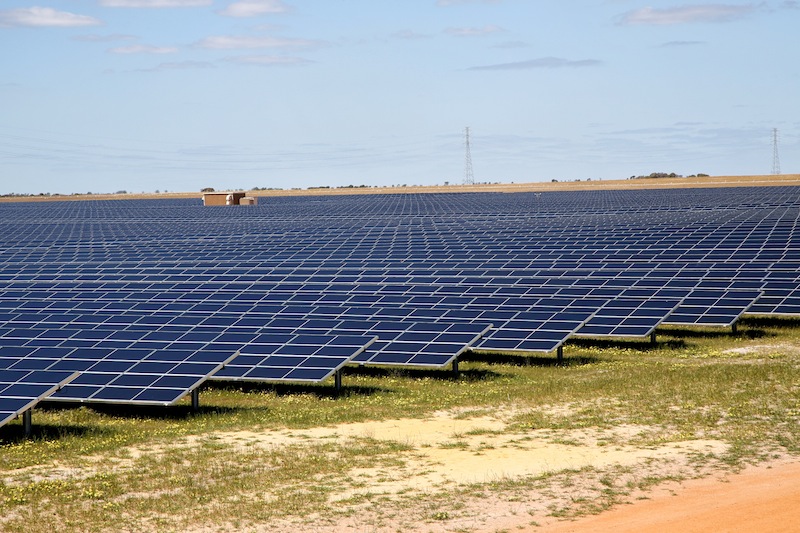
The array is mounted using an Australian designed and manufactured SunLockmounting system; also provided via Apollo Energy.
Diab Engineering’s installation incorporates a special system that monitors electricity consumption on the site and solar production in real time. Continue reading
Greens push to cease Future Fund’s investments in fossil fuel industries
 Greens push to end Future Fund fossil fuel investment http://www.smh.com.au/opinion/political-news/greens-push-to-end-future-fund-fossil-fuel-investment-20130606-2nr45.html#ixzz2VVM2J100 Peter Hannam Carbon economy editor, 6 June 13,
The Greens will on Thursday launch a campaign to get the $85 billion Future Fund to sell its holdings in fossil-fuel industries, starting with coal. The fund’s energy holdings now total about $3 billion, and are exposed to a ”carbon bubble” as nations shift towards low-carbon fuels, Greens leader Christine Milne said. The International Energy Agency last year estimated that two-thirds of proven fossil-fuel reserves would have to remain in the ground if the world is to avoid global warming of 2 degrees above pre-industrial levels.
”It’s good for the planet, good for people and good for long-term financial management to get out of coal,” Senator Milne said.The Greens are hoping to match the success of the anti-tobacco push, which led to the Future Fund deciding in February to dump its $222 million holdings of tobacco-related investments.
The Future Fund ”takes a very serious approach to environmental, social and corporate governance issues”, spokesman Will Hetherton said. However, exiting coal or other fossil fuels ”is certainly not on the current agenda”.
Senator Milne is hoping the campaign will spread to other superannuation funds, mimicking the push among US universities and other institutions to divest fossil-fuel investments. Tom Swann, a spokesman for Fossil Free ANU, said his university’s council recently discussed plans to set up responsible investment guidelines and will seek public input.
ANU has more than $80 million invested in coal, coal seam gas and other fossil investments out of about $260 million in equities, he said.
“The divestment campaign has really taken off in the USA, with campuses and city governments as large as Seattle and San Francisco dropping their investments in fossil fuels because people understand that if it’s wrong to wreck the climate, it’s wrong to profit from the wreckage,” said US environmentalist, Bill McKibben, ahead of a speech at ANU on Wednesday. ”Divestment had a real impact in the fight against apartheid, something Nelson Mandela and Desmond Tutu recognise, and it’s an important part of tackling climate change
Australia in some ways a leader in renewable energy – but, after September – a renewable energy backwater?
 Clean Energy Australia Report http://www.energymatters.com.au/index.php?main_page=news_article&article_id=3778 6 June 13 Australia is on track to reach its 2020 Renewable Energy Target; with renewables supplying a record 13.14 per cent of Australia’s electricity in 2012.
According to the Clean Energy Council’s 2012 Clean Energy Australia Report, enough electricity from renewable sources was generated last year to supply the needs of more than 4 million Australian homes.
Just in terms of wind power alone, the nation’s 62 wind farms supplied electricity equivalent to the consumption of more than one million homes. Continue reading
Top environment award for Top End Aboriginal leader
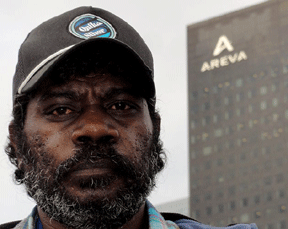 Australian Conservation Foundation, Dave Sweeney, 5 June 13, Australia’s largest National Park got bigger this year with the inclusion of the unique Koongarra region into the World Heritage listed Kakadu. This achievement – and the man who made it possible – ( Jeffrey Lee, at left, )has been acknowledged in the Australian Conservation Foundation 2013 Rawlinson Award
The Koongarra region is part of the estate of the Djok clan and has extremely high cultural and conservation values and properties. It includes the famous Nourlangie Rock (Burrunggui/Anbangbang) and is important in both the Rainbow Serpent and Lightning storylines.
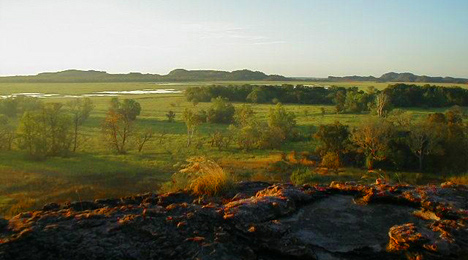
The senior Traditional Owner Jeffrey Lee has spoken powerfully against uranium mining at Koongarra and consistently rejected pressure from a series of multi-national mining companies, most recently the French nuclear giant Areva, to mine a major uranium deposit on his country.
Uranium mining has long been a source of conflict in Kakadu with Traditional Owners leading campaigns against mining proposals at both Koongarra and Jabiluka. The industry continues to generate headlines and heartache in Kakadu with mining company Energy Resources of Australia currently seeking federal approval to develop a new underground uranium mine at its existing Ranger site.
At the 2010 federal election all major parties agreed to support Jeffrey’s call for Koongarra to be incorporated into Kakadu and in March 2013 Jeffrey Lee finally secured the long term protection of his country stating that it’s inclusion in Kakadu “will ensure that the traditional laws, customs, sites, bush tucker, trees, plants and water stay the same as when they were passed on to me by my father and grandfather”.
For years Jeffrey has patiently and persistently taken his message opposition to uranium mining and his efforts to permanently protect this area from the corridors of Canberra to UNESCO headquarters in Paris.
His tenacity and vision is a powerful reminder of the importance of country and culture and has provided a lasting legacy for all people and time. ACF is proud to acknowledge Jeffrey’s efforts with a special Rawlinson Award for his outstanding efforts to protect one of Australia’s most special places from the threat of one of Australia’s most contested industrial activities.
Victorian government decides that climate change is a low priority
 THE Victorian Government has abandoned key agricultural climate change programs. Weekly Times, 5 June 13 It comes as environment groups this week claimed rural communities were being left to “fend for themselves”. Opposition water spokesman John Lenders criticised the move. ”If Peter Walsh thinks that providing farmers with vital drought support packages is purely a climate-related matter he is living in a fantasy land.
“Labor’s $205 million Future Farming Strategy focusing around research and development initiatives was cut back to $60 million by the Napthine Government in 2012 and attempted to dress it up as a boost……Victorian Budget papers reveal a significant cut in climate change work and a continued withdrawal from the Brumby Government’s $205m Future Farms Strategy.
The Budget papers say the lower 2013-14 target “reflects the refocusing of Department of Environment and Primary Industries into higher priorities”……
“Since being elected, they have abolished nearly all state climate programs,” Mr Wakeham said.
“Deciding not to talk about or develop policy on climate change unfortunately won’t make it go away as we’re set to learn the hard way.”
The Climate Commission recently said Victoria had entered a critical decade in the race to adapt to the stresses of climate change.
Professor Tim Flannery said Victoria was very vulnerable to large swings in climate.
Meanwhile, 13 DEPI bio scientists have been made redundant. The cuts were flagged in March but the Community and Public Sector Union said staff were told last week…..http://www.weeklytimesnow.com.au/article/2013/06/05/572284_politics-news.html
Liberal State governments attack renewable energy – prelude to Abbott destruction of renewable energy
The second story was not just one, but a barrage of media placements from Queensland Premier Campbell Newman and others seeking to lay the blame for the state’s stunning 22.5 per cent average rise in electricity costs in 2013/14 on green energy schemes, glossing over the fact that the overwhelming majority of the bill increases come because the cost of the billions of dollars of network upgrades is being borne by the consumer.
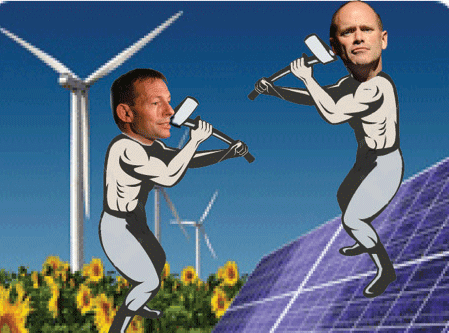 Abbott strangles $20bn green investment – to save 50c/week REneweconomy, By Giles Parkinson 3 June 2013 Two news stories over the weekend give a chilling insight into what might await the Australian renewable energy industry under a Federal Coalition government.
The first story was mostly symbolic in nature. The Newcastle Herald reported that the only wind turbine in Newcastle, the 600kW Kooragang turbine that was constructed in 1997 to “promote the emerging green energy market” is to be removed by Ausgrid – to make way for a new coal loader.
It is just a single turbine but, amazingly, apart from a small demonstration turbine at the CSIRO energy centre nearby, it is the only one in NSW north of Sydney. In fact, going north, you need to travel 2,000kms to the Atherton Tablelands before coming across another commercial wind turbine, 20 small towers amounting to 12MW at Windy Hill in the Atherton Tablelands. There are two other small turbines on Thursday Island, at the tip of the country and that is it – just 12.45MW of wind energy north of Sydney, out of a total of 2,500MW across the country.
How many other turbines are built in NSW will likely be influenced by key decisions being made by NSW Cabinet as early as today about rules governing wind farm developments and the state’s renewable energy plans. That, of course, and the fate of the large-scale renewable energy target – a federal decision. Continue reading
Queensland’s electricity consumers copping huge costs paid to State Government
 Qld’s financial bonanza from networks – paid for by consumers REneweconomy, By Giles Parkinson 4 June 2013As Queensland Premier Campbell Newman and his senior ministers continue their campaign to vilify rooftop solar, a new report has thrown further light on the real reason behind the massive increases in electricity bills in recent years – the huge increase in money pocketed from the network providers by the state government.
A report prepared for the Queensland CaneGrowers association by Melbourne-based energy consultancy CME says receipts pocketed by the state government from its network operators has more than doubled each year – from $47 million in 2007/8 to $970 million in 2011/12 – and this has been paid for by the consumers. Continue reading
Movement for Community Energy in Australia
Community Energy Push In Australia http://cleantechnica.com/2013/06/02/community-energy-push-in-australia/#bgWwJ0mK4m8lm50T.99 June 2, 2013 Giles Parkinson Community energy and pro renewable NGOs are calling for the Federal government to establish a $50 million fund that would seek to leverage up to half a billion dollar of investment in community-owned renewable energy projects.
The call for a Community Energy Grant Fund is an attempt to offer a catalyst for growing community interest in renewable energy projects, and to fill in a gap in the country’s portfolio of renewable energy projects of between 10kW and 50MW According to a proposal led by the Community Power Agency, Yes2Renewables and other NGOs and community energy groups, the funding could cover early stage development costs for around 75 projects and bring them to the stage of being investment ready and able to release share offerings to the community.
This would include feasibility studies, resource assessment (such as wind monitoring), community engagement, planning studies, business case development, and legal advice.
The proposal seeks to tap into growing interest in the community renewables space, as outlined in RenewEconomy last week. On Thursday, Continue reading
The radioactive poisoning of Maralinga
 Historic records of Radiation Monitoring at Australian Nuclear Test Sites, Paul Langley’s Nuclear History Blog 3 June 13“……..RETURN TO MARALINGA, Australia Bomb Test Site On 24 May 1984 a special VIP flight to the RAAF left Adelaide for Maralinga. On board were the Minister of Resources and Energy, Senator Walsh, and the south Australian Premier, John Bannon, accompanied by scientists of the Australian Radiation Laboratory. The tour of the bomb sites took no more than four hours and the politicians learned little more than they already knew from their briefings in Canberra and Adelaide. But the importance of the trip was symbolic. The representatives of the Federal and South Australian Government were there jointly to express their regret that the atomic test series had ever been allowed to take place in Australia and to pledge their support for all investigations into the possible harm done to servicemen, Aborigines and the environment…….
$billions of investment money on hold due to Federal Opposition’s anti renewables policies
 Political Uncertainty Puts Billions in Renewables on Hold Design Build, by By Marc Howe 3 June 13 Uncertainty surrounding environmental policy in the wake of a likely Coalition victory this September has obscured the outlook for renewable energy and led to billions in potential investment being placed on hold.
The Federal Election, slated for September 14, appears increasingly likely to usher in a Coalition government, whose policies could be a setback for Australia’s decade-long shift toward clean renewable energy.
A key issue will be the fate of Labor’s controversial carbon trading scheme should the Coalition be elected. The policy provides a pivotal boost to renewables by striving to reduce greenhouse gas emissions, yet the coalition has pledged “in blood” that it will cancel the carbon tax.
The Coalition has also said that it will cut power costs, pointing to the abundance of cheap coal in Australia, and reconsider renewable energy policy.The uncertainty surrounding the fate of the carbon tax and the policy environment for renewable energy has impeded many projects in a $20 billion pipeline of investment.
“We don’t see any clear long-term policy direction on the climate or energy sector from the opposition,” says Nathan Fabian, of Australia’s Investor Group on Climate Change.
“Until that is clear, capital is sitting on the sidelines.” The Investor Group on Climate Change represents a group of institutional investors located in Australasia, including pensions funds and major international banks, with around $900 billion in funds under its management……
The development of Australia’s renewable energy sector could also be hampered by the efforts of established power suppliers such as Origin Energy and EnergyAustralia, who are currently pushing for the Renewable Energy Target (RET) and carbon tax to be scaled back or scrapped completely. Earlier this year, Origin’s Grant King launched a attack against the the government’s green energy policy, saying the RET would further increase power costs to the detriment of end consumers.
Members of the renewable energy sector such as Infigen managing director Miles George say the opposition of leading energy companies to RET is motivated by self-interest and, in Origin’s case, the desire to protect billions of dollars in gas investments. http://designbuildsource.com.au/political-uncertainty-puts-billions-in-renewables
Queensland Competition Authority (QCA) clears solar households as cause of higher electrcity charges
Queensland Solar Households Vindicated http://www.energymatters.com.au/index.php?main_page=news_article&article_id=3772 3 June 13 Plans by Queensland Premier Campbell Newman and Energy Minister Mark McArdle to whack solar households with higher electricity charges appear to have been scuttled.
On Friday, the Queensland Competition Authority (QCA) released its Final Determination on regulated retail electricity prices for 2013-14. A typical Queensland customer’s annual bill will increase from $1,184 to $1,451. However, it has not recommended an extra charge for solar users.
Prior to the QCA’s final determination, Premier Newman was pushing a proposal to charge all solar homes an extra $200 a year; even though the Government had promised in December last year that there would be no fixed charge of any sort on people using solar.
Queensland Energy Minister Mark McArdle also launched an attack on solar households, placing the blame for power price increases primarily on green schemes.
This has not been echoed by the QCA, which says the increases are being primarily driven by increases in network charges. The QCA also points out the freezing of electricity rates by the Newman Government in 2011/12 has resulted in a bigger jump now.
The Clean Energy Council has applauded the QCA for moving away from the proposal to levy an extra charge on solar power users, an issue the CEC had heavily lobbied on.
“The QCA’s rigorous and comprehensive analysis of power price rises in Queensland has made it clear that renewable energy was a much smaller contributor to electricity bills than most other factors,” said Clean Energy Council Chief Executive David Green.
Mr. Green pointed out when anyone installs an air-conditioner, it costs all electricity users an estimated $7000 to pay for network upgrades. He also addressed the myth that solar users were “rich”; stating Queensland’s solar hotspots were Bundaberg, Hervey Bay, Ipswich, Toowoomba and Beenleigh. Even though the QCA has made it clear that network charges are the major culprit in upcoming electricity price rises, the Queensland Government’s demonising of solar has continued since the Final Determination was released.
Following the Queensland Competition Authority’s announcement; Solar Citizens, an advocacy group representing current and future solar users, has written to Premier Newman and Mark McArdle asking them to address a number of critical questions about what it says are Mr McArdle’s misleading statements on the impact of solar on energy costs in Queensland.
Spurred on by threats to solar households such as those recently issued by the Queensland Government, Solar Citizens is in a recruitment drive to bolster its numbers to ensure Australian solar users are well represented under a united front – and the group’s numbers are rapidly growing.
There are now over 300,000 solar users in Queensland, who have invested over $2.2 billion dollars of their own money into reducing their electricity costs and carbon emissions impact. The upcoming electricity rate increases will see that number grow.
According to national solar provider Energy Matters, a good quality 4kW solar power system installed in Brisbane can return a financial benefit of up to $1,960 a year. Energy Matters now also offers Queensland households a zero deposit payment plan option.
1 This month
17 October, Free Public Talk on Nuclear Issues in South Australia
David Noonan will speak on public interest concerns over the new Roxby Downs Indenture Act 2026 on BHP copper-uranium mining and ore processing in SA, and on how AUKUS may face SA with a High-Level nuclear waste agenda.
Dr Jim Green will discuss international developments in the field of nuclear power including ‘small modular reactors’ and Generation 4 ‘advanced’ nuclear reactor concepts.


Help Aunty Sue Protect Her Land and Sacred Sites From Destructive Rocket Testing.
.

Australians deserve the truth
about
AUKUS – https://aukuspublicinquiry.com/

PETITION – To: Prime Minister Anthony Albanese and the Australian Labor Government

of the week – Australians for War Powers Reform (AWPR)
To see nuclear-related stories in greater depth and intensity

