Flooding the planned nuclear waste dump area
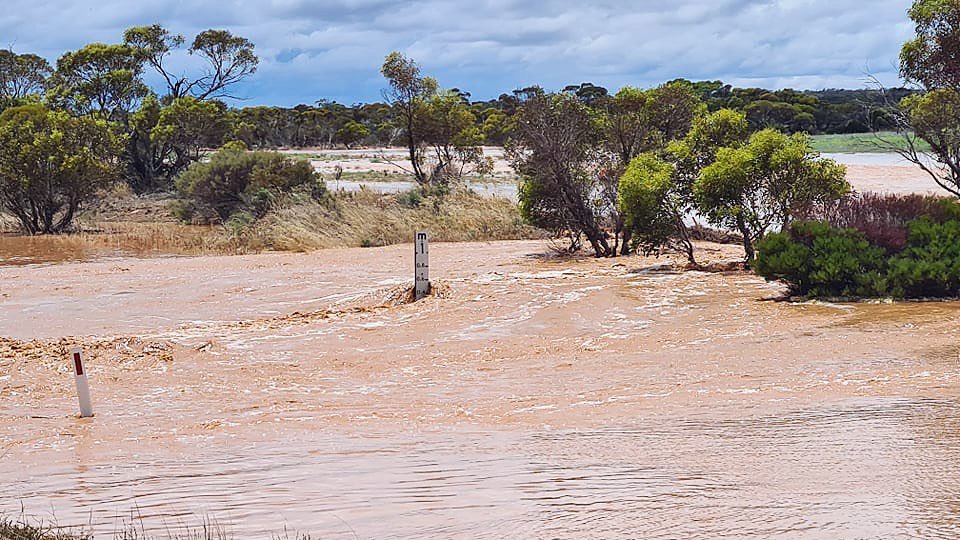
Flooding the Dump Michele Madigan, Sunday Mail, 6 Feb 22,
Well surely that has settled the matter- the Kimba region is a totally unsuitable site for where the federal government is proposing to dumping the nation’s highest-level radioactive waste.
Just out of Kimba, at Buckleboo where the proposed Napandee site actually is, neighbours recorded 185 mm in just the first recent downpour. Some areas received up to 300mm in two days. The Kimba mayor reported ‘massive damage to our roads and general infrastructure.’
The federal government is planning to transport this dangerous radioactive waste half way across the country to simply store it above ground for at least 100 years. The storage sheds will be designed with water outlets to leak.
Despite government assurances, 90% of the waste, measured by radioactivity, is intermediate level waste – toxic for an unimaginable 10,000 years.
In these times of galloping climate change it is certainly optimistic to be talking about ‘once in 100 years’ downpours. How much safer to keep it where it is manufactured in ANSTO’s solid buildings in Lucas Heights outer Sydney, with its on-site nuclear experts and highest-level security.(added ? )
UK court should slap down the US Justice Department in the Assange case

UK court should slap down the US Justice Department in the Assange case https://thehill.com/opinion/judiciary/591776-uk-court-should-slap-down-the-us-justice-department-in-the-assange-case?fbclid=IwAR1FwC11pSY_hGdiCvIdBqIj6mttfTheEDtcNR3EUpQG38xWS3-ZRC6TLhw
BY JAMES C. GOODALE, 6 Feb 22, As the lead attorney for the New York Times in the “Pentagon Papers” case in 1971, I’ve been doing a slow burn ever since over the government’s behavior in that instance: lies, disregard of court rules, arrogance, destruction of documents. All of this was brought to mind earlier this week when a British court hinted in the Julian Assange case that the U.S. government has acted in the same way once again.
It asked Britain’s supreme court to determine the appropriateness of a late filing by the government that completely undercut a ruling that Assange could NOT be extradited to the U.S. This followed British trial court Judge Vanessa Baraitser, who was hearing Assange’s extradition case, ruling that Assange might commit suicide if held in a U.S. prison in solitary confinement under what is called Special Administrative Measures (SAMs) and, so, he could not be extradited.
As soon as she announced her decision, the U.S. government filed assurances that Assange would not be held in that kind of detention, although it reserved the right to revoke the assurance if circumstances changed.
The judge was unmoved by this assurance, but she was reversed on appeal. The U.K.’s supreme court has now asked to consider the timeliness of this filing.
I do not believe the U.S. government’s assurances are worth the paper on which they have been written. Its behavior in this case has been rampant. Most outrageously, the CIA discussed a plot to kidnap Assange from the Ecuadorian Embassy in London, where he was holed up, and to kill him. The CIA also tapped into conversations in the Ecuadorian Embassy, including those with Assange’s lawyers.
There is not much question whether all of this is true. There was testimony about it in open court, and Mike Pompeo, the CIA director at the time and later secretary of State during the Trump administration, has conceded that there is “some truth” in the foregoing.
I do not pretend to be particularly familiar with the extradition laws of the U.K. But common sense tells me that you deliver highly important documents about a case — such as government assurances — before the case begins, not after it has been decided. U.K. counsel representing the U.S. disagrees, saying he can deliver documents when he wants and if he loses the appeal, he will start the extradition proceedings all over again.
This is the very same arrogance that was on display in the Pentagon Papers case, in which then-U.S. Solicitor General Erwin Griswold said the usual rules of evidence did not apply. His view of the law manifested itself in his introduction of new evidence in the case anytime the government was so moved. The claims were always extravagant: Publication of the new evidence would be a disaster for the country’s national security, etc., etc. They never were. Indeed, most of them turned out to be previously published.
The other principal fallacious claim made by the government back then was that the Times had revealed that the United States had broken the Vietnamese code. This also proved to be so much hogwash.
The government also destroyed — or, in its words, “lost” — New York Times briefs in the case. It prevailed upon me to give them these briefs to protect national security and to be returned if the government indicted the Times. A later research request evoked the response “they were lost.”
We do not know if the U.K.’s supreme court will take the Assange case to determine the issue of the timing of the U.S. government’s filing. Let’s hope that it does and then decides the U.S. government should not get away with the latest example of its less than appropriate behavior in a national security case.
James C. Goodale is the former general counsel and vice chairman of the New York Times and the author of “Fighting for the Press: The Inside Story of the Pentagon Papers and Other Battles.”
Nuclear submarine plan does not mean more jobs for Australians. In fact it’s already caused 1,100 job losses
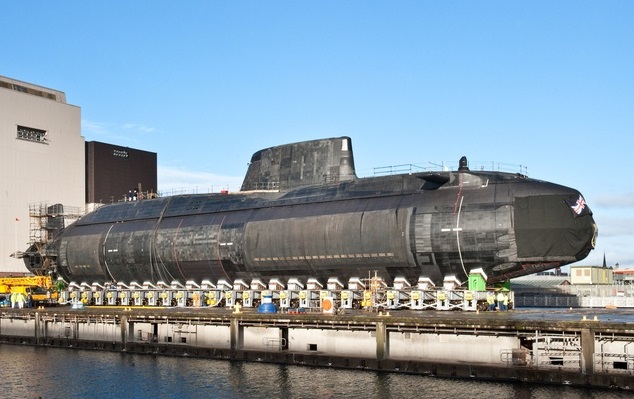
Now, we find out that the new $100 billion AUKUS subs deal is unlikely to have any local content mandate and may deliver absolutely nothing to the South Australian economy and workers.
more than 1,100 South Australian workers had lost their jobs because of the government’s decision to scrap the French agreement.
Doubts over local industry involvement in nuclear subs program, Joseph Brookes, Innovation Aus, Senior Reporter, 4 February 2022 Unions have called on the Prime Minister to commit to a minimum level of local industry involvement in the upcoming nuclear submarine program after a senior Defence official reportedly said there would be no mandated minimum level.
A high-ranking Defence official this week told an industry conference the department is “maturing beyond ascribing a percentage” of local industry involvement and was unlikely to set a minimum like previous major ship builds, according to The Australian.
In response to subsequent concerns from local industry, Defence minister Peter Dutton said Australia would “get the balance right” between supporting local industry and securing capabilities in response to rising foreign conflicts involving China………
The minister did not commit to a minimum level of local industry participation in submarine contracts.
In response to the earlier report that Defence’s Capability and Sustainment Group chief counsel Fran Rush had said the government was more focused more on securing capability than building local industry, unions called for Prime Minister Scott Morrison to fulfil a commitment to build at least eight nuclear powered submarines in Adelaide.
“Scott Morrison promised South Australia that it would receive billions in investment and thousands of jobs from the AUKUS submarine contract, making up for the significant losses caused by his tearing up of the French Naval Group contract, under which many South Australians were already employed,” SA Unions Secretary Dale Beasley said.
Now, we find out that the new $100 billion AUKUS subs deal is unlikely to have any local content mandate and may deliver absolutely nothing to the South Australian economy and workers.
“First Scott Morrison betrayed the French, now he’s betraying South Australians, by ripping away promised jobs and investment.”
The union said more than 1,100 South Australian workers had lost their jobs because of the government’s decision to scrap the French agreement.
Nearly 150 officials, including private contractors, are part of a government-led taskforce currently exploring options for acquiring submarines.
Do you know more? Contact James Riley via Email. https://www.innovationaus.com/doubts-over-local-industry-involvement-in-nuclear-subs-program/
The ABC is under the biggest attack in its history
The ABC is under the biggest attack in its history https://www.sarahhansonyoung.com/save_our_abc_petition?recruiter_id=759870
Our ABC is facing death by a thousand cuts – totalling over half a BILLION dollars – from the Liberals who can’t handle the public broadcaster doing its job and holding those in power to account. Sadly, our democracy is going to be far worse off for it.
Not only has the Morrison Government failed to restore the millions of dollars of funding they have cut from the ABC year after year, there is now no future funding for the Enhanced News Gathering program.
Our ABC is facing death by a thousand cuts – totalling over half a BILLION dollars – from the Liberals who can’t handle the public broadcaster doing its job and holding those in power to account. Sadly, our democracy is going to be far worse off for it.
Not only has the Morrison Government failed to restore the millions of dollars of funding they have cut from the ABC year after year, there is now no future funding for the Enhanced News Gathering program.
The ABC has been a vital source of information during the pandemic and helped save lives during the catastrophic summer bushfires immediately before that.
To do its job as the public expects, to continue producing the new Australians trust and the stories we love, the ABC must be well-funded.
The ABC needs allies, now more than ever.
Ranger uranium mine rehabilitation costs could blow out to $2.2 billion, Energy Resources tells ASX
Ranger uranium mine rehabilitation costs could blow out to $2.2 billion, Energy Resources tells ASX, https://www.abc.net.au/news/rural/2022-02-02/ranger-uranium-mine-cleanup-cost-blowout-to-2-2-billion/100798666ABC Rural / By Daniel Fitzgerald The rehabilitation of a decommissioned uranium mine in Kakadu National Park could cost up to $1.2 billion more than expected and take two years longer than initially planned.
Key points:
- Rehabilitation of Ranger uranium mine to cost between $1.6 billion and $2.2 billion
- Timeline of clean-up pushed out by two years
- Gundjeihmi Aboriginal Corporation concerned ERA won’t be able to fund extra costs
Energy Resources of Australia (ERA) — a subsidiary of mining giant Rio Tinto — shut down production at its Ranger uranium mine, 250 kilometres east of Darwin, in January last year and has since been working to return the mine site to its original state.
The rehabilitation was originally estimated at $973 million, but in a statement to the ASX on Wednesday, ERA revised costs to be approximately between $1.6 and $2.2 billion.
The company also said clean-up works could continue until the end of 2028, more than two years longer than planned.
The Gundjeihmi Aboriginal Corporation, which represents Mirarr traditional owners, had been seeking clarity on the expected cost blowouts from ERA.
“We knew it would cost more, but a doubling — to probably the biggest rehabilitation exercise in the history of Australian mining — took us by surprise,” chief executive Justin O’Brien said.
“It’s not good news, but at least we now have a much greater picture of the true cost.”
ERA’s statement outlined a number of reasons for the revised cost, including engineering issues, emerging technical risks and additional water treatment costs.
“It is a complex operation and it is in a very sensitive, world-heritage-listed national park, upstream of Aboriginal communities and the Arafura Sea,” Mr O’Brien said.
Federal changes needed to extend time frame
ERA’s current lease stipulates the company must complete the rehabilitation and be off the mine site by 2026, a condition legislated by the Atomic Energy Act 1953.
With the rehabilitation time frame now stretching into 2028, ERA said it “has been engaging with government and key stakeholders to amend the Atomic Energy Act 1953 and extend the expiry date of ERA’s tenure on the Ranger Project Area”.
Mr O’Brien said a two-year extension to the rehabilitation was “pretty ambitious”.
“If you’re going to amend the legislation in Canberra you don’t just do it for two years, you give them lots of space to do this,” he said.
“If they [ERA] relinquish within another 26 years, then fine.”
Can ERA afford the cost blowout?
In light of the cost revision, ERA said it was “currently reviewing all available funding options to ensure that the increased forecast cost of the rehabilitation of the Ranger Project Area will be adequately funded”.
As of December 31, 2021 the company had $699 million in cash funding and $535 million held by the Commonwealth government as part of the Ranger Rehabilitation Trust Fund.
ERA’s parent company, Rio Tinto said in a statement to the ASX, “it is committed to working with [ERA] to ensure the rehabilitation of the Ranger Project Area is successfully achieved to a standard that will establish an environment similar to the adjacent Kakadu National Park”.
Nuclear medicine incidents
Report highlights learnings from nuclear medicine incidents, Mirage News, 2 Feb 22, ARPANSA has finalised its annual report on radiation safety incidents using data collated from radiation regulators around the country…….The new Australian Radiation Incident Register (ARIR) report provides a summary and analysis of incidents that occurred during 2020. The report includes a focus on workflows in nuclear medicine. Nuclear medicine accounted for 157 of the 803 incidents reported for 2020…….
Findings of the report include:
a total of 803 incidents reported – demonstrating better awareness of reporting
529 of the reported incidents were in diagnostic radiology, with 157 in nuclear medicine, and 40 in radiotherapy
patients were exposed to less than 1 mSv of radiation in 47% of incidents
human error was identified as a factor in more than 65% of incidentsequipment failure or deficiencies accounted for 17% of incidents…….. https://www.miragenews.com/report-highlights-learnings-from-nuclear-716848/
Information wars: are we getting a fair view of China’s treatment of Uyghurs?
Information wars: are we getting a fair view of China’s treatment of Uyghurs?
MICHAEL WEST MEDIA|By Michael Sainsbury|February 3, 2022 ”……………………..
The Five-Eyes/China Propaganda War,
There is a propaganda war. It pits the China Communist Party against the West, led by the Five Eyes – the US, UK, Canada, Australia and New Zealand. To these we can also add Japan and South Korea, China’s mutually wary north Asian neighbours.
The latest battle in the war is being fought here in Australia over the Australian Strategic Policy Institute’s report Uyghurs for Sale: ‘Re-education’, forced labour and surveillance beyond Xinjiang. Its main theme is the re-education camps in Xinjiang and subsequent sending Uyghurs out for what it describes as forced labour in factories in the east of China in tough conditions, although they are paid rather than enslaved.
Considering that many of these factories are used by well-known Western clothing and retail brands, the report has sent shockwaves through the industry, with some withdrawing work from these factories.
Lawyer and activist Jaq James has prepared a lengthy rebuttal. Her paper, The Australian Strategic Policy Institute’s Uyghurs for Sale Report: Scholarly Analysis or Strategic Disinformation?, offers as a detailed unpicking ASPI’s reporting as loose/fudged and often second and third hand, as well as resulting in Uyghurs losing their jobs.
| Lead author on ASPI’s report is analyst, journalist and comedian Vicky Xu. Xu and her work have received widespread publicity in mainstream media. Yet the coverage has been devoid of scrutiny. Scrutiny has come however in independent media, particularly in John Menadue’s Pearls and Irritations, which has run stories by Jaq James and others questioning Xu’s claims. The biggest problem with both the reports is a lack of context…………https://www.michaelwest.com.au/information-wars-are-we-getting-a-fair-view-of-chinas-treatment-of-uyghurs/ |
Channel 10’s ”The Project” did have the guts to show Australia the Kimba nuclear waste dump story
How happy was the nuclear lobby, to keep this under wraps from the Australian public.!
In typical form, the nuclear lobby chooses a rather remote small rural community, and then blankets thenm with propaganda from ANSTO and any other pro nuclear institution they can find. Only the pro nuclear spin got to that community.along with lovely financial ”incentives”.
In the current floods, no media mention is made of the clear threats to a Napandee nuclear waste dump, from flooding – to add to the other threats, such as the ruination of the local agricultural reputation.
Only Channel 10 has had the guts. And I write as a person who is biased against the commercial TV channels. Always a fan of the ABC – I now see it as a rather timourouis organisation, always in dread of having their funding cut – as the Scott Morrison government continues in the good old Liberal tradition of death to the ABC by a thousand cuts.
The coming Khaki election: will Labor join in the belligerence against China?
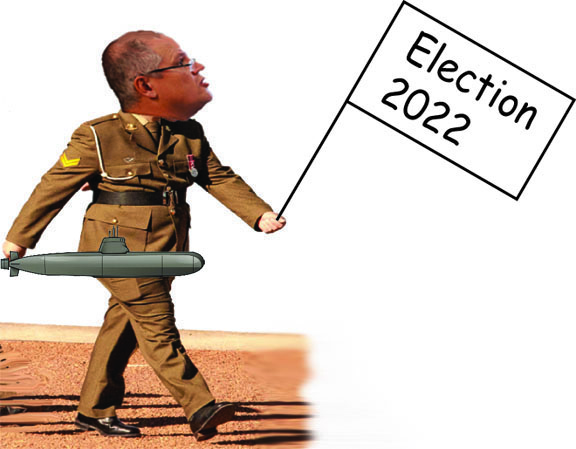
For the Australian Coalition government, with an election coming in less than four months, this is convenient.
Dutton and Prime Minister Scott Morrison are happy to harness Wu’s carefully crafted rhetoric to turn the threat from China into the national security issue of the election.
The three reasons Taiwan keeps talking up the threat of war with China, The Age, By Eryk Bagshaw, January 31, 2022 — Singapore: There was alarm last year when Defence Minister Peter Dutton warned that China’s push to take over Taiwan was gathering pace. It was time to have an honest conversation about the threat of war, he said, because once Taiwan was taken, the Japanese Senkaku islands were next – and then every major Australian city was “within range of China’s missiles”.The threat to Taiwan has not dissipated in the new year………
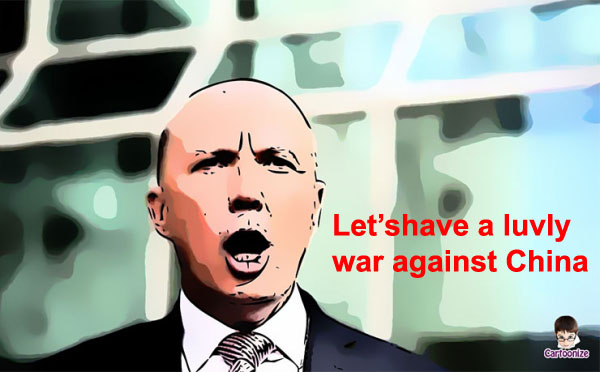
Peter Dutton also vowed to continue to speak out against China’s “belligerent approach” just hours after the new Chinese ambassador arrived in Australia with a conciliatory message about getting the troubled relationship “back to the right track”.
Taiwan’s Foreign Minister Joseph Wu is determined to keep international leaders talking about Taiwan’s situation should war come to pass.
There are three key reasons for this.
The first objective is domestic. “Taiwanese society understands that if the government is doing something right, they will continue to support the government,” Wu told me in an interview from Taipei……..
The strategy has netted Taiwan’s Democratic Progressive Party results, including a landslide presidential victory for Tsai Ing-wen in 2020.
The second objective is to maintain resolve………..
That means every rhetorical threat from Beijing is met with a response from Taipei. This cacophony can sound like warmongering but is more bombastic than about readying for boots on the ground.
The third objective is about building alliances and ensuring Taiwan becomes a global symbol of liberal democracy worth fighting for…………..
Taipei watched on with concern as the United States and its allies pulled out of Afghanistan……
This is why you will hear more like this from Wu throughout 2022…….
”Wu must frame the threat of war as omnipresent even if it is not imminent.”
For the Australian Coalition government, with an election coming in less than four months, this is convenient.
Dutton and Prime Minister Scott Morrison are happy to harness Wu’s carefully crafted rhetoric to turn the threat from China into the national security issue of the election.
Labor’s attempts to follow the international relations playbook will become more challenging as polling day draws near.
On Monday, Labor leader Anthony Albanese was asked on 3AW radio whether he would “unequivocally” support Taiwan in a military conflict and take a stand against “concentration camps” in Xinjiang.
“Where do you stand?” Neil Mitchell asked Albanese on Monday after days of government ministers accusing Albanese of softening Labor’s stance on China.
“What the international community has consistently said is that Taiwan’s position needs to be respected,” said Albanese.
Albanese let Wu do the talking. That’s admirable restraint. Let’s see how long it lasts. https://www.theage.com.au/world/asia/the-three-reasons-taiwan-keeps-talking-up-the-threat-of-war-with-china-20220131-p59skk.html
The past decade has seen stunning change. The next 10 years will be breathtaking

the share of renewables in January, 2022, in Australia’s main grid is 34.4 per cent. Wind and solar alone account for 28 per cent. Solar accounted for 12.6 per cent of generation over the last 12 months, and will now likely deliver half of all generation by 2050 – not three per cent.
That 1.5°C is the only target that really matters. The federal Coalition government insists we need new technology to get us there. But nearly all the tools we will need are already at our disposal. The only thing missing, at least at the federal level, is leadership. And in a few months’ time, at the next federal election, there will be an opportunity to get that right.
The past decade has seen stunning change. The next 10 years will be breathtaking, https://reneweconomy.com.au/the-past-decade-has-seen-stunning-change-the-next-10-years-will-be-breathtaking/ Giles Parkinson 30 January 2022.
They said it couldn’t be done. There was no way Australia could reach 20 per cent renewables by 2020, we were told. And yet we did. And then we were told there was too much wind and solar. Now it is clear there is not nearly enough.
It is now exactly a decade since the RenewEconomy website appeared and published its first articles. Australia, at the time, was yet to build its first large-scale solar farm; the carbon price had not yet been put in place, the finishing touches were being put on a re-booted renewable energy target and the Clean Energy Finance Corporation, and geothermal and solar thermal were supposed to be the next big thing.
At the time, the transition to a grid dominated by wind and solar appeared as some sort of flight of fancy.
Sure, some utilities like Origin spent tens of millions on solar and geothermal technologies, before throwing billions into LNG. The then chief executive of AGL, Michael Fraser, used to indulge our questions with responses such as “seeing it’s you guys, I guess we better talk about solar.” A few months later, AGL spent billions becoming the biggest generator of coal in the country and the biggest emitter. It is still trying to find a way out of that mess.
But there was no doubt that many legacy utilities could already see what was coming and how much was at stake. The small amounts of rooftop solar in the grid were already pointing to a future of deep duck curves and negative prices, and the incumbents used their regulatory and political influence to fight furiously against any moves to encourage rooftop solar or energy efficiency. Some of them still are.
Big business didn’t want the Clean Energy Finance Corporation (CEFC) to intervene in the market, because they wanted new technologies to be kept in the lab. Some still do. The coal lobby was arguing that it shouldn’t be expected to invest in carbon capture and storage because it was clearly not commercial, and wouldn’t be for another couple of decades. It’s too late for coal, but now the gas and oil industry are trotting out a similar argument.
In the month that RenewEconomy first published, with a team of just two (myself and still deputy editor Sophie Vorrath), there was a negligible amount of renewables in the grid – an average of 4.6 per cent over the month of January, 2012. Most of it was hydro. The official forecasts were equally dismissive – a federal government white paper predicted that solar, might, at best deliver 3 per cent of generation by 2050, or one per cent by 2030.
RenewEconomy, even in those early days, sensed that the transition might go a lot quicker than that. Firstly, because it needed to, secondly because it was clear it would be supported by great licks of capital, and thirdly because learning curves pointed to a future of low cost renewables.
Fast forward a decade and the share of renewables in January, 2022, in Australia’s main grid is 34.4 per cent. Wind and solar alone account for 28 per cent. Solar accounted for 12.6 per cent of generation over the last 12 months, and will now likely deliver half of all generation by 2050 – not three per cent.
That transition has brought extraordinary change. Coal fired power stations, if they couldn’t before, now see the writing on the wall and are preparing for closure, although they are still using their regulatory and political clout to make the case for one more major handout as the transition accelerates around them.
South Australia, thanks to its good resources and a government that made it clear it would welcome investment in renewables, leads the way with the a world-topping 62.5 per cent share for wind and solar (as a percentage of local demand) in the last 12 months.
South Australia has already delivered a week long period where wind and solar delivered more than local demand, and it is expected to reach “net 100 per cent” renewables (calculated over a year), well ahead of the official state target of 2030.
Remarkably, that net 100 per cent renewables will come from wind and solar only. It will be an extraordinary achievement and the knowledge gained from operating such a system will set a blueprint for the world to follow.
Yes, it will rely on storage, demand management, links to other states for exports and some imports, and some fossil fuel generation in wind and solar droughts, but having a gigawatt-scale grid in a modern economy meet the equivalent of 100 per cent of its demand over a year will be extraordinary.
And as stunning as the last decade has been, the next decade could be breathtaking because the market is now looking at green exports, in the form of electricity and hydrogen and ammonia, and green manufacturing, which can all focus their demand on when the sun shines and the wind blows. As the big utilities now admit, you can say goodbye to “baseload”.
As we look to the next decade, it is clear that coal generation may have disappeared from NSW by 2032, and fossil fuel cars will make up only a tiny fraction of new vehicle purchases. The share of renewables in the grid will be well above 80 per cent and could be heading towards 100 per cent.
Just to be clear on that point, the Australian Energy Market Operator expects the share of renewables to be around 80 per cent by 2030 according to what the overall industry considers to be the new “most likely” scenario, known as “step change.”
Crucially, mainstream politics is embracing it. Labor’s emissions targets, still well short of what’s needed for 1.5°C, assume an 82 per cent share of renewables in the main grid by 2030. Even the federal Coalition is dialing in a 69 per cent share of renewables in its woefully inadequate emissions targets.
Australian billionaires such as Andrew Forrest and Mike Cannon-Brookes have already helped change the public discourse on the green energy transition, and if their bold plans – and those of others – come true, Australia will be an exporter of green hydrogen, green ammonia, green electricity, and green materials in the form of steel and other manufactured products.
Continue readingDoes Channel 10’s ”The Project” have the guts to tell the truth about the government’s planned Kimba nuclear waste dump?

You would have thought, with the present flooding of the Kimba area, and indeed, of much of Northern South Australia, that concern about planning a nuclear waste dump there would be an ‘‘urgent item of news”
Indeed, Channel 10’s ”The Project” had 2 hours of interview s about the dump sll ready.
In a rare media event, they had interviewed No Dump advocates Kimba farmers Peter & Sue Woodford & Barngarla Traditional Owner Jason Bilney
Of course they’d also interviewed pro-dumpers.
But anyway, Channel 10 decided that this matter is not ”urgent” – and it’s gone on the back burner.
But instead, they’ve managed to put a reassuring spiel from The Australian Radioactive Waste Agency, (just in case the wider world in Australia might get a bit worried about the situation)
- Roni Skipworth, No nuclear waste dump anywhere in South Australia , 31 Jan 22, Was told today the Interviews Peter and Sue were involved with was 2 hours long and was suppose to be shown tonight on the Project though they got a message saying they will view it later in the week as an urgent report needed to go first.
- Let’s see how long they take to telecast it and also they just didn’t interview the Woolfords from No Nuclear Waste Dump on Agriculture Land. They interviewed the Yes Group also where Ramsay visited Kimba as well to put his bit in. Be interested to see what replaced the time slot tonight. This interview should had happened 6 years ago not just now!
- https://www.facebook.com/groups/1314655315214929—
Floods at Kimba: serious doubts that the Australian government has a plan for nuclear waste dump vulnerable to flooding

NUCLEAR WASTE AND FLOODS
Nuclear waste and floods
1. Preventing problems at a nuclear waste dump/store from flooding should be manageable, if and only if project management oversight and regulation is up to the task.
There are serious questions about whether management and regulation of the Australian government’s proposed national nuclear waste dump/store at Kimba in SA would be adequate. The most relevant case study in Australia is the flawed ‘clean up’ of the Maralinga nuclear test site in the late 1990s, overseen by the federal government. Everything that could go wrong, did go wrong. There has been no honesty or transparency about the failures at Maralinga, no attempt to learn from mistakes. Successive governments have simply lied about the problems and tried to cover them up. Expect the same at Kimba. https://nuclear.foe.org.au/flawed-clean-up-of-maralinga/
2. The proposed Kimba dump will be designed to leak. Either barriers prevent leakage, in which case there is a risk of accumulation of infiltrated water resulting in corrosion of waste drums and other such problems. Or, as is the case with the Kimba proposal, there will be water outlets, i.e. it is designed to leak.
3. Even with the expertise and resources available to ANSTO, and the importance of safely managing irradiated/spent nuclear fuel, water infiltration has been a problem at Lucas Heights. In early 1998, it was revealed that “airtight” spent fuel storage canisters had been infiltrated by water – 90 litres in one case – and corrosion had resulted. When canisters were retrieved for closer inspection, three accidents took place (2/3/98, 13/8/98, 1/2/99), all of them involving the dropping of canisters containing spent fuel while trying to transport them from the ‘dry storage’ site to another part of the Lucas Heights site. The public may never have learnt about those accidents if not for the fact that an ANSTO whistleblower told the local press. One of those accidents (1/2/99) subjected four ANSTO staff members to small radiation doses (up to 0.5 mSv).
4. One example of flooding compromising nuclear waste: Flooding at Nine Mile Point. In July 1981, water flooded the Radwaste Processing Building containing highly radioactive waste for Unit 1 at the Nine Mile Point nuclear plant in upstate New York. The flood tipped over 55-gallon metal drums filled with highly radioactive material. The spilled contents contaminated the building’s basement such that workers would receive a lethal radiation dose in about an hour. The Unit 1 reactor had been shut down for over two years and was receiving heightened oversight attention when the Nuclear Regulatory Commission (NRC) investigated the matter. But the NRC was reacting to a television news report about the hazardous condition rather than acting upon its own oversight efforts. The media spotlight resulted in this long over-looked hazard finally being remedied. https://allthingsnuclear.org/dlochbaum/flooding-at-nine-mile-point
5. Another example: Federal health officials agree radioactive waste in St. Louis area may be linked to cancer. The US government confirms some people in the St. Louis area may have a higher risk of getting cancer. A recent health report found some residents who grew up in areas contaminated by radioactive waste decades ago may have increased risk for bone and lung cancers, among other types of the disease. The assessment was conducted by the Agency for Toxic Substances and Disease Registry, a branch of the U.S. Centers for Disease Control and Prevention. Tens of thousands of radioactive waste barrels, many stacked and left open to the elements, contaminated the soil and nearby Coldwater Creek which sometimes flooded the park next to people’s homes. https://www.cbsnews.com/news/radioactive-waste-cancer-federal-health-officials-acknowledge-possible-link/
Kimba and the South Australian government must protect this precious agricutural region from nuclear waste dump’s danger of ground contamination.
Peter Remta, 29 Jan 22, Someone from Kimba should formally request the deputy premier what his government will do to ensure that the nuclear waste management facility at Napandee or anywhere else within the Eyre Peninsula will not lead to any radioactive ground contamination
This is an issue entirely within the constitutional competence and responsibility of the state government and it cannot rely on the federal government to provide a solution
The radioactive contamination of prime rural land within the Kimba district and further afield would be a disastrous outcome for the state’s economy and population with the likelihood of the destruction of its agricultural industry
The satisfaction of the resulting and incalculable claims for compensation due to the contamination would no doubt be completely beyond the state’s financial resources
There is now a strong possibility of radioactive ground contamination due to the significant flooding and the use of an above the ground facility of escape or leakage of the nuclear waste if the facility were established
The risks involved and the safety measures to overcome them are far too uncertain making it completely unacceptable to have the government’s proposed facility at Napandee
The risk will be incapable of elimination by the existing methods of containing the waste without using effective and proper geological burial in a suitable location
This request should be by way of addressing what the deputy premier raised in his letter posted by Karen Gray on Facebook on 13 January 2022
Traditional Owners welcome expiry of uranium mine approval, but the fight isn’t over
Traditional Owners welcome expiry of uranium mine approval, but the fight isn’t over, NIT by Giovanni Torre 28 Jan 22,- Yeelirrie area Traditional Owners have welcomed the expiry of the environmental approval to mine uranium on their land.
The approval conditions for mining at Yeelirrie, near Wiluna in central Western Australia, required the proponent, Cameco, to substantially begin mining within five years. On 20 January 2022 the approval expired with that condition unmet.
Traditional Owners have fought against mining at Yeelirrie since the 1970s when the uranium deposit was first identified by Western Mining Corporation.
Kado Muir, Tjiwarl native title holder, Ngalia leader of Walkatjurra Walkabout and Chair of the West Australia Nuclear Free Alliance said that over the past five decades “our community got together, stood up strong and has fought off three major multinational corporations”.
“Today we celebrate that Cameco cannot mine at Yeelirrie,” he said.
Shirley Wonyabong, Tjupan elder and senior Tjiwarl native title holder said: “Our community has come together over this issue and we’ve been clear that mining at Yeelirrie will not happen.”
“That area is important and we have a responsibility to protect that country and keep the uranium where it is. When you stay together and united and you don’t let mining companies push you around you can protect country,” she said.
Mr Muir said Traditional Owners were calling on the state government to not extend approvals to mine at Yeelirrie and to withdraw the approvals entirely.
Lizzie Wonyabong, Tjupan elder and senior Tjiwarl native title holder said the community has “campaigned so long” to stop mining at Yeelirrie “because of the Seven Sisters, the importance of that area, because of the dangers of uranium when you dig it up and because of the risk of extinction of the stygofauna”.
“It’s time now to put an end to the mining threat at Yeelirrie. Withdraw the approval.”
…………Federal level approval for the proposed Yeelirrie project was granted in 2019, before the Federal Election, without key protections repeatedly recommended by the Federal Government’s experts.
…….. A spokesperson for Western Australian Minister for the Environment Reece Whitby confirmed on Tuesday that Cameco has applied to the Minister for an extension on the Yeelirrie uranium project and the Minister is waiting to receive a briefing. https://nit.com.au/traditional-owners-welcome-expiry-of-uranium-mine-approval-but-the-fight-isnt-over/
Defence Minister Peter Dutton evasive about the 137 member nuclear submarine taskforce, which does not include a South Australian govt rep.

137 OFFICIALS ON TASKFORCE EXPLORING NUCLEAR SUB OPTIONS, AuManufacturing By Joseph Brookes, 28 Jan 22

Defence Minister Peter Dutton did not directly answer some of the questions, which came from government Senator James Patterson, including what the taskforce has delivered and to who, saying only that it is “still active”.
There are nearly 150 members on the federal government’s nuclear-powered submarines taskforce, including officials from a range of federal departments and 10 contractors who the defence department has declined to name, but no state government representatives.
The taskforce was established in September last year on the day the Prime Minister Scott Morrison announced a nuclear-powered submarine program would be the first major initiative of a new AUKUS security agreement.
Answers to Senate question on notice published on Friday revealed more details on the group which is spending 18 months scoping options for at least eight new nuclear-powered submarines.
Led by Vice Admiral Jonathan Mead, the Canberra based Nuclear-Powered Submarine Task Force had 137 members as of 10 December, including secondees from several government departments and private contractors, according to the response from defence minister Peter Dutton.
Prime Minister and Cabinet, DFAT, the Attorney General’s Department, Australia’s nuclear organisations ANSTO and ARPANSA, the Department of Education, Skills and Employment, and 10 unnamed contractors are all represented on the taskforce, which reports to the Secretary of Defence.
According to the minister’s response, the taskforce’s terms of reference are to work with the US and UK to “to identify the optimal pathway to deliver” at least eight nuclear-powered submarines……
The taskforce does not appear to include representatives from the South Australian state government, where the boat building project is “intended” to be based.
Editor’s note: work has begun on a submarine construction yard at Osborne North in Adelaide (pictured), intended for construction of conventional powered vessels.
,…………… The defence minister did not directly answer some of the questions, which came from government Senator James Patterson, including what the taskforce has delivered and to who, saying only that it is “still active”.
The response suggests a possible misunderstanding of the question which referred the minister to Senate Estimates hearings in October when defence officials spoke of an earlier inter-departmental group assessing the feasibility of switching to a nuclear submarine program……..
In May 2020 the Prime Minister instructed the Department of Defence to examine the feasibility of acquiring the nuclear-powered submarines, and received a briefing on the outcomes – including it being possible – around six months later on December 18.
But a public announcement on the plan to establish a nuclear-powered fleet and scrap an existing $90 billion diesel powered submarine program was not made until September last year.
The government’s ultimate decision to scupper an existing $90 billion submarine project in favour of a nuclear powered fleet has caused diplomatic tensions, including French president Emanuel Macron accusing Mr Morrison of lying to him about the change……. https://www.aumanufacturing.com.au/137-officials-on-taskforce-exploring-nuclear-sub-options
1 This month
7 April – WEBINAR – Australia and the Doomsday Clock – Preventing nuclear war through NoFirstUse and other policies
Online | Tuesday April 7, 4:00-5:30pm, Australian Eastern Time / 8:00-9:30am Central Europe Time
– Access the registration link
15 April – Zoom –Nuclear Power is Not the Solution
Apr 15, 2026 01:00 AM in Canberra, Melbourne, Sydney

Join the International Physicians for the Prevention of Nuclear War (IPPNW) on Tuesday, April 14th for a timely webinar exploring the risks associated with nuclear power and challenging the myth that it offers a simple, safe, carbon-free solution to the climate crisis

21 April Webinar: No Nuclear Weapons in Australia
Start: 2026-04-21 18:00:00 UTC Canberra, Melbourne, Sydney (GMT+10:00)
End: 2026-04-21 19:30:00 UTC Canberra, Melbourne, Sydney (GMT+10:00)
Event Type: Virtual
A virtual link will be communicated before the event.
Host Contact Info: australia@icanw.org

of the week – Australians for War Powers Reform (AWPR)
To see nuclear-related stories in greater depth and intensity
 Antinuclear