Meet Australian Public Affairs, the lobbying firm that pushed the Kimba nuclear waste dump for the Federal Government.

The representation by Australian Public Affairs of companies working within or directly linked to the energy, mining and uranium mining industries—many of which obviously have an interest in a nuclear waste dump—does not appear to have been disclosed to the public at any stage of their lobbying work for the federal government on the campaign for a national nuclear waste management facility.
Meet the lobbying firm that pushed the Kimba nuclear waste dump for the Federal Government while claiming “commitment to Indigenous Australians”. Matilda Duncan, 24 Feb 22,
Australian Public Affairs company officers: Tracey Cain, Phillip McCall, Kathryn Higgs, Nick Trainor, Paula Gelo, Matthew Doman, Dominique Wolfe,
Having pocketed six years worth of consulting fees campaigning on behalf of the federal government for their proposed nuclear waste dump in SA, Australian Public Affairs claims “success” as the Barngarla people of the Eyre Peninsula continue to fight the dump through the courts.
It’s a grim project brief few public relations firms would want: convince Australia it’s acceptable to establish not just a national nuclear waste dump, but an international dump site that would potentially accept nuclear waste from the United Kingdom and France.
The requirements of the job: advocate for a radioactive waste facility being built in the middle of one of Australia’s largest wheat and agricultural belts. Urge locals to support a nuclear waste dump near Kimba, despite the site neighbouring both a conservation park and a national park. Avoid publicly questioning why the company the federal government hired to assess the shortlisted dump sites has a U.S. parent company that manufactures nuclear weapons.
Think up methods of pushing the dump in a state that has already been subjected to the stress of a government nuclear waste dump site selection process an inexplicable 4 times in 23 years—and rejected it, to the point the Olsen Government passed legislation to prevent radioactive waste being brought into the state: the Nuclear Waste Storage Facility (Prohibition) Act 2000, which was subsequently strengthened by the Rann Government.
Sell the nuclear dump to the public in a state in which traditional owners have already been subjected to decade upon decade of trauma thanks to the nuclear industry and materials for nuclear weapons being sourced from their lands. Avoid mention of the damaging mining conducted at Radium Hill, the uranium mining that continues to this day at Olympic Dam, the grotesque takeover of land to establish a weapons testing range double the size of England, or the hideous government decision to allow Britain to test 7 atomic bombs at Maralinga and Emu Field without adequately warning the Indigenous people living there—bombs that, in a full circle of destruction, were made using uranium sourced from Radium Hill.
In the face of this depraved and dark history of governmental abuse, the job: tell the locals it will be worth it because the nuclear waste dump will bring “45 jobs”.
Tracey Cain and Alastair Furnival willingly took on the work.
For the past seven years, their lobbying firm Australian Public Affairs has been working behind the scenes for the Federal Government, providing media and campaign strategy advice to help the government promote the nuclear waste dump—presented as the “National Radioactive Waste Management Facility”—and steer them through what continues to be a long, flawed and troubled dump site selection process.
A married couple, Cain and Furnival share a property worth $5 million in Cremorne and equal ownership of Australian Public Affairs Pty Ltd. Furnival is also a staffer at another consulting firm, Elevate Consulting.
Their company made national headlines in 2014, during Furnival’s time as a federal government staffer. That year, Cain and Furnival’s company was lobbying for the junk food sector, representing Cadbury, the Australian Beverages Council and Mondelez Australia (formerly Kraft), while Furnival was working as chief of staff for the federal assistant health minister, Fiona Nash.
According to media reports, Senator Nash and Furnival intervened to pull down a food health star rating website less than 24 hours after it was launched, despite it having been in development for two years and approved by state and territory food ministers.
Furnival owned half of Australian Public Affairs while intervening in public policy decisions as Nash’s chief of staff. Furnival resigned in the wake of the scandal.
FEDERAL GOVERNMENT STAFFERS VS. LOBBYISTS WRITING SPIN
The Morrison Government appear to have given Australian Public Affairs plenty of latitude to complete their work promoting the nuclear waste dump, extending permission to act directly as Government spokespeople.
Numerous times over the past 2 years, media enquiries about the national nuclear waste management facility sent to the federal Department of Industry, Innovation and Science (DIIS) and it’s superseding [new] department have been responded to directly by an Australian Public Affairs staffer rather than federal government staff.
Media enquiries from this journalist were responded to directly by Australian Public Affairs Director Nick Trainor, who in an introductory email two years ago claimed to “work with” the federal government.
Trainor provided a response on behalf of DIIS and the “National Radiactive Waste Management Facility Taskforce” in that email, without disclosing that he was in fact working for a lobbying firm representing the federal government on the nuclear waste dump project…………………………………
A DISAPPEARING ETHICS POLICY
Sometime after 2015, Cain and Furnival removed an ethics policy for Australian Public Affairs from their company website.
The policy claimed Australian Public Affairs was ‘committed to an ethical and quality approach to servicing our clients’. The company would ‘refuse causes, ideas or programs which pose harm to the community’, the policy claimed, ‘never promote deception or unsupportable claims’ and ‘at all times act as a leader in the pursuit of ethical practice.’……………………………………
Australian Public Affairs’ Deputy CEO, Phillip McCall, previously worked for the Australian Nuclear Science and Technology Organisation (ANSTO) with oversight of the Lucas Heights nuclear reactor . APA’s client list has also included mining, gas and energy giants such as Santos—Australia’s second largest independent oil company and owner of the Moomba oil and gas fields in South Australia’s north-east.
APA staff were registered as lobbyists with the South Australian Government on Santos’ behalf from 2017 to late 2018. Uranium mining exploration projects in Santos’ Moomba gas fields were announced the following year, in 2019
APA also represented Santos on their Narrabri coal seam gas project.
Earlier this year—as their work for the Morrison Government on the nuclear waste dump continued—Australian Public Affairs began representing MaxMine (Resolution Systems), a mining technology company with offices in South Australia and South Africa. The company claims its “mission is to become the world’s biggest miner without owning a mine.”
MaxMine has been linked to Andrew Forrest’s Fortescue Metals Group, after—according to MaxMine’s own promotional material—conducting work on their technology with Fortescue in 2010.
WASTE DUMP POLITICAL CONNECTIONS
Andrew Forrest has invested in uranium mining for years. In 2014, he bought EMA, the company that owned uranium deposits at Mulga Rock in Western Australia. Just two months ago, a new uranium mining operation commenced there. Forrest’s private company, Squadron Resources, has an interest in the uranium mining company working at Mulga Rock, Vimy Resources.
The former Premier of South Australia, Jay Weatherill, was appointed to a CEO Position with Andrew Forrest’s Minderoo Foundation after he left public office.

Weatherill was behind the “unusual step” of setting up a Royal Commission in 2015 to consider South Australia’s potential role in the nuclear industry—despite the aforementioned decades of proposals for nuclear waste dumps being rejected by the community and legislation being enacted to ban nuclear waste being brought into the state. Weatherill spen much of his time as Premier pushing a proposal for a high-level nuclear waste storage facility in South Australia.
Weatherill has further personal connections to the current nuclear waste dump proposal. During his tenure as SA Premier, his wife Melissa Bailey was appointed to a position at AECOM Australia Pty Ltd—the company commissioned by the federal government to write site assessment reports for each of the shortlisted nuclear waste dump sites, covering topics like environmental impacts, climate change and wildlife impacts…………………………..
Questioned about the employment of Jay Weatherill’s wife at AECOM Australia Pty Ltd and why the federal government hired the company to assess the nuclear waste dump sites despite its association with nuclear weapons development, Australian Public Affairs responded on behalf of the federal government to both queries with the same phrase: “AECOM Australia Pty Ltd was selected to provide the required services through an open tender process and evaluation conducted in accordance with an approved procurement plan.”
The representation by Australian Public Affairs of companies working within or directly linked to the energy, mining and uranium mining industries—many of which obviously have an interest in a nuclear waste dump—does not appear to have been disclosed to the public at any stage of their lobbying work for the federal government on the campaign for a national nuclear waste management facility.
THE KIMBA COUNCIL
Remarkably, Cain has already claimed her company’s work on the government’s nuclear waste management facility project to be a “success”—even as the Traditional Owners, the Barngarla people, are again challenging the project through the courts.
For years the Barngarla people have repeatedly stated they have not been consulted about the storage of radioactive waste on their land. Representatives of the Barngarla people were excluded from a community vote to gauge local support for the nuclear waste facility—after the District Council of Kimba decided to exclude native title holders from the vote.
Despite major mainstream news outlets including the ABC, Guardian, Channel Ten’s The Project and NY Times visiting Kimba and publishing coverage of Jeff Baldock—the man who volunteered to sell his land at Napandee to the government for the nuclear waste management site—no attention was given by these outlets to his relative and business partner Graeme Baldock, a member of the Kimba Council that determined the Barngarla people would be excluded from the community vote on the nuclear waste dump………..
Graeme and Jeff Baldock had previously purchased thousands of hectares of land in the region near Kimba—in the region where the dump site is set to be established—according to information published in 2015 by the Baldock family farming company, Karinya Agriculture.
A member of the District Council of Kimba since 2010, Graeme Baldock was communicating directly with the federal government agency responsible for the nuclear waste management facility site selection process, the Department of Industry, Innovation and Science (DIIS), between 2017 and 2019.
In response to a freedom of information application made in early 2020 seeking access to Graeme Baldock’s emails with DIIS over two years, DIIS stated that the “documents contain personal information of certain individuals” and due to privacy provisions in freedom of information legislation, “8 third parties” would need to be consulted before the government might consider releasing the documents.
The Department of Industry then sought to impose administration charges of $500 to process the request for Graeme Baldock’s emails.
“COMMITTED TO CLOSING THE GAP”
As the Barngarla traditional owners pursue some semblance of justice through the courts, Tracey Cain continues to advertise her company’s services in the “Indigenous Affairs sector” today, writing: “Australian Public Affairs has extensive communications expertise with Aboriginal and Torres Strait Islander Peoples, on behalf of traditional landowners and Indigenous organisations, and for governments, corporates and NFPs wishing to engage with these communities.”
It’s not just the Barngarla people APA’s work on the nuclear waste dump process has affected—the traditional owners of other sites shortlisted for the dump, like South Australia’s Adnyamathanha people, have already publicly described the stress it caused. “The emotional stress we’re feeling is off the charts,” Regina McKenzie, an Adnyamathanha traditional owner, told the ABC in 2016. “We’re still the custodians here; we’ve always looked at it that way.”
Australian Public Affairs’ company spiel continues: “Within this work, APA is particularly committed to social and economic initiatives which support the Closing the Gap agenda, to provide Indigenous Australians with the same level of opportunity as the rest of the nation: including in health, mental health, education and social policy.”
In another section of APA’s website, the company characterises an “increase in environmental concern – not least amongst farmers and indigenous communities” as leading to “a rise in red tape and cost of compliance”.
In addition to APA working on projects that have contributed to the disenfranchisement of Indigenous communities, Furnival—Cain’s husband and co-owner of Australian Public Affairs—worked for the Abbott Government, an administration that cut $535 million from Indigenous programs.
Cain was contacted for comment about her husband’s role with the Abbott Government and asked if APA staff were directly involved with negotiations with the Barngarla people and other local communities involved in the nuclear waste dump site processes.
Cain was asked if Australian Public Affairs staff made it clear to these communities that they were a lobbying firm, not federal government staffers, when responding to their enquiries and concerns about the nuclear waste dump. She did not directly address these questions.
HISTORY REPEATING
Australian Public Affairs is not the only public relations firm to have chosen to assist the Government to continue perpetuating the toxic legacy of uranium in South Australia. Michels Warren have taken on the task too—an Adelaide PR firm that first represented the Howard Government during their attempt to establish a dump in South Australia from the late nineties until at least 2004. Freedom of information applications revealed the company’s dirty campaign to “soften up the community” and sell something its own staff knew had no benefit to South Australians: “The National Repository could never be sold as “good news” to South Australians. There are few, if any, tangible benefits such as jobs, investment or improved infrastructure. Its merits to South Australians, at the most, are intangible and the range and complexity of issues make them difficult to communicate.”
Despite having their ugly tactics exposed, Michels Warren chose not to leave their involvement with the nuclear industry and nuclear waste in the past. They went on to represent the Weatherill Government’s aforementioned unusual Royal Commission into nuclear power in 2016—a decision that might be explained, in part, by their previous campaigning on behalf of the corporate owners of the Beverley and Honeymoon uranium mines in South Australia.
IRATI WANTI
Almost two decades ago, the Kupa Piti Kungka Tjuta, a council of senior Indigenous women based near Coober Pedy in South Australia, were into their eighth year of fighting the Howard Government proposal to dump nuclear waste from the Lucas Heights nuclear reactor on their traditional lands.
In April 2003, the council’s founders, Eileen Kampakuta Brown and Eileen Wani Wingfield, received the Goldman Prize for environmental activism—an award akin to the Nobel Prize—and $US125,000 to continue their campaign against the nuclear waste dump. The women were fighting the Howard Government into their seventies, with a campaign slogan of “Irati wanti” which roughly translated as “The poison – leave it”.
The founder of the prize, Richard Goldman, said the women had been chosen for a campaign that “exemplifies how much can be accomplished when ordinary people take extraordinary action to protect the health of our planet”.
Mrs Brown said at the time that she was talking on behalf of her ancestors so that her children and grandchildren might also be able to live on the land, telling the Sydney Morning Herald in 2003 through her granddaughter: “There’s a lot of life out there.” https://matildaduncan.net/stories/22/feb/23/australian-public-affairs-tracey-cain-nuclear-waste-dump
”Taskforce” of 400 people joins exclusive discussion on how Australia can get nuclear submarines
Defining’ month for Australia’s nuclear subs program, Innovation, Joseph Brookes 23 Feb 22, The taskforce scoping Australia’s options for acquiring nuclear powered submarines has had its “defining month” in February, passing 200 members and gaining access to a nuclear information sharing agreement with the US and UK.
Defence officials said the “treaty-like” agreement effectively added Australia to the exclusive discussion the US and UK have been having on nuclear technology for more than 50 years and will propel the current nuclear-powered submarine program through its scoping phase…………..
However, while the intention continues to be to build the vessels in South Australia, officials confirmed no explicit minimum local industry involvement has been made yet, with few details – including submarine type – locked in………..
The Canberra-based group grew to 137 members by December and passed 200 this month.
It includes officials from several government departments and agencies as well as at least 10 unidentified private contractors, split into several working groups around the key areas. It also liaises with counterparts in the US and UK, including hosting a formal visit this month.
The taskforce has been given 18 months to identify the optimal pathway to deliver at least eight nuclear powered submarines………………
The agreement, which was signed in November by Defence Minister Peter Dutton but only came into effect this month, allows a deeper level of engagement on sensitive areas like nuclear technology, and its first use has coincided with visits from US and UK defence officials. https://www.innovationaus.com/defining-month-for-australias-nuclear-subs-program/
Nuclear Waste Dump Plan for Kimba – Craig Wilkins of Consrvation Council of South Australia
Monday 21st February 2022 on Peter Goers’ program ABC 891 with Conservation Council of South Australia CEO Craig Wilkins to discuss the Nuclear Waste Dump at Kimba.
Also presentation by Greg Bannon Flinders Local Action Group too, and others who contributed to the program. Interesting that Resources MinisterKeith Pitt, Sam Usher CEO · Australian Radioactive Waste Agency and MP Rowan Ramsey were no shows although they were invited to be involved!
The Conservation Council of South Australia has produced a new booklet on Nuclear waste – domestic Australian issues. Craig Wilkins was the prime author, though not the only author’
Transcript of interview. (basically accurate, but not absolutely word perfect)
CRAIG WILKINS: The book asks what is the best solution for Australia’s radioactive wastes. International best practice is to bury it deeply. That’s not the chosen option. Big difference between the low level waste and intermediate level waste.
PETER GOER. Kimba is very divided – hsad 300mm of rain. We had calls from farmers asking what will happen if nuclear waste is buried there.
CRAIG WILKINS: Wallerberdina was rejected for a site because it was recognised as a flood plain area.
PETER GOER. Govts have seized on this idea and pushed through. The benchmark of 65% community agreement was lowered as only 62% agreed. What’s to stop us importing nuclear waste from overseas in the future?
CRAIG WILKINS This is what is called ”project creep”. The rules change over time. People are concerned about this, particularly the Bangarla who were given native title to this region 2015, – this is one of the first true tests, about how seriously we consider that issue of native title. They did ask to be polled. but were deliberately excluded from the vote. They are fighting this legal battle now, in the Supreme Court. They say they weren’t consulted.
PETER GOER. you cite theUN declaration on the rights of indigenous peoples. tates should ensure that no storage of hazardous materials should be sited on indigenous land The former SA govt voted not to have a nuclear dump in SA. SA has not been consulted, only Kimba people have been consulted. Politicians have come on this show and mocked people who don’t live in Kimba, even though it’s a state issue, it’s a national issue surely. This material is either to come by sea, or be trundled through 3 states to get here.
GREG BANNON of Flinders Action Group – This site is in the wrong place. It’s just not scientific.The Whole approach has been to find a swilling community, and then try to make the facility fit the geology there for a nuclear waste site. It’s just not scientific. In the last month, Kimba has received record rain. One of the IAEA guidelines state that a nuclear waste facility should not be sited where you’ve got cross country water flow, or subsoil water, – water table underneath. When the Industry Department had their sites examined by AECOM, they produced 3 reports – the recent floods should be factored in.
Philippa. phoned in – pointing out the success in Canada, marketing radioactive isotopes made not from a nuclear reactor, but from cyclotrons. She mentions the risk of this dump becoming the thin end of the wedge – for importing other countries’ nuclear wastes.
Calls in, especially pointing out the risk to the Eyre Peninsula community region’s clean reputation as an agricultural area.
PETER GOER. Also this has divided Kimba. calls in – suggesting that Kimba has been bribed. A struggling rural community – the promise of more and more money, and jobs. Also questions about how the promised jobs might not materialise – larger waste facilities oversea employ fewer people than promised for this facility. Hard for people of Kimba to turn their backs on these ”rivers of gold”
CRAIG WILKINS It has been a disappointing process. The community there, like every other SA community, deserves a decent medical facility, decent services – there’s been a package of support being offered, in return for them accepting this facility.- which contains investments by govt that should be standard for any community. That makes it a very challenging position for the Kimba people – to work out whether to accept it or not. There’s nothing more divisive than this whole question of nuclear facilities. A previously very close-knit community has had this bomb placed in the middle of it and it has really divided them. It is a terrible shame.
PETER GOER.I do feel for the people of Kimba. Soon Kimba is going to be known world-wide as the nuclear dump town, not the town that’s halfway across Australia, not the home of the big galah. …..perhaps the butt of many jokes Kimba. will be known for that one thing.
CRAIG WILKINS. Places associated with nuclear activity very soon get that name, rather than being known as a very successful agricultural region, rural town of the year fantastic people …
PETER GOER. Rowan Ramsey pointed out that the population of Kimbawas very knowledgeable.
CRAIG WILKINS. Queried this – suggested that the truth was stretched.
Many calls in, mainly supporting the Conservation Council’s case
CRAIG WILKINS responding to questions on waste disposal – old mining sites not necessarily a solution – much research has to be done.
Kimba doesn’t have to accept this plan. It is not the solution, and is placing this community at a disadvantage.
Early closure of coal plant, battery and renewable developments – all spell the end for nuclear power hopes in Australia
Jim Green Nuclear Fuel Cycle Watch Australia, https://www.facebook.com/groups/1021186047913052 19 Feb 22,
Today’s two announcements in NSW are further proof that it’s game over for nuclear. Early closure of a coal plant (2025), and announcement of an additional large battery (700 MW) to be operational by 2025.
And major construction of the NSW-SA interconnector began this week. SA went from 62% renewable electricity supply to 67% last year with lots more in the pipeline, and synchronous condensers helped reduce gas-fired backup power generation
Federal govt expecting 69% renewable supply to the NEM by 2030 (about double the current amount) and Labor is aiming for 83% by 2030 if elected.
Coalition parties/governments in SA, NSW, Qld and Tas opposed to nuclear power. Labor clearly opposed at state and federal levels. Howard’s federal nuclear power ban has been retained by the Abbott, Turnbull and Morrison Coalition governments.
The writing is on the wall ‒ Kimba radioactive concerns move to South Australia’s political centre

The controversial federal government plan to dump and store radioactive waste near Kimba on the Eyre Peninsula is the focus of new posters appearing across Adelaide’s central business district this week.
The posters ‒ an initiative of the Don’t Dump on SA (DDSA) network ‒ are part of a growing effort calling on Premier Steven Marshall to support the South Australian law, community and environment and send a clear message of opposition to Canberra ahead of the March 19 state election.
The move comes following last week’s Legislative Council vote where Liberal politicians refused to join SA Green and Labor representatives in condemning the federal waste plan.

“For over two decades there has been bipartisan opposition to federal government plans to make SA the nation’s radioactive waste zone,” said DDSA member Dr. Jim Green. “Last week Premier Marshall walked away from this protection and from the commitment that he made ahead of the last state election that he had “a much greater ambition for our state” than to be a nuclear waste dump.
“A positive outcome of the Legislative Council vote was that the Labor Party reaffirmed its opposition to the proposed nuclear dump. MLC Kyam Maher highlighted Labor’s policy that Traditional Owners should have a right of veto over nuclear projects.”
The federal waste plan at Kimba is facing growing scrutiny following recent extensive flooding of the region and a Federal Court challenge by the Barngarla Traditional Owners.
“Barngarla people have been actively excluded from the area’s community ballot and the wider SA community has not had a say,” said DDSA representative Sister Michele Madigan.
“The federal waste plan poses a very serious and long-lasting risk to people and the environment and demands the highest level of transparency and rigour. Sadly, so far it has been a political football played with moving goalposts. It is time Premier Marshall blew the whistle and demanded an end to this move.”
The posters will remain in 30+ sites around Adelaide until the election and will be complemented with a range of community outreach initiatives in the lead up to the state election.
Julian Assange appeals to the Supreme Court,
Julian Assange appeals to the Supreme Court, https://www.bindmans.com/insight/updates/julian-assange-appeals-to-the-supreme-court, Kate Goold, 03 FEBRUARY 2022.
In December 2021, the High Court ruled that Julian Assange could be extradited to the USA, reversing a previous decision of Westminster Magistrates’ Court that extradition would be unjust or oppressive due to Mr Assange’s mental condition.
The ruling of the High Court was based on a package of diplomatic assurances provided by the US government about how and where Mr Assange would be detained if extradited and/or convicted. The assurances had been provided after the Magistrates’ Court found that Mr Assange was at a high risk of suicide if imprisoned in the very harsh regime that can be imposed on prisoners, who are considered a threat to national security, by the US. These fresh assurances were said by the USA to be sufficient to meet that concern, and the High Court agreed.
Among the assurances were undertakings that Mr Assange would not, at this time, be subject to Special Administrative Measures (SAMs), restricting his correspondence, visits and use of the telephone, nor detained at USP Florence ADMAX (ADX), a maximum-security prison in Colorado.
Crucially, however, these assurances were subject to the caveat that the US retained the power to impose such conditions if Mr Assange were to commit any future act that meets the tests for the imposition of SAMs or designation to ADX.
Application to the Supreme Court
As anticipated, Mr Assange sought permission to appeal the High Court judgment to the Supreme Court on the basis that there is a point of law of general public importance involved in the decision. He argued that the Supreme Court’s guidance was required on three questions of law regarding the assurances.
Firstly, he submitted that the Supreme Court ought to consider the question of whether a court can consider assurances that are introduced for the first time on appeal.
The second and third questions related to the caveat in the assurances concerning future acts. Mr Assange questioned whether it could be lawful to allow for potential exposure to conditions under SAMs or in ADX if the imposition of those prison regimes was judged by the US authorities to be justified by his own conduct. In Mr Assange’s case, this was said to be particularly important because conduct could involve speech, and also because it was accepted that he suffers from a severe mental condition.
On 24 January 2022, only the first question was certified by the High Court as an issue of general public importance:
In what circumstances can an appellate court receive assurances from a requesting state which were not before the court of first instance in extradition proceedings.
In the view of the High Court, this point of law is settled, but the High Court has certified a point of law of general public importance with regards to the provision of assurances at a later stage in proceedings, as the Supreme Court has not yet considered this specific question. The High Court concluded that the Supreme Court should have an opportunity to do so, since assurances are at the heart of many extradition proceedings and are increasingly relied on.
In extradition proceedings, assurances are not currently classed as ‘evidence’, but as ‘issues’, and therefore do not necessarily attract the same scrutiny. This also means they can be introduced after all evidence has been heard and tested.
The Supreme Court itself will now decide whether or not it should hear the appeal on this point.
Extradition practitioners largely welcome Supreme Court guidance on this point as late assurances designed to alleviate the court’s concerns about human rights violations following extradition have become a highly contentious issue, especially when provided by States with a poor record in human rights themselves.
It is of note that the High Court refused to certify the point of law with regards to future acts and did not appear to be overly concerned regarding the conditional nature of the diplomatic assurances provided. Mr Assange’s lawyers argued that the principle of absolute protection against inhuman or degrading treatment, contrary to Article 3, should also apply in cases where an individual’s mental condition is such that even if they are moved to a severe regime due to their behaviour (including speech), extradition should still be barred as oppressive (s91 Extradition Act) because the severity of the regime will cause such a deterioration in their mental health. The assurances provided do not rule out this possibility. This would have been an interesting issue for the Supreme Court to have considered, but that opportunity is no longer available.
Wider issues
Meanwhile, Mr Assange is likely to appeal to the High Court those grounds where he was unsuccessful before the District Judge at Westminster, as he was unable to cross appeal while the US appealed the District Judge decision. These grounds will largely focus on political motivation, freedom of speech and fair trial issues. If leave to appeal on the certified point is refused by the Supreme Court, Mr Assange still therefore has an opportunity to appeal to the High Court and his fight continues.
INVITATION TO WEBINAR – AUKUS WILL COST THE EARTH – 24 February
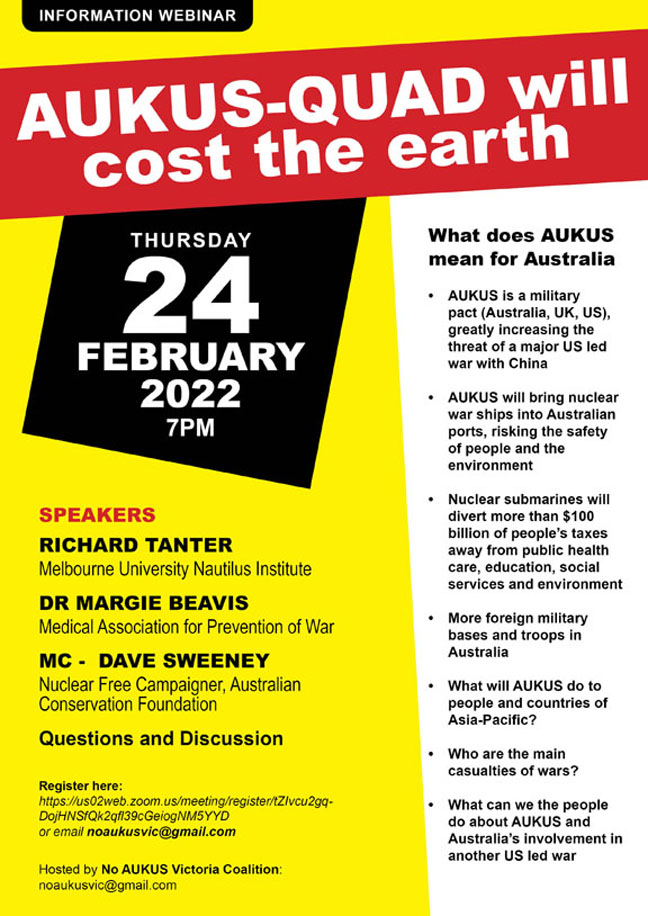
Register for the Webinar/Zoom here: Meeting Registration – Zoom Information and contact: noaukusvic@gmail.com
Tasmania may get cold, but sunburn is still very much a threat
Tasmania may get cold, but sunburn is still very much a threat https://www.abc.net.au/news/2022-02-14/uv-rays-not-heat-the-cause-of-sunburn/100774662, By Glen Perrin If you think you cannot get sunburnt in chilly old Tasmania, you are sorely mistaken — the island state has more than its fair share of dangerous ultraviolet rays.
What is sunburn? What is UV?
Sunburn occurs when skin exposed to ultraviolet (UV) radiation is damaged.
The exposed skin becomes red, hot, and often painful.
If you think you cannot get sunburnt in chilly old Tasmania, you are sorely mistaken — the island state has more than its fair share of dangerous ultraviolet rays.
Additional melanin, the skin’s natural protector, is produced when the skin is exposed to UV radiation.However, when the levels of UV radiation exceed the protecting abilities of melanin, sunburn occurs.This can occur in less than 15 minutes depending on the time of year, the location and skin type.
Skin can turn red from sunburn within two to six hours of being burnt.Long-term excessive exposure to UV radiation may also cause skin damage, eye damage, premature ageing or even skin cancer, with Australia and New Zealand having the highest rates of melanoma in the world. UV radiation is a type of energy that we cannot feel (it does not make us feel hot) or see.Three bands of UV radiation are emitted by the sun: UVA, UVB and UVC.
UVB radiation is the main contributor to sunburn, despite the fact most UVB radiation (around 85 to 90 per cent) is absorbed by the ozone layer in the stratosphere about 15 to 30 kilometres above the surface of the earth.Australia has some of the highest UV levels in the world.
Why is sunburn a concern in Tasmania?
Many people relate getting sunburnt to temperature and incorrectly believe that in Tasmania, being generally cooler, means they won’t get sunburnt.Sunburn can occur on hot and cool days. It is intensity of the UV that is important.Such levels of UV are seen in Tasmania throughout most of the year, except for the winter months. It is also possible to burn in the morning and early evening, not just in the middle of the day.
Although cloud can decrease the amount of UV reaching the surface (with thick unbroken cloud reflecting and absorbing more UV than thin cloud), a break in or thinning of the cloud will still allow enough UV through to cause damage.Partly cloudy conditions can even increase the amount of UV at the surface by reflecting it towards the ground from the sides of the clouds.
Pollutants in the air can absorb some UV radiation or reflect it away from the surface.By comparison, air free from pollutants, such as in Tasmania, results in more UV radiation reaching the surface. Although the ozone hole occurs well to the south of Tasmania, ozone depletion can play a role in sunburn.
The ozone hole typically occurs between August and mid-December.When the ozone hole has broken down, it is possible for pockets of ozone-depleted air to mix with mid-latitude air.This air may then move over Tasmania, resulting in more UVB radiation reaching the surface.
What is the UV Index? How does it work?
The UV Index describes a daily UV radiation intensity and ranges from 1 (low) to 11+ (extreme).
A computer model generates the Index considering ozone concentrations, date, time of day, latitude and altitude and assumes a cloud-free and pollution-free sky.
Temperature is not considered.
Sun protection is recommended when the Index reaches 3 and above.
Sunburn occur any time of the year and at any location
UV levels, and therefore the UV Index, do change through the year, being lowest in winter (below 3 and in the low range in Tasmania) and highest in summer (mostly between 10 and 12 in Tasmania and in the very high to extreme range).
But exposure to excessive UV radiation can occur at any time of the year and can be enhanced by being at alpine locations (where the atmosphere is thinner, allowing more UV radiation to reach the surface), in the snow, swimming, or near other reflective surfaces such as concrete.
UV levels are higher towards the equator, as a result of having to travel though a smaller column of the atmosphere to reach the surface than at higher latitudes.
The UV Index is provided by the Bureau of Meteorology as part of city and town forecasts and through UV maps, tables and the BOM Weather App.
You can use the Cancer Council’s SunSmart app to view sun protection times and current UV levels.
The UV Index in city and town forecasts is also accompanied by a sun protection time when the UV Index is 3 or above.
This represents a time-period in which it is recommended that you slip, slop, slap, seek and slide to protect yourself from sunburn.
Remember you can still get burnt on cool or cloudy days – so think UV, not heat.
More information about UV and sun protection times can be found on the BOM website.
Glen Perrin is a senior meteorologist with the Bureau of Meteorology in Tasmania
Practical considerations may hamper Australia’s path to nuclear submarines

Practical Considerations
Notwithstanding the sweeping nature of the AUKUS Partnership and the scope of the Security Agreement itself, a number of practical hurdles remain, including but not limited to the following:
- It is unclear how and when the parties will decide whether Australian submarines will incorporate either US or UK nuclear propulsion plants.
- The reactors in both US and UK submarines rely on fuel containing high enriched uranium (HEU); it is unclear how Australia will acquire the HEU necessary to power its fleet.
- Due to the volume of ongoing, contracted-for work, neither US nor UK shipyards are in a position to easily accommodate the construction of additional submarines in the near term.
- Balancing export requirements under the International Traffic in Arms Regulations (ITAR) and the nuclear regulations, determining how and when to license under the ITAR as opposed to the Nuclear Regulatory Commission, National Nuclear Security Administration, or other regulations is going to be a challenge.
- It would not be unusual for the nuclear submarine program to involve some form of offsets which would provide Australian industry an opportunity to contract or subcontract for the provision of various items for the submarines.
- Financing for the technology transfers and ultimate construction of the nuclear submarines remains an open question. Whether the United States will provide Foreign Military Sales (FMS) or Foreign Military Financing (FMF) may also be discussed.
- Australian shipbuilders presently have no experience constructing nuclear submarines. Therefore, it is likely that in the event the governments decide to construct Australia’s submarines in Adelaide, such construction would depend on the availability of skilled labor and necessary equipment, presumably sourced from either or both the United States or the United Kingdom. This could raise a number of immigration-related questions for the Australian government.
- No training pipeline presently exists in Australia to produce nuclear-trained submariners. Australian applicants to the submarine program may need to attend university in the United States or United Kingdom and enroll in those navies’ nuclear power training pipelines. To the extent that it is plant-specific, such training could not begin until it is determined whether the new Australian nuclear-powered submarines will incorporate either US or UK nuclear propulsion plants.
Conclusion
As a result of the AUKUS Partnership, Australia will become the seventh nation to operate nuclear-powered submarines. ………….. However, success will depend on the extent to which the three governments can and choose to identify and resolve practical considerations over several decades to establish a pathway to an Australian nuclear submarine and technology integration.
AUKUS Alliance: US and UK to Help Australia Acquire Nuclear-Powered Submarines
Morgan, Lewis & Bockius LLP 11 Feb 22,
Continue readingSouth Australian Labor supported Greens. motion opposing SA as nuclear waste dump, but Liberals SA Best and Advance SA blocked it.

10 Feb 22, Liberals and crossbench block Greens motion calling for SA to reject Federal Government’s attempt to turn the state into nuclear waste dumping ground
Today, the Liberals along with SA Best and Advance SA voted against a Greens motion condemning the decision by the federal government late last year to dump nuclear waste in Kimba.
“South Australians could not have been clearer. We do not want dangerous radioactive waste being dumped in farming country against the wishes of the Barngarla – the area’s Traditional Owners,” said SA Greens spokesperson for Energy, Robert Simms MLC.
“It is tremendously disappointing that the Liberals, SA Best, and Advance SA have ignored the pleas of the Traditional Owners, and instead given their tick of approval to put a radioactive waste dump in the heart of our food bowl that puts at risk our clean, green reputation and our state’s key grain export industry.
“A wide-ranging parliamentary inquiry must occur to not only consider the implications of the federal government’s decision to dump radioactive waste on Kimba on SA’s Eyre Peninsula, but also hear the concerns of the Barngarla People – and no further action should be taken until that process has concluded, “ Mr Simms said.
The motion moved today by Robert Simms MLC, was only supported by the Greens and SA Labor.
$53 million raised to help Julian Assange’s legal fight for freedom
AssangeDAO concludes raise with $53M to help Julian fight for freedom COINTELEGRAPH, BRIAN QUARMBY, 9 Feb 22,
The AssangeDAO pulled in 17,422 Ether from 10,000 people to be used to win the NFT auction that is supporting Assange’s legal battles. The Decentralized Autonomous Organization (DAO) supporting Wikileaks founder Julian Assange’s legal plight has concluded its raise, generating a whopping 17,422 Ether (ETH), worth roughly $53.7 million.
As previously reported by Cointelegraph, the AssangeDAO intends to use the fund to bid on a one-of-one NFT from a drop called “Censored” by digital artist Pak in collaboration with Assange. The proceeds of the sale will go towards Assange’s defense fund and additional awareness campaigns as he fights extradition to the United States this month.
Assange has been languishing in a United Kingdom jail for the past three years, with U.S. prosecutors seeking to try him on espionage charges. Supporters say that Assange is a whistleblower, journalist and publisher…………………… https://cointelegraph.com/news/assangedao-concludes-raise-with-53m-to-help-julian-fight-for-freedom
Flooding the planned nuclear waste dump area
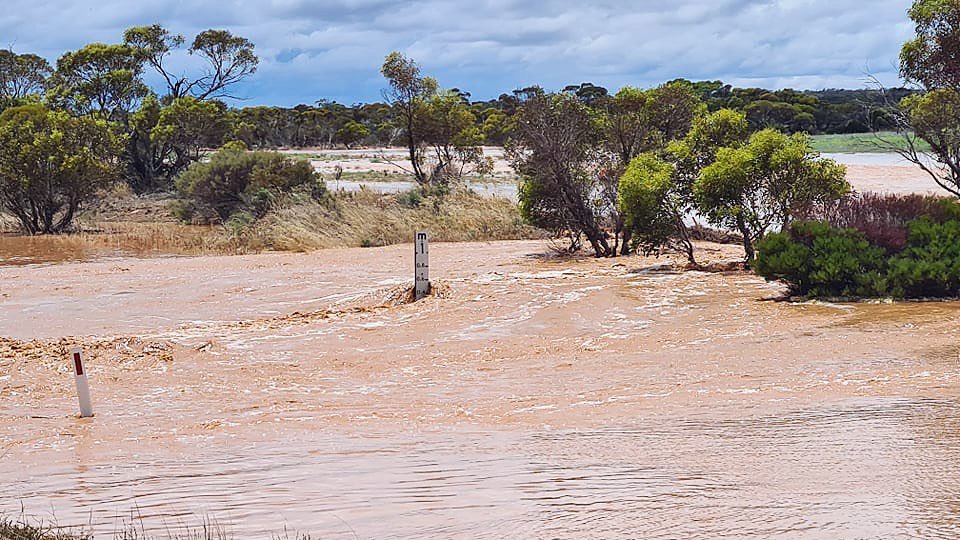
Flooding the Dump Michele Madigan, Sunday Mail, 6 Feb 22,
Well surely that has settled the matter- the Kimba region is a totally unsuitable site for where the federal government is proposing to dumping the nation’s highest-level radioactive waste.
Just out of Kimba, at Buckleboo where the proposed Napandee site actually is, neighbours recorded 185 mm in just the first recent downpour. Some areas received up to 300mm in two days. The Kimba mayor reported ‘massive damage to our roads and general infrastructure.’
The federal government is planning to transport this dangerous radioactive waste half way across the country to simply store it above ground for at least 100 years. The storage sheds will be designed with water outlets to leak.
Despite government assurances, 90% of the waste, measured by radioactivity, is intermediate level waste – toxic for an unimaginable 10,000 years.
In these times of galloping climate change it is certainly optimistic to be talking about ‘once in 100 years’ downpours. How much safer to keep it where it is manufactured in ANSTO’s solid buildings in Lucas Heights outer Sydney, with its on-site nuclear experts and highest-level security.(added ? )
UK court should slap down the US Justice Department in the Assange case

UK court should slap down the US Justice Department in the Assange case https://thehill.com/opinion/judiciary/591776-uk-court-should-slap-down-the-us-justice-department-in-the-assange-case?fbclid=IwAR1FwC11pSY_hGdiCvIdBqIj6mttfTheEDtcNR3EUpQG38xWS3-ZRC6TLhw
BY JAMES C. GOODALE, 6 Feb 22, As the lead attorney for the New York Times in the “Pentagon Papers” case in 1971, I’ve been doing a slow burn ever since over the government’s behavior in that instance: lies, disregard of court rules, arrogance, destruction of documents. All of this was brought to mind earlier this week when a British court hinted in the Julian Assange case that the U.S. government has acted in the same way once again.
It asked Britain’s supreme court to determine the appropriateness of a late filing by the government that completely undercut a ruling that Assange could NOT be extradited to the U.S. This followed British trial court Judge Vanessa Baraitser, who was hearing Assange’s extradition case, ruling that Assange might commit suicide if held in a U.S. prison in solitary confinement under what is called Special Administrative Measures (SAMs) and, so, he could not be extradited.
As soon as she announced her decision, the U.S. government filed assurances that Assange would not be held in that kind of detention, although it reserved the right to revoke the assurance if circumstances changed.
The judge was unmoved by this assurance, but she was reversed on appeal. The U.K.’s supreme court has now asked to consider the timeliness of this filing.
I do not believe the U.S. government’s assurances are worth the paper on which they have been written. Its behavior in this case has been rampant. Most outrageously, the CIA discussed a plot to kidnap Assange from the Ecuadorian Embassy in London, where he was holed up, and to kill him. The CIA also tapped into conversations in the Ecuadorian Embassy, including those with Assange’s lawyers.
There is not much question whether all of this is true. There was testimony about it in open court, and Mike Pompeo, the CIA director at the time and later secretary of State during the Trump administration, has conceded that there is “some truth” in the foregoing.
I do not pretend to be particularly familiar with the extradition laws of the U.K. But common sense tells me that you deliver highly important documents about a case — such as government assurances — before the case begins, not after it has been decided. U.K. counsel representing the U.S. disagrees, saying he can deliver documents when he wants and if he loses the appeal, he will start the extradition proceedings all over again.
This is the very same arrogance that was on display in the Pentagon Papers case, in which then-U.S. Solicitor General Erwin Griswold said the usual rules of evidence did not apply. His view of the law manifested itself in his introduction of new evidence in the case anytime the government was so moved. The claims were always extravagant: Publication of the new evidence would be a disaster for the country’s national security, etc., etc. They never were. Indeed, most of them turned out to be previously published.
The other principal fallacious claim made by the government back then was that the Times had revealed that the United States had broken the Vietnamese code. This also proved to be so much hogwash.
The government also destroyed — or, in its words, “lost” — New York Times briefs in the case. It prevailed upon me to give them these briefs to protect national security and to be returned if the government indicted the Times. A later research request evoked the response “they were lost.”
We do not know if the U.K.’s supreme court will take the Assange case to determine the issue of the timing of the U.S. government’s filing. Let’s hope that it does and then decides the U.S. government should not get away with the latest example of its less than appropriate behavior in a national security case.
James C. Goodale is the former general counsel and vice chairman of the New York Times and the author of “Fighting for the Press: The Inside Story of the Pentagon Papers and Other Battles.”
Nuclear submarine plan does not mean more jobs for Australians. In fact it’s already caused 1,100 job losses
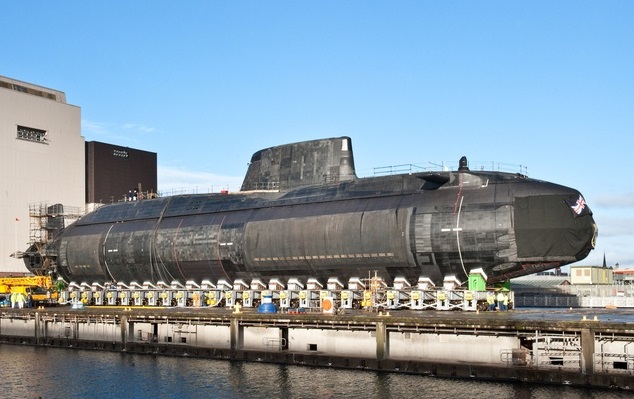
Now, we find out that the new $100 billion AUKUS subs deal is unlikely to have any local content mandate and may deliver absolutely nothing to the South Australian economy and workers.
more than 1,100 South Australian workers had lost their jobs because of the government’s decision to scrap the French agreement.
Doubts over local industry involvement in nuclear subs program, Joseph Brookes, Innovation Aus, Senior Reporter, 4 February 2022 Unions have called on the Prime Minister to commit to a minimum level of local industry involvement in the upcoming nuclear submarine program after a senior Defence official reportedly said there would be no mandated minimum level.
A high-ranking Defence official this week told an industry conference the department is “maturing beyond ascribing a percentage” of local industry involvement and was unlikely to set a minimum like previous major ship builds, according to The Australian.
In response to subsequent concerns from local industry, Defence minister Peter Dutton said Australia would “get the balance right” between supporting local industry and securing capabilities in response to rising foreign conflicts involving China………
The minister did not commit to a minimum level of local industry participation in submarine contracts.
In response to the earlier report that Defence’s Capability and Sustainment Group chief counsel Fran Rush had said the government was more focused more on securing capability than building local industry, unions called for Prime Minister Scott Morrison to fulfil a commitment to build at least eight nuclear powered submarines in Adelaide.
“Scott Morrison promised South Australia that it would receive billions in investment and thousands of jobs from the AUKUS submarine contract, making up for the significant losses caused by his tearing up of the French Naval Group contract, under which many South Australians were already employed,” SA Unions Secretary Dale Beasley said.
Now, we find out that the new $100 billion AUKUS subs deal is unlikely to have any local content mandate and may deliver absolutely nothing to the South Australian economy and workers.
“First Scott Morrison betrayed the French, now he’s betraying South Australians, by ripping away promised jobs and investment.”
The union said more than 1,100 South Australian workers had lost their jobs because of the government’s decision to scrap the French agreement.
Nearly 150 officials, including private contractors, are part of a government-led taskforce currently exploring options for acquiring submarines.
Do you know more? Contact James Riley via Email. https://www.innovationaus.com/doubts-over-local-industry-involvement-in-nuclear-subs-program/
The ABC is under the biggest attack in its history
The ABC is under the biggest attack in its history https://www.sarahhansonyoung.com/save_our_abc_petition?recruiter_id=759870
Our ABC is facing death by a thousand cuts – totalling over half a BILLION dollars – from the Liberals who can’t handle the public broadcaster doing its job and holding those in power to account. Sadly, our democracy is going to be far worse off for it.
Not only has the Morrison Government failed to restore the millions of dollars of funding they have cut from the ABC year after year, there is now no future funding for the Enhanced News Gathering program.
Our ABC is facing death by a thousand cuts – totalling over half a BILLION dollars – from the Liberals who can’t handle the public broadcaster doing its job and holding those in power to account. Sadly, our democracy is going to be far worse off for it.
Not only has the Morrison Government failed to restore the millions of dollars of funding they have cut from the ABC year after year, there is now no future funding for the Enhanced News Gathering program.
The ABC has been a vital source of information during the pandemic and helped save lives during the catastrophic summer bushfires immediately before that.
To do its job as the public expects, to continue producing the new Australians trust and the stories we love, the ABC must be well-funded.
The ABC needs allies, now more than ever.
1 This month


Help Aunty Sue Protect Her Land and Sacred Sites From Destructive Rocket Testing.
.

Australians deserve the truth
about
AUKUS – https://aukuspublicinquiry.com/

PETITION – To: Prime Minister Anthony Albanese and the Australian Labor Government

of the week – Australians for War Powers Reform (AWPR)
To see nuclear-related stories in greater depth and intensity

