Australia’s collapsing reputation – way way down on Transparency International Corruption Index

The way ahead
This report from an influential global agency adds weight to increasingly urgent calls for an investigative commission with similar powers at the federal level to Victoria’s Independent Broad-based Anti-corruption Commission and the Independent Commission Against Corruption in NSW.
Australia should be able to do at least as well as Estonia.
Australia hits new low on Transparency International Corruption Index
MICHAEL WEST MEDIA, |By Alan Austin, January 27, 2022 The decline of political and corporate standards in Australia over recent years is not just in the imagination of some critics. Transparency International released its annual corruption report yesterday which gives Australia the lowest score and global ranking since the series began in 1995.
The Corruption Perceptions Index is widely regarded as the leading global measure of public sector corruption. It offers an annual snapshot of the relative extent of corruption by ranking 180 countries and territories. Its methodology allows for comparison of scores across nations and from one year to the next.
Australia’s severe decline
Australia ranked seventh in the world in 1995 with a creditable score equivalent to 88 out of 100. Only New Zealand, Denmark, Singapore, Finland, Canada and Sweden scored better, but not by much.
Through the late 1990s and early 2000s, Australia slipped significantly in both scores and ranking, falling as low as 13th in 2000. But by 2007, Australia had recovered to 11th, and thereafter advanced further. Australia ranked eighth from 2009 to 2011 and resumed seventh slot in 2012. For the seven years from 2014 to 2020, Australia ranked between 11th and 13th.
Then suddenly last year, in just the one year, Australia tumbled from 11th to 18th in the global ranking. Its score fell from 77 where it has stayed for the last four years to a lowly 73.
The seven countries which overtook Australia in combating corruption last year were the United Kingdom, Hong Kong, Austria, Canada, Estonia, Ireland and Iceland.
Worst decade collapse in the developed world
Over the last ten years, the deterioration in Australia’s standing is the deepest of all advanced nations. From a 2011 score of 88, Australia tumbled 15 points to just 73 in 2021.
No other developed member of the Organisation for Economic Development and Cooperation (OECD) has fallen that far in that period. Of those 38 countries, 15 increased their scores over that time, 21 saw a decline and two remained unchanged……………..
Corruption on the public record
The specific reasons for Australia’s decline are not spelled out in Transparency’s report. Regular readers of MWM will, however, be familiar with the likely causes. They include the “sports rorts” affair, the highly problematic sale of floodwater rights, international money laundering, pork barreling selected electorates, corrupt allocation of grant funds, allowing criminals to hide money in Australia’s property market, political fundraising, influence peddling, the East Timor electronic surveillance scandal and the outcomes of inquiries by state investigative commissions.
Some of these were identified in Transparency’s annual report last year, which reported:
“Australia faces several corruption challenges, including anonymous company ownership and money laundering. Following the FinCEN files, where thousands of leaked financial documents exposed a vast paper trail of money laundering across the globe, more than US$150 million were traced back to Australian banks.
“The country also shows severe deficiencies when it comes to corruption in international real estate. As a result of a 2006 law, properties can be bought and sold without due diligence and real estate agents, lawyers and accountants are not required to report suspicious activities. …………………………
“Despite multiple commitments, 131 countries have made no significant progress against corruption in the last decade. Two-thirds of countries score below 50, indicating that they have serious corruption problems, while 27 countries are at their lowest score ever.”
These include Australia.
The way ahead
This report from an influential global agency adds weight to increasingly urgent calls for an investigative commission with similar powers at the federal level to Victoria’s Independent Broad-based Anti-corruption Commission and the Independent Commission Against Corruption in NSW.
Australia should be able to do at least as well as Estonia. https://www.michaelwest.com.au/australia-hits-new-low-on-transparency-international-corruption-index/
WASHED AWAY – Minister Keith Pitt’s grand dream of a Kimba nuclear waste dump

there is now no earthly hope of it ever being established at Kimba.
It is all over for Pitt so he should pick up his marbles and go home.
Peter Remta, 27 Jan 22, The recent events at Kimba resulting from the severe flooding have exposed a number of aspects included in the planning of the waste management facility that had been either inadequately covered or
completely ignored in the planning and accompanying studies.
While there are several instances of these insufficiencies it becomes most concerning that the federal government has spent huge amountsof money on developing its South Australian proposals and more
importantly has failed to inform the communities of the true situation
There will no doubt be attempts to downplay any forewarning of the flooding possibility at Kimba but the fact remains that none of the government studies gave much credence to the Pirie – Torrens corridor
which has always been a risk as to flooding and rising water tables for a large part of the Eyre Peninsula
MINISTER’S COMMENTS
Minister Pitt tweeted on 24 January 2022:
” It’s been a challenging couple of days for communities around Kimba inmSA after a big rain event. Thanks to those who took time out to joinmdiscussions for the new radioactive waste facility. It’s a critically important piece of national infrastructure #auspol”
The mention of “a big rain event” sounds more like some ancient tribalnwar dance than the devastating flooding in the Kimba region while thenrest of his tweet is hard to follow.
Surely he must be extending his thanks to those who previously joined in the past discussions for the waste facility as there is now no earthly hope of it ever being established at Kimba.
It also undoes the years of disingenuous exaltations of the facility by the government which in many instances were an insult to the community.
It is all over for Pitt so he should pick up his marbles and go home.
His biggest fault besides his numerous and unfounded statements was that he never gave the community the opportunity to get is ownnindependent assessment of his government’s proposals as is required by
all international prescriptions in these situations
OPINIONS
In closing here are a couple of comments by leading international experts whose anonymity I have preserved for commercial confidentiality:
A. Kimba – What a perfect site with floods – has groundwater at 20 mnand within 20-30 km of towns and wheatfields.
B. ……if the plan is to store waste fractions from spent fuel reprocessinginto what qualifies as intermediate level near-surface facility, and thennplace this facility in an area of obvious flooding risk … …it seems to
reach internationally competitive levels of stupidity. And …… it doesn’t help if it’s only interim storage, since we are not looking long term but a risk that would be well plausible during our generation
UK High Court gives very little chance for Julian Assange

UK: HIGH COURT DECISION WELCOME IN ASSANGE CASE BUT CONCERNS REMAIN OVER LIMITATIONS ON APPEAL , Amnesty UK 26 Jan 22, Following today’s High Court decision to certify one issue in the Assange appeal as of ‘general public importance’, Massimo Moratti, Amnesty International’s Deputy Research Director for Europe, said:
“While we welcome the High Court’s decision to certify one narrow issue related to the US’s assurances as being of ‘general public importance’, and so to allow the Supreme Court to consider granting an appeal on this issue, we are concerned the High Court has dodged its responsibility to ensure that matters of public importance are fully examined by the judiciary. The courts must ensure that people are not at risk of torture or other ill-treatment. This was at the heart of the two other issues the High Court has now effectively vetoed.
“Torture and other ill-treatment, including prolonged solitary confinement, are key features of life for many people in US federal prisons, including those imprisoned on charges similar to Assange’s.
“The ban on torture and other ill-treatment is absolute and cannot be upheld by simple promises from a state that it won’t abuse people.
“The Supreme Court should have had the opportunity to deliberate and rule on all of the points of law raised by Assange at this crucially important point but the High Court has limited its scope to do so. If the question of torture and other ill-treatment is not of general public importance, what is?”
“We now hope that the Supreme Court will grant leave to appeal on the certified issue concerning at what stage in extradition proceedings should such assurances be submitted and considered.”
US and British governments are effectively using “lawfare” to ensure Assange’s continued detention
Although the threat of imminent extradition has been stayed, Assange stands on thin ice. What began as a case on the most fundamental rights of journalists to expose war crimes and torturehas been whittled away by the British judiciary to the single question of how “assurances” of Assange’s safety should be given by one criminal state to another.
Whatever the outcome, the US and British governments are effectively using “lawfare” to ensure Assange’s continued detention, even though he has been convicted of no crime.
Assange granted leave to appeal to UK Supreme Court against extradition, https://www.wsws.org/en/articles/2022/01/24/assa-j24.html?pk_campaign=assange-newsletter&pk_kwd=wsws Oscar Grenfell, Thomas Scripps, 24January 2022
The UK High Court has provided WikiLeaks founder Julian Assange a route to appeal to the Supreme Court in his extradition case against the United States government.
Assange is seeking to overturn the High Court’s direction last December that he be extradited, against the earlier ruling of the lower Magistrates’ Court that to do so would be “oppressive” on health grounds.
The High Court upheld a US appeal against the Magistrates’ Court ruling despite accepting evidence of Assange’s intense physical and psychological ill-health. It also did not contest the likelihood that the conditions he would be subjected to in the US, as discussed throughout the entire preceding court process, would likely result in his death by suicide.
The December ruling was overwhelmingly based upon supposed US assurances, issued months after deadlines had elapsed, that Assange’s conditions in an American prison would not be as bad as previously accepted.
With numerous caveats and loopholes, the US assurances asserted that Assange would not be held under Special Administrative Measures (SAMs), a regime of total isolation, to which those convicted of terrorism offenses, along with drug lords and major serial killers, are sometimes subjected in federal prison.
The High Court found that the Magistrates Court should have solicited such assurances prior to its ruling.
In response to Assange’s request for leave to appeal this decision yesterday, the judges certified a single point of law of public importance, the requirement for an issue to be heard in the Supreme Court. This was: “In what circumstances can an appellate court receive assurances from a requesting state which were not before the court of first instance in extradition proceedings [in this case, the magistrates’ court].”
Assange’s lawyers had argued that “profound issues of natural justice arise where assurances are introduced by the Requesting State for the first time at the High Court stage… These issues have never been addressed by the Supreme Court.”
As his solicitors elaborated in an explanatory note, “There has long been a general approach by the courts that requires that all relevant matters are raised before the District Judge appointed to consider the case in the Magistrates’ Court,” but this has been undermined by the treating of assurances as “issues” rather than “evidence”, allowing them to be introduced at a later stage in proceedings.
“The defence argument is that despite being as demanding of close evidential scrutiny as the evidence already heard, and despite the content of the assurances being applicable to the testimony of witnesses already heard but not to be heard again, assurances have been afforded a different procedural position.”
The assurances in question, accepted in “good faith” by the High Court, are given by a state with a decades-long history of lies and dirty tricks whose record in the Assange case was exposed a month before the High Court ruling as including plans to kidnap and assassinate the heroic journalist.
Based on the statements of 30 former US officials, Yahoo! News revealed that the Trump administration and the Central Intelligence Agency (CIA) had discussed kidnapping or assassinating Assange when he was a political refugee in Ecuador’s London embassy in 2017. The US indictment was first conceived of as a pseudo-legal cover for a possible CIA rendition.
The character of that indictment, as a concoction from spies and criminals, had been proven in June 2021. Sigurdur “Siggi” Thordarson, whose testimony still forms a crucial part of the indictment, admitted that all his substantive allegations against Assange were lies proffered in exchange for immunity from US prosecution. The star US witness is reportedly facing prosecution in Iceland on fraud charges, having been convicted of child molestation and embezzlement offenses prior to his latest collaboration with the American government.
Although the threat of imminent extradition has been stayed, Assange stands on thin ice. What began as a case on the most fundamental rights of journalists to expose war crimes and torturehas been whittled away by the British judiciary to the single question of how “assurances” of Assange’s safety should be given by one criminal state to another.
The Magistrates’ Court upheld the sweeping US attacks on democratic rights contained in the attempt by a state to prosecute a journalist for publishing true information about its unlawful activities. This forced Assange to defend the US appeal on the grounds of the threat to his mental health posed by extradition and imprisonment in the US. The High Court’s acceptance of the US appeal means Assange’s defence is now limited to the question of when assurances should have been provided.
In keeping with the UK’s courts’ trashing of democratic rights throughout this case, the High Court rejected out of hand the point of appeal that the assurances are worthless because the US asserts the right to withdraw them if Assange violates, or is alleged to have violated, certain conditions.
Assange’s lawyers argued “oppressive treatment” is barred, “whether or not the requesting state justifies its imposition by reference to conduct.”The High Court replied that it did not consider these arguments to “raise certifiable points” for the Supreme Court’s consideration.
It is now technically down to the Supreme Court to agree to hear Assange’s case; it would be highly unusual, though not impossible, for it to refuse to consider an issue certified by the High Court.
If Assange’s appeal is unsuccessful and his case is sent to Home Secretary Priti Patel to rubber-stamp his extradition, then his lawyers can seek to cross appeal the Magistrates’ Court’s original decision on the substantive issues of the case—press freedom, the espionage act and the bar on extradition for political offences. But leave to do so is not assured and would mean years more incarceration as the new appeal works its way through the courts.
Whatever the outcome, the US and British governments are effectively using “lawfare” to ensure Assange’s continued detention, even though he has been convicted of no crime.
He remains in the maximum-security Belmarsh Prison, dubbed the UK’s Guantanamo Bay. With the British government allowing the mass spread of Omicron, in the latest stage of its homicidal “herd immunity” policy, the prison has reportedly been hit by COVID outbreaks. Assange, because of his fragile health, is at intense risk of succumbing to the virus. The repeated prison lockdowns intensify his isolation.
Australia Day honours for services to environment and conservation.
| from Maelor Himbury, 26 Jan 22 Australia Day honours We congratulate the following Australia Day honours recipients for services to the environment and conservation (apologies to anyone I may have missed) Victoria Tom BEER Brunswick Alan Simon FINKEL South Yarra Kenneth Ian GUTHRIE Clifton Hill Victoria Fay MARLES Northcote Josephine Louise JONES Rye Eve KANTOR Hensley Park John Desmond KOEHN Ivanhoe Kevin Charles MASON Healesville Lee Alexander MIEZIS Ballarat Sarah Jane STEPHEN St Kilda Madeline Jane TOWNSEND Ballarat Mark WOOTTON Hensley Park | NSW Roslynne Elizabeth HANSEN Merimbula Ross Anthony JEFFREE Alfords Point Austrelle Susan (Sue) LENNOX Bellingen Margaret Joy BAKER Winmalee Matthew Peter HANSEN Dubbo Roz HOLME Joan REID |
| WA Claire Lynette BRITTAIN Claremont Anthony Arthur FOWLER Lynette Joan SERVENTY Margaret River | QLD Jo-Anne BRAGG West End Gordon Paul GUYMER SA Roger Bartram GRUND Mary Louise SIMPSON Burnside John William WAMSLEY Aldgate Tas John Alexander CHURCH Battery Point |
Kimba flooding: Australian government must immediately abort nuclear waste dump project.
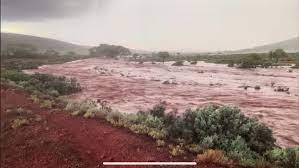
Peter Remta 25 Jan 22, Is this where the federal government should be placing its proposed above ground nuclear waste management facility?
There is no doubt that the sever flooding caused by the heavy rains in South Australia which included the Kimba district is a serious and essential reason for immediately aborting the proposed nuclear
waste management facility at Napandee farm.
From expert advice it is quite clear that Kimba as a whole – and not just Napandee – is far too dangerous to be an installation for theholding of nuclear waste particularly as the results of the present flooding may take up to ten years to overcome without any further flooding
This is especially the case as nuclear isotopes are dispersed and travel freely in water which can affect and contaminate all the surrounding land for many centuries making it completely unusable.
The federal government as the proponent of the Kimba nuclear waste facility cannot deny knowledge of floods and fires as risks for the purposes of the safety requirements for nuclear waste in Australia
As a result of advice by overseas experts that these two major risks are far more pertinent to Australia than other countries with nuclear waste the regulatory bodies should or must include these risks
within the Australian Radioactive Waste Management Framework and other applicable prescriptions and and standards for the longterm management of Australia’s radioactive waste including the storage or disposal of this waste at suitably sited facilities
I informed the officer at ARPANSA in charge of the Kimba facility development about formal inclusion of these risk and the requirement for the long overdue start of the safety case and her response was:
‘‘I think that it is not necessary at this stage however will take you up on the offer when we feel is the right time’‘
In view of the drastic situation that has now developed it is it is imperative that the federal government provides immediate funding to the Kimba community for an independent assessment and review of the government’s proposals
Massive flooding in Kimba district, – the Agricultural (no it’s now the Nuclear Waste) Town of the Year.
Flooding in Kimba district causes a decade’s worth of damage and communities are ‘completely shut off’
ABC North and West SA / By Declan Gooch, Brooke Neindorf, and Marcus Wilson, 23 Jan 22, V
Flooding on South Australia’s Eyre Peninsula has caused “massive, massive damage” to roads and infrastructure and left communities completely isolated.
Key points:
- Some parts of the Kimba district received 300mm of rain over the weekend
- The mayor says there has been “massive” damage to infrastructure
- A local farmer says his property looks like “channel country”
The Kimba district was among the hardest hit by the weekend’s destructive rain, which battered most of regional South Australia.
Mayor Dean Johnson said some areas received up to 300mm throughout Friday and Saturday.
The Bureau of Meteorology said the 160mm officially recorded in the 24 hours to 9am on Saturday was the most rain in a day ever documented there.
“It’s done massive, massive damage to our roads and general infrastructure,” Cr Johnson said.
“It will be some years and perhaps even a decade before we get to repair all of this, I think.”
“There are entire roads and sections of roads that have just been swept away by rivers of water. I can’t paint a much better picture than that. Just cliff edges where there used to be a road.”
He said many of the roads that had been damaged or destroyed were major roads, and the Kimba district was cut off from most directions.
“We’re completely shut off from the rest of the world at the moment. The road to the airport has completely washed away,” Cr Johnson said.
It is one of several regions that have been isolated by floodwater, with authorities scrambling to repair the Olympic Dam Highway that has cut off access to Roxby Downs.
‘You can mistake us for being in channel country at the moment’
Buckleboo, about 30 kilometres from Kimba, was another of the hardest-hit areas and also received its most rain ever recorded in a day.
Local farmer Tristan Baldock said his property had been transformed.
“You can mistake us for being in channel country at the moment, so we’ve got a historic watercourse that’s probably extending 20 kilometres through our property with a series of lagoons,” Mr Baldock said. ……
Will get through’
Cr Johnson said he was confident the region would recover. “The Agricultural Town of the Year is set up for a pretty good growing season next year, I think.”
more https://www.abc.net.au/news/2022-01-24/kimba-floods-eyre-peninsula-damage-isolated-roads-closed/100777084#:~:text=%22It’s%20done%20massive%2C%20massive%20damage,infrastructure%2C%22%20Cr%20Johnson%20said.&text=He%20said%20many%20of%20the,the%20world%20at%20the%20moment.
Flooding in South Australia includes Kimba- what about the nuclear dump sit? and what impact on uranium tailings dams?

This Channel 7 video report mentions Kimba as having had record rain. The ABC report mentions several towns with record rain, but does not mention Kimba
I wonder how this obviously flood-prone area could be selected a the nation’s nuclear waste dump site.
I also wonder how Olympic Dam’s huge dams of radioactive tailings are faring in this flood situation.
This Channel 7 video report mentions Kimba as having had record rain. The ABC report mentions several towns with record rain, but does not mention Kimba
I wonder how this obviously flood-prone area could be selected a the nation’s nuclear waste dump site.
Roads destroyed and homes flooded as rain cuts off towns in South Australia’s north | 7NEWS, 23 Jan 22,
Floodwaters submerge parts of outback SA as rain washes away highway and cars, ABC 23 Jan 22,
Key points:
- Emergency crews have rescued people trapped by floodwaters
- A section of the Olympic Dam Highway was washed away, blocking access between Roxby Downs and Woomera
- The bureau said several spots had recorded “all-time” highest rainfall totals over 24 hours
Entire towns in the state’s Far North are cut off after record-breaking rain. The SES has been flat out responding to hundreds of calls for help, as the heavens opened, destroying roads and inundating homes.
Rescue crews have been kept busy by outback floodwaters and record-breaking rains, which have continued to cause havoc in South Australia’s north and west, washing away roads as well as cars.
The weather bureau said some locations had set “all-time records” in terms of rainfall, while social media is awash with photos and videos of inundated highways.
Several people were rescued by the State Emergency Service (SES) after becoming trapped by floodwaters — including one who was swept 80 metres downstream and waited on top of his semi-submerged car for “at least four hours” as crews travelled to his remote location.
An entire section of the Olympic Dam Highway was also eroded between Pimba and Woomera, cutting off access from Roxby Downs…………………………………………. https://www.abc.net.au/news/2022-01-23/sa-rain-and-floods-wash-away-outback-roads/100776030
Options for Australia’s nuclear submarines – all of them impractical
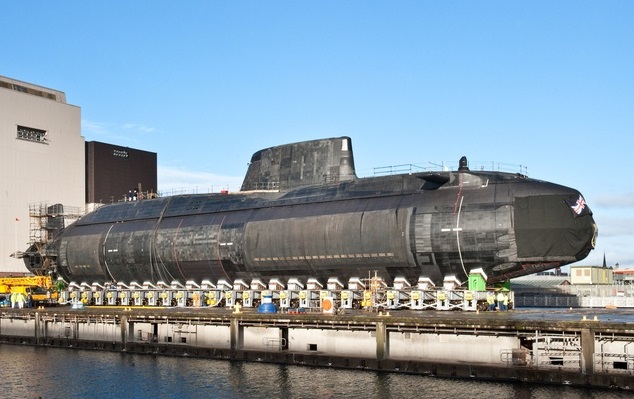
Nuclear-powered submarines for Australia: what are the options? The Strategist , 20 Jan 2022, Pete Sandeman The political and strategic ramifications of the AUKUS pact involving the US, UK and Australia continue to reverberate, but the details of how Australia will acquire nuclear-powered submarines (SSNs) have often been overlooked. There are daunting technical, industrial and financial challenges on the long road to joining that club.
Even the acquisition of conventional submarines isn’t easy and projects completed on time and budget are rare. Nuclear propulsion adds another layer of complexity and cost, and the engineering challenge has been described as more demanding than building the space shuttle. There are good reasons why SSN ownership is limited to a small group of elite nations—the US, Russia, China, the UK, France and India. (With considerable French assistance, Brazil is on track to have its first nuclear boat in the late 2020s.)
………. Some commentators suggest that Australia’s first boats at least could be bought off UK or US production lines. Alternatively, old or ‘surplus’ submarines could be leased until new vessels are available. These assumptions are at odds with the US Navy’s and Royal Navy’s struggles with bringing new boats into service and maintaining ageing vessels.
…….Defence Minister Peter Dutton has said the RAN is considering leasing boats from the USN or RN but that’s far from a certainty. The RN is already severely short of active boats—nominally down to six SSNs, and able to field two or three on a good day. The USN is trying to maintain its existing force, struggling to build enough new Virginia-class SSNs while its Los Angeles-class boats are phased out. However supportive of Australia the UK may be, it has no suitable boats available to lease. The US has a far bigger fleet with 28 Los Angeles boats still active, but its force is already overcommitted and Washington is unlikely to offer anything, except perhaps a recently retired boat as a static training vessel.
Neither the US nor UK keeps submarines ‘in reserve’. The UK has already expensively extended the 1980s-vintage Trafalgar-class boats well past their 30th birthdays. None of the growing collection of decommissioned hulks could be returned to service with all the funds and will in the world. Their nuclear fuel is spent, and they would need colossally expensive refits and refuelling. More critically, submarines have finite hull lives. Every dive fatigues the pressure hull and pipework to a point where safe diving becomes severely restricted or the boat becomes unseaworthy. Older boats become increasingly hard to maintain and struggle to retain their all-important minimal acoustic signature.
The US has a more effective submarine dismantling program than the UK and its LA-class boats are gradually being scrapped. The inactive boats that remain intact are equally tired and some were withdrawn from service prematurely to avoid the cost of mid-life refuelling. There’s a slim chance that one or two of these boats could see further service with the RAN but only at enormous expense, and refitting them would put more strain on overburdened US industrial capacity.
………. Some suggest the Astute’s the best solution, optimistically proposing that the first couple be built in the UK before technology transfer enables the remaining six to be made in Australia. …… Unfortunately, there are almost insurmountable obstacles to the class ever numbering more than seven.
In the UK, completion of the remaining Astute-class boats is finely balanced with the construction of the Dreadnought-class ballistic missile submarines (SSBNs) and there’s not space in the shipyard or skilled people available to add additional boats….
People didn’t prepare for nuclear submarine exports and AUKUS was a bolt from the blue.
Assuming money was no object, new engineers could be recruited and the Barrow facilities could be enlarged, the project would still be in trouble because the Astute’s PWR-2 reactor no longer meets modern safety benchmarks and production has almost ceased……
Even if additional PWR-2 reactors could be acquired and the Astute boats could be constructed in Australia, they’d be semi-obsolete when they began to arrive in service by the late 2030s.
………….. Although the USN benefits from an established design and an industrial base that’s vastly more efficient than that of the RN, the yards and supply chain will need to expand significantly to fulfil the ambitious plans to grow the USN fleet. A recent report to Congress noted that ‘observers have expressed concern about the industrial base’s capacity for executing such a workload without encountering bottlenecks or other production problems in one or both of these programs’.
The USN also has issues maintaining its existing submarines. …………………..
When the AUKUS announcement was made, the Australian government promised to acquire at least eight nuclear submarines to be built by ASC in South Australia. There’s limited submarine building experience left at ASC since the Collins boats were completed in the early 2000s. The deal with the French to build Attack-class boats included technology transfer to regenerate the skills base. Whatever SSN design is selected, greater assistance will be needed from the UK or US. With limited nuclear infrastructure, Australia is unlikely to be able to enrich uranium to fuel the reactors. It’s likely that the reactor compartments will have to be imported pre-fabricated from the US or UK. The entire submarine enterprise will require Australia to establish a new safety and regulatory framework.
………. Former prime minister Malcolm Turnbull said of the AUKUS deal: ‘There is no design, no costing, no contract. The only certainty is that we won’t have new submarines for 20 years, and their cost will be a lot more than the French subs.’ This is broadly correct. The eventual acquisition of SSNs is possible, but there are many potential showstoppers. The single biggest factor will probably be just how much the US government is willing to prioritise industrial assistance to the RAN at the expense of growing and supporting its own submarine fleet. The US has only ever exported nuclear technologies to Britain and must amend its laws to do the same for Australia.
A couple of elderly SSNs might be available for lease in the 2030s, but realistically it will be the 2040s before the RAN has sufficient SSNs to exert a strategic effect. The geopolitical situation could be vastly different then, and growing Chinese power and influence won’t wait for others to attain parity. The Australian public will also have to buy in to a project needing political commitment for decades and the RAN will have to lean heavily on allies and provide an enormous budget to cover the true financial costs of nuclear ownership.
Pete Sandeman is the main writer and editor of the UK site Navy Lookout, which he founded in 2007. He is a regular contributor to Warships International Fleet Review magazine and a member of the UK’s Independent Defence Media Association. This is an edited version of a piece he wrote for Navy Lookout. https://www.aspistrategist.org.au/nuclear-powered-submarines-for-australia-what-are-the-options/
Environmental protection prevails over uranium in Western Australia, with expiration of a third mining approval
Extinction threat over for Yeelirrie as uranium mine approval expires, https://www.miragenews.com/extinction-threat-over-for-yeelirrie-as-uranium-710566/ The controversial Yeelirrie uranium mine in Western Australia is no longer able to proceed after the proponent missed a deadline to commence works at the site in WA’s Goldfields.
The Conservation Council of WA (CCWA) and the Australian Conservation Foundation (ACF) welcomed the news, saying community resistance and environmental protection had prevailed.
Global uranium mining giant Cameco, headquartered in Canada, had five years to demonstrate ‘substantial commencement’ on the Yeelirrie uranium mine before environmental approvals expired on 20 January 2022.
Yeelirrie is the third of four WA uranium projects to have had its approval lapse after Cameco’s Kintyre uranium mine expired in March 2020 and Toro Energy’s Wiluna project expired earlier this month.
The federal environment minister infamously gave the green light to the Yeelirrie project knowing it was likely to send up to 11 species of unique subterranean fauna to extinction and would harm the Malleefowl, Princess parrot and Greater bilby.
Plans to mine uranium at Yeelirrie have been widely opposed by the Indigenous community around the site, which is on Tjiwarl Native Title determined country.
The Cameco proposal threatened an area which forms part of the Seven Sisters Dreaming songline and is referred to as ‘a place of death’. The word Yeelirrie translated to the word Yullala – which means to weep or mourn.
Vicki Abdullah, a Tjiwarl woman who has long campaigned against uranium mining on Tjiwarl country, said “Yeelirrie is an important cultural site, our families and old people have fought against mining at Yeelirrie for 50 years. There is a strong feeling of responsibility to keep the uranium there at Yeelirrie and we’re happy that as of today Cameco cannot mine that place.
“We’ve spoken to the Government many times and we hope they will do the right thing and withdraw the approval all together. Yeelirrie should never be mined and this government can make sure it is safe forever.”
Dave Sweeney from ACF said “There have been no new uranium mines started in Australia for a decade and with only two still operating it is increasingly clear there is no economic case for uranium mining in Western Australia.
“The sector has never made sense, now it doesn’t even make dollars.”
Mia Pepper from CCWA said “After 50 years of tireless campaigning to protect Yeelirrie we are now looking forward to the introduction of lasting protections against uranium mining in WA.”
‘Everything about the Gulf of St. Lawrence was warmer in 2021’: federal scientist
‘Everything about the Gulf of St. Lawrence was warmer in 2021’: federal scientistWarming ocean temperatures — especially in deep water — set more records in the Gulf of St. Lawrence in 2021, according to climate data released Tuesday by the Department of Fisheries and Oceans.
A mutual suicide pact: Australia’s undeclared nuclear weapons strategy

A mutual suicide pact: Australia’s undeclared nuclear weapons strategy, Pearls and Irritations, By Michael McKinleyJan 20, 2022 As the world’s nuclear arsenals build even more killing power, the need for Australia to abandon this perilous defence arrangement only increases.
The conventional wisdom has it that in the matter of nuclear weapons Australia is an exemplary international citizen. According to the Standard Version, it diligently supports the various nuclear arms control and disarmament regimes, and adheres to the position which regards nuclear weapons as instruments of nuclear deterrence and thus of the stable relations between major powers. Nuclear war-fighting is eschewed. Virtue is asserted. Res ipsa loquitor. The problem is that both claims are not only false, but embedded within what passes for defence policy with increasing willed ignorance, deceit and dishonesty.
At issue is the Australia’s unqualified general support for the various postures the US adopts and the particular role which it provides through the joint Australia-US facilities at Pine Gap and Northwest Cape. Their status as integral components in US global nuclear strategy – and thus nuclear targets in the event of major, peer-to-peer-war challenges the concept of government by consent of the governed.
The arrangements and agreements between Canberra and Washington have never been made public; indeed, successive governments have been industrious in their attempts to close off anything resembling national dialogue or debate on them.
This, of course, is a traditional and dishonourable tradition. Its origins are to be found in the official dishonesty surrounding Australia granting the British government the right to conduct a series of nuclear weapons tests at Maralinga, Emu Plains and the Montebello Islands from 1952 to 1963.
Unabated, it has coarsened the legal and ethical fabric of the nation’s security and foreign policy ever since to the point where the obvious has to be restated because, essentially, it no longer gives cause for shame, outrage, or anger.
Consider just six issues on which policymakers and mainstream national security commentators and scholars have been mute.
Diplomacy, it seems, has been substituted for by bellicose statements by high-level military and civilian personnel which exhibit, little more than its relegation to an irrelevance beyond its cosmetic utility.
Second, there is proliferation by stealth. The US initiative to modernise its nuclear arsenal by installing the burst-height compensating super-fuze has extraordinary implications. It effectively triples the killing power of its ballistic missiles and, as described by three of America’s most respected weapons analysts (Hans Kristensen, Matthew McKinzie and Theodore Postol) in the Bulletin of the Atomic Scientists the situation is one in which the US has developed “the capacity to fight and win a nuclear war by disarming enemies with a surprise first strike.”
Third, the advent of weapons with warheads described as “variable yield,” “low yield,” “clean” (sic), or “mini nukes” has encouraged declarations at the highest levels in the US that, under certain circumstances, nuclear weapons have “tactical” utility. And they are a matter of pride: as the head of US Strategic Command told a congressional committee in 2020, these innovations made him “proud to be an American.”
Fourth, this embrace of tactical nuclear weapons cannot be separated from the explicit intention to envisage nuclear weapons as inescapably enmeshed in the overarching concept of deterrence. Put another way, for Admiral Richard, and those of a like mind, there is no meaningful distinction to be made between conventional and nuclear deterrence: they comprise a single entity, the former being dependent on the latter for its intellectual and strategic credibility.
By extension the fifth comes into focus: the US to continuing to reserve to itself the right to a nuclear first strike. In 2020, in testimony before the Senate Armed Services Committee, General Tod Wolters, commander of US European Command and Supreme Allied Commander Europe, went so far as to enthuse over it with this endorsement: “I’m a fan of flexible first use policy.”
Sixth and finally, there is nuclear deterrence itself. The term is employed in polite conversation as though it was simply a technical description; in reality, however, it is an obscenity and this becomes obvious when its explicit principle is confronted.
In simple terms it is a mutual suicide pact to the preserve the status quo of the time. Richard Tanter on this site has accurately described Australia’s position within the alliance and under the nuclear umbrella as one which it expects the US to commit genocide in the name of the country’s defence.
An important point is missed here: this understanding or expectation has never been put to the Australian people. ………… …… https://johnmenadue.com/a-mutual-suicide-pact-australias-undeclared-nuclear-weapons-strategy/
Australia continues to lead the world for solar installations.
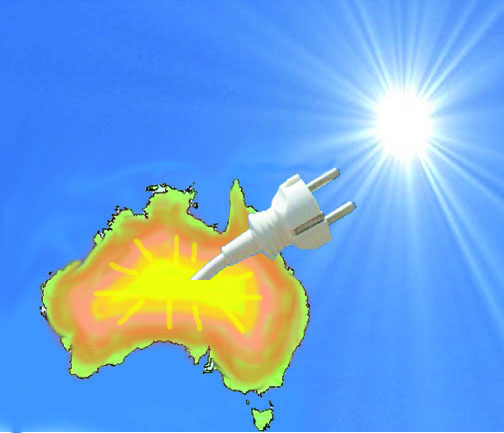
Rooftop solar took a hit in 2021 with the industry growing a third less than expected thanks to lockdowns and supply chain disruptions, despite still showing strong growth overall. More than 3m households and small businesses across the country now have solar panel systems installed, with the milestone reached in November. According to registration data provided by solar consultancy company SunWiz, 3.24GW of new solar capacity was added across the country last year, representing 10% growth on the previous year.
These figures include small rooftop systems of less than 100MW registered by homeowners and small businesses, and do not include large, industrial-scale solar installations. Queensland now has the most installed capacity, with 4,483MW, closely followed by New South Wales (4,256MW) and Victoria (3,839MW). Australia continues to lead the world for solar installations with a total installed capacity of just under 17GW.
nationwide.
Guardian 19th Jan 2022
Australia-UK talks – all about nuclear submarines and military co-operation against China.
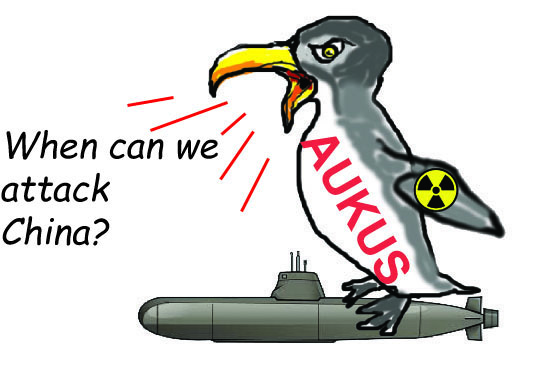
Nuclear submarines and closer interaction with British military to dominate Australian talks with UK, ABC, By defence correspondent Andrew Greene Closer military cooperation and possible basing of British defence assets in Australia will be discussed when ministers from both nations hold long-awaited face-to-face talks in Sydney this week.
Key points:
- British and Australian ministers will discuss the nuclear submarine deal and emerging security threats
- This will be the countries’ first in-person AUKMIN meeting since before the pandemic
- Scott Morrison will host the British ministers at Kirribilli House ahead of the talks
The British foreign and defence secretaries are due to arrive on Thursday ahead of their formal AUKMIN talks with their Australian counterparts on Friday.
This year’s Australia–United Kingdom Ministerial Consultations is expected to be dominated by the recent AUKUS nuclear submarine deal, as well as growing concerns over China’s power in the Indo-Pacific. ……………………….. https://www.abc.net.au/news/2022-01-19/nuclear-submarines-dominate-australia-uk-talks/100765474
AUKUS an unwelcome guest at the table of nuclear disarmament.
AUKUS is emblematic of a belligerence that is at odds with moral and ethical demands for the future. It posits a vision of military aggression and confrontation that increase the risk of war and war turning nuclear; and concedes authoritarianism and lack of debate as defining principles for the present
AUKUS an unwelcome guest at the table of nuclear disarmament, Pearls and Irritations,
By Sanjay BarboraJan 16, 2022 Despite many shortcomings, the Non-Proliferation Treaty remains a symbol of an inconsistent effort to ensure a world without threats of nuclear war.
The 2022 Review Conference (RevCon) of the Parties to the Nuclear Non-Proliferation Treaty (NPT) which was to meet from January 4 to 28 in New York has been postponed because of the resurgent virus. Consultations are under way to set a new meeting time.
………………As governments and civil society consider their priorities for the review conference, what then are we to expect? This question assumes greater significance for Australia, as the country’s leaders respond to the changing climate following the hastily announced AUKUS trilateral pact for the supply of nuclear-powered submarines to Australia in 2021.
Three closely related aspects ought to be considered by the country’s decision makers as they address the review conference. They are (a) Australia’s commitment to international obligations, (b) security implications of the proposed AUKUS submarines, and (c) reactions within civil society, either as they exist now or as may be anticipated in the future.
………………. In the past, Australia’s stated position was to aim for greater accountability from the Nuclear Weapons States (NWS), while widening the scope of non-nuclear weapons states (NNWS) to pursue the development of domestic nuclear energy. However, this position was undermined by its active opposition to and attempts to derail the Treaty on the Prohibition of Nuclear Weapons (TPNW) adopted by the UN General Assembly in 2017.
A decision to acquire nuclear-powered submarines under the AUKUS partnership would threaten this fraught history with further uncertainties. It would offer the United States an even greater say in Australian foreign policy in the Asia-Pacific-Indian Ocean region.
The specious defence that eight-nuclear propelled submarines do not constitute a breach of Australia’s commitment to nuclear disarmament and non-proliferation has two obvious problems.
Firstly, politicians and political commentators have made it clear that current tensions with China have played a substantial role in the current government’s decision to override earlier agreements for creating domestic capacities to build submarines with French support.
Secondly, this dystopian vision of a future world of nuclear showdowns could encourage governments of other NNWS in the region and elsewhere to follow a similar disingenuous narrative for nuclear militarisation.
In any case, the pathway from civil use to military weaponisation remains an issue of concern, that any sovereign country might follow. This could undo several decades of Australian diplomacy that sought to place the country as a reliable partner for securing peaceful policies and development in the Asia-Pacific-Indian Ocean region.
AUKUS is emblematic of a belligerence that is at odds with moral and ethical demands for the future. It posits a vision of military aggression and confrontation that increase the risk of war and war turning nuclear; and concedes authoritarianism and lack of debate as defining principles for the present…………..
The NPT Review Conference, therefore offers an opportunity to revive Australian civil society’s responsibility to reiterate its commitment to regional and global peace and a world free of nuclear weapons.
Professor Sanjay Barbora, Tata Institute of Social Sciences, India, is a Research Affiliate with the University of Melbourne’s Initiative for Peacebuilding. This article was stimulated by a closed-door roundtable discussion, “Would AUKUS undermine the NPT?” hosted by the Initiative for Peacebuilding on December 10. https://johnmenadue.com/aukus-an-unwelcome-guest-at-the-table-of-nuclear-disarmament/
1 This month
7 April – WEBINAR – Australia and the Doomsday Clock – Preventing nuclear war through NoFirstUse and other policies
Online | Tuesday April 7, 4:00-5:30pm, Australian Eastern Time / 8:00-9:30am Central Europe Time
– Access the registration link
15 April – Zoom –Nuclear Power is Not the Solution
Apr 15, 2026 01:00 AM in Canberra, Melbourne, Sydney

Join the International Physicians for the Prevention of Nuclear War (IPPNW) on Tuesday, April 14th for a timely webinar exploring the risks associated with nuclear power and challenging the myth that it offers a simple, safe, carbon-free solution to the climate crisis

21 April Webinar: No Nuclear Weapons in Australia
Start: 2026-04-21 18:00:00 UTC Canberra, Melbourne, Sydney (GMT+10:00)
End: 2026-04-21 19:30:00 UTC Canberra, Melbourne, Sydney (GMT+10:00)
Event Type: Virtual
A virtual link will be communicated before the event.
Host Contact Info: australia@icanw.org

of the week – Australians for War Powers Reform (AWPR)
To see nuclear-related stories in greater depth and intensity
 Antinuclear