Many wheels to turn before that Kimba nuclear dump can go ahead, especially if Labor wins in elections.
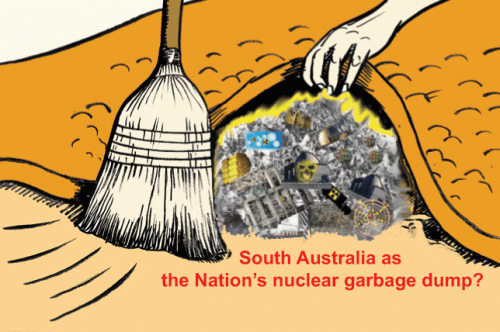
David Noonan Facebook: Fight to stop a nuclear waste dump in South Australia. 5 Dec 21. Regarding the planned nuclear waste dump at Kimba, South Australia, there will be better potential options if Federal ALP win office (and some if SA Labor do too);
there will have to be an SA Parliamentary Inquiry (likely starting sometime May on, after the elections & likely after any Judicial Reviews into Min Pitt’s siting decision & process has run its course);
there will be an EPBC Act environmental assessment including on transport issues and involving ‘public consultation’;
ARPANSA will (we expect) do separate Licensing processes – for proposed Low Level Disposal, with (better) ‘public consultaion’, and await the outcome of the EPBC Act assessment before making their Licensing decision (this will be very hard to head off if Lib gov’s are re-elected);
And in parallel or subsequently ARPANSA hold a separate process over indefinate above ground Storage of nuclear fuel wastes & ILW; ARPANSA (and a new ALP fed gov & even an SA Labor gov) will have and hear a range of concerns over co-located indefinate Storage of ILW et al and could eventually decide its preferable to retain such wastes at ANSTO Lucas Heights – until an ILW disposal option arises. There are a lot of wheels to turn yet…
In the next extradition court case for Julian Assange, we can expect the judge there to be very biased against Assange

Now the most powerful judge in England and Wales, Burnett will soon rule on Assange’s extradition case. The founder of WikiLeaks faces life imprisonment in the US. ……………………
As minister, Duncan did not hide his opposition to Julian Assange, calling him a “miserable little worm” in parliament in March 2018.
Duncan watched UK police pulling the WikiLeaks publisher from the Ecuadorian embassy via a live-feed in the Operations Room at the top of the Foreign Office.
He later admitted he was “trying to keep the smirk off [his] face”, and hosted drinks at his parliamentary office for the team involved in the eviction.
ASSANGE JUDGE IS 40-YEAR ‘GOOD FRIEND’ OF MINISTER WHO ORCHESTRATED HIS ARREST
Julian Assange’s fate lies in the hands of an appeal judge who is a close friend of Sir Alan Duncan – the former foreign minister who called Assange a “miserable little worm” in parliament. DECLASSIFIED UK
MATT KENNARD AND MARK CURTIS 2 DECEMBER 2021 LORD CHIEF JUSTICE IAN BURNETT, THE JUDGE THAT WILL SOON DECIDE JULIAN ASSANGE’S FATE, IS A CLOSE PERSONAL FRIEND OF SIR ALAN DUNCAN, WHO AS FOREIGN MINISTER ARRANGED ASSANGE’S EVICTION FROM THE ECUADORIAN EMBASSY.
The two have known each other since their student days at Oxford in the 1970s, when Duncan called Burnett “the Judge”. Burnett and his wife attended Duncan’s birthday dinner at a members-only London club in 2017, when Burnett was a judge at the court of appeal.
Now the most powerful judge in England and Wales, Burnett will soon rule on Assange’s extradition case. The founder of WikiLeaks faces life imprisonment in the US. ……………………
As minister, Duncan did not hide his opposition to Julian Assange, calling him a “miserable little worm” in parliament in March 2018.
In his diaries, Duncan refers to the “supposed human rights of Julian Assange”. He admits to arranging a Daily Mail hit piece on Assange that was published the day after the journalist’s arrest in April 2019.
Duncan watched UK police pulling the WikiLeaks publisher from the Ecuadorian embassy via a live-feed in the Operations Room at the top of the Foreign Office.
He later admitted he was “trying to keep the smirk off [his] face”, and hosted drinks at his parliamentary office for the team involved in the eviction.
Duncan then flew to Ecuador to meet President Lenín Moreno in order to “say thank you” for handing over Assange. Duncan reported he gave Moreno “a beautiful porcelain plate from the Buckingham Palace gift shop.”
“Job done,” he added………………………………. https://declassifieduk.org/assange-judge-is-40-year-good-friend-of-minister-who-orchestrated-his-arrest/
The people of South Australia are being excluded from the discussion and decisions about the Federal govt’s planned nuclear waste dump
Flinders Local Action Group
Bob Tulloch, 5 Dec 21, IS SOUTH AUSTRALIA DESTINED TO BE A NUCLEAR STATE? Six years ago, the Department of Industry, Innovation and Science (DIIS) suddenly burst into our lives with their push to establish a National Nuclear Waste Management Facility within our communities.Our lives, friendships and communities where fractured and torn apart, the effects still lingering today. The communities I refer to are Hawker/ Quorn in the Flinders Ranges and Kimba on Eyre Peninsular in South Australia.The ‘pro facility’ doctrine was loud, clear, and biased. Presented in a process where ‘community consultation’ was co-opted to ‘manufacture consent’. A process tightly controlled by DIIS with little room for alternative points of view, local dissent controlled with intimidation and bullying tactics.
It came as a shock to those involved, that our Government would use such tactics to push through their agenda, culminating after 40 years of failed efforts.This is when I started investigating behind the scenes in an attempt to understand why the Federal Government wanted to establish a nuclear waste facility at Kimba, so far from the main source of supply, Lucas Heights.
The Federal Government, under the NRWM Act, has the power to over ride state laws and has used these powers during the site characterisation study of the site Napandee near Kimba, which has now been officially declared as the site for a National Nuclear Waste Facility.
The Marshall Government is keen to set up a nuclear defense industry in South Australia to compliment the proposed nuclear submarine industry.Our state opposition, although opposed to the recent site selection process, is keeping very quiet, not forgetting under Jay Weatherall’s leadership in 2016, introduced the idea of importing the world’s nuclear waste to South Australia.My concern is, the people of South Australia are now being left out of the conversation and the decision making process.
Kimba residents who oppose the nuclear waste dump plan are not backing down.
Opposing residents refusing to back down on nuclear stance, Port Lincoln Times
- Claire Harris 2 Dec 21,. Kimba residents opposed to the nuclear waste facility being built in the district are not backing down on their stance, following the selection of the Napandee site by the federal government earlier this week.
No Radioactive Waste on Agricultural Land in Kimba or SA president Peter Woolford said he was disappointed in the announcement, but not surprised.
“It’s a bitter pill to swallow, because last week we were announced SA Ag Town of the Year, and now we’re the nuclear dump town,” he said.
“Ag is our big passion, it’s made Kimba, and will be a big factor influencing Kimba in future, so we’re standing up and opposing this because we want to protect what we have.”
Mr Woolford said he didn’t “subscribe to the theory” that the nuclear waste facility would be issue-free.
“We all take out insurance not because we know something is going to happen, but to protect against a potential risk if something does happen – this is no different,” he said.
He said the group would seek legal advice going forward to explore all avenues, potentially including a judicial review.
Retired Kimba farmer Peter McGilvray also opposes the choice and expected the community would remain divided on the issue.
“The damage is done. I came here in 1976 and was never going to leave, but this has pushed the button for me, and now I don’t plan on staying much longer,” he said.
Despite the criticism, Napandee site owner Jeff Baldock said the definitive decision was a step in the right direction for the town….. https://www.portlincolntimes.com.au/story/7534854/opposing-residents-refusing-to-back-down-on-nuclear-stance/s
Federal government spinning the virtues of nuclear waste to Whyalla, Port Lincoln, Ceduna, who had no say in the decision.
Roni Skipworth Facebook: No nuclear waste dump anywhere in South Australia ·
Those here who are of Aboriginal Culture please be aware this is happening in Whyalla Pt Lincoln Ceduna. The Federal Government didn’t want to include the Barngarla Custodians of Eyre Peninsula’s input when a new site for Australian Nuclear Waste Dump in Kimba Farming District. Though now that the Barngarla Culture is taking the Federal Government to COURT they want input from those towns mentioned. To give them SPIN in how the Culture can receive $$$, employment n investment into ANSTO the company who creates Nuclear Medicine in Lucas Heights NSW.
The Farmers The Landowners and City dwellers of SA hav been fighting this for 6-7yrs with State n Federal Govs. The best place to hold this Dump is at Lucas Heights as they received $60 million grant to extend ANSTO. Now Rowan Ramsay and the property owner of Napandee with the Mayor of Kimba are rubbing their hands together in bonuses of your well earned and Gst Taxes to start building in 4 years.
I live within the 50km limit though we and other neighbours on the borders of Kimba and in Wudinna didn’t have a say as well as the Barngarla Custodians have a vote. We meaning Mother Earth and those who have said NO seemed not to be heard.Please spread this to your friends and families of the Barngarla Culture of Eyre Peninsula.
How the federal government gets around the problem of trucking nuclear waste over Aboriginal land.
– Kazzi Jai 5 Dec 21, (Facebook No nuclear waste dump anywhere in South Australia) . The [Napandee . Kimba] property is not now Aboriginal land, as there is no Native Title over this piece of land. However there are parcels of land with Native Title neighbouring the site, which are used for camping and hunting by the Barngarla people of the region 2 The present Bill new section 19B empowers the Minister to acquire additional land for road access., thus overcoming Native Title on those areas. Minister Pitt says he will introduce an amendment to ensure that Title rights cannot be compulsorily acquired. (from Hansard)
Australia’s Minister for Defense Peter Dutton Mocks ‘Silly’ China Criticism of Nuclear Subs

Australian Defense Minister Peter Dutton derided the “inflammatory” remarks, describing them in a television interview as “provocative, sort of comical statements, really that are so silly it’s funny.”
Dutton had said at the weekend that he could not conceive of a situation in which Australia would not support the United States in the event of armed conflict with China over control of Taiwan.
Australia Mocks ‘Silly’ China Criticism of Nuclear Subs, Australia increased its defense spending in 2020 and is focusing on projecting military power in the Indo-Pacific. Defense News., STAFF WRITER WITH AFP NOVEMBER 19, 2021 Australia on Friday openly mocked a senior Chinese diplomat’s warnings about its plan to acquire nuclear-powered submarines, saying they were “so silly it’s funny.”
The Chinese embassy’s charge d’affaires, Wang Xining, said Australia would become the “naughty guy” if it procures the submarines, which are capable of stealthy, long-duration missions.
Nuclear-powered submarines are designed to launch long-range attacks, Wang argued in an interview with The Guardian.
“So who are you going to attack? You are no longer a peace lover, a peace defender, you become a sabre wielder in certain form,” said Wang, who is China’s top representative in Australia since the previous ambassador’s departure last month after a five-year term.
Wang said Australia had “zero nuclear capacity” to deal with any trouble affecting the submarines and asked if politicians were ready to apologize to people if any incident occurred.
Australian Defense Minister Peter Dutton derided the “inflammatory” remarks, describing them in a television interview as “provocative, sort of comical statements, really that are so silly it’s funny.”
Dutton said the acting Chinese ambassador “is probably reading off a script from the Communist Party but I think most Australians see through the non-productive nature of the comments.”………
In his interview with The Guardian, Wang also cautioned Australian politicians not to do anything “destructive to the relationship”.
Dutton had said at the weekend that he could not conceive of a situation in which Australia would not support the United States in the event of armed conflict with China over control of Taiwan.
Icy relations between Australia and China have led to a freeze in high-level diplomatic contacts for almost two years…….. https://www.thedefensepost.com/2021/11/19/australia-china-nuclear-subs/
Legislative and regulatory obstacles, highly dangerous wastes – Kimba nuclear dump is still an uncertain project.

no point moving intermediate waste from its temporary storage in Lucas Heights, to temporary storage in Napandee.
3 reasons the announcement to dump radioactive waste in South Australia is extremely premature , The Conversation, Ian Lowe, Emeritus Professor, School of Science, Griffith University Prof. Ian Lowe was for twelve years a member of the Radiation Health and Safety Advisory Council, which advises the regulator ARPANSA. 1 Dec 21,
The site, Napandee, comprises 211 hectares of government-acquired land, with radioactive waste set to be stored for over 100 years in deep trenches.
Radioactive waste is extremely hazardous to people and the environment. It emits radiation, which can pollute water, kill wildlife and cause a number of deadly human health issues such as cancer. Even waste with low potency levels needs to be stored away for centuries, so the community should be assured the repository is well designed and properly managed.
While Pitt is celebrating what he regards as a resolution, there are three reasons this announcement is premature……………
1. Legislative and regulatory hurdles
Twenty years ago, The Olsen government of SA passed legislation to prevent radioactive waste being brought into the state. When the Howard government proposed storing radioactive waste in the state soon after, the subsequent Rann government strengthened that legislation.
This means the new proposal will require the current SA government to repeal or amend the current law. This will be difficult, as Premier Steven Marshall runs a minority government and, with an MP defecting in October, he’s likely to struggle to get the support he needs.
There is also a regulatory hurdle. A proposal such as this needs the approval of the regulator, the Australian Radiation Protection And Nuclear Safety Authority (ARPANSA), which will assess the proposal to determine whether it ensures the safety of people and the natural environment.
ARPANSA took the previous proposal by the Howard government very seriously. The process included public hearings at which the Director of ARPANSA was assisted by two scientists – I was one and the other was a Canadian expert in radioactive waste management.
It became clear in the assessment process that the federal government had made no attempt to calculate the risk of transporting radioactive waste from the various sites where it’s now stored to the more secure centralised facility. It simply asserted that the risk was minimal.
ARPANSA was not impressed by this data-free approach. Faced with opposition by the state government and questions raised by the regulator, the federal government withdrew the proposal.
2. The waste is more dangerous
The second serious hurdle is that “intermediate level” waste from a nuclear reactor temporarily stored at Lucas Heights will be sent there.
The new Napandee facility will mostly store the comparatively benign “low-level waste”. This includes residues from nuclear medicine, scientific research and industrial applications. Once buried in deep trenches, this poses relatively little risk to humans or wildlife.
Intermediate level waste is much nastier and demands much greater levels of security. It contains long-lived radioactive isotopes that need to be isolated and contained for periods of thousands of years – effectively permanent disposal. This is generally seen as requiring engineered underground containment facilities, rather than the near-surface repositories used for low-level waste.
No such facility to safely, and permanently, house this waste has been built in Australia, and the regulator will undoubtedly require assurances it could be safely constructed and managed.
It will also be much more difficult to justify transporting this waste along the roads of three states, given it’s now securely held at Lucas Heights. Transporting nuclear waste comes with risks of accidents or possible theft by terrorists of the dangerous material.
There seems to be no point moving intermediate waste from its temporary storage in Lucas Heights, to temporary storage in Napandee.
3. No consent from Traditional Owners
The third hurdle for the proposal is the opposition of the Barngarla Traditional Owners, who have made clear they do not support the proposal for radioactive waste to be stored on their land.
After the consultation process in SA, a ballot showed 60% of the local residents supported the proposal. But the the Barngarla people say they have not been included in consultations.
In previous decades, our governments have ridden roughshod over the wishes of Traditional Owners and imposed developments they did not want. Today, the Australian public is generally more respectful of the wishes of Traditional Owners.
There will certainly be legal challenges to the government’s scheme. But even if the Barngarla people don’t have the law on their side, they have the moral authority. It will be politically difficult for any government to justify going ahead with a scheme that is totally opposed by the relevant Indigenous group. https://theconversation.com/3-reasons-the-announcement-to-dump-radioactive-waste-in-south-australia-is-extremely-premature-172766?fbclid=IwAR1AHoelrqg9AWWS4sicLvV6t3KIHFbFidE_rot3ncTVJ-Avlitu09Tl6bQ
Traditional owners say Vimy Resources is not listening to Aboriginal people
Tom Robinson Kalgoorlie Miner, Tue, 30 November 2021
Debbie Carmody spoke at Vimy’s AGM as a proxy for a shareholder.
A Goldfields Aboriginal woman has taken her people’s opposition to Vimy Resources’ proposed Mulga Rock uranium mine to the company’s inner sanctum, and says Vimy is not listening to traditional owners.
Anangu Spinifex woman Debbie Carmody is descended from displaced Aboriginal people, who were forced off their country at Maralinga in South Australia by nuclear testing in the mid-20th century.
Now, she is a prominent voice against the proposed uranium mine 290km east of Kalgoorlie-Boulder, within her traditional lands on the Upurli Upurli Nguratja native title claim — which was registered on January 22 this year.
She believes her people’s cultural and social relationship with their country is threatened by the prospect of uranium mining.
Ms Carmody travelled to Perth last Friday to join protesters at Vimy’s AGM, and spoke at the meeting as a proxy for a shareholder who was in opposition to the Mulga Rock proposal, and bought the shares to gain access to the company’s meetings.
Conservation Council of WA protesting against the proposed uranium mine in front of Vimy’s AGM last week. Credit: Daniel Wilkins/The West Australian
Ms Carmody said she told the AGM that Vimy had not consulted with UUN traditional owners and outlined the fears she holds for her country, but she said her protests fell on deaf ears.
“Our people have a long history with radioactive fallout and our families have died and have suffered rare and painful deaths as a result of radiation poisoning,” she said.
“We want to protect our special sites, the flora and fauna, and the underground water. We want to protect the destruction of our homelands.”
Last Thursday, Vimy Resources rejected claims it had not consulted with the UUN group, with interim chief executive Steven Michael saying the company met with Central Desert Native Title Services, which was acting on behalf of UUN.
But Ms Carmody said this did not represent proper consultation and felt the miner should have spoken to the UUN group directly.
“Vimy claimed to have consulted with Central Desert Native Title Services, I pointed out that they are not UNN with whom you should be speaking to,” she said.
“I also stated that all registered Native Title claimants have a right to negotiate, and therefore Vimy is not following due process.”
The company was given five years to begin work on Mulga Rock as part of ministerial approval for the controversial project issued on December 16, 2016 — at last week’s AGM the company listed a series of milestones it had met in the interim including the recent clearing of about 143ha at the site, but it is yet to make a final investment decision.
Ms Carmody said the clearing was disrespectful and showed “a lack of social value, moral and ethical leadership”.
Liberal MP Rowan Ramsey has misled South Australia, in greatly minimising the amount of Intermediate Level nuclear waste intended for Napandee farm site.

So on the basis of the above figures the amount of ILW contained in the big canister that Rowan mentioned is actually only 0.1 per cent by volume of the ILW intended for Napandee. (In other words the documented volume of ILW intended for Napandee is about 1000 times more than what he stated).
Andrew Williams, Fight to stop sa nuclear waste dump in South Australia, 1 Dec 21, Rowan Ramsey stated that the TN-81 canister in the Interim Waste Store at Lucas Heights is the only Intermediate Level Waste intended for Napandee. This is not correct.
The large canister that he mentioned contains reprocessed used nuclear fuel from the old decommissioned HIFAR reactor, which ARPANSA notes as having radioactivity at the higher end of the ILW range.
That means it must remain safe from people and the environment for 10,000 years according to International guidelines followed by the Australian regulator. Another load of reprocessed used nuclear fuel from the old HIFAR reactor is due back next year and is intended to end up at Napandee, in the same type of TN-81 container.
Of the waste intended for Napandee, this highly hazardous reprocessed nuclear fuel is the most radioactive. However there is a lot more intermediate level waste (ILW) than what is in these two big containers intended for Napandee. All of the reprocessed highly hazardous used nuclear fuel produced by the existing OPAL reactor over its operating life is intended for Napandee in years to come.
However during the production of radioactive isotopes (some of which are used in nuclear medicine) ILW is produced. The Australian Radioactive Waste Management Framework (2018) reports total ILW at 1770 cubic metres, with 95% by volume as federal gov. wastes. It is intended to produce a further 1,960 cubic metres over the next 40 years (all intended for Napandee), most of which will be produced at Lucas Heights. (This is documented and can be checked).
All of this ILW is intended to go to Napandee for up to 100 years of above ground storage. A TN-81 container can hold up to 28 canisters, each containing 150 litres of vitrified reprocessed fuel waste. 28×150 litres = 4,200 litres = 4.2 cubic metres. So on the basis of the above figures the amount of ILW contained in the big canister that Rowan mentioned is actually only 0.1 per cent by volume of the ILW intended for Napandee. (In other words the documented volume of ILW intended for Napandee is about 1000 times more than what he stated).
Kimba temporary nuclear waste dump plan is unnecessary, now that federal government has approved upgraded storage plan at Lucas Heights.
South Australian farm near Kimba to be nation’s first nuclear waste facility, Queensland Country Life 30 Nov 21,
A SOUTH Australian farm will be turned into a national nuclear waste facility, after the federal government officially selected the site in the last parliamentary sitting week of 2021.
The site near the town of Kimba, in the Eyre Peninsula, was always considered the front runner for the facility,…………
Australian Conservation Foundation national nuclear-free campaigner Dave Sweeney said the plan lacked a rationale and a social licence, as the region’s Traditional Owners were excluded from key consultation processes.
Mr Sweeney said the planned facility was unnecessary given federal parliament’s recent support for a $60 million waste storage upgrade to secure the most problematic intermediate level waste at the Australian Nuclear Science and Technology Organisation’s (ANSTO) Lucas Heights nuclear site for the next three to five decades.
“The Kimba plan is effectively redundant on the day Minister Pitt has made his decision,” Mr Sweeney said.
Extended storage of Australia’s most problematic waste at Lucas Heights where most of it is already stored, makes far more economic, environmental and radiological sense than the ill-considered Kimba plan.”
Labor backs bill forcing charities to reveal donors
Labor backs bill forcing charities to reveal donors in deal with government for dropping voter ID laws

“The government has rushed through amendments to retrospectively capture charities it doesn’t like, in an effort to silence them
“We’re equally disappointed Labor has allowed this process to happen.”
Legal expert says legislation is ‘an effort to silence’ charities the Coalition government ‘doesn’t like’, Paul Karp@Paul_Karp, Guardian, Wed 1 Dec 2021 .Labor has helped pass a bill that will force charities to reveal their donors for all advocacy, after the Coalition agreed to drop its proposal to make voters show identification at the 2022 federal election.
The deal has enraged the charity sector, which believed the Senate crossbench would have helped Labor block both the voter ID and political campaigner bills, but they will now have to declare donors with retrospective effect.
On Wednesday the independent senator, Jacqui Lambie, announced that she would vote against the voter ID bill because there was “no way” the benefits outweighed the risks of discouraging legitimate voters……….
On Wednesday afternoon Labor confirmed to Guardian Australia it had reached a deal with the government to pass a watered down version of the bill because it lacked the numbers to refer it to an inquiry and feared the crossbench could wave it through………..
The bill passed the Senate on Wednesday evening with the Coalition and Labor voting together to defeat unrelated crossbench amendments.
The charities sector is concerned that despite the $250,000 threshold, organisations like the Australian Conservation Foundation, unions, Voices for groups backing independent candidates, and climate groups including Australian Youth Climate Coalition and Farmers for Climate Action will now have to declare their donors.
It is also concerned that the new definition of electoral expenditure will capture issues-based and awareness-raising campaigns that don’t aim to influence voters’ choice.
Senior lawyer at The Human Rights Law Centre Alice Drury told Guardian Australia a coalition of 80 charities was “really disappointed about the whole process this bill has taken”.
“The government has rushed through amendments to retrospectively capture charities it doesn’t like, in an effort to silence them,” she said.
“We’re equally disappointed Labor has allowed this process to happen.”
Drury said the bill has a “discriminatory” impact on charities, which must demonstrate they are non-partisan to maintain their charitable status, which could be imperilled by advocacy spending above the threshold.
“Our major concern with this law is the threshold will act as a spending cap on charities……..
Greens senator, Larissa Waters, said the party was “glad to see the back of the voter ID laws but secretly trading one legislative outcome for another is not how democracy is supposed to work”, labelling the deal a “cynical stitch-up between the government and Labor”………..https://www.theguardian.com/australia-news/2021/dec/01/labor-to-back-bill-forcing-charities-to-reveal-donors-in-deal-with-government-for-dropping-voter-id-laws
Australian government using a loophole to evade international non-proliferation treaties, to get nuclear submarines?
“interesting interpretation” that the government would try to qualify for an exemption from the International Atomic Energy Agency’s inspection regime by claiming military submarines, which will be fuelled with weapons grade uranium, are for peaceful purposes.”
Labor questions whether nuclear subs breach international law, AFR, Andrew Tillett, Political correspondent, 30 Nov 21, Labor MPs have raised concerns about Australia breaching its non-proliferation obligations under the Morrison government’s plan to acquire nuclear-powered submarines from Britain and the United States.
Parliament’s Treaties Committee has begun a snap inquiry into the first element under the AUKUS deal, an agreement between the three countries to allow the sharing of highly classified nuclear technology with Australian officials.
The nuclear agreement also covers training opportunities for Australian submariners and technicians with the British and American programs.
Under the AUKUS pact, the government will acquire up to eight nuclear-powered submarines, promising they will be built in Adelaide. The first is due to be delivered sometime before 2040.
The government is adamant the nuclear submarine deal will not be a precursor to acquiring nuclear weapons.
The inquiry is due to report by December 17 but at its first hearing on Monday, Labor MP Josh Wilson highlighted significant uncertainty over the government’s plan to use a loophole in the international nuclear safety regime, which had never been used before, to acquire the submarines.
Mr Wilson and fellow Labor MP Peter Khalil grilled officials from the Defence, Foreign Affairs and Attorney-General’s departments over how Australia could acquire nuclear-powered submarines while still complying with its obligations under the nuclear non-proliferation treaty.
Training ‘needs to start now’
Mr Wilson said it was an “interesting interpretation” that the government would try to qualify for an exemption from the International Atomic Energy Agency’s inspection regime by claiming military submarines, which will be fuelled with weapons grade uranium, are for peaceful purposes.
“If it was determined that was acceptable, we will have broken new ground in weakening the existing non-proliferation regime,” Mr Wilson observed……….. https://www.afr.com/politics/federal/questions-over-whether-nuclear-subs-breach-international-law-20211129-p59d0h
UK and Australian consultancy firms get together in anticipation of nuclear submarine programme
In readiness for the commencement of Australia’s nuclear-powered submarine program, local consultancy Coras has formed a partnership with Britain’s Abbott Risk Consulting. Coras partners with Abbott to deepen nuclear submarine capability
28 November 2021 Consultancy.com.au, The partnership between the Australian defence-focused management consultancy and the UK-headquartered risk management specialist comes ahead of Australia’s transition to a nuclear-powered submarine capability as part of its recently-struck AUKUS pact with the UK and US.
The formal agreement is built on an existing close working relationship between the two consulting firms and aims to capitalise on the melding of local knowledge and international nuclear expertise…………….. https://www.consultancy.com.au/news/4433/coras-partners-with-abbott-to-deepen-nuclear-submarine-capability
France’s Foreign Minister raises concerns about AUKUS, nuclear submarines, and risks of weapons proliferation.
the theme of ‘betrayal’ in terms of both being ‘cheated’ out of a deal and being deceived by NATO allies and, in Australia’s case, a historical ally.
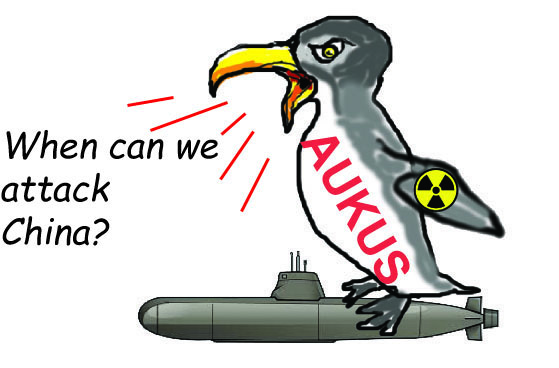
AUKUS was about ‘pressing a sense of confrontation with China’
if tomorrow Australia has some nuclear-powered submarines, why not, some other countries could ask for similar technology, it could be Indonesia, why not?’
Australia needs an entente cordiale with Indonesia over nuclear propulsion and non-proliferation, The Strategist, 29 Nov 2021, |David Engel However relaxed and comfortable Indonesian Defence Minister Prabowo Subianto might be about Australia’s plans to acquire nuclear-powered submarines (SSNs), the visit to Jakarta of French Foreign Minister Jean-Yves Le Drian has probably validated the very different view of Le Drian’s counterpart, Retno Marsudi.
……………………………………………. the most striking moment of the visit came during Le Drian’s address to Indonesia’s leading international affairs think tank, the Centre for Strategic and International Studies (CSIS). While his speech focused on issues such as multilateralism and the EU’s position on the Indo-Pacific, his response to a question on ‘minilateralism’—specifically, AUKUS and the Quad—took on a very different tone.
Ignoring the Quad, he levelled his remarks at AUKUS, stressing four points. The first two reiterated the theme of ‘betrayal’ in terms of both being ‘cheated’ out of a deal and being deceived by NATO allies and, in Australia’s case, a historical ally. He talked about American efforts to restore trust through various US commitments to France. He didn’t mention Australia in this context.
More significantly, his third point was that AUKUS was about ‘pressing a sense of confrontation with China’ (as the simultaneous translation put it). He said that, while France was not oblivious to China’s military threats and risks, he believed that the best way to respond to these threats was to ‘develop an alternative model rather than to first of all oppose’.
Perhaps his most significant point for Australian interests was his fourth, which went to the transfer of nuclear technology for submarine propulsion. He pointed out that until now no nuclear-weapon state had done this. But ‘if tomorrow Australia has some nuclear-powered submarines, why not, some other countries could ask for similar technology, it could be Indonesia, why not?’ He continued that, even though this technology was not covered by the Nuclear Non-Proliferation Treaty (NPT), the risk the arrangement posed of starting a trend was nonetheless of concern.
Irrespective of Le Drian’s intentions in answering the question in this manner—and it’s noteworthy that he didn’t cover AUKUS in his formal address—he would surely have known that his words would resonate powerfully with his audience, both at CSIS and more generally among Indonesia’s foreign policy establishment. While his depiction of Australia as duplicitous was evidently personal and heartfelt, it would also have struck a chord with those Indonesians who have characterised Canberra the same way over such issues as East Timor, Papua and spying allegations, irrespective of how justified that judgement might be.
Le Drian’s last point went directly to concerns about nuclear proliferation—issues that Indonesia highlighted in its official statement on AUKUS and the planned submarines. It corresponds closely ‘in spirit’ with subsequent official commentary to the effect that Indonesia was considering advocating a change to the NPT aimed at preventing non-nuclear-weapon states from acquiring SSNs………
whoever governs in Canberra now and into the future should at least make a priority of assuaging Jakarta’s worries on this subject, however overstated and unbalanced they are. While Indonesia’s prospects of changing the NPT and precluding Australia from having SSNs look remote at best—not least because several of its ASEAN colleagues do not share its views of Australia’s ambitions—the sooner the two countries can put this latest irritant to rest the better.
In the circumstances, the onus for doing so must primarily rest with Canberra………https://www.aspistrategist.org.au/australia-needs-an-entente-cordiale-with-indonesia-over-nuclear-propulsion-and-non-proliferation/
1 This month
17 October, Free Public Talk on Nuclear Issues in South Australia
David Noonan will speak on public interest concerns over the new Roxby Downs Indenture Act 2026 on BHP copper-uranium mining and ore processing in SA, and on how AUKUS may face SA with a High-Level nuclear waste agenda.
Dr Jim Green will discuss international developments in the field of nuclear power including ‘small modular reactors’ and Generation 4 ‘advanced’ nuclear reactor concepts.


Help Aunty Sue Protect Her Land and Sacred Sites From Destructive Rocket Testing.
.

Australians deserve the truth
about
AUKUS – https://aukuspublicinquiry.com/

PETITION – To: Prime Minister Anthony Albanese and the Australian Labor Government

of the week – Australians for War Powers Reform (AWPR)
To see nuclear-related stories in greater depth and intensity

