AUKUS deal leaves France out of South East Asian security arrangement.

Australian Prime Minister Scott Morrison on Wednesday said the three nations had agreed to “a new enhanced trilateral security partnership”.
The subtext of France and Australia’s submarine deal, Aljazeera, 27 Sep 21,
What do a new security pact and a cancelled military contract say about France’s place in the world? It was supposed to be an announcement of a pact, not the start of a foreign relations crisis between allies. But as Australia announced a new security partnership with the United Kingdom and the United States, dubbed AUKUS, it also cancelled a multibillion-dollar contract to buy submarines from France. So how did an abandoned deal for a dozen submarines turn in to the diplomatic version of a lover’s quarrel?Australia’s decision to cancel a multibillion-dollar order for French submarines in favour of American and British technology has sparked a diplomatic row of unprecedented proportions between longtime Western allies.
The French foreign ministry recalled its ambassadors to the United States and Australia citing “duplicity, disdain and lies”.
China’s Xi warns of ‘interference’ as Australia brushes off angerHundreds arrested in Australian anti-lockdown protestsFrance accuses Australia, US of ‘lying’ over submarine deal
Alongside the economic damage for tens of billions of euros, France said it resents the way Australia and its partners have handled the matter. French Foreign Minister Jean-Yves Le Drian, said, “There has been contempt so it’s not going well between us, not at all.”
President Emmanuel Macron will have a call with his US counterpart, Joe Biden, in the next few days, the French government said on Sunday.
Australia’s strategic alignment
Australia announced on Wednesday it would ditch a contract worth more than 50 billion euros ($59bn) to acquire 12 French-made diesel-electric submarines.
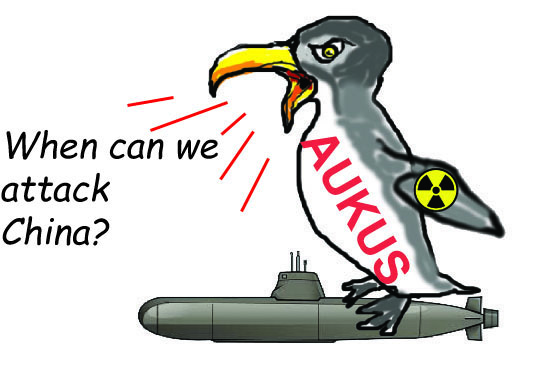
Instead, it will commission at least eight US nuclear-powered submarines in the framework of a new alliance – known by its acronym AUKUS – which will see Australia, the US, and the United Kingdom share advanced technologies with one another.
Australian Prime Minister Scott Morrison on Wednesday said the three nations had agreed to “a new enhanced trilateral security partnership”.
AUKUS Sub Deal Could Sink USA’s Relations With France,
AUKUS Sub Deal Could Sink Relations With France, Buoy Nuclear Tech Advances, Forbes, 27 Sep 21, ”…………… …….. Biden’s recent work to transform Australia into an Indo-Pacific bulwark against China, however, has worryingly offended a critical ally — France — and exposed some serious bungling in the U.S. Government. The newly announced agreement with the UK and Australia has been labeled Aukus, and it entails the making of a of nuclear-powered submarine fleet in Adelaide to replace Australia’s existing force……….
On the surface, the submarines seems logical. If equipped with nuclear armed submarine-launched ballistic missiles (SLBMs) they represent potentially maximum firepower with minimum expenditure……
The French government, informed of this [cancellation of their submarine sales contract] only hours before the public, reacted by recalling its ambassadors and accusing the U.S. and Australia of lying to them. After running on the normalization and renewal of ties of Europe, Biden cannot afford to grievously offend American allies or to take their support for granted, let alone France, America’s oldest European ally. ……
In his upcoming call with President Emmanuel Macron, President Biden might try to minimize the harm done to ensure fruitful cooperation in both Europe and Asia moving forward……..
CIA Reportedly Considered Kidnapping, Assassinating Julian Assange
CIA Reportedly Considered Kidnapping, Assassinating Julian Assange
Mike Pompeo was apparently motivated to get even with Wikileaks following its publication of sensitive CIA hacking tools https://www.rollingstone.com/politics/politics-news/cia-julian-assange-kidnap-assasinate-1232546/
ByWILLIAM VAILLANCOUR The CIA reportedly plotted to kidnap Julian Assange, and some senior officials in the agency and the Trump administration allegedly went so far as to consider options for how to assassinate the WikiLeaks founder, Yahoo! Newsreported Sunday.
According to the report, then-director Mike Pompeo was apparently motivated to get even with Wikileaks following its publication of sensitive CIA hacking tools, which the agency found to be “the largest data loss in CIA history.”
Pompeo and others “were completely detached from reality because they were so embarrassed about Vault 7,” according to a former Trump national security official, referring to the document dump. “They were seeing blood.”
Additional CIA plans allegedly included “extensive spying on WikiLeaks associates, sowing discord among the group’s members, and stealing their electronic devices.”
The report, based on conversations with more than 30 former officials, notes that the CIA’s plans for Assange reportedly led to strenuous debates regarding their legality. Some administration officials were so concerned that they felt the need to tell members of Congress about Pompeo’s suggestions.
Assange is currently imprisoned in London as courts weigh a U.S. request to extradite him.
AUKUS and the nuclear submarines will have economic effects on Australia, and big defence spending.

Neglected in the flush of enthusiasm that accompanied the AUKUS announcement is the likely cost of Australia’s new defence spending under a “China containment policy”.
New drives to counter China come with a major risk: throwing fuel on the Indo-Pacific arms race SMH, Tony Walker Tony Walker is a Friend of The Conversation.Vice-chancellor’s fellow, La Trobe UniversitySeptember 27, 2021 “……………….. Australian defence spending likely to rise
What is absolutely certain in all of this is that an Indo-Pacific security environment will now become more, not less, contentious.
SIPRI notes that in 2020, military spending in Asia totalled $US528 billion (A$725 billion), 62% of which was attributable to China and India.
IISS singled out Japan and Australia, in particular, as countries that were increasing defence spending to take account of China. Tokyo, for example, is budgeting for record spending of $US50 billion (A$68 billion) for 2022-23.
Australia’s defence spending stands a tick over 2% of GDP in 2021-22 at A$44.6 billion, with plans for further increases in the forward estimates.
However, those projections will now have to be re-worked given the commitments that have been made under AUKUS.
Neglected in the flush of enthusiasm that accompanied the AUKUS announcement is the likely cost of Australia’s new defence spending under a “China containment policy”. It is hard to see these commitments being realised without significant increases in defence allocations to 3-4% of GDP.
This comes at a time when budgets will already be stretched due to relief spending as a consequence of the pandemic.
In addition to existing weapons acquisitions, Canberra has indicated it will ramp up its purchases of longer-range weapons. This includes Tomahawk cruise missiles for its warships and anti-ship missiles for its fighter aircraft.
At the same time, it will work with the US under the AUKUS arrangement to develop hypersonic missiles that would test even the most sophisticated defence systems……………
The price tag for this in terms of equipment and likely continuing economic fallout for Australian exporters will not come cheap. ………….. https://theconversation.com/new-drives-to-counter-china-come-with-a-major-risk-throwing-fuel-on-the-indo-pacific-arms-race-168734
Australia’s Nuclear-Sub Shakeup Hits Shipbuilding Supply Chain
Australia’s Nuclear-Sub Shakeup Hits Shipbuilding Supply Chain, The Maritim Executive By Charlie Turner] 27 Sept 21,
The abrupt announcement by the Australian government that it was scrapping its plans to build a fleet of diesel-electric submarines in favor of nuclear-powered boats will have a ripple effect throughout the defense industry. The sunk cost of five years’ work and $1.7 billion has inflicted greater damage on domestic relations than on bilateral relations with the French government—it has broken the trust between defense leaders and Australian industry………
Industry bodies and lobby groups in Team Defence Australia, the Industry Capability Network and the Australian Industry & Defence Network have spent the past five years encouraging companies to invest time and resources to expand or set up a capability to service the submarine program. There have been multiple government-supported trips to Europe inviting Australian companies, at their own expense, to interact within the supply chain to develop relationships and encourage the coveted ‘knowledge sharing’ between French and Australian companies necessary to find success in such a technology leap. Follow-on trips and other efforts have been undertaken in the development of relationships and strategies centered around the program.
Those investments are a sunk cost for the Australian businesses that provide the critical operational services to support Australia’s defense capability.
Crucially, a significant number of Australian companies investing in these initiatives were small and medium enterprises that wouldn’t hold contracts directly with the defense organization but rather with the large prime contractors. They have no claim for losses—and it’s unlikely that the multinational primes will miss out on any penalty clauses contained in their contracts’ cancellation terms.
The repercussions of these actions will have long-lasting implications for the new program, in whatever form it takes. Initial indications are for a reduction in Australian industry content by 30 percent, down to 40 percent of the total build of the new submarines from the 60 percent under Naval Group. The absence of a commitment to 12 submarines under the AUKUS pact (the statement that there will be ‘at least eight’ is suitably vague) further reduces the market by another 30 percent.
With the Attack-class submarine program failing to survive a change in government leadership, how much confidence can industry maintain for investment when the new program has now apparently bypassed the strategic and political discussions about the requirement for nuclear-powered vessels?
Notably, the current and previous two prime ministers have had different preferred submarine suppliers despite being from the same political party. In the context of a change in government, the opposing major political parties have previously maintained a resolute opposition to any nuclear energy in Australia, and while Labor says it supports the new plan (with conditions), it will potentially be put in jeopardy at each federal election.
The AUKUS announcement gave an 18-month period for the examination of requirements for nuclear stewardship………..
Public discussion on the practical and political ramifications of a nuclear-propulsion solution within the country, our region and globally is the next step. Finally, continued bipartisan support for the program, in its latest form, will be required to avoid another calamity following an election or leadership spill. https://www.maritime-executive.com/editorials/australia-s-nuclear-sub-shakeup-hits-shipbuilding-supply-chain
Much posturing, but little content, on how AUKUS, and the nuclear submarines, will work
what does not make sense is a decision which, in essence, announces you are going to have a glorified interdepartmental committee look at whether it will actually work (the only missing ingredient from the Prime Minister’s usual modus operandi is mention of his department head Phil Gaetjens).
There are no details on just how this new alliance will work, but vast quantities of posturing, which is presumably designed to show the Chinese that we mean business.

However, a government desperate to avoid a referendum on pandemic management — and now threatened by challenges from independent candidates in blue-ribbon seats such as Kooyong and Wentworth over its inaction on climate change —— desperately needs something else to talk about.
Scott Morrison’s AUKUS submarine deal and ‘BFF theatre’ leaves Australia in a tricky spot, https://www.abc.net.au/news/2021-09-25/missing-details-on-australia-uk-us-submarine-deal/1004905647.30 / By Laura Tingle Sat 25 Sep 2021 The federal Coalition have always been keen advocates of contracting things out.
It started in the Howard years, when the delivery of services was contracted out and, over the intervening years, spread to contracting out policy advice — from the public service to richly rewarded consultants who sometimes produce little more than vacuous PowerPoint presentations.
The COVID-19 pandemic has shown the current government is willing to contract out responsibility for things such as quarantine, vaccines and vaccine-mandating rules to the states.
But who would ever have thought it would contract out our national security and defence strategy?
For, in a nutshell, that’s what has happened in the past week with the decision to embrace a new alliance with our old allies and “forever” friends, based on the decision to buy an (unspecified) nuclear submarine that will not go into service until 2040.
Capability gap
There is a vast amount to unpack in this decision, even amid a sense that, by the end of the week, the political caravan was moving on to climate change.
It is hard to think of a decision by Australia with such profound implications for our future that has been so redolent of symbolism, yet so completely lacking in substance.
A decision driven so much by valid concerns about defence capability, that leaves us so exposed as to not having any of that capability for the next 20 years — the time period when the power balance in our region is going to be decided.
In short, a massive strategic step-up announced to cover a massive capability gap.
The majority view in the political and strategic establishment in Australia says the strategic position has fundamentally shifted in the past five years and continues to rapidly evolve.
China’s capacity to scan the oceans, as well as both its military firepower and assertiveness, have all grown exponentially.
And most think that makes nuclear submarines, rather than conventionally powered ones, a rational decision.
It might also make sense to ramp-up your armaments — such as long-range Tomahawk Cruise Missiles — and talk of more US troops, planes and ships, and even British submarines, being based in Australia.
Looking to the US
However, what does not make sense is a decision which, in essence, announces you are going to have a glorified interdepartmental committee look at whether it will actually work (the only missing ingredient from the Prime Minister’s usual modus operandi is mention of his department head Phil Gaetjens).
There are no details on just how this new alliance will work, but vast quantities of posturing, which is presumably designed to show the Chinese that we mean business.
Things such as getting all our spooks to go to Washington this week.
Things such as emphasising the so-called Quad arrangement between the US, Australia, India and Japan, which makes it look like we have even more friends on our side.
Yet, when the Prime Minister holds a press conference in Washington DC ahead of the Quad meetings, what do you say it is about? Vaccines and energy policy.
No mention of China or strategic alliances here. And that sort of makes sense, given the constraints on Japanese military action, and that India has a very different take on Chinese issues to the Americans.
The implication in all this announcing is that the Americans are now committing to the region. That we can rely on Dad to sort out China for us.
All the talk of the new Cold War in the East raises obvious comparisons with the one in the West that occurred last century — and possibly even the crucial role the US played in Europe at that time.
Enduring questions
However, even among the more hawkish analysts, there is a gnawing question of how we (Australia) actually hold the feet of the Americans — and the British with their splendid history of reliable commitment to Asia and Australia in the 20th century — to the fire if things do indeed escalate with China.
And how do we now, on a day-to-day basis, differentiate ourselves from the US position on China when we have made so much not just of our operational dependence, but also of the whole “BFF theatre”?
This goes to questions of sovereign capability. That is, our capacity to run our own strategic policy, both in an operational sense and a diplomatic one.
Labor has backed the government’s decision on nuclear submarines with three caveats.
However, its foreign affairs spokesperson, Penny Wong, asked some valid questions on the point of sovereign capability in a speech on Thursday, such as: “How will we control the use of technology and capability that is not ours?”
“With the prospect of a higher level of technological dependence on the US, how does the Morrison-Joyce government assure Australians that we can act alone when need be; that we have the autonomy to defend ourselves, however and whenever we need to,” she said.
The alacrity and misrepresentation of Wong’s remarks by the Prime Minister in response only added to the suspicion that there is just a tad too much politics in the way this momentous dogleg in the country’s strategic position has been undertaken.
“Well, I think Australians would be puzzled as to why there can be bipartisan support for this initiative in the United States and within days, within days, the Labor Party seems to be having an each-way bet,” he said.
You can see why Labor has chosen to just stay as far away from this issue as it can, within the constraints of a responsibility to set out some reasonable questions about strategy, rather than nuclear submarines per se.
It is determined not to get wedged as it once was on Tampa.
The fallout
Labor’s determination not to get wedged may have taken away some of the political dividends of this huge shift, as has the debacle over informing the French of the decision, which has embarrassed not just Australia but the US.
And, of course, the Prime Minister’s ever-changing descriptions of how he had informed France’s Emmanuel Macron that he was tearing up a multi-billion dollar contract has been, well, just embarrassing.
“What I said was, is that I made direct contact with him,” he said in Washington on Thursday.
Having been unable to get Macron on the phone the night before the announcement, he said he “directly messaged him Australia’s decision in a personal correspondence”.
Australia dumped France, it appears, in a text message: A modus operandi more usually associated with 14-year-olds.
The nuclear subs decision may have all sorts of ramifications, from halting negotiations on a European Free Trade Agreement to entertaining prospects for cooperation between the US and China on climate change.
Its complexities are not best teased out in the lead-up to an election.
However, a government desperate to avoid a referendum on pandemic management — and now threatened by challenges from independent candidates in blue-ribbon seats such as Kooyong and Wentworth over its inaction on climate change — desperately needs something else to talk about.
Maralinga – ushered in Australia’s nuclear age

A picture in time: Maralinga, the blinding flash that ushered in Australia’s atomic age. https://www.theguardian.com/australia-news/2021/sep/27/a-picture-in-time-maralinga-when-the-atomic-age-reached-australia
Nuclear tests conducted in South Australia from 1956 resulted in swaths of countryside obliterated and decades of highly contaminated land.
The atomic age reached Maralinga with a blinding flash. At 5pm on 27 September 1956, a 15-kilotonne atomic device was detonated at the site in the western plains of South Australia.
The ensuing blast had as much explosive strength as the weapon which fell on Hiroshima 11 years earlier.
More than a decade after that horror struck Japan, Australia had become tangled up in the UK’s nuclear testing program, which saw swaths of countryside obliterated to further the nuclear arms race.
The atomic test at Maralinga was carried out by the British government as part of Operation Buffalo, run by the UK’s Atomic Weapons Research establishment.
In the moments after the detonation, RAAF personnel flew through the mushroom cloud to carry out tests with little instruction or protective equipment to shield them from the radiation.
For the next seven years, major and minor nuclear tests were carried out at Maralinga. The minor tests led to contamination of the area with plutonium-239, which has a radioactive half-life of 24,000 years.
Prior to the test, very little effort was put into finding and notifying the Anangu Pitjantjatjara people who lived on the land. In addition to the obvious immediate dangers of nuclear fallout in the area, the Indigenous community would endure the long term hazards of poisoned land and water for more than thirty years.
Maralinga was not the first nuclear weapons test conducted on Australian soil. Three years earlier, on 3 October 1952, Britain detonated a nuclear weapon on the Montebello Islands off the coast of Western Australia.
A further two detonations were carried out at Emu Field. Britain moved the testing site to Maralinga after previous locations were deemed to be too remote for nuclear weapons tests.
When Maralinga was eventually closed as a testing site in 1967, the British government began the process of cleaning the 3,200 sq km of contaminated land.
By 1968, the Australian and British governments agreed that Britain has successfully decontaminated the area by covering contaminated debris in concrete and ploughing the plutonium-laden soil into the ground.
In 1984, as the land was slated to be returned to the Tjarutja people, scientists found the land was still highly contaminated.
Nine years later, in 1993, following a royal commission, and after mounting pressure, the British government agreed to pay a portion of the estimated $101m cleanup cost.
It wasn’t until 1994, 38 years after the initial blast, that the Australian government paid $13.5m to the Indigenous people of Maralinga as compensation for what had been done to the land.
No nuclear submarines, say protesters

No nuclear submarines, say protesters https://www.greenleft.org.au/content/no-nuclear-submarines-say-protestersRenfrey ClarkeAdelaideSeptember 27, 2021 A protest on September 24 against the federal government’s decision to build nuclear-powered submarines and join in the new AUKUS pact drew 150 people to the front of Parliament House.
It was organised by a new network of anti-war, anti-nuclear and left activists. Speakers included Arabunna elder Uncle Kevin Buzzacott, Stephen Darley of the Independent and Peaceful Australia Network; economist and Greens Senate candidate Barbara Pocock; and Friends of the Earth anti-nuclear spokesperson Jim Green.
AUKUS and talk of conflict with China could torpedo COP26 climate summit
What role will Australia play in Glasgow? Will we go in good faith, promising bold action on climate change and preparedness to help our neighbouring countries in mitigation and adaptation, in recognition of our shared interests, or will we go as a spoiler?
History suggests the latter —
U.S.-China talk could torpedo climate conference https://independentaustralia.net/environment/environment-display/us-china-talk-could-torpedo-climate-conference,15558 By Graeme McLeay | 26 September 2021 If the focus favours an uncertain future threat of U.S.-China conflict when world leaders meet in six weeks to address the real danger of climate emergency at COP26, the summit will likely fail, writes Dr Graeme McLeay.

“In the councils of government, we must guard against the acquisition of unwarranted influence, whether sought or unsought, by the military-industrial complex.”
WHEN “IKE” spoke those words in his 1961 valedictory speech as U.S. President, he would not have dreamt that Australia, 60 years later, would become part of the military-industrial complex of the United States. As someone who understood the horrors of war, he understood the dangers of an arms race while at the same time acknowledging the need for defence at a time when America faced a belligerent adversary. He was cautious.
No such caution is evident in Canberra. In the space of a few days, we have been told we are to have nuclear-powered submarines, a larger presence of American armed forces based in Australia and missiles – presumably of the intercontinental variety – if all the China-talk is to be believed.
The very idea of Australia getting into an arms race with China is risible and preposterous. It will take at least 20 years for Australia to have something like the military capability that China has now and the massive spending involved will impoverish the next generation.
We have not been told whether our neighbours in Indonesia, Papua New Guinea, Malaysia, Singapore, India and the Pacific Islands have been consulted about the AUKUS deal, which brings a whiff of colonialism about it. New Zealand was quick to make it clear nuclear-powered subs will not be welcome there. It is likely they will also not be welcome in Port Adelaide.
The $90 billion French submarine deal is to be scrapped and bigger, more capable, and almost certainly, more expensive submarines will be built in Adelaide. An uncertain future threat of U.S.-China conflict is the justification for this 20-year program — about the time the world will have tipped into runaway, unstoppable climate change if the world’s present emissions trajectory continues.
In six weeks, world leaders come together in Glasgow to address the existential threat of climate emergency. As the war drums beat louder it appears unlikely they will meet in a spirit of cooperation and harmony. Without both China and the United States on board, there is the possibility of a disastrous failure, much worse than the Copenhagen fiasco because the urgency for action is so much greater.
Climate change and conflict are not unrelated. In a recent report from the Climate Council, ‘Rising to the Challenge: Addressing Climate and Security in Our Region’, authors describe climate change as a driver of insecurity.
Conflicts will arise over water, rising seas, salination, fisheries and crop failures. India, Pakistan and China – not always the best of pals – rely on meltwater from Himalayan glaciers for the survival of millions and internal conflicts over water have the potential to trigger war among neighbours which could drag the United States in, and Australia with it.
Much of Bangladesh, a country with a population of 166 million, is low lying and already experiencing inundation and salination from sea level rise. Food shortages are almost certain to occur when climate-related crop failures happen in multiple regions at the same time.
According to Climate Council spokeswoman and former Australian Defence Department Head of Defence Preparedness Cheryl Durrant:
‘Australia’s unwillingness to deal with climate change is already affecting our security, leading to a loss of geopolitical influence, particularly in the Pacific.’
What role will Australia play in Glasgow? Will we go in good faith, promising bold action on climate change and preparedness to help our neighbouring countries in mitigation and adaptation, in recognition of our shared interests, or will we go as a spoiler?
History suggests the latter — a history that goes back to the last century and the first Kyoto agreement. A belated promise of zero emissions by 2050 with no change to our weak 2030 target, with talk of future technology fixes, will convince no one.
The World Health Organization has described climate change as the greatest global health threat. Disruption of Earth’s stable climate and the biodiversity which protects us is an immediate health and security risk. A sober assessment of the risk which China poses to Australian security is common sense but failure to address the real and present danger of climate emergency, clearly set out in the Intergovernmental Panel on Climate Change (IPCC) Sixth Assessment Report, is negligence — negligence which will not go unnoticed by our young.
In his 1961 farewell speech, President Eisenhower also said:
“The potential for the disastrous rise of misplaced power exists and will persist.”
What is the Quad?
Justin Bergman, Senior Deputy Editor, The Conversation 27 Sep 21, On Friday, Prime Minister Scott Morrison joined the leaders of India, Japan and the US in Washington for the first in-person summit of the Quad.
What is the Quad, you ask? It’s sometimes labelled an “Asian NATO” — especially by China — but this isn’t quite right. Unlike NATO, the four members have not committed to defend each other in the event of a conflict. The group also doesn’t have a permanent headquarters that coordinates joint military plans.
Instead, as Ian Hall, deputy director of the Griffith Asia Institute, explains, it’s a diplomatic forum for the four Indo-Pacific powers to discuss issues in the region and cooperate to solve them.
Formed on the sidelines of other regional diplomatic forums, its remit is much broader than just security issues, encompassing infrastructure, cyber security, economic development and more.
| But the big elephant in any Quad meeting room is China. “Fundamentally, the Quad is still driven by mutual concerns about China,” writes Hall. “But, of course, this can’t be said openly, in so many words.”Whether these allies succeed in containing Chinese influence in the region and corralling its more expansionist tendencies will be a key test for US President Joe Biden’s foreign policy legacy — and Morrison’s, too.Visit theconversation.com for more coverage of the Washington summit to come. |
Talk of war with China reveals Australia’s delusions of grandeur
Talk of war with China reveals Australia’s delusions of grandeur, Independent Australia, By Dean Aszkielowicz | 26 May 2021, Australians need to be realistic when it comes to China, write Dr Dean Aszkielowicz and Paul Taucher.
THE LAST MAJOR CONFLICT in the Pacific ended over 75 years ago. Japan, the United States, China and the European colonial powers fought a war that cost millions of lives. It contributed to the downfall of several empires and overturned the regional political order.
Further, the American use of atomic bombs against Japan led to subsequent generations living with the fear of nuclear war.
Public figures in Australia who are now loudly predicting that a war with China is looming, ought to think carefully about something like this scenario playing out again. No matter what the behaviour of the Chinese regime is, or what the status of bilateral relations are, war is not an option.
Australia’s message must be peace. At the end of both World War I and
World War II, and again in the wake of the Cold War, political leaders and diplomats insisted that dialogue and international institutions are the key to a peaceful world. This view has persisted and the hope is that cooperation in politics, economics and security will protect sovereignty, increase prosperity, and allow smaller countries to determine their own path in world affairs.
This framework is known as a rules-based order and for much of the post-war era, many countries – including Australia – invested heavily in it. Indeed, much of the recent Australian angst over China stems from a belief that the regime is acting in a way that does not meet these international expectations.
Lately, however, the talk of war in Australia reflects its own emerging lack of faith in the rules-based order and a belief that ultimately the region will collapse into war. This belief downplays Australia’s ability to achieve its goals through diplomacy in the international arena.
Australians who entertain the thought of war also dramatically overstate the ability of the military in the face of an opponent like China. The Australian Defence Force (ADF) is effective, technically advanced and has a proud history. It has made major contributions to peacekeeping operations and supported the U.S. military.
The ADF has been most effective is as a diplomatic tool, by responding to disasters across the globe and through peacekeeping. In these kinds of deployments, the ADF makes an important contribution to supporting a rules-based order.
Much of Australia’s international reputation is built on these operations, and this work is indispensable in building and maintaining partnerships. The most challenging deployments, on the other hand, have been when the ADF has paid the price on behalf of the government for political crusades into practically unwinnable wars.
Australia does not have the capacity to fight a major war with China and deliver results that the Australian people would find acceptable in the aftermath of it. China is a major military and industrial power, whereas Australia is not.
When people predict a war is coming, they are predicting the deaths of thousands of Australians, the destruction of millions of dollars of ADF equipment and the collapse of a key Australian trade relationship.
This needs to be discussed much more openly if people are talking about war.
Even a limited war with China would deliver these outcomes. There are no guarantees, however, that a war would be contained at all, in which case the consequences for Australia would be an order of magnitude larger.
CNN made its thoughts clear when it called the notion of Australia fighting a war with China “ridiculous”.
Of course, those who insist that war with China is looming assume that Australia would not be on its own and would take part in the conflict in support of the U.S. They probably see war talk, in this context, as supporting the American agenda for the region. When the positions of Australia’s partners are considered, however, the recent war talk seems much more like Australia further escalating a situation that others would pay the highest price for.
Opinions in the U.S. are divided over how close war with China really is and over whether America is likely to win a war in the South China Sea. Some projections are very bleak.
Tellingly, Australia finds itself largely on its own in escalating war talk with China. Neither the U.S. nor China seem to want to go to war at the moment………
The hawkish tone of recent comments in Australia are currently out of step with the other major players. They convey an inflated sense of the country’s readiness for such a war and represent a loss of faith in a regional order that Australians spent decades helping to build.
If people in government or the military feel war with China is likely, then they must do everything they can to cool tensions, which is something diplomatic institutions are well equipped for. Issues with China over territory, human rights, or trade, need to be addressed through a renewed commitment by Australia to international institutions and international conventions……….. https://independentaustralia.net/article-display/talk-of-war-with-china-reveals-australias-delusions-of-grandeur,15122
Expansion of nuclear engineering at University of New South Wales
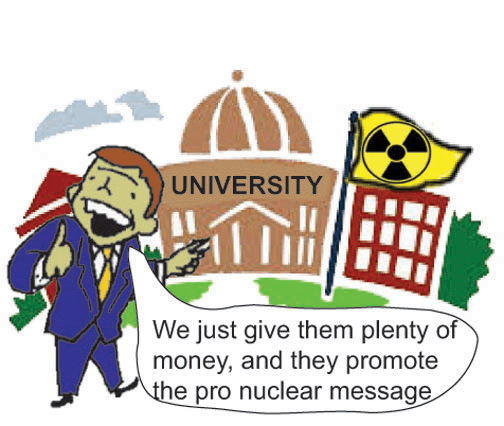
Australia’s only nuclear engineering program expands, Manufacturers Monthly, September 27, 2021 The Sir William Tyree Foundation has donated $1 million to the University of New South Wales (UNSW) to support expanding nuclear engineering program and foster the skills in Australia for using future technology.
The program prepares students for careers in high-tech industries including nuclear science, nuclear medicine, mining and resources, energy, manufacturing, aerospace, space exploration and defence……….
This gift builds on the foundations laid down to develop a high-tech nuclear industry in Australia, which will be essential if we choose to adopt nuclear energy …….. Sir William Tyree’s daughter and chair of the foundation board, Robyn Fennell said.
“To make this a reality, nuclear engineering programs like UNSW’s are critical in ensuring Australia has the home-grown skills to support that choice. My father believed strongly in the benefits of nuclear energy as a safe, clean Ed. [there’s that word again – it’s a lie] power source for Australia and our gift continues to support that vision.” ……..
$1.4 million election war chest, here’s how it will be spent for climate action with genuinely clean energy
$1.4 million election war chest, here’s how it will be spent
Climate 200 is an initiative co-founded by Simon Holmes a Court, clean energy advocate and son of corporate raider Robert and philantropist and businesswoman Janet. It will support progressive independents at the next federal election, building on the success of the likes of Zali Steggall.
Australia’s Prime Minister Scott Morrison on the defensive as Europe and South-East Asian countries react badly to AUKUS and the nuclear submarines
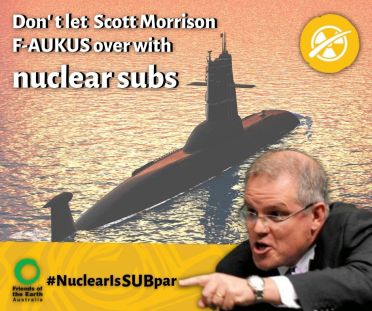
Morrison in defence mode as AUKUS fallout goes global, Frozen out in Europe, feted in Washington, alarming some of its south-east Asian neighbours: questions are being raised about whether Australia has the right diplomatic skills and resources to perform on the world stage. The Age By Anthony Galloway SEPTEMBER 25, 2021 or six days, the Indonesians knew something big was coming from Australia.
At a meeting in Jakarta on September 9, Australian Foreign Minister Marise Payne let her friend, Indonesian Foreign Minister Retno Marsudi, know a major shift was coming.
“The Foreign Minister of Australia mentioned there will be an announcement, but at the time we didn’t receive any information [about] what sort of announcement because I assume at that time it was not final yet,” Retno said this week.
The following Wednesday, Payne messaged Retno hours before the announcement of the AUKUS defence pact between Australia, the United States and Britain to share military technology and help Canberra build a fleet of nuclear-powered submarines in the face of Beijing’s growing aggression and military might.
The two ministers then talked over the phone, and Retno told Payne she hoped Australia would uphold its obligations to the Treaty on the Non-Proliferation of Nuclear Weapons and its commitment to “contribute to the peace and stability of the region”.
“I mentioned to my good friend Marise that Indonesia really hopes Australia will fulfil that commitment,” Retno said.
Since then, Malaysia has gone even further in expressing its reservations about the agreement, saying this week it will now consult China on how to react to the development.
And French President Emmanuel Macron is continuing to snub Australian Prime Minister Scott Morrison’s offer of a phone call after he was infuriated by Australia’s decision to dump a $90 billion submarine agreement with Paris and instead negotiate the AUKUS deal behind his back.
All of this contrasts sharply with Morrison’s week-long trip to New York and Washington. His interactions with the Americans have been glowing: not just with President Joe Biden, but also Democratic House Speaker Nancy Pelosi and Republican Senate leader Mitch McConnell. The first physical leaders meeting of the “Quad” grouping – Australia, the US, Japan and India – was expected to have a similar air of friendliness to it on Friday.
A week after the announcement of AUKUS, Australia finds itself at the forefront of world politics in a way it has never before been. Frozen out in Europe, feted in Washington, alarming some of its south-east Asian neighbours, and backed in by the Quad, these are unfamiliar times for little old Australia. And questions are being asked about whether we’ve got the right diplomatic skills and resources to perform on the world stage.
The ‘Anglosphere’ is back
When announcing AUKUS, Morrison described it as a “forever partnership”, while British Prime Minister Boris Johnson said it was an agreement among “kindred” nations. This led to a perception it was an alliance, when it is not. AUKUS is an agreement to share military technology including nuclear submarine capability, long-range missiles, cyber, artificial intelligence, quantum technologies and undersea drones.
Former senior diplomat and intelligence official Allan Gyngell, now national president of the Australian Institute of International Affairs, says Australia sent a problematic message to the region that the “Anglosphere is back”.
It reinforces perspectives that Australia is not really a legitimate part of the region, but a junior partner in a three-way partnership between English-speaking countries,” Gyngell says. “However much we say Asia is important to us, it is clear that home is where the heart is and the heart is with our two great and powerful friends.”
Some south-east Asian countries were also said to be uneasy with the focus on “values” and “democracy”. Many countries in the region are anxious about the growing assertiveness of China but they aren’t liberal democracies. They don’t see a nexus between liberal democratic values and the need to counterbalance a stronger, more aggressive China………………….
With the emergence of new formations such as the Quad and AUKUS, south-east Asian nations have been concerned about the power of ASEAN weakening. Australian diplomats have been insisting the nation is committed to “ASEAN centrality” in both private meetings and public statements.
Gyngell says Australia needs to be careful not to dismiss the concerns of south-east Asian nations, adding “we always look to vindication of our own positions and prejudices”.
Europe’s fury
Further afield, the Morrison government is most concerned about the repercussions in Europe, where there is visceral anger stemming from the AUKUS agreement being negotiated in secret all year even though the US and Britain are key members of NATO.
On the sidelines of the United Nations General Assembly, European Council President Charles Michel reminded Morrison of the need for “transparency and loyalty” during an awkward encounter, while German Foreign Minister Heiko Maas described the agreement as “unsettling”.
While the EU contemplates whether to scuttle talks over a free trade deal with Australia, Canberra can also expect a Europe that is less forgiving over its action on climate change………
Not enough focus has been on whether Australia is adequately investing in all the instruments of statecraft, most notably diplomacy and foreign aid, to support its strategic intentions.
Between 2013 and 2020, Australia’s total diplomatic and development budgets fell from 1.5 per cent of the federal budget to 1.3 per cent. The government gutted parts of the foreign aid budget in south-east Asia to pay for its “step-up” in the Pacific…………. https://www.theage.com.au/politics/federal/morrison-in-defence-mode-as-aukus-fallout-goes-global-20210924-p58ui2.html
France and other NATO members perturbed at the AUKUS agreement
“This is not about French disappointment about losing a contract. This is about a strategic decision that has implications for the whole of Europe. And to address that there is no easy fix.”
The AUKUS agreement is particularly sensitive for European security because the US and UK are influential members of NATO.
No timeframe, let alone a date’: France has no immediate plans to speak to Canberra, SMH, By Bevan Shields, September 25, 2021 — Paris: France has no immediate plans to restore diplomatic relations with Australia, as Emmanuel Macron and Boris Johnson move to heal a damaging rift triggered by the Morrison government’s new pact to counter China.
The French President and British Prime Minister spoke over the phone on Friday, local time – two days after an angry Macron held a similar bridge-building call with United States President Joe Biden.
A high-level French government official told The Sydney Morning Herald and The Age that it was far too soon to even consider when its ambassador to Australia, Jean-Pierre Thebault, would return to Canberra after being recalled amid the fallout from a shock deal for the US and UK to help Australia build a fleet of nuclear-powered submarines.
The deal sunk a $90 billion contract between Australia and France for 12 diesel-powered submarines, which Macron had used as a central plank of his strategy to be a major security partner in the increasingly contested Indo-Pacific.
Thebault remains in Paris for “consultations” over the so-called AUKUS pact and how France should re-engage with Australia at the diplomatic, ministerial and leader level……
The French government is angry with Australia over three key factors, including that Australia, the US and UK were negotiating behind an ally’s back; and that the Morrison government has downplayed the connection between the submarine contract and Macron’s interest in the Indo-Pacific.
“This is not about French disappointment about losing a contract. This is about a strategic decision that has implications for the whole of Europe. And to address that there is no easy fix.”
Some Australian government ministers have concluded that even if Thebault returns in the coming weeks, relations with France will not begin to thaw until after presidential elections in April 2022……..
The AUKUS agreement is particularly sensitive for European security because the US and UK are influential members of NATO……
Christop Huesgen, a longtime foreign policy adviser to the retiring German Chancellor Angela Merkel and German ambassador to the United States until earlier this year, said the US involvement in the AUKUS agreement was an “insult” to a key NATO nation…..
The French government is angry with Australia over three key factors, including that Australia, the US and UK were negotiating behind an ally’s back; and that the Morrison government has downplayed the connection between the submarine contract and Macron’s interest in the Indo-Pacific.
“This is not about disappointment over a commercial contract,” the French official said. “This is way more profound.”
They are also baffled that Australia has torn up a contract for French vessels when the AUKUS agreement only provides for an 18-month review into what sort of nuclear boats the US and UK could help Australia acquire. The cost of the eight vessels is not known, nor is when they will first enter the water.
Macron’s supporters are annoyed at what they say was an attempt on Morrison’s part to give the impression he had spoken with the French President about the submarine decision the night before it was announced in a press conference with Biden and Johnson.
…….French fury is also directed at Foreign Minister Marise Payne, who presided over the submarine contact’s birth during her time as defence minister and held a meeting with French Foreign Minister Jean-Yves Le Drian just two weeks before the AUKUS announcement.
Payne gave Le Drian no indication the deal was about to be scuttled and even released a joint statement afterwards praising the French-Australia submarine project………https://www.smh.com.au/world/europe/no-timeframe-let-alone-a-date-france-has-no-immediate-plans-to-speak-to-canberra-20210925-p58uo8.html
1 This month
Chernobyl: The Lost Tapes – A good documentary on Chernobyl on SBS available On Demand for the next 3 weeks– https://www.sbs.com.au/ondemand/tv-program/chernobyl-the-lost-tapes/2352741955560
15 April – Zoom –Nuclear Power is Not the Solution
Apr 15, 2026 01:00 AM in Canberra, Melbourne, Sydney

Join the International Physicians for the Prevention of Nuclear War (IPPNW) on Tuesday, April 14th for a timely webinar exploring the risks associated with nuclear power and challenging the myth that it offers a simple, safe, carbon-free solution to the climate crisis

21 April Webinar: No Nuclear Weapons in Australia
Start: 2026-04-21 18:00:00 UTC Canberra, Melbourne, Sydney (GMT+10:00)
End: 2026-04-21 19:30:00 UTC Canberra, Melbourne, Sydney (GMT+10:00)
Event Type: Virtual
A virtual link will be communicated before the event.
Host Contact Info: australia@icanw.org

of the week – Australians for War Powers Reform (AWPR)
To see nuclear-related stories in greater depth and intensity
 Antinuclear