Queensland’s premier has talked up gas and renewable energy when asked about the Adani coal mine, on her first day back from a trade mission to the United States.
Federal Labor Leader Bill Shorten this week cast further doubt on Adani’s ability to raise funding for the project and whether a future Labor government would support the project.
Annastacia Palaszczuk on Friday said she hadn’t spoken to Mr Shorten since returning from the US, but reiterated the $16.5 billion mine had to stand up by itself without taxpayer money.
“There are other resource industries investing in Queensland, the gas industry is investing in Queensland, we have $20 billion worth of renewable energy on our books,” Ms Palaszczuk told reporters in Brisbane
“I hope a lot of resource company’s projects go ahead, but money talks, and the money is talking by investing in renewables.”
Ms Palaszczuk deflected questions about the proposed coal mine in Queensland’s Galilee Basin, instead pointing to interest from US investors in her government’s 50 per cent renewable energy target.
The premier said she had also met with the CEOs of a number of gas companies in the US as part of her government’s push to use gas as a transition fuel between coal and renewables.
Anti-Adani documentary screening axed for safety reasons, not politics, council says, ABC News, 21 Feb 18 ByJosh RobertsonPublic safety concerns, not politics, were behind the axing of the screening of a documentary on the Stop Adani protest movement, a north Queensland council says.
Townsville City Council’s talks with police about “emerging community tensions” in the debate around the Carmichael mine project prompted its move to halt the screening at one of its public venues a week out, according to its chief executive Adele Young.
It follows the arrest of a man in Townsville on Monday night for allegedly assaulting anti-Adani protesters, reported threats to activist Ben Pennings, and a controversy that engulfed federal MP George Christensen on Sunday over his apparent online taunt to environmentalists while posing with a gun.
However, the North Queensland Conservation Council (NQCC) insists the council did not mention safety concerns when it first revealed its decision to scrap the booking agreement last Thursday.
The environmental group had already paid to hold a local premiere of the Nell Schofield film, A Mighty Force, at Townsville’s Old Magistrates Court on February 22, along with simultaneous screenings in other cities.
President of the NQCC, Wendy Tubman, said a council officer told the group in a phone call that her supervisor had instructed her to cancel the booking as council had deemed the film “political”.
Ms Tubman told the ABC it was an “outrageous” situation and the NQCC had then written to the mayor, Jenny Hill, to say it had legal advice that the booking agreement was “valid and binding”…….
Council move ‘a real worry’
State Greens MP Michael Berkman said that “whichever way you interpret the Townsville City Council’s actions here, it seems pretty rotten”.
“If they can’t be confident that community members are able to safely attend a film screening at the council venue, that’s a real worry,” he told the ABC.”What’s perhaps more concerning is if council is deliberately stifling community engagement and censoring any backlash around Adani, especially when they’ve come under fire for their dodgy $18 million funding of Adani’s airstrip.”………..http://www.abc.net.au/news/2018-02-21/council-denies-politics-behind-axing-of-stop-adani-documentary/9468218
There should be no extinguishment of Native Title without our consent
‘The W&J Council received its most recent mandate at a meeting of the W&J claim group on 2 December 2017.
The letter informed the Government that the W&J claim group opposes the Adani Mining Pty Ltd project because of the damage that it will cause to the culture, and the lands and waters,
of the Wangan and Jagalingou People.
‘W&J council also oppose the registered Indigenous Land Use Agreement (ILUA) with Adani Mining Pty Ltd
purported to be authorised by the Wangan and Jagalingou People
in controversial circumstances (“the Adani ILUA”).
Killing Country (Part 5): Native Title Colonialism, Racism And Mining For Manufactured Consent, New Matilda By Morgan Briggon
In the final of a five-part series on the battle by the Wangan and Jagalingou people of Central Queensland to halt the construction of the Carmichael coal mine by Indian mining giant Adani, Dr Morgan Brigg explains the problems with a native title system that continues to dispossess and disempower Australia’s First Peoples.
Wangan and Jagalingou people are the traditional owners of a vast swathe of Central-Western Queensland that is critical for the proposed Adani Carmichael mine, including a 2,750-hectare area over which native title rights must be extinguished for Adani to convert the land to freehold tenure for the infrastructure for mine operations.
The Wangan and Jagalingou are native title applicants with a prima facie claim to their lands, but the Wangan and Jagalingou Traditional Owners Family Council (W&J) are not following the establishment script of playing along with mining interests. Instead, they are vehemently resisting the proposed Adani Carmichael mine, including through native title law.
The fact that their rejection of Adani through four claim group meetings is not an open-and-shut case which sends the miners packing goes to the heart of what native title is and how it works in Australia
……… At the heart of the matter is that the native title regime is not a strong vehicle for the pursuit of Indigenous rights, including because it does not enable a veto, the possibility of which is the only true test of whether it can be said that free, prior and informed consent has been given. As W&J say, ‘no means no’.
Instead, native title facilitates the interests of state and capital by manufacturing consent through processes stacked against Indigenous people and backed up by the option of compulsory state acquisition of land.
The Australian establishment is accustomed to a highly inequitable approach to race politics. But the immorality of such legal deprivation is readily recognised on the world stage. The racially discriminatory nature of native title has previously been called out by the United Nations Committee on the Elimination of Racial Discrimination, and as the W&J’s recent submission to the CERD states, “a consultation process that conforms to international law is almost impossible under Australian law”.
Despite having the odds stacked against them, W&J are challenging Australia’s native title system and the notion that compliance with colonial-derived law and the imperatives of industrial projects is the way forward for Indigenous people……..
Manufacturing Consent, Denying Traditional Owners
Wangan and Jagalingou people rejected Adani’s proposals in December 2012 and October 2014. However, Adani went to the NNTT in 2013 and 2015, the Tribunal allowed the mining leases to be granted over the rejections of the claim group, and the Queensland Government duly complied. This is the most direct way in which native title facilitates the denial rather than the protection of Aboriginal rights.
There was no consent, and no requirement on Adani to continue to negotiate, or to accept a refusal.
In addition, and against Wangan and Jagalingou decisions in 2012 and 2014, QSNTS has continued to facilitate Adani’s ongoing efforts to seek agreement, through an ILUA, to the surrender of native title rights in up to 2,750 hectares of land that are necessary for infrastructure critical to the mine. QSNTS declined to in any way facilitate a ‘self-determined’ meeting of the claim group that was run in March 2016 – a meeting that once again rejected an ILUA with Adani, as well as any further dealings with them. They also refused to attend, or share the notice of the most recent claim group meetings in December 2017 – meetings to address the progress of the native title claim. These meetings also revisited, and as it turned out, de-authorised the ILUA that Adani was seeking to have registered………..
Meanwhile, the Queensland Government has remained silent in public while consistently joining court actions on the side of Adani, and actively facilitating the mine through the actions of the Coordinator-General. In this way, they prosecute an out-dated resource-intensive developmentalism at the expense of Indigenous rights, without publically saying that they oppose Indigenous rights.
As noted in a previous article in this series, “The ILUA process, in effect, enables the State Government to abrogate its responsibilities to mining companies in negotiations with Traditional Owners, despite the obvious unequal access to power and information that shapes both negotiation processes and their outcomes”.
However, depending on the outcome of the upcoming court case, the Queensland Government may be called upon to more explicitly deny the rights of Indigenous people as enabled by the native title regime.
Compulsory Acquisition and the Continuation of Colonial Violence
Should the objections of the W&J to the Adani ILUA process be upheld in the March 2018 court case, and if potential further Adani efforts to seek an ILUA are unsuccessful, the Queensland Government can compulsorily acquire the 2,750 hectares that Adani seeks. This action, which would be initiated through the Coordinator-General and require a decision of the Governor in Council, would see the state extinguish the native title rights of Wangan and Jagalingou people.
………W&J stand on the conflict-ridden frontier of these issues in real time where powerful forces – the state, miners, big money, and the established media – seek to overcome Aboriginal resistance that operates through the ‘right to say no’ that inspires older and rising generations of Aboriginal rights leaders.The W&J are pushing the limits of native title to prosecute their rights while opposing Adani’s proposed mine and making claims through Aboriginal law on their own terms. In doing so they are helping to show how native title is manifestly inadequate.
Farmers in distress as devastating drought enters its sixth year The Australian, RICK MORTON, Social Affairs reporter, Sydney @SquigglyRick
Almost five years after drought was last officially declared in Queensland, two-thirds of the state, or 120 million hectares, is in the grip of a dry so long and grinding that many who can afford to have forgotten it even exists.
At the end of last year, 35 council areas in the state remained wholly drought declared — some since April in 2013 — affecting thousands of beef and sheep stations, farms and other agricultural businesses.
Take Audrey Stone, a beef cattle property in Queensland’s central-west. It would be easy, owner Brett Wehl says, to sit back and believe it is the driest place on the continent.
The Wehl family homestead, about 40km northwest of Barcaldine, sits among a flat moonscape filled only with choking acacia bushes and tumbleweeds. The 6070ha property has run about 1000 head of cattle in the past but there are just 20 on it now.
Others have it worse, some have it better, but playing that game will drive a person mad, Mr Wehl says.
At the end of last year, precisely two-thirds of Queensland remained drought-declared with much of this officially in drought for four years and counting.
The state government has handed out $140m in drought assistance in that time. The proportion of the state affected has fallen from 87 per cent at the beginning of last year but thousands of farmers and graziers are still in its grip.
The Numbers Don’t Stack Up: W&J’s Rights on the Chopping Block for Adani’s ‘Non Viable’ Project, New Matilda, By John Quigginon Adani Changes its Plans
In the context of shifting policy settings and coal markets, Adani has changed its plans. The original Adani proposal involved production of 60 million tonnes of coal from W&J Country in the Galilee Basin, and with an expected life of 90 years.
This was at first downgraded to 40 million tonnes of coal by 2022, with an expected life of 60 years, and then further reduced to 25 million tonnes of coal.
This revised so-called ‘Stage 1’ project would defer expansion of the Abbot Point terminal, alongside establishment of an initial, smaller mine.
Given the very unlikely possibility that coal will actually be in demand for electricity generation beyond 2050, the difference in duration is immaterial. However, these reductions in scale do have important implications for the viability of the rail line.
Capital investment for the life of the original mine project was expected to total US $21.5 billion. This total figure continues to be regularly cited, despite the significant downsizing that has since occurred.
Adani has, to date, invested approximately US $3.5 billion in this project, of which approximately US $2.1 billion financed the purchase of the Abbot Point T1 coal terminal. The remainder was associated with the acquisition of the Carmichael mine site.
A large portion of Adani’s total investment is what economists like to call ‘sunk’: that is, it is investment that would be written off if the Carmichael mine project failed to proceed. The only terms in which Adani could recoup these funds was if it could find a buyer for its assets. Adani’s unwillingness to write off such a large investment is likely one reason it has persisted with the project.
But the Numbers Don’t Stack Up
With its new scaled down project proposal, alongside global coal price fluctuations and the very real market access challenges in India, and elsewhere, just how do Adani’s numbers stack up?
Let’s start with estimates on the sale price for Carmichael coal.
As of October 2017, the price of Australian thermal coal was approximately $US97/tonne. Futures markets predict a decline in this price over coming years. Reflecting this trend, the futures price for delivery in February 2020, a possible start date for shipments from the project, is $US81/tonne.
However, Tim Buckley of IEEFA has estimated that the lower quality of the Carmichael mine’s coal output will result in a 30 per cent discount in revenue per tonne.
On this basis, the price of coal from the Carmichael mine – assuming exports begin in 2020 – will deliver just $A74 tonne.
But what will it cost to produce?
In its original analysis, Adani – based on advice from McCullough Robertson in January 2015 – estimated costs of US $38.70/tonne, although other analyses suggest the cost may be higher. Significantly, this figure does not include the costs of rail transport and ship loading. And of course, such figures fail to capture the environmental costs of Adani’s proposed mega mine nor do they measure the irreplaceable loss of Country for Traditional Owners if this mine were to proceed.
Putting these ‘externalities’ aside, this suggests a cost of A $50/tonne in 2015, or $A55, updating for inflation at an annual rate of 2 per cent.
Based on these figures, the price for Carmichael coal – net of all operational costs – would be approximately $10/tonne. If royalties were paid at the standard rate, the net return would be just $3/tonne. That’s a very small return for the destruction of Country and walk over of Traditional Owners rights………..
If It’s Not Viable, Why Would the Project Proceed?
The analysis above shows that, even under highly favourable assumptions, the Adani Carmichael project will be unable to generate sufficient returns to cover interest at commercial rates, or to repay capital to lenders and investors.
This analysis therefore raises the question; why does Adani Enterprises choose to proceed with such a project?
Three possible answers present themselves.
The first is that Adani does not in fact intend to proceed with the project in the near future. Rather, the project is being kept alive with relatively modest expenditure to avoid writing off the large amounts already invested, and to maintain an option in the hope that ‘something will turn up’, such as an unexpected and sustained increase in the price Adani can realize for coal.
A second hypothesis is that the complexity of the Adani corporate structure is such that Adani could construct the proposed rail line almost entirely with public funds provided on concessional terms, then hope that other coal mines in the Basin would render it profitable.
The apparent transfer of ownership of the rail project to an Adani-controlled company in the Cayman Islands supports this idea.
A third possibility, is that by making continuous new demands on governments for concessions of various kinds, Adani will eventually be able to blame government policy for the project’s failure, and on this basis extract compensation. If this is the strategy, it has so far been foiled by the abject compliance of governments at all levels.
The Adani mine-rail-port project is not commercially viable, even under the most optimistic assumptions. That Adani has failed to achieve final close reflects the dubious economics on which this project is based
While much remains obscure, it is clear that any public funds advanced to the project – a project that does not have the consent of the Traditional Owners – will be at high risk of loss.
There is no future for exploitative developmentalism. The economy of the future will depend on sustainable management of resources, a task in which Indigenous communities must play a central role.
This follows the general (though not universal) recognition of the principle, following the Mabo decision, that Indigenous people have the right to play a role in determining the appropriate use of their land.
But this is not simply a nice ideal that will come about through sensible public policy development. This is a brutal contest for land and resources that started with colonisation.
Adani scraps $2bn deal to outsource Carmichael coalmine operation
Decision to end Downer EDI agreement follows Palaszczuk government’s blocking of federal loan for the Queensland project, Guardian, 19 Dec 17, Adani has blamed the Queensland government’s decision to kill off a taxpayer-funded loan for its decision to ditch a $2 billion agreement with a major contractor.
But the Indian miner says it remains committed to building its controversial Carmichael coalmine and the decision to part ways with Downer EDI has no bearing on that.
Adani had intended to outsource the operation of its Carmichael mine to Downer under an agreement that was worth $2bn at the time of its announcement in 2014, but now says it will run the mine itself.
It made pointed references to the Palaszczuk government’s loan veto and the need to keep production costs down in announcing the “mutual” split with Downer……
Anti-Adani protesters, who have targeted Downer over its involvement in the project, say it’s a welcome blow.
“Downer walking away from Adani is the biggest nail in the coffin for the Carmichael mine thus far. Adani are unlikely to find another Australian company willing to risk building and operating such a controversial mine,” Galilee Blockade spokesman Ben Pennings said.
“Adani have never operated a mine of this scale and have absolutely no experience operating mines in Australia.”
The very first act of Queensland’s newly re-elected Labor government was to make good on its election promise to veto a loan to Adani of up to $1bn from the federal Northern Australian Infrastructure Fund (Naif).
The government has said it backs the mine and wants the jobs it will create, but also says the project must be viable without taxpayer funds, including federal funds.
Annastacia Palaszczuk to officially veto Adani railway loan after swearing in
Letter confirming veto will be sent to Malcolm Turnbull as Liberal National party elects new leadership team, Guardian, Amy Remeikis, 12 Dec 17, The Queensland premier, Annastacia Palaszczuk, will move to officially veto any loan to the Indian mining company Adani from the Northern Australia Infrastructure Facility, as soon as she and her new government are sworn into office.
After almost two weeks of vote-counting, Labor was declared the winner of the 25 November poll on Friday, returning to parliament with a majority for the first time under Palaszczuk’s leadership.
A letter confirming the Adani veto, which marked a turning point in Labor’s campaign, will be sent to the prime minister immediately after Queensland’s governor swears in the new state government on Tuesday……
The move to veto the Naif loan has frustrated the federal government, particularly the minister for resources and northern Australia, Matt Canavan, who last week told News Corp the Queensland government decision was motivated by “xenophobia” and “racisim”, comments Bill Shorten’s office labelled “unhinged”…….
‘With the announcement of a new majority Qld Labor government, and
with the National Native Title Tribunal set to decide today whether to register Adani’s sham Indigenous Land Use Agreement,
the Wangan and Jagalingou Traditional Owners Council have presented a clear set of demands.
‘Wangan and Jagalingou (W&J) Traditional Owners Council Spokesperson Adrian Burragubba said,
‘“Our fight to protect our country and heritage will continue until Premier Annastacia Palaszczuk acknowledges
that we are the people from that land, and Adani does not have the consent it requires from us for this destructive mine.
‘“We call on the Palaszczuk Government to stand up for our rights and not the interests of Adani.
We have written to our more than 100,000 supporters in the wider community this morning,
asking them to press the Premier and Deputy Premier to demand that the returned Palaszczuk Government –
‘acknowledge that Adani and the Queensland Government do not have the consent of W&J Traditional Owners for the Carmichael mine
remove Queensland’s ‘signature’ from Adani’s contested Indigenous Land Use Agreement
rule out extinguishing Native Title to allow Adani to proceed, even if the ILUA is registered by the NNTT
stop opposing the rightful W&J Traditional Owners in court and wait for all our cases to be heard, and
end Adani’s special treatment – which will enable the destruction of W&J country and heritage – including keeping the Premier’s election promise to veto Adani’s $1BN taxpayer-funded loan”’
‘“This follows an an authorisation meeting of our Claim Group on 2 December at which,
for the fourth time since 2012, our people voted unanimously to reject an Indigenous Land Use Agreement (ILUA) with Adani. … ‘
Is this the end of the road for Adani’s Australian megamine?
Australian and Chinese banks have turned it down, and analysts say Adani’s failure to secure funding for the Carmichael mine leaves it high and dry, Guardian, Michael Slezak, 7 Dec 17, Adani’s operations in Australia appear to be hanging on by a thread, as activists prove effective at undermining the company’s chances of getting the finance it needs.
China seems to have ruled out funding for the mine, which means it’s not just Adani’s proposed Carmichael coalmine that is under threat, but also its existing Abbot Point coal terminal, which sits near Bowen, behind the Great Barrier Reef.
The campaign against the mine has been long. Environmentalists first tried to use Australia’s environmental laws to block it from going ahead, and then failing that, focused on pressuring financial institutions, first here, and then around the world.
The news that Beijing has left Adani out to dry comes as on-the-ground protests against construction of the mine pick up. Two Greens MPs, Jeremy Buckingham and Dawn Walker, have been arrested in Queensland for disrupting the company’s activities.
Is China’s move the end of the road for Adani’s mega coalmine in Australia, and will the Adani Group be left with billions of dollars in stranded assets?
Environmental laws fail to halt mine
Despite the mine threatening to destroy some of the best remaining habitat of threatened species of birds and lizards, federal environmental laws proved unable to stop the mine in the face of a government that wanted it to go ahead.
The initial federal approval for the mine was overturned after it was revealed the then-minister for the environment, Greg Hunt, had ignored his own department’s advice about the mine’s impact on two vulnerable species, the yakka skink and the ornamental snake.
But Australia’s environmental law leaves very little opportunity for challenging the merits of a minister’s decision – it only allows for challenges on whether those decisions considered everything required by the law. As a result, the minister needed only approve it again, after formally considering the impact on the two species.
Greens MPs arrested and fined at Adani protest, as Indian miner is referred to consumer watchdog, The New Daily 6 Nov 17,Two NSW Greens MPs have been arrested and fined for protesting against the proposed Adani Carmichael coalmine, while another front was opened in the long-running battle against the development.
Jeremy Buckingham and Dawn Walker were among 17 people arrested on Wednesday morning for trespassing at the controversial site, 270 kilometres west of Bowen in Queensland.
Mr Buckingham and Ms Walker were fined $250 each after being issued with a police infringement notice for trespassing unlawfully at a place of business.
“I’m proud to stand with activists in defence of climate and country, and respect all those people around Australia and internationally who want to stop the Adani coal project,” Mr Buckingham said in a statement on Wednesday.
“Although we are MPs from NSW this is an issue of national and international significance. Adani represents a line in the sand for all those concerned about climate change who do not want to see a new coal precinct opened up in Australia.”
Ms Walker said the proposal was “tearing Indigenous communities apart” and was offering “a sub standard agreement to traditional owners for their land”.
About 5am on Wednesday, Queensland Police were alerted that 35 people were blockading the railway construction site near the proposed mine.
Fourteen protesters entered the site and climbed onto vehicles and machinery about 6am, a police spokesman told The New Daily.
A woman in her 60s locked herself to a boundary gate with a metal bike lock around her neck. Police were working to remove her.
Seventeen people were arrested for trespass and failure to comply with direction. Nine of those people were issued with infringement notices after moving on.
As the nation’s energy future remains at the forefront of federal political discourse, SMR Nuclear Technology has reignited the nuclear debate. Robert Pritchard serves as chairman of the board at SMR Nuclear Technology and is executive director of the Energy Policy Institute. He is calling for communities across Australia to consider whether nuclear power could be generated in their area.
“Ipswich ticks the box. “Places like Ipswich, Mt Isa, Broken Hill, Olympic Dam in South Australia, somewhere up in the Pilbara – there are lots of places where this makes all sorts of sense in 10 years’ time.”
Mr Pritchard said the station would not be built tomorrow, but called for the community to envisage the future. “The first one that would ever operate would not operate until 2030 – you’ve got 13 years,” he said.
“We’ve got the timeline mapped out as to what would happen in those 13 years but the work has to start now. Where you start is not with the technology – that’s a given – you’ve got to start with the community support.”
Mr Pritchard said there was a growing interest in nuclear generation across the community, which would be vital to its future……..
Federal Member for Blair Shayne Neumann dismissed the call.
“I don’t think it’s in the best interests of Ipswich to have a nuclear power plant on the banks of the Bremer River,” he said.
“It’s got to be renewables – solar, wind and geo-thermal energy.”
He said the nation was moving away from a high-emissions-intensity economy towards a green future.
“I’ve come to the conclusion a long time ago, as far as I’m concerned, not for our future here,” he said.
The strong opposition from the Member for Blair does not discourage Mr Pritchard, who, although encouraged politicians to keep an open mind, said it was up to the people to decide. “I think this is going to capture the public’s imagination, mainly because it’s not being pushed by politicians,” he said.”If the community doesn’t want it, we’re not going to have it, that’s the end of the story,” he said.The energy policy executive said it was a matter of; “fly the kite and see what happens”.
Mr Neumann was “convinced” the majority of residents in Ipswich would be opposed to nuclear generation technology.
Mr Pritchard said it would take the community time to learn about nuclear power generation.
He pledged to set up a series of meetings around the country where people were expressing serious interest.”What we want to do over the next little while is start these dialogues with community people,” he said.”You’re not going to push anything down people’s throats – people just won’t cop that.”The vast majority of people will be interested.” revolution, https://www.qt.com.au/news/ipswich-ticks-the-boxes-for-nuclear-revolution/3281160/
ABC News, By Josh Robertson and Isobel Roe 4 Dec 17, A group of traditional owners fighting Adani’s central Queensland coal mine have filed a court injunction against both the mine owner and the Queensland Government, hoping to prevent a National Native Title Tribunal decision on the Carmichael mine site. The legal fate of Australia’s largest proposed coal mine hinges on the tribunal registering an Indigenous land use agreement (ILUA).
After months of pressure from Adani, it is understood the tribunal has moved to fast-track its ruling and was due to hand down its decision some time this week.
The move shocked mine opponents within the Wangan and Jagalingou (W&J) traditional owners, who fear having a huge swathe of their native title claim on Galilee Basin country irreversibly struck down before the Federal Court can rule on a separate challenge to the validity of the ILUA.


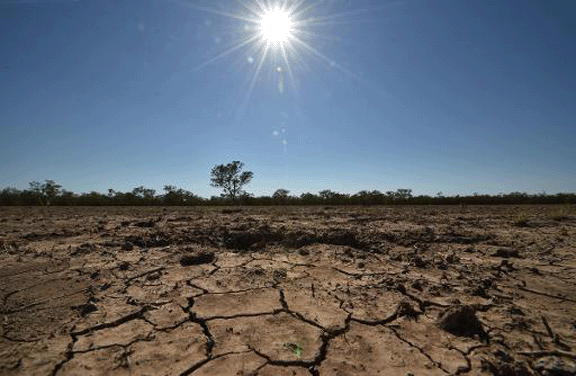
 Almost five years after drought was last officially declared in Queensland, two-thirds of the state, or 120 million hectares, is in the grip of a dry so long and grinding that many who can afford to have forgotten it even exists.


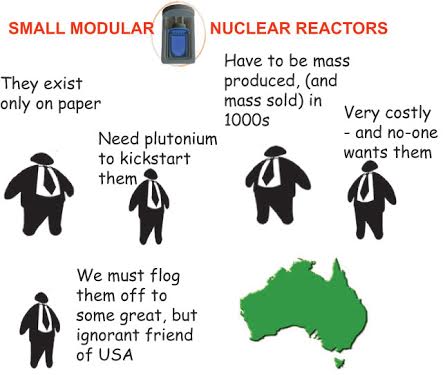




 Antinuclear