The decision by Adelaide University to withdraw a venue booking for an event featuring a leading United Nations human rights expert has ignited a fierce debate about academic freedom and censorship in South Australia.
The controversy surrounds a panel discussion titled “Settler Colonialism: What It Can Tell Us About the Conflict in Israel/Palestine,” which was scheduled to be held at the university’s Elder Hall. The event is part of the Constellations: Not Writers Week, a breakout festival created in response to the recent cancellation of the official Adelaide Writers’ Week.
The panel features Francesca Albanese, the United Nations Special Rapporteur on the Occupied Palestinian Territories, who was to appear via video link, alongside esteemed historian Henry Reynolds and UNSW academic Lana Tatour.
According to event moderator Chris Sidoti, Elder Hall had been booked a month in advance. However, on Tuesday, the university informed organisers that the booking was being revoked, citing “health and safety” concerns.
In a statement, an Adelaide University spokesperson defended the decision, stating they were only made aware of the external event the previous Friday. The university claimed it could not accept the booking because it:
“… did not go through the required review and approval process in accordance with the required policy and procedure.”
The spokesperson added that the university could not “ensure the safety, respect and comfort of those attending” and suggested an alternative venue – the National Wine Centre – at a significantly higher cost of $23,500, compared to the $750 fee for the university hall.
This explanation has done little to quell the criticism. Mr. Sidoti described the move as a “sad reflection on the state of Adelaide University today,” arguing that the institution’s core role is precisely “to provide forums for these kinds of discussions – and it’s failing in that.”
The cancellation has drawn sharp rebukes from political figures, who see it as part of a worrying trend of silencing dissenting voices.
Democracy education resources
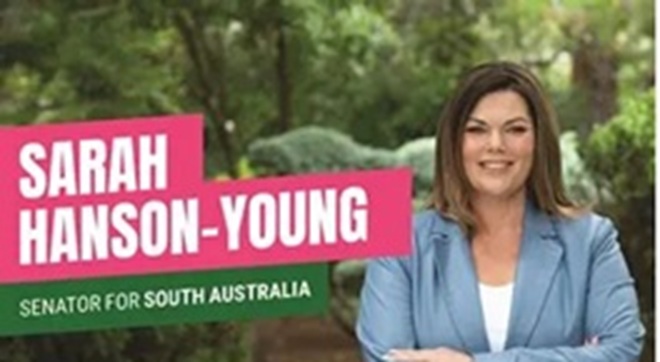
Greens Senator for South Australia, Sarah Hanson-Young, demanded the university explain its actions, calling the reports “concerning.” She linked the decision to the earlier controversies surrounding Writers’ Week, suggesting a broader “culture of fear infecting our institutions.”
“You cannot cancel curiosity, you cannot cancel compassion, and you cannot silence a city that believes in the exchange of ideas and freedom of expression,” Senator Hanson-Young said. She accused the university of capitulating to external pressure, stating that “seeking to silence a distinguished international human rights expert undermines academic freedom, weakens intellectual integrity, and contradicts the very principles universities are meant to uphold.”
The event is part of the Constellations festival, which was formed after the official Adelaide Writers’ Week was cancelled this year. That decision followed the withdrawal of hundreds of authors protesting the treatment of Palestinian-Australian writer Randa Abdel-Fattah, who was controversially uninvited from the original lineup.
When questioned directly about whether concerns regarding Ms. Albanese’s appearance – particularly in light of past criticism and US sanctions – influenced the decision, the university spokesperson did not provide a direct answer. They reiterated that the institution prides itself on being a place for the free exchange of ideas.
Event to Proceed at New Venue
Despite the university’s withdrawal, the discussion will go ahead. Organisers have secured the Norwood Concert Hall in Adelaide’s eastern suburbs for Thursday evening, where a sold-out crowd is expected to attend.
Senator Hanson-Young highlighted the public response as a rebuke to the university’s decision:
“Thankfully the event will go ahead… showing that South Australian audiences aren’t as fearful as these institutions,” she said.
Friends of the Earth Adelaide has lodged a submission to a Commonwealth Government environmental review into the proposed desalination plant at Mullaquana Station near Whyalla. The submission related to the referral of the ‘Northern Water Desalination Plant and Water Transfer System Infrastructure Project’ under the Environment Protection and Biodiversity Conservation Act (EPBC Number: 2025/10397, closing date for submissions 21/01/2026).
“This would be achieved by constructing a seawater desalination plant and a transfer pipeline to supply industry in the Upper Spencer Gulf and Far North.”
“Northern Water aims to deliver a secure, climate-resilient water source to meet the growing needs of existing and emerging industries in South Australia’s Upper Spencer Gulf and Far North. It will unlock the economic growth potential of the region … and will reduce reliance on precious water resources including the Great Artesian Basin and the River Murray.
We certainly support reducing reliance on precious water resources of the Great Artesian Basin (GAB) and the River Murray, but we want stronger assurances that the mound springs (formed by pressurised water from the GAB forcing its way to the surface) will be protected. The vast quantities of water drawn from the GAB by BHP to mine copper, uranium, etc. have caused many mound springs to dry up and threaten those that remain.
We also question whether the Giant Australian Cuttlefish will be adequately protected and wonder why Mullaquana Station was chosen over Cape Hardy, which is further south and was originally the preferred site.
Our submission focused on two issues:
1. Giant Australian Cuttlefish, and 2. Mound Springs (Great Artesian Basin).
We made the following three recommendations:
An independent comparative environmental analysis of the Mullaquana Station and Cape Hardy sites should be published before a final decision is made.
The positive and negative impacts of the project on the Great Artesian Basin, the Mound Springs and the River Murray should be included in the assessment.
by David Noonan Independent Environment Campaigner 10 Nov 2025.
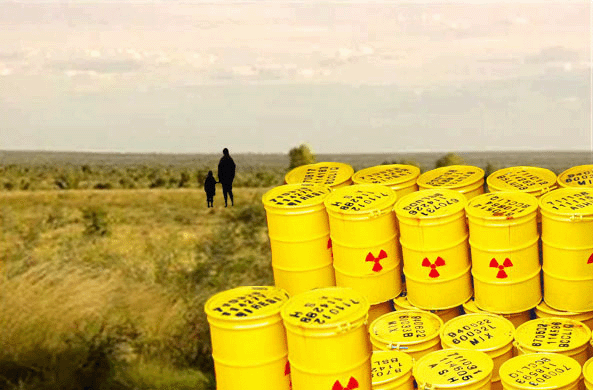
South Australians have a Right to Say No to undemocratic Federal imposed storage of AUKUS High Level nuclear waste in our State. All Federal MPs & Senators from SA, Members of the SA Parliament and candidates for the SA State Election on 21st March should declare their position:
Q: Will you accept or reject Federal imposed storage of AUKUS nuclear waste in SA?
The Federal Government quietly took up new AUKUS Regulations (2 Oct) as powers to impose AUKUS wastes by override of State laws that prohibit nuclear waste storage in SA, NT and WA.
AUKUS Regulation 111 “State and Territory laws that do not apply in relation to a regulated activity” names and prescribes our SA Nuclear Waste Storage (Prohibition) Act 2000. The Objects of this key SA Law set out what is at stake: “To protect the health, safety and welfare of the people of SA, and the environment in which they live” from nuclear waste storage.
Federal Labor’s draconian powers to compromise public health, safety and welfare protections in SA Law, lacks social licence, are an affront to civil society, and damages trust in governance. This is also a threat to Indigenous People with a cultural responsibility to protect their country.
Community expects our State Labor Government to give a clear State Election commitment to protect SA from the risks and impacts of untenable and illegal AUKUS High Level nuclear waste storage, see “The lethal legacy of Aukus nuclear submarines will remain for millennia – and there’s no plan to deal with it” (The Guardian, 10 August 2025, interview with Prof Ian Lowe).
Labor has a further key leadership test ahead of our Election: to commit to support Indigenous People’s human rights, set out in the United Nations Declaration on the Rights of Indigenous Peoples Article 29 (UNDRIP 2007), to “Free, Prior and Informed Consent” over storage of hazardous materials on their lands. AUKUS wastes absolutely are hazardous materials!
a Question for Premier Peter Malinauskas: Will you respect and support Indigenous Peoples Rights to Say No to Federal siting of AUKUS nuclear waste storage on their country in SA?
Call for full disclosure on a N-waste siting process after Labor breaks its commitment: The public has a Right to Know what regions are being targeted for storage of High-Level nuclear wastes. A secretive ongoing Defence review “to identify potential nuclear waste disposal sites” (ABC News March 2023) must be made public ahead of the SA State Election.
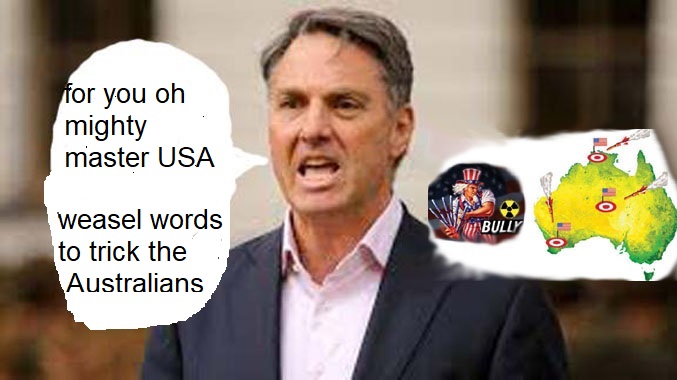
AUKUS Minister Marles has broken his commitment to announce a process by early 2024 to identify a site to dispose of AUKUS High-Level nuclear wastes. The failure by Defence to set out any process – other than to take up powers to impose nuclear wastes – is unacceptable.
REPORTER: Is a high-level nuclear waste dump the price that South Australia will have to pay for the jobs that go to the state? (Minister Marles Press Conference 14 March 2023)
MARLES: Well, as I indicated there will be a process that we will determine within the next 12 months for how the site will be identified. You’ve made a leap there, which we’re not going to make for some time. It will be a while before a site is ultimately identified. But we will within the next 12 months establish a process for how we walk down that path.
It is now over 4 years since Federal Labor agreed with Morrison’s AUKUS nuclear sub agenda.
SA Labor to let ‘national security interests’ decide siting for AUKUS nuclear waste?
National press reported the Woomera Area to be a ‘favoured location’ for storage and disposal of nuclear sub wastes back in August 2023 (“Woomera looms as national nuclear waste dump site including for AUKUS submarine high-level waste afr.com). WA, Qld and Vic political leaders have rejected a High-Level nuclear waste disposal site in their States, with WA suggesting the Woomera Prohibited Area in SA: “would be one obvious location within the Defence estate, however, we will await the outcomes of the federal review” (SMH 15 March 2023).
Premier Malinauskas has so far only said AUKUS nuclear waste should go to a ‘remote’ location in the “national security interest” (see “Site for high-level nuclear waste dump under AUKUS deal must be in national interest, SA premier says” ABC News 15 March 2023).
The Premier’s “Office for AUKUS” (Letter, 7 Oct 2025) accepts “safe and secure disposal” of High-Level nuclear waste, including spent fuel, produced when subs are decommissioned. The Office says no decision has been made on a location but declines to reveal what is underway, expresses no concerns over unprecedented nuclear waste storage or ‘social license’, and expects “community acceptance” (in SA?) for a nuclear ‘disposal solution’:
“I can confirm that no decision has been made on a location within Australia for the disposal of intermediate, or high-level radioactive waste from nuclear-powered submarines. Determining suitable locations and methods for safe and secure disposal will take time, but Australia will do so in a manner that sets the highest standards … and which builds community acceptance for a disposal solution.”
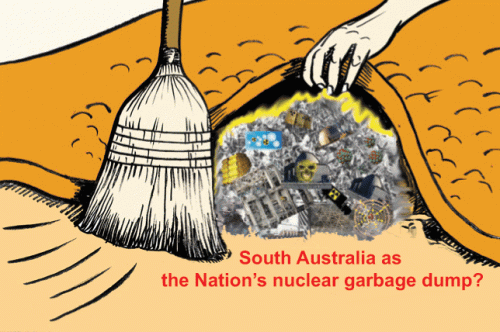
SA is left in the dark, without a say, as an ongoing target for an AUKUS nuclear waste dump.
AUKUS is to store US origin nuclear wastes from 2nd hand Virginia Class subs in Australia: AUKUS aims Australia take on second-hand US Virginia Class nuclear powered subs in the early 2030’s loaded with up to a dozen years of US origin military High-Level nuclear waste and fissile Atomic-Bomb fuel accrued in operations of US Navy High Enriched Uranium nuclear reactors.
Swapping an Australian flag onto this US military nuclear reactor waste places an untenable ‘for ever’ burden on all future generations to have to cope these US nuclear wastes.
Scenario: an AUKUS nuclear dump imposed on SA, High-Level military waste shipped into Whyalla Port to go north, nuclear subs to be ‘decommissioned’ at Osborne Port Adelaide.
Whyalla Port is back on a nuclear waste target range. How else could AUKUS nuclear waste get to a storage site in north SA? The Woomera Area is expected to be on a regional short list for an AUKUS dump, requiring nuclear waste transport routes across SA. Port Adelaide community has a Right to Say No to nuclear decommissioning plans for expanded Osborne submarine yards.
SA politicians must protect SA and rule out both an untenable AUKUS nuclear dump and decommissioning nuclear subs and nuclear reactors at Osborne or else-where in SA.
SA must respect Traditional Owners Human Rights to Say No to imposition of nuclear wastes.
The SA public have Rights to full disclosure and for politicians to have to declare their positions, We need an informed public debate ahead of our State Election. Silence by our political leaders, while a path is paved toward nuclear decisions, makes a nuclear waste dump future more likely.
Info: see Rex Patrick & “AUKUS waste in perpetuity”, and David Noonan in Pearls and Irritations
South Australia – the country’s most advanced renewables grid – has average more than 100 per cent net renewables (compared to state demand) over the past week, and more than 90 per cent renewables over the last 28 days. It is not the first time that South Australia has reached 100 per cent renewables – it has done so previously over the Christmas/New Year period – but it marks a significant milestone, given that its mix of renewables is made up entirely of variable wind and solar, and with no hydro or even biomass to speak of.
South Australia, the most advanced renewable grid in the country and even the world – thanks to its unrivalled near 75 per cent share of wind and solar – is also the most secure, according to a major new report on the state of the energy transition.
The Transition Plan for System Security, published on Monday by the Australian Energy Market Operator, identifies South Australia as the only state grid which is not facing a system strength deficit in coming years.
That’s largely because South Australia went first, and it went hard and fast. Its last coal fired power station closed in 2016, and because it has such a high percentage of wind and solar, as well as rooftop PV, it has had to deal with the issues around frequency control, inertia and system strength before other states. South Australia, the most advanced renewable grid in the country and even the world – thanks to its unrivalled near 75 per cent share of wind and solar – is also the most secure, according to a major new report on the state of the energy transition.
When the new transmission link to NSW is complete in 2027, South Australia will be the first in the world to be able to run its gigawatt scale grid at times with “engines off” – i.e. no gas plant required for bulk power or system security – as it nears or even achieves its target of reaching 100 per cent net renewables.
South Australians have a Right to Say No to undemocratic Federal imposed storage of AUKUS High Level nuclear waste in our State. All Federal MPs & Senators from SA, Members of the SA Parliament and candidates for the SA State Election on 21st March should declare their position:
Q: Will you accept or reject Federal imposed storage of AUKUS nuclear waste in SA? The Federal Government quietly took up new AUKUS Regulations (2 Oct) as powers to impose AUKUS wastes by override of State laws that prohibit nuclear waste storage in SA, NT and WA.
AUKUS Regulation 111 “State and Territory laws that do not apply in relation to a regulated activity” names and prescribes our SA Nuclear Waste Storage (Prohibition) Act 2000. The Objects of this key SA Law set out what is at stake: “To protect the health, safety and welfare of the people of SA, and the environment in which they live” from nuclear waste storage.
Federal Labor’s draconian powers to compromise public health, safety and welfare protections. n SA Law, lacks social licence, are an affront to civil society, and damages trust in governance. This is also a threat to Indigenous People with a cultural responsibility to protect their country.
Community expects our State Labor Government to give a clear State Election commitment to protect SA from the risks and impacts of untenable and illegal AUKUS High Level nuclear waste storage, see “The lethal legacy of Aukus nuclear submarines will remain for millennia – and there’s no plan to deal with it” (The Guardian, 10 August 2025, interview with Prof Ian Lowe).
Labor has a further key leadership test ahead of our Election: to commit to support Indigenous People’s human rights, set out in the United Nations Declaration on the Rights of Indigenous Peoples Article 29 (UNDRIP 2007), to “Free, Prior and Informed Consent” over storage of hazardous materials on their lands. AUKUS wastes absolutely are hazardous materials!
a Question for Premier Peter Malinauskas: Will you respect and support Indigenous Peoples Rights to Say No to Federal siting of AUKUS nuclear waste storage on their country in SA?
Call for full disclosure on a N-waste siting process after Labor breaks its commitment: The public has a Right to Know what regions are being targeted for storage of High-Level nuclear wastes. A secretive ongoing Defence review “to identify potential nuclear waste disposal sites” (ABC News March 2023) must be made public ahead of the SA State Election.
AUKUS Minister Marles has broken his commitment to announce a process by early 2024 to identify a site to dispose of AUKUS High-Level nuclear wastes. The failure by Defence to set out any process – other than to take up powers to impose nuclear wastes – is unacceptable.
REPORTER: Is a high-level nuclear waste dump the price that South Australia will have to pay for the jobs that go to the state? (Minister Marles Press Conference 14 March 2023)
MARLES: Well, as I indicated there will be a process that we will determine within the next 12 months for how the site will be identified. You’ve made a leap there, which we’re not going to make for some time. It will be a while before a site is ultimately identified. But we will within the next 12 months establish a process for how we walk down that path.
It is now over 4 years since Federal Labor agreed with Morrison’s AUKUS nuclear sub agenda.
SALabor to let ‘national security interests’ decide siting for AUKUS nuclear waste?
National press reported the Woomera Area to be a ‘favoured location’ for storage and disposal of nuclear sub wastes back in August 2023 (“Woomera looms as national nuclear waste dump site including for AUKUS submarine high-level waste afr.com). WA, Qld and Vic political leaders have rejected a High-Level nuclear waste disposal site in their States, with WA suggesting the Woomera Prohibited Area in SA: “would be one obvious location within the Defence estate, however, we will await the outcomes of the federal review” (SMH 15 March 2023).
Premier Malinauskas has so far only said AUKUS nuclear waste should go to a ‘remote’ location in the “national security interest” (see “Site for high-level nuclear waste dump under AUKUS deal must be in national interest, SA premier says” ABC News 15 March 2023).
The Premier’s “Office for AUKUS” (Letter, 7 Oct 2025) accepts “safe and secure disposal” of High-Level nuclear waste, including spent fuel, produced when subs are decommissioned. The Office says no decision has been made on a location but declines to reveal what is underway, expresses no concerns over unprecedented nuclear waste storage or‘social license’, and expects “community acceptance” (in SA?) for a nuclear ‘disposal solution’:
“I can confirm that no decision has been made on a location within Australia for the disposal of intermediate, or high-level radioactive waste from nuclear-powered submarines. Determining suitable locations and methods for safe and secure disposal will take time, but Australia will do so in a manner that sets the highest standards … and which builds community acceptance for a disposal solution.”
SA is left in the dark, without a say, as an ongoing target for an AUKUS nuclear waste dump.
AUKUS is to store US origin nuclear wastes from 2nd hand Virginia Class subs in Australia:
AUKUS aims Australia take on second-hand US Virginia Class nuclear powered subs in the early 2030’s loaded with up to a dozen years of US origin military High-Level nuclear waste and fissile Atomic-Bomb fuel accrued in operations of US Navy High Enriched Uranium nuclear reactors. Swapping an Australian flag onto this US military nuclear reactor waste places an untenable ‘for ever’ burden on all future generations to have to cope these US nuclear wastes.
Scenario: an AUKUS nuclear dump imposed on SA, High-Level military waste shipped into Whyalla Port to go north, nuclear subs to be ‘decommissioned’ at Osborne Port Adelaide.
Whyalla Port is back on a nuclear waste target range. How else could AUKUS nuclear waste get to a storage site in north SA? The Woomera Area is expected to be on a regional short list for an AUKUS dump, requiring nuclear waste transport routes across SA. Port Adelaide community has a Right to Say No to nuclear decommissioning plans for expanded Osborne submarine yards.
SA politicians must protect SA and rule out both an untenable AUKUS nuclear dump and decommissioning nuclear subs and nuclear reactors at Osborne or else-where in SA.
SA must respect Traditional Owners Human Rights to Say No to imposition of nuclear wastes.
The SA public have Rights to full disclosure and for politicians to have to declare their positions, We need an informed public debate ahead of our State Election. Silence by our political leaders, while a path is paved toward nuclear decisions, makes a nuclear waste dump future more likely.
Info: see Rex Patrick & “AUKUS waste in perpetuity”, and David Noonan in Pearls and Irritations.
The South Australia state government has appointed ASL to run its first auction for long duration storage, as the world’s most advanced wind and solar grid seeks around 700 MW of new firm capacity over the next six years.
South Australia leads the world in the uptake of wind and solar – which together accounted for 75 per cent of its local electricity demand over the last 12 months – and has set a world-leading target of reaching 100 per cent “net” renewables by the end of 2027. It already has seven big battery projects operating in the state, and another dozen under construction or contracted, but it is now seeking longer duration storage through the Firm Energy Reliability Mechanism (FERM) that it announced earlier this year.
Port Augusta was thrust into the spotlight when it was announced as one of several sites earmarked, under a Coalition election pledge, to host a nuclear reactor.
While the Coalition has not formally abandoned the plan, its resounding defeat at the recent federal election suggested voters did not embrace the idea.
What’s next?
As Port Augusta looks ahead, locals say its future could lie in several directions, including renewables and mining…………………………………………………………………………………………….
“It was really like a punch in the guts,” he said.
Mr Bannon, who lives 40 kilometres from Port Augusta at Quorn and had campaigned against the dump, said Port Augusta has had to reinvent itself in the past and could do so again.
“We also had a very big railway workshop here, it was a huge employer with lots of apprenticeships,” he said.
“Railways built everything. So that was a big loss when that was taken away and of course the most recent large employer has been the coal-fired power station.”
He said the transition to renewables had been more economically beneficial than some gave it credit for — and maintained that Port Augusta’s future was still in energy generation.
The South Australian Liberal party, which set the state’s first 100 per cent renewables target when in government six years ago, before embracing nuclear while in opposition, has reversed course again after the federal poll wipeout and the loss of a long time Liberal seat in Adelaide.
South Australia leads the world in the uptake of variable renewables, with a 72 per cent share of local demand over the last 12 months.
The then Liberal state government in 2019 set a target of reaching 100 per cent “net” renewables by 2030, before the current Labor government accelerated that target to 2027, and enshrined it into law, based on the planning for new wind and solar projects, battery storage and transmission.
New state Liberal leader Vincent Tarzia reversed course on renewables last year, supporting the federal Coalition’s plan to build nuclear power at seven sites across Australia, including at Port Augusta in South Australia, the site of the coal fired power stations that closed nearly a decade ago.
However, speaking to ABC Radio Adelaide, Tarzia has now backed away from his party’s election commitment to hold a Royal Commission into nuclear energy, saying it was clear that the technology has been “comprehensively rejected” by the electorate.
A potential nuclear future had been a top priority for the South Australian Liberal Party, promising in June last year to hold yet another Royal Commission into the technology. This was followed in August by the appointment of Stephen Patterson, the state MP for Morphett, as spokesman for Nuclear Readiness.
A new $4m planning office will be granted unprecedented powers, sparking calls to temper the power of the four bureaucrats set to wield them.
Sweeping new powers will be invested in a $4m office to fast track “significant” SA projects including housing and AUKUS – raising fears they could avoid tougher planning checks.
The State Government is planning to appoint four staff to the office, including an AUKUS expert, with unprecedented powers to “case manage” projects.
Premier Peter Malinauskas has flagged this would allow faster approvals in designated “go zones” for projects like the AUKUS nuclear-powered submarines, housing and renewable energy projects.
The move flared concerns about existing heritage, environment, coastal protection and pastoral land act processes being downgraded after the State Development Coordination and Facilitation Bill 2025 passed this week.
Mr Malinauskas previously said the law meant the State Government could designate “state development areas” as “go-zones”.
Regulatory work in these zones would be completed before developers moved in “allowing for quicker approvals within them once an application is made”.
This was meant to save time in passing “urgent and significant projects”.
A government spokesperson assured provisions meant the new office must perform any assessment independently and it could not be directed “by any Minister to either approve or reject any application.”
The office could not deal with nuclear waste projects.
And the Adelaide Parklands was protected by the Adelaide Parklands Act and the new bill states it “may never be designated as a state development area”.
But SA Greens party co-leader Robert Simms was still concerned.
He feared the inclusion of an AUKUS expert meant approvals for the project would bypass usual safety guards.
“SA parliament has just given the Malinauskas Government the biggest blank cheque in South Australian history,” he said.
“This bill gives an unelected office the power to override South Australian laws to enable controversial projects, including AUKUS, yet it passed the Upper House in the blink of an eye.”
“This bill isn’t about facilitating housing developments, it’s about giving the state government the power to ride roughshod over the community. It’s a power grab of epic proportions that should have been given much more scrutiny.”
It was confirmed in the senate the office would cost $4m a year to operate.
The SA Liberals have broken a key election promise with just 10 months to go until the state poll, with Liberal leader Vincent Tarzia dumping his party’s only energy policy.
In a stunning backdown, Mr Tarzia admitted on ABC Radio Adelaide that the Liberals’ election commitment to hold a Royal Commission into nuclear energy would be dumped in the wake of the federal election:
Rory McClaren: That’s what I was going to ask you… should nuclear from a Liberal Party policy perspective now be parked?
Vincent Tarzia: Yes, at the moment it’s been comprehensively rejected and we know the thing is with the energy transition, in three years’ time we will be in another position again.
The State Liberals made the pursuit of nuclear power their top priority, announcing their pursuit of a Royal Commission as their key commitment in their Budget Reply speech in June.
In August, Liberal Leader Vincent Tarzia appointed Stephen Patterson as Shadow Minister for Nuclear Readiness.
Now, just eight months later, the promise has been abandoned.
The 2016 Nuclear Fuel Cycle Royal Commission found nuclear power was not commercially viable in South Australia.
Quotes
Attributable to Tom Koutsantonis
What do the South Australian Liberals stand for?
They’re breaking election promises even before they’ve got to an election.
Only a few months ago, they were making the pursuit of nuclear energy their sole energy policy focus. Now, they’ve dumped it.
Vincent Tarzia must now dump his Shadow Minister for Nuclear Readiness, who has absolutely no policy offering other than the pursuit of an energy source that evidence shows will drive up bills for South Australians.
At a time when the Opposition should be outlining its policy platform ahead of the 2026 State Election, the State Liberals are instead ditching their only energy policy.
Friends of the Earth Adelaide Federal Election Campaign, Philip White May 5, 2025
Friends of the Earth Adelaide ran a targeted campaign in two marginal seats leading up to the federal election. We created an election leaflet advising voters about the dangers of nuclear power and asking them to “vote nuclear free”.
We are pleased that the Australian people rejected the nuclear option. We hope the Coalition gets the message and dumps its nuclear energy policy and becomes a constructive supporter of real climate action. Let this election mark an end to the climate wars.
Boothby
We delivered 50,000 of our leaflets to the letterboxes of voters in Boothby, a marginal seat in southern Adelaide held by Labor on a 3.3% margin prior to the election. Our aim was to prevent Boothby falling to a pro-nuclear candidate. We are very grateful to a grant from FOE Australia which paid for much of the printing and distribution of 45,000 of the leaflets by Australia Post. The remaining 5,000 leaflets were delivered by hand by our volunteers, who we are also very grateful to. We considered that a good reach of the 80,000 letterboxes in Boothby.
We are very pleased that Boothby was retained by an anti-nuclear candidate (Louise Miller-Frost for Labor, with Joanna Wells of the Greens also doing well). That’s one more seat to keep Australia free from nuclear power. We hope that the large loss the Coalition received means they will drop nuclear power as a policy.
Sturt
In late April a bus load of Traditional Owners from Port Augusta came to the city for a meeting in the marginal eastern Adelaide suburb of Sturt, held by the Liberals on a 0.5% margin prior to the election. Their aim was to appeal to Sturt voters for their support in keeping Port Augusta nuclear free. Friends of the Earth Adelaide co-hosted the meeting along with Don’t Nuke Port Augusta, with financial help from CANA. Traditional Owners spoke strongly of their lives and love for Port Augusta’s land and waterways, and of the tragic intergenerational consequences for their families of the nuclear testing in SA in the 1950s. The meeting was videoed and can be seen at https://www.youtube.com/live/lJ1tpcfkZIU and many great photos are on the Don’t Nuke Port Augusta Facebook page.
The Port Augusta contingent were prominent at the May Day Worker’s Right’s rally the following day. They got a great shoutout from the MC, the SA Unions Secretary, and huge applause and appreciation from the crowd of unionists. Also, that evening, they staged a demonstration at the Arkaba Hotel where Peter Dutton was promoting the Liberal candidate for Sturt. They said, “If Dutton won’t visit us, we’ll come to him.”
Our submission raised questions about assumptions made about the nuclear submarine agreements:
“The Environmental Impact Statement (EIS) is premised on the assumption that the proposed AUKUS nuclear submarines are in Australia’s strategic interest (pp. 9-10) and South Australia’s economic interests (pp. 12-13). Both these premises are false.
Many highly qualified defence experts argue that nuclear submarines are not in Australia’s strategic interest. [1] Along with these experts, and retired senior politicians like Paul Keating, Gareth Evans and Malcolm Turnbull, we believe that Australia will be less safe if it acquires nuclear powered submarines. Although it is the federal government that has made this strategic blunder, the EIS should not lend it any credence (as in section 1.5.4).
…
AUKUS submarines will also be prejudicial to our economic interest. Some of the abovementioned analysts don’t think Australia will actually ever get the promised nuclear submarines, certainly not in a reasonable time frame. This is a view not restricted to left-leaning people. Conservative commentator Greg Sheridan has criticised AUKUS for this reason.[2]”
1. Correct the factual errors regarding the effects of radiation.
2. Include active commissioning in the assessment.
3. Include the disposal of radioactive waste in the assessment and publish plans for management, storage and disposal of all streams of radioactive waste, including intermediate and high-level waste and spent nuclear fuel.
4. Include a proper analysis of the risks and consequences of incidents and accidents that could lead to a release of radioactive material into the environment.
5. Inform the public about the potential for exposure to radiation and the levels of radiation they could be exposed to.
6. The Commonwealth Government should consult with other levels of government, the Australian Radiation Protection and Nuclear Safety Agency, emergency services and with the general public to develop a response plan for radiological emergencies.
7. Publish the Strategic Assessment Plan before finalizing the Strategic Impact Assessment Report.
The select committee conducting an inquiry into nuclear power generation in Australia has triggered strong opinions from both sides of the fence.
Aboriginal leaders, resident representatives, and leaders from the mining and energy sector have spoken during a hearing at Port Augusta.
What’s next?
Should the opposition win the next election, it has promised to hold a two-and-a-half year consultation period over its nuclear plans.
The federal government’s select committee inquiry into nuclear power generation at Port Augusta has stirred strong emotions among those making a submission.
For anti-nuclear activist and Yankunytjatjara Anangu woman Karina Lester, it is a debate she is tired of having.
“Governments change, committee members change … organisations, company members, CEOs of companies change,” Ms Lester said.
“Those of us that are in the frontline are constantly needing to remind governments of the impacts of nuclear in our communities.
“Aboriginal people of South Australia have always said no to nuclear.”
Ms Lester, who gave evidence at a select committee hearing in Adelaide, describes herself as a survivor of the Emu Field nuclear tests.
She said Indigenous people had seen the impacts of nuclear technology first-hand.
The Nukunu Wapma Thura Aboriginal Corporation, which holds native title over the proposed site, has voiced strong opposition to any nuclear proposal.
“Aboriginal people throughout the region and state of South Australia have historically and overwhelmingly opposed nuclear energy, and the storage of its waste,” a spokesperson said.
Greg Bannon from the Flinders Local Action Group gave evidence at the public hearing in Port Augusta about the potential risk of a nuclear accident.
He has opposed nuclear technology for decades and said the time to switch to nuclear energy had passed. “I think it’s old technology, and I don’t think we need it,” he said.









 Antinuclear