Plan to dispose of nuclear waste from Aukus submarines unanimously rejected by Adelaide council
City of Port Adelaide Enfield’s mayor says she hadn’t received correspondence about storage or disposal before or after bill passed federal parliament
Guardian Petra Stock, 18 Nov 24
Plans to dispose of low-level nuclear waste from Aukus submarines at an Adelaide naval facility have been unanimously opposed by the local council for the area, who say they weren’t consulted.
The Osborne naval shipyard, 25km north of Adelaide CBD, and HMAS Stirling at Garden Island 50km south of Perth in Western Australia, have both been designated as “radioactive waste management facilities” for nuclear waste from Aukus submarines under the Australian naval nuclear power safety bill, which passed parliament in October.
Last week, the City of Port Adelaide Enfield – responsible for the area surrounding the Osborne shipyard – voted to unanimously oppose the storage and disposal of radioactive waste at the site.
Its mayor, Claire Boan, said council had been briefed on aspects of the Aukus project but it had not received any correspondence or communication about management and disposal of nuclear waste at the site.
“While the decision-making regarding this is out of the control of the council, we will continue to advocate for our community and lobby for community consultation throughout the process,” she said.
Rex Patrick, a former independent senator for South Australia, said the situation highlighted the lack of consultation and transparency regarding Aukus nuclear waste.
“Albanese called for Dutton to disclose where he was going to put his nuclear power reactors, and yet there’s been complete secrecy around the entire process associated with where they’ll put the high-level waste from naval reactors,” he said.
No public announcements have been made about the site selection or consultation process for dealing with the high-level nuclear waste associated with the Aukus submarines, which the government agreed Australia would dispose of in March last year……………………….. https://www.theguardian.com/environment/2024/nov/18/plan-to-dispose-of-nuclear-waste-from-aukus-submarines-unanimously-rejected-by-adelaide-council
Adelaide residents blindsided by decision to store AUKUS nuclear waste at submarine shipyards
The act allows radioactive waste to be stored at both sites but does not define what level
the legislation was also ambiguous about the disposal of nuclear material from UK and US nuclear submarines.
By Angelique Donnellan 7.30 ABC
In short:
Federal parliament has passed legislation that allows for nuclear waste to be stored and disposed of at a shipping yard in Adelaide.
Residents said they were not consulted or told of the plan.
What’s next?
Construction of nuclear submarines is expected to start in Adelaide by the end of the decade.
The $368 billion AUKUS pact is promising thousands of jobs and the return of submarine construction to South Australia.
But residents have just learned the deal also means nuclear waste will be stored on their doorstep.
“It’s madness. It’s not only close to a residential area, but it’s right on a waterway,” Adelaide resident Eileen Darley told 7.30.
Last month legislation quietly passed the federal parliament that will allow for the storage and disposal of nuclear waste at the Adelaide shipyard in Osborne, which is 25 kilometres north-west of the city’s CBD and near the popular seaside suburb of Semaphore and historic Port Adelaide.
Residents said it was the first time they heard about plans for the waste facility.
Nuclear submarine construction at Osborne is expected to start by the end of the decade.
“There’s 30,000 people that live in this area,” Ms Darley, who runs the local action group Port Adelaide Community Opposing AUKUS, said.
“All the childcare centres, all the schools and the families that live in this area, but also waterways that feed the mangroves, that is a dolphin sanctuary, and so forth.
“None of us in this area have been consulted about it at all.”
The Osborne shipyard is in federal Health Minister Mark Butler’s safe Labor electorate of Hindmarsh.
In an interview with 7.30, he said residents would be consulted closer to when the facility would be established but stated the waste facility would go ahead even if residents did not want it.
“This is going to happen,” he said.
“The government and parliament have decided that the future defence strategy of the country will involve nuclear-propelled submarines.”
Indigenous elder criticises government’s ‘sly and conniving’ moves
The state Labor government is in lock-step with the Commonwealth on AUKUS but community concerns are growing.
The Port Adelaide Enfield Council has resolved to oppose any nuclear waste storage or disposal at Osborne and is calling for widespread community engagement.
Local resident and Indigenous elder Margaret Brodie said she was disappointed the government legislated the facility without people having a say. The shipyard is on the traditional lands of the Kaurna people.
“It’s sly and conniving. That’s how I feel about it,” she told 7.30.
“As an Indigenous woman I think I get used to it, government being underhanded, not telling us anything, or not asking.
“If you talk about closing the gap, they’re not going to close the gap by doing things like this.”
The legislation declares the Osborne Shipyard as well as the HMAS Stirling naval base near Perth as designated naval nuclear propulsion facilities.
The act allows radioactive waste to be stored at both sites but does not define what level……………………………………………………………………………
Ms Darley was sceptical.
“It does not allay our concerns to hear that the government is saying that it’s temporary and it’s low level,” she said.
“We’re the people who are most affected if something goes wrong.”
The Naval Nuclear Power Safety Regulator, which reports to the defence minister, would grant the licence for the operation of the waste facilities.
Waste from UK and US subs
Greens senator David Shoebridge told 7.30 the legislation was also ambiguous about the disposal of nuclear material from UK and US nuclear submarines.
“One of the key amendments we wanted was to prohibit the storage of high-level nuclear waste from any foreign country, the United Kingdom or the United States, and that was aggressively resisted by both the government and the opposition,” he said.
“Neither the UK or the US have any permanent solution for their nuclear waste, and the UK is the one that’s in the most trouble … and they have seen with AUKUS a potential sucker down here in Australia who’s literally put their hand up and said, ‘Yeah, we’ll take some of that. We’ll help out.'”
There is also opposition to the waste facility at Perth’s naval base, which needs to be up and running as early as 2027 when one UK nuclear submarine and up to four US boats start regular rotations.
But Mr Butler stated it would also only hold low-level nuclear waste taken from UK or US submarines which came to Australia.
“Intermediate and high-level waste [from overseas] will not be stored in Australia,” he said.
………………………………………………………………………………………………………………………………………………………………………………………………………………. In South Australia, the Port Adelaide Community Opposing AUKUS said it was prepared for a fight ahead of next year’s federal election.
“How far are we prepared to go? Well, I think we’re in it for the long haul. That’s for sure,” Ms Darley said.
“We don’t want our children, our grandchildren, to have to deal with this in the long run.
“We’ll definitely be making this an election issue.” https://www.abc.net.au/news/2024-11-18/aukus-nuclear-waste-to-be-stored-adelaide-suburbs/104605640
Low-level nuclear waste from submarines to be stored at Osborne, South Australia
Adelaide Now, 30 Oct 24
Legislation passed will see a “radioactive waste facility’’ built in an Adelaide suburb, but federal and state ministers maintain it will only house “low level’’ material. Have your say.
Low-level radioactive waste generated by the building of the AUKUS nuclear submarines will be stored at Port Adelaide after legislation passed the federal parliament allowing for the construction of a “waste management facility’’.
However federal Defence Minister Richard Marles and his state counterpart Stephen Mullighan both denied any “intermediate’’ or “high-level” waste will be stored at the Osborne submarine facility, in Adelaide’s western suburbs
A spokesperson for Mr Marles said “submarine construction, test and commissioning activities planned for Osborne will generate small amounts of low-level radioactive waste’’, including personal protective equipment.
“This low-level radioactive waste will need to be managed and temporarily stored in a licensed facility,’’ the spokesperson said. “No intermediate-level waste or high-level radioactive waste (spent nuclear fuel) will be managed or stored in the facility.’’
Both the Albanese Labor government and the Peter Dutton-led Liberal opposition voted in favour of the Australian Naval Nuclear Power Safety Bill. The Bill ‘’regulate activities relating to conventionally armed, nuclear powered submarines’’.
Do you support a “radioactive waste facility’’ being built at the Osborne submarine base
Yes: It’s the right spot for it
69 %
No, I don’t want it anywhere in SA
31 %
563 votes
It names Osborne as a “designated zone’’ where “a facility for managing, storing or disposing of radioactive waste’’ could be built. The legislation does not specify what level of radioactive waste could be stored.
The legislation has sparked a community backlash, with a change.org petition started by former Liberal candidate Jake Hall-Evans already reaching almost 4000 signatures.
Mr Hall-Evans said there had been a lack of transparency about the possibility of a nuclear waste dump at Osborne.
“The people of Port Adelaide were promised submarine jobs, not a nuclear waste dump,’’ Mr Hall-Evans said.
He said Australia had struggled to find a suitable location for low-level radioactive waste, with a proposed facility at Kimba on the state’s Eyre Peninsula knocked back last year.
Premier Peter Malinauskas also opposed the dump at Kimba.
South Australian Greens Senator Sarah Hanson-Young said the new law was a “dangerous disaster for our state’’.
“This is toxic for South Australia,’’ Ms Hanson-Young, who is holding a nuclear forum at the Burnside Town Hall in the marginal seat of Sturt on Thursday.
“Peter Dutton not only wants nuclear reactors across Australia – he wants Adelaide to be an international dumping ground for nuclear waste,’’ she said.
A spokesperson for Port Adelaide Enfield Council said it had “not been consulted or advised of any licences being approved for a radioactive or nuclear waste storage site at Osborne’’.
Defence Minister Stephen Mullighan said there was “no proposal or capacity for nuclear waste, including low-level waste to be stored in the long term’’. term’’.
BHP’s untenable extraction of Great Artesian Basin waters for the Olympic Dam copper-uranium mine.
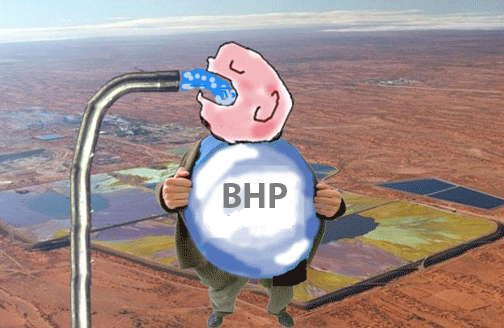
Jim Green, 26 Oct 24. BHP has had to move on Mound Springs protection issues regarding untenable extraction of GAB waters for the Olympic Dam copper-uranium mine, and an important Springs Study had now been released by SA Gov modelling reduced water extraction scenarios and affects on Springs & GAB waters.
A significant – if belated and partial – formal public commitment from BHP:
Milestone : FY2030 – cease abstraction from Wellfield A through switching to coastal desalination supply in partnership with the South Australian Government on the Northern Water Supply Project.
This partial win is a key if limited step toward proper protection for the unique and fragile Mound Springs of the GAB in SA, requiring:
is a key if limited step toward proper protection for the unique and fragile Mound Springs of the GAB in SA, requiring:
- closure of untenable BHP Wellfield A operations as soon as possible, that is warranted far sooner than by end of FY2030;
- BHP could prioritise and pay for whatever extent of water recovery at Olympic Dam to replace continued extraction from Wellfield A, which is projected to be run at 3.9 million litres a day ( Ml/d ) over next few years – about 10% of the volume BHP water take from the GAB;
- a campaign path to realise a phase out of the far larger adversely impacting Wellfield B operations that runs at 32 Ml/day, at least from when Northern Water supply becomes available at/after 2028 (this is difficult as BHP & SA Gov now think closing Wellfield A is all they have to do);
- a continued public interest campaign building on a lot of people’s roles and contributions over time…
an important Springs Study:
“Potential Impacts of Reducing Groundwater Abstraction from the Southwestern Great Artesian Basin: Modelled Aquifer Pressure and Spring Flow Response”
By Daniel Partington, Andrew Love, Daniel Wohling, Mark Keppel.
Goyder Institute for Water Research Technical Report Series No. 2024/01https://yoursay.sa.gov.au/84866/widgets/401081/documents/297652
see an extract from Goyder Institute Springs Study (at p.21 of doc & at p.31 of the pdf file, my bold below) citing the BHP commitment:
3.5 Output From the Modelled Scenarios Six experimental abstraction scenarios were proposed by Infrastructure SA to provide a spectrum of stimuli to assess the responsiveness of the aquifer to a change in abstraction volumes. The future abstraction rates from Wellfield A and B have not been confirmed, however there has been public commitment to cease abstraction from Wellfield A if water from the Northern Water project is available (see Olympic Dam Context- Based Water Targets).
South Australia sets spectacular new records for wind, solar and negative demand
Giles Parkinson, Sep 30, 2024, https://reneweconomy.com.au/south-australia-sets-spectacular-new-records-for-wind-solar-and-negative-demand/
Records continue to tumble across Australia’s main grids as the spring weather boosts the output of wind and solar and mild weather moderates demand, but none are as spectacular as those being set in South Australia.
The state’s unique end-of-the-line grid already leads the country, and arguably the globe, in the integration of variable wind and solar, with an average of more than 70 per cent of its demand over the last year and a world-first target of 100 per cent net renewables by 2027.
On Sunday, at 9.35 am, the state set a new milestone, setting a new record share of wind and solar (as a percentage of state electricity demand) of 150.7 per cent, beating a record set on Christmas Day last year, when – for obvious reasons – there was little electricity demand.
As Geoff Eldridge, from GPE NEMLog, notes, this means that the rooftop PV, along with large scale wind and solar farms, were generating 50.7 per cent more power than the state’s total electricity demand at the time.
The scale of excess output was further crystallised later in the day with a new minimum record for instantaneous residual demand, which hit minus 927 megawatts at 12.35pm.
Eldridge says residual demand is what’s left for other generators to supply after wind and solar have met a share of the demand. A negative residual demand means wind and solar were producing more electricity than SA needed, resulting in excess renewable generation which can be managed by exporting and battery charging. The remainder is curtailed.
Of the surplus 927 MW, the state was exporting 685 MW to Victoria, while another 163 MW was being soaked up by the state’s growing fleet of battery storage projects, and 730 MW of output was curtailed. Prices at the time were minus $47/MWh, a good opportunity for batteries to charge.
A further 84 MW was being produced by a couple of gas generators – not because their power output was needed, but because the state, at least for the moment, relies on them for essential grid services such as system strength and fault current.
That will be reduced considerably when the new link to NSW is completed in a few years, and it will allow the state to both export more, and import more when needs be.
“Balancing the system with such high renewable penetration is challenging but necessary as the energy transition progresses,” Eldridge says. “Managing excess generation through exports, storage, and curtailment is critical to keeping the grid stable and efficient.”
It wasn’t the only record to fall over the weekend. In Queensland, the country’s most coal dependent state in terms of annual share of demand and generation, large scale solar hit a record share of 34 per cent, and coal output – in megawatt terms – hit a record low of 2,882 MW.
The Queensland coal fleet capacity is more than 8,000 MW, so that is about as low as it can run until more units are closed down.
In Victoria on Saturday, just before the AFL grand final, rooftop solar also hit a new record output of 3,164 MW – although it did not push operational demand down low enough for the market operator to enact Minimum System Load protocols and possibly switch off some rooftop solar panels to maintain grid stability.
It had flagged a potential MSL event on Friday but cancelled it in the morning. Those events will likely occur at other times in spring and over the summer holidays, although the market operator is now working on new rules for big batteries to avoid a potentially unpopular and unwieldy solar switch off.
South Australia joins Denmark in elite club of two, “pushing the boundaries” of renewable energy integration
Sophie Vorrath, Sep 20, 2024, https://reneweconomy.com.au/south-australia-joins-denmark-in-elite-club-of-two-pushing-the-boundaries-of-renewable-energy-integration/
[excellent tables and graphs]
South Australia has joined an elite global club, after being listed alongside Denmark as the only other energy system in the world to be successfully managing significant volumes of surplus variable renewable energy across the year – albeit with a lot of hard work ahead.
In its latest global stocktake of variable renewable energy (VRE) integration across 50 power systems, the International Energy Agency says South Australia has joined the ranks of grids with the highest share of solar and wind in the world.
On the IEA’s scale, this puts South Australia in Phase 5 of the integration of renewables (Phase 6 is the top ranking), managing a share of solar and wind that averages out to be higher than fossil fuels over most of the year and at times surpasses 100% of local demand.
And while this is an achievement to be extremely proud of – of the 50 systems analysed by the IEA, 25 are in Phases 1 or 2, representing around 60% of global electricity generation – it also puts South Australia at the pointy end of renewable energy integration, where big changes need to happen fast, to keep the transition on track.
“A growing number of power systems are pushing the boundaries of VRE integration, successfully managing very high shares of variable renewables,” the report says.
But these “frontrunner systems” face complex challenges related to stability and flexibility, which the IEA says call for a transformation of how power systems are operated, planned and financed.
Certainly, South Australia is facing numerous challenges to get its grid from where it is now, to net 100 per cent renewables. And, as the report notes, some of these challenges are uniquely complex.
“In contrast to the case of Denmark, South Australia has limited interconnections with its neighbours, and the impact of solar PV on the net load is more visible,” it says.
“High VRE periods resulting in surplus generation are managed by a combination of measures including energy exports via interconnection to the
neighbouring state, storage with battery energy storage systems (BESS), demand response and curtailment.
“High ramps at sunrise and sunset hours resulting from solar PV generation are managed predominantly by fast-acting gas turbines and the BESS, as well as accessible resources in the rest of the NEM through the interconnector.”
To this end, Project EnergyConnect – a “nation critical” new transmission project that will join up key renewable energy zones in South Australia,
New South Wales and Victoria – is expected to help.
Meanwhile, other parts of Australia are not far behind – the IEA says Australia, as a nation, should be well into Phase 4 by 2030, where it will face “key operational challenges” to the way the power system responds to maintain stability immediately following disruptions in supply or demand.
Just this week in New South Wales, the state’s “potential output” of renewables – that is, the amount available for use or storage in ideal circumstances – was clocked at 99.8 per cent of native demand just before 11am on Sunday, with a combination of sunny weather and strong winds across most of the state.
But, as Renew Economy editor Giles Parkinson notes here, that level of variable renewables currently can’t be accommodated on the NSW system, for a combination of technical and economic reasons. And it is precisely this problem that the IEA report is hoping to address.
“By 2028 the main case of our renewables forecast shows that a range of countries …reach unprecedented annual shares of generation originating from wind and solar power plants – some above 65%,” the report says.
“This development calls for a better understanding of how this could affect electricity systems even further, and what measures can be taken on several fronts to ensure that those higher levels of VRE are integrated in an affordable and secure manner.”
And it warns that a failure to solve these challenges could derail the global climate effort.
“Should integration measures fail to be implemented in line with a scenario aligned with national climate targets, up to 2,000 terawatt-hours (TWh) of global VRE generation would be at risk by 2030, endangering achieving national energy and climate pledges,” the report says.
“This potential loss – equivalent to the combined VRE output of China and the United States in 2023 – stems from possible increases in technical and economic curtailment, as well as potential project connection delays.
“Consequently, the share of solar PV and wind in the global electricity mix in 2030 would reach 30%, lower than the 35% in the case where integration measures are implemented on time. If this decrease is compensated by increased reliance on fossil fuels, it could lead to up to a 20% smaller reduction of carbon dioxide (CO 2) emissions in the power sector.”
It is comforting to note, however, that Australia is not alone in the challenges it faces – even if it is at the leading edge of some of them.
The IEA says successfully integrating higher levels of solar and wind energy into the grid will increasingly rely on measures taken to meet two “critical
requirements:” electricity grids, and procuring flexibility from a broad range of assets.
Grid congestion is a worldwide issue, the IEA notes, considering that global investment in renewables almost doubled between 2010 and 2023, while from 2015 grid investment has stagnated at $US300 billion a year until 2024, when it rose to $US400 billion.
“As a result of insufficient grid investment, at least 1,500 GW of solar and wind projects at an advanced stage were waiting for grid connection as
of mid-2023,” the report says.
“Further, many countries are facing grid congestion issues, which are expensive to address due to the high cost of dispatching power plants to overcome
immediate issues and because of the large amount of investment necessary to overcome congestion in the future.
“It is crucial for countries to accelerate grid expansion and upgrades, as it enables benefits beyond solely integrating VRE, such as improved electricity access and supporting overall demand growth.”
But, as Australia is experiencing, grid development takes a long time to materialise, the report adds, which means any and all complementary solutions with shorter lead times must be tapped to improve the integration of solar and wind.
On power system flexibility, the IEA says most of these needs will be met by solutions that are already in use, such as batteries, demand response and, to a smaller extent, curtailment.
Flexibility also extends beyond conventional generators, the report adds, encompassing storage, new electricity-based end uses, and grid infrastructure, all of which vary regionally.
“This report calls for strategic government action, enhanced infrastructure, and regulatory reforms to ensure the successful large-scale integration of solar PV and wind in order to meet global energy transition targets,” the IEA says.
“Robust data, stakeholder collaboration and government prioritisation of integration measures are essential for overcoming these challenges and achieving a sustainable energy future.”
Sophie Vorrath Sophie is editor of One Step Off The Grid and deputy editor of its sister site, Renew Economy. She is the co-host of the Solar Insiders Podcast. Sophie has been writing about clean energy for more than a decade.
South Australia is aiming for 100% renewable energy by 2027. It’s already internationally ‘remarkable’
Experts say the state’s approach could provide a template for what can be achieved elsewhere.
Eight years ago, South Australia’s renewable energy future was in doubt as an extraordinary statewide blackout saw recriminations flow.
On 28 September 2016, a catastrophic weather event sent the entire state into system black. Around 4pm, some 850,000 homes and businesses lost power as supercell thunderstorms and destructive winds – some travelling up to 260km/h – crumpled transmission towers, causing three major power lines to trip.
Almost immediately, and despite advice to the contrary, members of the federal government sought to blame the blackout on wind and solar, with the then prime minister, Malcolm Turnbull, saying several state governments had set “extremely aggressive, extremely unrealistic” renewable energy targets.
Instead of relenting,SA chose to persevere. It now leads the world in the integration of variable, or weather-dependent, renewables.
Wind and solar power in South Australia grew to 75% in 2023, with few other systems reaching comparable levels. For instance, frontrunner Denmark achieved 67% in the same year.
The International Energy Agency says demonstrating the ability to power a large grid with wind and solar is crucial in the context of climate change, and South Australia’s share is “remarkable”.
The state government is now attempting to legislate a target of 100% renewable energy by 2027. Experts say the state’s approach could provide a template for what can be achieved elsewhere.
Energy specialist Dr Gabrielle Kuiper says powering a jurisdiction of almost 2 million people with majority wind and solar is a globally significant achievement.
“One of the most impressive things about that feat, from a technical point of view, is there have also been periods, starting in September last year, where the entire state was powered by rooftop solar alone,” Kuiper says.
On New Year’s Eve 2023, rooftop solar met 101.7% of South Australia’s energy needs for 30 minutes. Australia’s energy operator says that’s a world record for a grid of that size. Its engineering roadmap seeks to enable similar milestones throughout the national grid.
Daniel Westerman, chief executive of the Australian Energy Market Operator, says the “world-leading” rooftop solar contribution is made possible by power system equipment providing security, smarter connections between rooftop solar and the grid, and policies which protect consumers from unwanted disruptions.
Dr Susan Close, South Australia’s deputy premier and climate change minister, was a government minister during the 2016 statewide blackout. She believes the then federal government’s reaction at the time, blaming the state’s renewable energy, was “unfair and unsubstantiated”.
But if anything, she says the unhelpful response from Canberra hardened the state’s resolve. “In South Australia, the vast majority of people were proud of what we were doing, and simply wanted us to make sure that it was as secure and stable as possible,” Close says.
Close says the state’s energy shift hasn’t happened by chance. World-leading climate laws, consistent policy and a supportive planning system attracted investment and helped the state gain an early advantage under federal renewable energy targets. High retail power prices combined with a generous feed-in tariff scheme (now finished) to drive early uptake in rooftop solar. Now every second home in the state has solar installed.
Johanna Bowyer, lead analyst at the Institute for Energy Economics and Financial Analysis, said while South Australia does have fantastic wind and solar resources, “that’s the case for a lot of Australia”. Crucially, coal power stations were allowed to close under market conditions, she said. “They didn’t subsidise it to stay open for longer, like what is happening in New South Wales with Eraring.”
As coal generation was phased out, renewable energy grew to fill the gap.
Proposed changes to South Australia’s Climate Change Act include a 100% net renewable energy target, formalising statements by the energy minister earlier in the year.
The “net” terminology recognises that interstate transmission lines – connecting South Australia to Victoria and eventually NSW – will continue to share electricity across state borders.
The amendments also include a 60% emissions reduction target by 2030 – compared to 43% federally, and 50% in Queensland, NSW and Victoria – and a framework for timely updates along the pathway to net zero by 2050.
Kirsty Bevan, chief executive of the Conservation Council of SA, says the state’s “trailblazing renewable energy transition” puts it in a unique position to adopt much stronger emissions targets than other state governments. The council supports the renewable energy and 2030 emissions targets, but is keen to see the net zero target date brought forward.
“We should be proud of our past renewable energy accomplishments, but also build upon and capitalise on those accomplishments – to the benefit of all South Australians, our nature, and our shared planet,” Bevan said.
The state government’s focus is on stability, flexibility and reliability, with more large-scale battery storage following in the footsteps of the Hornsdale battery (the world’s biggest when it was activated), and hydrogen part of the plan to soak up excess wind and sun.
Kuiper says the secure and reliable system is made possible thanks to investment in storage, smarter management and grid flexibility. But the key to SA’s success isn’t merely technical, she says, it’s also political.
“The bipartisan support for renewable energy in South Australia has been really significant. It’s given investors a sense of certainty,” Kuiper said.
“I think there are lessons at a federal level, particularly for the federal opposition, about what can be achieved if you provide consistent support to this vitally important industry – that’s important for the domestic economy and for Australia’s development of export industries into the future.”
The aim of 100% net renewables was initially set under the Marshall Liberal government, with the Malinauskas Labor government bringing the date forward.
Close acknowledges the opposition’s part in supporting the state’s decarbonisation, adding that the current bill protects to a degree from “a sudden shift in temperament from the other side of politics.”
She says there’s no reason the energy and cultural transition in South Australia couldn’t be replicated in other parts of the country.
“The sooner you start, the easier it is,” she said. “The real cost is in being the last ones to make the change. And so we wish our interstate colleagues well in making that shift.”
The massive new projects propelling South Australia towards 100 per cent net renewables
The season of renewable records has begun early in Australia, sending
average coal power down below 50 per cent for the first time, establishing
new records for wind output, and sending grid demand to new lows across the
main grid.
The state at the forefront of the country’s energy transition
is, without a shadow of a doubt, South Australia. It kicked out coal in
2016, and is steadily reducing its dependence on gas. When a new
transmission link to NSW is completed in the next two years, the state
expects to run at 100 per cent net renewables – reducing gas to a support
role and becoming the first multi-gigawatt scale grid in the world to reach
such a milestone through wind and solar, rather than more conventional
renewable sources.
Big industry is lining up to build new factories and
production facilities to take advantage of cleaner power and lower
wholesale prices, and BHP is talking of doubling its mining production at
the giant Olympic Dam – and its smelting and refining capacity. The
latest data shows that wind and solar provided enough power to meet more
than 70 per cent of the state’s electricity demand in the last 12 months
– although the government says it is 75 per cent.
Over the past 30 days
it has been 86.4 per cent, and over the past week it has been more than 105
per cent. Rooftop solar now supplies the equivalent of all state demand on
occasions, presenting a complication for the market operator which prefers
to run the grid with assets it can control. It’s working on that solution
with new inverter standards and grid protocols, including solar
switch-offs. South Australia also led the country, and the world, in the
installation of the first big battery, the original “Tesla Big Battery”
now properly known as the Hornsdale Power Reserve.
Renew Economy 6th Sept 2024
Indigenous group considers legal battle over proposed Port Augusta nuclear power plant
ABC Stateline / By Arj Ganesan and James Wakelin 21 July 24
In short:
Earmarking Port Augusta for the opposition’s nuclear plan has proved wildly unpopular with Indigenous leaders, who say mining and dumping nuclear material is akin to “killing your mother”.
Others say they believe Australia is lagging behind and needs to embrace nuclear energy.
What’s next?
Questions remain, with voters saying they are still in the dark about how much the plan will cost and how the privately owned land would be acquired.
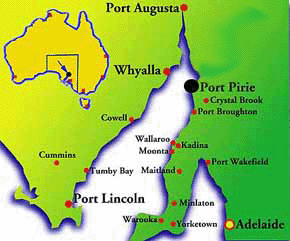
Earmarking Port Augusta for Peter Dutton’s nuclear plan has proved wildly unpopular with an Indigenous leader, who says he feels so strongly about the issue that he is willing to go to court to fight the proposal.
Nukunu elder Lindsay Thomas said his community was against mining fissionable elements, such as uranium as a whole.
“Our people don’t believe in this, we don’t believe it should have even been dug out of the ground anywhere in Australia,” he said.
“We believe it’s poison.”
Mr Thomas said First Nations people had a spiritual connection to the land and he was proud of the work the Barngarla people had done in stopping the federal government’s attempt to dump nuclear medical waste in Kimba.
“You put that stuff in the ground, that kills that earth forever, we can’t do that, we cannot do that,” he said.
“That’s like killing your mother.”
Some locals concerned nuclear is too risky
Citizen scientist and master diver Jeff Bowey is also opposed to Port Augusta as a location for nuclear energy.
Mr Bowey said it was too risky as the water around the Upper Spencer Gulf took “three to five years” to move through.
“You get a spill or some impact into the Gulf itself, you literally destroy what we’ve got,” he said.
“The Gulf is on a knife’s edge, all we need is like one little bit more impact and we’ll probably lose the Gulf and all of the positives that it has.
“We have species here — animals, fish life, plant life, marine life — that’s found nowhere else on earth…………………………………………………………………………………..
Many questions regarding the proposed plant remain.
Voters are still in the dark about how much the plan will cost or how the government will acquire the privately owned land…………………….. https://www.abc.net.au/news/2024-07-21/port-augusta-nuclear-power-plant-legal-battle/104105048
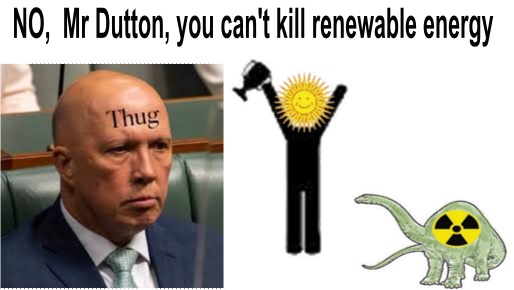
South Australia’s renewable triumph is stunning proof that Dutton’s nuclear plans are a folly
Giles Parkinson, Jul 12, 2024 https://reneweconomy.com.au/south-australias-renewable-triumph-is-stunning-proof-that-duttons-nuclear-plans-are-a-folly/
When the federal and state governments were deciding on a location to announce a funding deal that will underwrite South Australia’s final leap to its remarkable goal of 100 per cent net renewables within the next three years, Port Augusta was the obvious choice.
The city at the top of the Spencer Gulf, like the neighbouring Whyalla, is everything that the climate deniers, the renewable naysayers, the conservative media and the federal Coalition say is not possible.
Port Augusta once played host to the state’s ageing and incredibly dirty coal generators. Whyalla was the subject of taunts from former prime minister Tony Abbott that it would be rendered a ghost town by a carbon price.
Now the two cities are host to thriving renewable energy hubs, new green industries and technologies that will help propel the state into a clean energy future.
And it is remarkable how little is actually known about the achievements of South Australia beyond its borders. Already it is at an annual average of 70 per cent renewables, and by 2027 it intends to be the first in the world to reach 100 per cent net renewables primarily through wind, solar and storage.
Just to be clear, that does not mean that it will consume only renewables. “Net” means that the amount of power it produces from wind and solar during the year will be equivalent to the amount it consumes. But it will still export and import as needs must.
It’s a stunning achievement, and still one that the naysayers insist is not possible. The state has become a globally significant testing ground in technologies – it hosted the first Tesla big battery that helped change the thinking on future grids around the world – and it is addressing and solving complex engineering issues that many experts thought were too difficult and some still say are insurmountable.
More importantly, it is doing this as a result of bipartisan policy. Labor kicked it off more than a decade ago by making itself the most welcoming state for wind and solar.
The Liberal state government set the target of reaching 100 per cent renewables by 2030. Labor is now back in power and has accelerated that target to 2027. It is marvellous what can be achieved when the coal lobby is removed and not pulling the strings of the politicians and public mood.
Despite all this, the achievements in South Australia remain largely ignored by the rest of the country.
The announcement by federal energy minister Chris Bowen and state energy minister Tom Koutsanstonis about the funding deal for a gigawatt of new wind and solar and 600 MW (2,400 MWh) of battery storage – to ensure the 100 per cent net renewable target is met – barely rated a mention in mainstream media outside the state.
Yet it is here, in Port Augusta, that federal Opposition leader Peter Dutton has decided should be one of seven sites – along with Collie, Liddell, Mt Piper, Loy Yang, Callide and Tarong – that should play host to their nuclear power plant proposals.
They were chosen, the Coalition tells us, because they are locations that still have or once supported coal fired power generators, and – they claim – would have available transmission capacity. But as Koutsantonis pointed out during his visit this week, that is simply not the case. That capacity has already been taken up by other projects.
“This site here where the Port Augusta power station once sat is now at capacity in terms of our renewable transmission lines to Adelaide,” he told journalists. “So the idea you can just plug in a nuclear power station here is just folly.
“I haven’t seen Peter Dutton here. I haven’t seen the Commonwealth Opposition here at all talking to the state government about their pretend plans for nuclear power in South Australia.”
Indeed, it is not surprising that Dutton has not shown up: South Australia is not just shining a path to the future, it is a real life repudiation of the folly of the federal Coalition’s nuclear plans, and the sheer nonsense of its claims.
Let’s remember that the Coalition and the conservative media’s nuclear arguments are based almost entirely around the assumption that wind and solar cannot power a modern economy.
South Australia proves them wrong, emphatically so. The grid is reliable, wholesale power prices are falling, and will continue to do so as it free itself from the yolk of fossil gas. Legacy industries are being revived by the growth of wind and solar, new industries are being established, and big business with big loads are being attracted to the state.
The once broke Whyalla steelworks, for example, has based its revival around plans for “green steel” underpinned by wind and solar, and BHP will power its giant Olympic Dam mine with a unique “firmed renewables” contract sourced from the state’s biggest wind project and a big battery.
The state’s transmission operator ElectraNet reports inquiries amounting to several gigawatts of new load from industries attracted to cheaper and greener power, and apparently not the least bit concerned about the scare campaigns that the lights will surely go out.
South Australia is already at the stage where enough rooftop solar is generated in the middle of the day to meet all local demand. That will soon occur in other states too, including Western Australia, effectively eliminating grid demand and requiring storage or new load or exports to soak up the excess.
As every major utility in Australia makes clear, the era of always-on base-load power is well and truly passed in such grids. South Australia has not just shut down its last coal generators, and is closing down its remaining combined cycle gas plants, which perform a similar role. The gaps will be filled by facilities that are fast and flexible. There is simply no room in the grid for an always-on nuclear plant.
“This site is taken. So I’m not quite sure where he’s planning to build this or how he’s planning to build this,” Koutsantonis said.
“If Peter Dutton was serious about what he was talking about, he would have come to us earlier and spoken to us about it, consulted with us. For whatever reason, he hasn’t even stepped a foot on this site to actually have a look at it.”
Bowen has been taking that message across the country. “This whole precinct’s being transformed … into a renewable energy hub, a green cement hub and a critical minerals hub,” he said at Port Augusta.
The next day, Bowen popped up in Lithgow, at the site of another mooted nuclear site, the Mount Piper coal generator, where the asset owner Energy Australia also outlined plans to build pumped hydro, a giant battery and to convert its coal plant into a “flexible” asset rather than an “always on” baseload asset in the interim.
“Traditionally Mount Piper has been a full-load, continuous load power station, and today it’s becoming much more flexible,” EnergyAustralia’s head of operations and projects Sue Elliott said. “It now operates during the day and seasonally depending on renewable availability in the market.
“We are progressing planning for a Lake Lyell Pumped Hydro Project … and we’re also planning a 500 megawatt, four hour Mount Piper Battery Energy Storage System right here on site to take advantage of transmission assets.”
As Bowen pointed out, this is real investment happening now, not some time in the distant future.
“I’m not sure if Mr Dutton and (Opposition energy spokesman Ted) O’Brien have been here yet, but they have a plan for nuclear power, which is at least 30 years away,” he said.
“They admit 2035 at its earliest; even that is wildly ambitious and optimistic and unrealistic. But that doesn’t fix the problems today.
“It doesn’t create jobs today. It doesn’t create investment today and, indeed, it will chill investment. It will stop people investing in the alternative plans because of the investor uncertainty created by having a nuclear plan, which is never going to happen – it’s a fantasy.”
South Australia, and its charge towards 100 per cent renewables, is very real. And worth talking about.
South Australia locks in federal funds to become first grid in world to reach 100 per cent net wind and solar
And to underline the difference in federal politics, the announcement was made at Port Augusta, the site of a former coal fired power station that the federal Coalition wants to turn nuclear, but which has already become a hub for green energy and green industry.
And to underline the difference in federal politics, the announcement was made at Port Augusta, the site of a former coal fired power station that the federal Coalition wants to turn nuclear, but which has already become a hub for green energy and green industry.
Giles Parkinson, Jul 10, 2024, https://reneweconomy.com.au/south-australia-locks-in-federal-funds-to-become-first-grid-in-world-to-reach-100-per-cent-net-wind-and-solar/
South Australia has locked in federal funding to ensure that it becomes the first non-hydro grid in the world to reach 100 per cent net renewables.
The funding deal – through what’s known as a Renewable Energy Transformation Agreement – means that the federal government will underwrite a minimum one gigawatt of new wind and solar generation capacity and another 400 MW (1,600 MWh) of storage – to ensure it meets its target of 100 per cent net renewables by 2027.
South Australia already leads Australia – and the world – with a wind and solar share of around 70 per cent over the last 12 months. The addition of the new capacity, along with the new Project Energy Connect transmission link from NSW, will enable it to become the first in the world to reach 1`00 per cent net renewables based around wind and solar.
That does not mean it will be powered at all times by wind and solar. But the amount of wind and solar generated and stored each year will be equivalent to what it consume each year. The state will export power at times and import at other times, and can fall pack on existing peaking gas plants to fill in the gaps.
Reaching that milestone will be a landmark for the state, and for advocates of the renewable energy transition, particularly as conservative and legacy fossil fuel interests continue to push back on the idea that a modern economy can be powered by renewables and storage.
The irony about South Australia is that the target of 100 per cent net renewables was originally committed by the state Liberal government. The state Labor government merely accelerated it from 2030 to 2027.
And to underline the difference in federal politics, the announcement was made at Port Augusta, the site of a former coal fired power station that the federal Coalition wants to turn nuclear, but which has already become a hub for green energy and green industry.
“South Australia has been a renewable energy pioneer – so much so that we recently brought forward our renewable energy target by three years, committing to ensure electricity generation can be sourced from net 100 per cent renewables by 2027,” state energy minister Tom Koutsantonis said in a statement.
“So we warmly welcome this agreement to accelerate the roll out of renewables while ensuring the reliability of the energy system.
“Our government is committed to working with the Commonwealth to establish a secured grid, supporting the power needs of South Australian households and businesses.”
South Australia has not added a new wind or solar project to the grid for around two years, although the biggest wind project in the state – the 412 MW Goyder South wind farm – is about to connect and send its first power to the grid.
Several new battery projects are also under construction – at Blyth, Hallett, Clements Gap and Templers and another, Tailem Bend, still waiting to be commissioned.
These projects will help propel the state towards 80 per cent renewables over the coming year, while the additional capacity of 1,000 MW of wind and solar, 400 MW of battery capacity (plus the minimum 200 MW included in the current CIS auction) will take it towards 100 per cent net renewables by 2027.
South Australia is also building the world’s first green hydrogen power plant at Whyalla, which will be accompanied by a 250 MW green hydrogen electrolyser and storage facilities, which will also be the world’s biggest when complete.
The state is also fielding huge number of inquiries from industry keen to source zero emissions and low cost green energy – with the local transmission company ElectraNet reporting that more than 2 gigawatts of load inquiries have been made.
Federal energy and climate minister Chris Bowen says the signing of the Renewable Energy Transformation Agreement means that South Australia is the first state to lock in the funding required to meet its targets under the federal government’s Capacity Investment Scheme.
The CIS aims to contract an additional 32GW of renewable generation and storage across the country to help it deliver most of the capacity needed to meet its 82 per cent renewable energy target by 2032.
The first tender of 6 gigawatts of new wind and solar capacity has been flooded with interest, with more than 40 GW of projects showing interest, while the first storage tender – for 600 MW, 2,400 MWh in Victoria and South Australia – was also heavily oversubscribed with some 19 GW of proposals.
Bowen says the bilateral agreements have been designed specifically to address the barriers developers, communities, and governments face in delivering renewable projects, and to replace ageing infrastructure that was built half a century ago.
“The Albanese Government is delivering the certainty and confidence the market spent a decade asking for,” Bowen said in a statement.
“The more renewable energy we have in our grid, the more downward pressure it puts on energy bills because it is the cheapest form of energy to power households and industry.
“Giving the market the confidence to build new projects is good; signing an agreement to collaborate with South Australia on practical steps to get the best out of this energy transformation for South Australian workers, communities and industry, is great.
“The Albanese Government’s Reliable Renewables Plan is the only plan supported by experts to deliver the clean, cheap, reliable and resilient energy system that Australians deserve. This is in sharp contrast to Peter Dutton’s anti-renewables nuclear plan – which remains uncosted and unexplained.”
As part of the deal, South Australia, will establish its own specific grid reliability mechanism and benchmark to be used in place of the national framework, and to be responsible for identifying and delivering new projects and technologies that will maintain reliability to that standard.
Renew Economy is seeking more information to understand what that means in practice.
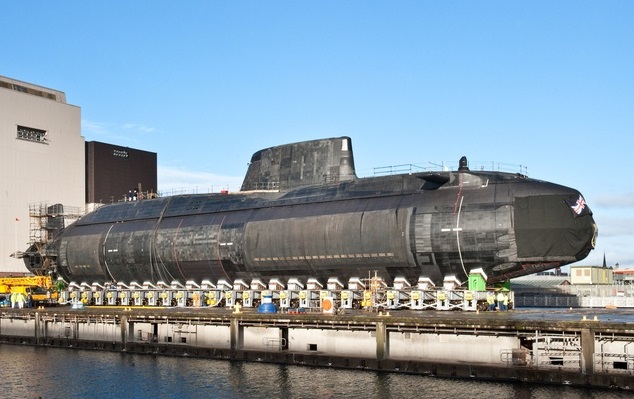
Will Port Adelaide, Fremantle or Port Kembla be the Australian Chernobyl?
By Douglas McCartyJul 21, 2023 https://johnmenadue.com/aukus-will-adelaide-fremantle-or-port-kembla-be-the-australian-chernobyl/
While most discussion of the AUKUS Agreement has focussed on the geopolitical implications for Australia’s standing in the world, the escalation of the risk of war and the crippling cost of the nuclear submarine purchases when less expensive and more sensible non-nuclear options are available, little has been said of the risk to the civilian population posed by these nuclear-powered submarines (or other nuclear-powered naval vessels) in Australia’s home ports.
Perhaps we citizens only enter the calculations as ‘collateral damage’. Any such necessarily technical discussion is hampered by military secrecy. Some information has been released officially, but most is from generalised inference, or conjecture, and so subject to uncertainty. However, in this important matter, it is worth attempting to join the dots….
News from the war in Ukraine includes, almost every other night, a report on the situation around the Zaporizhzhia Nuclear Power Plant, the largest in Europe. Though no longer continuing to generate power for Ukraine, it is always at risk of being shelled or bombed by one side or the other, and regularly just avoiding reactor cooling water pump failure from damaged power transmission lines or lack of diesel fuel for their backup generators for the pumps. How long this situation will continue remains to be seen. And now, after the breaching of the Kakhovka Dam, it is estimated just three months of water for cooling remains.
The consequences of the catastrophic failure of a nuclear reactor are well known to both the Ukrainians and the Russians. To the Northwest of Zaporizhzhia, and just 100 kilometres North of Kyiv, lies the Chernobyl Reactor No. 4, which, on 26 April 1986, underwent meltdown after a coolant and moderator failure, exploded, and caught fire. Radioactive material and fission products were ejected into the air, spreading across the immediate countryside and into Northern Europe. Radioactive rain was reported on the mountains of Wales and Scotland, in the Alps, and contamination in reindeer herds in Northern Sweden. The principal radiological contaminant of concern across this vast area was Caesium-137, one of many fission products and representing some 6% of fission reactor spent fuel. Just 27 kg of Caesium-137, it is calculated, caused this contamination. Some 150,000 square kilometres of Ukraine, Belarus and Russia were initially contaminated. Of course, at the time of the accident, all this was part of the Soviet Union. To this day, 2600 square kilometres around the plant are considered unsafe for human habitation, or agriculture, and will remain so for between 300 and 3000 years! The Reactor used 2% enriched Uranium fuel.
Although the loss of life at Chernobyl was a small fraction of the 100,000 deaths from one of the only two uses of nuclear weapons in war, on Hiroshima in 1945, Chernobyl created 400 times more radioactive pollution. The Hiroshima bomb, “Little Boy”, contained 64 kg of enriched Uranium, though less than 2% actually underwent nuclear fission. The bomb was detonated 500 metres above ground (‘airburst’), and the fatalities were the result of blast, heat, and irradiation, in a city centre. Chernobyl occurred at ground level and so ejected debris upwards initially, followed by smoke columns from subsequent fires. . The 31 deaths at Chernobyl were plant operators and, of course, firemen. The G7, the AUKUS Partners and the Quad just met at ‘ground zero’ in a rebuilt Hiroshima City, 78 years after the bombing.
The US Navy nuclear powered warships, including the ‘Virginia’ Class submarines that Australia would buy under the AUKUS Agreement, principally use Highly Enriched Uranium (HEU) reactors. The Uranium is enriched to above 93% fissionable Uranium-235. It is weapons grade material and has in part been sourced from decommissioned nuclear weapons. The submarine reactors are intended to last for the ‘Life of Ship’ (LOS), up to 33 years, without needing refuelling. Low Enriched Uranium reactors need fuel replacement every 5 to 10 years, when, importantly, the containment pressure vessel around the reactor is physically inspected for flaws and deterioration. This is not done for the HEU, LOS reactors.
The US Navy nuclear powered warships, including the ‘Virginia’ Class submarines that Australia would buy under the AUKUS Agreement, principally use Highly Enriched Uranium (HEU) reactors. The Uranium is enriched to above 93% fissionable Uranium-235. It is weapons grade material and has in part been sourced from decommissioned nuclear weapons. The submarine reactors are intended to last for the ‘Life of Ship’ (LOS), up to 33 years, without needing refuelling. Low Enriched Uranium reactors need fuel replacement every 5 to 10 years, when, importantly, the containment pressure vessel around the reactor is physically inspected for flaws and deterioration. This is not done for the HEU, LOS reactors. In one year, at full power, (210 x 365 ÷ 940 =) 81.5 kg of U-235 would be required. Along with other decay products from the U-235 (Strontium-90, Iodine-131, Xenon-133 etc.), as noted earlier some 6% (or 4.9 kg) would be Caesium-137. The ‘neutron poisons’ also created are balanced out by ‘burnable’ neutron poisons incorporated into the core when new, to maintain reactor function over the years. So far, simple nuclear physics and thermodynamics.
Operationally, one surmises, the submarine reactor will infrequently run at full power. Actual annual production of Caesium-137 may lie between, say, 0.8 kg for 1/6th capacity operation on average for the whole year, and 2.45 kg at half capacity for the year. As the reactor is designed to not need refuelling for the ‘Life of the Ship’, the Cs-137 would continuously accumulate inside the reactor fuel elements. At the lower bound of 1/6th operation, there would be approaching 27 kg of Cs-137 in the core after 33 years, allowing for the decay of some of the Caesiun-137, given its half-life of 30.05 years. At the upper bound, it would take about 13 years for 27 kg of Caesium-137 to accumulate.
Visiting nuclear-powered submarines, from the US or UK, would be similar. Visiting US nuclear-powered aircraft carriers, each with two A1B reactors each of 700MWt, may have 27 kg of Cs-137 in their reactor cores after just two years of operation.
Visiting ships may stay in Australian ports for days or even weeks. Australian submarines will be in port not only between deployments, but also for maintenance, for months and years. The US Navy appears to have about 40 Virginia Class Subs, with some 18 undergoing long-stay maintenance, or about half. We might expect the same. So, at any one time, the AUKUS plan would see naval nuclear reactors, US, or UK, or Australian, or all, in Adelaide, and/or Fremantle, and/or Port Kembla. While peacetime only presents the risk of a nuclear accident, wartime would see these important military assets easily detectable – and targetable – while in port. In the event of a nuclear war, this may be just one of our worries.
In a conventional, non-nuclear conflict, the story may be very different. The situation of the Zaporizhzhia civilian reactors in Ukraine is most instructive. However, as legitimate military targets, would such restraint be shown towards the reactors in the submarines? What would be the impact of a conventional cruise or hypersonic or ballistic missile warhead on the pressure hull and reactor containment vessel (and plumbing) of a nuclear-powered submarine?
Should just 27 kg of the Caesium-137 in the naval reactor cores be released into the air through an explosion (as at Chernobyl) in an accident or deliberate attack, what would be the outcome? In Fremantle, especially if the ‘Fremantle Doctor’ was blowing, would sections of Fremantle and Perth become unsafe for human habitation? In Port Kembla, especially if a ‘Southery Buster’ came through, the Illawarra and, depending on the particular weather conditions, would parts of the South of Sydney become unsuitable for human habitation? For Port Adelaide, especially if a NW change came through, would the Adelaide coastal strip from Gawler to Aldinga become unsuitable for human habitation?
Imagine the number of “single mums doing it tough” who would have to be relocated to emergency accommodation – somewhere! Imagine all that social housing rendered uninhabitable! Even if we ‘won’ the war.
This is a real possibility if we have nuclear reactors in surface ships or submarines in our ports, or in our ship building and maintenance facilities.
Summary of Australian federal and state/territory nuclear/uranium laws and prohibitions.

Current prohibitions on nuclear activities in Australia: a quick guide
From Jim Green, 30 May 2024
https://www.aph.gov.au/About_Parliament/Parliamentary_departments/Parliamentary_Library/pubs/rp/rp2324/Quick_Guides/NuclearActivitiesProhibitions
PDF Version [564KB]
Dr Emily Gibson
Science, Technology, Environment and Resources; Law and Bills Digest Sections
This quick guide provides an overview of current prohibitions on nuclear activities under Commonwealth, state and territory laws. It considers the primary legislation most relevant to current policy debates about domestic nuclear energy only and consequently does not consider recent changes to Commonwealth law to facilitate Australia’s acquisition of conventionally-armed, nuclear-powered submarines under the AUKUS partnership.[1] It also does not include consideration of Australia’s international obligations in respect of nuclear activities, including the safeguarding of nuclear materials and the non-proliferation of nuclear weapons.
If a domestic nuclear energy industry were to progress, it is expected that a comprehensive framework for the safety, security and safeguarding of the related nuclear material would need to be legislated to accommodate such an industry.[2] Consideration of these issues is beyond the scope of this paper.
What are nuclear activities?
A nuclear activity is any process or step in the utilisation of material capable of undergoing nuclear fission; that is, any activities in the nuclear fuel cycle.[3] Nuclear activities therefore include:
- mining of nuclear or radioactive materials such as uranium and thorium milling, refining, treatment, processing, reprocessing, fabrication or enrichment of nuclear material
- the production of nuclear energy
- the construction, operation or decommissioning of a mine, plant, facility, structure, apparatus or equipment used in the above activities
- the use, storage, handling, transportation, possession, acquisition, abandonment or disposal of nuclear materials, apparatus or equipment.
Prohibitions on nuclear activities
Commonwealth
Nuclear activities are regulated under the Australian Radiation Protection and Nuclear Safety Act 1998 (ARPANS Act) and the Environment Protection and Biodiversity Conservation Act 1999 (EPBC Act).
Australian Radiation Protection and Nuclear Safety Act 1998
The ARPANS Act establishes a licensing framework for controlled persons (including a Commonwealth entity or a Commonwealth contractor) in relation to controlled facilities (a nuclear installation, a prescribed radiation facility, or a prescribed legacy site).[4] A nuclear installation includes a nuclear reactor for research or the production of radioactive materials for industrial or medical use, and a radioactive waste storage or disposal facility with an activity that is greater than the activity level prescribed by the Australian Radiation Protection and Nuclear Safety Regulations 2018.[5]
The ARPANS Act allows the CEO of the Australian Radiation Protection and Nuclear Safety Agency (ARPANSA) to issue licences for controlled facilities.[6] In issuing a facility licence, the CEO ‘must take into account the matters (if any) specified in the regulations, and must also take into account international best practice in relation to radiation protection and nuclear safety’.[7]
However, subsection 10(2) of the Act expressly prohibits the CEO from granting a licence for the construction or operation of any of the following nuclear installations: a nuclear fuel fabrication plant; a nuclear power plant; an enrichment plant; or a reprocessing facility.[8] This prohibition does not appear to apply to a radioactive waste storage or disposal facility.
Environment Protection and Biodiversity Conservation Act 1999
The EPBC Act establishes 9 matters of national environmental significance (MNES) and provides for the assessment and approval of these actions if the action has, will have, or is likely to have a significant impact on the MNES.[9] ‘Nuclear actions’ are one of the MNES.[10] Where a nuclear action is determined to be a controlled action (that is, one likely to have a significant impact and requiring assessment and approval under the Act), the assessment considers the impact of a nuclear action on the environment generally (including people and communities).[11]
The Act establishes offences for the taking of nuclear actions in those circumstances.[14]
Similarly, the Act provides that a relevant entity (as set out below) must not take an action (including a nuclear action) unless a requisite approval has been obtained under Part 9 of the Act or a relevant exception applies:
- a person must not take a relevant action on Commonwealth land that has, will have or is likely to have a significant impact on the environment[15]
- a person must not take a relevant action outside Commonwealth land if the action has, will have or is likely to have a significant impact on the environment on Commonwealth land[16]
- the Commonwealth or a Commonwealth agency must not take inside or outside the Australian jurisdiction an action that has, will have or is likely to have a significant impact on the environment inside or outside the Australian jurisdiction.[17]
The Act establishes offences and civil penalty provisions for the taking of an action in those circumstances.[18]
Subsection 140A(1) prohibits the Minister for the Environment from granting an approval for a nuclear action relating to specified nuclear installations. These installations are a nuclear fuel fabrication plant, a nuclear power plant, an enrichment plant, and a reprocessing facility.
Potential reform of the nuclear action trigger
The second independent review of the EPBC Act, completed in October 2020 by Professor Graeme Samuel (Samuel Review), recommended that the nuclear actions MNES be retained.[19] The review recommended that ‘the EPBC Act and the regulatory arrangements of [ARPANSA] should be aligned, to support the implementation of best-practice international approaches based on risk of harm to the environment, including the community’.[20]
In 2022, the Government’s Nature Positive Plan adopted this approach and stated, ‘[a] uniform national approach to regulation of radiation will be delivered through the new National Environmental Standards’.
In February 2024, a policy draft of the National Environmental Standard for Matters of National Environmental Significance indicates that ‘nuclear actions’ will be renamed ‘radiological exposure actions’ and states:
Relevant decisions must:
Not be inconsistent with the ARPANSA national codesfor protection from radiological exposure actions including in relation to:
- human health and environmental risks and outcomes; and. radiological impacts on biological diversity,
- the conservation of species and the natural health of ecosystems.[22]
States and territories
States and territories generally regulate nuclear and radiation activities through either the health or the environmental protection portfolios. The relevant legislation provides for the protection of health and safety of people, and the protection of property and the environment, from the harmful effects of radiation by establishing licensing regimes to regulate the possession, use, and transportation of radiation sources and substances.[23] Mining of radioactive materials is regulated through the resources portfolio.
In addition, as outlined below, the states and territories have legislation prohibiting certain nuclear activities or the construction and operation of certain nuclear facilities. Importantly, where permitted, nuclear activities (including mining) would also be subject to assessment and approvals under a range of other legislation, including planning and environmental impact assessment, native title and cultural heritage, and radiation licensing laws at the state or territory and Commonwealth level.
New South Wales
Exploration for uranium has been permitted under the Mining Act 1992 since 2012.[24] However, the mining of uranium is prohibited by the Uranium Mining and Nuclear Facilities (Prohibitions) Act 1986 (NSW Prohibitions Act).[25]
The NSW Prohibitions Act also prohibits the construction and operation of certain nuclear facilities, including uranium enrichment facilities, fabrication and reprocessing plants, nuclear power plants, and storage and waste disposal facilities (other than for the storage and disposal of waste from research or medical purposes, or the relevant radiological licensing Act).[26]
Northern Territory
The Atomic Energy Act 1953 (Cth) provides that the Commonwealth owns all uranium found in the territories.[27] Uranium exploration and mining in the Northern Territory (NT) is regulated under both NT mining laws (the Mineral Titles Act 2010 and the Mining Management Act 2001) and the Atomic Energy Act.[28] The Ranger Uranium Mine operated until 2021 and is now undergoing rehabilitation.[29]
The Nuclear Waste Transport, Storage and Disposal (Prohibition) Act 2004 (NT) prohibits the construction and operation of nuclear waste storage facilities, as well as the transportation of nuclear waste for storage at a nuclear waste storage facility in the NT.[30] Nuclear waste is defined as including waste material from nuclear plants or the conditioning or reprocessing of spent nuclear fuel.[31]
This Act also:
- prohibits public funds from being expended, granted or advanced to any person for, or for encouraging or financing any activity associated with the development, construction or operation of a nuclear waste storage facility
- would require the NT Parliament to hold an inquiry into the likely impact of a nuclear waste storage facility proposed by the Commonwealth on the cultural, environmental and socio‑economic wellbeing of the territory.[32]
Queensland
Exploration for and mining of uranium are permitted under the Mineral Resources Act 1989. However, it has been government policy to not grant mining leases for uranium since 2015.[33] The government policy ban extends to the treatment or processing of uranium within the state.[34]
The Nuclear Facilities Prohibition Act 2007, in similar terms to the NSW Prohibitions Act, prohibits the construction and operation of nuclear reactors and other nuclear facilities in the nuclear fuel cycle.[35]
Unlike other state and territory prohibition legislation, the Nuclear Facilities Prohibition Act would require the responsible Queensland Minister to hold a plebiscite to gain the views of the Queensland population if the Minister was satisfied that the Commonwealth Government has taken, or is likely to take, steps to amend a Commonwealth law or exercise a power under a Commonwealth law to facilitate the construction of a prohibited nuclear facility, or if the Commonwealth Government adopts a policy position of supporting or allowing the construction of a prohibited nuclear facility in Queensland.[36]
South Australia
The exploration and mining of radioactive material (including uranium) is permitted in South Australia (SA), subject to approvals under the Mining Act 1971 and the Radiation Protection and Control Act 2021 (RP&C Act).[37] For example, uranium is mined at Olympic Dam, Four Mile and Honeymoon. However, conversion and enrichment activities are prohibited by the RP&C Act.[38]
The Nuclear Waste Storage Facility (Prohibition) Act 2000 prohibits the construction or operation of a nuclear waste storage facility, and the import to SA or transport within SA of nuclear waste for delivery to a nuclear waste storage facility.[39]
The Nuclear Waste Storage Facility (Prohibition) Act prohibits the SA Government from expending public funds to encourage or finance the construction or operation of nuclear waste storage facilities.[40] The Act would also require the SA Parliament to hold an inquiry into the proposed construction or operation of a nuclear waste storage facility in SA authorised under a Commonwealth law.[41]
Tasmania
The exploration and mining of atomic substances (which includes uranium and thorium) is permitted under the Mineral Resources Development Act 1995 (Tas), subject to approval.
Victoria
The Nuclear Activities (Prohibitions) Act 1983 prohibits a range of activities associated with the nuclear fuel cycle, including the exploration and mining of uranium and thorium, and the construction or operation of facilities for the conversion or enrichment of any nuclear material, nuclear reactors and facilities for the storage and disposal of nuclear waste from those prohibited activities.[42]
Western Australia
Exploration for and mining of uranium is permitted under the Mining Act 1978. A state policy ban on mining approvals was overturned in November 2008;[43] however, this was reinstated in June 2017, with a ‘no uranium’ condition on future mining leases.[44] The ban does not apply to 4 projects that had already been approved by the previous government.
The Nuclear Activities Regulation Act 1978 aims to protect the health and safety of people and the environment from possible harmful effects of nuclear activities, including by regulating the mining and processing of uranium and the equipment used in those processes. The Nuclear Waste Storage and Transportation (Prohibition) Act 1999 also prohibits the storage, disposal or transportation in Western Australia of certain nuclear waste (including waste from a nuclear plant or nuclear weapons).[45]
Can the Commonwealth override a state ban on nuclear activities?
The Commonwealth Parliament only has the power to make laws in relation to matters specified in the Constitution of Australia, including in sections 51, 52 and 122. Assuming the Commonwealth has a sufficient head of power to legislate, section 109 of the Constitution specifically provides for circumstances in which there might be an inconsistency between Commonwealth and state laws:
When a law of a State is inconsistent with a law of the Commonwealth, the latter shall prevail, and the former shall, to the extent of the inconsistency, be invalid.
Therefore, even though some states have enacted prohibitions on certain nuclear activities within their jurisdictions, the Commonwealth Parliament could enact specific legislation in relation to nuclear activities so that such activities can take place within those jurisdictions. One such example is the National Radioactive Waste Management Act 2012 (Cth), which provides for the establishment of a national radioactive waste management facility at a site to be declared by the responsible Commonwealth Minister. Section 12 of that Act provides that state and territory laws have no effect in regulating, hindering, or preventing such a facility
Further information
- ‘Who we regulate’, ARPANSA
- ‘State & territory regulators’, ARPANSA
- ‘Uranium and thorium’, in Geoscience Australia, Australia’s Energy Commodity Resources, 2023 Edition, (Canberra: Geoscience Australia, 2023).
Koonibba looks to the future as a rocket launch site, but one elder is concerned about impact on sacred sites
ABC Eyre Peninsula / By Jodie Hamilton and Amelia Costigan, Sat 11 May 2024
When an 11.5 metre German rocket was launched from the tiny South Australian former mission town of Koonibba last Friday, it lit the candle for self-determination and the future of local Indigenous youth.
But one elder says the project risks damaging sacred women’s sites and the next generation’s connection to country.
Kokotha elder Sue Coleman-Haseldine was camped out in the firing line on the rocket range with a handful of supporters to protest the space venture.
However, the majority of the 125 residents of Koonibba — down from a population of 145 in 2016 — supported the launch.
The community negotiated and developed the venture in partnership with Adelaide company Southern Launch over six years.
The partnership is already delivering educational benefits for town’s small school and nearby Ceduna schools, with plans for a space observatory to attract tourists.
Connection to country
But Ms Coleman-Haseldine has vowed to continue protesting against the site.
She is worried it could help develop weapons technology, the scars of which still plague the lands to the north of Koonibba at Maralinga and Emu Fields, where the Australian and British governments tested nuclear weapons from 1952 to 1963.
Ms Coleman Haseldine was born at the Koonibba Mission in 1951 and said she was no stranger to battles, having addressed the United Nations in 2017 about the impact of those weapons tests at Maralinga.
Walking across a large granite rock outcrop, she points out symbols and talks about the stories of the land.
With family and friends, she has been maintaining and cleaning sacred deep waterholes and clearing dirt and soil washed into shallow surface rock pools, to provide safer drinking holes for emus, kangaroos, birds and reptiles.
She set up camp in the Yumbarra Conservation Park, part of the 41,000 square kilometre rocket launch range, which allows for rocket re-entry and retrievals.
The Yellabinna Wilderness Protection Area to the north is also in the rocket launch range
“That rocket launching, I think it could start fires, it could just hit one of these rocks and smash it, starting to break the storylines,” Ms Coleman-Haseldine said.
A Department for Environment and Water spokesperson said the department ensured Southern Launch had consulted appropriately with the Far West Coast Aboriginal Corporation and the Yumbarra Conservation Park Co-management Board…………………………..
Ms Coleman-Haseldine said she had been going to the area from childhood and had a custodial role to protect the land, animals and stories.
“This area is all part of the Seven Sisters dreaming,” she said.
“Country gives us bush med, food, teaches the kids out here how to survive.
“And it teaches them respect for the country and each other, and the animals………………………………………….. https://www.abc.net.au/news/2024-05-11/koonibba-rocket-launch-aboriginal-community-protest-kokotha-sa/103808598
Why South Australia will be a nuclear power battleground at the 2025 federal election

Adelaide Now, 15 Apr 24
Crunch time for affordable, reliable electricity is coming fast and SA will be key to deciding nuclear power’s fate, writes Paul Starick.
Crunch time is rapidly approaching in the race to deliver affordable, reliable electricity while transitioning Australia to a net-zero economy.
The next federal election, expected early next year, will be yet another battle in the climate war that has deadlocked politicians and delivered little for voters – other than dramatically higher power prices.
The fundamental choice at this election will be between pumping billions of dollars into building wind and solar farms – or nuclear power plants.
Prime Minister Anthony Albanese argues renewable energy will bring cheaper power prices and boost sovereign capability by reviving manufacturing.
A Net Zero Australia report released last July finds $1.5 trillion will have to be spent by the end of this decade, particularly on rolling out transmission networks to support new wind and solar, if Australia is going to meet its emissions reductions targets by 2050.
The group, which included experts form Melbourne, Queensland and Princeton universities, said: “Nuclear power should not be in our plans, because it’s too expensive and slow”.
His rival, Opposition Leader Peter Dutton, argues the Coalition could deliver cheaper power prices by installing the first small-modular nuclear power reactors into the grid by the mid-2030s, at a cost of $3.5bn to $5bn each.
They would be built by Rolls-Royce, also the supplier of nuclear reactors for AUKUS submarines to be built in Adelaide as part of $368bn project.
The reported cost and timeline, at the very least, raises strong questions over Labor’s blanket rejection of nuclear as uneconomic, given the amount that is being ploughed into renewables.

I find it amazing that the Advertiser just accepts Peter Dutton’s claims on the timing and costs of the as yet non-existent small nuclear reactors
South Australia will be at the epicentre of this epic battle over electricity generation and prices.
The state has world-leading penetration of renewable energy and the world’s largest uranium resource at Olympic Dam.
The Coalition wants a nuclear power plant at Port Augusta.
The consequences are huge, as straight-talking Alinta Energy chief Jeff Dimery said on Wednesday, when he argued Australians must face the “hard truth” of having to pay more for electricity to reach net zero by 2050”.
State and federal Labor governments want to rapidly accelerate the renewable push.
Premier Peter Malinauskas in late February said the 100 per cent renewables net electricity generation target would be brought forward three years from 2030 to 2027.
The catalyst, he vowed, would be a clean energy boom underpinned by the state-owned, $593m hydrogen power plant operating in Whyalla from 2026.
This project, a core 2022 election promise, almost certainly will attract federal funding in the May federal budget, as part of massive government investment in the energy transition promised by Prime Minister Anthony Albanese in a landmark speech on Thursday.
Mr Albanese is citing green iron production at Whyalla steelworks, fuelled by green hydrogen from the state-operated plant, as a key example of his Future Made in Australia plan.
But the federal Coalition and state Liberals sense an opportunity to wedge Mr Malinauskas on nuclear energy.
He seems a supporter, frustrated only by a disciplined commitment to implement his hydrogen power plant election promise, plus remain in lock-step with Labor colleagues by insisting it is uneconomic……………….
Whatever the machinations, voters will soon, appropriately, decide nuclear power’s future.
1 This month

of the week – Australians for War Powers Reform (AWPR)
To see nuclear-related stories in greater depth and intensity
 Antinuclear