Carbon neutral plan for Adelaide transport would supply 20,000 jobs
 20,000 jobs tipped if Adelaide spends big on tram network, plug-in hybrid cars to be carbon-neutral city
 http://www.adelaidenow.com.au/news/south-australia/20000-jobs-tipped-if-adelaide-spends-big-on-tram-network-plugin-hybrid-cars-to-be-carbonneutral-city/news-story/0a9e113ba2c052a5167ab24a9b6d1c49 September 2, 2016 A RADICAL plan to make Adelaide the world’s first carbon-neutral city could create more than 20,000 jobs, a State Government-commissioned report says.Engineering company Siemens has presented a range of options that could help Adelaide reduce its net carbon emissions to zero by 2025, including heavy investment in public transport to reduce private car use.
The report, released on Friday, says spending $4.9 billion on public transport infrastructure, including six new tram lines, could create 21,000 full-time equivalent jobs and reduce car use as a share of annual passenger kilometres by 20 per cent.
A less expensive option would be to create incentives for more drivers to use low-emission vehicles, including plug-in hybrid cars.
A $1.4 billion outlay would create 5600 full-time equivalent jobs but would provide a greater return on investment, reducing Adelaide’s transport-related emissions by up to 47 per cent.
“From a 50-50 split in 2015, emissions in the building sector will drop to 33 per cent, with 67 per cent of emissions accruing from transportation,” the report says. “The city will increasingly need to tackle its transport emissions to meet its targets.”
Incentives to encourage greater use of electric cars could include free public parking, exemptions from one-off purchase fees and the freedom to use dedicated bus lanes, all of which have been implemented in Norway. Electric car owners could also receive grants and streamlined permits to install their own charging stations or a reimbursement of energy recharging costs.
Premier Jay Weatherill said the report would add to the debate on ways to reduce emissions, adding that previous efforts to green the state had not constrained economic growth. “We’ve demonstrated that you can cut your emissions and at the same time grow your economy,” he told a Committee for Economic Development of Australia briefing. “These two things are not mutually exclusive.”
Secret forum – for the Nuclear Royal Commission to indoctrinate kids?
 The South Australian government is going to a lot of trouble to set up a forum for 160 students and 60 teachers to hear a presentation from the former Nuclear Royal commissioner, Kevin Scarce, and the Chief Executive of the Nuclear Consultation and Response Agency, to tell them all about the plan for South Australia to import foreign nuclear waste.
Walk Against Nuclear Waste Importation protestors speak out at Willunga, Adelaide
 Fleurieu protesters stand against nuclear storage | VIDEO, The Times On The Coast, 30 Aug 16 “Nuclear waste, what a disgrace,” was chanted loud and clear by more than 100 participants in the Walk Against Nuclear Waste Importation as they gathered on the steps of the Willunga Hub on August 24.
Inside was a consultation team who welcomed the walkers with feedback forms and Know Nuclear information packs, taking an opportunity to inform the community about what the Nuclear Fuel Cycle Royal Commission recommendation on storing international radioactive waste meant.
“The proposal before us is an economic one: $5.5 billion per annum, $445 billion over the life of the facility,” said John Phalen, Director, Engagement, Nuclear Fuel Cycle Royal Commission Consultation and Response Agency.
“What we are asking people to do is examine the opportunity,” he said……..
Willinga, Strathalbyn and Victor Harbor among the 100 selected sites for Know Nuclear representatives to talk to local communities.
“I don’t think nuclear dumping is good for our environment or our future,” said Jeffrey Simmons. “Especially when we take it from other parts of the world.”
Sherilee Williams agreed. She said she had a deep respect for the land and its traditional owners since walking from central Australia’s Dingo Fence to Mount Compass a few years ago. “They (the state government) are thinking South Australia’s desert is a wasteland but it’s a sacred place; it’s a place of healing,” she said………
Community consultation runs until October. Feedback forms are available atnuclear.yoursay.sa.gov.au
Living in a radioactive environment Boris Sopotsko from Hallett Cove grew up in St Petersburg, Russia, 40 kilometres from a nuclear power plant and remembers as a child being taught where to run, where to hide, and what to eat after an explosion or leak.
“I hate the idea so much,” he said, referring to an international nuclear waste storage facility proposed for South Australia. “It makes me feel ill. “I remember our school had a gas mask for every single student and an under ground shelter; a nuclear bomb shelter. “The walls had posters showing us how to check which way the wind was blowing and what to do to avoid contaminated rains. “We were well trained, but that doesn’t mean we’d survive.”
Mr Sopotsko feared for the state’s future and said he actively opposed the importing, storing and burying of international nuclear waste in South Australia.
“Nuclear waste from all over the world is clearly a concern, especially when shipping in high seas,” he said. He said transporting the material on roads and rail posed a safety risk: “you freeze with dread at the sight,” he remembers.
Storing the waste above ground was also a concern. “We live in a time when the West has enemies,” he said. “This would be an easy target.”
Underground storage poses a contamination risk to soil and water. “Germany’s waste deposit in Lower Saxony has experienced an underground radioactive leak and people’s resistance against further storage is very strong……..http://www.victorharbortimes.com.au/story/4130203/fleurieu-protesters-stand-against-nuclear-storage-video/
Geothermal power project closes in SA as technology deemed not financially viable
ABC News, 30 Aug 16 By Tom Fedorowytsch A potential energy source in Australia is set to remain untapped, with a geothermal power project in the far north of South Australia now closed.
Energy company Geodynamics closed and remediated the sites of several test wells and generation plants in the Cooper Basin after deciding they were not financially viable.
Before the closure, the company had managed to extract super-heated water from five kilometres below the earth’s surface and use it to generate small amounts of electricity.
“The technology worked but unfortunately the cost of implementing the technology and also the cost of delivering the electricity that was produced to a market was just greater than the revenue stream that we could create,” Geodynamics chief executive Chris Murray said…….http://www.abc.net.au/news/2016-08-30/geothermal-power-plant-closes-deemed-not-financially-viable/7798962
Surface nuclear waste spurs community concern
Community concern is mounting about plans to store high level radioactive waste above ground for years before building a proposed nuclear waste dump, warns Conservation SA CEO Craig Wilkins.
“From our public consultation, most people think this proposed dump is an ‘out of sight, out of mind’ idea, where we bury the waste deep in the outback and that’s it,” he said. “The reality is very different.
“The Nuclear Fuel Cycle Royal Commission was very candid: The project only stacks up financially if we import and stockpile 50,000 tonnes of nuclear waste above ground for as long as 17 years before we can deposit it in an underground disposal site. Indeed, that ‘interim’ surface site will store tens of thousands of tonnes above ground for the next 100 years.

“So, we acquire the risk and responsibility for this nuclear waste before we know if we can actually build and operate the ultimate repository – let alone obtain community consent for it.
“Before we get there, ships containing that high-level waste enter South Australian waters through problem areas such as the South China Sea, then traverse our prawn and tuna fisheries, aquaculture zones and tourism hotspots every month for 70 years. That is a huge amount of risk.
“The plan would require a purpose-built nuclear port and rail line with nuclear waste being stored at five different locations across the state. While these facts are publicly accessible, they’ve been obscured by the promise of eye-popping windfall profits from this proposal.”
However, community concern has grown as South Australian citizens identify problems with the financial viability, environmental impact and community effects of the proposed nuclear waste dump.
In Port Augusta, a two-day community forum, called Exposure 2016, will run this weekend, from September 2-4, at the city’s Institute Theatre, starting on Friday night with ‘Talking Straight Out’. This exhibition showcases the famous Irati Wanti campaign when senior Aboriginal women from Coober Pedy, the Kupa Piti Kungka Tjuta, defeated Federal Government plans to dump radioactive waste on their land.
The free event will also include sessions on the SA Government’s international nuclear waste dumping plans; current Federal Government plans to dump waste in the Flinders Ranges; traditional owners’ voices and rights; impacts of radiation on people and the environment; impacts on industries including tourism, farming and recreation and the track record of radioactive waste management / mismanagement in South Australia and globally.
For many South Australians, the proposed nuclear waste dump in the State’s outback invokes memories of Maralinga and Emu Fields, the South Australian sites of nine British secret nuclear tests between 1953 and 1963. The tests exposed local Aboriginal communities to radiation that caused cancers, blindness and ongoing genetic damage. British and Australian servicemen were also exposed and radioactivity was detected in SA, NT, NSW and Queensland.
South Australian singer Mike Roberts also communicates concern about the nuclear waste dump in his new song Welcome to the Nuclear State. Listen at http://www.cdbaby.com/cd/mikeroberts23#. For community concerns about the SA nuclear waste dump, visit http://www.nodumpalliance.org.au/.
Climate Change Adaptation – South Australia in the lead
National Climate Adaptation Conference 2016, Day Three – Sean Kidney
SOUTH AUSTRALIA: LEADING ON CLIMATE CHANGE ADAPTATION The Climate group, August 2016. Sandy Pitcher, Chief Executive of South Australia’s Department of Environment, Water and Natural Resources, reflects on the achievements of Australia’s preeminent climate change forum, the Climate Adaptation 2016 conference, which took place in Adelaide in July.
The Climate Adaptation 2016 conference provided an unprecedented opportunity for South Australia to highlight the important progress being made on climate change adaptation in our state, and learn from others in Australia and around the world.
The conference was presented by the National Climate Change Adaptation Research Facility and the Commonwealth Scientific and Industrial Research Organisation, with the South Australian Government – a member of The Climate Group’s States & Regions Alliance, the platinum sponsor. It attracted around 490 policy makers, researchers and practitioners and the debate focused on the challenges and opportunities presented by climate change adaptation.
The innovation that we’re seeing mainly happens at the local level, and can be shared at conferences like this. It is a crucial way, for us in South Australia and beyond, to share ideas, catalyze local action, and bring key influencers together.
ADAPTATION IS A VERY KEY TENANT TO ANY FUTURE STRATEGY – THERE ARE MANY PEOPLE WHO ARE GOING TO BE IMPACTED BY A CHANGING CLIMATE
South Australia has long been recognized as a global leader on climate action, and our work in climate change adaptation is central to our efforts.
Our award-winning adaptation framework is based on a collaborative, regional approach involving partnerships between local government, regional development committees and natural resources management boards, who are working together to develop well-informed adaptation solutions for their communities.
Currently, in each of the State’s regions, five climate adaptation plans have been completed with the remainder due to be finalized by the end of the year….https://www.theclimategroup.org/news/south-australia-leading-climate-change-adaptation
South Australia’s nuclear waste dump plan not economically viable? The nuclear lobby doesn’t care
The global nuclear lobby surely does not care about whether or not the South Australian nuclear waste importing scheme is economically viable. Their fairly desperate need is to sell nuclear reactors to those countries that don’t already have them. In particular, the ‘small nuclear” lobby sees an urgency now, with ‘big nuclear’ failing, to get their industry happening.
A commitment by an Australian State to take in nuclear waste could do the trick for them – as Oscar Archer put it – by unblocking the back end of the nuclear fuel cycle.
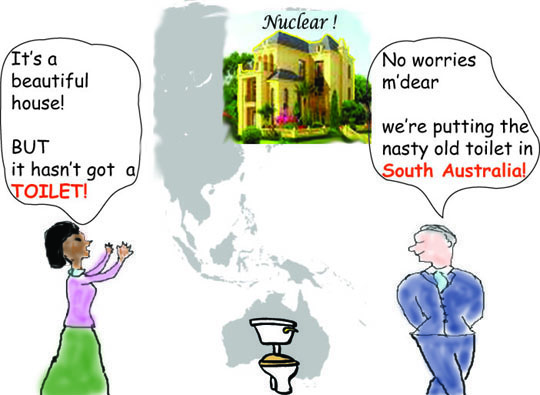
Mixed motives in South Australia’s nuclear waste import plan. Online Opinion, Noel Wauchope, 23 Aug 16 In South Australia the continued nuclear push focusses solely on a nuclear waste importing industry. Yet that might not be economically viable. Behind the scenes, another agenda is being pursued – that of developing new generation nuclear reactors.
First, let’s look at the message. The message from the Nuclear Fuel Cycle Royal Commission (NFCRC) is clearly a plan to make South Australia rich, by importing foreign nuclear wastes. …..This theme has been repeated ad nauseam by the NFCRC’s publicity, by politicians, and the mainstream media.…..
Whereas other countries are compelled to develop nuclear waste facilities, to deal with their waste production from civil and military reactors,that is not a necessity for Australia, (with the exception of relatively tiny amounts derived from the Lucas Heights research reactor).
So, the only reason for South Australia to develop a massive nuclear waste management business is to make money.
If it’s not profitable, then it shouldn’t be done.
Or so it would seem.
There is another, quieter, message. When you read the Royal Commission’s reports, you find that, while the major aim is for a nuclear waste business, in fact, the door is kept open for other parts of the nuclear fuel chain……… Continue reading
South Australia: Future Business Council calls for National smart energy grid
 Tom Quinn: South Australian business is paying high price for ‘dumb’ national electricity grid
 http://www.adelaidenow.com.au/news/opinion/tom-quinn-south-australian-business-is-paying-high-price-for-dumb-national-electricity-grid/news-story/97918e65518213082303ddd011421d3f
Last week’s meeting of energy ministers fumbled their first chance to do so, leaving business hamstrung. Nowhere is that as painfully clear than in South Australia.
The state has led the country in tapping into rich, renewable resources but when it comes to accessing the benefits business is still missing out. The problem? South Australia must operate within a larger national system that’s designed for a different age.
The wholesale electricity price spikes seen in July, claims of gas market manipulation and barriers preventing the rapid shift to 100 per cent renewable electricity have highlighted the many systematic flaws. At the heart of all this, though, sits an outdated grid that is based on last century’s centralised generation model.
This obsolete system has served us well but is now holding back the state and business community.
The sand is rapidly shifting under the traditional energy market’s feet driven by households and businesses that are no longer just consumers of energy but also producers, particularly through domestic solar panels Continue reading
Canberra heads to 100% renewable energy, helped by wind power from South Australia
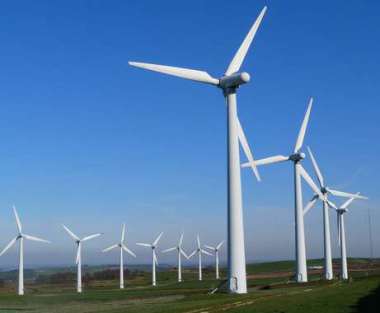 Wind farms in Crookwell, South Australia ‘final piece’ in ACT’s renewable plan http://www.canberratimes.com.au/act-news/wind-farms-in-crookwell-south-australia-final-piece-in-acts-renewable-plan-20160823-gqys5x.html Christopher Knaus, 23 Aug 16 A local wind farm has won a bid to supply 41,600 ACT homes with energy, while a third successful bid from a South Australian project means it will provide a major chunk of Canberra’s renewable power by 2020.
Environment Minister Simon Corbell on Tuesday announced what he described as the “final piece” in the government’s plan for 100 per cent renewable energy by 2020. A 91MW $200 million Crookwell wind farm, to be built by Spanish-owned company Union Fenosa Wind Australia, has won the right to be paid feed-in tariff grants under the government’s reverse auction process.
The project, due to be completed in September 2018, will build 28 turbines able to power 41,600 Canberra homes.
Mr Corbell said the Crookwell farm would be paid $86.60/MWh for the energy it feeds into the grid, which he said was a record low for a NSW wind farm. The other successful bidder was the Hornsdale Wind Farm, being built by Neoen International SAS and Megawatt Capital north of Adelaide.
The Hornsdale project has already been successful in the first and second rounds of ACT wind auctions, and is building the capacity for 309MW in total. That means the South Australian project will provide a large chunk of the ACT’s renewable energy by 2020. Continue reading
Nuclear waste plan for South Australia not economically viable? Global nuclear lobby doesn’t care
The global nuclear lobby surely does not care about whether or not the South Australian nuclear waste importing scheme is economically viable.
A commitment by an Australian State to take in nuclear waste could do the trick for them – as Oscar Archer put it – by unblocking the back end of the nuclear fuel cycle. The NFCRC plan also promises the chance of a market in Australia for the mini nuclear reactors.
Mixed motives in South Australia’s nuclear waste import plan, Noel Wauchope, Online Opinion, 23 Aug 16, In South Australia the continued nuclear push focusses solely on a nuclear waste importing industry. Yet that might not be economically viable. Behind the scenes, another agenda is being pursued – that of developing new generation nuclear reactors.
First, let’s look at the message. The message from the Nuclear Fuel Cycle Royal Commission (NFCRC) is clearly a plan to make South Australia rich, by importing foreign nuclear wastes……This theme has been repeated ad nauseam by the NFCRC’s publicity, by politicians, and the mainstream media.…..
Meanwhile, the South Australian Parliament is holding a Committee Inquiry into the NFCRC’s recommendations. This Committee asked witnesses about various aspects of the plan. However, an intense focus in questioning Royal Commissioner Kevin Scarce, and Dr Tim Johnson from Jacob Engineering (financial reporter to the NFCRC) was directed at the economic question. It was clear that the politicians were concerned that there’s a possibility of the State spending a significant amount of money on the project, which might then not go ahead. And, indeed, Dr Johnson acknowledged that, financially,” there is a very significant risk”
Whereas other countries are compelled to develop nuclear waste facilities, to deal with their waste production from civil and military reactors,that is not a necessity for Australia, (with the exception of relatively tiny amounts derived from the Lucas Heights research reactor).
So, the only reason for South Australia to develop a massive nuclear waste management business is to make money.
If it’s not profitable, then it shouldn’t be done.
Or so it would seem.
There is another, quieter, message. When you read the Royal Commission’s reports, you find that, while the major aim is for a nuclear waste business, in fact, the door is kept open for other parts of the nuclear fuel chain…….
The clearest explanation of this came early in 2015, just as the NFCRC was starting, in an ABC Radio National talk by Oscar Archer…….
Archer’s plan is significant because it illustrates a very important point about South Australia’s nuclear waste plan – IT SOLVES A GLOBAL NUCLEAR INDUSTRY PROBLEM. Both in ‘already nuclear’ countries, especially America, and in the so far non nuclear counties, such as in South Asia, the nuclear industry is stalled because of its nuclear waste problem. In America, the “new small nuclear”, such as the PRISM, technologies (Power Reactor Innnovative Small Module) cannot even be tested, without a definite waste disposal solution. But, if South Australia provided not only the solution, but also the first setting up of new small reactors, that would give the industry the necessary boost……..
Once Australia has set up a nuclear waste importing industry, the nuclear reactor salesmen of USA, Canada, South Korea, will have an excellent marketing pitch for South Asia, as the nuclear waste problem has been removed from their shores.. And South Asia is exactly the market that the NCRC has in its sights. The NFCRC eliminated most of the EU, Russia, China, North America as customers. This was explained by Dr Tim Jacobs, of Jacobs Engineering, (financial reporters to the NFCRC), at the recent hearing of the South Australian Parliamentary Joint Committee on Findings of the Nuclear Fuel Cycle Royal Commission ………
South Australia’s government is influenced by a strong nuclear lobby push and the Royal Commission advocacy for solving that State’s present financial problems by a futuristic nuclear waste repository bonanza scheme…….
The global nuclear lobby surely does not care about whether or not the South Australian nuclear waste importing scheme is economically viable. Their fairly desperate need is to sell nuclear reactors to those countries that don’t already have them. In particular, the ‘small nuclear” lobby sees an urgency now, with ‘big nuclear’ failing, to get their industry happening.
A commitment by an Australian State to take in nuclear waste could do the trick for them – as Oscar Archer put it – by unblocking the back end of the nuclear fuel cycle. The NFCRC plan also promises the chance of a market in Australia for the mini nuclear reactors. http://www.onlineopinion.com.au/view.asp?article=18465&page=1
Roger Cross: Reasons to Reject a Medium and High Level Radioactive Waste Dump in South Australia
Roger Cross Submission to Joint Committee on Nuclear Royal Commission South Australian Parliament, August 2016 Some Reasons for rejecting the proposal to build a Medium and High Level Radioactive Waste Dump in South Australia. By Roger Cross (Author of Fallout: Hedley Marston and the British Bomb Tests in Australia, co-author of Beyond Belief The British Bomb Tests: Australia’s Veterans Speak Out)
Preamble:
The risks to the future health and security to all Australians, and South Australians in particular are many. A risk-benefit analysis is almost certainly impossible given a time-frame that extends for centuries (probably for the rest of human existence on the Planet). Benefits, in terms of financial gain to the State. and some employment must be secondary to the multitude of risks involved. These risks are worth restating so that the “golden egg” of a large financial windfall do not cloud the realities of such a decision.
Risks:
- Health Risks: The existence or otherwise of a threshold below which exposure to ionising
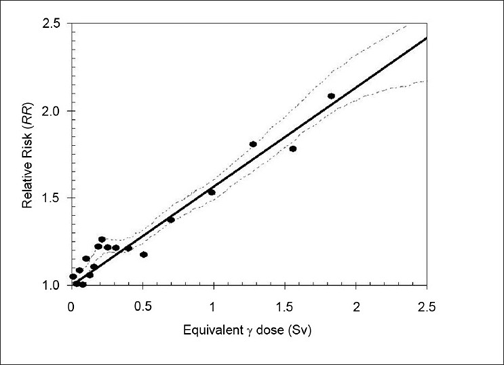
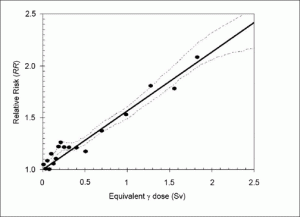 radiation is harmless has been a matter of continuous debate among nuclear scientists for decades. The statistical analysis of John Gofman (l,W, Gofman, 1981. Radiation and Human Health, Sierra Club, San Francisco, 1981, and 1990 RadiationInduced Cancer Fom Low-Dose Exposure: An Independent Analysis. Committee or Nuclear Responsibility Inc., San Francisco) shows there is no safe radioactive dose. Therefore, at any point in the chain of receiving, from overseas, transporting within S.A. and storage even small mishaps leading to only low-level contamination are not risk free. Naturally any large scale mishap would be catastrophic for the State.
- Historical Episode of radioactive contamination in South Australia: It is not feasible to claim that mishaps would not occur, that is, the risks are non-existent The radioactive contamination of Adelaide on the 12 October. 1956 due to an unfortunate change in the wind
 direction at the 11 October Maralinga Bomb Test is a case in point, This mishap caused the population of Adelaide and much of the rest of the State to be contaminated with ionising radiation from one of the Buffalo Bomh explosions (See Cross, R. 2001, Fallout: Hedley Marston and the British Bomb Tests in Australia, Wakefield Press, Adelaide, for information about this event).

- Transportation Risks: While these are impossible to quantify they are not
 negligible.Transportation of medium or high level radioactive waste in particular would require a
high degree of security and infrastructure. The former, in particular would challenge the well-being of South Australians through a system of near military style command and control intrusion into the lives of all South Australians. Such is the consequence of having to secure such a commodity.

- The Uranium back to source Argument: An argument has been mounted that because SA
 exports Uranium, and may one day become a world leading exporter of themineral, we should take back the highly radioactive waste from the user of our Uranium. This argument is entirely false, as in no other exported mineral has it been suggested that we have such an obligation. For example, do coal and iron ore producing States receive back the waste slag and ash. This can be applied to almost any raw material exported. Waste is an inevitable consequence of industrial processing and is the end-users responsibility.
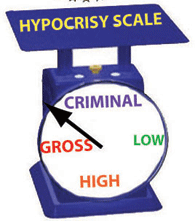
- South Australia’s future World image: The risks are not confined to technical issues but are
 also present in the image we wish to present to the rest of the world. This will become increasingly important in our push to attract more overseas visitors. Tourism is and can play and ever greater part in our economy as the State is currently seen as fl safe, clean and green place to visit. This advantage we have would naturally disappear in the minds of prospective visitors if we went ahead with the storage of medium and high level radioactive waste from around the World.
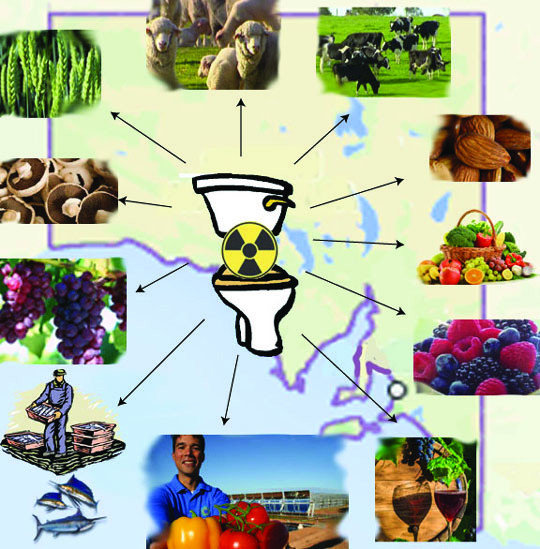
Taken from research by the pre-eminent researcher into the health effects of low-dose ionizing radiation, Emeritus Professor John W. Gofman. See for example:- Radiation Induced Cancer from Low-Dose Exposure. An Independent Analysis, 1990, and Synapse article
Disproof of any Safe Dose: The Threshold Question In Chapters 18 through 21 it is proved beyond reasonable doubt that no safe dose or dose rate exists. His analysis of the absence of a threshold below which no harm will be done from a dose of ionizing radiation is based on human evidence. The data analysed rules out the idea of a threshold with regard to radiation-induction human cancer.
The practical implications for these findings are obvious for the establishment of any storage facility of ionising radiation material, and especially the concern here, medium to high level material. There cannot be any doubt that any exposure to radiation as a result of the multiple handling steps that are required even to reach a storage facility would have human health consequences forthose exposed, and may have, even, heritable consequences.
It should be noted that possible exposures do not end with the material reaching the storage facility but continue at that facility virtually in perpetuity. Consider the following:-
“How would a safe level of radiation come about? It could come about in theory jf the biological repair 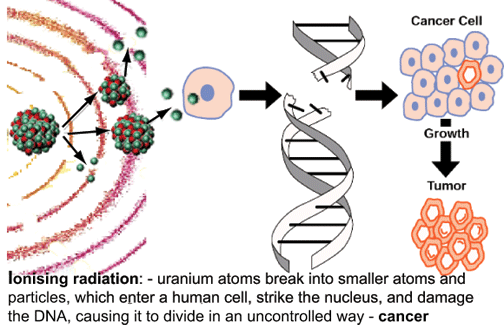 mechanisms – which exist and will repair DNA and chromosomes – work perfectly. Then a low dose of radiation might be totally repaired. The problem, though, is that repair mechanisms don’t work perfectly. There are lesions in DNA and chromosomes that are unrepairable. There are those where the repair mechanisms don’t get to the site and so they go unrepaired. . .. The evidence that the repair mechanism is not perfect is very solid today…. Ionizing radiation is not like a poison out of a bottle where you can dilute it and dilute it. The lowest dose of ionizing radiation is one nuclear track through the cell- you cannot halve it.”
1 Quotation from Gofman on Health Effects of nuclear Radiation, Synapse, Vol 38, No 16, 1994. http://www.parliament.sa.gov.au/Committees/Pages/Committees.aspx?CTId=2&CId=333

South Australian Parliamentary Inquiry asks inconvenient questions about nuclear waste import costs
 SA parliamentary committee questions economics of importing nuclear waste, Independent Australia, 19 August 2016, The economic benefits of SA’s push for a global nuclear waste dump took a negative turn during the current parliamentary committee inquiry. Noel Wauchope reports.
THE SOUTH Australian Parliament is holdinga Joint Committee on Findings of the Nuclear Fuel Cycle Royal Commission (NFCRC).
The five committee members, with one exception, the Greens Mark Parnell, have pro-nuclear opinions. I thought that it was going to be just a rubber stamp for the NFCRC. Now I am not so sure. The committee gave the NFCRC a grilling on the economics of the plan to develop a nuclear waste import industry in South Australia.
Answers indicated that the NFCRC is keen to have discussions with other countries before the matter is resolved at the political level…….
Trawling through the 173 pages transcript of hearings of this committee, I was surprised at the rigour of the questioning of witnesses by the politicians. They did ask hard questions about the arrangements for contracts from overseas countries, customers sending radioactive wastes to South Australia. They asked questions about who pays and when, and for what aspects of the process.
The most intensive questioning of witnesses was certainly on that subject of economics. After all, the plan is to make a financial bonanza for the state. There is no other reason for it. I sensed that the parliamentary committee was indeed focussed on this one basic question:
If it’s not going to make money, why do it?……
Dr Johnson went on to rather confusing statements about the contractual arrangements, and particularly about at what stage revenue would come to South Australia. I don’t think that the committee was inspired with confidence as Johnson discussed this. It was a very lengthy discussion. A few extracts illustrate the economic problems that were revealed in this discussion:
(Transcript p.24) Dr JOHNSON:
We recognised that, once waste got to South Australia, it was very unlikely to leave South Australia. It was very unlikely that there would be anywhere else you could move it on to, so the liability and the responsibility for that waste would be transferred to South Australia. What was a realistic value of that willingness to pay number? We looked at that in a number of different ways because there is no market for it……
a rare mention of the probability of a serious nuclear accident happening – who knows when? It raised the spectre of the expected nuclear waste bonanza suddenly fizzling out, after South Australia had committed to building the nuclear waste repository …..
Dr Johnson seemed to get a bit rattled:
Dr JOHNSON:
In essence we are spending money up until we start signing the contracts, and at this stage on the 28-year timeline that occurs at year six-ish, but if it’s a 40-year timeline and there are delays, then it may well be that you keep spending money and you don’t get the precommitments until later than year six. : I am not an economist; I am a chemist. Quite clearly, we were not looking at this from an economic perspective. Our remit was to look at it from a financial perspective…….
Kristen Jelk asks:
Who is talking about “Brand South Australia”? ……….If SA is pitching safe products to an international market, and it becomes known that this Australian state has established a dump for nuclear waste, then the damage to brand SA will be immeasurable….It will not matter that the dump is in a desert, nor will it matter if the dump is a distance from prime agricultural land, nor will it matter if experts assure of safety standards. The perception that would prevail is that SA will be a dumping ground for nuclear waste. Perception is everything….
China is our largest trading partner. At present, Australia has clear marketing opportunities in China, and for our other nearer neighbours. In assessing the so called golden coin to be gained for bringing in radioactive trash, South Australia needs to also consider the other side of that coin —the economic opportunities that could be lost, along with the risk of a poor or no return on the waste facility investment. https://independentaustralia.net/environment/environment-display/sa-parliamentary-committee-questions-economics-of-importing-nuclear-waste,9371
South Australia, Victoria – set up electricity trading scheme – says Xenophon
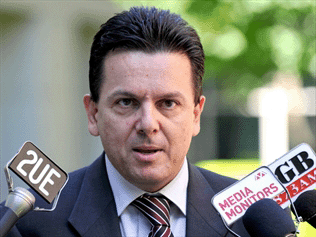 Xenophon calls for SA and Victoria to set up their own electricity emissions trading scheme, ABC News, By Nick Harmsen , 18 Aug 16, The Victorian and South Australian governments should establish their own joint electricity emissions trading scheme if the Federal Government refuses to put a price on carbon, Senator Nick Xenophon says.
The South Australian senator told an industry conference in Port Pirie that such a scheme would drive down prices.
“The sooner that COAG acts, or alternatively the Victorian and South Australian governments, the sooner consumers and businesses will have real relief in power prices with enhanced reliability,” he said.
“It could and should happen this year.”
Senator Xenophon said he had discussed the proposal with South Australian Energy Minister Tom Koutsantonis, and had written to the federal Minister Josh Frydenberg, urging the issue be discussed at a national meeting of energy ministers this Friday.
Proposal first discussed seven years ago
Rather than advocating a nationwide carbon pricing scheme, Senator Xenophon said the Federal Government should resurrect a scheme first put forward in 2009, during Prime Minister Malcolm Turnbull’s time as opposition leader.
“We, as in Malcolm and me, jointly commissioned Frontier Economics to come up with an alternative emissions trading scheme to [then prime minister Kevin Rudd’s] carbon pollution reduction scheme,” he said.
That scheme would effectively see dirty power generators pay cleaner generators to run more……..
South Australian Energy Minister Tom Koutsantonis said Senator Xenophon’s proposal had already been considered by numerous bodies, including COAG. “I am sure this idea is one of the many things we will discuss on Friday at what is an incredibly important COAG meeting,” he said.
“The main point I agree with Mr Xenophon on is that this is an urgent issue that requires the ministers to take back power in decision making, form a consensus and agree to a reform of the energy market.” http://www.abc.net.au/news/2016-08-17/electricity-emissions-trading-scheme-plan-for-sa-and-victoria/7751324
South Australia’s electricity price spike manipulated by fossil fuel generators
Energy companies withholding supply to blame for July price spike, report finds
Analysis of temporary jump in prices in South Australia showed generation capacity far exceeded demand, pointing to market manipulation, Guardian, Michael Slezak, 17 Aug 16 Fossil fuel electricity generators in South Australia withheld their supply to push up prices and reap bigger profits, according to an analysis of the causes behind the extremely high prices there in early July.
The findings suggested some solutions proposed ahead of this week’s Coag energy council meeting for the so-called “energy crisis” like increasing the supply of gas in Australia won’t help the situation at all.
The three things often pointed to as possible causes of the price spikes, especially on 7 July, have been the closure of the Northern power station, the main Victoria-SA interconnector being down and wind farms not producing much power.
But in a report commissioned by GetUp, energy analyst Bruce Mountain showed the generation capacity that was available in the market still far exceeded the demand. However, besides those owned by Origin, all other fossil fuel generators continued to operate far below their capacity, only offering electricity to the market for a very high cost.
In addition, Mountain showed the Australian Energy Market Operator (Aemo) forecasted that low wind and the interconnector maintenance would create high prices, which the generators could have responded to by ramping up supply and making solid profits.
“Yet, they did not respond to that information by making more of their production available to the market,” Mountain said in the report.
“Had this capacity been made available to the market at more reasonable prices, even prices far above production cost, those extreme prices would not have occurred.”
Mountain said Snowy Hydro, Engie, AGL and Energy Australia were exploiting their market power to push up prices. He said they weren’t doing anything illegal, but they were taking advantage of a market that wasn’t functioning properly.
“I think there’s a question of social license –and we’re seeing this in many other industries, where people are expected not just by the letter of the law but by the spirit of the law and maybe there’s scope for some of that to find its way into how we think about these things,” said Mountain.
Miriam Lyons from GetUp said the market is failing to deliver the competition needed to protect consumers’ interests.
“This shows that the answer to South Australia’s problems is not more gas, but more competition. Supporting cleaner suppliers of on-demand energy – like concentrating solar thermal in Port Augusta – would be far better for consumers, and for the planet……..https://www.theguardian.com/australia-news/2016/aug/17/energy-companies-withholding-supply-to-blame-for-july-price-spike-report-finds
Conflict of interest in selection of site for federal nuclear waste dump
Indigenous Australians Fight Planned Nuclear Dump On Sacred Lands, Huffington Post, Timothy Large, 18 Aug “……..CONFLICT OF INTEREST?
Opponents say the government’s process for selecting the site was tainted from the start.
Wallerberdina is co-leased by Grant Chapman, a retired Liberal Party lawmaker who in 1995 chaired a Senate committee that called for a central repository for nuclear waste.
Last year, the government asked for volunteers to accept the dump. Wallerberdina was among 28 nominations nationwide. In May, the government chose it from a final shortlist of six.
“Chapman should understand that that’s not his land to make that bid,” said Tauto Sansbury, chair of the Aboriginal Congress of South Australia. “He should have negotiated with the traditional owners.”
In his home office in Adelaide, Chapman denied there was any conflict of interest in offering up his land.
“It just happened that I think that country, being isolated, and the nature of the topography and geology and so on, is a suitable spot. So that’s why we put it up,” he said.
He declined to say how much he could profit from the sale. Media reports have said he could make four times the market value of the land.
Asked about the possible desecration of sacred sites, he said: “I think it’s quite a wild claim to assert that the whole of the property has cultural significance.”
Back at Yappala, traditional owner Regina McKenzie was dangling her feet in Hookina Creek, whose underground aquifer is so ancient that she says its waters “rained on dinosaurs.”
“It’s racism towards our culture. This is our belief system … It’s like me and my sisters going to the Vatican and saying we want to put a waste dump right under the pillar where they say St. Peter is buried.” http://www.huffingtonpost.com/entry/indigenous-australians-fight-planned-nuclear-dump-on-sacred-lands_us_57b5f8c9e4b00d9c3a161db9
1 This month
7 April – WEBINAR – Australia and the Doomsday Clock – Preventing nuclear war through NoFirstUse and other policies
Online | Tuesday April 7, 4:00-5:30pm, Australian Eastern Time / 8:00-9:30am Central Europe Time
– Access the registration link
15 April – Zoom –Nuclear Power is Not the Solution
Apr 15, 2026 01:00 AM in Canberra, Melbourne, Sydney

Join the International Physicians for the Prevention of Nuclear War (IPPNW) on Tuesday, April 14th for a timely webinar exploring the risks associated with nuclear power and challenging the myth that it offers a simple, safe, carbon-free solution to the climate crisis

21 April Webinar: No Nuclear Weapons in Australia
Start: 2026-04-21 18:00:00 UTC Canberra, Melbourne, Sydney (GMT+10:00)
End: 2026-04-21 19:30:00 UTC Canberra, Melbourne, Sydney (GMT+10:00)
Event Type: Virtual
A virtual link will be communicated before the event.
Host Contact Info: australia@icanw.org

of the week – Australians for War Powers Reform (AWPR)
To see nuclear-related stories in greater depth and intensity
 Antinuclear