Change Australia’s Environmental Protection Laws – ANSTO”s submission to #NuclearCommissionSAust
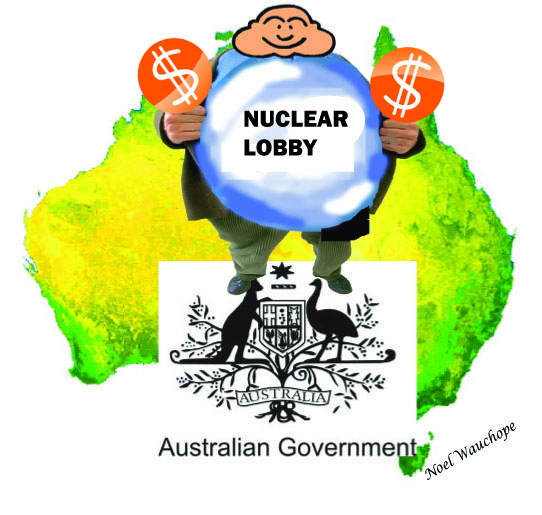
 EXTRACT from ANSTO Submission http://nuclearrc.sa.gov.au/app/uploads/2015/11/Australian-Nuclear-Science-and-Technology-Organisation-03-08-2015.pdf
Legislative and regulatory
Significant legislative changes would be required in order to develop a South Australian nuclear power industry. At present, nuclear power is prohibited in Australia. At the Commonwealth level, the Environment Protection and Biodiversity Conservation Act 1999 (Cth) effectively prohibits the construction or operation of nuclear fuel fabrication plants, nuclear power plants, enrichment plants or reprocessing facilities.
In addition, the Australian Radiation Protection and Nuclear Safety Act 1998 (Cth) prevents the CEO of ARPANSA from licensing the siting,construction or operation of such facilities by Commonwealth entities. At the South Australian level, there is a conditional ban on conversion and enrichment (see section 27 of the RadiationProtection and Control Act 1982).
In addition to the removal of those legislative barriers, legislation would also be required in order to upgrade the existing regulatory structure or create new a regulatory structure capable of performing the functions required for the licensing of nuclear power reactors. There would
also need to be legislation governing nuclear liability in order to bring Australia into line with international norms……..
BHP’s Submission to #NuclearCommissionSAust – “No particular health risks from uranium mining”
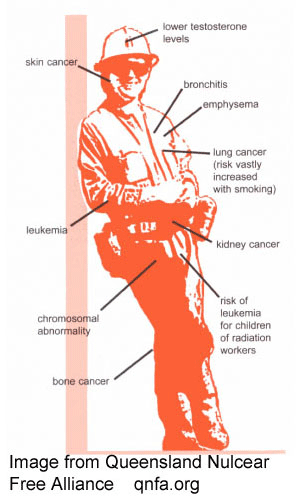 A not very exciting Submission, in which BHP outlines its work at Olympic Dam. The major point is that BHP wants to remove uranium mining from being listed as a Matter of National Environmental Significance 9NES) in the Federal Government’s Environment Protection and Biodiversity Conservation Act (EPBC Act).
BHP maintains that the health risks from uranium mining are not really different from the risks in any other type of mining.
On the future for the uranium market, BHP is cagey, pointing out that copper is the major money-spinner from Olympic Dam
BHP Billiton – Submission to RC ISSUESPAPER 1 Exploration, Extraction and Milling http://nuclearrc.sa.gov.au/app/uploads/2015/11/BHP-Billiton-03-08-2015.pdf
EXTRACT
“…..We believe this Commission to be an important opportunity to seek changes that will reduce barriers to entry into uranium extraction and exploration. We make two important recommendations: Continue reading
Australian Workers Union complacent about health, sends pro nuclear Submission to #NuclearCommissionSAust
Not surprisingly, the AWU Submission concentrates on JOBS. They quote (to my mind) some rather ambitious and over-confident forecasts on the employment future, with the nuclear fuel chain.
AWU enthusiasm focuses on the opportunities in uranium mining, – says little about o the other phases of the full nuclear chain. Confident of the economic benefits of that chain, and keen for nuclear waste importing.
Notably, their Submission says very little about health: it is very complacent about radiation safety.
AUSTRALIAN WORKERS UNION SUBMISSION TO SA Nuclear Royal Commission http://nuclearrc.sa.gov.au/app/uploads/2015/11/Australian-Workers-Union-03-08-2015.pdf
Scott McDine- National Secretary The Australian Workers’ Union Level10, 377-383 Sussex Street, Sydney NSW 2000 Phone: 02 8005 3333 1 Fax: 02 8005 3300 Website: www.awu.net.au I Email: members@nat.awu.net.au
EXTRACT
“……This submission asserts that the potential economic and employment benefits of the nuclear fuel cycle are vast, and that failure to act would represent a lost opportunity for South Australia. It also acknowledges Australia’s capacity to manage the safety, environmental and security risks associated with the nuclear industry…… Continue reading
AREVA’s published Submission to #NuclearCommissionSAust
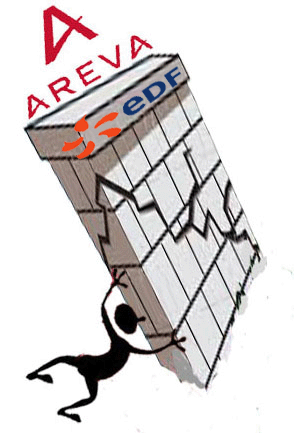 The RC published only one Submission, from AREVA Australia I think that we can be pretty confident that AREVA sent in other Submissions , including one on waste management.
The published Submission is pretty boring – deals only with uranium mining and exploration. AREVA does acknowledge the current poor uranium market, but looks to future growth, without any convincing reason. I list some extracts below, – they are not very notable.
I thought that the relatively large time that the RC spent with AREVA was more interesting. Ironically, the RC in France met with AREVA on the day after President Hollande ordered AREVA to merge with EDF, to save it from bankruptcy.
4 June 15 Visit to AREVA Tricastin, France.
- Explanation of AREVA’s conversion plant and the development of the project;
- Tour of conversion plant construction site;
- Explanation of AREVA’s Georges Besse II operating enrichment plant;
- Tour of GB II enrichment plant facilities.
Visit to AREVA Melox, France.
- Explanation of AREVA’s operating mixed oxide fuel fabrication plant and the use of mixed oxide fuels;Tour of mixed oxide fuel fabrication facilities.
5 June 15 Visit to AREVA La Hague, France.
Visit to EDF Flamanville, France.
8 June 15 Meeting with AREVA.
- Discussion of future nuclear energy demand, barriers to investment in the nuclear fuel cycle and the economics of investment.
SUBMISSION SOUTH AUSTRALIA: NUCLEAR FUEL CYCLE ROYAL COMMISSION
ISSUE PAPER #1 EXPLORATION EXTRACTION AND MILLING
IAN JOHN (JOE) POTTER RP GEO 24 JULY 2015
AREVA Resources Australia Pty Ltd A.B.N. 44 009 758 481 68 Greenhill Rd Wayville SA 5034 Tel: + 61 8 8292 9300 Fax: + 61 8 8377 7903 Email: infoARA@areva.com
“INTRODUCTION
AREVA is at present the world’s largest, integrated company in the nuclear cycle”…. (Ed. note. -That’s no longer true)
“CONCLUSIONS and RECOMMENDATIONS Continue reading
ANSTO’s Submission to #NuclearCommissionSAust – not keen on Thorium
Thorium fuelled nuclear power reactors are often put forward as a possible alternative to uranium 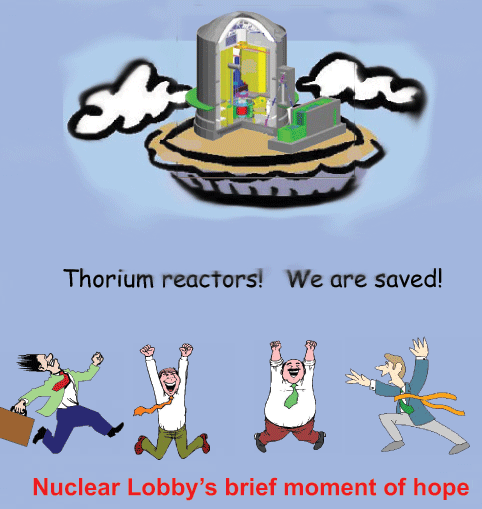 fuelled reactors on the basis of a number of arguments, not all of which are accurate. For example, proponents of thorium reactors often claim that the thorium fuel cycle is resistantto proliferation risks.
However, the production of uranium‐233 during the thorium fuel cycle presents a potential proliferation risk that would require similar safeguards to those in place for the uranium fuel cycle today (ANSTO 2013).
Although the thorium fuel cycle is a theoretically feasible source of energy, there is limited evidence that significant investment in future thorium technologies would improve on the well established technologies and systems in place for the uranium fuel cycle, for which Australia is already one of the world’s largest exporters…..
ANSTO’s Submission (on all 4 Issues papers) says surprisingly little about nuclear waste management. It directs those remarks to how expert ANSTO itself is at managing nuclear waste.
It is enthusiastic about the future for nuclear power, but I note that it uses that “escape” word “potential” when predicting that good future. No author is named.
ANSTO Submission http://nuclearrc.sa.gov.au/app/uploads/2015/11/Australian-Nuclear-Science-and-Technology-Organisation-03-08-2015.pdf EXTRACTS
“nuclear power, in countries with limited potential for hydropower, is the most efficient and cost‐effective low emissions fit‐for‐service base‐load electricity generation option……
new generation nuclear power plants under construction across the world represent a mature and safe technology; and future nuclear technology has the potential to further improve safety while reducing cost and up‐front capital investment requirements…..
“Safety Continue reading
Let’s examine the pro nuclear Submissions to #NuclearCommissionSAust: here’s one
An example of pro nuke submission from an individual representing in a company. His theme is that waste import would be a great economic boon to South Australia, but only if it is part of a full nuclear fuel chain. He quotes some significant safety risks, but seems to dismiss them as not so serious. He is delightfully enthusiastic, but vague, on the economic benefits.
Henry Askin sent in a submission on Nuclear Waste (Issues paper4 ) http://nuclearrc.sa.gov.au/app/uploads/2015/11/Henry-Askin-24-07-2015.pdf )
Dr. Henry J Askin Director, U-SAFE PTY LTD U-Safe Pty. Ltd. was founded in 2006 to promote the construction and operation of a safe permanent storage and disposal repository for the radioactive by-products of the nuclear fuel cycle.
Askin’s conclusion is vague on the economic result of importing nuclear waste, by itself. But enthusiastic if it is part of the whole nuclear fuel chain:
“The economic benefits will depend on the extent of commitment to the full nuclear fuel cycle, the cost of studying and building the repository, the operating costs and moreover the extent of funding provided by the eventual client entities. Estimation of costs is highly problematic, since there are no equivalent benchmark projects available……
It is not practical to establish an enrichment and reprocessing facility in the state unless in conjunction with nuclear power generation as well. These processes are intensive in electricity consumption and would result in very significant greenhouse gas emissions if conventionally powered. On the other hand, if it were decided to establish a full nuclear fuel cycle industry necessarily including the adoption of nuclear power generation, the economic benefits would be incalculable.
Effects would spread directly throughout the various areas of transport, high technology processing and fabrication of fuel rods, material supply and construction and the initiation of tertiary specialist training in all aspects of nuclear engineering, and spill widely throughout the general service and retail economy.”
Economics. He starts with enthusiasm for the economic benefits of waste importing:
“It is without question that if a best in class ILW and HLW repository was accessible the electricity utilities operating the nuclear power stations and the reprocessing facilities would avail themselves of it. This is evidenced by the 1998/1999 campaign by Pangea Resources seeking to establish a deep subsurface repository in Western Australia. The company was created by British Nuclear Fuels, Golder Associates and Nagra, the latter being a Swiss radioactive waste management entity. Management of the public relations was a spectacular failure, with both WA and SA introducing legislation prohibiting the establishment of nuclear waste waste dumps in 1999 and 2000 respectively.
However Pangea, now known as ARIUS, continues efforts internationally.”
“Considering the increasing imperatives to remove HLW from vulnerable temporary storage in the vicinity of source reactors, safe disposal would not be expected to be price or cost sensitive. In fact, the generators of this waste would in all probability be prepared to fund the construction of the repository in addition to paying ongoing storage costs for the operation and maintenance of the facility.”
But it would really only be economic if Australia first had the full nuclear fuel chain:
“If the industrial capacity to conduct such full cycle processing were to be established in the state, the magnitude of the resulting economic benefits would go a long way towards the acceptance of international waste and the concomitant construction of the deep storage repository. “
On the safe storage/disposal of nuclear waste:
Within salt domes or mines ……….The most successful of these is the Waste Isolation Pilot Plant (WIPP), opened for business in 1999 at Carlsbad New Mexico. ( ha ha successful?)
Drigg is a surface storage facility (ha ha currently threatened by flooding in Cumbria)
He then lists the technical problems in geology for waste disposal
On security risks:
“The principal security risks would appear to be related to protest activities by anti nuclear groups and more seriously, terrorist action. The former would be unlikely to penetrate the perimeter of the surrounding exclusion zone, and be limited to hindrance of transport logistics for limited periods. There is abundant experience in managing this category of essentially nuisance behavior and is not considered to be of concern.
Far more serious is the possibility of terrorist attack with the objective of acquiring ILW and/or HLW for the assembly of devices capable of area denial in populated or strategic locations, the ‘dirty bomb’ strategy. Although the material would be potentially lethal for those involved, in this age of suicide bombing this is perhaps not an inhibition. However if a deep burial repository were to be established in a remote semi desert area of inland Australia unauthorized access would be a major challenge”
On transport:
“The greatest vulnerability would lie not with the repository itself but with the waste delivery transport chain” “Transport of waste to the repository could pose hazards but is unlikely to adversely affect the environment to any greater extent than normal transport” (ha ha what about the huge derailment of sulphuric acid transport, Queensland, in December?)
How can #NuclearCommissionSAust? know waste disposal costs, when France doesn’t?
from Antinuclear Australia Observer, 14 Jan 16 When the French don’t know the cost of deep geological disposal – even within 10 billion Euro’s of an estimate – how can the SA Nuclear Royal Commission claim to know…
Presumably the higher estimate herein of circa 30 billion Euro’s is more accurate and less dependent (ie less rigged) on claimed future ‘technical optimisations’ that may not ever come to pass and shouldn’t be assumed in cost estimates for proposals for SA to take on International High Level Nuclear Spent Fuel Wastes…
The South Australian Nuclear Royal Commission has been full of interest and proposals for Storage of SNF without serious commensurate attention to the cost and implications of Disposal – a multi decade undertaking – and the real risk that in taking SNF waste for Storage the proposed Disposal plans can fail – just as they have and did in USA over last few decades…
EDF already needs to borrow money just to pay its dividend and is set to spend tens of billions of euros on upgrading its ageing reactors, building new nuclear plants in Hinkley Point, Britain and buying the reactor arm of Areva.
“This report is clearly negative for all nuclear operators, and most specifically for EDF and Areva”
EDF shares are down more than 44 percent in the 12 months,
EDF sinks to all-time low as nuclear waste cost estimate soars http://uk.reuters.com/article/edf-nuclear-waste-idUKL8N14W2RO20160112 PARIS | BY GEERT DE CLERCQ Jan 12 Shares in French utility EDF sank to all-time lows on Tuesday after the country’s Andra nuclear waste agency said that storage costs could be higher than EDF’s estimates.
Mirroring German utilities E.ON and RWE , which saw their shares hit decade lows late last year over worries about nuclear decommissioning costs, EDF fell as much as 7.3 percent before recovering to 4.1 percent lower.
A string of brokerage price target downgrades and French forward power prices falling to new decade lows only added to the gloom.
In a report released late on Monday, Andra said costs for the Cigeo deep geological storage project could be as high as 30 billion euros or as low as 20 billion depending on assumptions about different cost factors in coming years.
“There are different views on the calculation, more or less conservative, depending on estimates for future technological progress and optimisation,” Continue reading
South Australian launch for Aboriginal owned solar energy storage system
The products are being launched at Tandanya Aboriginal Cultural centre in Adelaide on Wednesday 2 September. Ms Oberon said Adelaide was chosen for the launch because of the council’s Sustainable City Incentive Scheme, which provides up to $5000 towards the cost in installing solar PV storage across the residential, business, education and community sectors. Funding for the program also has financial support from the South Australian government.
“We felt it was important to acknowledge the South Australian government and the City of Adelaide for such a forward-looking and innovative scheme,” Ms Oberon said.
The company is also hoping other state governments and councils will be encouraged to take up the idea of supporting the uptake of renewable energy storage.
The company’s core mission is based on the fundamental Aboriginal approach of stewardship of the earth and its resources. This means needing to shift out of high-emissions fossil-fuel derived energy.
Aboriginal-owned energy company one-upping Tesla By Willow Aliento, The Fifth Estate Friday 8 January 2016 The renewable energy storage game is about to be disrupted, with Australian Aboriginal-owned company AllGrid Energy announcing the launch of WattGrid, a new 10kWh solar energy storage system it says is around 30 per cent cheaper than the Tesla Powerwall.
Customers also don’t have to wait until 2016. Spokeswoman for AllGrid, Deborah Oberon, said the company expected to be making its first deliveries in the next two to three months.

The $11,999 WattGrid unit comprises an aluminium cabinet containing tubular lead acid gel batteries, and a hybrid 5kW solar inverter with battery management system that has load share capability with the grid and uninterrupted power supply capability.
The unit is also accompanied by a software app, WattsHappening, that allows users to view real-time information and interface with the system.
Beta testing has shown the unit can help solar owners maintain an energy supply profile that can be matched to the demand profile, potentially rendering drawing grid power unnecessary.
The Queensland-based company is also releasing another product it has developed, the PortaGrid. This is an independent unit comprising solar panels, storage, UPS, inverter and outlets that is suitable for remote and off-grid locations, as well as emergency situations.
The units can be supplied with an inbuilt weather station that will automatically close up the panels in the event of a severe weather hazard such as a cyclone. Continue reading
South Australian towns could become nuclear terrorism targets
Nuclear a terrorist risk, Whyalla News Dec. 28, 2015, Local towns such as Whyalla could be made terror targets if South Australia does become part of the nuclear fuel cycle.
This risk was outlined as part of a Nuclear Royal Commission public session held at the Whyalla public library in front of a small group of locals earlier this month.
Regional engagement officer Jon Bok said that an increased threat of terrorism was one of the several risks the commission were taking into account.
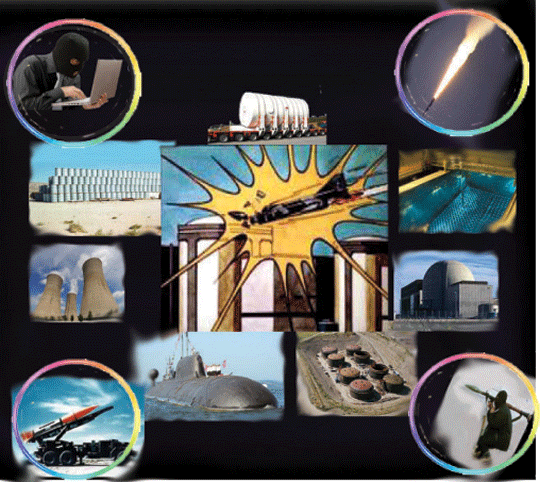
“At the moment we are looking into several issues, with terrorism being one of them,” Mr Bok said.
Mr Bok declined to comment on what counter-measures could be taken to prevent a terrorist attack…… http://www.whyallanewsonline.com.au/story/3617682/nuclear-a-terrorist-risk/
Record low price for wind energy achieved in ACT deal with South Australia
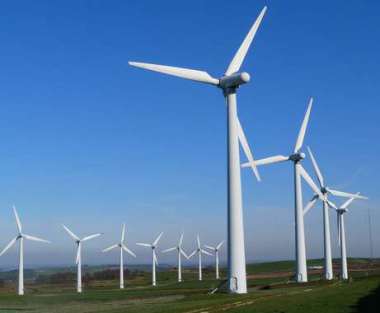 Record price for renewable energy achieved in new wind farm deal, ACT Government says http://www.abc.net.au/news/2015-12-21/record-price-for-renewale-energy-achieved-in-new-wind-farm-deal/7045414
A record low in pricing for renewable energy has been set as part of a deal to buy power from a South Australian wind farm, the ACT Environment Minister says.
The French-developed Hornsdale wind farm has been selected to supply power to the ACT, at a cost of $77 per megawatt hour.
Located just north of Jamestown in South Australia, the wind farm will eventually power 56,000 Canberra houses, providing 13 per cent of the ACT’s projected electricity demand by 2020. Continue reading
Australian media ignored the indigenous achievements in opposing a nuclear South Australia
Dennis Matthews 24 Dec 15 In response to Dave Sweeney’s “good nuclear news” – on the leadership of indigenous Australians in opposing the nuclear industry and nuclear waste dumping in South Australia
 It’s correct, in December Karina and Rose Lester shared the Conservation Council of SA (Conservation SA) 2015, $1000, Jill Hudson Award for environmental protection for their opposition to the nuclear industry, but, apart from a small column in The Advertiser which didn’t mention the nuclear industry I’ve seen no mention of this important event.
I looked for a media release on the Conservation SA website but couldn’t find anything.
Perhaps someone could put the media release on this website?
PS. The first winners of the Jill Hudson award were Adnyamathanha activist Dr Jillian Marsh and ABC journalist Rose Crane. I understand that Jillian is involved in fighting attempts to put the proposed national nuclear waste dump on Adnyamathanha land.
South Australia power networks cannot impose tariff on solar homes
Federal Court rejects SA Power Networks’ proposed charge on solar-powered households http://www.abc.net.au/news/2015-12-23/federal-court-rejects-solar-household-charge/7050600 The Federal Court has dismissed an appeal by SA Power Networks to charge a tariff on homes with solar panels.
The electricity distributor wanted it to approve a tariff of about $100 a year.
It argued that solar-powered houses have different energy consumption patterns and are effectively subsidised by houses without panels.
SA Power Networks took the matter to court when the Australian Energy Regulator rejected the proposed charge.
The distributor said that it was “disappointed by the appeal decision” and maintained that its application was about “fair and equitable cost-sharing among customers”.
“This was not about additional revenue,” SA Power networks said in a statement.
Bill Fisher spells it out on nuclear waste – Submission to #NuclearCommissionSAust
 Bill Fisher Nuclear Fuel Cycle Royal Commission – Submission – All Issues
Introduction I frequently make submissions to parliamentary enquiries on matters nuclear: most recently the Enquiry into Nuclear Non-proliferation and Disarmament and the Enquiry into expansion of the Roxby mine. My submission is usually among the large majority (about 90%) opposed to uranium mining and export. The usual 90% majority is usually ignored! The 10% who are listened to are uranium industry representatives, governments and government departments, and a few scientists who are on the payroll of the uranium industry or the government. While this is a significant problem in the case of federal governments, it is far worse in South Australia, where the Roxby Downs Indenture Act is designed to override virtually all other legislation, and government departments which are supposed to monitor mining and export also act as promoters and protectors of the industry…..
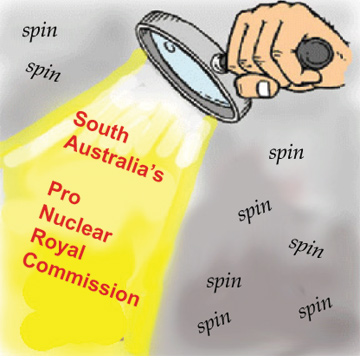
Biased South Australia Nuclear Royal Commission
 Royal Commission vs Community Permission: Environment groups assess performance of SA nuclear Royal Commission
National and state environment groups have today released an assessment of the state Royal Commission into the nuclear industry in SA. The report – commissioned by Conservation SA, the Australian Conservation Foundation and Friends of the Earth Australia – looks at the Commission’s progress since its surprise unveiling by Premier Jay Weatherill ten months ago.
The report raises serious concerns about the Royal Commission, from the unrepresentative and unbalanced composition of the Expert Advisory Committee, conflicts of interest, the Royal Commission’s unwillingness to correct factual errors, to a repeated pattern of pro-nuclear claims being uncritically accepted and promoted.
“The nuclear industry embodies unique, complex and long lasting safety, security, environmental and public health challenges,” said Conservation SA Chief Executive Craig Wilkins. “The sector lacks a secure social license and it is imperative that any consideration of an expansion of the industry is predicated on the highest standards of evidence, rigour, transparency and inclusion. Sadly this report shows these standards are not being reflected in the current Royal Commission.”
The Royal Commission has been criticised by civil society groups including environmental, public health and Aboriginal organisations for its restricted processes and limited information flows.
“Unlike most Royal Commissions this one was not a response to a pressing public issue, but rather it is a calculated political initiative with a pro-nuclear agenda,” said ACF nuclear campaigner Dave Sweeney. “As a result the Commission looks less like an objective risk-benefit analysis and more an industry feasibility study. Environment groups and others will continue to closely track this deficient process.”
The Royal Commission is set to make an interim report in February 2016 with a final report due no later than 6 May 2016.
“We are concerned about skewed and inaccurate information and assumptions, especially in relation to nuclear growth and reactor longevity and so-called small modular reactors,” said Friends of the Earth Australia’s Dr Jim Green, a co-author of the report. “The Royal Commission praises the United Arab Emirates for the speed of its nuclear power program without making any mention of the elephant in the room: undemocratic countries can build reactors more quickly than democratic countries. Statements by the Royal Commission regarding the impact of the Chernobyl and Fukushima nuclear disasters are incorrect – and the list goes on.”
The groups have called for an expanded Advisory Committee, increased Aboriginal access to information and decision points and dedicated studies into the potential for growth in SA’s renewable energy sector as important steps to bring some much needed balance into the Commission’s deliberations.
The report is posted at: http://www.foe.org.au/rc-critique
Direct download: http://www.foe.org.au/sites/default/files/RC-critique-16Dec2015-final.pdf
__._,_.___
Yandruwandha Yawarrawarrka people granted Native Title
Native title granted by Federal Court for Yandruwandha Yawarrawarrka people, ABC News, 17 Dec 15 By Nicola Gage Descendants of Aboriginal families who helped Burke and Wills on their ill-fated expedition through central Australia have won native title over their outback land.
Hundreds of Yandruwandha Yawarrawarrka people have gathered near Innamincka in South Australia for a bush hearing of the Federal Court.
It determined the group to be the rightful native title holders of 40,000 square kilometres of the outback. The area stretches across seven pastoral leases and includes Coongie Lakes National Park, Innamincka Regional Reserve and Strzelecki Regional Reserve.
Lawyer Michael Pagsanjan said the Yandruwandha Yawarrawarrka people fought for decades for recognition, after filing their original claim in 1998.
“The Yandruwandha Yawarrawarrka people will have the right to hunt, the right to camp, the right to fish and the right to look after special places,” he said.
“Today is a really momentous occasion where they can sit back, take a deep breath, a sigh of relief.
“This day isn’t just important for them, it’s important for their ancestors who have passed away.”……..
Historical past where two cultures met
The remote region includes places of significance to the Burke and Wills expedition, including the old “dig tree” under which food was buried.
The Yandruwandha Yawarrawarrka people helped the explorers, giving them food and shelter, and sharing knowledge about the land.
“For those explorers who were willing to accept their help, they luckily survived,” Mr Pagsanjan said.
“But unfortunately for those explorers who denied or rejected that help, they perished.”
Mr Pagsanjan said the native title determination marked a new chapter in South Australia.
“This is the last of the larger, far northern claims that’s been resolved,” he said.
“Now we’ve got close to about 60 per cent of the state which is capable of being determined.
“We’ve got a goal that soon we’ll hopefully have resolved the vast majority of claims in the state.” http://www.abc.net.au/news/2015-12-16/native-title-claim-acknowledged-at-sa-bush-hearing/7033858
1 This month
15 April – Zoom –Nuclear Power is Not the Solution
Apr 15, 2026 01:00 AM in Canberra, Melbourne, Sydney

Join the International Physicians for the Prevention of Nuclear War (IPPNW) on Tuesday, April 14th for a timely webinar exploring the risks associated with nuclear power and challenging the myth that it offers a simple, safe, carbon-free solution to the climate crisis

21 April Webinar: No Nuclear Weapons in Australia
Start: 2026-04-21 18:00:00 UTC Canberra, Melbourne, Sydney (GMT+10:00)
End: 2026-04-21 19:30:00 UTC Canberra, Melbourne, Sydney (GMT+10:00)
Event Type: Virtual
A virtual link will be communicated before the event.
Host Contact Info: australia@icanw.org

of the week – Australians for War Powers Reform (AWPR)
To see nuclear-related stories in greater depth and intensity
 Antinuclear