The Nuclear Royal Commission’s whole aim – to build a case for importing global radioactive trash ?
If it did take more than 25 years to build a nuclear power plant then the technology could be made obsolete by renewables.
Last October, South Australia managed for the first time to get more than 100 per cent of its electricity needs for a working day between 9.30am to 6pm, from a combination of wind and solar energy. Overall it gets more than 30 per cent of its power from renewables, and has a target of 50 per cent to be achieved within 10 years.
Prof Diesendorf said it would only take 15 to 20 years to go to 100 per cent renewables in the state.
“The global enrichment market is oversaturated, and no-one credibly believes nuclear power is a realistic proposition for the sparse South Australian grid,” Greens senator Scott Ludlam argued in a column for New Matilda.
 “That leaves only the probability that this whole exercise is designed to build the case for a national or international radioactive waste dump.”
Is building a nuclear waste dump in Australia really the best idea? THE ADVERTISER, CHARIS CHANG JULY 09, 2 “………….at least one expert believes the [Nuclear expansion] scenario is too good to be true, and would do little to help the state’s economy in the short to medium term. The technology Senator Edwards has suggested is still in development and will not be feasible for more than 20 years.
Retired researcher Richard Leaver, formerly of Flinders University, told news.com.au that no Generation IV reactors had yet been built. These reactors are not generally expected to be available for commercial construction before 2030-40.
“And sodium cooling has, so far, a four-decade history of failure and serious accident,” Mr Leaver said.He said the state government should wait until someone managed to get the reactor working on an industrial scale before accepting anyone’s spent nuclear fuel.
Even if researchers could develop a Generation IV generator as a working technology, this would likely reduce the potential economic benefits. Continue reading
#NuclearCommissionSAust – Even Kevin Scarce has big doubts about thorium reactors
 Kevin Scarce sometimes scarce on nuclear reality, Online opinion, Noel Wauchope, 7 July 15 On June 29 Kevin Scarce, chief of South Australia’s Nuclear Royal Commission, was interviewed by Ian Henschke on ABC Radio 891 Adelaide. Scarce had just returned from a Royal Commission whirlwind tour of Taiwan, Japan, Europe and the UK. The interview can be heard here.
I was pretty amazed, not only at the speed at which the Commission examined the nuclear industry, at so many places, from 26 May 12 June 2015, and at the complicated facilities that they examined, but also at how much information was left out of Scarce’s report, and at the apparent inadequacy of their grasp of current developments in the nuclear industry.
First and most obvious were two questions, both which Kevin Scarce had emphasised at his pre-tour community forums in South Australia. Scarce had stressed that the Commission would be consulting people on both sides of the nuclear debate – those for the nuclear industry, and those against it. In the whole interview, in all the places and organisations that Scarce described – not one word about meeting anyone remotely anti-nuclear.
Secondly, at the pre-tour meetings, Scarce had repeatedly said that the Commission would be studying renewable energy as well as nuclear. In his talk with Ian Henschke, it was clear that the Commission had not visited any renewable energy organisations or facilities. Indeed, when the interviewer brought up the subject of renewable energy, Scarce glossed over it very quickly – pointing out that Germany was “a way away’ from their renewables goal, and saying “We are certainly looking at renewables”.
Their first visit was to Taiwan, as Scarce said “to talk to the Taiwanese about their spent reactor fuel and about how they were going to manage it.” Well, it’s not surprising that Scarce did not go on to explain how the Taiwanese are going to manage their spent nuclear fuel, because the Taiwanese themselves do not know what to do with it. They are probablyretiring one reactor early, due to its accumulating wastes, and are also trying to work out a plan to export their nuclear wastes, but facing opposition in their legislature to this plan.
Then on to Japan…….
Reporting on France, Scarce was fairly reticent, considering that they spent so much time talking to AREVA, the State owned nuclear company. But that’s understandable. The South Australian Nuclear Royal Commission arrived at AREVA on 4th June. On 3rd June, the French government announced the break-up of AREVA, due to its disastrous financial record, to prevent it from bankruptcy……..
Questioned about new Generation IV nuclear reactors, Scarce emphasised their safety features, and, to be fair to him, he did point out the “enormous uncertainty” about when they would be commercially available – “not much before 2040″. He was asked about thorium reactors, and again, admitted to not knowing much about them, and that “2040 might be optimistic for thorium reactors“. Scarce said that with these reactors, thorium, not uranium, is the source of power. That’s not actually correct, as uranium 233 is the power source in thorium reactors. They need plutonium or enriched uranium to trigger the transformation of the inert thorium, to the fissile uranium.
To give credit to Kevin Scarce, he did mention the fact that this process is not so clean, meaning that plutonium or enriched uranium are a radioactive problem issue. He said “so some of your benefit in terms of a clean fuel source isn’t there”. Also, to be fair to Kevin Scarce, he did point out that thorium reactors have been tried in the past, in America, and closed down, and that he was doubtful about their future.
Henschke asked Scarce if he saw “state of the art” nuclear reactors. Yes, the Commission had been to both Olkiluoto and to Flamanville in France, and had seen the pressurised water reactors – the very ones that are now described as afinancial and safety fiasco. No wonder that Scarce did not elaborate on these visits……. http://www.onlineopinion.com.au/view.asp?article=17489

Submission Points to Royal Commission Issues Paper 1 EXPLORATION, EXTRACTION AND MILLING
Submissions to this Paper are due by July 24 POINTS TO CONSIDER
They want you to direct your answers to the points they have set out in http://nuclearrc.sa.gov.au/our-reports/exploration-extraction-and-milling/ SO: here are a few ideas:
1.1 and 1.2. (economics of uranium industry) Australia’s uranium production of 5,000 tonnes in 2014 was the lowest for 16 years. The industry generates less than 0.2 per cent of national export revenue and accounts for less than 0.02 per cent of jobs in Australia. (1)
Nowhere in this Issues Paper is information given on Government funding of the nuclear industry either directly in the form of grants and through government supplied services.
1.12 (Uranium enrichment) and 1.7 (Future of uranium market) The 2006 Switkowski Review concluded that “there may be little real opportunity for Australian companies to extend profitably” into enrichment. (2) Conditions are no more conducive to the establishment of an enrichment industry now than they were in 2006. Former World Nuclear Association executive Steve Kidd noted in July 2014 that “the world enrichment market is heavily over-supplied”.(3)
1.8. (health effects) There is a well established link between uranium mining and lung cancer. (4) Exposure to even low-level radiation is a health hazard. That is the position of all relevant expert bodies such as the United Nations Scientific Committee on the Effects of Atomic Radiation. As the the US National Academy of Sciences’ Committee on the Biological Effects of Ionising Radiation states, “the risk of cancer proceeds in a linear fashion at lower doses without a threshold and … the smallest dose has the potential to cause a small increase in risk to humans.”
1.10 (risks) Enrichment plants can produce both low-enriched uranium for reactors and highly-enriched uranium for weapons.
1.13 (effects on other industries). South Australia’s remarkable success in renewable energy, and its reputation for clean agricultural produce would clearly be threatened by further development in the uranium/nuclear industry
(1) http://www.conservationsa.org.au/images/Nuclear_Royal_Commission_issues_summary.pdf
(2) http://www.ansto.gov.au/__data/assets/pdf_file/0005/38975/Umpner_report_2006.pdf
(3) Nuclear Engineering International Magazine, May 2014
(4) http://www.mapw.org.au/files/downloads/Nuclear-power-uranium-mining-&-public-health_MAPW-Factsheet.pdf
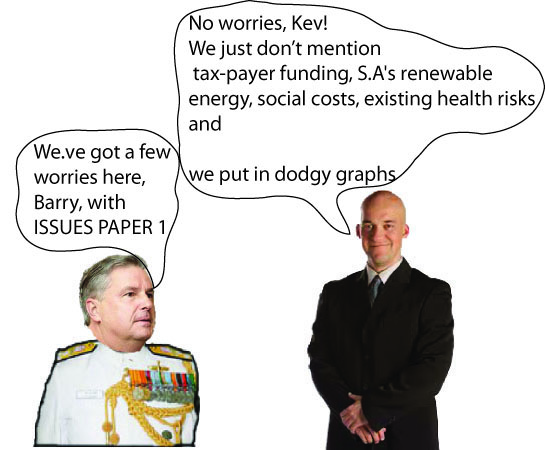
Answer Points to Nuclear Royal Commission on Importing Nuclear Waste
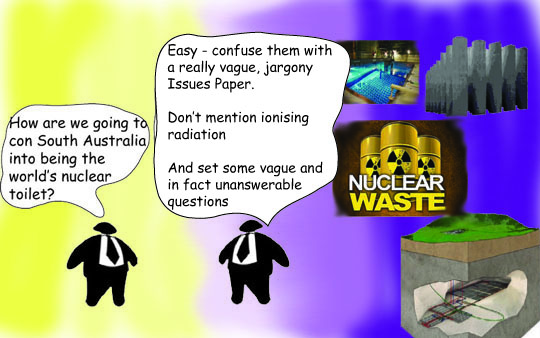
The nuclear-lobby-stacked Royal Commission faces stiff opposition in South Australia
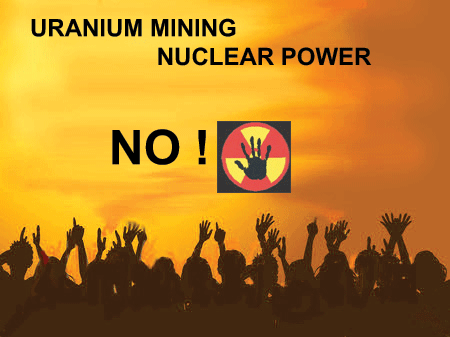 Renewables now! Nuclear not an option, Green Left, July 4, 2015 What about the new South Australian royal commission into the nuclear industry?
“……..South Australia has a nuclear industry the government wants to expand. There is uranium enrichment, but that is an economic non-starter, and then there is nuclear power, which is theoretically possible but very expensive and controversial.
 The nuclear lobby is driving the idea that if you import other countries’ high-level waste, those countries would pay billions of dollars to get it off their hands. So there is all sorts of nonsense flying around South Australia, especially in the Murdoch press, that these billions of dollars would cover the entire cost of building nuclear reactors and would also allow the abolition of all state taxes.
But even with that sort of propaganda being circulated in the Adelaide Advertiser — a Murdoch tabloid — they found that fewer than one in six South Australians want a high-level nuclear waste dump.
It is a massive challenge, as the royal commission is stacked by pro-nuclear lobbyists. So it will issue a pro-nuclear report and we are doing the best we can to dull their enthusiasm.
We are building a separate campaign against the expansion. Traditional owners held a meeting in Port Augusta in April and this is the starting point to building an ongoing campaign.
A lot of these traditional owners have already experienced a track record of the industries of pollution and lies and they don’t want to be a part of it. They have seen the outrageous divide and rule tactics used by Heathgate against Adnyamathanha traditional owners. Then there is the long history of Olympic Dam uranium mine, and attempts to dump nuclear waste on Aboriginal land despite their ferocious opposition. Or go back to the Maralinga bomb tests in South Australia — there is a lot of history with people still suffering the varied impacts of that.
There is a lot of campaign strength in South Australia. Certainly we are putting in submissions to the royal commission but we don’t want to get sucked into their campaign too much because it is a fraud and the more important thing for us is to build campaigns and support Aboriginal people who want to build campaigns…..” https: //www.greenleft.org.au/node/59400
The writing is on the wall for coal-fired power in Australia
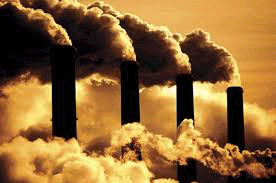 Say goodbye to coal power in Australia, The Age July 5, 2015 Mark Diesendorf The writing is on the wall for coal-fired power in Australia. Despite federal government attempts to stop the growth of renewable energy, all they can do is delay the inevitable transition.
Tasmania already has almost 100 per cent renewable electricity, based on hydro supplemented by wind. The ACT is on track to reach its target of 90 per cent net renewable electricity by 2020, based on solar and wind.
South Australia, with no freshwater hydro-electric potential, is the leading mainland state in the transition to renewable energy. Last year 33 per cent of its annual electricity consumption was generated by the wind and 6 per cent from rooftop solar. Furthermore, its electricity system has already operated reliably and stably for hours when the contribution of variable renewable energy reached two-thirds of demand. Recently wind power and gas coped admirably when the coal-fired Northern power station went unexpectedly offline.
Coal power will soon disappear from SA and eventually from the whole country. Because wind has no fuel cost, it can bid the lowest price into the electricity market and so is ranked higher in operating order than coal. The result: coal is displaced from operating as base-load (24/7) power, coal’s economics become worse and incidentally the wholesale price of electricity decreases.
This is the real reason our Prime Minister is trying to stop the growth in wind power. It has nothing to do with aesthetics or the sham ‘wind turbine syndrome’, but everything to do with Mr Abbott’s misguided commitment to coal. Continue reading
Transcript of Nuclear Royal Commission’s second meeting at Coober Pedy
 Jon Bok representing the Royal Commission. Small attendance (5 people)
This is not a perfect transcript, but is largely accurate. Where you see 1. that means a question from the attendees.
Bok: I’m here to help with providing information for the community, and particularly the Aboriginal community, as the Commissioner looks at risks and opportunities for expanding the nuclear industry in South Australia.
- Is there some reason why we are being targeted? We’ve had two Royal Commission community forums, and Roxby Downs hasn’t had one.
Bok: I’m out an about in the region. I’m going back to Port Augusta in the coming weeks.
- You’re not looking at the underground tunnels, are you? – I don’t mean you personally; I mean the government in general.
Bok: It’s a much broader process. It is my opportunity to meet people who are interested.
- AREVA is sending back a shipload of nuclear waste to Australia. What are we going to do with that, when it gets here?
Bok: I simply don’t know. The Commissioner is looking broadly at South Australia. One question is – should we take nuclear waste in, to South Australia?
I’m not aware if Australia has the obligation to take that waste back. The question is: is it viable to take back nuclear waste?. The Terms of Reference ask about the feasibility and viability of the four questions . Continue reading
#NuclearCommissionSAust Have your say for the future of South Australia – submissions close soon – July theme
Submissions for the Royal Commission into the Nuclear Fuel Cycle are closing soon.
This Commission could change our State forever.
Make sure you have a say in it. The Conservation SA team 26 June 15
This is too big an issue not to have your voice heard. Currently, our State government is weighing up a future that could see nuclear power, uranium enrichment and nuclear waste dumping here in South Australia. The window for the public to make comment on these issues closes in a month.
We encourage you to make a submission and draw on our resources to assist you.
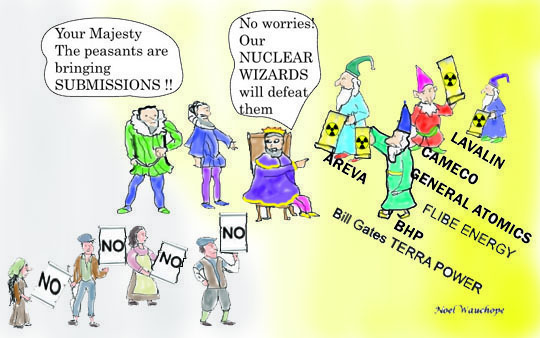
In May nuclear expert Dr Jim Green produced some information resources about each of the issues the Royal Commission into the Nuclear Fuel Cycle is investigating. Please see a summary and full report here.
Only last week renewables expert Dr Mark Diesendorf from the University of NSW finished an exciting report showing that South Australia could be run on 100% renewable energy is just 15 years. You can view and download the summary version and Dr Mark Diesendorf’s full report online here.
The issue papers generated by the Royal Commission are available here and submissions are due:
- Issues Paper 1 (Extraction) and/or Issues Paper 4 (Storage and Disposal of Waste) is 24 July, 2015
- Issues Paper 2 (Further Processing) and/or Issues Paper 3 (Electricity Generation) is 3 August, 2015.
If you wish to provide a consolidated written submission addressing all Issues Papers you have until Monday August 3, 2015.
If you wish to make an oral submission call the Royal Commission on 08 8207 1480 to make arrangements.
It’s critical that your voice is heard. This commission could change our State for generations to come.
Now is the time to act.
Kevin Scarce, Nuclear Royal Commission chief, shows up in his true pro nuclear colours
Dennis Matthews, 26 June 15 It does no credit to the Advertiser, or Kevin Scarce, or the SA inquiry into the nuclear industry when Scarce cites misleading statements like no one was killed by exposure to ionising radiation from the Fukushima disaster (The Advertiser, 25/6/15).
This sort of ignorance was promulgated generations ago by the asbestos industry. Gullible, greedy politicians and newspaper editors became part of the problem and it took many decades before action was taken.
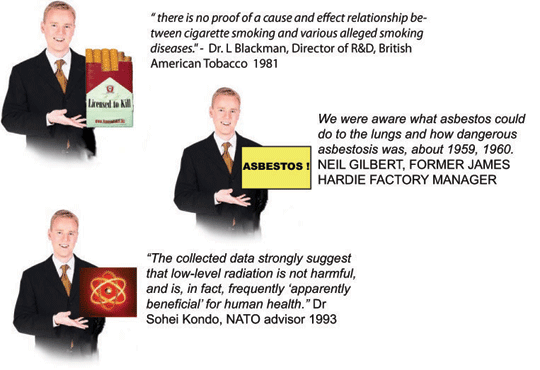
Sure, nobody was killed outright by asbestos, and lots of jobs and wealth were produced, but do we really want to lumber the next generation of South Australians with another expensive medical disaster?
It’s time that editors, politicians, and ex-Governors learnt from the past. Learnt that some medical disasters don’t happen overnight and can take decades to be diagnosed.
As with asbestos, the nuclear industry and its supporters will undoubtedly be condemned by history. It’s a pity that the Scarce’s and Koutsantonis’s of this world won’t be around to try to defend themselves.
Nuclear Royal Commission chief Scarce says “Don’t worry about Fukushima”
Fukushima scarcely a worry Adelaide Advertiser, Adelaide, Paul Starick 25 Jun 2015 FORMER governor Kevin Scarce says the Fukushima disaster doesn’t pose a major barrier to the nuclear industry’s development in SA.
The Nuclear Fuel Cycle Royal Commissioner, who toured the Fukushima exclusion zone during a global study tour, says the 2011 nuclear power plant meltdown was a result of poor design and management. In an exclusive interview with The Advertiser, Rear Admiral (retired) Scarce said the six-country study tour had demonstrated SA was technically capable, with help, of developing a nuclear industry, from the enrichment to spent fuel rod reprocessing, if this was financially viable.
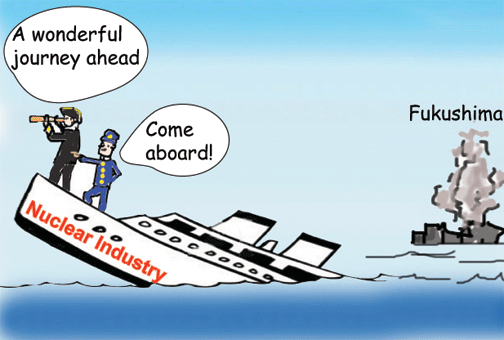
……. Rear Admiral Scarce said the disaster had prompted safety rethinks at other sites the three-person delegation visited during the Asian and European tour, completed this month…..it doesn’t indicate to me that we shouldn’t be looking at this technology. “It means we’ve got to be very careful. We’ve got to be aware of what the consequences are.
“As devastating as Fukushima was, the subsequent improvements made since then enable us to go and look at this technology for our future.”….
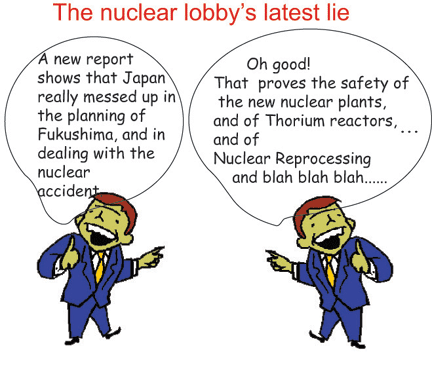
South Australia’s pro nuclear lobby upset about the State’s embrace of rooftop solar
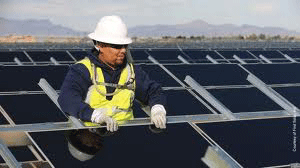 Dennis Matthews, 26 June 15, There is little doubt that South Australians have embraced rooftop solar electricity, with gusto. This is undoubtedly a worry to the pro-nuclear lobby ( a long time opponent of renewable energy) and to companies who stand to lose income from such independent electricity producers.
Thanks to the breakup and privatisation of the former publicly owned ETSA, what one part of the electricity industry gives, another part can just as easily take away. Or as the monopoly electricity network company SAPN has so coyly put (The Advertiser, 25/6/15) “it was ultimately up to the energy retailers as to how much of the reduction in SAPN charges were passed on to householders.”
Given that SAPN and the retailers do not compete for the electricity dollar, what’s the bet that prices will continue to go up, maybe not this year but almost certainly by the end of 2016, and that each segment of the privatised electricity industry will blame the other.
South Australia’s Renewable Energy Future
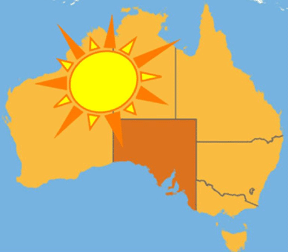 Renewable energy future for South Australia http://indaily.com.au/opinion/2015/06/25/renewable-energy-future-for-south-australia/ MARK DIESENDORF | 25 JUNE 2015 The closure of Alinta Energy’s Leigh Creek Coal mine and two Port Augusta power stations will cost 438 jobs in South Australia, but over several years this could be transformed into an opportunity to create many new jobs in renewable energy.
South Australia’s wind and solar resources are huge, and SA is already the leading Australian state in non-hydro renewable energy utilisation, with about 40 per cent of its annual electricity consumption coming from wind and sunshine.
State electricity supply has operated reliably and stably for hours when the contribution of variable renewable energy reached two-thirds of demand, and wind power and gas coped admirably recently when the coal-fired Northern power station went unexpectedly offline.
The SA electricity system could be operated entirely on scaled-up, commercially available, renewable energy sources. This is the conclusion of the studies underlying my report to the Conservation Council of South Australia, now available online.
Our hourly simulation modelling at University of New South Wales shows the South Australian system could be supplied by a combination of variable renewable energy sources (wind and solar PV), and flexible, dispatchable sources (biofuelled gas turbines and concentrated solar thermal power with thermal storage).
It is the combination of variable and flexible sources that is the basis for reliability. Continue reading
Dr Timothy Stone should not be a Royal Commissioner: has financial interest in a nuclear company
Dr Timothy Stone should be in the same position as any other business or ordinary individual: free to put his opinions to the Royal Commission through the submissions process, but not be a member of the Commission in any form.
Dr Timothy Stone Visiting Professor, International Energy Policy Institute, University College London Adelaide
Current potentially relevant activities:
- Non-executive Director, Horizon Nuclear Power Ltd (UK)
- Visiting Professorship, International Energy Policy Institute, University College London (Adelaide)
- Chairman, Advisory Board of DBD Ltd (UK, nuclear engineering)
Barry Brook should be removed from the South Australian Nuclear Royal Commission
 So that’s the game plan − making absurd claims about Generation IV reactors, pretending that they are near-term prospects, and being less than “abundantly clear” about the truth. Time for these people to be held to account and for Brook to be removed from the South Australian Nuclear Fuel Cycle Royal Commission’s ‘expert panel’.
Royal Commissioner Kevin Scarce was forewarned about Brook’s track record of peddling misinformation but still chose to include Brook in his ‘expert panel’.
On the troubled worldwide history with fast reactors, see the report by the International Panel on Fissile Materials.
Barry Brook being less than “abundantly clear” about Generation IV reactors Jim Green, June 2015, www.foe.org.au/anti-nuclear/issues/oz/barry-brook-bravenewclimate An 18 June 2015 guest post on Barry Brook’s website claims that Generation IV fast neutron reactors will be mass produced and “dominating the market by about 2030.”
Compare that Big Fat Lie with the following:
- The Generation IV International Forum states: “Depending on their respective degree of technical maturity, the FIRST Generation IV systems are expected to be deployed commercially around 2030-2040.” (emphasis added)
- The International Atomic Energy Agency states: “Experts expect that the FIRST Generation IV fast reactor DEMONSTRATION PLANTS AND PROTOTYPES will be in operation by 2030 to 2040.” (emphases added)
- A 2015 report by the French government’s Institute for Radiological Protection and Nuclear Safety (IRSN) states: “There is still much R&D to be done to develop the Generation IV nuclear reactors, as well as for the fuel cycle and the associated waste management which depends on the system chosen.”
IRSN is also sceptical about safety claims: “At the present stage of development, IRSN does not notice evidence that leads to conclude that the systems under review are likely to offer a significantly improved level of safety compared with Generation III reactors, except perhaps for the VHTR …” Moreover the VHTR (very high temperature reactor) system could bring about significant safety improvements “but only by significantly limiting unit power”.
- The World Nuclear Association noted in 2009 that “progress is seen as slow, and several potential [Generation IV] designs have been undergoing evaluation on paper for many years.”
Rooftop solar taking over in South Australia – the test State for Renewable Energy
 Rooftop solar to cut total grid demand to zero in South Australia, REneweconomy By Giles Parkinson on 18 June 2015 See also Rooftop solar to overtake coal capacity before 2030
The Australian Energy Market Operator predicts that the growing uptake of rooftop solar by homes and businesses will reduce grid demand in South Australia on certain occasions to zero by 2023, highlighting the rapid change in the nature of energy markets, and the growing shift from centralised baseload generation.
The predictions from AEMO came in its 2015 National Electricity Forecasting Report, released on Thursday. It says that the near 575MW of rooftop solar is already accounting for one-third of total grid demand on certain days in the state.
But within a decade this total could treble, pushing minimum demand required from the grid in the whole state to below 0MW (zero) on some occasions in 2023-24, and for several hours at a time by 2024/25 – when AEMO expects 1864MW of rooftop solar.
It says zero demand from the grid could last from 11.30am to 2.30pm local time on some days………..
South Australia will be a test case for Australia, and indeed the world, because of its high level of “variable renewables” such as wind and solar in its energy mix. Continue reading
1 This month


Help Aunty Sue Protect Her Land and Sacred Sites From Destructive Rocket Testing.
.
Australians deserve the truth
about
AUKUS – https://aukuspublicinquiry.com/

PETITION – To: Prime Minister Anthony Albanese and the Australian Labor Government

of the week – Australians for War Powers Reform (AWPR)
To see nuclear-related stories in greater depth and intensity

