South Australia’s grain exports could be at risk, if Kimba nuclear waste dump goes ahead
 Paul Waldon Fight To Stop A Nuclear Waste Dump In South Australia, 17 Feb 20,
Keeping in mind the safe standard for radioactive contaminated food in Australia is 1200 becquerels, which fails to keep up with the safer standards of Japan at only 100 becquerels per kilo. Not only is Japans standards safer than ours but Australia’s grain export to Japan is about $646 million per year, and that could be in jeopardy if the program to turn Kimba into a radioactive dump proceeds.
Dr Bandazhevsky’s study came with the added problem of finding children of Belarus free of contamination, there was also a health cluster in children now recorded and known as Chernobyl heart, a condition of multiple holes in the heart, due to radioactive exposure.
Nuclear waste dumping: as the Baldock family sells farming land, is the agricultural market for Kimba now stuffed up?
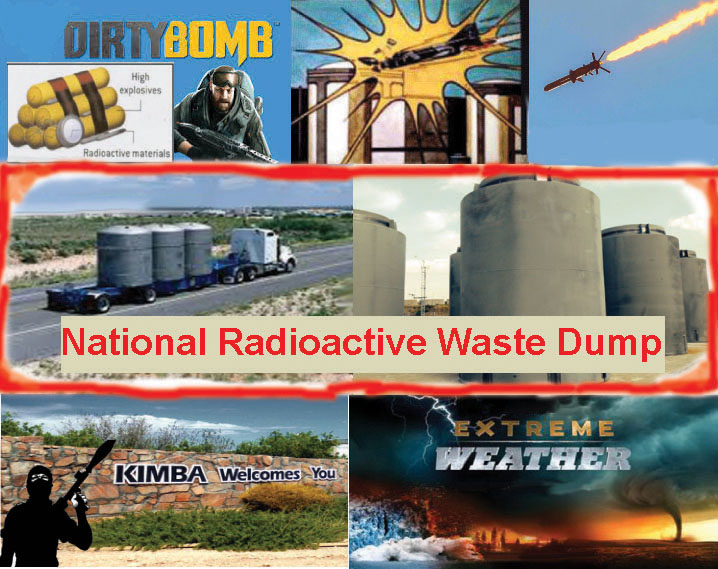
As the Baldock family anticipates the establishment of a nuclear waste dump on Jeff Baldock’s land, they now sell a large chunk of their farming land, along with three other farming families that have made the same decision. (Reported in The Advertiser , 14 Feb 2020)
It looks as if they are getting out fast, before the dirty nuclear waste news is widely known.
And here are some of the many comments on Facebook:
James Shepherdson It is actually about roughly 20ks from the site and has only just been added to the other land for sale. Read into it what you will , but if he’s planning to stay he’s sure sending the wrong message with this move .As far as being approachable, been there done that and got jumped on by council and the gov department and were accused of bullying . this will go down in history as the most undemocratic process in this country
K Bruun I can’t – but at the same time ‘can’ – believe this. I am amazed at how planned this has been. There must be something sociopathic about these people. I still don’t understand how Baldock could spend his nuffield scholarship learning how to keep families on farms together, yet does this. What is the psychology behind people like this? They have effectively harmed their entire community.
Kazzi Jai Paul Waldon “It was sheer elation when I heard,” Baldock says. “I’m 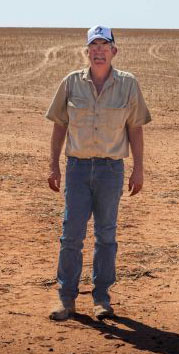 very, very excited about what lies ahead for Kimba. It gives me a great feeling of relief. I’m quite excited to have it on my property and see it develop, to have our kids around it and see some opportunities close to home.”
The Saturday Paper February 8th -14th 2020
Noel Wauchope Perhaps the Baldocks and others look to a “healthy”economic transition for Australia from an agricultural country to the world’s quarry and waste dump.
Whyalla is targeted for nuclear waste shipments and should have a right to refuse untenable plans.
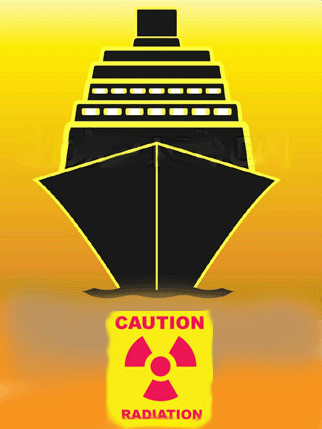 Whyalla is targeted for nuclear waste shipments and should have a right to refuse untenable plans.
Napandee Nuclear Store site nomination also targets Whyalla Port: Nuclear Brief (Feb 2020) by David Noonan, Independent Environment Campaigner
Amidst rising controversy, a Federal Minister has nominated Napandee near Kimba on Eyre Peninsula as a Nuclear Store to take reactor fuel wastes and long-lived wastes from Lucas Heights.
The “Site Characterisation Technical Report: Napandee” (DIIS, July 2018, Proximity to ports p.150) named Whyalla Port to take shipments of nuclear fuel wastes, in the event Napandee is named as a Nuclear Store. Two shipments of reprocessed nuclear fuel wastes, in 130 tonne TN-81 casks, are intended within the first two years of operations of a Nuclear Waste Store at Napandee (p.152).
Some 100 x B-double 50 tonne loads of Intermediate Level Wastes (ILW) are also intended in the first four years of Nuclear Store operations at Napandee (p.152). The Report (p.157-158) states:
“It may be possible to have these containers shipped from Port Kembla to ports such as Whyalla”
However, the Federal government has conspicuously failed to consult the SA community on plans to impose multiple shipments of nuclear waste across SA, including potentially through Whyalla Port.
This flawed practice is in continued breach of advice of the Nuclear Safety Committee (NSC) to the nuclear regulator ARPANSA (Nov 2016) on the NRWMF, on transparency in decisions, stating:
“The ongoing requirement to clearly and effectively engage all stakeholders, including those along transport routes.” With the NSC stating that: “Such engagement is essential…
” Eyre Peninsula, Whyalla and transport route communities have so far been denied a say on these Federal nuclear waste plans and now face potential serious reputational risks and material impacts.”
The Australian Radioactive Waste Management Framework (DIIS, April 2018, p.4) reports total Intermediate Level Wastes at 1,770 m3 – with 95% (by volume) arising as Federal government wastes.
The Federal gov. plans to more than double Intermediate Level Wastes to produce a further 1,960 m3 over next 40 years, with 1,850 m3 (95%) of that arising from ANSTO Lucas Heights operations.
All these nuclear wastes are intended to go to Napandee for up to 100 years above ground storage.
Proposed indefinite above ground storage of nuclear fuel wastes at Napandee may compromise safety and security in SA and contravenes Nuclear Safety Committee advice. The NSC has stated dual handling in transport associated with interim storage “does not represent international best practice” and raises “implications for security”. These federal nuclear plans are also illegal in SA.
The previous SA State Liberal government prohibited the import, transport, storage and disposal of nuclear fuel wastes and reprocessed wastes under the Nuclear Waste Storage (Prohibition) Act 2000.
“The Objects of this Act are to protect the health, safety and welfare of the people of South Australia and to protect the environment in which they live by prohibiting the establishment of certain nuclear waste storage facilities in this State.”
ARPANSA states these nuclear wastes require isolation from the environment for 10 000 years.
Nuclear waste can pose serious Safety, Accident and Security Risks:
“In the event of a major nuclear accident, adverse impacts on the tourism, agriculture and property sectors could potentially be profound.”
SA Nuclear Royal Commission: Tentative Findings, Risks and Challenges, Impacts on other Sectors (Feb 2016, p.28)
Key questions on safety and security in nuclear fuel waste transport and storage remain unanswered (see D Noonan submission to Minister Canavan, p.11-12). These wastes must not be allowed into SA.
The UK Nuclear Free Local Authorities “Briefing: Nuclear security concerns – how secure is the UK civil nuclear sector?”
(NFLA, May 2016) highlights key security threats including the risks from potential malicious attack on a nuclear waste transport or on a nuclear waste storage site. NFLA (p.8) cites the views of nuclear engineer Dr John Large on safety as at the heart of its concerns:
“Movement of nuclear materials is inherently risky both in terms of severe accident and terrorist attack. Not all accident scenarios and accident severities can be foreseen; it is only possible to maintain a limited security cordon around the flask and its consignment; … terrorists are able to seek out and exploit vulnerabilities in the transport arrangements and localities on the route; and emergency planning is difficult to maintain over the entire route.”
NFLA Recommendations (p.15) call for real discussion on the aftermath of a nuclear security incident given the major emergency response issues that arise. That belated debate is yet to be heard in SA.
SA is arguable unprepared for the consequences of nuclear fuel waste accidents or security events. Hundreds of Police were required for security at a 2018 nuclear waste shipment out of Port Kembla.
Whyalla is targeted for nuclear waste shipments and should have a right to refuse untenable plans.
In “Nuclear port potential” (Whyalla News, 3 rd August 2018, p.1) the Mayor said Federal gov. plans to use Whyalla’s port for nuclear waste: “would require significant community consultation”, noting:
“In the past Whyalla has opposed any nuclear or radioactive shipping in this region”.
DIIS’s Napandee Site Characterisation Report refers to potential “occurrences of complete shutdown” (p.154) in Iron Triangle Cities during nuclear waste shipments. This is unacceptable.
These are fundamentally State issues and the SA public have not given consent to proposed nuclear waste transport and storage. Under the leadership of Premier Steven Marshall the SA State Liberal government has a responsibility to protect the public interest and to uphold the law in our State.
The Marshall gov. must protect all SA regional communities and reject a Nuclear Waste Store in SA. For further Information, see: https://nuclear.foe.org.au/waste
South Australia’s renewable energy future hampered by lack of electricity infrastructure
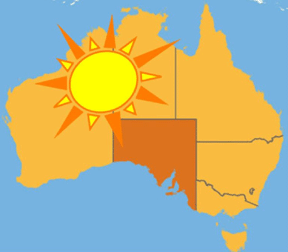 South Australia’s renewable energy future hampered by lack of electricity infrastructure https://www.abc.net.au/news/2020-02-11/sa-renewables-future-hampered-lack-of-instructure/11935392
By Emma Pedler and Lucy Robinson South Australia’s drive to be the national leader in renewable energy is being hampered by infrastructure unable to support the future growth potential, according to economist Ross Garnaut.
Key points:
- A lack of infrastructure is undermining SA’s goal to lead the nation in renewable energy, experts say
- A windfarm that was approved almost 20 years ago was never developed because of a lack of support for large-scale operations
- State officials say a proactive approach to infrastructure would attract businesses and create jobs
Dr Garnaut highlighted the Eyre Peninsula and Spencer Gulf as two of the regions most likely to be able to both create renewable energy and house the industries that want to use it.
But he said the region would not be able to capitalise on opportunities without high voltage transmission infrastructure similar to the interconnector recently approved to link SA and New South Wales.
“We need lots more of that kind of infrastructure … so that we can bring together at single points a range of high quality wind and high quality solar, so that we can balance the requirements of different parts of the region,” he said Continue reading
Nuclear Stigma is, and will continue to be the cancer that erodes Kimba future.
“Them or us, a shit town and a policeman on the fence.”
Kimba farmer / nuclear profiteer, Andrew Baldock who has recklessly fueled the ongoing promotion to degrade a agriculture region is now pleading for the community to reunite. This maybe seen as Baldock’s failed solicitation to procure redemption, forgiveness or clemency for the irremediable damage ignorantly portrayed upon what is mostly a nobbled and unwilling community.
Sunday the 2nd of February anti-nuclear rally, portrayed attending people as welcome contributing visitors to the town until their views of nuclear were apparent only to find they were treated no better than a leper in Kimba’s colony. One local person and yes I say one, that being of the local constabulary claimed to be on the fence and treated people with regard, where the nuclear embracing dichotomy has failed to welcome.
Nuclear Stigma is, and will continue to be the cancer that erodes Kimba future. https://www.facebook.com/groups/941313402573199/
In 2020 Adelaide City Council to become South Australia’s first carbon neutral local government
 Renewable energy to fully power city council, INDAILY , Stephanie Richards, 5 Feb 20,
Adelaide City Council says it will become South Australia’s first carbon neutral local government by the end of this year following the signing of a “landmark” renewable power purchase agreement.
Lord Mayor Sandy Verschoor this morning announced the council had entered into an agreement with Melbourne-based energy retailer Flow Power to source all its electricity from solar and wind power.
The contract means all council-owned infrastructure and buildings – including street lights, libraries, community centres and Town Hall – will be powered by 100 per cent renewable energy from July.
The switch is expected to slash the council’s current carbon emissions – more than half of which are tied to electricity use – by 11,000 tonnes each year.
Verschoor told reporters this morning the agreement would result in a 20 per cent reduction to the council’s electricity costs, however she said she was “not allowed to talk dollars” due to commercial confidentiality.
She said the agreement would mean the council would become carbon neutral-certified by the end of this year, joining the already-certified Brisbane, Sydney and Melbourne city councils.
Carbon neutrality, or having a net-zero carbon footprint, is achieved when the amount of greenhouse gas emissions emitted into the atmosphere is balanced by the amount being removed.
“This partnership will not only save our ratepayers money, it helps cement Adelaide’s international clean and green reputation,” Verschoor said…….. https://indaily.com.au/news/local/2020/02/05/renewable-energy-to-fully-power-city-council/
A reminder to South Australian govt that nuclear waste dumping is illegal there

Our laws are clear, there are ten year imprisonment penalties and multi million dollar fines for offences relating to planning and promotion and establishment and operation of a nuclear waste dump in South Australia – these are very serious penalties, in accord with the gravity of the threat.
These laws have been breached by recent bribery and deception activities … and there are clear public statements of intention to breach these laws further in the near future, recently moving from conspiring to breach the importation prohibition, to specifying a precise place where an illegal dump is planned, on farm land in the middle of a large area of precious farm land.
Please act to fight this evil criminal activity.
As specified in the legislation, this is a matter of acting “to protect the health, safety and welfare of the people of South Australia and to protect the environment in which they live by prohibiting the establishment of certain nuclear waste storage facilities in this State.”
(Nuclear Waste Storage Facility (Prohibition) Act 2000 https://www.legislation.sa.gov.au/…/NUCLEAR%20WASTE… )
Best wishes
from
Brett Stokes
resident of Willaston 5118
Strong rally in Kimba, South Australia, against nuclear dump plan
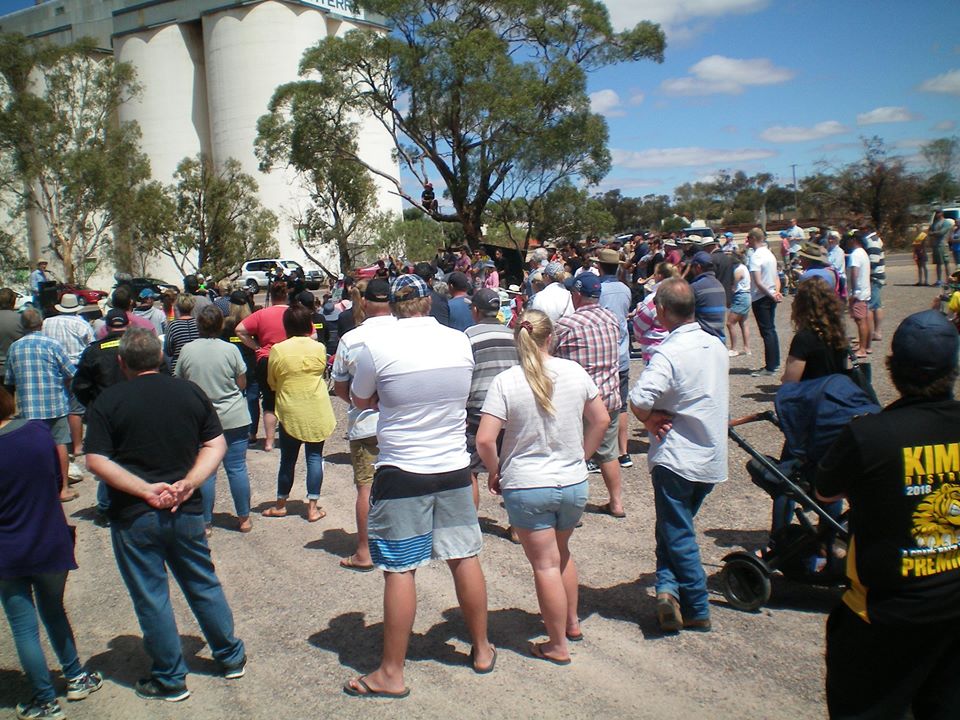
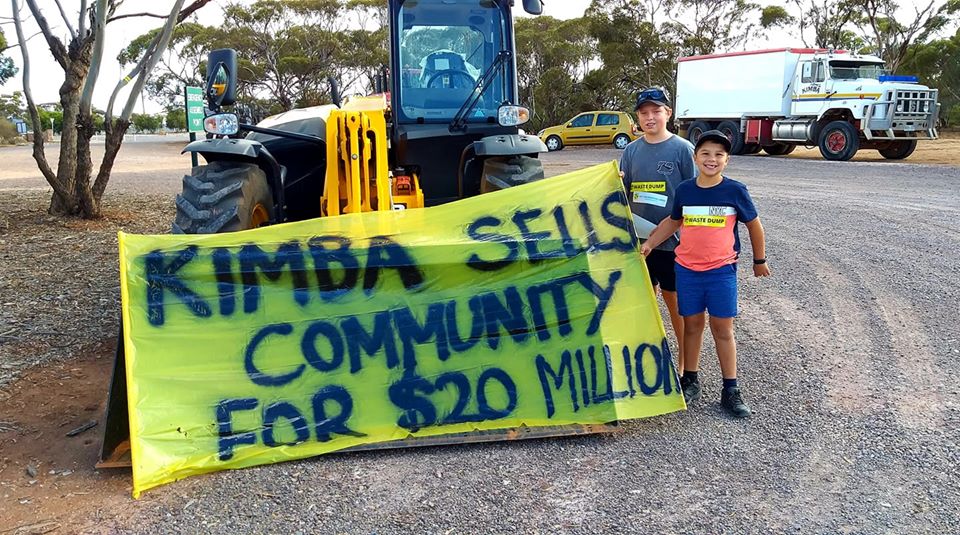
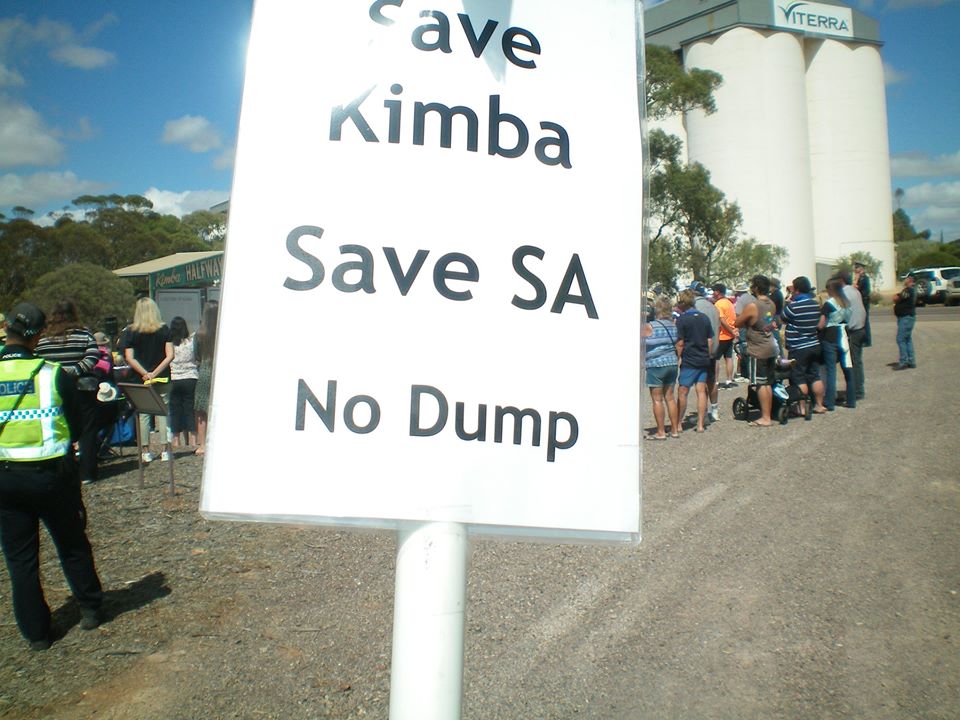
SA community calls on government to scrap planned nuclear waste dump, SBS, 2 Feb 2020 Protesters are venting their anger at a nuclear waste dump proposed on South Australia’s Eyre Peninsula. Protesters are calling on the federal government to scrap a proposed nuclear waste dump on South Australia’s Eyre Peninsula at a rally on Sunday.
The farming property Napandee near the town of Kimba was announced as the site of the radioactive facility on Saturday.
But the No Radioactive Waste on Agricultural Land in Kimba or SA committee says the community consultation process was flawed.
“Those opposed to the facility have had no choice but to fight, at every opportunity, for our legitimate concerns to be heard,” president Peter Woolford said…..
Federal Resources Minister Matthew Canavan said a decision on the site would be announced soon. https://www.sbs.com.au/news/sa-community-calls-on-government-to-scrap-planned-nuclear-waste-dump
Honeymoon uranium mine might restart this year, and pigs might fly
 Uranium miner flags restart at Honeymoon within a year if prices jump, others aren’t so sure, ABC BROKEN HILL BY DECLAN GOOCH AND SARA TOMEVSKA 22 Jan 2020, The company behind a proposal to restart uranium mining in north-east South Australia says it would be ready to begin production within a year if prices improve.
But the Australian Conservation Foundation (ACF) has cast doubt on the likelihood of that occurring, arguing the market is moving away from uranium.
Key points:
- Honeymoon is one of only four Australian uranium mines with an export licence but has been mothballed since 2013
- New owner Boss Resources says technology will help it lower operational costs and will reopen the mine once uranium prices improve
- Anti-nuclear campaigners doubt the mine’s prospects, saying significant uranium producers have been deferring or halting development
The Honeymoon uranium mine was mothballed in 2013 because it had become too expensive to run.
But in 2015, the mine, which is about 80 kilometres north-west of Broken Hill, was purchased by WA exploration company Boss Resources.
Boss chief executive Duncan Craib said the company had developed new technology to lower operational costs and had finalised a feasibility study.
He said the mine would reopen once uranium prices improved, which he was expecting to happen soon.
“We don’t want to destroy the resource at low uranium prices, so we’d like an uptick in the market before proceeding,” Mr Craib said.
Honeymoon is one of only four Australian uranium mines with an export licence.
However, Mr Craib said uranium was under-utilised in Australia and he would like to see a domestic uptake of nuclear power…….
Optimism baseless, campaigner says
Anti-nuclear campaigner Dave Sweeney from the ACF said he believed the announcement was without substance.
“There is nothing new in their statement,” he said.
“It’s pretty much a holding-pattern statement from a mining company with not a lot of resources, not a lot of projects, that are trying to continue to hold a place in the market, where the market is increasingly in freefall.
“Obviously, Boss is going to say the uranium price is going to soar — they’re a uranium miner.
“We’ve got major producers in this country … We’ve got a third of the world’s uranium and we’re not digging much, and that is because the price is not there.
Mr Sweeney said significant producers were deferring or halting development.
Rio Tinto, a massive mining company, is exiting at the Ranger mine in Kakadu,” he said.
“Cameco, the world’s largest dedicated uranium producer, has written down an asset that it spent $500 million on a decade ago in WA, and says that the best way to preserve the value of uranium is to keep it in the ground.”…….. https://mobile.abc.net.au/news/2020-01-22/honeymoon-uranium-mine-production-within-a-year-company-says/11889466
New short films show the shocking impact of nuclear waste plan on the Kimba community
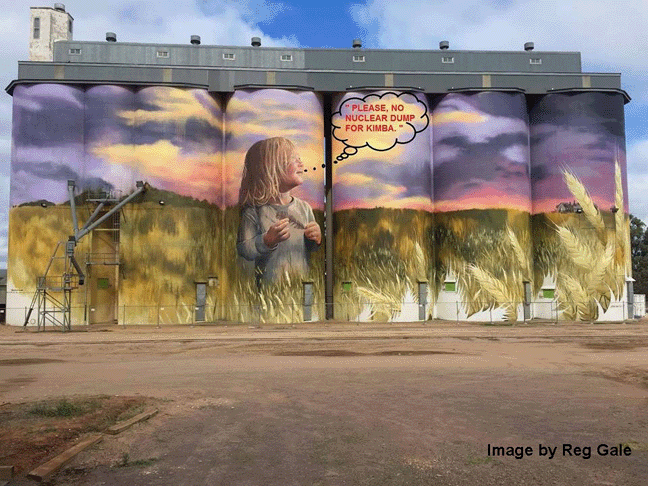
The stories of Kimba farming families and local townspeople opposed to the proposed National Radioactive Waste Management Facility in the district have had their story documented in a message to wider Australia.
Port Pirie filmmaker Kim Mavromatis has released a series of mini-documentaries over the past three months telling the stories of communities impacted by the four-year process to determine whether the facility had broad community support at Kimba or Hawker.
Mr Mavromatis said he had been following the debate around both the waste facility and the SA nuclear fuel cycle process, and he believed the communities involved were only given one side of the story throughout consultation.
“At the end of the day… the government weren’t doing the right thing by the people,” he said.
He said as a member of the Port Pirie community he had also been concerned that his community, which could potentially see the waste transported through their town or port, had not had the same opportunity for consultation as the Kimba and Hawker communities who late last year participated in community ballots to measure support for the proposal.
In one of Mr Mavromatis’s videos, Kimba locals and members of the No Radioactive Waste Facility for Kimba District group spoke about why they remained opposed to the proposal, and the impact the years of uncertainty and community debate has had on them personally.
Among those featured were neighbours of the proposed sites.
Secretary of the group Toni Scott said through the years they had discussed ways of getting their message out to a wider audience, and while it was difficult for many to tell their story there were still many people across the wider Eyre Peninsula and the state who needed to know what was going on as a final decision looms.
“We’re at the stage now where we really want to create as much awareness as we can,” she said.
“We’re hoping people can relate to it.”
Many of the interviewees featured are visibly emotional in the film, which Mrs Scott said was an unintentional outcome of individuals being encouraged to share their stories openly.
“Those raw emotions just came out… I think it’s important for people to see that and realise how affected members of our community actually are,” she said.
Mr Mavromatis said it was “shocking” to see first-hand the impact on the community.
“It’s their livelihood, it’s their future, it’s their kids’ future and it’s permanent,” he said.
The filmmaker has also created a documentary about the impact of the process on the Barngarla people, who in an independent ballot last year voted 0% in favour of the facility.
Mr Mavromatis said the lack of genuine engagement with the traditional owners, who are native title holders of areas neighbouring both proposed sites, was a “total disgrace.”
A rally is planned for Kimba on February 2, with Kimba community members encouraging the wider state to join them.
“We are asking people from Eyre Peninsula and SA to join us in a peaceful protest so the minister (Resources minister Matthew Canavan) can get the message that Kimba is not the right place and farming land is not the right place,” Mrs Scott said.
The video series can be found at vimeo.com/mav17557967.
Uncle Kevin warns that the people, and the lizard are fighting back against BHP and its uranium mine
Uncle Kevin “The lizard has had enough and so have the people. And the old country has been ruined, devastated by BHP.
In 2020, we’ll be having serious meetings on the Borefield road, somewhere near Canegrass swamp.
BHP is one of the biggest miners in the world and Olympic dam at Roxby is the biggest uranium mine in the world. They are fully supported by the federal and state governments.
At Canegrass swamp people were tricked by WMC who started this development. We could not do anything about it back then in the 70s and 80s.
Olympic dam development is taking 42m litres of sacred artesian water from the Lake Eyre basin each day. This is going to be expanded to 50m litres per day for the next 25 years. We must stop this now.
Native title and ILUAS have made it harder for us. Our people are being tricked and this has been devastating for the Arabunna people who don’t want their land destroyed.
I am calling out for all people land and water protectors concerned about global warming and environmental destruction to come and help.
The lizard has had enough, come and help us close Roxby down. Dates will be announced, we’re thinking of June/July 2020.
BHP at Roxby are sucking the blood out of the land – the water of the great Lake Eyre basin.
And BHP wants more.
They are killing us.
Turning our mob against each other as they fight over the crumbs of the destruction.
Greed is poison. Their lust for the poison will kill us all unless we take a stand.
Lake Eyre is talking. Be aware.
Are u listening? https://www.facebook.com/groups/941313402573199/
South Australia’s Liberals keen to weaken health and safety laws on uranium
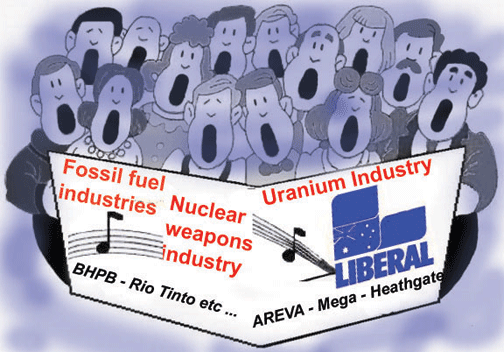
Push to cut green tape for new uranium mines in South Australia, https://www.adelaidenow.com.au/news/south-australia/push-to-cut-green-tape-for-new-uranium-mines-in-south-australia/news-story/5cee611673d15b550eabeb7210afdf8f?fbclid=IwAR3nf_aFghOlO3glVVwF964xz0H9dvJJ_GeX-libfDWV1ehu9o6R-allX2Q
29 Dec 19 “Unnecessary” green tape is choking the potential for lucrative new uranium mines in South Australia, the State Government says.
The Marshall Government is calling for Canberra to slash federal environmental approvals to pave the way for new mines as a once in a decade review of the nation’s environmental laws gets underway.
SA already has four of the country’s six uranium mines, which have produced 24,300 tonnes and $2.1 billion worth of uranium over five years.
But SA has made a submission to a federal inquiry into nuclear power calling for Canberra to axe the requirement for Commonwealth environmental approvals, in addition to state approvals, for new uranium mines.
It argues the removal of this duplication “will not diminish existing standards of regulation safety and compliance and will increase efficiency, reduce costs bourne by industry”.
It would also boost SA’s status as a “favourable investment destination”.
The submission notes “unnecessary” extra green tape is a “significant barrier to the viability of new uranium mine developments” in SA.
It also calls for changes to the Environment Protection and Biodiversity Conservation Act to remove the ‘nuclear action trigger’ for uranium and other mines with naturally occurring radioactive minerals, to stop the need for federal approvals.
SA will push for the power to go it alone in a once in a decade review of the EPBC Act, currently being conducted by former ACCC chair Graeme Samuel.
A state government spokesman said SA wanted the federal and state approval duplications removed “so costs can be reduced and economic benefits increased”.
“The nature of our State’s geology means radioactive impurities found in other productive ores are inadvertently captured by the nuclear action trigger, and the review is an important opportunity to address this anomaly,” he said.
Two of SA’s uranium mines are operational, while Boss Resource’s Honeymoon mine is in the process of restarting.
BHP has also discovered copper, which uranium could potentially be found near, at the Oak Dam site 65km from its existing Olympic Dam mine.
New Liberal senator for SA Alex Antic has called for SA to look at using nuclear power generation along with a nuclear fuel waste storage facility, saying it could add
“billions of dollars from our participation in the nuclear fuel cycle”.
The state government’s submission said nuclear power was “unviable now and into the foreseeable future” in SA but noted it could be used in remote mining if small modular reactor technology advanced, although the state was currently looking at renewables with power storage for those situations.
The submission also highlighted that nuclear power could be viable in other states, which would create more demand for SA’s “significant” uranium deposits.
Senator Antic welcomed the possibility of next generation nuclear power technologies playing a role in SA’s future energy grid.
He hit out at nuclear power critics, saying: “Those who tell us that we are in the middle of a climate emergency can’t have their ideological cake and eat it too.”
“Nuclear power has proven to be virtually emission free, reliable, and safe.”
SA Chamber of Mines & Energy chief executive Rebecca Knol welcomed the call to slash “unnecessary duplication” of approvals, saying it could save an estimated $426 million in regulatory and operational costs.
It could help SA achieve its 3 per cent annual growth target, she said.
Mr Samuel is due to report to federal Environment Minister Sussan Ley by October.
A spokesman for the Minister said she had been clear that “stringent environmental protection” was fundamental to any review outcomes.
South Australia facing hightened bushfire conditions, as blazes continue
 ‘Elevated fire conditions’ to hit South Australia on Monday as firefighters continue to battle blazes ABC, 29 Dec 19Key points: ‘Elevated fire conditions’ to hit South Australia on Monday as firefighters continue to battle blazes ABC, 29 Dec 19Key points:
Extreme temperatures, damaging winds and severe thunderstorms are expected to grip much of South Australia on Monday, prompting a “severe to extreme” fire rating for most of the state. The conditions have prompted the Country Fire Service (CFS) to warn those in bushfire-prone areas to remain vigilant and make decisions early about staying or leaving their property. It comes as the CFS continues to battle blazes at Cudlee Creek, in the Adelaide Hills and at Duncan, on Kangaroo Island, which both remain at advice level….. A catastrophic fire danger rating has been flagged for Adelaide, Mid North and the Yorke Peninsula, while extreme danger is predicted at Murraylands and the Lower South-East districts. A severe fire danger rating is also in place for the rest of the state, which includes the Adelaide Metropolitan, Flinders, Riverland, Kangaroo Island, the West Coast, Lower and Eastern Eyre Peninsulas and the Upper South East……. Weather to bring ‘elevated fire conditions’Bureau of Meteorology (BOM) forecaster Bonnie Haselgrove said very hot conditions were expected on Monday with very hot and dry north to north-westerly winds…… Outside of South Australia, Swan Hill in Victoria is expected to reach 43C on Monday, and Menindee in New South Wales is also forecast for 43C. As for metropolitan areas, Parramatta in Western Sydney is expected to reach 38C on Monday; Melbourne is forecast to reach 43C; and the northern Adelaide suburb of Elizabeth could reach 41C. Canberra is expected to hit 39C on Monday and Tasmanians will not be spared from the heat either with Hobart predicted to hit 40C.https://www.abc.net.au/news/2019-12-29/elevated-fire-conditions-to-hit-sa-on-monday-as-fires-burn/11831200 |
|
|
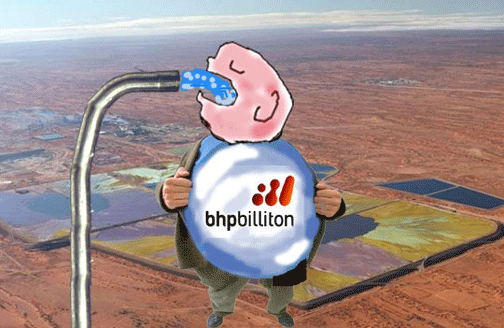
BHP’s plan to take yet more water for huge copper-uranium mine
https://www.melbournefoe.org.au/olympic_dam_uranium_mine_expansion1219
The federal government is inviting public comment on BHP’s proposed expansion of the Olympic Dam copper-uranium mine (ODM) until Tues. 10 Dec 2019.
BHP plans to increase extraction of precious Great Artesian Basin water to an average 50 million litres per day for the next 25 years, with likely serious adverse impacts on the unique and fragile Mound Springs ‒ which are listed as an Endangered Ecological Community and are of significant cultural importance to Aboriginal people.
Please make a brief submission to the Federal Minister for Environment. You can use our pro-forma submission and just add your name (and you can add any additional comments you like).
More information:
- Short briefing papers on the proposed Olympic Dam expansion are posted at https://nuclear.foe.org.au/olympic-dam/.
- See esp. the “Preconditions to Protect Mound Springs in Olympic Dam Expansion EIS Guidelines“.
- Detailed BHP information: See the BHP Referral at http://epbcnotices.environment.gov.au/publicnoticesreferrals/ and scroll down to Referral Number 2019/8570, dated 27 Nov. in chronological listing, or Search (use the tab “Filter by Referral Number’) for 2019/8570.
How are Australian States progressing on renewable energy? South Australia way ahead
South Australia leading the nation in renewable energy, https://thenewdaily.com.au/news/national/2019/11/25/renewable-energy-winners/ Samantha Dick
South Australia is shifting to renewable energy faster than any other state or territory.
This is despite the federal government’s “lack of leadership” and continued support for major fossil fuel projects, says the Climate Council.
|
Progress is based on how much electricity is derived from renewable energy, proportion of households with rooftop solar, large-scale wind and solar capacity per capita, and policies to support the transition. South Australia earned this year’s top spot for generating more than half of its electricity from wind and solar, and for setting a target of net 100 per cent renewable energy in the 2030s. Following closely in second place was the Australian Capital Territory, which is on track for 100 per cent renewable energy from 2020. The ACT has also announced impressive plans to achieve net zero emissions by 2045 by cutting emissions from transport and cities. Tasmania was in third place for making headwinds toward 100 per cent renewable energy by 2022, and for researching three pumped hydro sites that could supply energy to Victoria over the next 10 to 15 years. Victoria was ranked fourth, winning points for planning the nation’s most ambitious large-scale wind and solar projects, and for legislating a renewable energy target of 50 per cent by 2030. However, more than 80 per cent of the state’s power still comes from fossil fuels, meaning it has a long way to go to catch up to the frontrunners. Further behind in fifth place was Queensland, where nearly half of Australia’s large-scale renewable energy projects were completed last year. But despite making big improvements, the Queensland government lost marks for continuing to support new fossil-fuel projects like the Adani coal mine. The Adani coal mine, backed by the federal government, will put out an estimated 7.7 billion tonnes of greenhouse gases over 60 years through extracting 2.3 billion tonnes of coal. It is also unlikely the Sunshine State will meet its target of 50 per cent renewable energy by 2030.
|
|
1 This month

of the week – Australians for War Powers Reform (AWPR)
To see nuclear-related stories in greater depth and intensity
 Antinuclear