
Activists rally against nuclear waste transport, By JOSHUA SOLOMON
 Staff Writer,Greenfield Recorder September 21, 2018 GREENFIELD — In a lot of
  ways it was like a party, celebrating the accomplishments of the past few years: The closures of the Vermont and Rowe nuclear plants. ……..The theme of the night? The high-level nuclear power plant waste being stored in Rowe and Vernon, Vt., must go — but only once the right and final safe place for it is decided.
“I haven’t bothered you for three or four years at this point,” leader of CAN and Rowe resident Deb Katz said. “But we’ve come back to our community to say: We need to be involved again. And I wish it wasn’t so.”
Katz and CAN just begun a tour of New England, and after spending their first two nights in Vermont, they came to Greenfield Thursday. On Friday, they will take the tour to the Statehouse on Beacon Hill.
Currently, the anti-nuclear activists are rallying against a bill that could allow for the high-level nuclear waste in Rowe and Vernon, Vt., to be shipped in canisters across the country to Texas or New Mexico. It would place the waste in what CAN is calling “parking lots” that are seen as more temporary holdings than anything else, but could be pitched as helping tthe economy in these regions in the Southwest of the country.
“Why shouldn’t we just say ‘yes, wow. Thank you so much’? The trouble is this is a really bad idea,” Katz said. “We all want the waste off the site, but we want it done right. And we want it done once.” ………
At the moment there isn’t a distinct solution on where to move the high-level nuclear waste, but Katz and fellow lead organizer Chris Williams of Vermont advovated for more science to figure out the best solution to storing waste that remains toxic for thousands of years.
“It took a lot of hard science to create this mess,” Williams said. “To get rid of this stuff properly, we’re going to have to apply real science and not just political expediency.”
The goal is to look to scientists to find the place for “deep geological storage,” Williams said.
Preaching to find a better, scientific solution was organizer and activist Kerstin Rudek from the Peoples Initiative, based out of Germany, where her neighbors have faced similar issues.
“It’s an international thing,” Rudek said, pointing to the lack of answers of what to do with the nuclear waste and the need for answers. “It’s not just a local thing.”
The meeting, which Williams described as a “little more lively than your usual nuclear waste meeting,” also included the speaker Leona Morgan, from the Navajo Nation and an Albuquerque, N.M. resident.
“It’s great news when we hear a nuclear power plant has been shut down, but it makes me nervous because it makes the push for these false solutions even harder,” Morgan said.
She described the political climate in New Mexico as pitching to residents that moving the nuclear waste there would be good for their economy, creating jobs, but ignoring the will of the residents who might be affected by it most.
“I’m here tonight to tell you we don’t want it,” Morgan said. “We don’t want this waste.”………
You can reach Joshua Solomon at: jsolomon@recorder.com 413-772-0261, ext. 264 https://www.recorder.com/Anti-nuclear-group-CAN-advocated-for-one-final-location-for-waste-at-tour-event-at-Hawks—Reed-20333471
September 21, 2018
Posted by Christina Macpherson |
General News |
Leave a comment
Nuclear Fuel Cycle Watch South Australia, 20 Sept 18, Harry Degenaar wrote: ‘A topic well documented…[speaking to reprocessing nuclear unspent, spent, and weapons-grade plutonium]’
Yes, the documentation in sales brochures, selling a dead technology.
You will never find any independent energy auditing specialists servicing the corporate state or global governments, pushing the nuclear industries;
* well documented, topic.
What are the probabilities this will ever take a 180º turnaround?
If anyone was going to take a bet like that one, they would be wasting their time and money.
Something never considered when these nuclear fuel reprocessing concepts started, as this was purely an engineering process.
Nonetheless, ‘proof of concept’ is very much the domain of good engineering, and that must include economic viability.
The nuclear industry can’t run unspent fuel through any reactor twice, as uranium is getting cheaper and cheaper.
Worse than that, is the reality renewables drive energy costs of electricity down;
* nuclear reactor costs are going up, &
* renewables are going down.
Repeating, this 1970s “Blue Sky Mining” ideal is pointless, despite the partial truth, its a con.
The part that makes it impossible, is economics, the con is believing global markets aren’t judging uranium harshly.
The reality is, it costs far more to run the unspent fuel through once let alone twice, three, four or five times claimed!
I can give a century of ore metrics, but it seems pointless.
What are the probabilities these ore prices dropping will reverse?
Sure there will be blips like we had with iron ore, but those are very tempory factors, short-lived, the trend down is unstoppable, as innovation efficiencies increase in mining. https://www.facebook.com/groups/1021186047913052/
September 21, 2018
Posted by Christina Macpherson |
General News |
Leave a comment

 North Korea Agrees to Permanently Dismantle Nuclear Complex If U.S. Takes Corresponding Steps, TIME, ERIC TALMADGE AND KIM TONG-HYUNG / AP , September 19, 2018 (PYONGYANG, North Korea) — South Korean President Moon Jae-in and North Korean leader Kim Jong Un announced a sweeping set of agreements after their second day of talks in Pyongyang on Wednesday that included a promise by Kim to permanently dismantle the North’s main nuclear complex if the United States takes corresponding measures, the acceptance of international inspectors to monitor the closing of a key missile test site and launch pad and a vow to work together to host the Summer Olympics in 2032.
Declaring they had made a major step toward peace on the Korean Peninsula, the two leaders were side by side as they announced the joint statement to a group of North and South Korean reporters after a closed-door meeting Wednesday morning……
The statement caps off the third summit between Kim and Moon, who is under increasing pressure from Washington to find a path forward in its efforts to get Kim to completely — and unilaterally — abandon his nuclear arsenal. ……..
The question is whether it will be enough for President Donald Trump to pick up where Moon has left off.
Trump has maintained that he and Kim have a solid relationship, and both leaders have expressed interest in a follow-up summit to their meeting in June in Singapore. North Korea has been demanding a declaration formally ending the Korean War, which was stopped in 1953 by a cease-fire, but neither leader mentioned it as they read the joint statement.
In the meantime, however, Moon and Kim made concrete moves of their own to reduce tensions on their border.
According a joint statement signed by the countries’ defense chiefs, the two Koreas agreed to establish buffer zones along their land and sea borders to reduce military tensions and prevent accidental clashes. They also agreed to withdraw 11 guard posts from the Demilitarized Zone by December and to establish a no-fly zone above the military demarcation line that bisects the two Koreas that will apply to planes, helicopters and drones………http://time.com/5400296/north-korea-dismantle-nuclear-complex-nyongbyon/
September 21, 2018
Posted by Christina Macpherson |
General News |
Leave a comment
 At this rate, Earth risks sea level rise of 20 to 30 feet, historical analysis shows New research finds that a vast area of Antarctica retreated when Earth’s temperatures weren’t much warmer than they are now, WP Chris Mooney, September 20 2018
Temperatures not much warmer than the planet is experiencing now were sufficient to melt a major part of the East Antarctic ice sheet in Earth’s past, scientists reported Wednesday, including during one era about 125,000 years ago when sea levels were as much as 20 to 30 feet higher than they are now.
“It doesn’t need to be a very big warming, as long as it stays 2 degrees warmer for a sufficient time, this is the end game,” said David Wilson, a geologist at Imperial College London and one of the authors of the new research, which was published in Nature. Scientists at institutions in Australia, New Zealand, Japan and Spain also contributed to the work.
The research concerns a little-studied region called the Wilkes Subglacial Basin, which is roughly the size of California and Texas combined and contains more than 10 feet of potential sea-level rise. Fronted by three enormous glaciers named Cook, Mertz and Ninnis, the Wilkes is known to be vulnerable to fast retreat because the ice here is not standing on land and instead is rising up from a deep depression in the ocean floor.
Moreover, that depression grows deeper as you move from the current icy coastline of the Wilkes farther inland toward the South Pole, a downhill slope that could facilitate rapid ice loss.
What the new science adds is that during past warm periods in Earth’s history, some or all of the ice in the Wilkes Subglacial Basin seems to have gone away. That’s an inference researchers made by studying the record of sediments in the seafloor just off the coast of the current ice front……..
Humans have caused about 1 degree Celsius (1.8 degrees Fahrenheit) of warming above the preindustrial planetary temperatures experienced before the year 1880 or so. The world has pledged to avoid a warming above 2 degrees Celsius, and even hopes to hold the warming to 1.5 degrees, but current promises made by countries are not nearly enough to prevent these outcomes.
n other words, we are already on a course that could heat the planet enough to melt some or all of the Wilkes Basin.
“We say 2 degrees beyond preindustrial, and we’re already beyond preindustrial,” Wilson said. “So this is potentially the kinds of temperatures we could see this century.”
The study cannot reveal, however, just how quickly ice emptied out of the Wilkes Basin. The past warm periods in question are thought to have been driven by slight variations in Earth’s orbit as it rotates around the sun, leading to stronger summer heat. That warmth was maintained for thousands of years.
…….. The new research “contributes to the mounting pile of evidence that East Antarctica is not as stable as we thought,” Isabella Velicogna, a glaciologist at the University of California at Irvine, said by email. Velicogna was not directly involved in the paper…….https://www.washingtonpost.com/energy-environment/2018/09/20/antarctica-warming-could-fuel-disastrous-sea-level-rise-study-finds/?utm_term=.7c426ea2a985
September 21, 2018
Posted by Christina Macpherson |
General News |
Leave a comment
Anti-nuclear waste rally in Montpelier, 18 Sept 18 MONTPELIER, Vt. (WCAX) An anti-nuclear waste campaign visited Montpelier Tuesday night, delivering a replica radioactive waste cask. The event was organized by the “Citizens Awareness Network” as part of a multi-stop tour throughout New England.
Activists say they are responding to a bill now in the U.S. Senate that would establish temporary mobile storage for high-level nuclear waste. The storage casks would travel from places like the Vermont Yankee Nuclear Power Plant and would be transported to southwestern states like Texas and New Mexico. The group’s goal is to leave the waste where it is, but better protected.
“We have to find a responsible way to deal with this waste and what the industry is trying to do is just get this waste off of their hands as quickly as possible,” said Tim Judson of the Nuclear Information and Resource Service.
“In New Mexico, we are concerned about not just our communities because of the storage, but the transport would impact everyone across the nation. Anywhere between a nuclear power plant and the waste site,” said Leona Morgan of the Nuclear Issues Study Group.
The nuclear cask will stop Wednesday night in Brattleboro at the Congregational Church.
September 21, 2018
Posted by Christina Macpherson |
General News |
Leave a comment
Astronauts Going to Mars Will Absorb Crazy Amounts of Radiation. Now We Know How Much. https://www.space.com/41887-mars-radiation-too-much-for-astronauts.html
By Meghan Bartels, Space.com Senior Writer | September 20, 2018, There are plenty of challenges to putting people on Mars, whether you look at the rocket, the astronaut or the planet itself. New data from one of the many spacecraft at work around Mars confirm just how dangerous a round-trip human journey would be by measuring the amount of radiation an astronaut would experience.
Cosmic radiation is made up of incredibly tiny particles moving incredibly fast, nearly at the speed of light — the sort of phenomenon a human body isn’t very well equipped to withstand. That radiation travels across all of space, but Earth’s atmosphere buffers us from the worst of its impacts. That means the farther away from Earth’s surface you go, the more cosmic radiation your body absorbs. [Space Radiation Threat to Astronauts Explained (Infographic)]
By the time you’re traveling to and from Mars, that gets to be a very big problem. “Radiation doses accumulated by astronauts in interplanetary space would be several hundred times larger than the doses accumulated by humans over the same time period on Earth, and several times larger than the doses of astronauts and cosmonauts working on the International Space Station,” Jordanka Semkova, a physicist at the Bulgarian Academy of Sciences and lead scientist on the new research, said in a statement. “Our results show that the journey itself would provide very significant exposure for the astronauts to radiation.”
Those results are based on data from the European Space Agency’s Trace Gas Orbiter, a spacecraft that has been circling the Red Planet since 2016. One of the instruments it carries is a dosimeter, which has been taking measurements throughout the orbiter’s journey.
According to the team behind the new research, those measurements show that just getting to and from Mars would expose astronauts to at least 60 percent of the current recommended maximum career exposure.
What precisely that recommended maximum is varies with sex and age, but it ranges from 1 sievert for a 25-year-old woman to 4 sieverts for a 55-year-old man. (The measurement of sieverts already accounts for differences in weight.)
But 60 percent just for the round-trip is particularly concerning, since presumably the point of going to Mars is to spend at least a little time on the planet’s surface — ideally, without overdosing on radiation.
Email Meghan Bartels at mbartels@space.com or follow her @meghanbartels. Follow us @Spacedotcom, Facebook and Google+. Original article on Space.com.
|
|
|


September 21, 2018
Posted by Christina Macpherson |
General News |
Leave a comment
No to nuclear energy a good move Science has yet to find ways to manage its waste to prevent cataclysmic outcomes, says PM Malaysian Reserve , By LYDIA NATHAN 20 Sep 18
Malaysia will have to figure out a substantial and safe way to dispose of nuclear waste if the country were to opt for nuclear energy to generate electricity.
Association of Water and Energy Research Malaysia president S Piarapakaran, who supports Prime Minister (PM) Tun Dr Mahathir Mohamad’s decision to not rely on nuclear energy for the country’s power generation, said the biggest issue would be the containment of energy from leaking.
The government would also have to determine the cost that would be incurred, apart from finding methods to manage such a project successfully.
“A worst-case scenario we’re looking at is leakage in a case of nuclear exposure that could cause various types of cancer to develop rapidly ending in death, or a more severe and long-term outcome, which is severe genetic inflammation that causes mutation,” he told The Malaysian Reserve (TMR) in a telephone inter- view yesterday.
Piarapakaran said mutation as a result of nuclear radiation is also a serious issue as it could last for generations. “In some cases, babies are born with organs outside of their bodies. They are sick all their lives and cannot develop normally,” Piarapakaran said, adding that the cost of management will only increase over the years.
“Waste management is becoming more expensive and we won’t know the exact cost 30 or 40 years from now,” he said.
The PM’s call for the country to not rely on nuclear power was announced at the launch of the Conference of the Electric Power Supply Industry 2018 at the Kuala Lumpur Convention Centre earlier this week………https://themalaysianreserve.com/2018/09/20/no-to-nuclear-energy-a-good-move/
September 21, 2018
Posted by Christina Macpherson |
General News |
Leave a comment
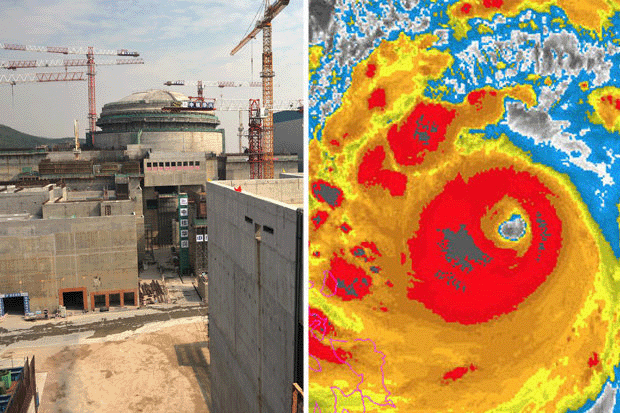
 RED ALERT: Typhoon Mangkhut to SMASH into TWO nuclear plants as MILLIONS evacuate in panic https://www.express.co.uk/news/world/1018412/Typhoon-Mangkhut-Hong-Kong-China-nuclear-plants-red-alert-worst-storm
TYPHOON MANGKHUT – the most powerful storm of the year – is expected to directly hit two nuclear power plants later today with shocking 120mph winds, as officials issue a red alert warning.
By OLI SMITH Sep 16, 2018 Typhoon Mangkhut has battered Hong Kong and southern China today, prompting 2.45 million to evacuate.
The typhoon is the world’s most powerful storm of the year, with winds as high as 170 miles per hour – twice as powerful as Hurricane Florence which has struck the US east coast. At least 64 people have died in the wake of the typhoon in the Phillipines while so far two are reportedly dead in Hong Kong.
Officials have issued a red alert warning amid mounting fears over two nuclear power stations in the direct path of the typhoon.There are concerns the typhoon will damage the nuclear reactors and efforts are underway to avoid a repeat of the Japanese Fukushima catastrophe, when an earthquake and tsunami sent three nuclear reactors into meltdown.
The Taishan Nuclear Power Plant and Yangjiang Nuclear Power Station, both in Guangdong, mainland China, confirmed they were “combat ready” and in emergency lockdown as the superstorm nears.
Emergency safety investigations have been carried out at both plants for last-minute preparations behind the typhoon strikes this evening with 120mph winds.
A spokesman for the Taishan facility said: “All emergency personnel are at their posts and have conducted their preparatory work.The plant is fully prepared for the typhoon, and everything is in its place.”
Workers at the Yangjiang plant also secured the facility’s five generating units but fears remain for the sixth, which remains under construction.
Plant manager Chen Weizhong added that all doors and windows were tightly closed.
Mangkhut has already caused mass devastation in the Philippines, where around 40 gold miners are feared trapped following a landslide.The Hong Kong Observatory (HKO) raised the storm signal to T10 – the highest level possible, as the city shut down.
Footage from Hong Kong shows the scale of devastation, including a high-rise construction crane collapsing and windows in skyscrapers breaking under pressure.
One video shows a father and son swept off their feet and thrown into a wall due to the sheer power of the winds
After the typhoon passes over Hong Kong, the powerful storm is expected to wreak havoc across several Chinese megacities.
September 19, 2018
Posted by Christina Macpherson |
General News |
Leave a comment
https://www.newsobserver.com/news/business/article218585655.htmlThe Associated Press, September 18, 2018, ROSWELL, N.M.
A national consumer advocacy group is joining the fight against a proposed nuclear waste storage site in southeastern New Mexico
The Roswell Daily Record reports the Washington, D.C.-based Public Citizen announced last week it had filed to intervene in the license application submitted by Holtec International to the U.S. Nuclear Regulatory Commission.
Holtec International, a New Jersey-based company specializing in nuclear storage, has applied to the U.S. Nuclear Regulatory Commission for a license to construct a nuclear waste storage facility about 35 miles (56 kilometers) east of Carlsbad.
The facility, to be located in western Lea County, could eventually store up to 10,000 shipments of spent nuclear fuel.f Public Citizen’s petition is accepted by the federal commission, it would able to participate in hearings. The group says the radioactive waste poses health risks.
September 19, 2018
Posted by Christina Macpherson |
General News |
Leave a comment
Andrew Feinstein: The Shadow World of the Global Arms Trade | Fall 2017 Wall Exchange
<iframe width=”560″ height=”315″ src=”https://www.youtube.com/embed/hCjZXCYD_8c” frameborder=”0″ allow=
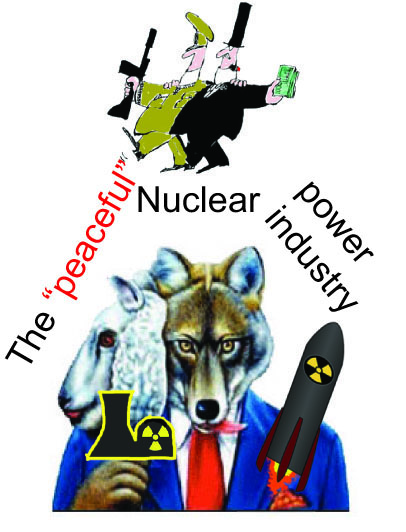
questions arise over many well-documented military entanglements of 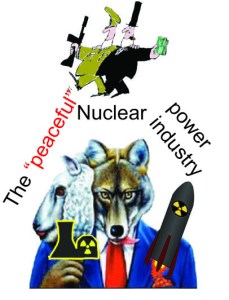 nuclear power
the “reliable provision of Russia’s defense capability is the main priority of the nuclear industry” – Rosatom
a host of other defense policy discussions are very clear that the UK nuclear ‘submarine industrial base’ would not be sustainable, if a decision were taken to discontinue civil nuclear power…statements from UK submarine industry sources note incentives to “mask” the costs of this military programme behind the related civilian industrial infrastructure…. a programme of submarine-derived small modular reactors should be adopted in UK energy policy in order to “relieve the Ministry of the burden of developing and retaining skills and capability” on the military side. – Rolls Royce
focused on facilitating ‘mobility’ between the civil and defense nuclear workforce – UK
In the USA, powerful imperatives have recently been openly declared in high level policy debate, to maintain support for otherwise-uncompetitive nuclear power in order to sustain a continuing nuclear navy.
How much of the costs of these shared underpinnings for military nuclear ambitions, are being concealed by otherwise uneconomic joint civil-military nuclear infrastructures?
A Global Picture of Industrial Interdependencies Between Civil and Military Nuclear Infrastructures https://www.sussex.ac.uk/webteam/gateway/file.php?name=2018-13-swps-stirling-and-johnstone.pdf&site=25 (this paper is richly supplied with comprehensive footnotes and references. Andy Stirling, Phil Johnstone, SPRU, August 2018 (This is an extended, updated and more fully referenced version of a chapter appearing in M. Schneider, A. Froggatt, J. Hazemann, T. Katsuta, M.V. Ramana, A. Stirling, P. Johnstone, C. von Hirschhausen, B. Wealer, The World Nuclear Industry Status Report 2018, Mycle Schneider Consulting, Paris, 2018)
Abstract
Noting the increasingly unfavourable economic and operational position of nuclear power around the world, this paper reviews evidence for a hitherto neglected connection between international commitments to civil and military nuclear infrastructures. Continue reading →
September 19, 2018
Posted by Christina Macpherson |
General News |
Leave a comment
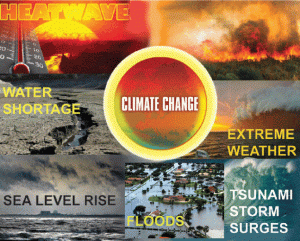 Here’s how climate change is fueling Hurricane Florence A novel forecast looks at the size and fury of the storm with and without human-caused warming, Science News, BY CAROLYN GRAMLING , SEPTEMBER 13, 2018
Even as Hurricane Florence bears down on the Carolinas, bringing fierce winds and heavy rains, one team of scientists has undertaken a different kind of forecast: Understanding the influence of human-caused climate change on a storm that hasn’t made landfall yet.
Real-time storm forecasts continuously update as new data become available. But what would happen if, from a single starting point — in this case, the state of the atmosphere on September 11 — Florence roared ahead in two parallel worlds: one with and one without the influence of human-caused climate change?
In that hypothetical scenario, Florence was bigger than if it would be if it had occurred in a world with no human-caused warming, climate modeler Kevin Reed of Stony Brook University in New York and colleagues conclude in a study posted on the university’s website September 12. And thanks to warmer sea surface temperatures and more available moisture in the air, it would dump 50 percent more rain on the Carolinas, the researchers predict.
The goal of such climate change attribution studies is to determine whether — and by how much — human-driven climate change might have caused a particular extreme event, such as a hurricane, a heat wave or a flood. It’s an increasingly high-profile area of research, particularly after three studies last year found that a trio of extreme events in 2016 simply could not have happened without climate change (SN: 1/20/18, p. 6).
Until now, such studies have been conducted only when the event is long over. Reed and his colleagues got a jump on that question, conducting the first attribution study for an extreme event that is still in progress. It’s not yet clear what role such real-time attribution studies might play in society; they could aid emergency planning, policy making and even climate-related litigation.
In the meantime, what this study reveals is that “dangerous climate change is here now,” says study coauthor Michael Wehner, a climate scientist at Lawrence Berkeley National Laboratory in California. “The chances and magnitude of dangerous extreme weather have already been significantly increased.”
Reed talked with Science News about what a forecast attribution study is, how the new study suggests climate change may have altered Florence’s rainfall and size, and the future of real-time attribution. His responses are edited for space and clarity………https://www.sciencenews.org/article/how-climate-change-fueling-hurricane-florence
September 14, 2018
Posted by Christina Macpherson |
General News |
Leave a comment
AN “extremely dangerous” super typhoon predicted to be the one of the strongest systems on record is howling towards Hong Kong and the Philippines with up to 43 million people in the firing line.
Typhoon Mangkhut is the equivalent of a Category 5 severe tropical cyclone, boasting maximum sustained winds of 205kph and gusts up to 285kph. Bureau of Meteorology Australia tropical climatologist Greg Browning told news.com.au that Mangkhut was “significantly stronger” than Hurricane Florence which is simultaneously hurtling towards the US as North Carolina locals evacuate the region to avoid the onslaught.
“(Mangkhut is) relatively rare (because it’s) at the top of the severe scale,” Mr Browning said. It’s extremely dangerous as it’s a very large system with very strong winds and a potential storm surge over a large distance.
“There will be very heavy rainfall associated with it which has potential to cause widespread damage.”
Mr Browning said Mangkhut was the most powerful storm system to have developed on Earth this year but that it wasn’t the strongest since records began in 1946, as has been reported internationally. Typhoon Haiyan – which killed more than 6,000 people when it lashed the Philippines with maximum sustained winds of 230kph and gusts of 325kph in 2013 – holds that record.
On Friday, Mangkhut was in the Pacific, about 450km from the Philippines with the 125km-wide eye expected to make landfall on the country’s largest island, Luzon, on Saturday.
The Global Disaster Alert and co-ordination System (GDACS) said it expected a “high humanitarian impact based on the storm strength and the affected population in the past and forecasted path” of destruction. As many as 43 million people could be exposed to Mangkhut’s cyclonic winds, according to the GDACS. More than four million Filippinos are reportedly at risk of the storm which could drench areas as far south as the country’s island capital, Manila. Mr Browning said the super typhoon was then likely to continue tracking west to Hong Kong and southern China, jeopardising millions more lives, on Sunday and Monday.
‘THE BIGGEST KILLER OF ALL’
The Joint Typhoon Warning Center in Hawaii has categorised the system as a “super typhoon“ which Mr Browning said equates to “very destructive winds” and heavy rainfall that’s likely to cause infrastructure damage anywhere it hits.
“But the biggest killer of all with a system like this is typically the storm surge,” he said.
“The region close to the typhoon’s crossing can expect (to bare the brunt).”
With a 900km wide rain band – which is 50 per cent bigger than Haiyan’s – combined with seasonal monsoon rains, the typhoon could also set off landslides, according to forecasters.
Countries across east and southeast Asia are issuing emergency alerts and ordering evacuations as both Mangkhut and a second storm, Typhoon Barijat taunt the region.
Mangkhut is forecast to hit the northeastern Cagayan province of the Philippines, early on Saturday local time.
Office of Civil Defense chief Ricardo Jalad told an emergency meeting led by the Philippines President Rodrigo Duterte that about 4.2 million people in Cagayan, nearby Isabela province and outlying regions were vulnerable to the most destructive effects near the typhoon’s 125km-wide eye. Nearly 48,000 houses in those high-risk areas are made of light materials and vulnerable to Mangkhut’s ferocious winds.
Storm warnings have been raised in 25 provinces across the Philippines restricting air and sea travel. Schools have been closed and bulldozers are on standby in the event of landslides.
The military and police in Luzon have been placed on red alert — barring all troops from going on leave — so they can respond to emergencies in communities expected to bear the brunt of the typhoon.
Cagayan Governor Manuel Mamba told local media that this typhoon was “very different, this is more complicated because of possible storm surges”.
MEGACITIES IN PATH OF DESTRUCTION
The Hong Kong observatory’s tracking system shows a 70 per cent probability that Mangkhut could deviate within a 500km radius from its predicted position, causing uncertainty over the next few days. The observatory warned of rough seas and frequent heavy squalls, urging residents of the densely populated financial hub to “take suitable precautions and pay close attention to the latest information” on the storm.
Australian expat Alexis Galloway, who lives in Hong Kong, told news.com.au the government this morning “announced on the radio they are opening 47 emergency shelters once the T3 is raised”.
“This is the first time I’m actually quite nervous (about a typhoon) … we live right on the water too and 15 minutes from Shenzhen! Right in the thick (of it),” she said.
The system is already stronger than any of the 15 past severe or super typhoons that warranted the highest “No 10” warning sign, the South China Morning Post reports.
On the Chinese mainland, the three southern provinces of Guangdong, Guangxi and Hainan are co-ordinating preparations, including suspending transport and moving people to shelter inland, the national meteorological agency reported. The area is home to a string of megacities and more than 100 million people. Guangdong, China’s manufacturing hub, has set up 3777 shelters, while more than 100,000 residents and tourists have been moved to safety or sent home. The province has recalled more than 36,000 fishing boats to port, while train services between the cities of Zhanjiang and Maoming have been suspended and all ferry services between the Guangdong and Hainan have been put on hold.
megan.palin@news.com.au | @Megan_Palin
September 14, 2018
Posted by Christina Macpherson |
General News |
Leave a comment
 Earth could enter permanent ‘hothouse‘ state, scientists warn https://zeelandpress.com/earth-could-enter-permanent-hothouse-state-scientists-warn/ by Katie Hansen on September 10, 2018
The planet urgently needs to transition to a green economy because fossil fuel pollution risks pushing the Earth into a lasting and dangerous “hothouse” state, researchers warned on Monday.
If polar ice continues to melt, forests are slashed and greenhouse gases rise to new highs — as they currently do each year — the Earth will pass a tipping point.
Crossing that threshold “guarantees a climate 4-5 Celsius (7-9 Fahrenheit) higher than pre-industrial times, and sea levels that are 10 to 60 meters (30-200 feet) higher than today,” cautioned scientists in .
And that “could be only decades ahead,” they said.
What is ‘Hothouse Earth‘? Continue reading →
September 14, 2018
Posted by Christina Macpherson |
General News |
Leave a comment
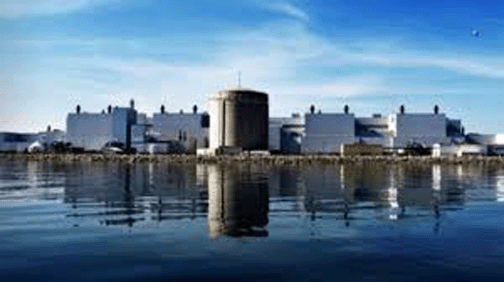
A NUCLEAR PLANT BRACES FOR IMPACT WITH HURRICANE FLORENCE, Wired, MEGAN MOLTENIMEGAN MOLTENI 13 Sept 18 I N MARCH 11, 2011, a one-two, earthquake-tsunami punch knocked out the safety systems at the Fukushima Dai-ichi nuclear power plant, triggering an explosion of hydrogen gas and meltdowns in three of its six reactors—the world’s worst nuclear disaster since Chernobyl. Fukushima’s facility was built with 1960s technology, designed at a time when engineers underestimated plant vulnerabilities during natural disasters. In the US, 20 plants with similar designs are currently operating.
One of them is slated for a head-on collision with Hurricane Florence. Duke Energy Corp’s dual-reactor, 1,870-megawatt Brunswick plant sits four miles inland from Cape Fear, a pointy headland jutting out into the Atlantic Ocean just south of the city of Wilmington, North Carolina. Brunswick has survived decades of run-ins with hurricanes, but Florence could be its biggest test yet. The plant perches near the banks of the Cape Fear River, which drains 9,000 square miles of the state’s most densely populated regions. Like Hurricane Harvey in 2017, Florence is predicted to stall out for days, pounding the Carolinas with unrelenting amounts of water, leading to life-threatening storm surges and catastrophic flooding. NOAA’s National Hurricane Center is projecting 110 mile-per-hour winds, waves as high as 13 feet, and in some places, up to 40 inches of rain.
Duke Energy Corp’s dual-reactor, 1,870-megawatt Brunswick plant sits four miles inland from Cape Fear, a pointy headland jutting out into the Atlantic Ocean just south of the city of Wilmington, North Carolina. Brunswick has survived decades of run-ins with hurricanes, but Florence could be its biggest test yet. The plant perches near the banks of the Cape Fear River, which drains 9,000 square miles of the state’s most densely populated regions. Like Hurricane Harvey in 2017, Florence is predicted to stall out for days, pounding the Carolinas with unrelenting amounts of water, leading to life-threatening storm surges and catastrophic flooding. NOAA’s National Hurricane Center is projecting 110 mile-per-hour winds, waves as high as 13 feet, and in some places, up to 40 inches of rain.
They’re part of a sweep of changes nuclear plants around the US have adopted post-Fukushima……….
Duke predicted a maximum storm surge of 7 feet at the plant’s safety-related buildings. But the plant was originally designed to cope with only 3.6 feet of expected surge, according to the NRC’s 2017 summary assessment of Duke’s hazard reevaluation report, which has not been made public.
In a letter earlier this year, the NRC reminded Duke that the plant’s current design falls short of the reevaluated flood risks. According to Burnell, Duke has since submitted an assessment of how it will cope—including the use of those steel door reinforcements—which the NRC is still evaluating. “The review is not complete but there’s nothing in there to this point that causes us any concern,” says Burnell………….
Storms can be unpredictable, however. Dave Lochbaum, who directs a nuclear safety watchdog group at the Union of Concerned Scientists, has spent a lifetime studying nuclear failures. Brunswick troubles him because in 2012, Duke found hundreds of missing or damaged flood protections at the plant, such as cracked seals and corroded pipes. According to the group, none of the NRC’s subsequent reports have mentioned repairs. “Hopefully they’ve been fixed,” says Lochbaum. “But we’ve not been able to confirm that with the available documentation.”………
In its 2012 post-Fukushima review, Florida Power & Light told the NRC that flood protections at its St. Lucie plant on South Hutchinson Island were adequate, despite failing to discover six electrical conduits with missing seals in one of the emergency core cooling systems. Two years later, a freak storm inundated Florida’s central coast with record rainfall, flooding one of the plant’s reactors with 50,000 gallons of stormwater. The deluge submerged core cooling pumps, rendering them useless. Had the reactor faltered during the storm, the plant would not have been able to maintain a safe and stable status beyond 24 hours, according to an NRC notice of violation issued to FPL after the incident………https://www.wired.com/story/a-nuclear-plant-braces-for-impact-with-hurricane-florence/
September 14, 2018
Posted by Christina Macpherson |
General News |
Leave a comment






 Antinuclear