Proposed nuclear storage site in southeast New Mexico accused of ‘nuclear colonialism’Adrian C Hedden, Carlsbad Current-Argus May 4, 2018
Fears of a proposed nuclear waste repository between Carlsbad and Hobbs extended beyond the two cities, stirring anxiety from residents across New Mexico and west Texas.
Leona Morgan, co-coordinator of the Albuquerque-based Nuclear Issues Study Group and a Diné activist, said the potential horrors of nuclear exposure were already felt by Native American residents in the Four Corners Region of New Mexico, where uranium was mined until the late 1990s.
Morgan said the concerns of Native Americans, such as the Navajo Nation, are often ignored by the federal government.
“I’ve heard a lot of warm sentiments about how this part of the state knows about nuclear science, and how much you all welcome it,” she said.
“In our part of the state, we know about the cancers, and the contamination of our lands and our water. We know this will impact us for generations to come.”
Holtec International, a New Jersey-based company specializing in nuclear storage, applied to the U.S. Nuclear Regulatory Commission in March 2017 for the first phase of an interim storage facility for spent nuclear fuel rods.
The application was accepted by the NRC in March, and the NRC moved forward with the application process by holding “scoping meetings” to solicit public comments in Roswell and Hobbs Monday and Tuesday respectively, and then in Carlsbad on Thursday at the Eddy County Fire Service.
The first phase would include 500 canisters of spent nuclear fuel rods, brought in by rail cars from nuclear power plants across the country, and stored at the property about 35 miles east of Carlsbad.
In total, 10,000 canisters could be stored at the site, totaling up to 120,000 metric tons of spent nuclear fuel.
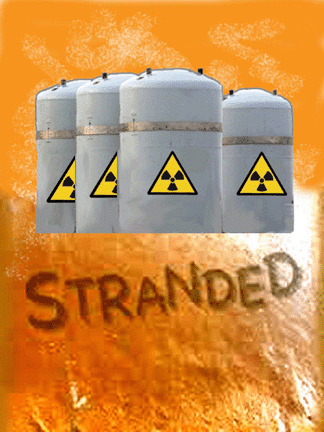
The Holtec project is intended as a temporary storage facility, until a permanent repository is developed. [i.e. stranded wastes – just as is planned for Kimba, South Australia]
The concept of interim storage was first devised as a proposal for a permanent disposal facility in Yucca Mountain, Nevada, recently stalled.
Opponents of Holtec’s proposal contended the waste should be stored at the generator sites on an interim basis, and only moved when a permanent repository is available.
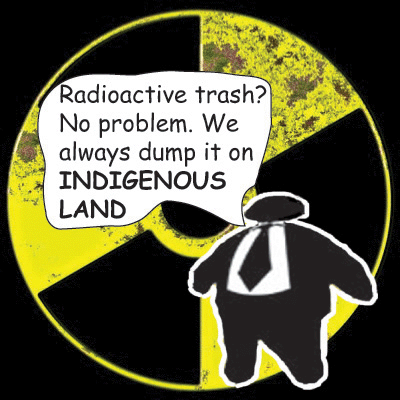
…. Morgan said the project was an example of “nuclear colonialism,” forcing low-income and minority-majority regions to unfairly bear the risk of storing nuclear waste.
“The contamination that was left by the United States government is an atrocity. It is a sin,” she said. “It is a violation of our human rights, and it is a form of genocide. New Mexico should not be proud of its nuclear legacy. It is the birth place of nuclear colonialism.”
Myriad activists, scientists, local leaders and business owners spoke for and against the project at Thursday’s meeting.
The debate centered around a potential canister leak, and contamination of nearby soil and natural resources.
…….. Karen Hadden, executive director for the Sustainable Energy and Economic Development Coalition said even with monitoring, the risk of radiation exposure was too high to support the project.
A similar, smaller interim storage facility was proposed near Andrews, Texas – about 40 miles across the eastern state line, by Waste Control Specialists (WCS) and French nuclear company Orano.
The project was re-docketed by the NRC earlier this year, after it stalled.
“They’re both a risk to our communities,” Hadden said of the facilities. “This is a project of huge magnitude that could impact this entire country. It cannot be taken lightly.”
She said the consequence of Holtec’s proposal could be felt across the nation, and residents from outside Carlsbad, and along the transport paths, deserve a place at the table.
‘Yes, there is still radiation here’, Gulf News 4 May 18 , Australia’s least likely tourist spot: a test site for atom bombs “……..
“Yes, there is still radiation here,” Robin Matthews ( Australia’s only nuclear tour guide) said as he drove a minibus to the sites where the Australian and British governments dropped seven bombs between 1956 and 1963, which dotted the earth with huge craters and poisoned scores of indigenous people and their descendants.
Back then, the government placed hundreds of human guinea pigs — wearing only shorts and long socks — in the front areas of the test zones. The effects of large doses of radiation were devastating…….
Today, just four people live full time in Maralinga village, a veritable ghost town. Amid the old buildings are new lodgings built for tourists, complete with hot water and Wi-Fi.
In the 1950s and ‘60s, at the height of the Cold War, 35,000 military personnel lived here.
The first nuclear test was conducted in September 1956, two months before the Melbourne Olympics.
That blast — as powerful as the bomb that the US dropped on Hiroshima — was the first of seven atom bombs set off here. But it was the so-called minor tests that were the most harrowing. Carried out in secret, the tests examined how toxic substances, including uranium and plutonium 239, would react when burnt or blown up.
….. Around one area tourists can visit are 22 major pits, each at least 15 metres deep and cased in reinforced concrete to prevent dangerous radiation from seeping out.
The site looks like a recently tilled garden bed, stretching out for hundreds of yards, in a near perfect circle. Dotting the red desert earth are shards of twisted metal. Aside from a few feral camels loping nearby, it is still and silent.
But on October 4 1956, a “nuclear landmine” was detonated here, tearing a crater 40 metres wide and 21 metres deep into the earth.
‘This is their land’
The resulting atomic reaction took only a fraction of a second, but its effects on one indigenous family would last decades. Survivors of the blasts, their children and grandchildren suffered from cataracts, blood diseases, arthritic conditions, stomach cancers and birth defects…….https://gulfnews.com/news/asia/australia/yes-there-is-still-radiation-here-1.2216400
‘The newly-formed Construction Forestry Maritime Mining and Energy Union has held
its inaugural Aboriginal and Torres Strait Islander conference in Far North Queensland,
where delegates pledged their full support for the Uluru Statement from the Heart.
‘More than 60 rank and file Indigenous members from a diverse range of industries
— including building sites, mines, the waterfront, seafaring, manufacturing and forestry
— came together in Cairns.
‘The inaugural Aboriginal and Torres Strait Islander Conference resolved that the union
would campaign politically and within the community
in support of the Uluru Statement from the Heart, in particular for the
creation of a constitutionally enshrined First Nations Voice and a
Makarrata Commission to implement the process of truth telling and treaty.
‘Conference coordinator andMUA Northern Territory Branch Secretary Thomas Mayor,
who has in recent times been a full time advocate to convince Australians
to support the Uluru Statement from the Heart, said the newly merged union
was determined to build on its strong history of supporting First Nations people. …
‘New report says Turnbull Government’s remote work-for-the-dole program failing on every measure
‘More than 90 members of the new union protested against the Turnbull Government’s
controversial work for the dole program known as the Community Development Program (CDP).
‘Mayor said the protest was against the CDP’s low wages for Aboriginal and Torres Strait Islander people.
‘“CDP is a program that discriminates against Aboriginal and Torres Strait Islander people,” he said. …. ‘
SELLING THE SCIENCE OF CLIMATE CHANGE , Climate One, 4 May 18,The scientific consensus is that human activity is cooking the planet and disrupting our economies. Yet many people still don’t believe that climate change will affect them personally. Or they deny that the problem is urgent enough to take action that would disrupt their lifestyles. Why has communicating the facts about climate change to the public been such a challenge?
“Facts don’t work by themselves,” says David Fenton, founder and chairman of Fenton Communications. “Facts only really work when one, they’re embedded in moral narratives. Secondly, facts don’t work unless they’re embedded in stories. And third, the brain only absorbs messages that are simple and that are repeated.”…….
“Part of my job,” he explains, “is to help scientists speak English and acceptable accurate drama.”
Fenton believes in exploiting the findings of cognitive science to deliver otherwise complex messages. “Only campaigns work,” he stresses, “Only the repetition – I’m repeating myself I know – of simple messages changes public opinion and affects the brain.”
Fenton notes that while it’s hard to be optimistic when you hang out with climate scientists, he remains so because the climate movement has never really tried to reach the general public at a scale similar to a national advertising campaign – let alone the disinformation campaign of the fossil fuel industry……. Climate One is presented in association with KQED Public Radio. https://climateone.org/audio/selling-science-climate-change
We Now Have A Working Nuclear Reactor for Other Planets — But No Plan For Its Waste,Futurism, Claudia Geib, 23 May 18 If the power goes out in your home, you can usually settle in with some candles, a flashlight, and a good book. You wait it out, because the lights will probably be back on soon.
But if you’re on Mars, your electricity isn’t just keeping the lights on — it’s literally keeping you alive. In that case, a power outage becomes a much bigger problem.
NASA scientists think they’ve found a way to avoid that possibility altogether: creating a nuclear reactor. This nuclear reactor, known as Kilopower, is about the size of a refrigerator and can be safely launched into space alongside any celestial voyagers; astronauts can start it up either while they’re still in space, or after landing on an extraterrestrial body.
The Kilopower prototype just aced a series of major tests in Nevada that simulated an actual mission, including failures that could have compromised its safety (but didn’t).
………. Nuclear reactors are not an unusual feature in space; the Voyager 1 and 2 spacecraft, now whizzing through deep space after departing our solar system, have been running on nuclear energy since they launched in the 1970s. The same is true for the Mars rover Curiosity since it landed on the Red Planet in 2012.
But we’d need a lot more reactors to colonize planets. And that could pose a problem of what to do with the waste.
If the power goes out in your home, you can usually settle in with some candles, a flashlight, and a good book. You wait it out, because the lights will probably be back on soon.
But if you’re on Mars, your electricity isn’t just keeping the lights on — it’s literally keeping you alive. In that case, a power outage becomes a much bigger problem.
NASA scientists think they’ve found a way to avoid that possibility altogether: creating a nuclear reactor. This nuclear reactor, known as Kilopower, is about the size of a refrigerator and can be safely launched into space alongside any celestial voyagers; astronauts can start it up either while they’re still in space, or after landing on an extraterrestrial body.
The Kilopower prototype just aced a series of major tests in Nevada that simulated an actual mission, including failures that could have compromised its safety (but didn’t)
But we’d need a lot more reactors to colonize planets. And that could pose a problem of what to do with the waste. According to Popular Mechanics, Kilopower reactors create electricity through active nuclear fission — in which atoms are cleaved apart to release energy. You need solid uranium-235 to do it, which is housed in a reactor core about the size of a roll of paper towels. Eventually, that uranium-235 is going to be “spent,” just like fuel rods in Earth-based reactors, and put nearby humans at risk.
When that happens, the uranium core will have to be stored somewhere safe; spent reactor fuel is still dangerously radioactive, and releases lots of heat. On Earth, most spent fuel rods stored in pools of water that keep the rods cool, preventing them from catching fire and blocking radiating radioactivity. But on another planet, we’d need any available water to, you know, keep humans alive.
…….Right now, all we can do is speculate — as far as we know, NASA doesn’t have any publicly available plan for what to do with spent nuclear fuel on extraterrestrial missions. That could be because the Kilopower prototype just proved itself actually feasible. But not knowing what to do with the waste from it seems like an unusual oversight, since NASA is planning to go back to the Moon, and then to Mars, by the early 2030s.
NASA demos little nuclear power plant to help find little green men, Kilopower experiment looks good for 10 kilowatts on the Moon, Mars or beyond By Simon Sharwood, APAC Editor3 May 2018 NASA has announced successful tests of a small fission reactor capable of producing about 10 kilowatts of power, and hopes the technology will prove suitable for use on the Moon or Mars.
With 250 babies born each minute, how many people can the Earth sustain? UN data suggests that the world’s population will hit 11 billion by 2100, with the fastest rises being recorded in Africa and Asia, Guardian, by Lucy Lamble 24 Apr 2018
How many people are there in the world?
We don’t know for sure as all figures are estimates, but UN data suggests there were about a billion people in 1800, 2 billion in 1927, 5 billion in 1987 and just over 7.5 billion today.
There are on average about 250 babies born every minute – more than 130 million in a year. It is projected that there will be 11 billion people by 2100. New UN figures are due out in June.
Meeting on Holtec proposal fills conference room; Opinions polarized on plan to store nuclear waste in southeast New Mexico, Roswell Daily Record By Vistas
These two words demonstrate how polarized opinions were at a public meeting Monday night at ENMU-Roswell hosted by the Nuclear Regulatory Commission to hear comments on a proposed interim storage facility for spent nuclear fuel: “Benign” and “genocide.”
A conference room in the Campus Union Building was filled to its capacity of 95. There were around 50 people who requested to speak, each given four minutes to offer their support for the project or say why they want the NRC to deny the application by Holtec International, the private corporation requesting a 40-year license to store solid nuclear waste on a site in Lea County about halfway between Carlsbad and Hobbs.
According to the Nuclear Regulatory Commission, the initial request is for storage of up to 8,680 metric tons of waste.
But according to a Holtec official, the “ultimate target” is for up to 100,000 metric tons of spent rods. If the company’s application is approved, the high-level nuclear waste would be stored at the interim facility “until a permanent storage option is available”…
Both sides of the issue were represented at the open house.
Bobbi Riedel, a doctoral student in nuclear physics attending the University of New Mexico in Albuquerque, was there with five other UNM students to speak in favor of the proposed storage site. “We’ve come down here from Albuquerque to inform people about nuclear safety,” she said. “I think this is a perfectly safe project.” She said storing nuclear facility at the site would save taxpayers about $30 billion a year.
Wearing a blue T-shirt that said, “No Holtec International,” Melanie Deason of Roswell said she is against the project.
“I can sum up Holtec in one word — ‘genocide,’” she said.
Deason said that among her concerns were transportation, geology, water issues and the Rio Grande Compact, an interstate compact to equitably portion the waters of the Rio Grande Basin between New Mexico, Colorado and Texas.
“I don’t think Texas wants radioactivity in their food chain,” she said. Deason also was on the list of speakers…
John Heaton, a spokesperson for the pro nuclear from the Eddy-Lea Energy Alliance, said while Holtec’s proposal is not a permanent solution to nuclear waste storage, when a permanent site is built in will most likely be in the western U.S., possibly Nevada, and not in the east …
“It is going to be benign,” Heaton said. “It just sits there and gets cooler.”…
Al Squire, a member of the Dairy Producers of New Mexico who said he was attending as a private citizen, had a much different opinion on the self-ventilating cooling system. He said the temperature of the fuel rods stored at the site would be between 200 to 700 degrees.
“What happens if it plugs up?” he said. “Murphy’s Law says it will happen. We could have another Chernobyl or Fukushima (a nuclear disaster that occurred in Japan in 2011..
Helen Henderson, a rancher from Chaves County, stressed the impact the facility could have agriculture and gas and oil, which are the stalwarts of the economy in southeast New Mexico.
She said while the Holtec facility would only provide 55 permanent jobs in New Mexico, ranching, farming, gas and oil combined provide 23,000. If an accident occurred, Henderson said, “It would destroy New Mexico.”….
The first speaker was Sister Joan Brown, a Franciscan nun from Albuquerque.
She said in the Christian tradition the desert is a place where people find God and not a wasteland.
She then spoke of “environmental justice,” not just for humans but for all living things.
“A life is a life and it is not dispensable,” she said. “In this state we have a history of not respecting that.”
Brown referred to a group who call themselves the “Downwinders,” who say that they, along with their preceding generations, have been contaminated by the radioactive fallout from the 1945 test explosion at the Trinity Site near Alamogordo. She added that uranium workers in New Mexico also have been harmed by radiation and that Holtec’s proposed facility is located in an area with predominantly low incomes and a majority Hispanic population.
Founded in 1986, Holtec provides solutions for managing the backend of the nuclear power cycle for commercial nuclear power plants.
The company is headquartered in New Jersey and has locations throughout the world, including Pennsylvania and Florida.
Another public meeting will be held today in Hobbs tonight and third meeting will be held Thursday in Carlsbad.
The public also can mail comments to the NRC at One White Flint North Building, 11555 Rockville Pike, Rockville, Maryland 20852–2738, or post comments online at regulations.gov. The deadline for public comments is May 29.
NRC officials said a transcript of the meetings should be posted on their website within two or three weeks.
Given that offshore wind is expected to continue falling in price and is being built at the moment, unlike nuclear, the economic case for new reactors in the U.K. appears to diminish by the day.
Similar challenges face nuclear elsewhere in Western Europe.
But the situation in the U.S. is even worse. In America it is now no longer economically viable to keep existing plants running, let alone build new ones.
How the Nuclear Industry Is Fighting Back, The beleaguered nuclear power sector has launched a charm offensive in a bid to stay relevant. Greentech Media , APRIL 30, 2018 The West’s nuclear industry has embarked on its biggest public relations push ever in a bid to stay relevant to policymakers increasingly focused on renewables.
Recent weeks have seen a coordinated campaign by two of the sector’s top agencies to claw back support for a technology that is struggling to remain economically viable and is in danger of being sidelined in discussions over future energy pathways in Europe and North America.
In the U.S., the Nuclear Energy Institute (NEI) kicked off proceedings in an apparently low-key fashion. With little fanfare, the Institute’s website had a facelift in early March, dispensing with its former staid design and adopting a more modern look with bold type and plenty of video.
In the place of headlines about developments in nuclear technology, the NEI’s site now plays inspirational messages over images of children, cityscapes and electric cars. “Carbon-free. Available 24/7. Powering communities,” it says. “Vital to our clean energy future.” Continue reading →
~ Gerry Georgatos 1 May 2018 ‘Gerry Georgatos explores the reasons behind Australia’s devastatingly high Indigenous imprisonment rate.
‘AS A PREDOMINATELY experiential researcher and journeyer to homeland communities,
and having worked for more than two decades alongside the incarcerated, homeless and suicide affected,
I have looked at the national prison population numbers during the last two decades,
and disaggregated an estimated minimum 100,000 of First Nations people having been to prison.
In comparing global data, it is the highest rate of racialised incarceration in the world.
‘More than 500,000 Australians still living have been to prison.
Therefore one in 50 Australians have been to prison. However,
of the 500,000, more than 100,000 are Aboriginal and/or Torres Strait Islanders
— First Nations persons. Up to 120,000 have been to prison.
With more than 700,000 Australians identifying as Aboriginal and/or Torres Strait Islander,
more than one in seven have been to prison.
From a racialised lens this is the world’s highest gaoling rate.
Australia’s First Nations peoples are gaoled at a higher rate than the Black American gaoling rate. … ‘Overall, the authentic pathway to significantly reduce offending and the prison population
are to lift people out of poverty,
to improve life circumstances.
‘More than one in three of Aboriginal and/or Torres Strait Islanders
living below the poverty line have been to prison.
Ken, 1 May 18 I hope australia will not allow itself to be turned into a huge radioactive waste zone, like the United States.
The teratogenic, gentoxic, mutagenic potential, of even some of the weaker radiation emitting radionuclides, is a billion times more potent than comparable genotoxic, teratogenic, mutagenic chemicals like agent orange.
All of murica is plagued by radioactive nuclear and radioactive medical waste. 1000 bombs exploded above ground. Many more underground.
100 crappy, old leaky reactors that constantly belch tritium dioxide into the atmosphere. Some of them clustered, like the 5 around chicago, that dump tritium other radionuclides into rivers and lakes.
There are Depleted uranium munitions set off on military bases aall over the United States.
There is Nuclear waste in municipal dumps, like st lewis, that is on fire. 170 millionn murican drink water, that is heavily contaminated with radium.
The colorado river and its drainage, is heavily contaminated with alpha emiiters from old uranium mines and mills in utah, wyoming, colorado, and new mexico.
All the thorium from welding rods in dumps. , Radium in water and gasoline from fracking, Americium in landfills from smoke.detectors. The plutonium from plants in oklahoma, washington, new mexico, tennesse, s carolina, livermore california, colorado, texas.
The shallow grave hi level and low level nuclear waste all over murica.
The large amount of hi level waste at every reactor, including those shut like san onofre. The outrage and insanity goes on and on. Americans are truly stupid bastards
I have t laugh , when I see a story about living in a radioactive zone like Fukushima or, the Ukraine, that do not include america as being a radioactive zone. It reminds me of how brain- washed and, what kind of propaganda bullshit muricans, allow themselves to be immersed in.
During the darkest days of World War II, US Army general Joseph Stilwell earned the nickname “Vinegar Joe” for his brilliant, blunt, bracing, leadership style. Stilwell’s tough, honest assessment of a disastrous military campaign in Asia captured the imagination of the American public, and roused the White House to completely re-assess the direction it had been taking: “I claim we got a hell of a beating. We got run out of Burma and it is humiliating as hell. I think we ought to find out what caused it, fix it, then go back and retake it.”
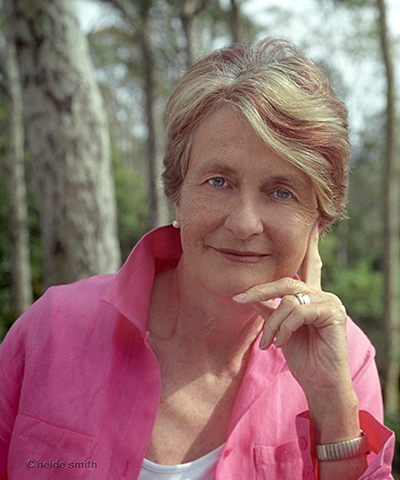
Though she may not enjoy the comparison to a military man, the same tough-but-invigorating observations can be found in the pithy, concise, sharp (and sometimes humorous) words of legendary anti-nuclear activist Helen Caldicott, who recently gave an hour-long interview to the Bulletin by Skype from her home in Sydney. For nearly 60 years, this Australian physician has been taking on the powers-that-be, and fighting for a world without nuclear weapons.
And not holding anything back.
It’s not every day that one hears the words “missile envy” in a sober-sided analysis of the reasons for the nuclear arms race. Or learn that the solution to nuclear proliferation may be to give the collective bottoms of those in charge a good swat.
Or hear this observation about the current situation in Washington: “We’ve got a man in charge who I think has never read a book, and who knows nothing about global politics, or his own county’s politics. Who operates with his own kind of sordid intuition. And he’s putting people in every department committed to destroying that department… My dream solution is that people from Congress come in, pick him up, and lock him in a laundry [room] or something. ”
And now, you can enjoy a sneak peak of the full interview, for free, in advance of formal publication in the Bulletin’s bi-monthly magazine.
And find out what she said about you.
(Full disclosure: I was the interviewer, so I may be biased in her favor. But I’d still highly recommend reading what Caldicott has to say, no matter who conducted the interview.)
Publication Name: Taylor and Francis OnlineTo read what we’re reading, click here
Kim Jong-un promises to close North Korea’s nuclear test site in May in front of the world, ABC News , 29 Apr 18,
North Korean leader Kim Jong-un has vowed to shut down the country’s nuclear test site in May and open the process to experts and journalists from South Korea and the United States, Seoul’s presidential office has said.
Key points:
Singapore is being considered as a location for the Trump-Kim summit
Mr Trump said he would continue to sanctions pressure on Pyongyang
He is also providing the Japanese Prime Minister with updates on the negotiations
Mr Kim made the comments during his summit with South Korean President Moon Jae-in on Friday (local time), where he also expressed optimism about his anticipated meeting with Donald Trump.
The North Korean leader said the US President would learn he is “not a person” to fire missiles toward the United States, Mr Moon’s spokesman Yoon Young-chan said.
During the summit, the two Korean leaders promised to work toward the “complete denuclearisation” of the Korean Peninsula, but made no references to verification or timetables…………
North Korea suspends nuclear tests, will change time zone
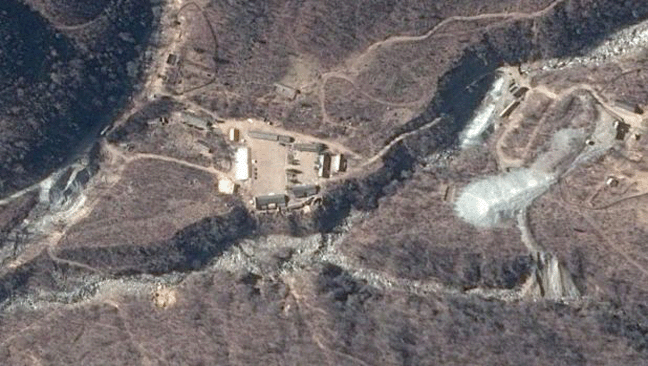
Mr Kim reacted to scepticism that the North would only be closing down the northernmost test tunnel at the site in Punggye-ri, which some analysts say became too unstable to conduct further underground detonations following the country’s sixth and most powerful nuclear test in September.
In his conversation with the South Korean President, Mr Kim denied that he would be merely clearing out damaged goods, saying that the site also has two new tunnels that are larger than previous testing facilities, Mr Yoon said.
Mr Yoon said the North Korean leader also revealed plans to re-adjust its current time zone to match the South’s………
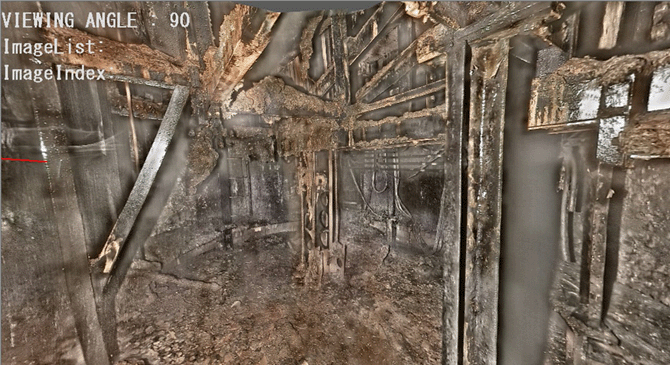
The bottom of the inside of Fukushima No. 1 nuclear plant’s crippled No. 2 reactor has been revealed in a much clearer and wider range in footage released by plant operator Tokyo Electric Power Co. on April 26.
The film shows the clearest pictures yet inside the containment vessel just below the pressure vessel of the nuclear reactor, which went into meltdown due to the 2011 earthquake and tsunami disaster.
Melted nuclear fuel debris is seen attached to pillars, walls and the ceiling, and accumulations between approximately 40 and 70 centimeters thick are piled up and cover the whole floor.
TEPCO captured the footage on Jan. 19 by attaching a remote-controlled camera to an extendable rod with a span of 16 meters into the containment vessel from an opening in its side.
Excerpts were released at the time, but new processing of the footage has revealed a much clearer picture.
In the bottom of the containment vessel, fuel debris has fused to some areas particularly thickly. It is possible that the bottom of the reactor has several holes that caused the debris to fall and solidify as it cooled.
The improved knowledge of the nuclear reactor’s state will help to calculate an estimate of the amount of the debris inside, and suggest at how it could be removed in the future. TEPCO hopes to start its next investigation inside the reactor within this fiscal year.
Apr 15, 2026 01:00 AM in Canberra, Melbourne, Sydney
Join the International Physicians for the Prevention of Nuclear War (IPPNW) on Tuesday, April 14th for a timely webinar exploring the risks associated with nuclear power and challenging the myth that it offers a simple, safe, carbon-free solution to the climate crisis
21 April Webinar: No Nuclear Weapons in Australia
Start: 2026-04-21 18:00:00 UTC Canberra, Melbourne, Sydney (GMT+10:00)
End: 2026-04-21 19:30:00 UTC Canberra, Melbourne, Sydney (GMT+10:00)
Event Type: Virtual A virtual link will be communicated before the event.








 Antinuclear