Tangentyere Women Take It To Canberra
News 10th Apr 2018
‘Tangentyere Women’s Family Safety group spokesperson Barbara Shaw
told CAAMA news the message the Tangentyere women carry…
‘An Aboriginal-run Family Safety Group from central Australia have arrived in Canberra
with a strong plea for multi-level support in combating family violence at the community level…
‘They carry a strong message asking for ongoing investment and respectful collaboration
in conversations regarding family and child policies.
‘The two-day visit filled with meetings with
the First Nations Caucus,
the Status of Women meeting,
the Closing the Gap Steering Committees as well as
Aunty Pat Turner from NACCHO and
the Federal Minister for Indigenous Affairs Mr Nigel Scullion.’
Listen to Barbara Shaw on CAAMA news:
caama.com.au/news/2018/tangentyere-women-take-it-to-canberra
New Zealand government takes action to ban future offshore oil and gas exploration
 FT 12th April 2018 , New Zealand has become one of the world’s first countries to ban future offshore oil and gas exploration in a move heralded by environmental
campaigners as a symbolic blow to “Big Oil”.
“There will be no further offshore oil and gas exploration permits granted,” said Jacinda Ardern, New
Zealand’s prime minister, on Thursday. “We must take this step as part of
our package of measures to tackle climate change,” she said.
The South Pacific nation’s ban is an important policy move at a time when nations are
exploring how to comply with their requirements under the Paris climate
change agreement.France, Belize and Costa Rica have already announced bans
on either fossil fuel exploration or production, although these are largely
symbolic as none are ma jor oil producers.
However, the policy shift announced by Prime Minister Ms Ardern marks a change in direction for
New Zealand, which under the previous conservative government prioritised
fossil fuel exploration to help the economy grow.
https://www.ft.com/content/d91e9864-3ded-11e8-b7e0-52972418fec4
Mayor of Kimba wavering about the area hosting a nuclear waste dump?
Nuclear waste dump proposed for Eyre Peninsula town Kimba but – Nuclear waste dump proposed for Eyre Peninsula town Kimba but mayor says money and job information needed before approval … on financial rewards and jobs before Kimba locals are asked to give their final tick of approval for a radioactive waste facility, the Eyre Peninsula town’s mayor says. Kimba’s …(Subscribers only) www.adelaidenow.com.au/…/nuclear-waste-dump-proposed-for-eyre-peninsula-town-ki...
USA Department of Homeland Security to monitor journalists and bloggers

Homeland Security to Compile Database of Journalists, Bloggers, https://biglawbusiness.com/homeland-security-to-compile-database-of-journalists-bloggers/ By – Bloomberg Government April 5, 2018
- Seeks contractor that can monitor 290,000 global news sources
• ‘Media influencer’ database to note `sentiment’ of coverage
The U.S. Department of Homeland Security wants to monitor hundreds of thousands of news sources around the world and compile a database of journalists, editors, foreign correspondents, and bloggers to identify top “media influencers.”
It’s seeking a contractor that can help it monitor traditional news sources as well as social media and identify “any and all” coverage related to the agency or a particular event, according to a request for information released April 3.
The data to be collected includes a publication’s “sentiment” as well as geographical spread, top posters, languages, momentum, and circulation. No value for the contract was disclosed.
“Services shall provide media comparison tools, design and rebranding tools, communication tools, and the ability to identify top media influencers,” according to the statement. DHS agencies have “a critical need to incorporate these functions into their programs in order to better reach federal, state, local, tribal, and private partners,” it said.
The DHS wants to track more than 290,000 global news sources, including online, print, broadcast, cable, and radio, as well as trade and industry publications, local, national and international outlets, and social media, according to the documents. It also wants the ability to track media coverage in more than 100 languages including Arabic, Chinese, and Russian, with instant translation of articles into English.
The request comes amid heightened concern about accuracy in media and the potential for foreigners to influence U.S. elections and policy through “fake news.” Nineteen lawmakers including Reps. Josh Gottheimer (D-N.J.), Lee Zeldin (R-N.Y.), Ron DeSantis (R-Fla.), and Sen. Ted Cruz (R-Texas), sent a letter to Attorney General Jeff Sessions last month, asking whether Qatar-based Al Jazeera should register as a foreign agent because it “often directly undermines” U.S. interests with favorable coverage of Hamas, Hezbollah and al-Qaeda’s branch in Syria.
The DHS request says the selected vendor will set up an online “media influence database” giving users the ability to browse based on location, beat, and type of influence. For each influencer found, “present contact details and any other information that could be relevant, including publications this influencer writes for, and an overview of the previous coverage published by the media influencer.”
A department spokesman didn’t immediately return a phone call and email seeking comment.
Responses are due April 13. Seven companies, mainly minority- or women-owned small businesses, have already expressed interest in becoming a vendor for the contract, according to the FedBizOpps web site.
— With assistance from Daniel Snyder
To contact the reporter on this story: Cary O’Reilly in Washington atcoreilly@bgov.com
To contact the editors responsible for this story: Loren Duggan atlduggan@bgov.com; Robin Meszoly at rmeszoly@bgov.com; Theresa Barry attbarry@bgov.com
‘Monash Forum’ should change its name says Frydenberg
He declared an “intellectually curious” Sir John Monash would have been more likely to support new technology. …..
https://www.theage.com.au/politics/federal/monash-forum-should-change-its-name-energy-minister-josh-frydenberg-20180408-p4z8d9.html
The connection between nuclear power and nuclear weapons
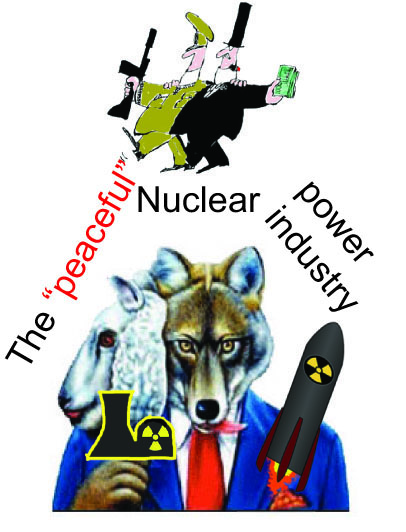 Deutsche Welle Expose Nuclear Power and Nuclear Weapons Link, Marianne Wildart, 8 Apr 18
In this recent article the German News outlet ‘Deutsche Welle’ expose the link between civil nuclear and nuclear weapons. Nuclear ‘energy’ is a political choice.
Is the IEA underestimating renewables?……….A study by the Lappeenranta University of Technology (LUT) in Finland simulating the costs of the global transition to renewables and found that a 100-percent renewable energy system would be cheaper that what we have today.
Fell, meanwhile, has documented the explosion of nuclear powers costs, as well as the security concerns over new nuclear reactors.
Yet India, Saudi Arabia, Turkey and the UK remain committed to building new nuclear power plants. And Fell sees a motive for this that has nothing to do with securing an affordable energy supply. “The main driving force behind the new nuclear reactors are nuclear weapons, and the desire for nuclear weapons,” he told DW.
Scientists at the University of Sussex have come to a similar conclusion. In their study of British nuclear policy they attribute the construction of new reactors to cross-funding with military nuclear programs. They argue that maintaining nuclear power programs and expertise at the expense of electricity customers has the advantage of relieving the defense budget…. https://wordpress.com/read/feeds/331643/posts/1820643667
Corruption in uranium mining – no wonder that AREVA changed its name
 Le Monde 7th April 2018, Acquisition of Uramin: the former director of the Areva mines indicted for
“corruption” The former director of the Areva mines has been indicted in Paris for “corruption” in the investigation of the acquisition of themining company Uramin in 2007. Areva, now Orano, had paid 1.8 billion euros
to acquire the Canadian Uramin , but the exploitation of the three deposits of the company in Namibia , South Africa and Central Africa had proved much
more difficult than expected. The operation had turned into a financial chasm and had forced Areva, at the end of 2011, to provision 1.5 billion euros. http://www.lemonde.fr/police-justice/article/2018/04/07/rachat-d-uramin-l-ex-directeur-des-mines-d-areva-mis-en-examen-pour-corruption_5282269_1653578.html
China’s toxic history of rare earths mining

Rare-earth mining in China comes at a heavy cost for local villages https://www.theguardian.com/environment/2012/aug/07/china-rare-earth-village-pollution Pollution is poisoning the farms and villages of the region that processes the precious minerals, Guardian, Cécile Bontron, 7 Apr 18,
From the air it looks like a huge lake, fed by many tributaries, but on the ground it turns out to be a murky expanse of water, in which no fish or algae can survive. The shore is coated with a black crust, so thick you can walk on it. Into this huge, 10 sq km tailings pond nearby factories discharge water loaded with chemicals used to process the 17 most sought after minerals in the world, collectively known as rare earths.
The town of Baotou, in Inner Mongolia, is the largest Chinese source of these strategic elements, essential to advanced technology, from smartphones to GPS receivers, but also to wind farms and, above all, electric cars. The minerals are mined at Bayan Obo, 120km farther north, then brought to Baotou for processing.
The concentration of rare earths in the ore is very low, so they must be separated and purified, using hydro-metallurgical techniques and acid baths. Chinaaccounts for 97% of global output of these precious substances, with two-thirds produced in Baotou.
The foul waters of the tailings pond contain all sorts of toxic chemicals, but also radioactive elements such as thorium which, if ingested, cause cancers of the pancreas and lungs, and leukaemia. “Before the factories were built, there were just fields here as far as the eye can see. In the place of this radioactive sludge, there were watermelons, aubergines and tomatoes,” says Li Guirong with a sigh.
It was in 1958 – when he was 10 – that a state-owned concern, the Baotou Iron and Steel company (Baogang), started producing rare-earth minerals. The lake appeared at that time. “To begin with we didn’t notice the pollution it was causing. How could we have known?” As secretary general of the local branch of the Communist party, he is one of the few residents who dares to speak out.
Towards the end of the 1980s, Li explains, crops in nearby villages started to fail: “Plants grew badly. They would flower all right, but sometimes there was no fruit or they were small or smelt awful.” Ten years later the villagers had to accept that vegetables simply would not grow any longer. In the village of Xinguang Sancun – much as in all those near the Baotou factories – farmers let some fields run wild and stopped planting anything but wheat and corn.
A study by the municipal environmental protection agency showed that rare-earth minerals were the source of their problems. The minerals themselves caused pollution, but also the dozens of new factories that had sprung up around the processing facilities and a fossil-fuel power station feeding Baotou’s new industrial fabric. Residents of what was now known as the “rare-earth capital of the world” were inhaling solvent vapour, particularly sulphuric acid, as well as coal dust, clearly visible in the air between houses.
Now the soil and groundwater are saturated with toxic substances. Five years ago Li had to get rid of his sick pigs, the last survivors of a collection of cows, horses, chickens and goats, killed off by the toxins.
The farmers have moved away. Most of the small brick houses in Xinguang Sancun, huddling close to one another, are going to rack and ruin. In just 10 years the population has dropped from 2,000 to 300 people.
Lu Yongqing, 56, was one of the first to go. “I couldn’t feed my family any longer,” he says. He tried his luck at Baotou, working as a mason, then carrying bricks in a factory, finally resorting to selling vegetables at local markets, with odd jobs on the side. Registered as farmers in their identity papers, the refugees from Xinguang Sancun are treated as second-class citizens and mercilessly exploited.
The farmers who have stayed on tend to gather near the mahjong hall. “I have aching legs, like many of the villagers. There’s a lot of diabetes, osteoporosis and chest problems. All the families are affected by illness,” says He Guixiang, 60. “I’ve been knocking on government doors for nearly 20 years,” she says. “To begin with I’d go every day, except Sundays.”
By maintaining the pressure, the villagers have obtained the promise of financial compensation, as yet only partly fulfilled. There has been talk of new housing, too. Neatly arranged tower blocks have gone up a few kilometres west of their homes. They were funded by compensation paid by Baogang to the local government.
But the buildings stand empty. The government is demanding that the villagers buy the right to occupy their flat, but they will not be able to pass it on to their children.
Some tried to sell waste from the pond, which still has a high rare-earth content, to reprocessing plants. The sludge fetched about $300 a tonne.
But the central government has recently deprived them of even this resource. One of their number is on trial and may incur a 10-year prison sentence.
This article originally appeared in Le Monde
Volcano erupts only 40 miles from Japanese nuclear power plant, and more eruptions predicted

Another powerful eruption observed at Mount Shinmoe , Japan Times, 5 Apr 18 FUKUOKA – Another powerful eruption was observed at Mount Shinmoe in southwestern Japan early Thursday, with ash sent spiralling into a plume around 5,000 meters high, the Meteorological Agency said.
The eruption at the 1,421-meter volcano that straddles Miyazaki and Kagoshima prefectures was the largest since March 25, according to the agency.
Mount Shinmoe erupted violently for the first time in about seven years on March 6, and the agency said a week later that it was expected to continue explosive eruptions for several months or more……..https://www.japantimes.co.jp/news/2018/04/05/national/another-powerful-eruption-observed-mount-shinmoe/#.WsggQIhubIU
Change the name: Monash family
The descendants of Sir John Monash and former deputy PM Tim Fischer have demanded pollies change the name of their pro-coal group… (subscribers only)
https://www.theaustralian.com.au/national-affairs/monash-family-call-for-coal-power-politicians-to-change-name-of-their-group/news-story/38540315a1e4826c3463a190e01fe4db
Japan finally shuts failed “dream nuclear reactor” – costly feast breeder reprocessing policy

Japan prepares to shut troubled ‘dream’ nuclear reactor https://asia.nikkei.com/Politics/Japan-prepares-to-shut-troubled-dream-nuclear-reactor
Decades-old plant has cost almost $10bn and hardly ever operated
TOKYO — Japan is set to start decommissioning its troubled Monju fast-breeder reactor after decades of accidents, cost overruns and scandals. It is the beginning of the end of a controversial project that exposed the shortcomings of the country’s nuclear policy and the government’s failure to fully explain the risks and the costs.
In July, the Japan Atomic Energy Agency will begin decommissioning what was hailed as a “dream” reactor that was expected to produce more nuclear fuel than it consumed. The government has so far spent more than 1 trillion yen ($9.44 billion) on the plant, which has barely ever operated.
The plan approved by the Nuclear Regulation Authority on March 28 to decommission the reactor, located in central Japan’s Fukui Prefecture, calls for the extraction of spent nuclear fuel to be completed by the end of the fiscal year through March 2023. Full decommissioning is expected to take about 30 years.
Japan does not have the technological ability to manage the decommissioning process on its own, and must enlist the help of France, which has more experience with fast-breeder reactors. Among the technical challenges is handling the plant’s sodium coolant, which is highly reactive and explodes on contact with air.
Many of the problems with Japan’s nuclear policy were brought to light by the Fukushima Daiichi nuclear disaster caused by the tsunami and earthquake of March 2011. Such problems have included the high costs of plants, the selection of nuclear disposal sites, and the threat of shutdowns due to lawsuits. Japan’s nuclear policy has largely been gridlocked since the disaster.
But the Monju project had many problems before the Fukushima catastrophe.
Planning for the project began in the 1960s. Its fast-breeder technology was considered a dream technology for resource-poor Japan, which had been traumatized by the oil crisis of the 1970s. The reactor was supposed to generate more plutonium fuel than it consumed.
The reactor finally started operating in 1994, but was forced to shut down the following year due to a sodium leak. It has been inoperative for most of the time since. The decision to decommission it was made in December 2016 following a series of safety scandals, including the revelation that many safety checks had been omitted.
Recent experience suggests the government’s estimated cost of 375 billion yen to decommission Monju could be on the low side. In 2016, the estimate for decommissioning the Fukushima Daiichi plant ballooned to 8 trillion yen from an initial 2 trillion yen in 2013, largely due to inadequate understanding of the decommissioning process.
While “the JAEA will try to keep costs down,” said Hajime Ito, executive director with the agency, the process of extracting sodium, the biggest hurdle, has yet to be determined. Future technical requirements will also involve significant costs.
The Monju reactor is not the only example of failure in Japan’s nuclear fuel cycle policy — the cycle of how nuclear fuel is handled and processed, including disposing nuclear waste and reprocessing used fuel.
Central to this policy is a nuclear fuel reprocessing plant in the village of Rokkasho in northern Aomori Prefecture that was supposed to extract plutonium and uranium by reprocessing spent nuclear fuel to be reused at nuclear plants.
More than 2 trillion yen has been spent on the plant so far. Construction was begun in 1993, but completion has been repeatedly postponed due to safety concerns. On Wednesday, the NRA decided to resume safety checks on the plant, but if it chooses to decommission it, the cost would be an estimated 1.5 trillion yen.
Had Japan taken into consideration the costs of decommissioning plants and disposing of spent nuclear fuel, it probably would not have been able to push ahead with its nuclear policy in the first place, said a former senior official of the Ministry of Economy, Trade and Industry, who was involved in formulating the country’s basic energy plan.
The Biosphere is Convulsing
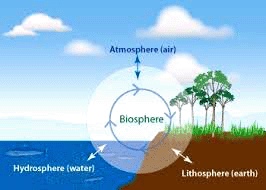 Thanks to Climate Disruption, Earth Is Already
  Losing Critical Biosphere Components http://www.truth-out.org/news/item/44016-thanks-to-climate-disruption-earth-is-already-losing-critical-biosphere-components Monday, April 02, 2018By Dahr Jamail, Truthout | Report
 Two weeks ago, I gave a keynote presentation about anthropogenic climate disruption (ACD) at a large sustainability conference in Chico, California. During the question-and-answer session following my talk, a student asked me what I thought the world would look like by 2050. His question stopped me in my tracks. I had to pause and take a deep breath, to prepare myself emotionally for what I had to tell him.
Here is the gist of what I said: Based on years of research for my forthcoming book, The End of Ice, along with my work compiling these monthly climate disruption dispatches for four years now, I know that by 2050, we will be inhabiting a dramatically different planet. I believe we will already have tens — if not hundreds — of millions of climate refugees from sea-level rise and conflicts born of lack of food and water. What we currently call extreme weather events (massive floods, droughts, hurricanes) will have long since become the norm. In the US, growing food in the Midwest and the central valley of California will be extremely difficult, if not largely impossible, due to shifting weather patterns of rainfall and drought. Some swaths of the world, including the Gulf states in the Middle East and parts of the US Southwest, will be largely uninhabitable due to simply being too hot. Greenland and the Antarctic will both be experiencing dramatically advanced melting, and most of the glaciers in the contiguous 48 US states will have long since ceased to exist. And given that we are officially already amidst the Sixth Mass Extinction Event of the planet, which humans triggered, the biological annihilation that comes with this is happening apace.
This portrait might seem far-fetched to some. But to understand that this is our future, all we need to do is look at what is already happening around the planet. Continue reading
Trump has no idea of the issues involved in his planned meeting with Kim Jong Un
 Does Trump Even Know What He Wants From Kim Jong-un?
The president has shown no indication that he has any plan for next month’s all-important North Korea summit. Slate, By
The huge carbon footprint of digital data centres – consuming vast amounts of electricity
Energy Hogs: Can World’s Huge Data Centers Be Made More Efficient?
The gigantic data centers that power the internet consume vast amounts of electricity and emit 3 percent of global CO2 emissions. To change that, data companies need to turn to clean energy sources and dramatically improve energy efficiency. Yale Environment 360 APRIL 3, 2018
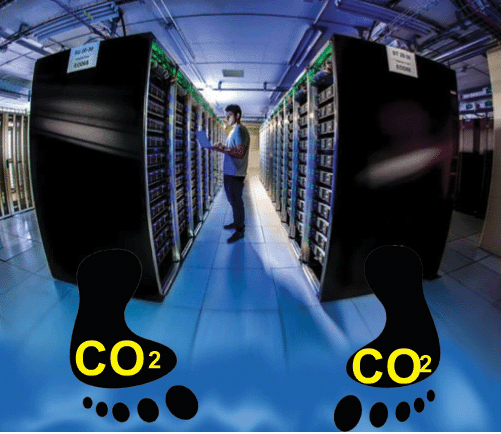
The cloud is coming back to Earth with a bump. That ethereal place where we store our data, stream our movies, and email the world has a physical presence – in hundreds of giant data centers that are taking a growing toll on the planet.
Data centers are the factories of the digital age. These mostly windowless, featureless boxes are scattered across the globe – from Las Vegas to Bangalore, and Des Moines to Reykjavik. They run the planet’s digital services. Their construction alone costs around $20 billion a year worldwide.
The biggest, covering a million square feet or more, consume as much power as a city of a million people. In total, they eat up more than 2 percent of the world’s electricity and produce 3 percent of CO2 emissions, as much as the airline industry. And with global data traffic more than doubling every four years, they are growing fast.
Yet if there is a data center near you, the chances are you don’t know about it. And you still have no way of knowing which center delivers your Netflix download, nor whether it runs on renewable energy using processors cooled by Arctic air, or runs on coal power and sits in desert heat, cooled by gigantically inefficient banks of refrigerators.
We are often told that the world’s economy is dematerializing – that physical analog stuff is being replaced by digital data, and that this data has minimal ecological footprint. But not so fast. If the global IT industry were a country, only China and the United States would contribute more to climate change, according to a Greenpeace report investigating “the race to build a green internet,” published last year.
Storing, moving, processing, and analyzing data all require energy. Lots of it. The processors in the biggest data centers hum with as much energy as can be delivered by a large power station, 1,000 megawatts or more. And it can take as much energy again to keep the servers and surrounding buildings from overheating.
Almost every keystroke adds to this. Continue reading
Failed nuclear giant AREVA, resuscitateda s “Orano” – but still losing money
Nasdaq 29th March 2018, French uranium mining and nuclear fuel group Orano, formerly called Areva, said its 2017 revenue fell 11 percent to 3.9 billion euros ($4.80 billion) and core earnings fell 30 percent to 946 million euros as demand for nuclear fuel remains low.
Orano’s order book, while still representing nearly eight years of revenue, fell to 30.8 billion euros at the end of 2017 from 33.6 billion euros at the end of 2016 and the company expects revenue will fall again this year. The company continued to burn cash, with a negative cash flow of 1.06 billion euros compared to minus 915 million euros in 2016, but Orano said it targets positive net cash flow from company operations this year. https://www.nasdaq.com/article/nuclear-group-orano-earnings-slide-in-grim-uranium-market-20180329-00098
1 This month
7 April – WEBINAR – Australia and the Doomsday Clock – Preventing nuclear war through NoFirstUse and other policies
Online | Tuesday April 7, 4:00-5:30pm, Australian Eastern Time / 8:00-9:30am Central Europe Time
– Access the registration link
15 April – Zoom –Nuclear Power is Not the Solution
Apr 15, 2026 01:00 AM in Canberra, Melbourne, Sydney

Join the International Physicians for the Prevention of Nuclear War (IPPNW) on Tuesday, April 14th for a timely webinar exploring the risks associated with nuclear power and challenging the myth that it offers a simple, safe, carbon-free solution to the climate crisis

21 April Webinar: No Nuclear Weapons in Australia
Start: 2026-04-21 18:00:00 UTC Canberra, Melbourne, Sydney (GMT+10:00)
End: 2026-04-21 19:30:00 UTC Canberra, Melbourne, Sydney (GMT+10:00)
Event Type: Virtual
A virtual link will be communicated before the event.
Host Contact Info: australia@icanw.org

of the week – Australians for War Powers Reform (AWPR)
To see nuclear-related stories in greater depth and intensity
 Antinuclear