Ionising radiation – the tragedy of the ”radium girls”

They weren’t just making paints, they were doing the painting, too. According to NPR, US Radium hired scores of girls and young women — as young as just 11-years-old — to paint watch dials with the glow-in-the-dark, radium-based paint. As if just working with the paint wasn’t bad enough, they were also encouraged to put the brush between their lips and twirl it into a point. It was the best way to get truly precise numbers and brush strokes, but with each lick of the brush, they were swallowing radium.
the human body isn’t great at telling the difference between radium and calcium. Radium gets absorbed into the bones just like calcium does, and when that happens, the rot starts.
Writer and historian Kate Moore documented the cases of the Radium Girls (via The Spectator) and found that there were a whole host of symptoms. Some started suffering from chronic exhaustion. For many, it started with their teeth — one by one, those teeth would start to decay and rot. When they were removed, their gums wouldn’t heal. In some cases, the jaw would just simply disintegrate at the dentist’s touch. Bad breath was common. Skin became so delicate that the slightest touch would tear open wounds. Ulcers formed for some, and those that were pregnant bore stillborn babies.
THE RADIUM GIRLS HAD TO BE BURIED IN LEAD-LINED COFFINS
The Radium Girls weren’t just sick, they were very literally radioactive. Mollie Maggia was exhumed in 1927, in the hopes that her bones would give still-living Radium Girls the evidence they needed to win in court. According to Popular Science, her coffin was lifted out of the ground, and her body? It glowed. That wasn’t entirely surprising, considering her bones were found to be highly radioactive — and considering radium’s half-life is 1,600 years, they’re not going to stop glowing any time soon.
Eventually, 16 separate sites around Ottawa would be classified as Superfund sites.
NPR Illinois says that many have been cleaned up, but as of 2018, there was at least one site — a 17-acre plot of land on the Fox River — that still remained a highly radioactive and terrifying legacy of the Radium Girls.
THE MESSED UP TRUTH ABOUT THE RADIUM GIRLS https://www.grunge.com/181092/the-messed-up-truth-about-the-radium-girls/ BY DEBRA KELLY/DEC. JULY 14, 2020
History is filled with episodes that prove mankind is just sort of making everything up as it goes. There’s no shortage of things that can kill us or do horrible, terrible things to our soft and squishy bodies, and every time we think we know about them all, it turns out there’s something else lurking around the corner.
And sometimes, it’s disguised as something awesome. Need proof? Look no further than the Radium Girls.
Yes, that radium. Today, the Royal Society of Chemistry says there’s really only one use for radium — targeted cancer treatments, because it’s so good at killing cells. It was first discovered in 1898 by Marie and Pierre Curie, after they extracted a single milligram from ten tons of a uranium ore called pitchblende. And it was pretty darn cool. It glowed, and seriously, how exciting is that? Unfortunately, it was also deadly — as the so-called Radium Girls would find out.
The American election- what will the nuclear order look like after this?
 THE U.S. ELECTION AND NUCLEAR ORDER IN THE POST-PANDEMIC
  WORLD Limitless Life, LEON V. SIGAL, SEPTEMBER 29 2020Abstract
U.S. power and prestige may have diminished in recent years, but the United States still plays a pivotal role in international institutions, alliances, and mass media, so who becomes its president and which party controls Congress matter a lot for the global nuclear order. However unlikely it is that Donald Trump’s expressed desire to contest the election’s outcome could succeed, whether the nation can avert a violent backlash among disappointed partisans is less clear.
Nuclear weapons are often thought to be the esoteric domain of experts. Yet one need only recall that although mass activism does not guarantee policy change, three of the most significant developments in recent decades – the ban on above-ground nuclear tests, the INF
Treaty, and the collapse of the Berlin Wall – would not have happened without mass protests in many countries. And citizen involvement, organized by NGOs, can even facilitate monitoring of arms agreements and nuclear developments in some countries.
positive change to the global nuclear order will continue to be marginal and fitful. This makes the international milieu critical for the nuclear future – a milieu that a president can influence but not determine.
President Trump’s reelection is likely to have a pernicious effect on that milieu, hindering international cooperation to limit nuclear weapons and accelerating a qualitative arms race that could endanger crisis stability. Yet two of Trump’s more positive impulses are likely to continue. He is unlikely to increase the risk of an intense crisis leading to nuclear war because he wants to avoid U.S. involvement in any wars, not start new ones. He will also try to sustain negotiations
with North Korea to curb nuclear developments there, though whether he is prepared to satisfy Pyongyang’s stiffer demands remains in doubt.
His opponent, Joseph Biden, will face those same demands. Personnel is policy, and the Biden administration will likely be staffed with officials who served under President Obama. That means a return to shoring up alliances and international cooperation. It also means continuity with Obama’s nuclear policies. Whether he will curtail Obama’s modernization plans is not clear, but in contrast to Trump, he will try his best to restore the JCPOA, which could head off nuclear
weapons development not only in Iran but also in Saudi Arabia. He will also strive to save START, seek technical talks with China, and not abandon the Open Skies accord……….. https://wordpress.com/read/feeds/2663585/posts/2938659215
Exposed! Extinction Rebellion fact checks pro-nuclear front groups

XR reveal climate-denying behind pro-nuclear front groups
Exposed! — Beyond Nuclear International
Extinction Rebellion fact checks pro-nuclear front groups https://wordpress.com/read/feeds/72759838/posts/2936415505 Beyond Nuclear International, 28 Sept 20,
The following is a statement from Extinction Rebellion, UK, in light of misrepresentations of their movement by a former team member now working for a pro-nuclear front group. It alleges that Environmental Progress, its new employee, Zion Lights, its founder, Michael Shellenberger, and the group’s predecessor, Breakthrough Institute (still operating as well) have ties to big corporations and to climate denial.There have been a number of stories in the press in the last few weeks with criticisms about Extinction Rebellion by Zion Lights, UK director of the pro-nuclear lobby group Environmental Progress. It appears that Lights is engaged in a deliberate PR campaign to discredit Extinction Rebellion.
For any editors who might be considering platforming Lights, we would like to make you aware of some information about the organisation she works for and her employer, Michael Shellenberger.
ENVIRONMENTAL PROGRESS & MICHAEL SHELLENBERGER
Environmental Progress is a pro-nuclear energy lobby group. While the group itself was only established in 2016, its backers and affiliates have a long and well-documented history of denying human-caused climate change and/or attempting to delay action on the climate crisis. A quick look at groups currently promoting Zion Lights through their social media channels include climate deniers and industry lobbyists such as The Global Warming Policy Foundation and the Genetic Literacy Project (formerly funded by Monsanto).*
The founder of Environmental Progress, Michael Shellenberger, has a record of spreading misinformation around climate change and using marketing techniques to distort the narrative around climate science. He has a reputation for downplaying the severity of the climate crisis and promoting aggressive economic growth and green technocapitalist solutions.
Shellenberger appeared on the Tucker Carlson Show on Fox News just last week to say that the forest fires currently raging in California are due to “more people and more electrical wires that they’ve failed to maintain because we’ve focused on other things like building renewables” and we’ve been “so focused on renewables, so focused on climate change.”
In his recent book Apocalypse Never: Why Environmental Alarmism Hurts us All, Shellenberger argues that there are no limits to growth and that environmental problems can be solved by everyone getting richer. The book has been widely criticised by many respected scientists both for its central premise and its misunderstanding, misinterpretation and misuse of the facts. (See here and here.)
His stance on fundamental and vitally important points of scientific consensus around the climate crisis is flat out wrong. In his essay promoting his book published in June of this year on the Environmental Progress website and The Australian – ‘On behalf of environmentalists, I apologise for the climate scare’ – he claims that “climate change is not making natural disasters worse” and that “Humans are not causing a ‘sixth mass extinction”. He also argues that “fires have declined 25% around the world since 2003,” and, “The build-up of wood fuel and more houses near forests, not climate change, explain why there are more, and more dangerous, fires in Australia and California.” These claims contradict reports from the IPCC and misrepresent the discussion taking place in the scientific community.
One science advisor with Environmental Progress, respected MIT climate expert Professor Kerry Emanuel, spoke publicly about being “very concerned” about the essay, and felt unsure whether he would remain involved with the organisation.
The article was published in Forbes, before being pulled offline the same day for violating its code of ethics around self-promotion.
A key tactic from the climate delayer playbook used in the essay is that of the repentant environmentalist, according to investigative journalist, Paul Thacker. After gaining credibility by aligning themselves with a section of the environmental movement, the repentant environmentalist then performs a volte face and attacks their former position.
This tactic has also been used by Zion Lights, who first overstated her role within Extinction Rebellion (she was a member of the media team, not ‘co-lead’ as stated on the Environmental Progress website) and then denounced the movement following an apparent change of heart.
BREAKTHROUGH INSTITUTE
Shellenberger is co-founder of the Breakthrough Institute, a lobbying group masquerading as a “think tank”. The Breakthrough Institute has “a clear history as a contrarian outlet for information on climate change [which] regularly criticises environmental groups”, according to Paul Thacker. Breakthrough has also been described as a “program for hippie-punching your way to fame and fortune.”
Shellenberger co-founded the Breakthrough Institute with Ted Nordhaus, nephew of economist, William Nordhuas. William Nordhaus features in Merchants of Doubt – Naomi Oreskes and Erik Conway’s examination of the PR strategies used both by the tobacco and fossil fuel industries. His interventions in the 1990s helped set back essential action on climate change by decades.
Other figures associated with Shellenberger and the Breakthrough Institute include:
Owen Paterson, one of the UK’s most prominent climate deniers who helped with the UK launch of the group’s Ecomodernist manifesto in 2015.- Matt Ridley, coal mine owner, once hereditary Conservative Peer and famous climate delayer / ‘lukewarmist’ who spoke at the UK launch event. Continue reading



The danger of a catastrophic war against China – or Iran, or Russia
 Provocation on the High Seas: U.S. Naval Adventures Near the Shores of Russia, China and Iranby https://www.counterpunch.org/2020/09/25/provocation-on-the-high-seas-u-s-naval-adventures-near-the-shores-of-russia-china-and-iran/?fbclid=IwAR3aA7GT52EdGN66LcYfQzrWYby-J9MqmSRI9xaU0gz7TyVLcRXJMa9z6GM EVE OTTENBERG The war on terror is slowly ending. The U.S. military will try to keep bases in Iraq and Afghanistan, but with most troops gone in the next few years, the lives of the few who remain will be at constant risk. Pressure will mount to get those soldiers out. But Pentagon bureaucrats and brass are masters of institutional infighting, and, apparently, ignoring presidential orders they don’t like, so who knows how that will turn out? One thing is sure: the military’s focus has shifted, from the Middle East to Russia and China. That means U.S. soldiers and materiel will continue to be in places they shouldn’t, in ever greater numbers, namely the Black Sea and the South China Sea. Provocation on the High Seas: U.S. Naval Adventures Near the Shores of Russia, China and Iranby https://www.counterpunch.org/2020/09/25/provocation-on-the-high-seas-u-s-naval-adventures-near-the-shores-of-russia-china-and-iran/?fbclid=IwAR3aA7GT52EdGN66LcYfQzrWYby-J9MqmSRI9xaU0gz7TyVLcRXJMa9z6GM EVE OTTENBERG The war on terror is slowly ending. The U.S. military will try to keep bases in Iraq and Afghanistan, but with most troops gone in the next few years, the lives of the few who remain will be at constant risk. Pressure will mount to get those soldiers out. But Pentagon bureaucrats and brass are masters of institutional infighting, and, apparently, ignoring presidential orders they don’t like, so who knows how that will turn out? One thing is sure: the military’s focus has shifted, from the Middle East to Russia and China. That means U.S. soldiers and materiel will continue to be in places they shouldn’t, in ever greater numbers, namely the Black Sea and the South China Sea.
Lest you fear that peace might break out in the Middle East, there’s always the possibility of a U.S. assault on Iran. That chance greatly increased with the Trump regime’s monumental blunder of smashing the Iran nuclear treaty. Trump clearly thought his high-handed rejection would cow the Iranians. He was wrong. In an apparent rage, he ratcheted up sanctions, threats, insults and then – an assassination, the logical conclusion of which was war, had Trump not come to his senses. Since then things have cooled down a bit, though not enough to stop the Trump regime from interfering with Iran’s oil trade with Venezuela or from making preposterous accusations about Iranian plots against the U.S. ambassador to South Africa, an official with no relation to Iran, known mostly for her business in expensive handbags and for donating to Trump. What the idiotically bellicose U.S. policy toward Iran – including the recent U.S. push for more sanctions – has mainly achieved is a warm embrace between Iran and China. And that’s not a matter susceptible to piracy on the high seas – the preferred U.S. approach to tankers taking Iranian fuel to Caracas. Nor will wild charges about planned assassinations of obscure, random U.S. bureaucrats affect this relationship. The Trump regime has blustered, threatened, insulted and caused the great Iran-China friendship to sink deep roots and blossom. Lest you fear that peace might break out in the Middle East, there’s always the possibility of a U.S. assault on Iran. That chance greatly increased with the Trump regime’s monumental blunder of smashing the Iran nuclear treaty. Trump clearly thought his high-handed rejection would cow the Iranians. He was wrong. In an apparent rage, he ratcheted up sanctions, threats, insults and then – an assassination, the logical conclusion of which was war, had Trump not come to his senses. Since then things have cooled down a bit, though not enough to stop the Trump regime from interfering with Iran’s oil trade with Venezuela or from making preposterous accusations about Iranian plots against the U.S. ambassador to South Africa, an official with no relation to Iran, known mostly for her business in expensive handbags and for donating to Trump.
What the idiotically bellicose U.S. policy toward Iran – including the recent U.S. push for more sanctions – has mainly achieved is a warm embrace between Iran and China. And that’s not a matter susceptible to piracy on the high seas – the preferred U.S. approach to tankers taking Iranian fuel to Caracas. Nor will wild charges about planned assassinations of obscure, random U.S. bureaucrats affect this relationship. The Trump regime has blustered, threatened, insulted and caused the great Iran-China friendship to sink deep roots and blossom. It probably would have anyway, but Trump surely deserves credit for nourishing it. As Time reported on July 29, Iran is negotiating a 25-year deal with China, with “billions of dollars worth of Chinese investments in energy, transportation, banking and cybersecurity in Iran.” There also could be “weapons development and intelligence sharing and joint military drills.” In short, this $400 billion deal is huge and alarm bells are ringing frantically in Washington. They shouldn’t be. If the Trump regime had been paying attention, they would have seen this coming, because it’s the logical outcome of their absurd hostility to both countries. But then, cultural illiteracy regarding Iran is a feature of Republican policy in the Middle East. After all, the Bush regime invaded, conquered and destroyed Iraq – war crimes whose main beneficiary was Iran, which had no love, to say the least, for Saddam Hussein and was more than happy to cement its brotherhood with newly ascendant Iraqi Shia. This is the sort of stuff any high schooler could have alerted the Bush regime to in advance. But alas, the GOP’s geopolitical geniuses had no use for even high school wisdom. To ensure we all got that point, the Trump regime quickly pounced on one of Obama’s few decent and intelligent moves in the Middle East – the Iran nuclear treaty – and shredded it. Still, the U.S. military’s focus has shifted. That shift started with Obama’s odious “pivot to China.” According to Chinese State Councilor Wang Yi, quoted by Russia Today, U.S. intervention in the South China Sea is “the main driver of militarization there.” Currently several countries in the region claim territory in the South China Sea – China, Vietnam, Malaysia, the Philippines, Indonesia and Brunei. Some of these claims overlap, thus causing disputes, RT reports. The U.S. stirs the pot with its “freedom of navigation” military patrols. Naturally this intervention has led to incidents between the Chinese and U.S. militaries. And worse could happen any time. China regards the South China Sea as its backyard and the U.S. presence there as a provocation. After all, how would Washington react to Chinese military patrols in the Gulf of Mexico? That is the territorial equivalent of what the U.S. does to China, though Washington refuses to recognize this in its quest for global dominance. It’s the same with U.S. aggression in the Black Sea, where the target is Russia. In August, the U.S. held military drills in the Black Sea, known, in the not too distant past, as the shores of Russia. Earlier, Andrei Krasov of the State Duma Defense Committee told the Interfax agency: “The actions of American reconnaissance aircraft will not remain without reaction.” Indeed, in late July, Russia reported intercepting an American reconnaissance flight over the Black Sea. Two much of this sort of stuff could lead to war. So what we have here is the U.S. fishing in troubled waters. NATO has already nearly surrounded Russia, which now boasts supersonic nuclear weapons. In response, Trump recently revealed that the U.S. has some sort of secret “super” weapon. Which only makes the Black Sea brinksmanship more dangerous. Both adversaries are armed to the teeth. To make matters worse, Trump has ripped up all nuclear treaties with Russia except START – and that is at death’s door. A war with either Russia, China or Iran would be catastrophic, as anyone with a brain knows. Nor would it solve any of the myriad disasters currently besetting the U.S.: an out-of-control pandemic, with more fatalities than any other country in the world and no end in sight; economic collapse, with tens of millions jobless and millions facing eviction and homelessness in a few months; a climate taking revenge on fossil fuel capitalism by burning up large swaths of the globe, including the American West Coast; other human-induced, climate change, extreme weather events elsewhere in the U.S., like the currently soggy Gulf Coast; the rise of violent, over-armed, know-nothing, radical right-wing vigilantes; racial unrest. And those are just the big, obvious monster weeds in the American front yard. Washington should take a page from Voltaire and tend its own garden. Forget about the Black Sea, the South China Sea and the Gulf of Oman. Now is not the time for new conflict. Because as every school child knows, never is the only time for nuclear war. |
|
DONALD TRUMP JR. CALLS FOR VOLUNTEERS TO JOIN AN ‘ARMY’ AND ‘SECURE’ THE 2020 ELECTION
 DONALD TRUMP JR. CALLS FOR VOLUNTEERS TO JOIN AN ‘ARMY’ AND ‘SECURE’ THE 2020 ELECTION https://www.lancastercourier.com/2020/09/27/donald-trump-jr-calls-for-volunteers-to-join-an-army-and-secure-the-2020-election/
Posted by Will Bishop | Sep 27, 2020 | Election 2020, A new video ad appearing on social media features the president’s son, Donald Trump Jr., urging volunteers to join an “army” and keep the “radical left” from succeeding in their attempt to “steal” the 2020 election: [tweets shown here]…….
“What else does one even say about these insane … Trump-Pence ads, and the curiously addled Don Jr., who resembles a crackhead in the throes of addiction? What else does one say, but holy shit. Long past time for Twitter and Facebook, where these ads are trending, to take action — the ads are lying, and they’re inciting armed violence against Americans.”
If there is indeed violence on Election Day and it can be traced back to this ad or others circulating online, those who made the spots need to be arrested and charged with conspiracy to interfere with an election and accessory to commit a violent crime.
‘Nuclear power is now the most expensive form of generation, except for gas peaking plants’
The latest edition of the World Nuclear Industry Status Report indicates the stagnation of the sector continues. Just 2.4 GW of new nuclear generation capacity came online last year, compared to 98 GW of solar. The world’s operational nuclear power capacity had declined by 2.1%, to 362 GW, at the end of June.
SEPTEMBER 25, 2020 EMILIANO BELLINI PV MAGAZINE AUSTRALIA The levelized cost of energy (LCOE) from nuclear power rose from around $117/MWh in 2015 to $155 at the end of last year, according to the latest edition of the World Nuclear Industry Status Report, published annually by French nuclear consultant Mycle Schneider.
By contrast, the LCOE from solar power decreased from $65/MWh to approximately $49 and that of wind from $55 to $41.
“What is remarkable about these trends, is that the costs of renewables continue to fall due to incremental manufacturing and installation improvements while nuclear, despite over half a century of industrial experience, continues to see costs rising,” stated the report, citing a recent study from financial advisory and asset management firm Lazard. “Nuclear power is now the most expensive form of generation, except for gas peaking plants,” added the study, which did not provide an LCOE for gas peaker generation.
The cost difference is having a huge impact in new generation capacity deployment, with just 2.4 GW of new nuclear plants installed last year, compared to 98 GW of solar and 59.2 GW of wind, according to the report. The world’s operational nuclear capacity fell 2.1% to 362 GW by the end of June. “The number of operating reactors in the world has dropped … to 408 as of mid-2020, that is below the level already reached in 1988 and 30 units below the historic peak of 438 in 2002,” the study reported.
Six nuclear reactors were grid-connected last year: three in Russia, two in China and one in South Korea. At the same time, five nuclear plants closed last year and three more were shuttered in the first half of this year, with no nuclear facilities added from January to June. An additional eight facilities, which had ceased operations, were decommissioned in 2019………. https://www.pv-magazine-australia.com/2020/09/25/nuclear-power-is-now-the-most-expensive-form-of-generation-except-for-gas-peaking-plants/
World Nuclear Industry Status Report 2020 Released
|
World Nuclear Industry Status Report 2020 Released https://www.solarquotes.com.au/blog/nuclear-report-2020-mb1699/
September 28, 2020 by Michael Bloch The WNISR2020 report released late last week indicates nuclear energy is continuing to lose ground to wind and solar power.
The report states there were 408 operating nuclear reactors as at mid-2020 (409 as at September). As at June, the world’s operating fleet was at a 30-year low; 10 less than in 1989 and 30 fewer than the 2002 peak of 438. Total operating nuclear power generation capacity dropped by 2.2 percent from one year earlier to reach 362 GW as of mid-2020. However, nuclear energy’s share of global gross electricity generation saw a bit of an uptick last year, with a 0.2 percentage-point increase over the 10.15 percent in 2018 to 10.35 percent in 2019. But this is a far cry from its heyday when its share was 17.5 percent in 1996. The mean age of the world’s nuclear fleet has been increasing steadily for decades and now stands at approximately 31 years; with 20 percent 41 years or older. Nuclear Power And COVIDThe report notes 33 of the 52 units under construction are behind schedule; 12 have reported increased delays and 4 have had documented delays for the first time over the past year. Some of this would be due to the impact of COVID. But the pandemic is also having some other disturbing effects in the sector. For example, in the USA a site undergoing refueling reported hundreds of infections, and the report says many testing, maintenance and repair activities have been cancelled or suspended – or executed under improper conditions.
|
|

Our plastic planet
|
Our plastic planet https://www.ehn.org/our-plastic-planet-2647824733.html?rebelltitem=1#rebelltitem1
While climate change remains environmental issue #1, the worries over plastic in our water, soil, food, and bodies continue to grow. Peter Dykstra 28 Sept 20, ”……… It’s hard to ignore the looming mountain of plastics problems. Plastic pollution has been hiding in plain sight as the next eco-calamity for decades. With climate change teed up as the major global environmental challenge, let’s take stock of another modern crisis.
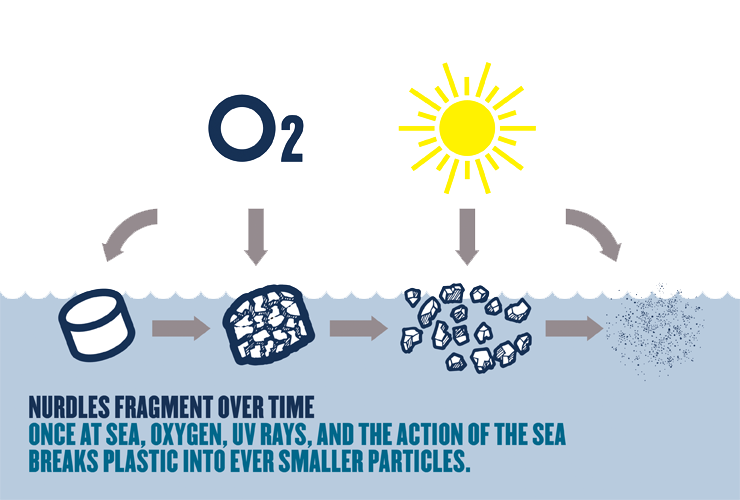
Nurdle alert! My first encounter with nurdles was on what should have been a pristine Costa Rican beach in 1986. The lentil-sized, grayish pellets spread the sands for miles, along with a stunning number of shoes. I never figured out the source of the shoe spill, but nurdles eventually became a headline-maker in the oceans world. Nurdles are the feedstock for much of the world’s production of plastics products. If plastic things were pancakes, nurdles would be the batter. They’re spilled from trucks, boxcars, and in the case of the Costa Rican beach, apparently a container ship. There are no firm statistics on how many spills there have been, or how many hundred of billions of virtually indestructible nurdles litter our beaches and seafloors. One example: in 2017, 600 volunteers scoured 279 U.K. beaches, reporting that two-thirds of them were “littered” with nurdles. We do know that nurdle pollution is the tip of the plastic pollution sh*tberg. Let’s talk recycling. For years, much of what we think of as recycled plastic was collected in communities and eventually shipped to Asia. In 2018, the People’s Republic of China formally announced that they’d officially had it. Imports of recyclable plastic had choked China’s landfills beyond reason. Early, rudimentary successes with recycled goods had run their course. But we reached Peak Flip-Flop, and China’s National Sword initiative slammed the door, barring plastic waste imports from the U.S. and about two dozen industrialized nations. Most of our plastic goes to the landfill. In 1960 the U.S. sent roughly 390 tons of plastic waste to landfills, according to the U.S. Environmental Protection Agency. In 2017, the most recent year there is data for, that number shot to 26,820 tons, which is about nine times more than was recycled. Yikes. Part of this is driven by the market to make plastics: the U.S. fracking boom caused an abundance of cheap natural gas and oil. By mid-2019, it was cheaper to make new plastic than it was to recycle the old stuff. Here are some other quick facts to put a damper on your day:
We know the problem has been building for years, and the paths to solutions are often blocked by the fossil fuel industry, which sees salvation in plastics production as its other marquee products fade. While we all rightly call for leaders to address, and in some cases just acknowledge, the climate crisis, let’s also remember to skip the straws and question those that keep |
|
The Arctic Has Entered A New Climate State
We begin our state-of-the-glaciers talk with the sad example of the Okjökull Glacier (simple known as Ok) in Iceland. It is the first world glacier declared “dead” due to climate change. On that site is a plaque reading:
A letter to the future
Ok is the first Icelandic glacier to lose its status as a glacier.
In the next 200 years all our glaciers are expected to follow the same path.
This monument is to acknowledge that we know
what is happening and what needs to be done.
Only you know if we did it
The Arctic Has Entered A New Climate State, Radio Ecoshock 26 Sep 20, Ice is rapidly disappearing from both Poles. Two polar ice experts report latest science. From the U.S. National Center For Atmospheric Research in Colorado, Arctic scientist Laura Landrum: in 2020, the Arctic has reached a new climate state. Thomas Slater from Leeds University UK reports ice loss from glaciers has surpassed the worst case scenarios. Manhattan-size chunks falling away, other ice shelves shatter in unnatural heat and warmed-up seas.
Listen to or download this Radio Ecoshock show ………..
The new water added to the ocean runs away to every country with a sea coast. It runs up estuaries, eats away coastlines, and piles up in every hurricane, high tide and storm. Slater agrees with NASA that in some cases, there is no way to stop these mountains of ice from becoming sea water. This massive change has happened. The tipping point for a grand melting of the world’s second biggest pile of ice, Greenland, was 20 years ago. Like light from the stars, rising seas just take a while to reach us.
Hot in the cold news, this: the Arctic’s largest remaining ice shelf lost a very large chunk of ice, like the volume of mountains, broken away in North Eastern Greenland – floating off into the Atlantic are new melting ice islands twice the size of Manhattan. Continue reading
Covid-19 – the emergence of symptoms down the track
 the emergence of symptoms down the track is a reminder of why it’s important to take precautions
When looking at impact of coronavirus, we can’t forget the long-term health effects, ABC Health & Wellbeing, By health reporter Olivia Willis-28 Sept 20, It can be tempting to think of COVID-19 patients as falling into one of two categories.
Category 1: young, otherwise healthy individuals who experience mild symptoms and recover at home.
Category 2: older people and people with pre-existing health conditions who become seriously ill and go to hospital.
While it’s true that there is a spectrum of risk when it comes to severity of disease, it’s become increasingly clear that not everyone fits neatly into one of these categories.
For many people, the labels of “mild” or “severe”, “sick” or “recovered” are blurred by their experience of ongoing, sometimes debilitating symptoms weeks or months after they first were infected.
Both anecdotal reports and a growing body of research suggest persistent fatigue, breathlessness, “brain fog” and muscle aches, among other symptoms, are plaguing people some time after their infection has cleared.
So what do we know about the lingering health effects of coronavirus, and how concerned should we be?
Health effects can linger for months Continue reading
After 4 decades of Plowshares Actions, It’s Nuclear Warfare that Should Be on Trial — Not Activists
 Most of the Kings Bay Plowshares still await sentencing. Mom was sentenced to time served by video conference in June — a surreal and dislocating experience that is now more and more common in our criminal justice system. Her co-defendants opted to postpone sentencing in hopes that it could be in person, but it is unclear if that will happen.
After 4 decades of Plowshares Actions, It’s Nuclear Warfare that Should Be on Trial — Not Activists, Forty years ago, the Plowshares Eight sparked a movement of nuclear disarmers that continues to take responsibility for weapons of mass destruction.
Before him were eight activists, including two priests and a nun. As Judge Salus tried to preside over the government’s prosecution of them for their trespass onto — and destruction of — private property, the eight were trying to put nuclear warfare, nuclear weapons, nuclear policy and U.S. exceptionalism on trial.
That was 40 years ago this week — ancient history by some measures. And no one reading this will be surprised to find that the eight were found guilty and the human family is still threatened by almost 15,000 nuclear warheads. So, four decades later, why isn’t nuclear warfare on trial?
They are the crime responsible for the deaths of hundreds of thousands of Japanese civilians 75 years ago. They have littered the landscape with radioactive waste. They have cost the United States more than $5 trillion from the public coffers. They are the apocalyptic nightmare on hair-trigger alert that haunt our children’s dreams.
On September 9, 1980, my father, Philip Berrigan, along with his brother Daniel, John Schuchardt, Dean Hammer, Elmer Maas, Molly Rush, Sister Anne Montgomery, and Father Carl Kabat, gained entry into the General Electric plant in King of Prussia, Pennsylvania. Once inside the complex, they poured blood over two nuclear weapons’ nose cones, and used household hammers to dent the metal. They came to be known as The Plowshares Eight. Continue reading
Essential points from the 2020 World Nuclear Industry Status Report
Three takeaways from the 2020 World Nuclear Industry Status Report, https://thebulletin.org/2020/09/three-takeaways-from-the-2020-world-nuclear-industry-status-report/
John Krzyzaniak The size of the global nuclear fleet has been stagnant for 30 years, and last year was no different. According to the 2020 World Nuclear Industry Status Report, released Thursday, there were 408 nuclear reactors online across the world as of July 1, 2020—a decline of nine units since the middle of last year and roughly on par with the number of reactors in operation in 1988.
The bulky 361-page industry report was compiled by an international team of independent experts led by Mycle Schneider, a consultant based in Paris. Over the last 15 years, it has become well-known for offering accurate but often sobering assessments of the state of nuclear energy across the globe. Last year, Schneider pointedly asserted that “the world is experiencing an undeclared ‘organic’ nuclear phaseout.”
Although the 2020 report is overflowing with data, several key trends stand out.
First, although the raw number of worldwide reactors is well below its all-time high of 438, their actual combined electricity generation came close to setting a record. As a whole, they generated 2,657 terawatt-hours of electricity in 2019, only three terawatt-hours below the historic peak in 2006. The United States, Russia, and China all hit individual country records for total electricity production from nuclear energy. Nevertheless, nuclear energy’s share of the energy market is in long-term decline, as other forms of energy witness rapid expansion.
Second, China continues to be the main driver of new nuclear energy, but over the long term its intentions are uncertain. The number of new projects there appears to be slowing. Whereas two years ago there were 20 units under construction, today there are only 15. Moreover, China missed its nuclear energy goals for 2020 by a sizeable margin: It planned to have 58 gigawatts of installed nuclear capacity and 30 more gigawatts under construction, but it currently has about 45 gigawatts capacity online and only 14 more under construction.
Third, reactor construction delays and cost overruns continue to plague the nuclear industry and, notably, early indications suggest that small modular reactors may be no exception.
For 63 reactors that came online worldwide between 2010 and 2019, the mean construction time was 10 years. Tennessee’s Watts Bar Unit 2, which took more than 43 years from construction start to grid connection, was the only reactor completed in the United States during that time period. But even in China, where average construction times were among the lowest, delays were widespread, and in many cases the real construction times were double the initial expectations.
While small modular reactors exist mostly on paper, there are many companies hoping to change that, promising units that are safer, cheaper, and faster to build. Last month, the US Nuclear Regulatory Commission approved a small modular reactor design submitted by a company called NuScale Power. Though several hurdles remain, NuScale plans to build its first reactor at the site of the Idaho National Laboratory and supply power to Utah Associated Municipal Power Systems as early as 2029.
But other countries’ recent experiences, detailed in the report, point to the difficulties ahead. Russia brought two small reactors online in 2019, but these took over 12 years to build, and at a cost about six times as much as the original estimates. These are the famed floating reactors of the Akademik-Lomonosov—they’re literally installed on a large ship, and that complication almost certainly contributed to the delays and high costs.
But there are more comparable examples for NuScale. The CAREM-25, a 25-megawatt prototype small modular reactor in Argentina, was supposed to receive its first fuel load in 2017 but is at least three years behind schedule. Similarly, China’s High Temperature Reactor project is running four years behind schedule and, while China originally planned to build 18 more of these smaller reactors, the report suggests its appetite may be sated after just one.
That means if countries want to wean themselves off of fossil fuels and stave off the worst effects of climate change, they may need to look elsewhere. And, the report suggests, they already are. The world added 184 gigawatts of non-hydro renewable capacity in 2019, a stark contrast to the 8-gigawatt decline in nuclear capacity.
Radiation exposure on the moon is nearly three times that on the International Space Station
Radiation exposure on the moon is nearly three times that on the ISS, 25 September 2020
By Layal Liverpool Astronauts on the moon would face nearly three times more radiation exposure than those aboard the International Space Station, which could make long-term missions riskier than thought.
“Once you’ve survived being on the moon and come back to Earth, radiation damage is what stays with you for the rest of your life and that’s why this is a critical measurement,” says Robert Wimmer-Schweingruber at the University of Kiel in Germany.
Wimmer-Schweingruber and his team analysed several weeks of data acquired by China’s Chang’e … (subscribers only) https://www.newscientist.com/article/2255545-radiation-exposure-on-the-moon-is-nearly-three-times-that-on-the-iss/#ixzz6Z61souv7
Resistance in USA for nuclear waste transport through cities, communities
Transporting the waste to the New Mexico and West Texas facilities by rail car and through major cities, including those in the Dallas-Fort Worth region, could be a Pandora’s Box of problems for North Texans
|
High-level nuclear waste refers to spent, or used, reactor fuel and waste materials that exist after the used fuel is reprocessed for disposal. The radioactive waste poses potentially harmful effects to humans and only decreases in radioactivity through decay, which can take hundreds of thousands of years, according to the Nuclear Regulatory Commission, the federal agency that regulates nuclear power plants and the storage and disposal of waste. Activists who oppose the West Texas plan say the impact will not be limited to residents of Andrews County, where the toxic waste site owned by Waste Control Specialists already sits near the Texas-New Mexico border. The commission is considering a similar plan for a high-level waste storage facility in southeastern New Mexico, brought forward by the nuclear company Holtec. Transporting the waste to the New Mexico and West Texas facilities by rail car and through major cities, including those in the Dallas-Fort Worth region, could be a Pandora’s Box of problems for North Texans, said Lon Burnam, a former state representative and the chair of the Tarrant Coalition for Environmental Awareness. “We’ve created all this waste, there’s no good way to handle it, and the question is: What is the least objectionable way to handle it?” Burnam said. “But carting it all through Dallas-Fort Worth, from my perspective, is one of the worst ways to handle it. Why should we be the community that 90% of this stuff goes through on its way to either West Texas or the New Mexico side?” For years, the U.S. Department of Energy has struggled to find a long-term storage solution for the country’s growing stockpile of radioactive waste. With no permanent destination for safe disposal, more than 80,000 metric tons of highly radioactive nuclear waste sit at the country’s commercial nuclear plants, according to the U.S. Government Accountability Office. …… Texans have until Nov. 3 to submit online public comments on the report, which may be the last chance that the public has to voice opposition or support for the application…… https://www.star-telegram.com/news/state/texas/article245941215.html |
|

David Suzuki on nuclear power as a climate change solution ”I want to puke.”
 I want to puke. Because politicians love to say, “Oh, yeah, we care about this and boy, there’s [nuclear] technology just around the corner.”
Yeah, it’s taken a child [environmental activist Greta Thunberg] to finally have an impact that is more than all of us environmentalists put together over the past years.
The power of that child is that she’s got no vested interest in anything. She’s just saying: “Listen to the science because the scientists are telling us I have no future if we don’t take some drastic action.”
I want to puke’: David Suzuki reacts to O’Regan’s nuclear power endorsement
The Nature of Things host also addressed the climate crisis and youth’s role in climate change https://www.cbc.ca/radio/checkup/is-it-time-to-call-an-election-1.5728483/i-want-to-puke-david-suzuki-reacts-to-o-regan-s-nuclear-power-endorsement-1.5731819
CBC Radio Sep 21, 2020 David Suzuki spoke to Checkup host Ian Hanomansing about how to tackle climate change while in the midst of the COVID-19 pandemic, and took questions from callers, in Sunday’s Ask Me Anything segment.
With the COVID-19 pandemic at the forefront of the news cycle, it might be easy to forget about the ongoing climate change crisis.
While managing the pandemic has become the first priority of the Canadian government and other governments around the world, climate change was a major talking point in the 2019 federal election campaign.
This summer, the last intact ice shelf in the Canadian Arctic collapsed. South of the border, dry, hot weather conditions in states such as Oregon and Washington have led to historic wildfires.
David Suzuki is a scientist and environmental activist. He’s also the host of The Nature of Things on CBC television. Continue reading
1 This month
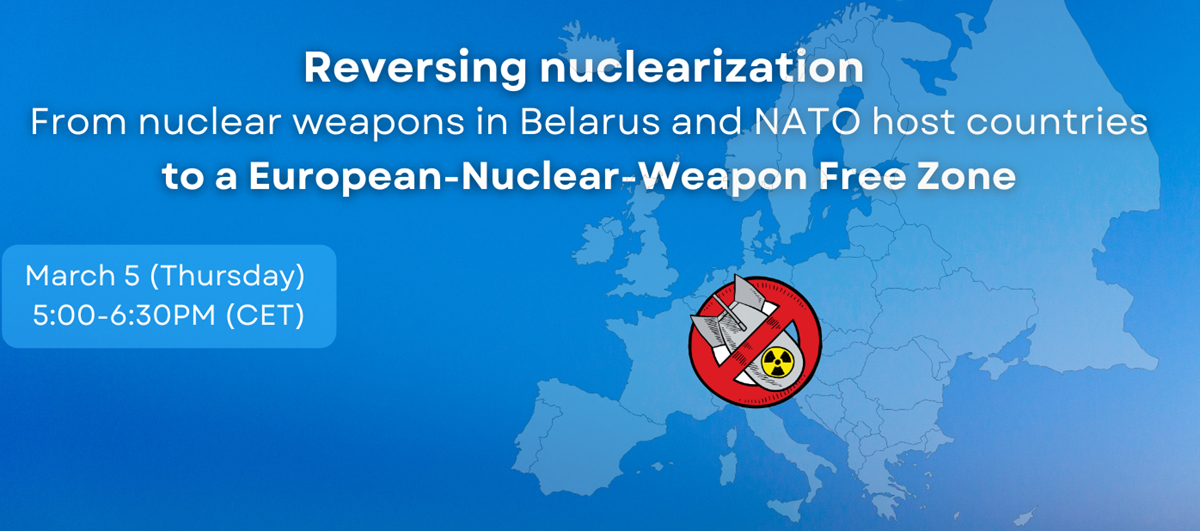
6 March -Online – Reversing nuclearization:
From nuclear weapons in Belarus and NATO host countries to a European-Nuclear-Weapon Free Zone
Mar 6, 2026 03:00 AM in Canberra, Melbourne, Sydney

of the week – Australians for War Powers Reform (AWPR)
To see nuclear-related stories in greater depth and intensity
 Antinuclear