Activists take coal mine fight to the top
IN WHAT is believed to be a legal first, green activists have applied to take their battle against Gina Rinehart’s Alpha coal project to the High Court…. (subscribers only)
http://www.couriermail.com.au/news/queensland/green-activists-take-fight-against-alpha-mine-to-the-high-court/news-story/1f4b833d1c08661b7ea69c4a30f6663a
Climate campaigners should have the right to sue governments
Alice Klein, 28 Oct 16
The Australian government wants to stop environmental groups using the courts to halt carbon-belching projects, but we all deserve to be heard
https://www.newscientist.com/article/2110777-climate-campaigners-should-have-the-right-to-sue-governments/
Kim Mavromatis debunks Geoff Russell’s pro nuclear spiel on New Matilda
Kim Mavromatis No High Level International Nuclear Waste Dump in South Australia October 25
My comment to a NewMatilda news article by Geoff Russell.
Why did 3,000 people attend the “No Nuclear Waste Dumps” rally in Adelaide? 10 times more than attended the state govnts “Know Nuclear” citizens jury. I expect it’s because there’s nothing more scary than trusting politicians with Nuclear Waste dumps. In the recent SA statewide blackout, some communities were without power for 3 days. The state government can’t even get electricity right so how are we supposed to trust them with Nuclear Waste Dumps?
The numbers tell a story. The SA Govnt Nuclear Royal Commission is using Onkalo as their model, the underground permanent high level nuclear waste dump, currently being built in Finland (1st in the world). Onkalo has a capacity of 5,000 to 10,000 tonnes of high level nuclear waste and will be 4-6 sq kms in size.
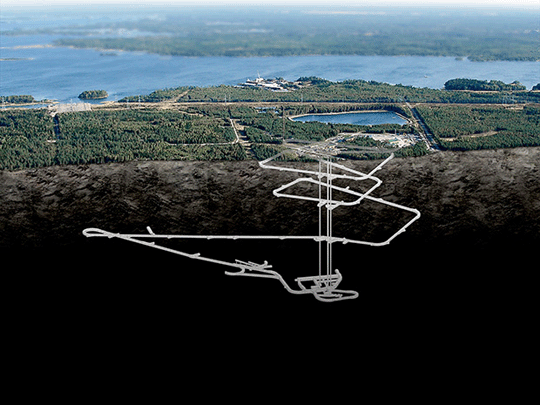
The SA Nuclear Royal Commission proposes SA import 138,000 tonnes of high level nuclear waste – 14 to 28 times the size of Onkalo, which equates to a high level nuclear waste dump in South Australia of around 100 sq kms, half a km underground.
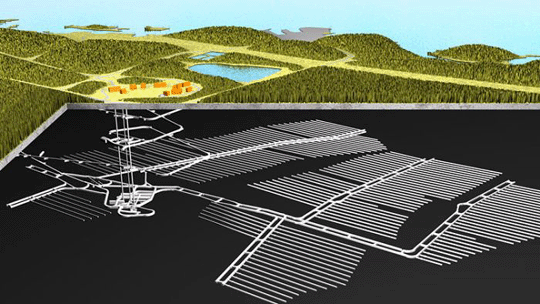
And for decades half the high level nuclear waste will be stored above ground in temporary vessels. And that’s just for the high level nuclear waste. The NRC report also proposes SA import a further 390,000 m3 of intermediate level nuclear waste and 81,000 m3 of low level nuclear waste. Impressive numbers, for one nuclear waste dump, modelled on a waste dump in Finland that hasn’t been built yet, with a capacity of 5,000-10,000 tonnes. I expect there wont just be one high level nuclear waste dump is SA, there will be many, but the SA NRC economics is modelled on building just one nuclear waste dump?
The SA NRC report doesn’t mention how big the proposed nuclear waste dump will be, so I quizzed a “Know Nuclear” expert at one of the 100 SA govnt roadshows around SA, and he couldn’t tell me either. “Know Nuclear” is the state govnt’s moto, so don’t you think, they should know?
The state govnt have already spent millions on the “Know Nuclear” circus and will need to spend a further $600 million even before they get one cent in return.
Storms and floods and earthquakes and transport accidents do happen – and when an accident happens it’s likely to be catastrophic. What are they going to say when an accident happens – blame it on the weather?
And there’s more – we aren’t just being bombarded by the state govnt, the Federal govnt has their own proposal for an intermediate and low level nuclear waste dump in South Australia. And it just so happens that an ex Liberal politician has volunteered his property in the Flinders Ranges. So kind of him. Anyone with any knowledge of the Flinders Ranges knows that it’s prone to flooding and earthquake activity – not a smart place to put a nuclear waste dump.
The Adelaide rally was held on the 63rd Anniversary of the first British Nuclear Tests on the Australian mainland at Emu Field in South Australia. Bobby Brown witnessed the bombs and the black mist and is a survivor – he tells his story, in a short film (Bobby Brown Homelands), about living with the legacy of British Nuclear testing. For all those who care to look at it, here’s the link : https://vimeo.com/119231410
And for those who care to watch a video of the Adelaide rally. Here’s a link :https://vimeo.com/187622136
By the way, I’m also a concerned filmmaker, who lives in regional SA, and was one of the 3,000 people who attended the “No Nuclear Waste Dumps” rally in Adelaide. https://www.facebook.com/groups/1314655315214929/permalink/1482846785062447/
Australian no longer seen as a good global citizen
 , PETER BOYER, Mercury October 25, 2016 Australia would rate pretty well as a citizen of the world if the sole measure of that was being open to the global market.
With protectionism on the rise, fuelled by vanishing jobs and anger about the excesses of multinational corporations, Australia gets top marks for its open economy.
That is the good news, but we are dragging our heels against other measures of global citizenship, including our response to the principle of human rights, which dictates that everyone should be treated decently.
Human rights came under a spotlight this month when three investigations, by the UN Committee on the Rights of the Child, Amnesty International and the ABC’s Four Corners, independently targeted the heartbreaking plight of about 50 child refugees on Nauru………
The toughest measure of global citizenship is climate policy. Last year’s Paris Agreement calls on us and the other 190 signatory nations to achieve results not just for this generation, but for those to come — decades and even centuries ahead. That takes real vision.
One of these is Howard Bamsey, a Canberra-based academic and climate policy specialist, who has been co-chairman of the UN’s Dialogue on Long-term
Co-operative Action on Climate Change, and Australia’s climate change envoy under Kevin Rudd. A fortnight ago Bamsey landed one of the toughest gigs on the planet: executive director of the UN’s Green Climate Fund, based in South Korea. Next week the Paris Agreement comes into force, and this agency has a pivotal role in making it work.
Bamsey must ensure richer countries honour their pledges to provide $100 billion a year by 2020 to help developing countries tackle climate change. He has to get money flowing into 100-odd projects in the pipeline. So far the fund has disbursed just $5.4 million.
The European Union, the US, China and 81 other countries have ratified the Paris Agreement, which means it becomes legally binding on Friday week. The process took less than 11 months, as against nearly eight years for the Kyoto Protocol. Australia, which has not ratified, is out in the cold.
Despite Government claims, Australia’s 2030 emissions target of 26-28 per cent below 2005 levels is well below what multiple authorities, including the Climate Change Authority in 2015, contend would be a fair contribution to keeping the world below 2C.
For half a century Australia was a leading player in the UN. We backed conventions on human rights and refugees, we took in war refugees from Europe and Asia, and we were leading players in a succession of UN environmental and climate conventions.
However, that all took a hit when John Howard rejected Afghan boat people and then refused to ratify the Kyoto climate protocol. His was a vote for world-weary cynicism over youthful enthusiasm. That narrow cynicism prevails, and it is strangling the life out of our country. http://www.themercury.com.au/news/opinion/talking-point-australia-fast-losing-its-reputation-as-an-outstanding-global-citizen/news-story/a47dfb53357e1f45f17a897c191cd6a8
The pretense that medical waste is the same as high level nuclear reactor waste
 The Adelaide Advertiser in its usual role as mouthpiece for the nuclear lobby, published an article by Jim McDowell (24 -10-16) . I presume that it was the usual glowing endorsemnet of all things nuclear – I was unable to read it, as I am not a subscriber. But, strangely – they let us read the comments! And here are a couple of them:
Whine about environmental groups bringing money into Australia whilst mining companies underhandedly rip off our country without fair payment! Not even completing remediating the damage done. Wake up to what you are saying!
Australia’s nuclear industry is hardly paying it’s way either. For all the mess uranium miners leave, we make more money exporting cheese!
The dump is an economic basket case that is so flawed they have to compromise safety at every step for it to possibly break even. http://www.adelaidenow.com.au/news/opinion/jim-mcdowell-conversation-about-the-merits-of-establishing-a-nuclear-waste-industry-in-south-australia-is-worth-continuing/news-story/277c34a9d4c1c8f520431a8ce44837ca
Hey Mr Weatherill- nuclear waste disposal is not an “industry”- it’s just a toxic dump
 Claire Catt, Your Say site, 20 Oct 2016 Weatherill is stating today in the Advertiser he is asking the community ‘its views on the establishment of a nuclear waste disposal industry in SA’.
It’s not an industry he’s proposing, just a dump in the outback. No sophistication there, just enormous risks and costs.
The discussion is bias and manipulated by the Government. Real information about the scale and dangers of this proposal are suppressed and the media is complicit.
The language used by Jay Weatherill is really creepy!
Nuclear Royal Commission not clear on toxicity. Corruption in the nuclear waste industry
 Jeffrey Frommelt, Your Say site, 21 Oct 2016
Billions of dollars? Most countries are shutting down their nuclear reactors because of risk of another Chernobyl or Fukashima and the toxicity of byproducts.
The demolition material is similar to the uncooled reactor materials at Chernobyl or Fukashima. A high percentage is depleted uranium. The Gulf War used depleted uranium as armour piercing ordinance and anyone who came into any contact with depleted uranium by inhalation. Ingestion, cut or lesion contact got “Gulf Syndrome”.
Elevated risk of thyroid cancer but statistics in Veteran Affairs is confidential. Fukashima also has swayed medical stats like most large chemical catastrophes. ( Hiroshima, Bophal, etc) The cleanup at Chernobyl was allegedly by volunteer helicopter pilots who knew they would die and 17yo military conscripts, who coincidently were all dead within 12 months. Nuclear waste can be Carbon 14 or toxic, yet the RC does not clarify how toxic any transported or stored waste will be.
Oh and I just read that a comparable “Toxic Nuclear Waste Storage Facility” overseas was recently closed because of corruption in the upper management. Almost sounds like Australia’s banks except no one was ever caught or prosecuted. Trust? When is the plutonium Maralinga going to be stored safely?
I am confident that a select few will be paid billions and a few or maybe two meaningful or fulfilling safe jobs will be created. ….
Young Victorians want renewable energy to replace Hazelwood power station
 Next generation pushes for green energy to renew Hazelwood power station, ABC News, By Helen Brown, 23 Oct 16, The Latrobe Valley is home to three coal mines and four power stations, but now the 75,000 residents in the area are facing serious questions about their future.
French company Engie has said it has no immediate plans to shut down the ageing Hazelwood plant, but in the valley many believe it is only a matter of time before Australia’s most polluting power plant stops operating.
And that has led to a group of its younger residents calling for a different kind of future.
Carolina Herrera, 16, said losing Hazelwood would be tough, and a plan for new jobs needed to be put in place. She believed a move to renewable energy was the way to go.
“People would have to leave, and that would affect the community except at the same time it’s something that can be improved, like cleaner jobs, there’s lots we can do,” she said.
According to teenager Ella Darling, it is time to use local skills to become known for a different way of producing power. “Brown coal has made this area what it is so we’re thankful for that, but it is time for change to solar power, wind and even thermal power,” Ella said……..
It is this scenario that has also prompted action for change from a group called the Earthworker Cooperative.
They have invested heavily in solar manufacturing equipment with the aim of starting new industries and new training opportunities in the region.
According to its secretary, Dan Musil, the gear could be used by a number of local businesses involved in sustainable industries. “We’ve been working as a community group in the absence of government action,” he said.
“We’re a community group trying to take action where governments haven’t been, to set up jobs in what will be, what needs to be, a just transition for the valley,” he said……..http://www.abc.net.au/news/2016-10-23/push-for-green-energy-to-renew-hazelwood-power-station/7956988
Uncomfortable questions on Your Say site, for nuclear-loving South Australian government
 Jeffrey Frommelt, Your Say site, 21 Oct 2016 After 911, all hazardous facilities need to withstand a 787 fully fueled at full throttle diving as a minimum.
If there is only 45kg of Australia. Nuclear medical waste to be stored, how does this generate billions of dollars and jobs in a shallow trench filled with demolition materials from dirty reactors and spent fuel (depleted uranium). ….
A nuclear dump will kill our wine industry instantly as soon as anyone finds a Geiger counter reading in a foreign newspaper. How many jobs are there today guarding Maralinga, Taranaki, Vixen 22 kg of plutonium and what stops this plutonium getting in the food chain at Maralinga for the next 200 million years?
After Monarto, State Bank, Multi Function Polis, MATS Plan, Hindmarsh Island bridge fiascos, who really believes any SA Toxic Nuclear Waste Dump will create jobs? Trust?
The Uranium industry is in massive decline simply because the end product is so toxic. “The clever country” becomes a rubbish dump for Toxic Nuclear Wastes is not a future.
Erin offers to dig for dirt on toxin shock
US environment crusader Erin Brockovich has vowed to advocate on behalf of residents affected by the Defence Department’s Adelaide contamination scandal.(subscribers only)
http://www.adelaidenow.com.au/news/south-australia/erin-brockovich-to-advocate-on-behalf-of-sa-contamination-victims/news-story/b8c7bb5ad26cefac5b1c40a97856e1e9
Absurdity of nuclear waste importing as solution to south Australia’s economic problems
Peter Mahoney, 17 Oct 16 Nuclear’s”back end” problem (the “disposal” of its waste). The search was on quickly to find a patsy state – and they think they have found it, here. Moral, economic and jobs arguments have been released in a barrage of coercive pressure on the SA public, when all Jacobs and their employers really want is a quick fix to their financial problems. The renewable energy industry is likely to overtake nuclear power generation in a few short decades, but if SA goes down this path we will be left with a very long term problem that the nuclear companies won’t be around to help with. The incredibly long timescales and ridiculously speculative nature of the economic modelling make any relevance to SA’s current economic challenges absurd. https://www.facebook.com/groups/1021186047913052/
Rebuttal to Senator David Leyonhjelm’s enthusiasm for “cheap” nuclear power
Nuclear power, CEDA and manufacturing Nuclear power is not cheap, AFR, Reg Lawler, 17 Oct 16 Senator David Leyonhjelm wants a supply side revolution which includes reducing energy costs by ” .. in the longer term by removing the ban on nuclear power” (October 14).
The main costs in nuclear power are the cost of construction, the cost of fuel and operation, the cost of permanent disposal of waste, the cost of insurance and the cost of eventually dismantling the plant (which is more than twice as expensive as building it).
The proposed Hinckley plant in the UK will deliver power at about twice the cost of the current supply and be considerably more expensive than renewables. That is even though it already has a 2 billion pound subsidy from the government and only pays for costs of construction and fuel and operation. The government and the community carry all the other costs.
If there is an argument for nuclear power generation it cannot be because it is cheap. http://www.afr.com/opinion/letters-to-the-editor/letters-nuclear-power-ceda-and-manufacturing-20161017-gs40nh
How to stop BHP’s tax avoidance
 There is one way to put a stop to BHP’s tax avoidance, ABC NEWS The Conversation By Professor John Mangan, UQ , 18 Oct 16 One of the most common ways multinationals take advantage of current laws to reduce their tax bill is through what’s known as transfer pricing. Former Treasurer Wayne Swan last week accused mining giant BHP of “aggressive transfer pricing”, denying the Australian government $5.7 billion in tax revenue.
For most companies, transfer pricing is rational behaviour, driven by the commercial possibilities created by variations in company tax rates across the international economy.
Companies (particularly multinationals) use it to minimise their tax bill by artificially inflating input costs in high tax countries and reporting (and paying tax) profit in low tax countries.
For BHP, this means selling some of its minerals to its Singapore marketing hub, which is then responsible for on-selling them and declaring the profits in Singapore, a low tax country.
This activity is legal under current tax law, though reports suggest the Australian Taxation Office has audited the firm on this activity. Governments around the world are struggling with the issue of transfer pricing. This often leads to opportunistic and, ultimately self-defeating competition among countries in setting company tax rates.
Former big four accounting firm executive George Rozvany has estimated tax minimisation schemes, of which transfer pricing is the most important, cost governments $US1 trillion a year.
In Australia alone, transfer pricing among the 300 largest companies is estimated to reduce the income tax take by $50 billion. In terms of the current total tax revenue, tax policy consultant Martin Feil estimated in 2008 that the income tax amount accruing to Australia should be at least three times as big if all the companies were paying tax at the official rate……….
A possible solution Continue reading
South Australia’s Weatherill government conned by the nuclear industry
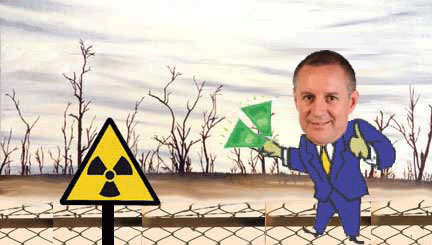 Claire Catt From Your Say site Since Mr. Weatherill suggests politicians should perhaps trust the people, I suggest it is high time for the State Government to stop meddling in this debate and stop pushing the nuclear industry’s agenda.
Northern Australia can expect more tropical cyclones this year
The season will almost certainly be more active than the last. And that means it’s time to prepare, because the likelihood of damage from a tropical cyclone is high in any season……..
As this season starts, ENSO is neutral. But a La Niña “watch” is current, meaning a La Niña certainly cannot be ruled out before the end of the year.
The latest observations show the Pacific Ocean has several indicators that have exceeded La Niña thresholds. El Niño and La Niña develop slowly, and likewise their impacts don’t appear suddenly.
With warmer water around Australia’s northern coastline – a classic La Niña-like pattern – the odds rise of an above-average tropical cyclone season. https://theconversation.com/more-tropical-cyclones-likely-for-australia-this-year-heres-why-66992
1 This month


Help Aunty Sue Protect Her Land and Sacred Sites From Destructive Rocket Testing.
.

Australians deserve the truth
about
AUKUS – https://aukuspublicinquiry.com/

PETITION – To: Prime Minister Anthony Albanese and the Australian Labor Government

of the week – Australians for War Powers Reform (AWPR)
To see nuclear-related stories in greater depth and intensity


Is there a reason that Jim McDowell feels the need to blur the line and pretend they are the same? Is it a lack of knowledge on his part? Surely not! It is his field, he shouldn’t be making mistakes here. Why would he be misinforming us, is he afraid to be honest? Why?
Why is he coming here if he is unable to discern the difference? Is it to try and sway the Citizen’s Jury?