Indigenous Australians Fight planned Flinders Ranges nuclear waste dump
 Indigenous Australians Fight Planned Nuclear Dump On Sacred Lands“It’s like me and my sisters going to the Vatican and saying we want to put a waste dump right under the pillar where they say St. Peter is buried.” Timothy Large, Huffington Post, 08/18/2016 (Thomson Reuters Foundation) – Enice Marsh remembers the black clouds of “poison stuff” that billowed from the northwest after British atomic bomb tests in the 1950s spread fallout across swathes of South Australia.
Now a new kind of radioactivity could head to her ancestral home in the remote Flinders Ranges – a nuclear waste dump.
“To me, it feels like a death penalty,” said Marsh, 73, standing in the cemetery of the outback town of Hawker, where many of her relatives are buried under red earth.
“We are one big family and the land also is family to us. We care for the land just in the same way we care for our family.”
South Australia is at the heart of a debate over the nation’s nuclear future that highlights a familiar tension between quick economic gain and long-term custodianship of land occupied by Aboriginal people for more than 50,000 years.
Two separate proposals divide opinion in the state with the country’s biggest uranium mine and a history going back nearly 20 years of saying “no” to nuclear dumps.
A recent Royal Commission report argues that South Australia could profit by storing high-level waste from nuclear reactors overseas, buried deep underground at a location still to be chosen.
As that recommendation is put to a “citizens’ jury” for further debate, the government is pushing ahead with plans to build a storage facility for less toxic waste generated domestically, mainly from industry and medicine.
It’s this above-ground dump for domestic waste that affects the Flinders, known for its haunting landscapes and home to the Adnyamathanha people, one of several hundred indigenous groups in Australia.
For the first time, the government says it has found a community — at least among non-Aboriginal people — willing to host a repository for the 40 cubic meters (125 square feet) of radioactive waste Australia generates annually……..ra ra http://www.huffingtonpost.com/entry/indigenous-australians-fight-planned-nuclear-dump-on-sacred-lands_us_57b5f8c9e4b00d9c3a161db9
First Australian uranium shipment to India flagged for next year
August 16, 2016. The first shipment of Australian uranium is reportedly due to arrive in India next year…. (subscribers only)
http://www.theaustralian.com.au/news/world/first-aussie-uranium-shipment-to-india-flagged-for-next-year/news-story/63d71c24223bd3c0890105b897f89c56
BHP Billiton posts first full-year loss, totalling $8.3b, dividend slashed
 By business reporter Michael Janda BHP Billiton has posted a statutory net full-year loss of $US6.385 ($8.3 billion) on significant one-off write-downs.
It is the company’s first annual loss since BHP and Billiton merged 15 years ago.
The company was expected to post a $US5.9 billion ($7.7 billion) loss according to the average of 11 analysts’ estimates compiled by Bloomberg…..http://www.abc.net.au/news/2016-08-16/bhp-billiton-posts-massive-full-year-loss/7748302
Antarctic climate change researcher named ACT’s Scientist of the Year
Man-made islands might be better known as the domain of China or Dubai.
But the ACT’s new Scientist of the Year, biogeographer Dr Ceridwen Fraser, would build her own in the sub-Antarctic; if research money was no object.
http://www.canberratimes.com.au/technology/sci-tech/antarctic-climate-change-researcher-named-acts-scientist-of-the-year-20160816-gqtk89.html
Up to $20 per week for 100pc electric cars
Australia could move to a 100pc electric vehicle fleet within ten years….(subscribers only)
http://www.afr.com/business/energy/electricity/electric-vehicle-switch-realistic-and-affordable-report-20160805-gqlog9
Australia unwise to snub China over power grid sale?
“Australian governments have proved to be very poor at understanding how to manage relations with China – they are a bit bewildered by China’s rise,” he said. “We need to figure out how we live in a world where China has become the principal economic player in our neighbourhood.”
Australia risks Chinese anger over power grid sale, BBC News Karishma Vaswani Asia business correspondent 11 August 2016
Australia’s decision to preliminarily block Chinese and Hong Kong bidders from taking a controlling stake in Ausgrid, the country’s largest Australia network, over national security concerns, is likely to be met with outrage and indignation in China. The Chinese don’t like being snubbed.
That’s not surprising – after all, who likes being dumped? And this is starting to look like a recurring pattern. Australia’s move comes as the UK has postponed approval for the Hinkley point nuclear power project, in which China’s General Nuclear Power Corp will have a minority stake, on similar concerns.
CGN is also accused of leading a conspiracy to steal American power industry secrets to speed up the development and production of Chinese reactor technology. Szuhsiung Ho, a senior adviser to CGN, is due in court in the US next week, and is accused of recruiting American experts to obtain sensitive nuclear technology for China, in a plot that prosecutors say threatened US security.
But the UK’s snub has already had serious consequences – verbally at least. Writing in the Financial Times, China’s ambassador to the UK, Liu Xiaming has said the delay to approving the plant had brought the two countries to a “crucial historical juncture.”
He hinted that “mutual trust” could be in jeopardy if the UK government decided not to approve the deal.
There’s been no official comment yet about the blocking of the Australian deal from China’s State Grid Corp. But it is a state owned enterprise, and this may be seen as an affront to China’s global ambitions, or viewed as yet another attempt to cast doubt on China’s motivations in the international business arena. Continue reading
“An Australian gift from one atomic survivor community to another.
 Indigenous Australia’s Shared Legacy With Nagasaki’s Atomic History
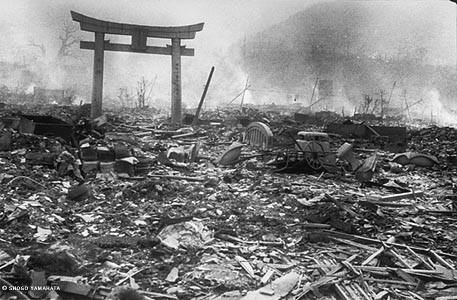
“An Australian gift from one atomic survivor community to another.”http://www.huffingtonpost.com.au/2016/08/08/indigenous-australias-shared-legacy-with-nagasakis-atomic-hist/ On August 9, 1945, Nagasaki became the second city in the world to be targeted by atomic bombs in warfare, killing 80,000 people. Over the next 70 years, thousands more would die from the effects of the bombing alone.
In the 1950s British nuclear testing saw nine atomic bombs tested on Australian soil in the Maralinga and Emu fields of South Australia. This forced the migration of the Pitjantjatjara Anangu community away from their traditional land into Yatala. For the Indigenous people of Maralinga, they were unable to return to their land and hunt because of contamination.
To mark not only the 71st anniversary of the Nagasaki bomb, but also International Day of the World’s Indigenous Peoples, this short documentary Peace Gift to Nagasaki unites both communities in their efforts to promote peace and expose the legacy of the atomic age through creative arts.
Until now, Australia has not been one of those countries. In Peace Gift to Nagasaki, the Yatala Aboriginal community present a sculpture called ‘The Tree of Life’ to the Japanese community, a sculpture made of wood and cast in bronze so it can survive many hundreds of years.
“The Yatala sculpture will be an Australian gift from one atomic survivor community to another,” the narrator of the documentary explains.
To find out more about this project you can head to the Nuclear Futures page over here.
Australia Leads The Charge To Promote Nuclear Weapons
The Australian government’s role, notwithstanding its ineffectual murmurings about how bad the weapons are, has been to lead the charge in opposing the growing push for a ban treaty, arguing that, without the support of the nations with the weapons, it’s an impractical process. That’s a bit like arguing that we must consult with criminals about the sort of laws they’d agree to before we enact any.
It also misrepresents the purpose of a ban treaty, which is to delegitimise and stigmatise the weapons and change the legal landscape by which nations are judged.
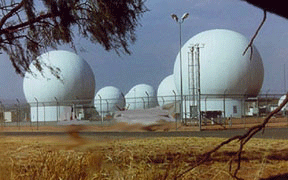 Australia’s stance, of course, has everything to do with our reliance on “extended nuclear deterrence”, which is a preparedness to have US weapons destroy cities on our behalf. Just which cities, or in what circumstances, the government refuses to say
71 Years On, We’re Still Dodging Bullets While Australia Leads The Charge To Promote Nuclear Weapons, New Matilda By Sue Wareham on August 8, 2016 There is some light on the horizon in terms of the international fight to ban nuclear weapons. But it’s certainly not emanating from Australia, writes Dr Sue Wareham.
Early August marks the anniversaries of the atomic bombings on August 6 and 9, 1945, of Hiroshima and Nagasaki – dates which most often come and go with little to offer except a terrifying reminder of humanity’s capacity to destroy ourselves. Nevertheless, we’ve made it to 71 years, having tempted fate with tens of thousands of the most destructive devices ever created, escaping within a whisker of global catastrophe more times than bears thinking about. Continue reading
Nuclear Royal Commission’s waste proposal – a bad option for South Australia
 Nuclear waste dump just another bad option — what about renewable energy?
However, a bad option it found acceptable is allowing a proportion of the world’s most dangerous high-level nuclear waste to be transported to SA for long-term disposal.
The royal commission is not proposing to import this material in its hottest, radioactive state — the initial cooling of the waste will take place overseas.
From the health point of view, the risks are largely borne by those who work in the nuclear industry and, perhaps because the risks are not high, the report does not adequately address them. Employees involved in the processing would have to accept increased health risks.
The impact on life and health from a major release of radioactivity from nuclear accidents is severe and immediate. Safety problems cannot be excluded: in existing repositories overseas (Germany and US), water ingress occurred in one, and failure in cooling systems caused an explosion in another. Both required expensive remediation.
Radiation toxicity is the primary reason so much care is required in dealing with nuclear material and why safe disposal of radioactive waste is critical. As the royal commission report says, “Used fuel requires isolation from the environment for many hundreds of thousands of years”…….
the costs of renewable sources of energy (solar, wind) are very low. Solar and wind plants can be built quickly and relatively cheaply, can be maintained or deconstructed easily, and have no ongoing population risks.
The endeavours of our scientists and engineers are needed in dealing with the many facets of climate challenge, including the transition to renewable energy, and they should be focused on this.
John Willoughby is Professor Emeritus, Flinders University, and a member of Doctors for the Environment Australiahttp://www.adelaidenow.com.au/news/opinion/nuclear-waste-dump-just-another-bad-option–what-about-renewable-energy/news-story/92f494cdde1dcae41481a45e5ac4f4ac
Geoff Cousins: Dear Minister Frydenberg
6 August 2016. Congratulations on your appointment as minister for the environment and energy. The bringing together of these two portfolios for the first time could present a substantial opportunity for sound policy development in Australia.
It must be a considerable relief for you to emerge from the gloom of the resources portfolio, away from the problems of the decline of the fossil fuel sector and the return of the killer black lung disease, into the bright light of nature and our rivers, mountains, forests and reefs. Why, you could even be the minister who saves the Great Barrier Reef – but more of that later.
In the meantime, you may want to have a word with that other new minister, Senator Matthew Canavan, who says he is excited by the prospect of the Adani Carmichael coalmine being built. … https://www.thesaturdaypaper.com.au/opinion/topic/2016/08/06/dear-minister-frydenberg/14704056003577
UN tries to hide involvement in deleting Australia from its climate report
 Federal environment department says Unesco sought and was granted heavy redactions in freedom of information documents, Guardian, Michael Slezak , 2 Aug 16 The United Nations has tried to cover up its involvement in the Australian government’s successful attempt to have all mentions of the country removed from a report on climate change and world heritage sites, freedom of information documents show.
In May, Unesco published a report with the UN’s environment program, Unep, and the Union of Concerned Scientists about the impact of climate change on world heritage sites, which were also major tourist attractions.
Australia was the only continent not mentioned, despite being home to several important sites, including the Great Barrier Reef, which were being heavily affected by climate change. Continue reading
Australia is still miles behind in recycling electronic products
Does not compute: Australia is still miles behind in recycling electronic products, The Conversation Graciela Metternicht This article was co-written by Ashleigh Morris, an honours student in environmental management at UNSW Australia. August 3, 2016 Australia is lagging far behind other rich countries in dealing with the growing mountain of “e-waste” from discarded electrical and electronic products.
My research, carried out with my student Ashleigh Morris, shows that in comparison with leading nations like Japan and Switzerland, Australia’s management of e-waste is ineffective and poorly implemented. This means that precious metals are not being recycled and hazardous materials are going into landfill instead of being properly dealt with…….https://theconversation.com/does-not-compute-australia-is-still-miles-behind-in-recycling-electronic-products-63381
The Nuclear Royal Commission’s sums don’t add up, but the danger is real
 SA’s nuclear debate: The sums don’t add up but the danger is very real, argues Craig Wilkins Craig Wilkins, Conservation Council SA, The Advertiser July 28, 2016 NUCLEAR DOSSIER SPECIAL REPORT: Everything you need to know about SA’s nuclear debate
LET’S be clear: the Nuclear Royal Commission is pushing a plan to make money by importing into our state high-level radioactive waste from overseas nuclear reactors.
Most people think it’s about burying this waste deep in the SA Outback.
- That’s not the half of it. Before then, waste cargo ships will enter our waters at least once a month for the next 70 years.
- After unloading, the waste will be stored above ground a few kilometres inland from our coastline for the next 80 years.
- Fifty thousand tonnes will be stockpiled in this above-ground site for around 20 years even before we know the underground dump will work.
The scale in creating the world’s largest nuclear dump site is staggering. So are the risks. It will change our state forever.
Central to the Royal Commission’s grand waste plan is an eye-popping revenue number.
However, Commissioner Scarce’s numbers are so huge it raises an equally big question: if there is so much profit in taking the world’s nuclear waste, why aren’t other countries or states rushing to do it?
Something just doesn’t add up. Either the money’s not there, or it’s a hell of a lot harder to do safely. The answer is: it’s both.
As there is no international market for high-level nuclear waste, any revenue or profit modelling is simply guesswork and assumption.
The Conservation Council of SA commissioned leading economic think tank The Australia Institute to take a deeper look at the numbers.
Far from making a motza, they found it could actually end up costing us money. Their view is backed by Professor Dick Blandy, respected Professor of Economics at the UniSA Business School.
The nuclear industry is notorious for massive cost over-runs. There are huge doubts about how much other countries are willing to pay, and how much demand there will be in the future. Also unknown is the economic impact on our other vital industries like food, wine and tourism. And taxpayers will need to spend hundreds of millions of dollars even before we know if it will proceed.
We are being told there are super-safe options for storage. We are also being told we can make enormous windfall profits.
The problem is, the gold standard level of safety the SA public rightly expects will take decades to achieve, and be ridiculously expensive, if it can be done at all.
We can try for the highest standard of safety, or we can make money, but we can’t have both.
There is no doubt there is a great deal of concern in our state about our economy and jobs for our children. But a decision for us to become the world’s nuclear waste dump should not be made in fear or desperation.
A nuclear dump is not our only choice. If we are willing to invest billions, there are many better options worth exploring, with far lower risks and many more jobs.
Taking the world’s nuclear waste is a forever decision – once we decide to do it there is no going back. We can’t change our minds or send it somewhere else. Neither can future generations of South Australians. As a proud state we can do much better. Craig Wilkins is the Conservation Council SA’s chief executive
‘Death spiral’ facing our energy future
THE Turnbull Government’s economic advisory arm has warned an ‘equity’ issue for lower-income households is looming as more households turn to solar and battery storage…. (registered readers only)
http://www.couriermail.com.au/news/queensland/major-issues-facing-energy-providers-as-electricity-bills-increase/news-story/e73325e8ffa1f1b043325090e366e4df
Is South Australia so desperate that it would become the world’s nuclear toilet?
The Royal Commission did say most of the really dangerous stuff will have dissipated in 500 years. So South Australia should be relatively OK somewhere around 2600.
if this state is known for anything globally, it will likely be as “that place that takes all the world’s dangerous crap’’
Should South Australia be home to the world’s largest nuclear waste dump?
IS there any greater sign that we have given up as a state than to volunteer to become a receptacle for some of the most dangerous material on the planet? Is there anything that says “We have completely run out of ideas” quite like becoming the place where nuclear waste fuel rods spend their retirement years?
There is a famous quote on the Statue of Liberty that proclaims “Give me your tired, your poor, your huddled masses yearning to breathe free’’. Perhaps we could put something similar on the Mall’s Balls.
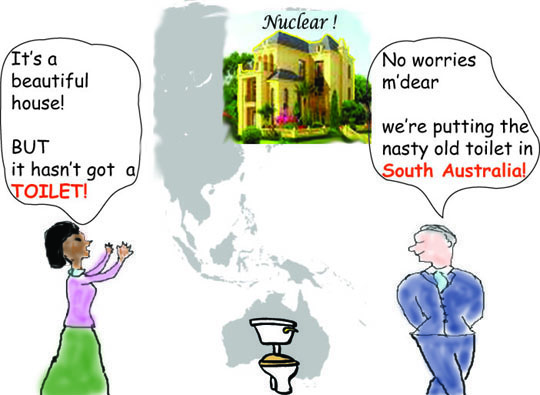
“Give me your poison, your chemicals, your radioactivity, we’ll breathe them for you.’’ Continue reading
1 This month


Help Aunty Sue Protect Her Land and Sacred Sites From Destructive Rocket Testing.
.

Australians deserve the truth
about
AUKUS – https://aukuspublicinquiry.com/

PETITION – To: Prime Minister Anthony Albanese and the Australian Labor Government

of the week – Australians for War Powers Reform (AWPR)
To see nuclear-related stories in greater depth and intensity

