Fukushima nuclear disaster has profound implications for Australia
Fukushima five years on, and the lessons we failed to learn, Guardian, Dave Sweeney, 11 Mar 16 After directly fuelling the disaster at Fukushima, Australia should have taken steps to review and reconsider its role in the global nuclear trade Five years ago this week the world held its breath, crossed its fingers and learnt a new word.
Fukushima went from being the name of a provincial Japanese city to becoming global shorthand for a costly and contaminating nuclear disaster.
Fukushima means “fortunate island” but the region’s luck melted down along with the reactors on March 11, 2011. The subsequent system failure, meltdown and uncontrolled release of large volumes of radiation at the Tokyo Electric Power Corporation’s Fukushima Daiichi nuclear complex has become one of the defining events of our age.
It was a game-changer that highlighted the urgent need for the game to change. As the country that supplied the fuel that made it happen, the events at Fukushima held – and still hold – profound implications for Australia. Continue reading
March 11 an important date for Australia, and for the world.
 For Australia, March 11 is significant as the closing date for submissions – submit comments to the National Radioactive Waste Management Project. The government pitches this plan as a sort of medical necessity. Not true. The real purpose is to store the radioactive trash due to return soon from France, and later from UK. This trash is the processed “intermediate level” nuclear wastes produced by the Lucas Heights nuclear reactor. Australia is obligated to take it back. It is not a large volume, and could be stored at Lucas Heights.
The selected communities don’t want this radioactive trash dump, despite the bribes offered by Government. It is also seen as a “foot in the door” for the cranky South Australian plan to invite in the world’s nuclear trash. It’ snot too late, even now – to send in a comment: see tips on how to do this.
For the world. It is the 5th anniversary of the Fukushima Daiichi Nuclear catastrophe. A catastrophe that continues – with the molten cores of the reactors not even found, with thousands of bags of radioactive debris, over 1000 tanks of radioactive water, and more accumulating every day, with radioactive leakage to groundwater and to the Pacific. A huge workforce of thousands daily involved in the clean-up, and no effective monitoring of their health. The government urges evacuees to return – but people are not convinced, especially about bringing children back to the irradiated zone.
And Japan, and the global nuclear industry pretend that all is well with the nuclear industry! And Fukushima will be OK again. Shades of Dr Pangloss in Voltaire’s Candide – “all is for the best, in the best of all possible worlds”
Submissions close today on national radioactive waste project
Beyond Nuclear Initiative: Submissions close today on national radioactive waste project . Six sites across the country have been named as possible locations for the national radioactive waste facility. The public comment period on this proposal will run until 5pm AEDT today March 11, 2016.
Community representatives from all of the six areas recently travelled to Canberra to meet face to face and stand united in calling for all of the sites to be scrapped due to local opposition. They are urging the government to halt the current site selection process and instead initiative an inquiry. A jointly prepared paper from the six sites is uploaded on the national waste dump page of the BNI website.
Radioactive waste production and management is a national issue and all interested people are encouraged to make a submission to the government process.
Tips for making a submission are on the Act! page of the BNI website.
Read more at: http://beyondnuclearinitiative.com/submissions-close-friday-on-national-radioactive-waste-project/
Indigenous leaders praise Victoria’s commitment to talk about treaty
 Calla Wahlquist, The Guardian Australia:
http://www.theguardian.com/australia-news/2016/mar/03/indigenous-leaders-praise-victorias-commitment-to-talk-about-treaty
“Government agreement to hold convention on treaty comes as support for
constitutional recognition wanes among some Indigenous people …
Rod Little, co-chair of the National Congress of Australia’s First Peoples, said
Victoria should be applauded for having the courage to open up debate.
“We have talked about treaty for a long time but there is this fear
[from governments] and we haven’t explored that fear that governments have …
we haven’t even sat down to look at this issue and discuss what is a treaty,
and what would it look like,” he said.
“All people have done is jump to the defensive position.” … “
Treaty, Yeah! The Undeniable Case For A National Settlement With Australia’s First Peoples
Liam McLoughlin, New Matilda: https://newmatilda.com/2016/03/05/treaty-yeah-the-undeniable-case-for-a-national-settlement-with-our-first-peoples/
“Treaty, yeah! Treaty now! Liam McLoughlin makes the case for supporting a treaty with the mob. …
Treaty has been a clarion call from Indigenous communities and their allies for decades. …
More recently, a variety of Aboriginal leaders have repeated calls for a Treaty.
These calls were crystallised in an online campaign launched by a group called Concerned Australians in 2014. …
In fact, Australia is the only Commonwealth country without a Treaty with its First Peoples. …
change always comes from the grassroots, not from so-called “national leaders”. … “
Victorian government’s treaty talks a first for Australia
Myles Morgan, The Point, NITV http://www.sbs.com.au/nitv/the-point-with-stan-grant/article/2016/03/07/victorian-governments-treaty-talks-first-australia 7 March 16:
“A meeting of Indigenous Victorians say ‘No’ to recognition, and ‘Yes’ to treaty, setting the state on a historic path. …
“Overwhelmingly, it was unanimously voted that the mob in the room didn’t support constitutional recognition.”
[said Taungurong man Adam Frogley]
“it might be used as political leverage, like. ‘if it can happen in Victoria why the hell can’t it happen here?’”
[said Melbourne University academic and Wiradjuri lawyer Mark McMillan]
The Victorian Government is stepping into a void left by the Turnbull Government, according to Minister Hutchins.
The nuclear industrial chain – full of false promises
The Commission – unsurprisingly given the overwhelming market sentiment – has stated it is 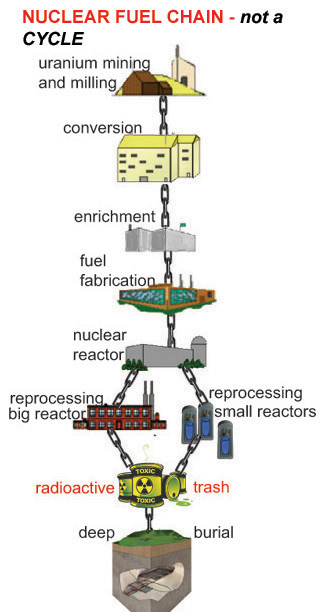 unconvinced about the chances for any uranium industry expansion and acknowledges nuclear power is not commercially viable in the foreseeable future.
A range of state and federal laws expressly preclude such an activity [importing nuclear waste] and there is continuing community contest and no bi-partisan political support. In July 2015 Labor’s national conference re-affirmed that it would ‘remain strongly opposed to the importation and storage of nuclear waste that is sourced from overseas in Australia’.
Unlike the global nuclear power sector which is dying out due to growing costs, public opposition and the rise of renewables – nuclear waste is like zombie waste – it remains undead. From its beginning to its never-end the nuclear industrial chain is full of false promises and real problems, and the Commission’s waste talk demands serious scrutiny and critical attention.
Failed Uranium Promises Highlights Need For Caution On Radioactive Waste Plans New Matilda, By Dave Sweeney on March 3, 2016 “……….Against this background, around 12 months ago South Australian Premier Jay Weatherill announced a Royal Commission to explore opportunities to expand the nuclear industry in SA. The Commission was tasked with examining development options over four broad areas: uranium mining, expanded uranium processing, domestic nuclear power and the storage and management of high-level radioactive waste.
The move surprised many at the time both because of SA’s leading role in renewable energy production (the state is on track to be 50 per cent powered by renewables this year) and the Fukushima inspired retreat from the nuclear industry.
Early commentators criticised the Commission’s pro-industry terms of reference and heavily skewed pro-nuclear ‘expert’ panel. They argued then that the process was either a Trojan Horse for, or would inevitably drift to, support for a renewed push for international radioactive waste disposal in Australia.
This view was vindicated in the Commissions recently released tentative findings. Continue reading
Renewable energy set to boom after ‘two-year drought’
Renewable energy is on the cusp of a long-awaited boom on a doubling in certificate prices.
The Turnbull government’s support for the goal of getting about 23.5 per cent of Australia’s electricity from renewable sources by 2020 has sparked a rise in the prices of renewable energy certificates and fresh M&A talk across the sector.
Infigen Energy managing director Miles George says that after a “two-year drought” in investment in the sector, interest has surged over the last six months thanks to the changed government rhetoric on the sector under Prime Minister Malcolm Turnbull, which has built confidence around the revised 2020 target for renewables.
The revised target of 33,000 gigawatt-hours of renewable energy supply by 2020 was cut from 41 GWh after the lengthy review that concluded last June.
Together with Infigen’s improved balance sheet after the $US274 million ($383 million) sale of its US business, the changes have sparked interest from third parties, both in individual projects in the wind energy player’s portfolio, as well as broader corporate interest, Mr George said………..
Players from other parts of the sector such as pipeline owner APA Group are also looking to grow their exposure to renewables.
Prices for large-scale renewable generation certificates or LGCs, which help underpin new renewables projects under the RET legislation, have surged from about $38 a year ago to more than $80, and are set to remain strong, with forward prices of $82 to $85 for the 2016-18 financial years.
With wholesale power prices also on the rise, prices are becoming supportive of new projects, while renewed interest on contracting for renewable power is emerging among the big three electricity retailers to meet their obligations under the RET after a few years on the sidelines……….http://www.afr.com/business/energy/renewable-energy-set-to-boom-after-twoyear-drought-20160229-gn6zob#ixzz41v2Gz4lY
New climate brings hope to Clean Energy Finance Corporation
The Turnbull government is leaving open the prospect of keeping the Clean Energy Finance Corporation alive…. (subscribers only)
http://www.theaustralian.com.au/national-affairs/climate/new-climate-brings-hope-to-clean-energy-finance-corporation/news-story/d29030ea5556e55a009270c9bedf2b2c
Tasmania needs to ramp up its wind and solar power
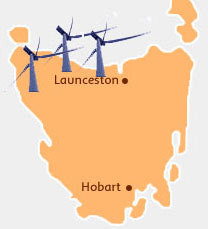 Tasmanian power crisis reveals urgent need for more renewable energy
With Tasmania’s hydropower plants idle due to low rainfall, and a faulty cable connecting the state to the mainland grid, it’s clear a better long-term solution is needed, Guardian, Max Opray, 3 Mar 16 The timing couldn’t have been any worse. On 20 December 2015, the undersea cable connecting Tasmania with mainland Australia malfunctioned, leaving the island state’s energy infrastructure stranded without help – just when it was needed most.
The bulk of Tasmania’s internal energy capacity comes from its extensive hydroelectric network but, with 2015 delivering the driest spring on record, water levels in the state’s dams were catastrophically low. More than ever, the Apple Isle was counting on electricity imported via the Basslink cable so that the hydroelectric dams could be given time to replenish.
Obscured by the Bass Strait’s silty seabed, the fault in the cable is yet to be identified, let alone repaired, and things are getting desperate.
Dam water levels are at 16.8% and falling, low enough that aquatic ecosystems are being put under strain. State-owned energy providerHydro Tasmania had in December already reassembled and rebooted the old Tamar Valley gas-fired generators to ease the burden on the dams and is now spending $44m on importing temporary diesel generators with 200MW of capacity to help keep the lights on while the state waits for cables to be fixed or the rain to arrive…….
Phil Harrington, [the Tasmania-based senior principal of carbon and energy at Pitt & Sherry] says adding more wind farms into the mix would perfectly complement the existing hydro capacity.
“It’s a marriage made in heaven basically,” he says. “The dams act as a big battery so you don’t have to worry about the intermittency of wind and, in turn, there is the opportunity to capture wind farm power when the wind is blowing and reduce the draw on dams.”
Harrington notes that ramping up wind capacity would not just be beneficial in preventing the current crisis from repeating but could also bring long-term economic benefits by allowing the state to consistently export rather than import energy.
That’s without even factoring in the reduced carbon emissions that would result from in-house renewables as opposed to imported electricity from fossil fuel power plants.
There are several planned wind farm projects around Tasmania, including West Coast Wind’s 33-turbine Granville Harbour proposal, but an unfavourable legislative and investment climate has seen progress stall in recent years.
Harrington also advocates improving energy efficiency and lifting the solar feed-in tariff, which the Tasmanian government slashed by two-thirds in 2013……..http://www.theguardian.com/sustainable-business/2016/mar/03/tasmanian-power-crisis-reveals-urgent-need-for-more-renewable-energy
Sam Kelton: Why it will be good to be green in Adelaide’s CBD
THE Adelaide City Council is seeing green and if it has its way wants to see Adelaide become a carbon neutral city by 2025…. (subscribers only)
http://www.adelaidenow.com.au/news/opinion/why-it-will-be-good-to-be-green-in–adelaides-cbd/news-story/64458a07df65398ed13cd652513ea801
Carbon cut as lights go out on coal-fired power
Coal-fired power generation is quietly being phased down, with eight of the nation’s 12 dirtiest stations shuttered….. (subscribers only)
http://www.theaustralian.com.au/national-affairs/climate/carbon-cut-as-lights-go-out-on-coalfired-power/news-story/448f76a427ed2f37f86dd087902faa72
Greens senator Larissa Waters attacks ‘corrupting influence’ of mining industry – video
http://www.theguardian.com/environment/video/2016/mar/01/greens-senator-larissa-waters-attacks-corrupting-influence-of-mining-industry-video 1 Mar 16 Larissa Waters says the mining sector’s political influence is disproportionate ‘when you look at the actual contribution that sector makes to our employment’ and gross domestic product. She says of what she describes as the industry’s ‘corrupting’ influence: ‘In the last three years both big parties have received $3.7m from the fossil fuels sector’ and questions what the companies receive in return. Waters says: ‘They get their approvals … There has not been a coalmine refused under our federal laws in history. There has not been a coal seam gas project refused under our federal laws in history’
New hope to Clean Energy Finance Corporation
 New hope to clean energy body
The Turnbull government is leaving open the prospect of keeping the Clean Energy Finance Corporation alive….(subscribers only)
http://www.theaustralian.com.au/national-affairs/climate/new-climate-brings-hope-to-clean-energy-finance-corporation/news-story/d29030ea5556e55a009270c9bedf2b2c
Continued pro nuclear attacks on renewable energy, despite Royal Commission’s findings
What we’re reading: Nuclear vs wind and solar http://reneweconomy.com.au/2016/what-were-reading-nuclear-vs-wind-and-solar-55304 By Giles Parkinson on 29 February 2016 Dick Smith plays his nuclear card, again
Dick Smith has spoken up again about his preference for nuclear power, despite the recent initial findings of the nuclear royal commission that the technology is way too expensive for Australia, and the Australian government findings that it’s at least twice the cost of wind and solar.
Smith, who promoted nuclear in a recent TV series, made his case when arguing against the proposed Mt Emerald wind farm in north Queensland, using the old myth about the need for more “baseload generation”.
We’re going to address the “baseload generation” myth later this week, and why it is the last resort of the coal industry and the nuclear idealists. The main point is that Australia already has about 7,000MW more “baseload” than it needs..Murdoch media and renewable blackouts!
The Murdoch media continues its campaign against wind and solar, with the Advertiser’s political editor Daniel Wills tweeting last week that the “lights could go out” when the coal-fired power station at Port Augusta is closed in May.
Wills linked to a story he wrote, quoting the head of the SA council of social services, who said that Adelaide suburbs could be blacked out for “weeks at a time” when the coal generator was shut.
No fear-mongering there, then. And obviously no reference to the report by the grid operator, the Australian Energy Market Operator, who said there was no danger to security or reliability from the closure of coal generation.
Coaliton’s ex oil industry energy spokesman utters the predictable
The South Australian opposition party, the Coalition, is maintaining its attack on renewable energy. In the above article, Wills quotes Coalition energy spokesman Dan van Holst Pellekaan saying that the state government should “stop approving new wind farms” if they were going to threaten supply reliability.
Van Holst Pellekaan has been a long-term critic of renewables. On his own blog, the former BP executive blames wind power for causing surges in power prices, even though this has been dismissed before as a furphy.
1 This month


Help Aunty Sue Protect Her Land and Sacred Sites From Destructive Rocket Testing.
.

Australians deserve the truth
about
AUKUS – https://aukuspublicinquiry.com/
PETITION – To: Prime Minister Anthony Albanese and the Australian Labor Government

of the week – Australians for War Powers Reform (AWPR)
To see nuclear-related stories in greater depth and intensity

