Pursuing nuclear power slows down real action on climate change by faster, cheaper, energy sources
In sum, the nuclear industry seeks its own sales arrangements protected from competition, its own prices determined by political processes rather than markets, and diminished opportunities for its carbon-free competitors to express their value, reach their customers, and discover their own prices. This could be good for compliant legislators’ campaign contributions, but hardly in the national interest or helpful for climate protection.
If you haven’t heard this view before, it’s not because it wasn’t published in reputable venues over several decades, but rather because the nuclear industry, which holds the microphone, is eager that you not hear it. Many otherwise sensible analysts and journalists have not properly reported this issue. Few political leaders understand it either. But by the end of this article, I hope you will.
to protect the climate, we must save the most carbon at the least cost and in the least time, counting all three variables—carbon and cost and time. Costly options save less carbon per dollar than cheaper options. Slow options save less carbon per year than faster options. Thus even a low- or no-carbon option that is too costly or too slow will reduce and retard achievable climate protection.
anti-market monkeybusiness cannot indefinitely forestall the victory of cheaper competitors, but it can delay and diminish climate protection while transferring tens of billions of unearned dollars from taxpayers and customers to nuclear owners.
Does Nuclear Power Slow Or Speed Climate Change? Forbes Amory B. Lovins-18 Nov 19, Most U.S. nuclear power plants cost more to run than they earn. Globally, the World Nuclear Industry Status Report 2019 documents the nuclear enterprise’s slow-motion commercial collapse—dying of an incurable attack of market forces. Yet in America, strong views are held across the political spectrum on whether nuclear power is essential or merely helpful in protecting the Earth’s climate—and both those views are wrong.
A bit of good news – patients’exposure to medical radiation is going down
 Radiology efforts over past decade led to 20% drop in patient’s radiation dose, report shows https://www.healthimaging.com/topics/molecular-imaging/radiology-20-drop-patients-radiation-dose Matt O’Connor | November 18, 2019 Radiology has undertaken many efforts to reduce patient exposure to radiation during imaging exams, and findings from a new report suggest those campaigns have made a significant impact. Radiology efforts over past decade led to 20% drop in patient’s radiation dose, report shows https://www.healthimaging.com/topics/molecular-imaging/radiology-20-drop-patients-radiation-dose Matt O’Connor | November 18, 2019 Radiology has undertaken many efforts to reduce patient exposure to radiation during imaging exams, and findings from a new report suggest those campaigns have made a significant impact.
The report, published Monday, Nov. 18, by the National Council on Radiation Protection and Measurements, showed doses dropped by 15% to 20% among U.S. patients between 2006 and 2016. Per person, the estimated average dose fell from 2.92 millisievert (mSv) in 2006 to 2.16 mSv in 2016. “We are pleased, but not surprised, that despite a steadily increasing and aging population, the medical radiation dose Americans receive is going down,” Continue reading |
Open letter from Japan, to nuclear waste site candidates
Friends of the Earth Adelaide, No Nuclear Waste Dump Anywhere in South Australia,November 17, 2015
Open letter to nuclear waste site candidates
So you want a nuclear waste dump in your neighbourhood?
I am an Australian living and working in Japan. I am married and have two small children, and we live midway between Tokyo and Fukushima, on the Pacific coast. The Japan Atomic Energy Agency has major research facilities near where I live, so we are fortunate, in a way, to be the most monitored part of Japan after Fukushima, at least when it comes to atmospheric contamination.
I feel compelled to write, as I am one of relatively few Australians with first-hand experience of living with chronic, low-level radiation contamination, as a result of the nuclear catastrophe at the Fukushima power station in 2011.
If you choose to have a nuclear waste site in your area, and your worst fears are realised, either through leakage from the site, or an accident in transportation; you will have entered a brave new world of probabilities. Nothing is certain when it comes to radiation and illnesses; and in spite of experts’s assurances, we just do not have the data on chronic, low-level radiation contamination. In a way, Japan is the case study. Because radiation is odourless, colourless and tasteless, putting out a positive message about what people cannot smell, see or taste is relatively easy, from the point of view of the authorities and companies involved. People soon forget. Any resulting illnesses, such as cancers, will not appear for many years or even decades, so proving a direct link will be difficult, to say the least. It’s a spin doctors and lawyers dream.
Living with radiation all around us has forced us to reconsider and rearrange our daily lives, in order to prevent being contaminated. The most important thing for us was not the atmospheric radiation, as scary as that was. The official story has it that the main plume of radiation from Fukushima travelled north-west, then south; but our area was still affected, as were other areas.
By way of reassuring the public that they had the pulse of what was going on, the local government placed large, flat-screen TV’s in public buildings and local government offices to ‘monitor’ radiation levels. But to make sure the information is not too alarming, it is displayed in grays (which is like showing how much sun is shining) and not sieverts (which is like showing how sunburnt you are). We bought a personal radiation monitor for use at home and when we go out, and we use Safecast.org as our source of other radiation information.
Parks were not decontaminated around here, and there are hotspots that persist. We rarely go to the park. When my son came home from school with decorated pine cones from art class earlier this year, collected from the local park (as they do every year, said the principal) it took some explaining to get them to stop, with data collected by local NGO’s, demonstrating that the pine cones were likely to have high levels of radiation in them.
Children are not screened here, as we are not in the main contamination area. We have yearly screening done for our son, as he was affected by the fallout, evidenced by the nodules in his thyroid; but this is done at our own expense. At least we know about it and can monitor it; the authorities are not interested in his story.
But what concerns us more than that, is radiation in the food and water supplies. Sure, the authorities do screen food and water supplies, but the data is based on government-set safety levels, however we do not know how these levels were decided. Experts continue to argue. What we do know is that if radiation is detected below those government-set levels, the data shows ‘not detected’. This is false and misleading, and the cynic in me says that this will in all likelihood ‘future-proof’ agencies and companies against class actions, as lawyers in the future will have to demonstrate a link between future cancers and this incident. Hard to make that case if a review of the data 30 years hence shows ‘not detected’. But it’s also bad science; if at some time in the future research reveals that the government levels were wrong, there will be no data available to make any changes to policies.
So the data on water and food safety is less than reassuring. The authorities have published copious data sets on their websites. They do not standardise the information, and do not simplify or explain the data; those likely to access this data soon tire of such cumbersome and confusing information.
We just don’t trust the authorities to get this right.
For example, my son’s school proudly promotes local produce in their school lunch programme. He takes a lunch box. We source our fruit and veggies from Kyushu, in the south of Japan, from a company that does their own testing for radiation, on equipment that we helped pay for. We bought a second fridge for the extra storage needed. And we buy bottled water from a source well away from the affected areas.
With two small children we have to take this stuff seriously. We get on with our lives, but we no longer are willing to take risks with what would otherwise be regarded as ordinary: a trip to the park, or to a restaurant; just turning on the tap has us wondering.
Whatever side of the nuclear industry your politics are, you would be wise to consider the ramifications for you, your family, friends and neighbours, when things go pear-shaped. And go pear-shaped they will; two words I don’t put together any longer are ‘nuclear’ and ‘safety’. And I live day to day knowing why. Chronic, low-level radiation contamination may not be immediately life-threatening, but it will change your life.
I hope you decide wisely.
Phillip Otake
Wombat House
Hitachinaka, Ibaraki
Japan 3120052
Air Independent Propulsion (AIP) submarines to supercede nuclear ones?
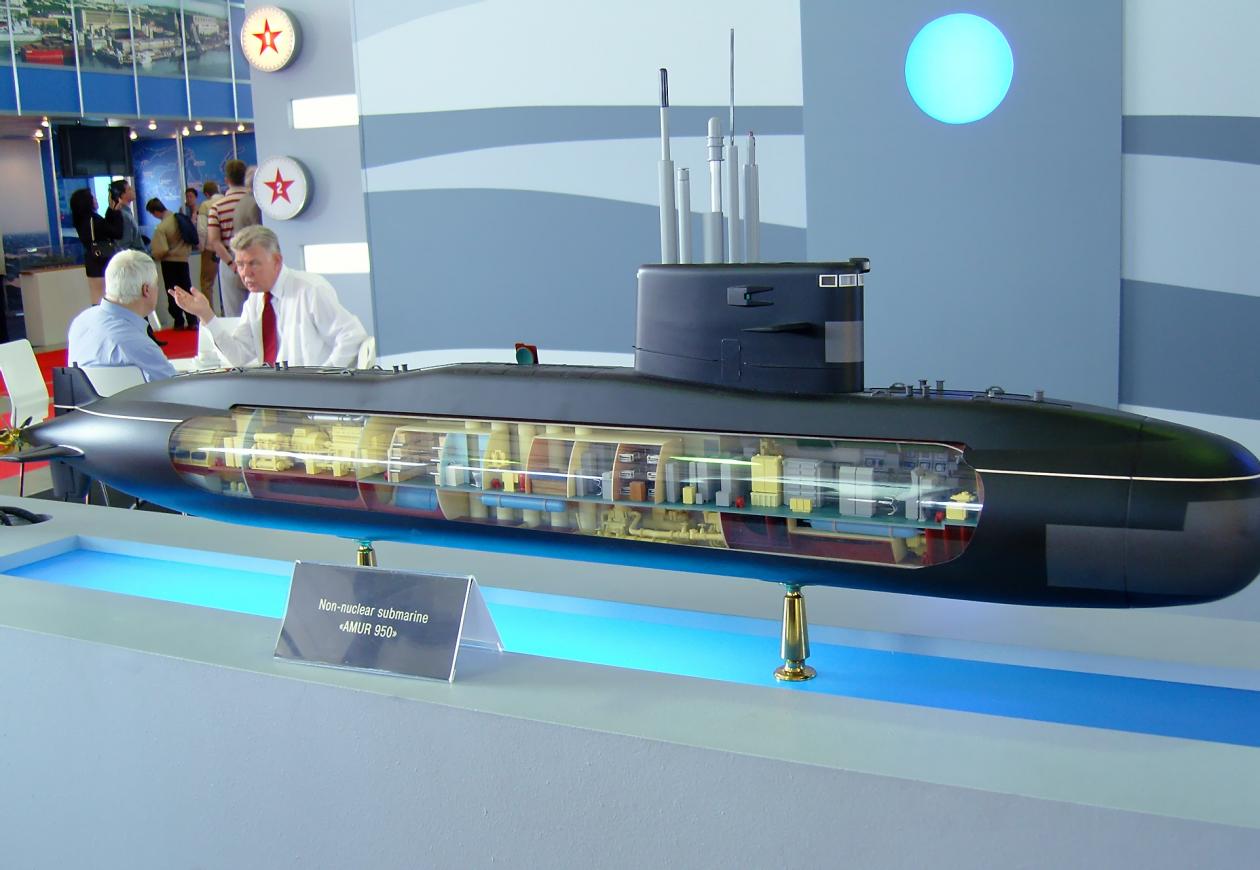
Why is the nuclear lobby frantically propagandising nuclear reactors for  Australian submarines, just as it looks as if cheaper AIP submarines look likely to take over?
AIP powered-submarines have proliferated across the world using three different types of engines, with nearly 60 operational today in fifteen countries. Around fifty more are on order or being constructed.
Stealth:…..AIP submarines can, if properly designed, swim underwater even more quietly.
Cost: ….a country could easily buy three or four medium-sized AIP submarines instead of one nuclear attack submarine
|
All U.S. Navy Submarines are Nuclear Powered (But That Could Change)
Here come the subs. National Interest, 11 Nov 1 9, by Sebastien Roblin Key point: AIP subs are affordable and, when piloted by a competent crew, can sink carriers.
Nuclear-powered submarines have traditionally held a decisive edge in endurance, stealth and speed over cheaper diesel submarines. However, new Air Independent Propulsion (AIP) technology has significantly narrowed the performance gap on a new generation of submarines that cost a fraction of the price of a nuclear-powered boat…….
In the 1990s, submarines powered by Air Independent Propulsion (AIP) technology entered operational use. Though the concept dated back to the 19th century and had been tested in a few prototype vessels, it was left to Sweden to deploy the first operational AIP-powered submarine, the Gotland-class, which proved to be stealthy and relatively long enduring. The 60-meter long Gotlands are powered by a Stirling-cycle engine, a heat engine consuming a combination of liquid oxygen and diesel fuel. Since then, AIP powered-submarines have proliferated across the world using three different types of engines, with nearly 60 operational today in fifteen countries. Around fifty more are on order or being constructed. China has 15 Stirling-powered Yuan-class Type 039A submarines with 20 more planned, as well as a single large Type 032 missile submarine that can fire ballistic missiles. Japan for her part has eight medium-sized Soryu class submarines that also use Stirling engines, with 15 more planned for or under construction. The Swedes, for their part, have developed four different classes of Stirling-powered submarines. Germany has also built dozens of AIP powered submarines, most notably the small Type 212 and 214, and has exported them across the globe. The German boats all use electro-catalytic fuel cells, a generally more efficient and quiet technology than the Stirling, though also more complex and expensive. Other countries intending to build fuel-cell powered submarines include Spain (the S-80), India (the Kalvari-class) and Russia (the Lada-class). Finally, France has designed several subs using closed-cycle steam turbine called MESMA. Three upgraded Agosta-90b class subs with MESMA engines serve in the Pakistani Navy. Continue reading |
“Interim” radioactive waste dump could become permanent, with transport dangers, too
Some fear the “interim” storage facility could become a de facto permanent  storage facility
transport of high-level radioactive waste across the state could also lead to potentially dangerous nuclear releases, leaving impacted communities responsible for emergency responses.
the proposal fits into a wider pattern of negligence and environmental racism on behalf of the federal government towards one of the United States’ poorest majority-minority states.
|
The proposal, which has been in the works since 2011, would see high-level waste generated at nuclear power plants across the country transported to New Mexico for storage at the proposed facility along the Lea-Eddy county line between Hobbs and Carlsbad. Continue reading |

China General Nuclear Power Group to invest $2.5 billion into a huge solar project – plus 2 GW of wind turbines
China General Nuclear Power Group is reportedly preparing to invest almost $2.5 billion into a huge solar project – plus 2 GW of wind turbines – in the autonomous province of Inner Mongolia. Local authorities say the massive project will be complete in 2021.
NOVEMBER 15, 2019 VINCENT SHAW Sources in Beijing have told pv magazine the state-owned China General Nuclear Power Group (CGN) is preparing to invest RMB17 billion ($2.43 billion) in renewables generation capacity in northern China, including 1 GW of solar panels.
The nuclear power company is also planning 2 GW of onshore wind capacity, with all the facilities to be built in the Inner Mongolian city of Ulanchabu.
The authorities in Ulanchabu say compliance reviews and administrative procedures will be carried out in the first half of next year with construction due to start on the massive renewables project by August, ready for completion in 2021.
Having been founded in 1994 in Guangdong province to operate China’s first nuclear power station – the Daya Bay plant – CGN has long since diversified into solar and wind power. The company claims to operate a 4.4 GW solar portfolio and 12.7 GW of wind facilities across all provinces of its homeland after funding more than 300 clean energy projects. The nuclear company also claims to have a 13.4 GW overseas renewable energy project pipeline.
The autonomous region of Inner Mongolia boasts excellent sunshine resources and the Inner Mongolia Solar Energy Industry Association said the construction of ultra-high voltage transmission lines in the province has enabled the authorities to set a curtailment target of near zero for solar electricity, and of 10% for wind power.
Nuclear power wouldn’t be able to stand on its own feet without massive government support.

|
Nuclear power ‘dead and alive’, S&P proclaims, EURACTIV, 13 Nov 19, Growing competition from cheap renewable electricity, safety concerns, and rising costs of new plants are slowly driving nuclear power over the edge – except in Russia and China where the industry continues to enjoy extensive state support, S&P said in a note to investors.It’s probably one of the worst kept secrets in the energy world: nuclear power wouldn’t be able to stand on its own feet without massive government support.
Now, S&P Global Ratings has made it plain and clear to investors. “The global nuclear industry is facing challenges to do with safety concerns, tightening regulations post-Fukushima, phase-out policies in several countries, aging asset bases, increasingly volatile energy markets, and competition with renewables,” the rating agency wrote in the note, released on Monday (11 November). “We see little economic rationale for new nuclear builds in the US or Western Europe, owing to massive cost escalations and renewables cost-competitiveness, which should lead to a material decline in nuclear generation by 2040,” S&P said. But despite those challenges, it would be too soon to pronounce nuclear power dead, S&P adds. China and Russia, for instance, continue to build new nuclear capacities, supported by energy policies and significantly lower construction costs, the rating agency remarked.
In Europe, a battle has been raging below the radar on whether to include or reject nuclear power from an upcoming sustainable finance classification scheme aimed at driving private investments into the green economy. While France supports the inclusion of nuclear in the EU’s draft green finance taxonomy, Germany and Austria argue nuclear isn’t sustainable and shouldn’t be eligible for any kind of EU support. A final decision on the EU’s sustainable finance taxonomy is expected in December. https://www.euractiv.com/section/electricity/news/nuclear-power-dead-and-alive-sp-proclaims/ |
|
|
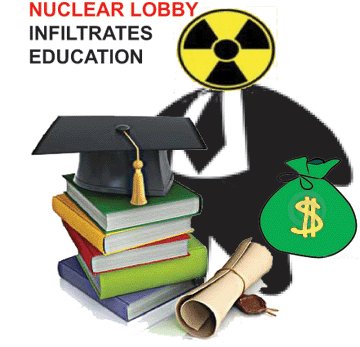
Nuclear industry infitrates U.S. universities (is this happening in Australia, too?)
|
UNIVERSITIES ACROSS AMERICA PROFIT FROM DEVELOPING NUCLEAR WEAPONS. IT’S UNCONSCIONABLE, https://www.newsweek.com/universities-funding-nuclear-weapons-research-1471572 BEATRICE FIHN ON 11/13/19 Americans like a good comeback story, but the recent revitalization of the nuclear arms race is not one to be cheered. President Trump plans to charge the American taxpayer nearly $100,000 a minute to expand the nation’s nuclear weapons capabilities.Other nuclear-armed countries are doing the same.
A new generation of nuclear weapons requires a new generation of workers to develop and maintain these weapons of mass destruction. The National Nuclear Security Administration reported to Congress that 40 percent of its workforce will be eligible to retire in the next five years.The U.S. government and its contractors have turned to the nation’s universities to provide this human capital. A new report documents formal ties between nearly 50 college campuses and the nuclear weapons complex. The extent to which universities have joined this endeavor is surprising. Supporting weapons of mass destruction does not show up in any university mission statements. In fact, it’s often the opposite: universities like to talk about bringing the benefits of knowledge to a global community. The dangers posed by nuclear weapons are clear. Yet universities still choose to support them anyway. Students and faculty now face a choice. They can become the next generation of weapons scientists. Or they can refuse to be complicit in this scheme, denying research partnerships or internships at nuclear weapons labs.Currently, universities across the country receive millions and in some cases billions of dollars to support nuclear weapons development. Universities directly manage nuclear weapons labs, form institutional agreements with these labs and related production sites, pursue research partnerships with nuclear weapons scientists, and provide targeted workforce development for these facilities. Many of the universities with more extensive connections to nuclear weapons are household names: the University of California, Texas A&M University, Johns Hopkins University, and the University of New Mexico. Others, such as local technical and vocational schools, are less well-known. Nuclear weapons are weapons of mass destruction, just like chemical and biological weapons. They carry devastating humanitarian and environmental consequences that do not stop at national borders. Thousands still suffer from the bombs dropped on Hiroshima and Nagasaki. Thousands more suffer from the effects of nuclear weapons testing in the 20th century, including in the U.S. One Centers for Disease Control and Prevention study estimated that radioactive fallout from nuclear tests would kill an additional 11,000 Americans due to an increase in fatal cancers. The United States has paid more than $2.3 billion in compensation to individuals affected by nuclear test fallout. Those most affected by tests around the world have been the already marginalized: indigenous and colonized peoples, women and children. Some see value in the nuclear weapons complex because it supplies thousands of jobs. These boosters fail to acknowledge the studies that demonstrate how defense spending produces fewer jobs per dollar than investment in other areas, like education, health care or infrastructure. The business of nuclear weapons does not provide jobs; it takes them away. Our choice today is between a future without nuclear weapons or no future at all. Seventy-nine nations (and counting) have signed the 2017 United Nations Treaty on the Prohibition of Nuclear Weapons; American states and cities are voting to urge the US to join them. Universities that support nuclear weapons make the wrong choice and their communities should refuse to be complicit. Students, faculty, alumni, and community members — who often fund these schools through their tax dollars — can also take concrete action to help their universities join the right side of history. They can push for transparency around any ties to the nuclear weapons complex, install ethical review processes for basic or dual-purpose research funded by the complex, and prohibit classified research. They can ask University administrations to stop direct management of nuclear weapons production sites and dissolve research contracts solely related to nuclear weapons production. University communities and administrations together can lobby the federal government to flip its funding priorities, so that nonproliferation and disarmament verification research receive more funding than weapons activities. A society can—and should—actively debate the extent to which universities are to serve explicitly national interests. But there should be no debate when it comes to supporting weapons of mass destruction. American academia must stop enabling mass murder. Beatrice Fihn is the Executive Director of the International Campaign to Abolish Nuclear Weapons (ICAN), the 2017 Nobel Peace Prize-winners. |
|
‘Insect apocalypse’ poses risk to all life on Earth
|
‘Insect apocalypse’ poses risk to all life on Earth, conservationists warn
Report claims 400,000 insect species face extinction amid heavy use of pesticides, Guardian, Damian Carrington Environment editor @dpcarrington, Wed 13 Nov 2019 The “unnoticed insect apocalypse” should set alarm bells ringing, according to conservationists, who said that without a halt there will be profound consequences for humans and all life on Earth.
A new report suggested half of all insects may have been lost since 1970 as a result of the destruction of nature and heavy use of pesticides. The report said 40% of the 1million known species of insect are facing extinction. The analysis, written by one of the UK’s leading ecologists, has a particular focus on the UK, whose insects are the most studied in the world. It said 23 bee and wasp species have become extinct in the last century, while the number of pesticide applications has approximately doubled in the last 25 years. UK butterflies that specialise in particular habitats have fallen 77% since the mid-1970s and generalists have declined 46%, the report said. There are also knock-on effects on other animals, such as the spotted flycatcher which only eats flying insects. Its populations have dropped by 93% since 1967. But conservationists said that insect populations can be rescued, by introducing firm targets to cut pesticide use and making urban parks and gardens more wildlife friendly. Scientists said insects are essential for all ecosystems, as pollinators, food for other creatures, and recyclers of nutrients. “We can’t be sure, but in terms of numbers, we may have lost 50% or more of our insects since 1970 – it could be much more,” said Prof Dave Goulson, at the University of Sussex, UK, who wrote the report for the Wildlife Trusts. “We just don’t know, which is scary. If we don’t stop the decline of our insects there will be profound consequences for all life on earth [and] for human wellbeing.”…… The planet is at the start of a sixth mass extinction in its history, with huge losses already reported in larger animals that are easier to study. But insects are by far the most varied and abundant animals, outweighing humanity by 17 times. Insect population collapses have been reported in Germany and Puerto Rico, and the first global scientific review, published in February, said widespread declines threaten a “catastrophic collapse of nature’s ecosystems”. Insects can be helped to recover by “rewilding” urban gardens and parks, Goulson said. “There is potential for a huge network of insect-friendly habitats right across the country. Already a lot of people are buying into the idea that they can make their gardens more wildlife friendly by letting go of control a bit. There are also quite a lot of councils going pesticide free.” But he said: “The bigger challenge is farming – 70% of Britain is farmland. No matter how many gardens we make wildlife friendly, if 70% of the countryside remains largely hostile to life, then we are not going to turn around insect decline.”……. https://www.theguardian.com/environment/2019/nov/13/insect-apocalypse-poses-risk-to-all-life-on-earth-conservationists-warn |
|
Morrison govt – new loans for rare earths miners
New loans for rare earths miners Courier Mail , 13 Nov 19
The Morrison Government has announced a range of measures to help Australia become an “international powerhouse” in an untapped mining sector…. (subscribers only)
Yes, Virginia, Tritium and other radionuclides are hazardous,even in transport and storage
 Zac Eagle Nuclear Fuel Cycle Watch Australia, 11 Nov 19,
 “The specific aims of disposal are:
(c) To inhibit, reduce and delay the migration of radionuclides at any time from
the waste to the accessible biosphere;
(d) To ensure that the amounts of radionuclides reaching the accessible
biosphere due to any migration from the disposal facility are such that
possible radiological consequences are acceptably low at all times.”
Some radionuclides can NOT be contained as they will diffuse in transport and storage, eg tritium.
Tritium is a carcinogen (causes cancer), teratogen (causes deformations of the embryo during pregnancy) and mutagen (causes mutations to DNA). Even very low rates of tritium exposure can lead to cancer, leukemia, and birth defects. https://www.facebook.com/groups/1021186047913052/
Are we opening the doors for an international high-level nuclear waste dump?
Nuclear concern, LEON ASHTON, Quorn, Nov 19
ARE we opening the doors for an international high-level nuclear waste dump?
Federal Government leaders say Australia does not have any high-level nuclear waste.
The reason we don’t is because the word “waste” in the dictionary means it is a material or by-product no longer useful or required.
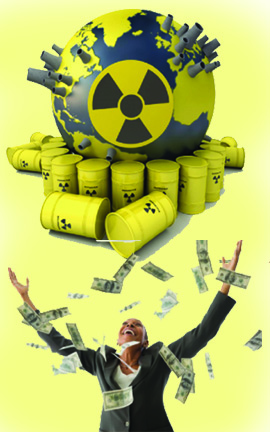 But someone can still make money out of our spent nuclear fuel rods from Lucas Heights, so off it goes under a veil of secrecy to France or England, where recoverable plutonium and uranium is extracted. But the majority of radioactivity (about 95 per cent) still remains in the reprocessed nuclear waste.
Playing politics with words cannot, and does not, reduce the radioactive risk. This badly flawed process to find a postcode to dump our own nuclear waste, without the Federal Government putting all the cards on the table, could very well have major long-lasting implications for all South Australians.

About nuclear plants and bushfires
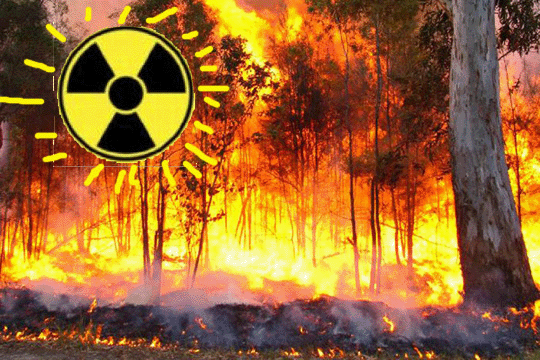 NUCLEAR WILDFIRES Inlander, Robert Alvarez
A reminder to clinicians – nuclear medicine has radiation dangers
Clinicians Get Real on Radiation: ‘Don’t Do Dumb Things’
Awareness of surroundings and others in the room are key to proper cath-lab radiation safety, a VIVA “roundtable” concluded. TCTMD, By L.A. McKeown
November 07, 2019 S VEGAS, NV—Keeping cath lab staff as well as patients safe and within acceptable levels of radiation is a priority that operators can and should be doing on a daily basis, experts here agreed.
The most crucial message for clinicians is that “they are primarily responsible not only for their own personal safety and the patient’s safety, but of everyone in the room,” Mark Bates, MD, DSc (West Virginia University School of Medicine, Morgantown), told TCTMD. He co-moderated a roundtable at VIVA 2019 on radiation protection strategies that provided a glimpse of how the future might look.
“I think 10 years from now we’re going to be in a position where a lot of procedures in the vasculature are going to be done with minimal radiation exposure as we optimize the existing technology, as well as some of the new laser- or light-augmented three-dimensional imaging,” he added…….
he encouraged operators to be aware of their trainees and monitor them for excess radiation exposure.
“As experienced interventionists, we see anatomy that we know is going to be a challenge,” he explained, “[but] we watch our trainees move through the algorithm and change to different wires and different catheters much slower than what we’re used to doing because they need to learn how to do it. Not only are they taking on radiation, but the patients are taking on a lot of extra radiation, too. I think we need to control the time that we allow trainees to perform certain aspects of the procedure.”……
Communication, Visualization, and Behavior Change
Gray noted that while you may have adequate shielding in your cath lab, it won’t help if you don’t use it correctly. A side drape, for example, that gets in your way and is pushed aside out of annoyance may make a difference in exposure levels for everyone in the room.
“That’s really the dumbest thing you could do, so don’t do dumb things,” he said. Gray added that understanding the effects of scatter on yourself may be a simple as looking at your hands for loss of hair on the fingers and wrists. At his institution Geiger counters are used when X-ray badges indicate elevated radiation exposures for individual operators. “So, you have an auditory signal that’s telling you that you’re on the pedal,” he said, adding that it may help in situations where staff are reaching over the table and may not even realize they are being exposed…….. https://www.tctmd.com/news/clinicians-get-real-radiation-dont-do-dumb-things
Radiation risk to South Australians from nuclear waste transport and dumping
 Susan Craig Fight To Stop Nuclear Waste Dump In Flinders Ranges SA, 9 Nov 19, I live less than 300km from KIMBA and less than 400km from HAWKER in metropolitan Adelaide as the wind blows. In the event of the nuclear incident, which there will be, I and my family will be effected. This is catastrophic for all South Australians. Radioactive contamination blows with the wind and flows with the water, there will be no barrier or magic force field to stop it. https://www.facebook.com/groups/941313402573199/
1 This month

of the week – Australians for War Powers Reform (AWPR)
To see nuclear-related stories in greater depth and intensity
 Antinuclear