Electricite de France SA’s announcement that some of its nuclear reactors at home may contain substandard components is the latest setback in the country’s 40-year love affair with atomic energy.
France launched its nuclear program in the 1970s to reduce its dependence on fossil fuels as unprofitable coal mines progressively closed and Western economies were roiled by two consecutive oil shocks. EDF commissioned 58 reactors between 1978 and 2002, which has seen the country get more of its power from nuclear than any other nation. It also means it’s got an aging energy infrastructure, with its oldest plants embarking on large modernization programs to extend their lifecycle.
“The French nuclear fleet is now aging, meaning that some plants will have to be halted in the next 15 years,” said Marc-Antoine Eyl-Mazzega, director of the Center for Energy at the Institut Francais des Relations Internationales. “Some say that nuclear energy is very risky. Renewable energies come with tens of thousands of jobs, but France has been lagging behind.”
After commissioning its 58th reactor in 2002, EDF started building a new type of atomic plant in 2007. Its flagship Flamanville project in Western France was initially due be completed in 2012, though it’s been beset by construction problems.
EDF has also faced setbacks at its existing fleet of French reactors. In 2016, its main supplier Framatome disclosed anomalies in manufacturing records for large equipment, leading to prolonged halts at almost a third of the utility’s reactors. Tuesday’s announcement’s by EDF that some of its reactors may contain substandard components made by Framatome, now 75.5%-owned by EDF, is reigniting fears of prolonged shutdowns.
Given France gets three quarters of its energy generation from nuclear energy, the financial impact of disruption could be severe.
“There should be a significant uplift in French and Central European power prices based on likely future French nuclear outages, which could potentially mean EDF having to buy French generation output that it is short at a premium price,” Barclays Bank analysts Peter Crampton and Dominic Nash wrote in a note.
The stakes are high for the French nuclear industry, which employs about 220,000 people. President Emmanuel Macron has pledged to reduce nuclear output to 50% of France’s power mix in 2035 by shutting down 14 aging reactors to make room for renewables.
Even as the price of electricity stemming from wind and solar has sunk below that of new nuclear builds, the French president has asked EDF to prove by mid-2021 that it can build more competitively-priced nuclear plants, to provide large volumes of carbon-free power as a 100% renewable electricity system seems likely to remain out of reach for at least several decades.
It comes as state-controlled EDF struggles to fund the billions of euros needed each year to maintain its nuclear plants and build new ones within existing cash flows. It’s considering spinning off a minority stake in an entity that would include its power-distribution, renewables and energy-services businesses to raise funds.
Rights chief Michelle Bachelet highlights role in civil wars. ‘The world has never seen a threat to human rights of this scope’ Agence France-Presse in Geneva, 10 Sep 2019Climate change is not only having a devastating impact on the environments we live in, but also on respect for human rights globally, the UN has warned.
The UN rights chief, Michelle Bachelet, cited the civil wars sparked by a warming planet and the plight of indigenous people in an Amazon ravaged by wildfires and rampant deforestation.
“The world has never seen a threat to human rights of this scope,” she told the UN human rights council in Geneva.
“The economies of all nations, the institutional, political, social and cultural fabric of every state, and the rights of all your people, and future generations, will be impacted” by climate change, she warned. Continue reading →
When toxic waste piles — either solid rock or liquid confined behind earthen dams — are left unaddressed, the potential increases for “catastrophic failure
WHILE ‘ZOMBIE’ MINES IDLE, CLEANUP AND WORKERS SUFFER IN LIMBO As the governor of West Virginia and other mine owners warehouse their operations and avoid cleanup, the Trump administration stifles attempts to write rules that could restrict the practice. Center for Public Integrity, 8 Sept 19
……….RADIOACTIVE LEGACY
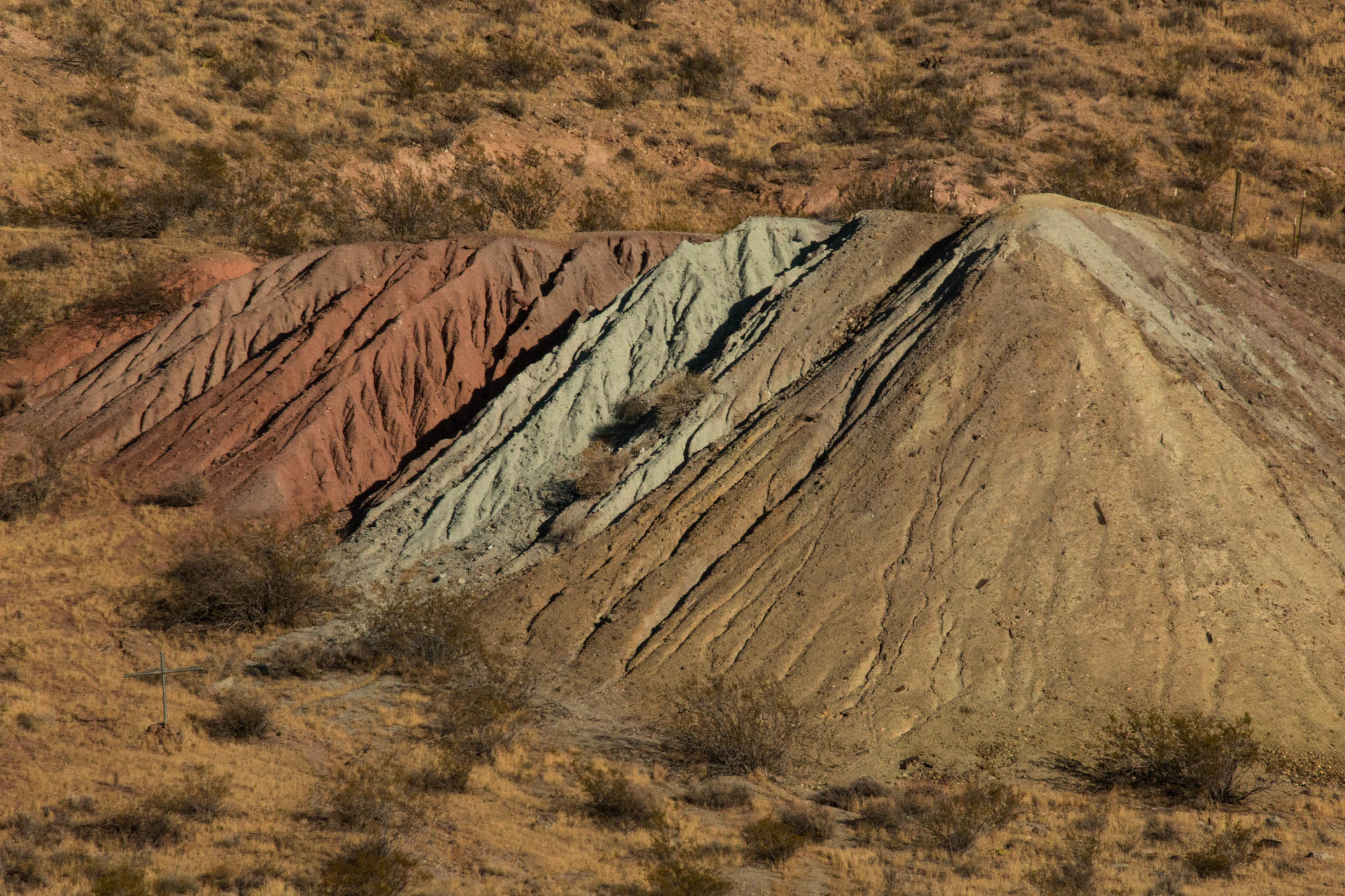
Remnants of America’s nuclear past litter the Grants Mining District in northwest New Mexico: signs warning of radioactivity, a spiked drill bit outside the New Mexico Mining Museum in Grants, businesses offering to help retired miners get U.S. Department of Labor health benefits.
Mount Taylor — “Tsoodzil” to the Navajo Nation — towers over the landscape. At the base of the 11,305-foot-tall inactive volcano sits the Mount Taylor Mine, idled in 1990 and allowed to flood.
The heyday of Southwestern uranium mining lasted just 30 years. Much of the industry, including this mine, has since remained in standby.Continue reading →
Paul Waldon Fight To Stop Nuclear Waste Dump In Flinders Ranges SA, September 7 Kimba, Hawker, don’t have power don’t even have a strong voice or economic clout, so do you think the government will guarantee a nuclear income to oversee the rolling stewardship of the radioactive wastes that will eventually belong to any unwilling community?
If the government was going to it right with deep geological excavation and billions of dollars spent for the storage of such radioactive wastes, don’t you think that their investment would fail to show returns. However there are two other ways to show return on such investment and that is to embrace other countries atomic wastes with the hope the clients keep paying for the storage, or the second is to extract Plutonium from the waste and try to sell it to a dying nuclear market.
Remember the failed Charles McCombie plan made more money from the South Australian taxpayers than what a community would see from a federal governments brigandage of the Flinders or Eyre Peninsula.
“The destruction of a society”: First the U.S. invaded Iraq — then we left it poisoned Scientist: Bombs, bullets and military hardware abandoned by U.S. forces have left Iraq “toxic for millennia”, Salon.com DAVID MASCIOTRA 7 Sept 19 “………In your groundbreaking new research, you discover that the teeth of Iraqi children have 28 times more thorium if they live near a U.S. military base. What is the significance of that conclusion, and what does the presence of thorium indicate about a child’s health? What kinds of abnormalities and health problems will they experience?
The Iraqi population is potentially contaminated with depleted uranium decay products. Baby teeth are highly sensitive to environmental exposures. Such high levels of thorium simply suggest high exposure at an early age and potentially in utero.
We found uranium and thorium in these children’s teeth and hair. Uranium and thorium were also in the bone marrow of children, all of whom had severe birth defects. The magnitude of public contamination caused by these alpha-emitting radioactive compounds is a serious question to be answered. Our bone marrow data is still unpublished, but we hope to publish it separately.
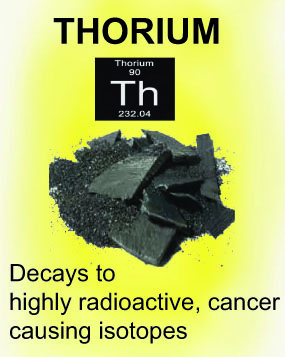
Thorium is an alpha emitter and, once in the body, it can cause cancer and other anomalies. Impacts can vary depending on the timing and amount of exposure. Childhood leukemia, which has been rising in southern Iraq, is a verified outcome of thorium exposure.
“The destruction of a society”: First the U.S. invaded Iraq — then we left it poisoned Scientist: Bombs, bullets and military hardware abandoned by U.S. forces have left Iraq “toxic for millennia”, Salon.com DAVID MASCIOTRA 7 Sept 19
The political and moral culture of the United States allows for bipartisan cooperation to destroy an entire country, killing hundreds of thousands of people in the process, without even the flimsiest of justification. Then, only a few years later, everyone can act as if it never happened.
In 2011, the U.S. withdrew most of its military personnel from Iraq, leaving the country in ruins. Estimates of the number of civilians who died during the war in Iraq range from 151,000 to 655,000. An additional 4,491 American military personnel perished in the war. Because the bombs have stopped falling from the sky and the invasion and occupation of Iraq no longer makes headlines, Americans likely devote no thought to the devastation that occurred in their name.
With the exception of Rep. Tulsi Gabbard of Hawaii, who is currently polling at or below 2 percent, no candidate for the Democratic presidential nomination has consistently addressed the criminality, cruelty and cavalier wastefulness of American foreign policy. Joe Biden, the frontrunner in the race, not only supported the war in Iraq — despite his recent incoherent claims to the contrary — but as chair of the Senate Foreign Relations Committee acted as its most effective and influential salesman in the Democratic Party.
The blasé attitude of America toward the death and destruction it creates, all while boasting of its benevolence, cannot withstand the scrutiny of science. Dr. Mozhgan Savabieasfahani, an environmental toxicologist at the University of Michigan and recipient of the Rachel Carson Prize, has led several investigative expeditions in Iraq to determine how the pollutants and toxic chemicals from the U.S.-led war are poisoning Iraq’s people and environment. The health effects are catastrophic, and will remain so long after the war reached its official end.
I previously interviewed Savabieasfahani about her initial research, and recently acquired an update regarding her team’s latest discovery that there is a close correlation between proximity to a U.S. military base and birth defects in Iraqi children.
Average Americans, even many who opposed the war in Iraq, seem to believe that once the military campaign is over the casualties of war stop accumulating. What is the purpose of your general research regarding the toxicity of the Iraqi environment resulting from American bombs, munitions and other materials? How does the American invasion and occupation continue to adversely affect the health of Iraqis?
Bombs and bullets have been used on an extreme scale in Iraq. Dropping tons of bombs and releasing millions of bullets leaves toxic residues the in air, water and soil of the targeted population. These pollutants continue to poison those populations years after the bombing stops
What’s more, the United States imported thousands of tons of military equipment into Iraq to use in their occupation. They include, tanks, trucks, bombers, armored vehicles, infantry weapons, antiaircraft systems, artillery and mortars — some of which are coated with depleted uranium, and much more. These eventually find their way into U.S. military junkyards which remain across Iraq.
There are unknown numbers of military junkyards scattered across the Iraqi landscape.
Fluctuations in temperature facilitates the rusting and weathering of military junk, releasing toxic pollutants [including radioactive uranium compounds, neurotoxic lead and mercury, etc.] into the Iraqi environment.
Uranium and its related compounds remain toxic for millennia and poison local populations through food, air and water contamination.
The exposure of pregnant mothers to the pollutions of war, including uranium and thorium, irreversibly damages their unborn children. We found thorium, a product of depleted uranium decay, in the hair of Iraqi children with birth defects who lived in Nasiriyah and Ur City, near a U.S. military base.
The destruction of a society does not stop after U.S. bombs stop falling. Environmental contamination which the U.S. leaves behind continues to destroy our environment and poison our people decades after the bombs have stopped falling. The U.S. has a long history of irreversibly destroying human habitats. That must end…….
Forty-four years after U.S. forces left Vietnam, there are still Vietnamese babies born with birth defects from the American military’s use of Agent Orange. How long do you believe Iraqis will continue to suffer from the American-led war?
If left unmitigated, the population will be permanently exposed to elevated toxic exposures which can impact the Iraqi gene pool.
Through the use of the scientific method, you are gaining the ability to identify a severe problem in Iraq. Considering that the problem is a result of the U.S. invasion, what could the U.S. do to solve or at least mitigate the problem?
The U.S. must be held responsible and forced to clean up all the sites which it has polluted. Technology exists for the cleanup of radiation contamination. The removal and disposal of U.S.-created military junkyards would go a long way towards cleaning toxic releases out of the Iraqi environment.
You are a scientist, not a political analyst, but you must have some thoughts regarding the political implications of your work. How do you react to the lack of substantive conversation about the consequences of war in American politics and the press, and the American establishment’s evasion of responsibility on this issue?
I expect nothing from the American political establishment or their propaganda machines which masquerade as “news media” and feed uncritically off State Department press briefings.
Fortunately, there is a movement to criminalize environmental contamination caused by war. Damage to nature and the human environment must be considered a war crime.
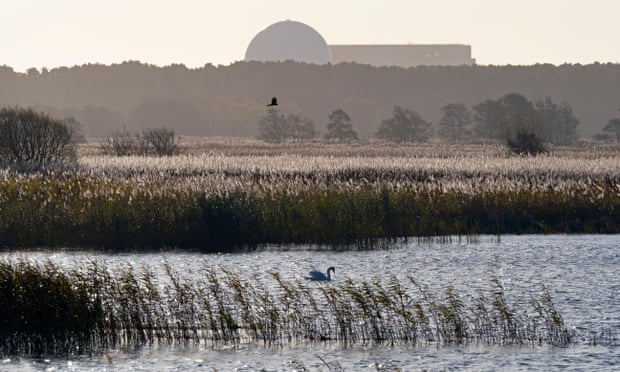
Nuclear power station could destroy wildlife haven I’ve loved since childhood Naturalist Stephen Moss was 13 when he first saw the RSPB reserve in Minsmere, Suffolk. Now he fears plans for Sizewell C could wipe it out, Guardian Stephen Moss@stephenmoss_tv 7 Sept 19 Minsmere and I go back a long way. I can still remember the thrill of my first visit, in 1973, when I was just 13 years old. Later, I made my very first wildlife programme there, with Bill Oddie. And most recently, I presented live programmes from the reserve on the BBC’s red button for Springwatch.
So naturally I am worried that this unique place could be ruined by the proposed building of Sizewell C nuclear power station, a few hundred metres down the coast. And I’m not the only one. My colleague Chris Packham, who like me first went there as a teenager, has called on EDF Energy to ensure that it safeguards Minsmere and its wildlife, now and in the future.
More than 20,000 people have already written to EDF to raise their concerns, and the RSPB – which is firmly against the plans – is holding a Love Minsmere festival at the reserve on 15 September.
There are more than 200 RSPB reserves in the UK – so what makes Minsmere special? The main reason is the incredible range of species found in such a small area – just 1,000 hectares (2,500 acres).
The reserve’s bird list currently stands at nearly 350 species, of which more than 100 have bred; while more than 1,000 types of butterfly and moth have been recorded, including the eponymous Minsmere crimson underwing, recorded just once in the UK, here at Minsmere.
Wyoming lawmakers made it clear this week they are serious about exploring the possible construction of a nuclear waste storage facility within state borders.
Whether it will even be possible, however, still remains to be seen.
Though conversations about potential risks to the environment or to human health were front and center at this week’s first – and only – meeting of the Spent Fuel Rods Subcommittee in Casper, the possibility that Wyoming would ever get a repository to store the nation’s nuclear waste seemed a distant one at the close of business Thursday…….
lawmakers on Thursday learned that the potential windfall from the federal government – at just $10 million a year – might not be worth the political battle ahead to make the proposal happen. …… “If the revenue isn’t there – and we’re only talking $10 million right now – there isn’t going to be any interest in this.”……..
some members of the public expressed concerns that the transportation and storage of nuclear waste could be dangerous ….. while others saw the economic benefits of a nuclear storage facility to be minimal, and not worth the trouble ….
Hinkley Point A nuclear waste transport plans refused, BBC, 5 September 2019 Plans to transport nuclear waste through Somerset and store it at Hinkley Point A, have been rejected by the county council.
Magnox, which manages the decommissioned site, applied for permission to bring waste from three UK power stations to the site by road.
But Somerset County Council voted unanimously to refuse the plans.
Magnox said it was disappointed the council had not agreed with the recommendation for approval.
Under current planning conditions, only waste generated on the Hinkley A site – which is currently under construction- can be stored there.
The company had applied to change the rules so it could transport and temporarily store waste from Oldbury in Gloucestershire, Dungeness A in Kent and Sizewell A in Suffolk.
It had wanted to make a total of 46 deliveries of “intermediate waste”, such as used nuclear fuel containers, by road through Bridgwater.
Despite being recommended for approval, the council’s regulation committee voted unanimously to oppose the application.
‘No benefit’
Councillor Simon Coles said approving the plans would send a message that more of the Hinkley A storage facility could become home to waste from other parts of the UK.
some analysts and many members of the public remain sceptical about whether it is really safe.
China earmarks site to store nuclear waste deep underground
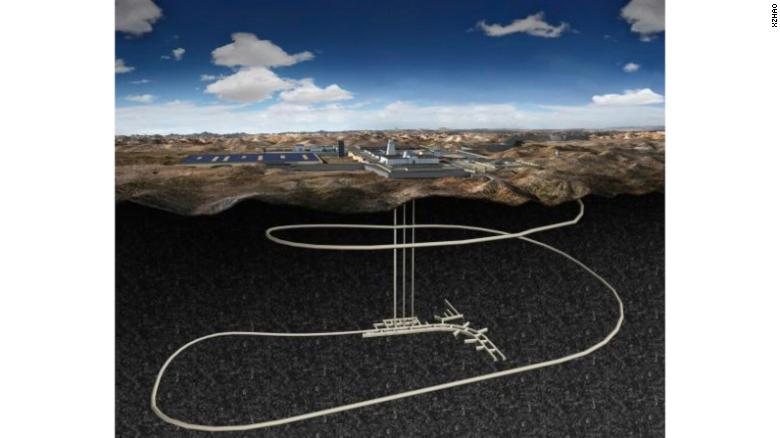
Researchers will conduct tests at the location in Gansu to see whether it will make a viable facility to store highly radioactive waste safely Scientists say China has the chance to become a world leader in this field but has to find a way to ensure it does not leak, SCMP, Echo Xie September 06, 2019 China has chosen a site for an underground laboratory to research the disposal of highly radioactive waste, the country’s nuclear safety watchdog said on Wednesday.
Officials said work would soon begin on building the Beishan Underground Research Laboratory 400 metres (1,312 feet) underground in the northwestern province of Gansu.
Liu Hua, head of the National Nuclear Safety Administration, said work would be carried out to determine whether it was possible to build a repository for high-level nuclear waste deep underground. …….. [China] needs to find a safe and reliable way of dealing with its growing stockpiles of nuclear waste. …..
Some Chinese scientists said the country had the chance to lead the world in this area of research but others have expressed concerns about safety. ……
Despite broad scientific support for underground disposal, some analysts and many members of the public remain sceptical about whether it is really safe.
Lei Yian, an associate professor at Peking University’s school of physics, said there was no absolute guarantee that the repositories would be safe when they came into operation…….
China is also building more facilities to dispose of low and intermediate-level waste. Officials said new plants were being built in Zhejiang, Fujian and Shandong, three coastal provinces that lack disposal facilities.
It can therefore be stated with certainty that the “isotopic source of energy” referred to by Rosatom was a nuclear reactor.
The Mysterious Explosion of a Russian Nuclear Missile Enginem The BESA CENTER. By Lt. Col. (res.) Dr. Raphael Ofek, September 6, 2019 BESA Center Perspectives Paper No. 1,280, September 6, 2019
EXECUTIVE SUMMARY: The fatal explosion that occurred recently during testing of the Russian Burevestnik nuclear cruise missile raises many questions. Could it have been avoided? Was it a fundamental failure of the ambitious armaments plan declared by President Putin in 2018? Whatever the answers to these questions, the renewed trend toward an unconventional armaments race could deteriorate into a second Cold War. Continue reading →
The country of Iceland has held a funeral for its first glacier lost to the climate crisis. The once massive Okjökull glacier, now completely gone, has been commemorated with a plaque that reads: “A letter to the future. Ok is the first Icelandic glacier to lose its status as a glacier. In the next 200 years all our glaciers are expected to follow the same path. This monument is to acknowledge that we know what is happening and what needs to be done. Only you know if we did it.”
This reality is reverberating across the globe, far beyond Iceland. Even when no literal funeral is being held, we are, in a sense, witnessing an ongoing funeral for the world we once knew.
July was the hottest month ever recorded on Earth since record keeping began in 1880. Nine out of the 10 hottest Julys ever recorded have occurred since 2005, and July was the 43rd consecutive July to register temperatures above the 20th century average.
In Greenland, scientists were stunned by how rapidly the ice sheet is melting, as it was revealed the ice there was not expected to melt like this until 2070. The melt rate has been called “unprecedented,” as the all-time single-day melt record was broken in August as the ice sheet lost a mind-bending 12.5 billion tons of water in one day. It is worth remembering that the Greenland ice sheet contains enough ice to increase global sea levels by 20 feet, and it is now predicted that it will lose more ice this year than ever before.
Also for the first time in recorded history, Alaska’s sea ice has melted completely away. That means there was no sea ice whatsoever within 150 miles of its shores, according to the National Weather Service, as the northernmost state cooked under record-breaking heat through the summer.
Earth
A recent UN report estimates 2 billion people are already facing moderate to severe food insecurity, due largely to the warming planet……
Water
Drought-induced blackouts are now besetting the people of Zimbabwe, where some places are seeing 18 hours per day without electricity. Imagine that in the summer heat. Dams providing hydropower lack water. Power blackouts are spreading.
In Harare, Zimbabwe’s capital city, the taps have run dry, affecting more than 2 million people, who have been trying to cope with not having access to municipal drinking water.
These stunning satellite photos show an Arctic burning up in front of our eyes. In Alaska alone, at the time of this writing, at least 1.6 million acres have burned from at least 100 wildfires this summer. Wildfires in Siberiacould well burn into October when the first snows fall, as at least 6.7 million acres have burned across Russia…..
Air
By 2050, Florida will have more days that feel like 100 degrees Fahrenheit (100°F) than any other state in the U.S…….
Diplomats from 22 countries and regions attended a briefing at the Foreign Ministry, where Japanese officials stressed the importance of combating rumors about safety at the plant, which was decimated by a 2011 earthquake and tsunami, while pledging transparency.
The plant’s operator, Tokyo Electric Power Co., or TEPCO, said last month that it would run out of storage space for the water in 2022, prompting South Korea to raise safety questions amid tensions with Japan that have intensified over trade and history. South Korea was among those represented at Wednesday’s briefing.
Water must be continuously pumped into the four melted reactors at the plant so the fuel inside can be kept cool, and radioactive water has leaked from the reactors and mixed with groundwater and rainwater since the disaster.
The plant has accumulated more than 1 million tons of water in nearly 1,000 tanks. The water has been treated but still contains some radioactive elements. One, tritium — a relative of radiation-emitting hydrogen — cannot be separated.
Tritium is not unique to Fukushima’s melted reactors and is not harmful in low doses, and water containing it is routinely released from nuclear power plants around the world, including in South Korea, officials say.
The water has been a source of concern, sparking rumors about safety, especially as Japan tries to get countries to lift restrictions on food imports from the Fukushima area ahead of the 2020 Tokyo Olympics. Import restrictions are still in place in 22 countries and regions, including South Korea and China.
“In order to prevent harmful rumors about the Fukushima Dai-ichi plant from being circulated, we believe it is extremely important to provide scientific and accurate information,” Yumiko Hata, a Ministry of Economy, Trade and Industry official in charge of the Fukushima accident response, said at the briefing. “We appreciate your understanding of the situation and continuing support for the decommissioning work at the Fukushima Dai-ichi plant.”
Officials said there were no complaints from the diplomats Wednesday about Japan’s handling of the water.
More than eight years after the accident, Japan has yet to decide what to do with the radioactive water. A government-commissioned panel has picked five options, including the controlled release of the water into the Pacific Ocean.
As disputes between Japan and neighboring South Korea escalated over export controls and colonial-era labor used by Japanese companies, Seoul last month announced plans to step up radiation tests of Japanese food products, and asked about the contaminated water and the possibility of its release into the sea.
Experts say the tanks pose flooding and radiation risks and hamper decontamination efforts at the plant. Nuclear scientists, including members the International Atomic Energy Agency and Japanese Nuclear Regulation Authority, have recommended the water’s controlled release into the sea as the only realistic option scientifically and financially. Local residents oppose this, saying the release would trigger rumors of contamination, which would spell doom for Fukushima’s fishing and agriculture industries.
The panel recently added a sixth option of long-term storage.
‘Misinformed’: Mining lobby hits out at Cannon-Brookes’ climate claims, Brisbane Times, By Nick Toscano and Darren Gray, September 5, 2019The Minerals Council of Australia has hit out at tech billionaire Mike Cannon-Brookes accusing the Atlassian founder of accepting without question what it calls misinformed claims about its approach to climate change.
BHP, Australia’s largest miner, is facing a push from shareholders including Mr Cannon-Brookes to suspend its membership of industry groups accused of undermining the Paris climate accord goals through stances on various policy issues.
The resolution recommends BHP cut ties with a list of associations including the Minerals Council of Australia (MCA), which it says has supported subsidies for coal-fired power stations in Australia and the development of a new thermal coal basin.
The legacy of Chernobyl: Zombie reactors and an invisible enemy ABC News, Foreign Correspondent By Europe correspondent Linton Besser, Mark Doman, Alex Palmer and Nathanael Scott, 3 Sep 2019
“…………… Victims of contaminated food
While there are areas close to the crippled reactor which are perfectly safe, throughout vast stretches of the north-west of the country, many kilometres away, Ukrainians are still grappling with the legacy of the Chernobyl eruption.
The Australian Government’s official travel advice for this region warns tourists not to eat dairy, game, fruits or vegetables “unless they are imported”.
But in a country as poor as Ukraine, where many still subsist on what they can grow themselves, that’s a luxury few can afford.A study of 14 villages in Rivne — a province 200km west of the reactor — found radioactive milk at more than 12 times the safe level for children. That study was conducted between 2011 and 2016 and published last year, 32 years after the explosion. [PITURE HERE]
The paper warned that in the absence of protective measures for the rural population, the radiation poisoning could continue until at least 2040.It’s primarily Ukraine’s youth — including the grandchildren of those who lived through the disaster — who are now paying for it.
Nine-year-old Kristina, from the small village of Lugove to the west of Kiev, is one of them.
“Sometimes I feel sick,” she told Foreign Correspondent. “I have a headache and my stomach goes around.” In fact, Kristina has an enlarged pancreas and thyroid. She’s suffering the ill effects of consuming contaminated food.
Kristina’s condition is carefully monitored at the Institute of Specialised Radiation Protection on the outskirts of Kiev. The facility was established just months after the accident, and it is still taking on hundreds of new patients every year. All of them are children.
“[They] do not understand what Chernobyl was, the kind of catastrophe [it was],” the institute’s chief nurse, Nataliya Moshko, said. Often, the children do not believe they are sick at all.Still, it’s better than it was. When she first began in nursing, Nataliya was caring for children diagnosed with terminal cancer, “because of the consequences of the Chernobyl disaster”.
Now long dead, she insisted, “I remember every one”.
The legacy of the accident endures. As of January, of the 2.1 million people registered with Ukraine’s health authorities for treatment for Chernobyl-related illnesses, 350,000 were children.
“The problem is that the Chernobyl disaster with its consequences was not solved very quickly at that time,” Nataliya said. “And now these vast territories of Ukraine, and many, many thousands of people are contaminated.”The children spend weeks in the hospital to receive treatment, but also to be fed a clean diet. If and when their symptoms ease, and they’re discharged, they return home to the same contaminated environment which made them ill in the first place.
Food markets across the country are required to test local produce for the two isotopes which persist in the environment — Strontium-90 and Caesium-137.
Berries, mushrooms and milk contaminated by radiation are meant to be discarded, but reports abound of radioactive berries being merely discounted instead.On a visit to a testing laboratory attached to one large fresh produce hall in Kiev, officials take great care in demonstrating the rigour with which they test for Caesium-137.







 Antinuclear