John Bolton shoots down report of ‘nuclear freeze’ agreement with North Korea
White House adviser dismisses reports of a ‘freeze’ of North Korea’s nuclear weapons arsenal. Politico, By QUINT FORGEY 7/1/19, White House National Security Adviser John Bolton on Monday dismissed reports that the administration is considering agreeing to a “freeze” of North Korea’s nuclear weapons arsenal as opposed to a more comprehensive denuclearization pact.
Prior to U.S. President Donald Trump’s meeting Sunday with North Korean leader Kim Jong Un — where Trump became the first sitting commander-in-chief to step into the isolated communist state — the New York Times reported that administration officials have been mulling a deal with Pyongyang to halt production of new nuclear material as a way to kickstart a new round of talks with Kim’s regime.
But the head of Trump’s National Security Council slammed the Times story, writing online that “there should be consequences” for its publishing. Bolton did not specify whether it was the Times or whoever its source was that should face those consequences.
“I read this NYT story with curiosity. Neither the NSC staff nor I have discussed or heard of any desire to ‘settle for a nuclear freeze by North Korea,’” Bolton tweeted, describing the report as “a reprehensible attempt by someone to box in the President.”……
Iran says nuclear stockpile limit breached, Perth Now, AAPNews Corp Australia Network July 2, 2019
Iran has breached the limit of its enriched uranium stockpile set in a 2015 deal with major powers, Foreign Minister Mohammad Javad Zarif said, defying a warning by European cosignatories to stick to the deal despite US sanctions.
Mr Zarif confirmed to the ISNA news agency that Iran had exceeded the relevant limit of 300kg of uranium hexafluoride (UF6), but Foreign Ministry spokesman Abbas Mousavi said Iran’s steps to decrease its commitments to the nuclear deal were “reversible”.
The International Atomic Energy Agency (IAEA) said that its inspectors were verifying whether Iran had accumulated more enriched uranium than allowed……….
After talks on Friday in Vienna, Iran said European countries had offered too little in the way of trade assistance to persuade it to back off from its plan to breach the limit, a riposte to US President Donald Trump’s decision last year to quit the deal and reimpose economic sanctions.
Mr Mousavi urged them on Monday to step up their efforts. “Time is running out for them to save the deal,” state TV quoted Mr Mousavi as saying. The deal between Iran and six world powers lifted most international sanctions against Iran in return for restrictions on its nuclear work aimed at extending the time Iran would need to produce a nuclear bomb, if it chose to, from roughly two-three months to a year.
Iran says its nuclear program is solely for peaceful purposes, including generating power. Its regional adversary Israel, which Iran does not recognise, says the program presents it with an existential threat. ……
So when temperatures in Berlin rose to an uncomfortable 37 Celsius this week – a record for the month of June – I was uncommonly delighted to go to the Bloomberg office, where it’s artificially and blissfully cool.
By letting people in overheated climates concentrate on their work and get a good night’s sleep, air conditioning has played a big part in driving global prosperity and happiness over the past few decades – and that revolution has still barely begun.
About half of Chinese households have this modern tool, but of the 1.6 billion people living in India and Indonesia, only 88 million have access to air conditioning at home, Bloomberg New Energy Finance noted in a recent report.
For many, relief is in sight. Because of the combination of population growth, rising incomes, falling equipment prices and urbanisation, the number of air-conditioning units installed globally is set to jump from about 1.6 billion today to 5.6 billion by the middle of the century, according to the International Energy Agency.
That’s encouraging news for US manufacturers of cooling systems such as Carrier (United Technologies Corp), Ingersoll-Rand and Johnson Controls International.
And because much of this growth will happen in Asia, Chinese companies such as Gree Electric Appliances, Qingdao Haier, Midea Group and Japan’s Daikin Industries Ltd should be big beneficiaries.
There’s just one glaring problem: What will all this extra demand for electricity do to the climate?
Vicious cycle
Carbon dioxide emissions rose another 2 per cent in 2018, the fastest pace in seven years. That increase was alarming in its own right, given what we know about the unfolding climate emergency.
But the proximate cause was especially troubling: Extreme weather led to more demand for air conditioning and heating in 2018, BP explained in its annual review of energy sector.
It’s not too hard to imagine a vicious cycle in which more hot weather begets ever more demand for air conditioning and thus even more need for power. That in turn means more emissions and even hotter temperatures.
That negative feedback loop exists at a local level too. Air-conditioning units funnel heat outside, exacerbating the so-called “urban heat island” effect, which makes cities warmer than the countryside.
BNEF expects electricity demand from residential and commercial air conditioning to increase by more than 140 per cent by 2050 – an increase that’s comparable to adding the European Union’s entire electricity consumption. Air conditioning will represent 12.7 per cent of electricity demand by the middle of the century, compared to almost 9 per cent now, it thinks.
Thankfully, much of that extra demand will be met by solar power (the need for cooling is highest during daylight hours). But because temperatures don’t always return to comfortable levels when the sun goes down, there’s a danger some will be supplied by fossil power.
‘Passivhaus’ and LED revolution
Buildings have long been a blind spot in climate discussions even though they account for about one-fifth of global energy consumption. The inefficiency of air-conditioning systems or badly designed homes and offices simply aren’t as eye-catching as electric cars and making people feel ashamed about flying.
At least Germany’s “passivhaus” movement, a way of building homes that require very little heating or cooling, voluntary standard for energy efficiency in buildings, shows some people are starting to recognise the danger.
There are lessons to be learned from the world of lighting too. The LED revolution was spurred by innovation but also by better energy efficiency labelling on products and the phasing out of out-of-date technology. Something similar needs to happen with air conditioning.
There was a big step forward in January when the Kigali Amendment to the Montreal Protocol came into force. Though not well known, its aim is to phase out the use of potent greenhouse gases called hydrofluorocarbons, which are used widely in air conditioning systems. Unless substituted, these alone could cause 0.4C of additional warming by the end of the century.
Yet true to form, President Donald Trump’s administration hasn’t yet submitted Kigali to the Senate for ratification, even though American manufacturers would benefit from demand for the new technologies that it would spawn.
Trump knows all about the importance of good air con. He spends much of his time at his Palm Beach country club, a place that couldn’t exist without it.
So he’d do well to remember this: You can air condition the clubhouse but not the golf course. And it’s starting to get awfully hot outside.
Chris Bryant is a Bloomberg Opinion columnist covering industrial companies. He previously worked for the Financial Times.
If USA can change some high level nuclear waste to “low level”, might not ANSTO be tempted to do the same for Lucas Heights’ nuclear waste?
State and top fed official at odds over Hanford high level radioactive waste, Tri City Herald, ANNETTE CARY
A top Department of Energy official is fighting what he says are misconceptions about a new policy on which Hanford and other nuclear weapons complex waste must be treated and disposed of to the stringent standards required for high level radioactive waste.
“We’re proposing nothing here,” he said. “We don’t have any plans to propose anything in Washington state.”
But key state of Washington officials are not buying his explanation……..
When the new DOE policy on classifying high level waste was announced earlier this month, Washington state Gov. Jay Inslee and Attorney General Bob Ferguson said in a joint statement that all options would be considered to stop “this reckless and dangerous action.”
Nuclear Power’s Economic Crisis, Friends of the Earth, Australia, 29 June 19
Letter to Australian Politicians (FoE has sent this to all federal MPs and Senators)
Nuclear Power’s Economic Crisis
‒ An Escalating Crisis
‒ Recent Experience in North America and Western Europe: New Reactors Cost A$14‒24 Billion Each
‒ Small Modular Reactors and ‘Generation IV’ Nuclear Power Concepts
———————-
Here are some fun quotes from the paper:
“I don’t think we’re building any more nuclear plants in the United States. I don’t think it’s ever going to happen. They are too expensive to construct.” ‒ William Von Hoene, Senior Vice-President of Exelon, 2018.
Nuclear power “just isn’t economic, and it’s not economic within a foreseeable time frame.” ‒ John Rowe, recently-retired CEO of Exelon, 2012.
“It’s just hard to justify nuclear, really hard.” ‒ Jeffrey Immelt, General Electric’s CEO, 2012.
“I don’t think anybody’s pretending you can take forward a new nuclear power station without some form of government underwriting or support.” ‒ Sir John Armitt, chair of the UK National Infrastructure Commission, 2018.
France’s nuclear industry is in its “worst situation ever”, a former EDF director said in November 2016 ‒ and the situation has worsened since then.
Nuclear power is “ridiculously expensive” and “uncompetitive” with solar. ‒ Nobuo Tanaka, former executive director of the International Energy Agency, and former executive board member of the Japan Atomic Industrial Forum, 2018.
Compounding problems facing nuclear developers “add up to something of a crisis for the UK’s nuclear new-build programme.” ‒ Tim Yeo, former Conservative parliamentarian and now a nuclear industry lobbyist, 2017.
“It sometimes seems like U.S. and European nuclear companies are in competition to see which can heap greater embarrassment on their industry.” ‒Financial Times, 2017, ‘Red faces become the norm at nuclear power groups’.
“I don’t think a CEO of a utility could in good conscience propose a nuclear-power reactor to his or her board of directors.” ‒ Alan Schriesheim, director emeritus of Argonne National Laboratory, 2014.
“New-build nuclear in the West is dead” due to “enormous costs, political and popular opposition, and regulatory uncertainty” ‒ Morningstar market analysts Mark Barnett and Travis Miller, 2013
“Nuclear construction on-time and on-budget? It’s essentially never happened.” ‒ Andrew J. Wittmann, financial analyst with Robert W. Baird & Co., 2017.
“The mooted nuclear renaissance has clearly stalled.” ‒ Steve Kidd, former World Nuclear Association executive, 2014.
EDF to curb Bugey nuclear reactor output as Rhone river flow slows https://www.reuters.com/article/us-france-weather-nuclearpower/edf-to-curb-bugey-nuclear-reactor-output-as-rhone-river-flow-slows-idReporting by Bate Felix; Editing by Geert De Clercq, PARIS (Reuters) 29 June 19 – French utility EDF said on Friday that power generation at its 3,600 megawatt (MW) Bugey nuclear power plant in eastern France could be curbed from Tuesday July 2 due to a lower flow rate of the Rhone river.The plant near the Swiss border has four 900 MW reactors and uses water from the river for cooling.
EDF’s use of water from rivers as coolant is regulated by law to protect plant and animal life. It is obliged to reduce output during hot weather when water temperatures rise, or when river levels and the flow rate are low.
France saw new all-time record temperatures about 45 degrees Celsius in the south of the country on Friday afternoon as a sweltering heatwave engulfed much of southern and central Europe.
‘Worst is still to come’: Sizzling Europe battles wildfires, health risks, New records are being set as Europe swelters, sparking forest fires – and debates over public nudity. SBS News, 28 June 19 Wildfires raged across Catalonia and French authorities stepped up restrictions on water use and driving in cities as swathes of western Europe remained in the grip of an intense heatwave.
Temperatures climbed towards 44 degrees Celsius (111 degrees Fahrenheit) in parts of northern Spain and southern France, driving many people to seek relief in the sea, rivers, lakes, fountains and swimming pools.
Grid operator RTE said French electricity demand on Thursday was close to a summer record seen two years ago, as people turned on fans and coolers to full blast for relief from the scorching temperatures……….
The stifling heat has elsewhere prompted traffic restrictions in France and fanned debate in Germany over public nudity as sweltering residents stripped off. …….
Exceptional for arriving so early in summer, the heatwave will on Thursday and Friday likely send thermometers above 40 degrees in France, Spain and Greece.
In Spain, hundreds of firefighters and soldiers, backed by water-dropping aircraft, battled on Wednesday to put out a wind-fuelled forest fire that erupted in Torre del Espanol in the northeastern region of Catalonia…….
Scientists warn that global warming linked to human fossil fuel use could make such scorchers more frequent.
“Global temperatures are increasing due to climate change,” said Len Shaffrey, professor of climate science at the University of Reading.
Professor Heorhi F. Lepin, a physicist, co-chairman of the public association ‘Scientists For A Nuclear-Free Belarus’, who took part in the rectification of the consequences of the Chernobyl disaster, warns the Belarusians against launching the nuclear power plant in Astravets. https://belsat.eu/en/?p=1108658
According to him, the site chosen is no good and even dangerous – once an earthquake happened on the spot; there is an intersection of crust fractures. However, President Alyaksandr Lukashenka called the scientists who are critical of nuclear-power engineering and particularly the Astravets NPP ‘undercover bandits’ and ‘enemies of the people’, Lepin stressed. The Belarusian NPP with two VVER-1200 reactors with a total capacity of 2,400 MW is being built according to the Russian project near Astravets in the Hrodna region. The first power unit is scheduled to be commissioned in 2019, the second one — in 2020. Subscribe to our channels:
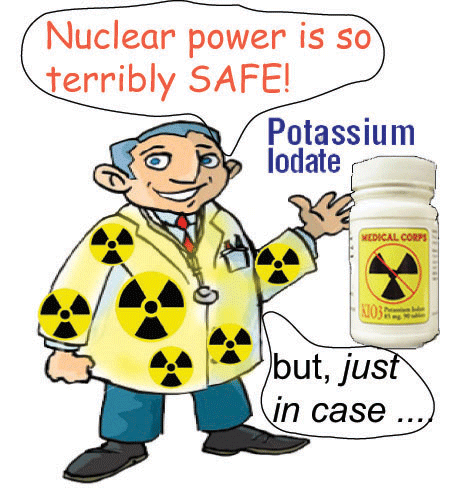
Lithuania to purchase 4 mln iodine tablets to use in case of BelNPP accident, Belsat, 28 June 19 The Lithuanian Ministry of Health will spend about one million euros on 4 million iodine tablets to be used in case of an accident at the Belarusian NPP. This year they should be distributed to residents of the Belarusian-Lithuanian borderland and Vilnius, ru.delfi.lt reports.
Minister of Internal Affairs of Lithuania Eimutis Misiūnas assures that the state institutions are ready for a possible accident at the nuclear power plant in Astravets. But he is not hiding the fact that the agency lacks coordination….
According to him, in case of “the worst scenario”, when the wind blows from east to west, Lithuania will have to evacuate about 20 thousand people in the 30 km zone of the nuclear power plant. Misiūnas believes that this is unlikely, as such weather conditions happen on average 16 days per year.
The China Syndrome (1979) ORIGINAL TRAILER [HD 1080p]
How THE CHINA SYNDROME Brought Down The Nuclear Power Industry, The film that predicted Three Mile Island and affected the response to Chernobyl. Birth, Movies, Death. By ANDREW TODDJun. 28, 2019When we think about nuclear power, we tend to think about disasters. Real life has given us plenty of reason to do so: between Three Mile Island, Chernobyl, and Fukushima, three major global powers have each seen their nuclear industries fall subject to catastrophe. People died; economies crashed; whole sections of Earth were rendered uninhabitable. Hell, Chernobyl arguably ended the entire Soviet Union.
Entertainment, too, has played a significant role in creating this image of nuclear power. Dozens of movies, TV miniseries, and documentaries over the years have played off and magnified real-life fears, often drawing a direct connection between the “peaceful atom” and its destructive wartime counterpart. One of the first, and most influential, was James Bridges’ 1979 atomic energy thriller The China Syndrome.
“The China Syndrome” is a colloquial term for a very real threat in the event of a nuclear accident. It refers to a reactor accident wherein reactivity becomes so supercritical that operators cannot control it. The fuel gets so hot, it melts its mounting channels, control rods, and even exterior housing, burning through concrete and steel to seep unstoppably downwards – in fanciful terms, all the way to China (hence the name). This actually happened, to a degree, at Chernobyl: the reactor transformed into hundreds of tons of corium lava, eating through multiple basement levels and nearly breaching the building’s foundations before it cooled sufficiently to stop melting concrete. The danger, as with any China Syndrome situation, was that the fuel would reach groundwater, poisoning the land or creating a steam explosion that would blast radioactive material across an enormous area.
Curiously, there is no China Syndrome in The China Syndrome. Based primarily on a 1970 accident at the Dresden Nuclear Power Station in Illinois, the film follows reporter Kimberly Wells (Jane Fonda) and cameraman Richard Adams (Michael Douglas) after they witness an accident while reporting at a California nuclear power plant. ………….
Predictably, the nuclear industry had a fiery reaction. Westinghouse executive John Taylor described the film as “an overall character assassination of an entire industry.” Nuclear experts generally agreed that the film’s specific events were highly improbable (if not entirely impossible), but also that an inherent clash exists between earning corporate profits and spending the money required to keep reactors safe. The industry may have been correct to debate the film’s finer technical points or melodramatic ending, but it’s hard to argue that unchecked capitalism doesn’t encourage corner-cutting.
On that note, it’s worth noting, that The China Syndrome’s institutional failure is near-identical to that which contributed to the Chernobyl disaster. Both saw powerful organisations covering up disastrous mistakes made in the name of cost-efficiency, but they come from opposite ends of the ideological spectrum. One comes from American capitalism, where making money and gaining power comes first and safety regulations are a costly hassle. The other comes from Soviet communism, where saving money and maintaining power came first and safety regulations were a costly hassle. Personal and institutional selfishness knows no political boundaries, and both all-powerful states and all-powerful corporations are prone to malfeasance.
All the industry’s rebuttal ultimately proved ill-advised, of course, as less than two weeks after the film’s release, a reactor underwent a partial meltdown at the Three Mile Island Nuclear Generating Station. Still the most serious nuclear accident in US history, the accident caused no immediate deaths, but the radiation leakage may have contributed to cancers, and the fourteen years of cleanup cost a billion dollars. More importantly, it caused opinion to solidify around the The China Syndrome’s thesis: that the nuclear energy industry could not be trusted with nuclear energy……… https://birthmoviesdeath.com/2019/06/28/how-the-china-syndrome-brought-down-the-nuclear-power-industry
The National 28th June 2019, SCOTLAND produced a record amount of renewable energy in the first three
months of 2019, with enough power generated to supply almost nine out of 10
homes. A total of 8877 Gigawatt hours (GWh) of green electricity were
generated in the first quarter of this year – 17% more than in the same
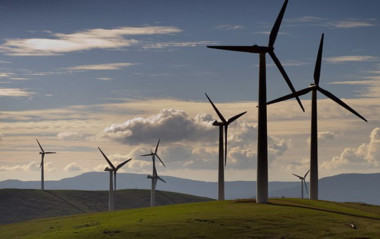
period of 2018. The bulk of this power – 5792 GWh – came from onshore wind
farms, the figures from the UK Department for Business, Energy and
Industrial Strategy (BEIS) show.
Overall, the amount of renewable energy
generated was enough to power around 88% of Scottish households for a year,
the Scottish Government said. Energy minister Paul Wheelhouse said the
sector is going from “strength to strength”. The BEIS data also shows
renewable energy capacity in Scotland rose from 10.4 Gigawatts (GW) in
March 2018 to 11.3 GW in March this year. Electricity exports from Scotland
were at their highest since the last three months of 2017, rising to 4543
GWh – the equivalent of enough energy to power more than 1.1 million homes
for a year. https://www.thenational.scot/news/17735413.scotland-producing-record-renewable-energy-output/
Tom Burke 25th June 2019 Tom Burke: We don’t need nuclear power to keep the lights on, which is fortunate as nuclear power stations are unplanned offline about 25% of the time. They are intermittent, as is all energy generation, so it is fortunate that we don’t actually need base load power.
It’s about five years since the then Chief Executive of Wood Mackenzie Steve Halliday, said baseload is an outmoded concept of how you manage an electricity grid, and that’s because we have modern sensors, we have deep data, deep analytics, we have much more sophisticated software, and we are able to manage our electricity system in a way that delivers affordable and reliable electricity, much more efficiently that we were able to do in the past, and
we simply don’t need very big base load power stations of any kind any more, and certainly not ones the size of the new Hinkley Station at 3.2 gigawatts.
The cost of renewables has gone down, the cost of storage has gone down, absolutely dramatically, far faster than anybody thought possible, and we are now in a position to deliver all of the electricity that people need over the coming decades, without reliance on nuclear power stations any more than we are reliant on big coal fired power stations. Toward the end of the coming decade we will be able to do it without reliance on gas either. We are moving into a very different kind of electricity system, and the idea that nuclear power, which is essentially a
20th Century technology, is what you need to solve a 21st Century problem is simply wrong.
Trump is quietly leading us closer to nuclear disaster, WP, By Steven Andreasen, June 26 2019 Steven Andreasen, director for defense policy and arms control on the National Security Council staff from 1993 to 2001, is a national security consultant who teaches at the University of Minnesota.
Quietly and under a shadow of unease at home and abroad, the Trump administration is opening the door to U.S. resumption of underground nuclear explosive testing. If the president follows his national security team into this dark room, it could shatter the 50-year international consensus behind preventing the spread of nuclear weapons and launch a new nuclear arms race that shakes both the Nevada desert and one of the last remaining pillars of arms control.
The 1996 Comprehensive Nuclear-Test-Ban Treaty (CTBT) prohibits “any nuclear weapon test explosion or any other nuclear explosion” in the atmosphere, in space, underwater or underground. During the negotiations, the United States, Russia, China, Britain and France also agreed on a “not all-inclusive, but illustrative” list of activities not prohibited by the CTBT, recorded by President Bill Clinton in a 1997 directive and given to the Senate. As the U.S. negotiatortold the Senatein 1999, “the zero line, between what would be prohibited to all under the treaty and what would not be prohibited, would be precisely defined by the question of nuclear yield” — that is, whether the activity produced a self-sustaining nuclear reaction. “If what you did produced any yield whatsoever, it was not allowed. If it didn’t, it was allowed.”
The CTBT, unratified though it is by the United States, but with 184 signatories, created a near-universal norm against nuclear explosive testing. (Only North Korea has tested since 1998.) Beyond this benefit, the commitment by the five nuclear weapon states to conclude the treaty by 1996 was crucial to achieving the indefinite extensionin 1995 of the existing nuclear Non-Proliferation Treaty. Today, the Non-Proliferation Treaty remains central to limiting the spread of nuclear weapons. Any action that weakens the test-ban treaty weakens the Non-Proliferation Treaty.
So why would the Trump administration seek to restart nuclear testing? In March, four Republican senators wrote the president asking whether he would consider “unsigning” the CTBT, calling the pact a “deeply flawed treaty that purports to ban all nuclear weapons tests.” In late May, the director of the Defense Intelligence Agency stated Russia “probably” is not adhering to its nuclear testing moratorium. The word “probably” prompted more queries and a new DIA statement: “The U.S. government, including the Intelligence Community, has assessed that Russia has conducted nuclear weapons tests that have created nuclear yield.”
Are the Russians cheating? Russia’s nuclear test site has been under close scrutiny for years. But in the absence of more public information — information that if it exists would probably be highly classified and unlikely to be made public — we have little choice but to assess the administration’s charge based on its motivations and methods.
National security adviser John Bolton and other administration officials are fervent test-ban treaty opponents. The seemingly out-of-the-blue letter from Republican senators and the DIA director’s public remarks had the look of an orchestrated campaign — significantly with no apparent effort to engage with Moscow.
……… The move to “unsign” the CTBT could lead to more destructive nuclear capabilities in the hands of potential U.S. adversaries and be perceived by non-nuclear-weapon states as the ultimate “bait and switch” two decades after the Non-Proliferation Treaty was extended indefinitely. It would fuel uncertainty bordering on chaos for the future of nuclear nonproliferation. And it would generate controversy around our own weapons laboratories, which play a vital role in our security. It would be a high price to pay for fulfilling the dreams of those who seek to destroy another treaty.https://www.washingtonpost.com/opinions/trump-is-quietly-leading-us-closer-to-nuclear-disaster/2019/06/26/3348ca5e-9445-11e9-aadb-74e6b2b46f6a_story.html?utm_term=.375b76b382e7
Nuclear Moral Hazard, Recent sales of U.S. nuclear plants raise questions about safety, liability, and economic incentives. (Today’s post is co-authored with Catherine Hausman, an assistant professor at the University of Michigan.): Davis, Lucas and Catherine Hausman. “Nuclear Moral Hazard”, Energy Institute Blog, UC Berkeley, June 24, 2019,Last week, a company called Holtec International received federal approval to acquire New Jersey’s Oyster Creek nuclear power plant. Except Oyster Creek shut down last fall and will never produce another kilowatt-hour. Holtec is buying it to tear it down. It will be responsible for decommissioning the site, including managing spent fuel and other radioactive waste.
The Oyster Creek sale is one of severalsuchrecent transactions in which a U.S. nuclear plant is being sold by a large publicly-traded company to a smaller privately-owned company specializing in decommissioning. Though the other sales are pending approval by the Nuclear Regulatory Commission, it is not too soon to consider the potential implications for safety and the environment.
The U.S. nuclear industry has a strong record of safe operations. Historically, most owners of U.S. nuclear plants have been large companies, with significant “skin in the game” in terms of profitability and reputation if something were to go wrong. Do smaller companies have the same incentives? ………
Old Regime – Incentive for Safety
But, these nuclear asset transfers could have a big downside. In the past, safe operations meant that nuclear plants could make more money. We suspect that these economic incentives partly account for the good safety record of U.S. nuclear plants. Nuclear power plant owners worked hard to avoid problems because plant shutdowns are costly for plant owners.
Take Entergy, for example. At its peak, Entergy owned eight U.S. nuclear power plants, over 9,000 megawatts of nuclear capacity. With a large portfolio on the line, Entergy had an enormous incentive to make sure all its plants kept running without incident.
In short, under the old regime, it was profitable for nuclear operators to be extremely safe.
New Regime – Less to Lose
But that argument applied in an era when plants were actually generating electricity. Once plants close, this mechanism is no longer relevant – there are no operating profits on the line. Now the way to maximize profits is to minimize costs; so companies specializing in decommissioning will be working hard to figure out how to perform these functions as cheaply as possible.
And the reputation-based incentives also change. Before, companies worried that any problem at any plant would risk their reputation and thus their whole business – including other plants they owned and possibly including non-nuclear assets. But what about the new owners? Smaller companies have less to lose.
Bankruptcy protection is also an issue. For a company like Entergy with a $19 billion dollar market capitalization, only a large incident would put it out of business. Not true for a smaller company. Economists have long argued that bankruptcy protection raises a moral hazard problem – with “judgment proof” companies having less incentive to act safely.
Following in the Footsteps of Oil and Gas?
A similar moral hazard problem arises with oil and gas wells. Our colleague Judd Boomhower has writtenabout how small oil and gas producers face adverse incentives for safety and environmental risk. If the small oil and gas producer declares bankruptcy, it is not responsible for accident clean-up costs. Judd’s research shows that this can lead to less safe operating practices. Relatedly, the American West has thousands of “abandoned” wells that have not been properly remediated, many “owned” by companies that have gone bankrupt. Similar problems have shown up also with coal mines and offshore oil infrastructure. And the stakes for the nuclear sites are tremendous – across the country, we’re talking billions of dollars in anticipated clean-up costs.
Big Role for Regulation
When economic incentives alone do not ensure safe and thorough decommissioning, regulation should play a larger role. The new owners of these plants are inheriting substantial decommissioning funds, and the Nuclear Regulatory Commission hasstated that it will be monitoring financial viability closely throughout the decommissioning process. But what happens if the new owners run out of money? Where will the necessary funds come from if the decommissioning funds prove insufficient to cover costs?
This is new territory for the Nuclear Regulatory Commission. As the U.S. nuclear generation fleet heads toward retirement, the NRC needs to pivot away from regulating construction and operation, and toward regulating decommissioning and fuel storage. Given the incentive issues these sales raise, it is critical that the NRC get up to speed quickly on the emerging risks.
Decommissionings at several recently-closed plants are aiming for accelerated timelines, which could be good or bad for safety. Between that and the specialized expertise that the new owners are bringing, the sales could turn out to be a win for the public. But the economic incentives for proper decommissioning are not very reassuring, and it’s not clear that regulations are ready to fill that gap. https://energyathaas.wordpress.com/2019/06/24/nuclear-moral-hazard/
Nuclear energy is dangerous, and there will always be opposition to this controversial power source.
Local MP Justine Elliot has reaffirmed her longstanding opposition to nuclear power after recent comments made by Gold Coast Liberal Minister Karen Andrews. Last week Minister Karen Andrews told Sky News she ‘doesn’t have an issue with it (nuclear energy) being considered.’ (SKY AM AGENDA – 18/06/2019)
Elliot says the community on the North Coast does have a major issue with nuclear energy. ‘I stand with them in opposing any nuclear power plants in coastal communities like ours on the NSW North Coast,’ she said.
‘Let me make this very clear to Scott Morrison and the Liberals and Nationals – if you pursue any plans for nuclear energy in our region, our community will fight this every day.’
Ms Elliot says as the local Federal MP her message to the Prime Minister is – no nuclear power. ‘Not On My Watch!’
Elliot says the Liberal National government needs to come clean on their plans for nuclear power and reassure the community that it won’t become home to a nuclear power plant. ‘We know that nuclear power plants need to be built near water so I call on the Liberals and Nationals to rule out any plans for nuclear power in our area.
‘I have a long record of opposition to nuclear power and stand with my local community who have made it clear they don’t want it in our area.’
Nuclear power plants are illegal in Australia. Section 140A of the Environment Protection Biodiversity Conservation Act explicitly rules out the development of nuclear installations.
‘The pressure is now on Scott Morrison to take real action to end the energy crisis that has emerged under the Liberal National Government.
‘So far, all the Liberals and Nationals are promising in energy is expensive new coal-fired power stations and a growing pressure from Ministers such as Karen Andrews, for Australia to pursue even more expensive nuclear power.
‘I stand committed in my opposition to nuclear power and under my watch the North Coast will never become home to a nuclear power plant.’









 Antinuclear