The public needs more time to comment on an issue as important as reclassifying high level radioactive waste at Hanford and other Department of Energy sites, says 75 organizations nationwide.
On Monday, Sen. Ron Wyden, D-Ore., added his support to their call for more additional time on the DOE proposal.
DOE is considering a change to how it interprets the legal definition of high level radioactive waste, which would allow more flexibility in how it disposes of some waste at the Hanford site.
Defining less of the nation’s nuclear waste as high level could speed up environmental cleanup and save billions of dollars. Continue reading →
The research – which involved analysis of 3280 research papers and was published on Tuesday by Nature Climate Change – identified 467 pathways that populations were already being hit by a warmer climate. Those impacts will likely increase and intensify unless aggressive efforts are taken to curb greenhouse gas pollution.
“We never stopped being surprised by how many impacts had already happened to us,” said Camilo Mora, an associate professor at the University of Hawaii and lead author of the paper. (An interactive can be seen here.)
“It was also mind-blowing that we just refuse to wake up about how serious this is,” he said.
Examples of impacts cited ranged from famine deaths triggered by droughts and the increased spread of diseases in a warming world, to worsening heavy metal contamination in lakes after wild fires and a poor Russian wheat harvest amid heatwaves in 2010 that led to a doubling of world prices for the commodity.
The tendency towards more extreme weather includes accelerated evaporation rates as temperatures rise, worsening droughts and contributing to more severe wildfires – a combination currently being played out in California, Professor Mora said.
Similarly, with the atmosphere holding about 7 per cent more moisture for each degree of warming, the potential for more intense rain events increases.
About 20-40 per cent of the rainfall from the record wet Hurricane Harvey that soaked Houston in 2017 has been attributed to climate change, Professor Mora said.
Coastal regions were already being exposed to overlapping hazards from both the land and the ocean, making them particularly vulnerable locations now and in the future.
If carbon emissions continued to rise unabated at their current rate, tropical coastal areas such as in Southeast Asia could face as many as six climate hazards concurrently, the paper said.
These included rising sea level and the increased acidity of oceans as they absorb more carbon from the atmosphere.
Top-down limitations
While societies often relied on top-down approaches to dealing with emissions, the result was often a fragile policy set-up.
“One person can come along and reverse the whole thing,” Professor Mora said.
“We need to build the solution for climate change from the bottom up,” he said, citing a project currently being tested in Hawaii to make the US state fully carbon neutral by tree planting and other efforts.
Another Nuclear Megaproject Bites The Dust, Oil Price, By Leonard Hyman & William Tilles – Nov 19, 2018,Toshiba, the troubled Japanese electrical and electronics conglomerate and former owner of the bankrupt Westinghouse, Corp., decided last week cancel its Moorside nuclear project in the UK. If completed, this large nuclear power station would have provided about 7 percent of the UK’s electricity needs. Not that this announcement was a surprise.
Toshiba’s announcement follows word of a breakdown in negotiations with prospective buyer, Korea Electric Power (KEPCo). It appears the Koreans, like others, are rethinking their commitment to nuclear energy worldwide.
Absent the cancellation decision, Toshiba is likely to have had trouble financing a project of this magnitude especially given the stress on its finances from its troubled venture into American nuclear construction. The Moorside project in Cumbria will have cost Toshiba over £400 million and management announced it was taking a write off of £125 million. Toshiba described its decision as “economically rational.” Amen to that.
A government spokesperson commented, “All proposed nuclear projects in the UK are led by private sector developers and … this is entirely a commercial decision for Toshiba.” This is an interesting statement. The only UK nuclear construction project currently underway is owned by French and Chinese state controlled entities, financed with liberal debt guarantees provided by the UK government.
But let’s review the UK’s nuclear energy plans. There were at a minimum three large facilities planned. One for Cumbria, the Toshiba NuGen entity, is now cancelled. The Hinkley Point C units, being built by a French and Chinese consortium, are under construction and slated for commercial service in 2025-27. Lastly, Hitachi had a planned nuclear site in Wylfa.
Given the turmoil surrounding new nuclear construction, we have our doubts about the financial viability of Wylfa. This plant would cost at least 20 billion pounds ($26 billion). Press reports indicate government support would be necessary for close to two thirds of that amount. To further encourage developers, a government minister said in June that the government might directly invest 5 billion pounds into the project for a one third ownership share.
Saudi Arabia’s Investigation of Jamal Khashoggi’s Murder Is a Tragic Farce, New Yorker, By Robin Wright, November 16, 2018 Despite six weeks of ferocious denials by Saudi Arabia, U.S. intelligence has concluded that the kingdom’s ambitious young crown prince, Mohammed Bin Salman, personally ordered the execution of journalist Jamal Khashoggi, who was killed in Istanbul last month, the Washington Postreported late Friday. The U.S. assessment was reportedly based on a growing array of hard data as well as a psychological study of the thirty-three-year-old prince. The most damning and specific intelligence was provided by Turkey, including audio recordings of the murder inside the Saudi consulate and a call from the diplomatic mission back to Saudi Arabia immediately afterwards. Turkey shared both with the C.I.A. director Gina Haspel. But the United States also had its own electronic intercepts of conversations, some retrieved in a search of its electronic archives after Khashoggi’s murder on October 2nd, the Post reported. One was reportedly between the crown prince’s brother Khalid, who was the Saudi Ambassador to Washington at the time, and Khashoggi, who was told to go to Istanbul to get official papers proving his divorce so he could remarry.
The C.I.A. assessment contradicts the Saudi version of events, which was released just a day earlier.
With a straight face, the Saudi foreign minister, Adel al-Jubeir, explained the murder of Jamal
Khashoggi to a group of journalists on Thursday by saying, dismissively, “Sometimes mistakes happen.” The kingdom wrapped up its investigation by charging eleven men—five face the death penalty—and offering yet a fourth (or is it now the fifth?) version of the Washington Postcolumnist’s execution. The Saudis initially claimed that Khashoggi left the Saudi consulate alive. It later admitted that he’d died—but only after he initiated a fistfight and succumbed to a choke hold meant simply to subdue him. At the time, al-Jubeir insisted that Khashoggi’s body had been rolled up in a carpet and taken out of the consulate in one piece. The government later admitted that he’d been dismembered. Now it’s claiming that Khashoggi was tied up and injected with an overdose of a sedative that accidentally killed him.
“May Allah rest his soul,” the Saudi investigation concluded
The announcement generated more questions than answers. The suspects were not named. The kingdom still claims not to know where Khashoggi’s body is, since its agents gave his remains to a “local collaborator” whose name it allegedly does not know. (It said it provided a rough “sketch” to Turkish officials.) It offered no explanation of why one of the fifteen men—the same height and girth as Khashoggi—donned the journalist’s clothing after his death and walked around Istanbul, then switched back to his clothing in a public restroom, after which he tossed what appeared to be Khashoggi’s trousers and jacket into a dumpster. And then there is the inconvenient issue of the bone saw revealed in a security X-ray of the Saudis’ luggage.
Book Review: Weapons, BY DENNIS RICHES http://www.cnic.jp/english/?Sayonara Nukes ~The Case for Abolishing Nuclear Energy and Nuclear Weapons p=4174 BY CNIC_ENGLISH · CAITLIN STRONELL, CNIC AUGUST 2, 2018
Center for Glocal Studies, Seijo University I first came across Dennis Riches’ blog about a year after 3.11 when I was in India studying anti-nuclear movements. I read it avidly for its rich perspectives and home truths. Dennis was offering cultural, psychological, socio-economic explanations for the innumerable crises that the Fukushima Daiichi meltdowns had unleashed. Many of my friends at the time were focused on technical explanations, which although of course vitally important, didn’t answer the really big questions for me, such as: How can the nuclear industry still be telling the same lies? How can TEPCO still be allowed to operate as a company? What are the structures we have to change here? His blog described the stark reality that we were facing in a matter-of-fact way but with strong undercurrents of extreme passion, which somehow seemed to me exactly what was needed.
His recently released book is a compilation of these blog posts, divided into three parts: Articles that relate nuclear issues to works of literature, cinema and popular music; articles primarily about nuclear energy; and articles primarily about nuclear weapons.
The first section connects nuclear issues to figures as wide apart as Don Quixote and Bob Dylan, and compares the situation in Japan immediately after the Fukushima Daiichi disaster to a sci-fi drama called LOST. Although I have never seen this drama, Dennis’s comparison of the traumatized victims in the drama who somehow find themselves in an island paradise that has been transformed by technology and their dazed befuddlement and denial of reality, or perhaps inability to even grasp what had happened to them, and the situation in Japan in the nuclear disaster aftermath, make a lot of sense. We are reminded that in times when we feel utter disbelief, it is often the arts that offer the best explanation as to how and why we find ourselves in this predicament. This section also includes other film and book reviews and discussions.
The other two sections also contain book reviews as well as reports of conferences that Dennis attended, including the 2015 Pugwash Conference in Nagasaki (which he is quite critical of) as well as a report of a presentation on India’s nuclear program by Kumar Sundaram given in 2014 when he was in Tokyo. Articles on the devastating affects of the nuclear industry on citizens of various countries around the world, including the US, the Pacific Islands and Dennis’s native Canada are described with a focus on the voices of the victims. More abstract ideas such as the ‘institutional self-deception’ of the nuclear industry as well as an article titled ‘Commucapitalism’ about how ‘plutonium cities’ in both of the superpowers adopted the same political and social values despite their opposing national ideologies.
Many of the articles are 10-20 pages long and this allows Dennis to present many details, but also articulate overarching ideas and arguments. Each article is followed by copious endnotes and in many cases further reading lists providing a wealth of information on a wide variety of topics. Although this may sound a little academic, the articles are very easy to read and draw you in with their forthrightness and slight sarcastic edge.
The time period covered is from immediately after 3.11 through to more recent articles on the Trump administration. I would have liked to have known the actual date that the original blog was published as I think this might give some indication of the phases that Dennis, and perhaps many of us, went through and the way our thoughts developed post 3.11.
The book is published by Seijo University’s Center for Glocal Studies and is available in pdf form, free of charge at www.seijo.ac.jp/research/glocal-center/publications/english-study-series/index.html
Roni Skipworth Fight To Stop Nuclear Waste Dump In Flinders Ranges SA, 19 Nov 18
Being in Adelaide for the last 12 days waiting for an operation. I have mentioned about the sites being proposed for this stupid idea of a Waste Dump. To my surprise not many cityites know about it and about the fight we have on our hands for those in Flinders Ranges or in farmland of Kimba.
Another thing most don’t know where Kimba is or don’t care. Many have heard of Flinders Ranges but didnt know where this site is. Too many noncaring people in the city who don’t have a clue what us Country bumpkins are fighting for. I even mentioned drilling in the Bight but like the Waste Dumps they don’t care or want to know. Gee they know how to waste water and we get told to save it, as SAWater has plans to build another desal off Sleaford Bay via Pt Lincoln costing $millions of wasted SA Taxes. It seems to me we are 2 separate destinations instead of being in the same State
Mari WalkerSadly many city folk have no idea – but I’m a city person and have travelled the State and know that a waste dump is a very bad idea – so not all city slickers are dumb bunnies who haven’t a clue!
Roni SkipworthI was speaking about those I had spoken to . I do know there are concerned people throughout the city and suburbs just not enough. I feel there are many immigrants coming in with no care factor
City people care once they are informed of what is going on up here. There has been hardly any media coverage about a pending waste dump in the Flinders Ranges. Please keep talking and informing people about it.https://www.facebook.com/groups/344452605899556/
Steve Dale Fight To Stop Nuclear Waste Dump In Flinders Ranges SA, 19 Nov 18nuclear waste is many thousands of times more radioactive than the ore we dig up – it’s not like returning a used piece of used chewing gum. We give them dirt and they want to return highly toxic, long lasting poison.
The solution is to stop producing the radioactive waste. Cyclotrons and accelerators will provide medical isotopes with very little or no waste. ANSTO has decided on a path that makes large amounts of wastes so they can chase after an export isotope market. They are a loose cannon that shoots great gobs of toxic nuclear waste.
Until now, human beings have been spreading, from our beginnings in Africa, out across the globe—slowly at first, and then much faster. But a period of contraction is setting in as we lose parts of the habitable earth.
some of the world is becoming too hot for humans.
As some people flee humidity and rising sea levels, others will be forced to relocate in order to find enough water to survive.
escaping the wreckage is, almost certainly, a fantasy. Even if astronauts did cross the thirty-four million miles to Mars, they’d need to go underground to survive there. To what end?
“People think if we fuck up here on Earth we can always go to Mars or the stars,” “It’s pernicious.”
How Extreme Weather Is Shrinking the Planet, New Yorker, by Bill McKibben November 18, 2018With wildfires, heat waves, and rising sea levels, large tracts of the earth are at risk of becoming uninhabitable. But the fossil-fuel industry continues its assault on the facts …
“……For the past few years, a tide of optimistic thinking has held that conditions for human beings around the globe have been improving. Wars are scarcer, poverty and hunger are less severe, and there are better prospects for wide-scale literacy and education. But there are newer signs that human progress has begun to flag. In the face of our environmental deterioration, it’s now reasonable to ask whether the human game has begun to falter—perhaps even to play itself out. Late in 2017, a United Nations agency announced that the number of chronically malnourished people in the world, after a decade of decline, had started to grow again—by thirty-eight million, to a total of eight hundred and fifteen million, “largely due to the proliferation of violent conflicts and climate-related shocks.” In June, 2018, the Food and Agriculture Organization of the U.N. found that child labor, after years of falling, was growing, “driven in part by an increase in conflicts and climate-induced disasters.”
Scientists have warned for decades that climate change would lead to extreme weather. Shortly before the I.P.C.C. report was published, Hurricane Michael, the strongest hurricane ever to hit the Florida Panhandle, inflicted thirty billion dollars’ worth of material damage and killed forty-five people. President Trump, who has argued that global warming is “a total, and very expensive, hoax,” visited Florida to survey the wreckage, but told reporters that the storm had not caused him to rethink his decision to withdraw the U.S. from the Paris climate accords. He expressed no interest in the I.P. C.C. report beyond asking “who drew it.” (The answer is ninety-one researchers from forty countries.) He later claimed that his “natural instinct” for science made him confident that the climate would soon “change back.” A month later, Trump blamed the fires in California on “gross mismanagement of forests.
……….As a team of scientists recently pointed out in the journal Nature Climate Change, the physical shifts we’re inflicting on the planet will “extend longer than the entire history of human civilization thus far.”
The poorest and most vulnerable will pay the highest price. But already, even in the most affluent areas, many of us hesitate to walk across a grassy meadow because of the proliferation of ticks bearing Lyme disease which have comewith the hot weather; we have found ourselves unable to swim off beaches, because jellyfish, which thrive as warming seas kill off other marine life, have taken over the water.
The planet’s diameter will remain eight thousand miles, and its surface will still cover two hundred million square miles. But the earth, for humans, has begun to shrink, under our feet and in our minds.Continue reading →
Kardashian shared with her 58 million followers Thursday that she was “shocked and furious” to learn that the Woolsey fire, which threatened her Calabasas home, started at the former nuclear testing site and is “potentially radioactive.”
The celebrity’s sister, Kourtney Kardashian, echoed her concerns.
“Our family lives only 20 miles from a nuclear disaster site, Santa Susana Field Lab, and we didn’t even know it. We need Gavin Newsom to do something,” Kardashian tweeted Thursday.
But the contaminated 2,900-acre site is well known to San Fernando Valley residents.
Nearly 490,000 people signed a petition on Change.org, started by West Hills resident Melissa Bumstead whose daughter Grace has twice survived leukemia. The girl is one of 50 children within 20 miles of the site with cancer, a product, some residents say, of an era of nuclear research and rocket engine testing that left a tragic imprint in the area.
The lab appeared on the map in the 1940s, and about two decades later it became the site of a partial meltdown accident that left the area polluted with radioactive and chemical contamination. The United States Department of Energy and NASA signed an agreement in 2010, promising to remove all contamination from the site by 2017. The state’s Department of Toxic Substance Control, or DTSC, asked Boeing, which owns a portion of the area, to commit to its own cleanup.
About a year after the deadline, the companies still have not cleaned the area. Now, Bumstead and other parents worry that their families are being exposed to carcinogenic chemicals.
The Woolsey fire, which started near the former Rocketdyne site, has amplified those concerns.
“DTSC repeatedly minimizes risk from SSFL and has broken every promise it ever made about the SSFL cleanup,” Bumstead wrote in a statement. “Communities throughout the state have also been failed by DTSC. The public has no confidence in this troubled agency.”
Abbott Dutton, a spokeswoman for DTSC, wrote in an email that the agency’s experts accessed the site last Saturday to inspect damage caused by the fire.
“We confirmed that the SSFL facilities that previously handled radioactive and hazardous materials were not affected by the fire,” Dutton wrote. “Over the weekend our multi-agency team took measurements of radiation and hazardous compounds, both on the site and in the surrounding community. The results from this initial round of testing showed no radiation levels above background levels, and no elevated levels of hazardous compounds other than those normally present after a wildfire.”
But Bumstead was skeptical about the test results.
“I was outraged to learn that DTSC and other agencies are telling everyone there’s no risk, and then we find out they haven’t even received many of the test results,” she wrote in an email. “DTSC and Los Angeles County Department of Public Health should not make assurances when they don’t have the data and won’t release whatever measurements they may have taken.”
THEY OCCURRED IN 1959, 1964, 1969, Doug Carrol 19 Nov 18
“Until 2006, the site was operated by private corporations for federal agencies — chiefly NASA. The problems there began in 1959, when a nuclear reactor partially melted down, contaminating portions of the hilltop facility and spewing radioactive gases into the atmosphere. That incident wasn’t publicly disclosed until 1979. By then, more mishaps had followed, including reactor accidents in 1964 and 1969. The worst contamination is thought to be in a parcel known as Area IV, where the meltdown occurred”
20 years of the worst radioactive shit in the universe accumulated in simi valley, where the horrendous fire occured this past week. The place has not been cleaned up. The fires, that englufed Ventura county and Malibu. 3 nuclear meltdowns occured at Santa susana in a 10 year period. Multiple ignitions of shitty nuclear reactor engines, that just spewed radioactive shit into the valley, everytime they fired it off. The recent fires in ventura county, picked up that cesium 137, plutonium yada yada yada, and suspended it in the air all over so cal. Everyone there is breathing it.
I knew a Doctor raised south of Santa Susana. His one and only child, was born deaf and blind with deformities. His three siblings died of cancer, at relatively young ages.
Frank Zappa was from lancaster, and went to High School close to there. His father was affiliated with government research close to santa susana. FRANK may not have been in Lancaster when the first meltdown occured, but there was nuclear research there in the early 50s.
Watch for a massive uptick in the incidence of Reactive airway disease, intractable respiratory infections in children this winter. Watch for a large spike cancer, in the next few years in socal.
Frank Zappa died of the most hideous, fast growing metastatic-prostate cancer possible. That was at age 53. Continue reading →
Despite six weeks of ferocious denials by Saudi Arabia, U.S. intelligence has concluded that the kingdom’s ambitious young crown prince, Mohammed Bin Salman, personally ordered the execution of journalist Jamal Khashoggi, who was killed in Istanbul last month, the Washington Postreported late Friday. The U.S. assessment was reportedly based on a growing array of hard data as well as a psychological study of the thirty-three-year-old prince. The most damning and specific intelligence was provided by Turkey, including audio recordings of the murder inside the Saudi consulate and a call from the diplomatic mission back to Saudi Arabia immediately afterwards. Turkey shared both with the C.I.A. director Gina Haspel. But the United States also had its own electronic intercepts of conversations, some retrieved in a search of its electronic archives after Khashoggi’s murder on October 2nd, the Post reported. One was reportedly between the crown prince’s brother Khalid, who was the Saudi Ambassador to Washington at the time, and Khashoggi, who was told to go to Istanbul to get official papers proving his divorce so he could remarry.
The C.I.A. assessment contradicts the Saudi version of events, which was released just a day earlier.
With a straight face, the Saudi foreign minister, Adel al-Jubeir, explained the murder of Jamal Khashoggi to a group of journalists on Thursday by saying, dismissively, “Sometimes mistakes happen.” The kingdom wrapped up its investigation by charging eleven men—five face the death penalty—and offering yet a fourth (or is it now the fifth?) version of the Washington Postcolumnist’s execution. The Saudis initially claimed that Khashoggi left the Saudi consulate alive. It later admitted that he’d died—but only after he initiated a fistfight and succumbed to a choke hold meant simply to subdue him. At the time, al-Jubeir insisted that Khashoggi’s body had been rolled up in a carpet and taken out of the consulate in one piece. The government later admitted that he’d been dismembered. Now it’s claiming that Khashoggi was tied up and injected with an overdose of a sedative that accidentally killed him.
“May Allah rest his soul,” the Saudi investigation concluded.
The announcement generated more questions than answers. The suspects were not named. The kingdom still claims not to know where Khashoggi’s body is, since its agents gave his remains to a “local collaborator” whose name it allegedly does not know. (It said it provided a rough “sketch” to Turkish officials.) It offered no explanation of why one of the fifteen men—the same height and girth as Khashoggi—donned the journalist’s clothing after his death and walked around Istanbul, then switched back to his clothing in a public restroom, after which he tossed what appeared to be Khashoggi’s trousers and jacket into a dumpster. And then there is the inconvenient issue of the bone saw revealed in a security X-ray of the Saudis’ luggage.
In 2017, the Nuclear Regulatory Commission accepted Waste Control Specialists’ application to begin an interim storage facility for nuclear waste at an Andrews County dump.
The public can submit their opinion to the NRC at nonuclearwaste.org. The deadline for comments is midnight on Monday.
WCS initially hoped to break ground in 2020, but that timeline has been pushed back due to a change in ownership. The license decision from the NRC could be made as early as 2020 and according to NRC spokesperson David McIntyre, the NRC is currently working on an environmental safety and security reviews that won’t be completed until the fall of 2019.
In March, Orano, a French company specializing in nuclear power and renewable energy, and WCS formed a joint venture to license the interim storage facility.
Public Citizen and SEED have intervened in that license application citing a variety of hazards in transporting and storing that nuclear waste. Seven of the eight radioactive waste sites that have been proposed over the last 40 years in Texas have been stopped — the only one to pass is in Andrews County.
“There’s no benefit to Texas taking the nation’s high-level radioactive waste,” said Tom “Smitty” Smith, who was the former director of Public Citizen. “This is waste that nobody else wants that other states have said, ‘We don’t want it in our borders.’ It’s waste that people who live around nuclear reactors have organized to politically to send it somewhere else.
“Here in Texas it’s believed because of former governor (Rick) Perry and because Andrews County said, ‘we would like bring this waste to us,’ that somehow we have expressed consent. More than five million people that live in cities have expressed their opposition.”
SEED Director Karen Hadden said one of the reasons behind submitting opinions online is due to the lack of public meetings by the NRC. There was one meeting in Andrews that took place in 2017, one public meeting in Hobbs, N.M. and two meetings were in Rockville, Md.
McIntyre said after the environmental safety and security reviews is completed in 2019, the NRC will return to Texas for the public to voice opinions and concerns.
The interim storage facility could hold up to 40,000 tons of irradiated nuclear reaction fuel over the life of the 40-year permit. There are no restrictions on how many times WCS could renew its permit.
Hadden is concerned the interim nuclear waste site could stay permanently.
“We risk the waste could stay forever,” Hadden said.
The current application states the nuclear waste would be transported by railroads.
Yet, Dallas, San Antonio and Midland have already opposed the transport of nuclear waste in and around the city
Activist attorney Terry Lodge, who resides in Toledo, Ohio, said over the phone there’s an interim storage already in place — onsite storage.
Lodge continued to explain on a daily basis, it’s overseen by the NRC. It means there’s an alternative that’s taking place instead of the plan to ship everything to the middle of the desert — in some instances thousands of miles — through cities and risk accident, sabotage or terrorism.
“A lengthy petition has been filed to intervene rising 14 various technical points including objections to the legality and odd financing scheme that’s being proposed by WCS when there’s no federal law even allows it,” Lodge said.
The concern also arises when the nuclear waste is transported through neighbors.
Adrian Shelley, current Public Citizen director, said over last several weeks the company used EJSCREEN to look at communities along Class I rail routes across Texas. EJSCREEN can see age, race, education level, income level and language along rail routes.
Shelley said some of the urban areas along those routes have as high as 90 percent of minority residents and in other areas that number is closer to 70 percent. A majority of the people that live along these rail routes don’t speak English, Spanish being the most common.
Lodge said there are also safety concerns for thousands of trips — 3,000 minimum — and there are some Department of Energy policies under consideration that would double, triple or quadruple the number of shipments because of the need to reload the fuel rods into smaller canisters, so they could ultimately be disposed in a geological repository.
“It’s a massive transportation campaign, increasing risk with the number of trips and potential for a serious accident in transit that could have effects according to federal agencies as far as 50 miles downwind,” Lodge said.
Smith added that a 10-year survey from the U.S. Department of Transportation website discovered there have been more than 10,000 railroad accidents in Texas. Many of those involved hazardous cargos. During that 10-year period of time, 25 of the cars carrying hazardous materials had some sort of rupture or leak.
Smith said a report submitted that’s part of the Yucca Mountain licensing process stated an accident could cost $3.5 to $45 billion if the casks were penetrated, but not perforated. If there was a sabotage event and the casks were fully perforated, the cleanup costs could be somewhere between $300 and $648 billion dollars.
“The risk of a train accident is not insignificant,” he said.
Channel News Asia. 17 Nov 18 France aims to reduce the share of electricity produced by nuclear reactors to 50 percent from 75 percent now by 2035, Environment Minister Francois de Rugy said on Sunday. PARIS: France aims to reduce the share of electricity produced by nuclear reactors to 50 percent from 75 percent now by 2035, Environment Minister Francois de Rugy said on Sunday.
The French government has long outlined plans to shrink the country’s reliance on nuclear energy to 50 percent, though the deadline for that goal had remained less clear.
A long-awaited government update on France’s long-term energy strategy is expected to be released later this month, setting out in greater detail how it will cut the share of nuclear in its power generation……….
The new environment minister has said he expected there would be fewer nuclear reactors in France in 10 year’s time, though he has given few details on how many of state-owned EDF’s 58 plants will have to close.
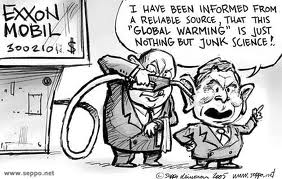
The strategy of muddling the public’s impression of climate science has proved to be highly effective. In 2017, polls found that almost ninety per cent of Americans did not know that there was a scientific consensus on global warming.
What is certain is that the industry’s campaign cost us the efforts of the human generation that might have made the crucial difference in the climate fight
How Extreme Weather Is Shrinking the Planet, New Yorker, by Bill McKibben November 18, 2018 “………The climatologist James Hansen testified before Congress about the dangers of human-caused climate change thirty years ago. Since then, carbon emissions have increased with each year except 2009 (the height of the global recession) and the newest data show that 2018 will set another record. Simple inertia and the human tendency to prioritize short-term gains have played a role, but the fossil-fuel industry’s contribution has been by far the most damaging. Alex Steffen, an environmental writer, coined the term “predatory delay” to describe “the blocking or slowing of needed change, in order to make money off unsustainable, unjust systems in the meantime.” The behavior of the oil companies, which have pulled off perhaps the most consequential deception in mankind’s history, is a prime example.
As journalists at InsideClimate News and the Los Angeles Times have revealed since 2015, Exxon, the world’s largest oil company, understood that its product was contributing to climate change a decade before Hansen testified. In July, 1977, James F. Black, one of Exxon’s senior scientists, addressed many of the company’s top leaders in New York, explaining the earliest research on the greenhouse effect. “There is general scientific agreement that the most likely manner in which mankind is influencing the global climate is through carbon-dioxide release from the burning of fossil fuels,” he said, according to a written version of the speech which was later recorded, and which was obtained by InsideClimate News. In 1978, speaking to the company’s executives, Black estimated that a doubling of the carbon-dioxide concentration in the atmosphere would increase average global temperatures by between two and three degrees Celsius (5.4 degrees Fahrenheit), and as much as ten degrees Celsius (eighteen degrees Fahrenheit) at the poles.
Exxon spent millions of dollars researching the problem. It outfitted an oil tanker, the Esso Atlantic, with CO2 detectors to measure how fast the oceans could absorb excess carbon, and hired mathematicians to build sophisticated climate models. By 1982, they had concluded that even the company’s earlier estimates were probably too low. In a private corporate primer, they wrote that heading off global warming and “potentially catastrophic events” would “require major reductions in fossil fuel combustion.” Continue reading →
Zero Hedge, By Zoë Schlanger & Daniel Wolfe, November 13, 2018 As the Woolsey fire tore through more than 90,000 acres of Southern California over the weekend, it scorched land at a closed-down lab where the US government and private companies tested nuclear weapons and rocket engines for decades beginning in the 1940s.
The Santa Susana Field Lab (SSFL), in the Simi Hills right on the border of Ventura and Los Angeles counties, is now a federal Superfund site. It was the site of several nuclear accidents, including the worst nuclear meltdown in US history when, in 1959, facility operators intentionally vented nuclear material from the site’s “Sodium Reactor Experiment” to prevent it from overheating and exploding. By the time the leaks were closed, the site had released 459 times more radiation than was leaked during the better-known 1979 meltdown at Three Mile Island.
The lab property, now owned by airplane manufacturer Boeing, stretches for 2,800 acres in the Simi Hills, and remains contaminated with toxic materials. Thousands of people live within two miles of the site, and roughly half a million live within 10 miles, according to an investigation by NBC 4 Los Angeles.
The California Department of Toxic Substances Control said that, as of Friday (Nov. 9), they believed there was nothing to worry about at the Santa Susana site in relation to the Woolsey fire. “Our scientists and toxicologists have reviewed information about the fire’s location and do not believe the fire has caused any releases of hazardous materials that would pose a risk to people exposed to the smoke,” the department said in a statement.
But some physicians disagree.
“We know what substances are on the site and how hazardous they are. We’re talking about incredibly dangerous radionuclides and toxic chemicals such a trichloroethylene, perchlorate, dioxins and heavy metals,” Robert Dodge, a physician and the president of Physicians for Social Responsibility Los Angeles, said in a statement. “These toxic materials are in SSFL’s soil and vegetation, and when it burns and becomes airborne in smoke and ash, there is real possibility of heightened exposure for area residents.” ……….
 U.S. senator joins nationwide call for caution on Hanford waste change https://www.tri-cityherald.com/news/local/hanford/article221916070.html BY ANNETTE CARY






 Antinuclear