Highly misleading to say that Lucas Heights nuclear reactor is mainly for medical uses
 it would be highly misleading to attribute this predominantly to medical isotope production given the broad range of uses of the HIFAR and MOATA reactors over the last 60 years.
 waste will be deposited in the repository? Less than 1% is medical waste (leftover radium and some disused sources). Most states and territories each only have a few cubic metres of low level medical waste.
What materials will go into waste repositary for Lucas Heights nuclear trash?
 Radioactive waste in Australia, Medical Association for the Prevention
 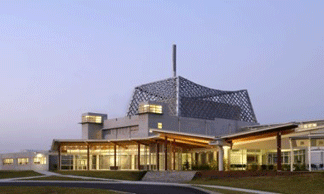 of War (MAPW) 18 Jan 16 …………….Where does the radioactive waste to be deposited in this repository come from? The repository is designed for “low level” and “intermediate level” waste; as of 2014 a total of 4,906 cubic metres (m3 ).
The planned repositary for Lucas Heights returning nuclear waste
 Radioactive waste in Australia, Medical Association for the Prevention of War (MAPW) 18 Jan 16 What will the repository look like? “……The low level waste will be permanently disposed of in a shallow trench covered by 5 metres of soil with plastic and clay lining to prevent water and other materials entering. The nuclear fuel waste, which is intermediate level waste, is too hazardous to be managed in this manner, so will be placed above ground in a temporary purpose-built store3 . Is the repository a permanent management solution? No. This is merely an interim repository for the intermediate level waste. There is no timeline set for a permanent solution. Permanent disposal of intermediate level waste requires deep geological burial. So the Commonwealth repository follows IAEA recommendations only for the low level waste (see below). It does not meet the permanent disposal needs of the intermediate level waste, and defers accountability indefinitely
Only a small fraction of Lucas Heights radioactive waste is of medical origin
The incessant references to nuclear medicine to ‘sell’ the proposed radioactive waste repository/store amount to nothing more than emotive propaganda
10-20% of the current stockpile would be the plausible range for medical waste − closer to 10% if measuring by radioactivity (because spent reactor fuel is such a large contributor to total radioactivity) and closer to 20% if measuring by volume.
Nuclear medicine and the proposed national radioactive waste dump http://www.foe.org.au/anti-nuclear/issues/oz/nontdump/med Jim Green National nuclear campaigner – Friends of the Earth, Australia December 2015
To download a 2-page paper addressing these issues right-click here.
“As health organisations, we are appalled that access to nuclear medical procedures is being used to justify the proposed nuclear waste dump. Most waste from these procedures break down quickly and can be safely disposed of either on site or locally.”
− Dr Bill Williams, Medical Association for the Prevention of War
“Linking the need for a centralized radioactive waste storage facility with the production of isotopes for nuclear medicine is misleading. The production of radioactive isotopes for nuclear medicine comprises a small percentage of the output of research reactors. The majority of the waste that is produced in these facilities occurs regardless of the nuclear medicine isotope production.”
− Nuclear Radiologist Dr Peter Karamoskos
Summary
Proponents of a national radioactive waste facility (a repository for lower-level wastes and a co-located store for higher-level wastes) claim or imply that nuclear medicine would be jeopardised if the facility does not proceed. There is no basis to such claims – they amount to dishonest scare-mongering.
Proponents claim that most or all of the waste that the federal government wants to dispose of or store at a national repository/store arises from medicine, specifically the production and use of medical radioisotopes. However, measured by radioactivity, the true figure is just 10-20%. Measured by volume, the figure may be within that range or it may be higher than 20% − but it takes some creative accounting to justify the claim that most or even all of the waste is medical in origin.
In any case, the fact that some waste is of medical origin doesn’t mean that a national repository/store is the best way to manage the waste.
If the plan for a national repository/store does not proceed, medical waste will continue to be stored at the Lucas Heights reactor site operated by the Australian Nuclear Science and Technology Organisation (ANSTO) and, in much smaller volumes, at hospitals. Some waste is used in hospitals and then sent back to ANSTO (e.g. molybdenum ‘cows’ that have been ‘milked’ of the daughter radionuclide, technetium-99m − by far the most commonly used medical radioisotope). That is no problem since ANSTO and hospitals continue to produce radioactive waste and thus they have an ongoing need for on-site waste stores and waste management expertise regardless of the options for periodic off-site disposal.
Nuclear medicine is not being adversely affected by the absence of a national radioactive waste repository/store. Nuclear medicine will not benefit from the creation of a national radioactive waste repository/store. Continue reading
Sorry history of the inadequate clean-up of radioactive Maralinga nuclear bomb test site
 “By ploughing soil at Taranaki without first removing contaminated fragments the British failed to achieve a significant reduction in radiological hazard and made the situation more difficult to remedy,”
Under a 1956 agreement, the UK accepted responsibility for cleaning up the site. In a subsequent agreement in 1968, Australia released the UK from that responsibility.
Clean-up work finally started in 1996 and continued to 2000, with the worst-affected area now deemed safe to visit but not for permanent occupancy, including by traditional owners the Maralinga-Tjarutja people who officially got their land back only in 2009.

 Aust demands UK pay up for nuclear mess http://www.9news.com.au/national/2016/01/01/00/09/aust-demands-uk-pay-up-for-nuclear-mess In 1990, [Prime Minister] Bob Hawke faced one of his more challenging missions, demanding British PM Margaret Thatcher pay to clean up the God-awful mess left behind when her predecessors let off A-bombs in the outback. Continue reading
Australia’s nuclear weapons plan, and the connection with NSW nuclear reactor
On Nov. 2, 1956, Australia’s Defense Committee formally recommended the acquisition of kiloton-range tactical nuclear weapons.
In 1969, the government announced plans to construct a 500-megawatt nuclear reactor at Jervis Bay in New South Wales.
The intention was clear — this reactor was to support a nuclear weapons program. The reactor project pushed ahead and preliminary site work commenced.
 Revealed: Australia’s Failed Bid for Nuclear Weapons, Chris Walsh, The
  National Interest 16 Sept 15, At 9:00 in the morning on Oct. 3, 1952, a 25-kiloton nuclear explosion vaporized the retired British frigate HMS Plym off Australia’s remote western coast. The Operation Hurricane detonation in the Monte Bello Islands was a seminal moment for Britain and marked its return to the club of great powers.
But for Australia, these tests and others served a murkier purpose – as important and deliberate steps toward Australia’s own acquisition of nuclear weapons. It was in the tense Cold War environment of the late 1950s and early 1960s that these aspirations moved beyond talk and into concrete action.
By the time the Hurricane detonation took place, Australia was already experienced in weapons of mass destruction. From 1943 and in the shadow of a possible Japanese invasion, Australia built extensive stocks of chemical weapons and delivery systems…….
Australia — with its vast coastlines and deserts — emerged as a key player in Britain’s nuclear strategy.
When Britain approached Australia to host nuclear tests, a sympathetic government led by Prime Minister Robert Menzies readily agreed. While Menzies — an Anglophile — focused on his relationship with the United Kingdom, others saw this as an opportunity for Australia to buy membership into the nuclear club. Continue reading
National waste dump is NOT NEEDED for medical nuclear wastes
Is Australia becoming the world’s nuclear waste dump by stealth? http://www.smh.com.au/comment/is-australia-becoming-the-worlds-nuclear-waste-dump-by-stealth-20151122-gl4v04.html December 2, 2015 -Dr Margaret Beavis
When it comes to justifying new nuclear waste storage, a lot has been said about it being essential for medical diagnostics and cancer treatment. This is misleading. It blurs two distinct components of nuclear medicine – the production of isotopes and the use of isotopes.
Australia’s medical use of isotopes creates very little waste. In contrast, reactor production of isotopes generates considerable amounts, and ANSTO (the Australian national nuclear research and development organisation) is very quietly proposing to dramatically increase production to supply 30 per cent of the world market. This will significantly increase Australia’s nuclear waste problems.
On the “use” side, the vast majority of isotopes used for medical tests are very short-lived. They decay on the medical facilities’ premises until their radioactivity is negligible. They can then be disposed of in the normal waste stream (sewers, landfill etc) according to set standards. There is no need for a new nuclear waste facility for these isotopes. Most cancer radiotherapy uses X-rays, which does not produce any waste at all. A very small proportion of cancer treatments need radioactive materials, which also are too short-lived to require a remote repository, or are legally required to be sent back to the (overseas) supplier once used up. There is a very small amount of legacy radium relating to cancer therapy in the past, however, this has not been used in Australia since 1975.
On the other hand, using a nuclear reactor to manufacture radio isotopes creates a significant amount of intermediate and low-level waste. ANSTO has recently unilaterally decided it will dramatically increase its production of medical isotopes at the Lucas Heights reactor to supply 30 per cent of the world’s needs. This business decision assumes it will not have to pay for the disposal of the waste produced, even though it will need securing for many thousands of years.
This decision ignores the reality of technology that enables isotopes to now be produced using accelerators and cyclotrons; i.e. without using a reactor and without generating large quantities of radioactive waste. This is fast approaching commercial scale and economic viability. ANSTO’s decision contrasts with that of the Canadian nuclear authorities, who have for some years been actively phasing out reactor production, and pouring money into developing non-reactor technologies.
Canada, the world’s single largest producer of medical isotopes, independently reviewed its nuclear industry in 2009 and decided not to build a new reactor. Several reasons stood out: investment in reactor production of medical isotopes would crowd out investment in innovative alternative production technologies both domestically and internationally, Canada did not want to continue being the radioactive waste site for other countries’ nuclear medicine industries, it created supply vulnerabilities, and at no stage was it commercially viable without massive taxpayer subsidies.
The ANSTO decision represents vested interests entrenching a reactor-based model and crowding out development of other options. In many ways it is like the coal industry boosting production to stop wind and solar development. Like coal, the business model relies on not being responsible (financially or socially) for the waste it leaves behind.
We urgently need an open conversation about whether we want to pick up the world’s waste tab when it comes to producing medical isotopes. This is a policy choice that will leave Australia storing waste from isotopes produced for international markets. The market price for these isotopes does not factor in the price of storing this waste, which falls to the taxpayer and the community unlucky enough to be landed with it. It is taking Australia down a path that Canada has rejected.
The bottom line is that storage of nuclear waste from reactors is difficult, requiring long-term isolation and security.
We need transparent, informed and clear discussion of what our choices are. We have an obligation to future generations to minimise the waste we produce. There needs to be a considered and open debate about where existing waste is most safely stored in Australia. And it needs to be absolutely clear to ANSTO that we do not want to be left holding the world’s radioactive waste by default.
The Australian community is far from convinced about taking on more radioactive material on behalf of the international community. ANSTO needs to be much more explicit about what it is planning. As a government-owned entity it has a responsibility to be upfront and consult with the community.
When it comes to such long-term decisions about radioactive materials, sleight of hand is not good enough.
Margaret Beavis is a GP and national president of the Medical Association for Prevention of War.
First Nuclear Royal Commission Issues paper indicates an expensive farce
 The paper appears to be totally confused by what is a cyclic process. For example, the phrase “once-through” cycle is an oxymoron and reprocessing spent fuel is just that, not recycling. These terms come from the nuclear industry’s spin doctors.
Nowhere in this Issues Paper is information given on Government funding of the nuclear industry either directly in the form of grants and through government supplied services such as exploration, testing, environmental, and occupational health and safety services or indirect in the form of administrative services associated with the nuclear industry. We have no way of telling, for example, whether government expenditure has been recouped through royalties.
 NUCLEAR FUEL CYCLE (sic) ROYAL COMMISSION
ISSUES PAPER ONE
EXPLORATION, EXTRACTION AND MILLING (of Uranium and Thorium), critique by Dennis Matthews, 20 Apr 15
This, the first issues paper of the SA Government’s commission into expanding SA’s role in the nuclear industry, will confirm the worst fears of those who suspect that this commission is an expensive farce funded by the taxpayers of SA , and that the decision to expand the nuclear industry in SA is an ALP-LP-nuclear industry done deal.
The issues paper is the product of the SA Government’s mining bureaucracy, a bureaucracy that has a long history of a gung-ho environmental vandalism in the name of development. In the days when uranium mining was being considered at Roxby, Beverley and Honeymoon it was called the Dept of Mines & Energy but was known in the environment circles as the Dept of Mines & Mines, there never was any interest in anything form of energy other than coal, gas, oil and uranium.
Thanks to the Australian Democrats we got the Renewable Energy Target (RET) which overnight led to significant investment in wind energy in SA. We then got an even better result in the form of rooftop solar, the ultimate challenge to the fossil-nuclear fuel lobby and to multinational energy corporations in general. Not surprisingly the Liberal-Labor duopoly is now trying to reverse this challenge to big business’ control over electricity generation. To a ruling duopoly, which has given us widespread privatisation of essential services, consumer control over electricity generation is anathema.
The issues paper has four sections. Continue reading
Australian government aims to shut down critics of its environmental policies
given the urgency of the environmental crisis, an increasing number of Australians recognise that we need environmental groups who do more than plant trees.
In the run to this year’s Paris climate talks and next year’s federal election, we need laws that encourage full-blooded political participation.
 Government inquiry takes aim at green charities that ‘get political’ The Conversation, Peter BurdonSenior lecturer at University of Adelaide 16 Apr 15 The almost 600 environmental groups that hold tax-deductibility status in Australia are being scrutinised by a federal government inquiry, with reports that more than 100 of them face being struck off the list.
Some, like the state and territory Conservation Councils and Environmental Defenders Offices, are still reeling from cuts to their programs and core funding. Others, such as Greenpeace, The Wilderness Society, and Friends of the Earth, could lose access to the tax-deductible donations that help sustain their work.
Encouraging donations Deductible gift-recipient status allows eligible organisations, such as those on the environmental register, to receive tax-deductible gifts and contributions. Consistent with similar schemes in the United States and Europe, the environmental register was established as an incentive for citizens and corporations to fund organisations that are active in the public sphere, while also feeding into the logic of small government and shifting the burden of catering for social needs back onto the community.
In Australia, an environmental organisation is defined as a body or society whose primary purpose is to protect the environment or conduct education and research.
Importantly, however, in 2010 the High Court ruled that groups with tax-deductible status also have the right to engage in political debate and advocacy. The judgement described the freedom to speak out on political issues as “indispensable” for “representative and responsible government”.
Moreover, the court pointed out that there is no general rule that excludes “political objects” from charitable purposes. Instead, the key consideration is whether the organisation “contributes to the public welfare”. The ruling has been used as a precedent both in Australia and overseas, such as when Greenpeace won a favourable decision from the New Zealand Supreme Court last year.
Why is Australia holding the inquiry? Continue reading
Respected Aboriginal women elders explain the importance of the Homelands
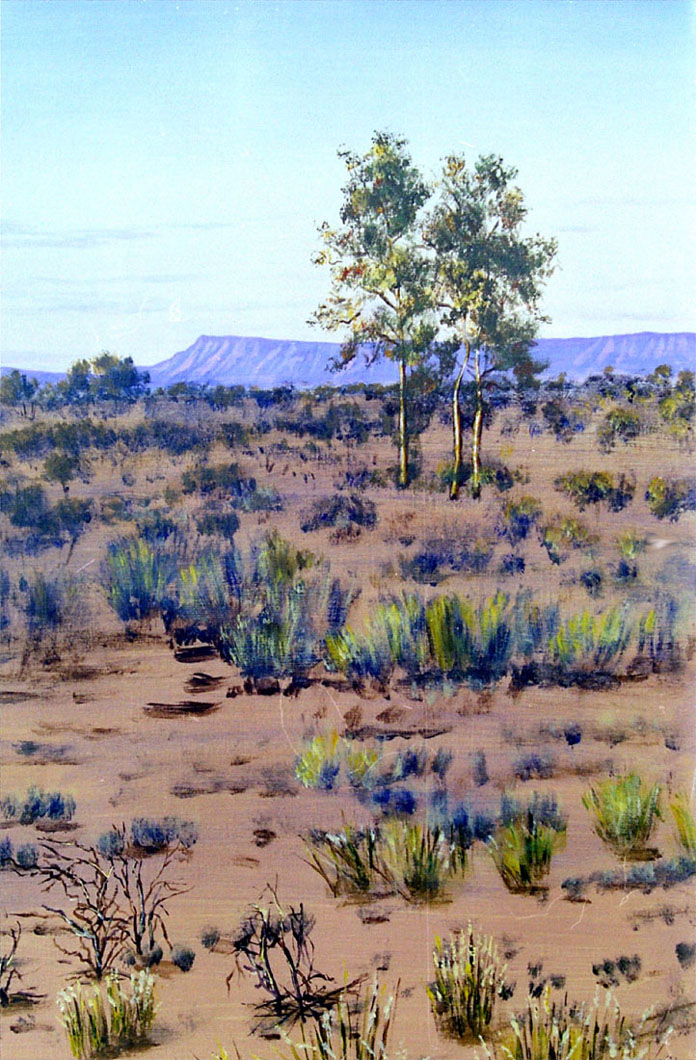 ‘People wanted to go back to homeland’
Mr McLarty said many of the small communities were created in response to government policy last century which saw Aboriginal people forcibly amalgamated into camps with other tribes.
“People wanted to move back to their own homeland,” he said.
“People wanted to go out to their own community, to feel some ownership, because they didn’t feel like they belong here in another tribal area.”
He said the Prime Minister’s comments may come from a lack of understanding of Aboriginal people’s history.
The women said remote communities were being unfairly painted as dysfunctional.
They argued that in most communities, children were safer and happier being raised ‘on-country’, where there was not the steady flow of drugs and alcohol and they could learn the traditional culture.
Remote Aboriginal community closures: Return to country or risk losing traditional homes forever, elders warn http://www.abc.net.au/news/2015-03-11/indigenous-community-members-called-on-to-return-to-country/6304716 By Erin Parke and Rebecca Trigger Senior Aboriginal women from WA’s Kimberley say the Prime Minister’s “lifestyle choice” comments are a wake-up call and people who have drifted from their bush communities should return or risk losing them forever.
The call comes in the wake of Tony Abbott’s suggestion that living in remote Aboriginal communities was a “lifestyle choice” that could not be endlessly subsidised by the Government.
Senior Miriuwung Gajerrong woman and chairperson of the Kimberley Aboriginal Law and Culture Centre Merle Carter said the comments should spur people into action.
“For all of our people who are living in town, who are fringe-dwellers, just because of alcohol, go back to your communities,” she said.
“With the statement that Premier Colin Barnett made about closing the Aboriginal communities, and Tony Abbott backing him up, this might be a wake-up call.” Continue reading
Nuclear waste generated at Lucas Heights is a very small amount – Ziggy Switkowski
 Nuclear waste dump needed, SA could fill gap, ABC Radio P.M February 23, 2015 Natalie Whiting reported this story
“……….NATALIE WHITING: Is the Federal Government going to need a sight for waste storage earlier than when we might see this royal commission wrap up?
NATALIE WHITING: Nuclear fuel rods from France are set to be returned to Australia before the end of the year
More nuclear waste, which is being reprocessed in the UK, will be sent back by 2020……”http://www.abc.net.au/pm/content/2015/s4185584.htm
Australian governments’ political risks in promoting the really quite marginal uranium industry
Given that Australia’s uranium mining and export accounts for less than 1 percent of its hundred billion dollar mineral export business (iron ore, bauxite, coal, copper, nickel etc),36 however, these decisions by Australian leaders risked significant political capital over what has been a highly contentious issue in Australia’s recent political history
Undermining Nuclear Non-Proliferation: Energy and Security Politics in the Australia-India-Japan-U.S. Nuclear Nexus 核不拡散の土台崩し オーストラリア·インド·日本·米国間におけるエネルギーと安全保障政策 The Asia-Pacific Journal, Vol. 12, Issue 46, No. 2, November 1, 2014 Adam Broinowski “……Until 2014, along with China, Japan has also seen a boom in mostly solar and wind electricity generation. But this has been stalled by utilities who have refused to take an influx of renewable power into the grid or to reduce electricity prices.10 With fewer nuclear plants scheduled for construction around the world than for shutdown, however, the nuclear industry faces the likely prospect of contraction11 and replacement by rapidly advancing renewable energy options, including solar, wind, tidal, hydro and possibly geothermal power over the longer term.
Despite this gloomy prognosis for the uranium sector, confidence began to return to the uranium mining industry in Australia from late 2012. Continue reading
A warning on greedy businessmen’s push for nuclear chain in South Australia
 South Australia takes first step to nuclear power GEORGE LEKAKIS The New Daily, Financial Services Editor 9 Feb 15 “……..The setting up of the Royal Commission follows lobbying by prominent South Australian business figures for an independent evaluation of nuclear power and enrichment proposals for the state……..South Australian Nuclear Energy Systems has been discussing its business proposals with Federal and State politicians, with a view to amending laws that ban nuclear power generation.
Mr Hundertmark told The New Daily last year that the company had identified international capital sources for funding local nuclear projects and had formed connections with global players.
“The funding of the things that need to be done is not a real problem – the problem is to get the legislative changes needed,” he said at the time.
Australian Conservation Foundation spokesman David Sweeney warned that the Royal Commission could merely be a pretext for conditioning South Australians to the prospect of establishing a nuclear waste dump.
“There’s no doubt that a large part of this inquiry is to de-sensitise people to the idea of creating an international radioactive waste dump in the state,” he said.“People need to be wary of the possibility that the inquiry is just a Trojan horse for getting a waste dump built.”
Mr Sweeney said any independent inquiry would find that the economic case for nuclear power did not stack up. “As far as nuclear power is concerned, this is a fanciful exercise because of the outstanding growth of renewable alternatives,” he said.
Mr Weatherill said the government would finalise the terms of reference for the Royal Commission in consultation with experts.
In June last year, The New Daily revealed that a group of high-powered businessmen and scientists led by former News International director Bruce Hundertmark had formed a new company to prepare business proposals for nuclear power stations in South Australia.
Apart from Mr Hundertmark, the board of South Australian Nuclear Energy Systems Pty Ltd, includes Ian Kowalick, the former chief of staff to ex-Liberal premier John Olsen. http://thenewdaily.com.au/news/2015/02/08/south-australia-takes-first-step-nuclear-power/
Thorium mining illegal in Victoria – but watch this space, and watch Dr John White
 The Liberal Party’s nuclear dreams: The strange case of Dr John White and Ignite, Independent Australia Sandi Keane 12 March 2014,
Why were Ignite Energy so desparate to dissociate their director Dr John White from both the nuclear industry and the Liberal Party? Deputy editor Sandi Keaneinvestigates.
IS THE nuclear fantasy that has taken hold in South Australia poised to slip under Victoria’s ‘no nukes‘ radar?
More to the point, is the iconic Ninety Mile Beach region of Gippsland being eyed off as a future source of thorium – uranium’s young sister – the substance hailed by nuclear proponents as the green energy source of the future?………
Enquiries to both the Sydney and Melbourne offices of Ignite confirmed that, yes, Dr White was still one of its key people — manager, government and community liaison. Less than five months ago, he was introduced as Ignite’s “executive director” in an interview with the ABC’s The World Today on 17 October 2013. Indeed, the receptionist at Ignite thought that the ‘executive director’ title was still listed on Dr White’s CV.
So, why delete it from the website and have conniptions over us publishing his connections to the Uranium Industry Framework? Also, what did Megan Davison mean by ‘casting aspersions’? Was it the reference to his being ‘a key Liberal Party adviser in the Howard-era’?
As chair of Howard’s Uranium Industry Framework and mastermind of the business plan for the Global Nuclear Energy Partnership (now renamed the International Framework for Nuclear Energy Co-operation), ‘key adviser’ hardly seems to do him justice.
Is this a reaction to the claims by members of the Gippsland community that Ignite is getting favourable treatment because of John White’s special relationship with the Liberal Party?
ELA4968’s thorium prospects Continue reading
Lucas Heights reactor medical Isotopes
1998 Both ANSTO and the government have sought to cloak rational discussion about the costs and benefits of a reactor under a dishonest claim that the reactor is vital for nuclear medicine. In fact medical isotopes can be easily obtained from a global market which already supplies many Australian hospitals.
a senior government bureaucrat who was quoted on the same ABC radio program saying: “The government decided to push the whole health line, and that included appealing to the emotion of people. … So it was reduced to one point, and an emotional one at that. They never tried to argue the science of it, the rationality of it”.ABC radio on March 29, 1998
The medical isotope rhetoric has become so implausible that the government is itself backing away from it. The parliamentary Public Works Committee produced a bipartisan report in August 1999 which said: “A number of organisations and individuals challenged the need for a research reactor based on a requirement to produce medical radiopharmaceuticals. … The Committee recognises that this issue has not been resolved satisfactorily.”
In fact, a nuclear reactor is likely to commit Australia decisively to the “nuclear club” by ensuring a seat on the International Atomic Energy Agency (IAEA). The IAEA regulates the world’s nuclear industry and is also the world’s biggest promoter of nuclear energy.
It is unclear how our national interest is served by participating in the global spread of nuclear energy with its associated risks and waste problems. Professor McKinnon, who carried out the government’s 1993 Reactor Review, agreed, stating: “There may be national advantages in not being so closely associated with IAEA stances.”http://www.foe.org.au/anti-nuclear/issues/oz/lh/articles
Cyclotrons have important advantages over nuclear reactors in relation to radioactive waste and safety, and cyclotrons pose no risk in relation to weapons proliferation. The underlying reason for these advantages is that cyclotrons are powered by electricity, whereas research reactors rely on a uranium fission reaction.
1 This month

of the week – Australians for War Powers Reform (AWPR)
To see nuclear-related stories in greater depth and intensity
 Antinuclear