Traditional owners fight Adani coal project, – fear destruction of their sacred wetlands
|
Adani coal mine poses ‘alarming’ risk to sacred wetlands, traditional owners say, ABC News
Key points:
The ABC this week became the first media organisation to visit the remote springs complex — one of the world’s last unspoiled desert oases — which are at the centre of a controversial Morrison Government decision that thrust Adani forward as a federal election issue. The trip to the nationally important wetlands was at the invitation of a determined group of mine opponents within the Wangan and Jagalingou (W&J) people, who have vowed to take their fight all the way to The Hague. The Doongmabulla, which means “the place of many waters”, represents the key hurdles to Adani’s mining ambitions in a project already four years overdue. The miner still has to prove to the Queensland Government it can safeguard the springs, which are also the key cultural concern for traditional mine site owners who could further put the brakes on Adani by taking them to the High Court. Scientists dispute Adani’s mine impact modellingCommonwealth science agencies have raised doubts about Adani’s modelling of the mine’s impact on the springs, saying it could drain its underground water source by four times its legal limit. But Federal Environment Minister Melissa Price approved Adani’s groundwater plans after it agreed to extra monitoring and safeguards and amid pressure from Queensland colleagues to sign off before the election was called. However, concerns raised in a joint report by the CSIRO and Geosciences Australia are being assessed by the Queensland environment department, which said it could not let the mine proceed until Adani provided better evidence about the sources of the springs…….. https://www.abc.net.au/news/2019-05-01/adani-coal-mine-poses-alarming-risk-to-sacred-wetlands/11058854 |
|
UK nuclear testing in Australia – Trident anniversary – no cause for celebration.
Trident celebrations ignore Aboriginal victims of British nuclear weapons testing, Green Left, Linda Pearson, April 26, 2019 Issue 1218, Scotland
Campaign for Nuclear Disarmament (CND) General Secretary Kate Hudson said the plan is “morally repugnant” and the organisation is urging supporters to convey their opposition to Defence Secretary, Gavin Williamson. Two Bishops and more than 20 priests have called on Westminster Abbey to cancel the service, which is set to take place on May 3……
The rhetoric of “deterrence” and “defence” is routinely invoked by nuclear-armed states to obscure the horrifying truth about nuclear weapons and justify national security doctrines that rely on them. Nuclear weapons are unique in their destructive power; “designed to indiscriminately kill and destroy thousands of innocent civilians”, as the Bishop of Colchester told The Times last week. This reality was recognised by most of the world’s countries, which voted to ban nuclear weapons in 2017.
Britain’s nuclear weapons program has already destroyed the lives of countless innocent civilians. More than 1200 Indigenous Australians were exposed to radiation during British nuclear weapons testing in the 1950s and 1960s, while many others were displaced. The effects continue to be experienced by their families today. Some are now calling on the British government to apologise for the testing, instead of celebrating Trident.
Nuclear testing in Australia
Britain conducted 12 major nuclear weapons tests in Australia at the Montebello Islands, and at Emu Field and Maralinga in South Australia.
After securing the agreement of the Australian government, the British established a permanent test site at Maralinga in 1955. Seven major and several hundred “minor” tests were carried out there, releasing 100kg of radioactive materials into the surrounding area.
The British and Australian governments of the day demonstrated a callous disregard for the lives of Aboriginal people that is characteristic of the settler-colonial mindset. Permission to conduct the testing was not sought from Aboriginal landowners and the Australian government decided they should not be informed of the risks.
When an Australian scientist asked British authorities about the potential danger to local Aboriginal people, the response was that “a dying race couldn’t influence the defence of Western civilisation”.
Many Aboriginal people were forcibly removed from their land prior to the tests, destroying their way of life. Others experienced serious health issues as a result of their exposure to radiation.
Yankunytjatjara man Yami Lester went blind after a “black mist” from the explosions enveloped his country. Others experienced skin rashes, diarrhea and vomiting. Today, Aboriginal communities in the area experience high rates of diseases associated with the effects of radiation poisoning.
 Yami Lester’s daughter, Karina Lester, and her family played a crucial role in the International Campaign to Abolish Nuclear Weapons (ICAN). They collected and shared stories from the survivors of nuclear weapons testing that were instrumental in convincing 122 states that the only safe way to deal with nuclear weapons is to eliminate them.
ICAN won the Nobel Peace Prize for its efforts to bring about the 2017 United Nations Treaty on the Prohibition of Nuclear Weapons. The historic treaty recognises “the disproportionate impact of nuclear-weapon activities on Indigenous peoples”. The British and Australian governments boycotted the UN negotiations, however, and have ruled out signing the treaty.
No cause for celebration
Karina Lester said “survivors of the British Nuclear Tests carried out on Australian soil in the 1950’s and 1960’s in South Australia’s outback are still haunted. The Indigenous communities still suffer with high numbers of deaths, cancers, respiratory illnesses and autoimmune disease.”
Several attempts to clean up the Maralinga site have been made by British and Australian governments, thanks to the campaigning of survivors like Yami Lester, but contamination at the site remains. In 1995, Aboriginal peoples received just £7.5 million for the loss and contamination of their land. Only £110,000 has been paid to five Aboriginal people to compensate for their exposure to radiation. A class action was blocked by Britain’s Supreme Court in 2013.
Karina Lester said that the affected communities “have had no apology for the wrongdoings on our traditional lands to this day. As the British Government celebrates 50 years with nuclear weapons, Australia’s Indigenous communities in South Australia wear the scars.”
Instead of celebrating, Lester said, “we Indigenous South Australians urge the British government to own up and apologise for your actions…………”https://www.greenleft.org.au/content/trident-celebrations-ignore-aboriginal-victims-british-nuclear-weapons-testing
Traditional Owners fighting Adani coal mine mount fresh legal challenge
https://www.sbs.com.au/nitv/article/2019/04/10/traditional-owners-fighting-adani-coal-mine-mount-fresh-legal-challenge?fbclid=IwAR2CDn6KvmYhrD2yfZ2-Hz7sGtKr0MRWbA5fDQFVvr1S-3Oxk_OOd509qyk Adani gained federal government approval for its controversial mine project but could be stopped by a courtroom confrontation from Traditional Owners. By Ella Archibald-Binge, 10 Apr 19
Australia and Britain’s shameful history of Nuclear Bombing of First Nations Lands
Living with the legacy of British Nuclear testing: Bobby Brown
Maralinga No More: The British Nuclear Bombing of First Nations Lands https://www.sydneycriminallawyers.com.au/blog/maralinga-no-more-the-british-nuclear-bombing-of-first-nations-lands/?fbclid=IwAR0UIC6VK_x6i8NAStEyZHZXK-Sld-IH4HFyE9gy-Zngp4RzaLtVeiWV7tM, By 31/03/2019
As former Australian Conservation Foundation anti-nuclear campaigner David Noonan put it in 2005, “Australia is the only society to have ever provided its own uranium to an overseas nuclear weapons state to make nuclear weapons to then bomb back on their own land.”
And it was Scott Morrison’s pin-up boy, former prime minister Robert Menzies, who in 1950 said yes to the British government carrying out secret nuclear weapons tests without initially consulting cabinet, whilst making assurances that no negative radioactive impact would occur.
Around 800 kilometres northeast of Adelaide, Maralinga was chosen as the main nuclear testing site, as the government found that the Maralinga Tjarutja people – who’d been living there since time immemorial – weren’t actually using the land.
The local Indigenous peoples were never consulted about the testing. Many were forcibly removed from their lands and taken to Yalata mission in SA, which effectively served as a prison camp. Some remained in the vicinity of the test site. Signs written in English were erected warning them to leave.
Indeed, on 27 September 1956, when the first nuclear device, One Tree, was detonated at Maralinga, First Nations peoples had no rights under Commonwealth Law. The vote didn’t come until 1962, while citizenship rights weren’t granted until the 1967 Referendum.
A toxic legacy
The Menzies Liberal government passed the Defence (Special Undertakings) Act 1952, which effectively allowed the British to access remotes parts of Australia to test atomic weapons. The general public for the most part had no awareness or understanding of what would take place.
British and Australian servicemen built a test site, airstrip and township at Maralinga known as Section 400. Australian troops signed documents under Australian secrecy laws that required them never to divulge any operational information, with the threat of harsh prison sentences.
Between September 1956 and October 1957, the British set off seven above ground nuclear bombs ranging from 1 to 27 kilotons. The first four were part of Operation Buffalo, while the last three made up Operation Antler.
Following these tests, the British continued to carry out around 600 minor nuclear warhead tests up until 1963. And it was these that caused the greatest contamination. The most dire being the Vixen B tests that led to massive contamination of plutonium, which has a half-life of over 24,000 years.
The impact upon First Nations
Around 1,200 Aboriginal people were exposed to the radioactive fallout of the tests. This could lead to blindness, skin rashes and fever. It caused the early deaths of entire families. And long-term illnesses such as cancer and lung disease became prevalent amongst these communities.
As for those who were moved away from their homelands, their way of life was destroyed. The Maralinga Tjarutja Land Rights Act was passed by the SA parliament in 1984, which ensured the damaged land was handed back freehold to traditional owners, as soon as it became “safe” again.
The Maralinga Tjarutja people, as well as other First Nations peoples, gradually returned to their homelands. Australia and reluctant British governments carried out initially terribly shonky clean-ups, that got progressively better, of the Maralinga site in 1967, 2000 and 2009.
And the British government eventually paid affected Aboriginal peoples $13.5 million in compensation for the loss and contamination of their lands in 1995.
Prior to Maralinga
The late Yankunytjatjara elder Yami Lester was just a boy living at Walatinna in the South Australian outback, when at 7 am on 15 October 1953, the British detonated a nuclear bomb at a test site at Emu Fields, northeast of Maralinga.
Mr Lester watched as a long, black cloud of smoke stretched out from the bomb site towards his homelands. In the wake of two tests carried out at Emu Fields within 12 days of each other, Yemi permanently lost his site, sudden deaths occurred, and his people suffered long-term illnesses.
The Emu Fields blasts were not the first on Australian soils. The initial nuclear bomb blast was carried out on the Monte Bello Islands in October 1952, while two more blasts took place in this Indian Ocean region in 1956.
And just like the Maralinga and Emu Fields blasts, the radioactive waste from these islands travelled across the entire continent. Two hotspots of excessive radioactive fallout resulting from the Emu Fields blasts were the NSW towns of Lismore and Dubbo.
Adding insult to injury
In 1989, the federal government announced it was establishing a nuclear waste dump near Coober Pedy in SA on the lands the Kupa Piti Kungka Tjuta, a senior women’s council representing the local peoples, many of whom had directly suffered the impacts of British nuclear testing.
As opposition to the dump grew, the government used the provisions of the Land Acquisition Act 1989 to seize the land, where it proposed to store the waste that was being produced at Sydney’s Lucas Heights reactor.
n July 2004, after a six year long battle the Kungka Tjuta senior women brought a stop the nuclear waste repository being situated on their land. And the federal government then turned to the NT’s Muckaty Station to dump the NSW waste. However, after that fell through, it’s still looking for a site.
The global threat continues
Maralinga took place at the height of the Cold War, after the US government refused to continue its nuclear program with British participation. And following World War Two, the crumbling empire sought to develop its own nuclear capacities in its faraway colonial backyard.
But, while many believe the threat of nuclear war faded with the end of the Cold War, renowned political analyst Noam Chomsky still warns that the two major threats in the world today are climate change and nuclear war.
Chomsky has pointed to a March 2007 article published in the Bulletin of the Atomic Sciences that revealed the “extremely dangerous” threat the Trump administration’s nuclear forces modernisation program is creating.
And as of January this year, the Doomsday Clock – which measures the likelihood of human-made global catastrophe – is still set at two minutes to midnight, as it first was 12 months prior. Based on the two threats identified by Chomsky, this setting is the closest to midnight it’s been since 1953.
Western Australian Aboriginal community uses solar hydropanel to solve problem of uranium in water
 Buttah Windee in remote WA now has clean water thanks to solar hydropanel technology https://www.abc.net.au/news/2019-03-31/solar-hydropanels-fix-water-supply-in-remote-community/10941788?fbclid=IwAR2j446RfOuRIZNBC0K1xY6CWBq3Jnn48zx0b-WiuI8o96Jklb-bL1pfZHQ
Key points:
- Six solar hydropanels have been installed in the small WA community, capturing 900 litres of water a month from the air
- The community had discovered its water supply contained uranium more than twice the national health standard, and the State Government deemed it too expensive to address
- With the help of crowdfunding and technology donated by a WA company, the residents of the community no longer need to live elsewhere
The remote Aboriginal community is 760 kilometres north-east of Perth on the outskirts of Meekatharra.
Almost a decade ago, resident Andrew Binsiar discovered the community’s water was tainted with naturally occurring uranium at more than twice the national health standard.
“I was actually very surprised,” he said.
“You’d imagine people would test the water for human consumption before people are allowed to drink it.”
Unable to drink the community’s tap water, most of the 50 people who lived at Buttah Windee left.
Too expensive to fix: State Government
But for Andrew Binsiar and his wife Janine, leaving the home where they had raised their five children was not an option.
He turned to the State Government for help, but was told fixing the water supply would be too expensive.
“They come out and put up ‘do not drink the water’ signs and that was their solution to it,” Mr Binsiar said.
The State Government offered to move the remaining residents into state housing in Meekatharra, but Mr Binsiar was apprehensive about exposing his family to the town’s social issues.
“We knocked them back … for the simple reason I’d already been there and done that. My life changed when I moved here,” he said.
“I wasn’t a very good father when I lived in Meeka.”
Solar hydropanels pull water from air
Almost a decade on, Buttah Windee is the first remote Aboriginal community in Australia to use innovative technology for its water supply.
Six solar hydropanels have been installed at the outback community, donated by a WA company who heard about the community’s plight and wanted to help out.
Director of Wilco Electrical Frank Mitchell said the units captured water from the air and produced up to 900 litres of water a month.
“Those fans, you can hear them whirring away, are just drawing in air all day, all around, and the piece of material inside collects … the moisture in the air, then condenses down into the tank where it’s got a pump straight out to the tap,” he said.
Mr Binsiar said it was a simple idea, which should be introduced to all remote communities.
“Water is a basic human right that everyone deserves,” he said.
“It could mean better health for your children … I would guarantee that most communities have bad water.”
Crowdfunding rallies support
The near decade-long battle for clean drinking water has not come easily for the Buttah Windee residents, with Mr Binsiar turning to crowdfunding as a last resort.
Word spread quickly when Mr Binsiar began the fundraising campaign last year, and people from across Australia donated nearly $26,000 in three months.
“It was a huge success. The Australian public have been awesome,” he said.
Mr Binsiar used the funds to install a reverse osmosis water treatment plant.
“Reverse osmosis takes out all the contaminants in the water … on the back end of it, it puts the minerals your body needs back into the water,” he said.
“They’ve given us a chance where no-one else would and we are really proud of what we have done here.”
Barramundi fish farm to boost employment
The two separate systems now supply the community with safe drinking water and enough water to run a small barramundi fish farm.
Mr Binsiar and several residents built the fish farm hoping it would eventually provide local employment and a potential source of income. “Hopefully we can continue on and make it bigger and provide this region with fresh barramundi,” he said.
“I’d like to welcome everyone out to Buttah Windee and come and look at the work we do.”
Hypocrisy in Scotland. For political reasons, First Minister Nicola Sturgeon refused to meet Aboriginal nuclear waste protestor
 Gaffe reveals why Sturgeon refused to meet nuclear waste protestor https://theferret.scot/sturgeon-nuclear-waste-protestor/ James McEnaney on March 14, 2019 The Scottish Government has mistakenly revealed that Nicola Sturgeon refused to meet an Aboriginal nuclear waste protestor in an attempt to avoid political damage – not because she was too busy, as her officials said.
 Internal emails uncovered by The Ferret reveal that the First Minister was advised to turn down a request for a meeting in 2018 so as not to become a “focus for criticism”. But officials said the public reason given for her refusal would be “on the standard basis of diary pressures”.
Campaigners reacted with sadness, saying that the Scottish Government’s “ears are closed”. The government stressed that it had “very limited scope” to address the issues raised.
Nuclear fuel was sent from an Australian research reactor to Dounreay on the north coast of Scotland for reprocessing in the 1990s. The resulting radioactive waste, amounting to 51 cemented drums, was originally due to be returned to Australia for disposal.
But under the terms of a waste substitution deal in 2014, Scottish and UK governments agreed that the drums should stay at Dounreay. Instead, the plan is to send four containers of “radiologically equivalent” waste to Australia from the Sellafield nuclear complex in Cumbria.
Two sites have been identified for a planned store for the waste in south Australia – Wallerberdina Station, near Hawker, and Kimber – both of which face opposition from indigenous communities. The Ferret reported in February that Scottish ministers had been advised that they had powers to prevent the waste being exported to protect human rights.
Landmark High Court decision guides how compensation for native title losses will be determined
March 14, 2019 1.43pm AEDT William Isdale Jonathan Fulcher
theconversation.com/landmark-high-court-decision-guides-how-compensation-for-native-title-losses-will-be-determined-113346
‘The High Court has decided, for the first time, the approach that should be taken to resolving native title compensation claims. In a previous article, we said it would be “the most significant case concerning Indigenous land rights since the Mabo and Wik decisions”. The High Court’s decision yesterday certainly stands up to that description, and provides a degree of certainty for native title holders and governments. … ‘
Abbot Point Nine fines reduced on appeal
 Source Document: mailchi.mp/frontlineaction.org/anti-adani-activist-fines-reduced 8 March 2019
Nine anti-Adani activists, each originally fined $8,000 for disciplined non-violent direct action, which blocked coal exports from Adani’s Abbot point coal terminal for a total of 14 hours in January 2018, have expressed great relief that their fines have been substantially reduced on appeal to Bowen District Court.
The activists’ fines were reduced to between $2,000 to $3,000 each.
“Our actions were aimed to highlight the massive threat posed to a liveable planet for future generations by Adani’s railway and mine. Burning the Galilee Basin’s coal will make limiting global temperature rise to 1.5 to 2 degrees above pre-industrial levels, as agreed at Paris, an impossibility.” said Liisa Rusanen, one of the nine activists.
“In confronting the climate emergency, of course we need to phase out coal and other fossil fuels. We also need to stop billion-dollar corporations from dictating government policy. The destruction of the environment has deep roots in the current political system and our future depends on facing this.” Added Nic Avery, another of the nine activists.
Another of the nine, Ella Skerret, pointed out “our original fines totalled $72,000 compared to Adani’s $12,000 fine for exceeding their licensed release of polluted water into the Caley Valley Wetlands during cyclone Debbie. A second pollution incident occurred in the recent major rainfall event and is being investigated. Will they be handed another meagre fine?”
The nine activists thanked Caxton Legal Centre, in addition to Barristers Andrew Boe and Sian McGee for their dedicated hard work in achieving this appeal court outcome.
Traditional owners and Western Australia’s Conservation Council continue legal action, to uphold environmental law
 WA are continuing their fight against a proposed uranium mine, fearing unique subterranean fauna in the project area will be made extinct if it proceeds.
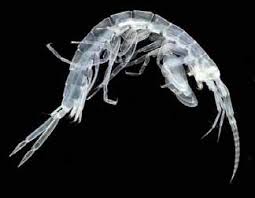 “Stygofauna might be a relatively obscure species. In fact, these particular species of stygofauna were not known to science until the proponent started exploring for uranium in that area,” Mr Verstegen said on Tuesday.
“But the legal precedent here has much broader implications.
“We’re certainly very keen to be upholding environmental laws … which were never intended to be used by a minister or a government to approve the extinction of species.”
The matter was heard on Tuesday and a decision will be handed down at a later date.
Long delayed realisation of Australia’s brutal history of massacres of Aboriginal people
As the toll of Australia’s frontier brutality keeps climbing, truth telling is long overdue, The myth of benign, peaceful settlement persists today – even as historians reveal a far more sinister picture
• The Killing Times: the massacres of Aboriginal people Australia must confront
• A massacre map of the frontier wars – interactive
Guardian by Paul Daley, 4 Mar 19
“………… The Australian Museum estimates that pre-European invasion in 1788, about 750,000 Indigenous people (representing some 700 language groups) inhabited the continent that would become Australia. This figure may well be an underestimate.
Little over a century later, by federation in 1901, the Aboriginal and Torres Strait Island population had diminished to some 117,000. Black-white warfare and organised massacres, no matter how you define them, with police, British soldiers, native police, militia and raiding parties as the perpetrators, accounted for many tens of thousands of deaths. Individual acts of violence – including shootings, poisonings, torture and illegal incarceration – killed many more. Battle wounds, starvation (owing to the depletion of traditional hunting grounds) and disease – all of which can also be directly linked to invasion and frontier conflict – killed countless others.
Yet the historiographic confect of benign, peaceful settlement and the unexplained “passing” or “extinction” of the “natives” pervaded well into the 1960s, replete with the deception that very few Aboriginal people died violently during pastoral and urban expansion and dispossession. Things began to change with the emergence of a new, more inquisitive, less empire-centric cohort of historians and writers who, not content with the Anglophile colonial trope of terra nullius and benevolence to the Indigenes, began to commit truth to the page………..
In the 1970s and 1980s a number of historians – among them Henry Reynolds, Marilyn Lake and Richard Broome – began focusing on frontier violence, using the colonial records, newspaper archives and family histories (including generational oral accounts of killings).
Reynolds is acknowledged as the first Australian historian to make a calculated continental estimate of the number of Aboriginal and Torres Strait Islanders who died violently in Australian frontier conflict. In his 1981 book, The Other Side of the Frontier, and after at least a decade’s research Reynolds estimated the figure at about 20,000……….
Reynolds speaks of the significance of Evans and Ørsted-Jensen’s research on the numbers of killings in colonial Queensland.
Based on an extrapolation of native police documentation, they estimated (conservatively) that as many as 60,000 Aboriginal people died in frontier violence in Queensland alone.
The national implications of the figure are profound; the wars that raged across this continent from 1788 did, it seem, claim more Indigenous lives than 62,000 Australian service personnel who died in the first world war………… https://www.theguardian.com/australia-news/2019/mar/04/as-the-toll-of-australias-frontier-brutality-keeps-climbing-truth-telling-is-long-overdue
Adani’s ruthless aggression exposed in leaked “attack dog” plan
“Wangan and Jagalingou Traditional Owners say an explosive ABC report this morning has revealed the corruption of process and the intimidation being engaged in by Adani’s new legal team. They say Adani are trying to silence its opponents and build political pressure to push its Carmichael project through. (ABC News story here).
Law firm AJ and Co to wage war for Adani coal company – as an “attack dog”
 Adani’s new law firm put forward ‘trained attack dog’ strategy for waging legal ‘war’ https://mobile.abc.net.au/news/2019-02-19/adani-law-firm-put-forward-trained-attack-dog-strategy/10821470?pfmredir=sm&fbclid=IwAR0vOmyhhAWM3VjluLNby1RdjRC2WzreUxr465GFLLyT2oO8Qy-5kRB7od8 BY JOSH ROBERTSON Lawyers for mining firm Adani proposed waging “war” on opponents of its controversial Queensland mine by using the legal system to pressure government, silence critics and financially cripple activists, according to documents obtained by the ABC.
Key points:
- Law firm AJ & Co promised to be Adani’s “trained attack dog”
- The firm launched bankruptcy proceedings against an Indigenous mine opponent
- Head of commercial litigation Alex Moriarty quit after a falling out over strategy
The draft copy of Adani’s new law firm’s aggressive strategy to bring the Carmichael mine to life is labelled “Taking the Gloves Off” and outlines a commercial proposal by AJ & Co to win a multi-million-dollar legal contract with the Indian mining giant.
In the document, the Brisbane firm promised to be Adani’s “trained attack dog”.
The strategy recommended bankrupting individuals who unsuccessfully challenge Adani in court, using lawsuits to pressure the Queensland Government and social media “bias” as a tool to discredit decisionmakers.
In a section called “Play the Man”, it recommended “where activists and commentators spread untruths, use the legal system to silence them”.
It also urged Adani to hire private investigators to target activists and work “with police and a criminal lawyer to ensure appropriate police action is taken against protesters”.
“Like a well-trained police dog, our litigations know when to sit and shake, and when it is time to bite,” the law firm promised. “To achieve its commercial goal, Adani needs to accept it is involved in a war.”
The AJ & Co plan pledged to “assess each battle as part of the overall war” and to “know when to negotiate and known when all out attack is required”.
An Adani spokeswoman said “we won’t apologise for pursuing our legal rights”.
“Like many organisations, we have a panel of law firms that service our business on a wide range of matters to ensure we are complying with Australia’s legal and regulatory frameworks,” the Adani spokeswoman said.
“We will not comment in detail on the legal firms we use, their marketing material and any matters where they may represent us or advice we may receive.”
Lawyer quit firm over strategy
The ABC can reveal AJ & Co’s former head of commercial litigation, Alex Moriarty, quit after an internal falling out over strategy in the wake of the proposal.
Mr Moriarty — who did not leak the planning document and now runs his own legal firm — also alleged he was assaulted by a colleague who confronted him over dealings with Adani, a complaint that Queensland police were investigating.
The ABC understands the alleged incident did not involve physical contact.
Mr Moriarty said he disavowed the “aggressive commentary” at the heart of the proposal, and that he believed it “tends to bring the legal profession into disrepute”.
“Such comments tend to damage the professional independence and integrity of the legal profession as a whole.”
The AJ & Co proposal suggested Adani “not settle for government departments dragging out decisions — use the legal system to pressure decisionmakers”.
It also argued that “social media is a tool to use against activists and decisionmakers”.
“Look for evidence of bias and use it to show the court system is being used for political activism,” the law firm wrote.
Since it was engaged by Adani, AJ & Co has pushed to bankrupt a cash-strapped Indigenous opponent of the mine, threatened legal action against a community legal service and an environmental group, and applied to access an ABC journalist’s expenses and documents.
Queensland Deputy Premier Jackie Trad told the ABC she believed it was “clear that their strategy has been activated … and we should be concerned”.
“We’ve seen the attacks on government — they clearly don’t like the role that the independent regulator [the Department of Environment and Science] is performing in terms of using science to make recommendations around final approval,” she said.
“I mean, seriously, what’s Adani going to do next? Are they going to start pressuring the CSIRO around the ground water management plan?
“And quite frankly, I am quite alarmed by some of the language used in the report like pursuing individuals so that they become bankrupt.
“I, like most Australians, don’t want to see us go down an Americanisation path of heavy litigation and corporate attack.”
Murrawah Johnson from the anti-Adani faction of the mine site’s traditional owners, the Wangan and Jagalingou (W&J), told the ABC that in recent months “Adani’s strategy has definitely changed — it’s become more aggressive”.
On Adani’s behalf in December, AJ & Co launched bankruptcy proceedings against vocal W&J opponent Adrian Burragubba over unpaid legal costs.
“My uncle Adrian has been public enemy number one for Adani,” Ms Johnson said.
“Going after him, I think, has been their plan all along — to essentially stamp out our resistance to the coal mine going ahead on our country.”
A day after the ABC revealed Adani was under investigation for alleged unlawful site works, AJ & Co wrote to Queensland’s Environmental Defenders Office (EDO).
EDO chief executive Jo Bragg, who commented in the ABC story, said the letter was “clearly designed to intimidate us”, although she declined to elaborate.
“It appears Adani has built an entire, well-funded strategy around hiring lawyers to bully community groups into silence,” she said.
AJ & Co later applied under federal Freedom of Information laws to access ABC journalist Mark Willacy’s expenses, and documents relating to the story.
In November, AJ & Co demanded environmental campaigners Market Forces abandon a trip to South Korea with W&J opponents to lobby banks not to invest in Adani.
Market Forces executive director Julien Vincent said the law firm accused the campaigners of injurious falsehood, unlawful conspiracy to cause economic loss to Adani and threatened legal action.
“It was pretty aggressive,” Mr Vincent said.
“It came across with a tone that had little substance to back up the allegations it made, and was quite threatening in the steps that would be taken if we didn’t comply with everything they wanted.”
A barrister for Market Forces told AJ & Co its allegations were “doomed to fail” and no more was heard from the firm.
Mr Vincent said Adani’s mine was “a massive public issue … and it is entirely reasonable for people to speak up and voice their concerns”.
An AJ & Co spokesman said “we don’t discuss matters which may relate to clients”.
Matt Canavan hijacks native title fight on Adani
 “The system, the native title system,” Tony McAvoy, SC, Australia’s first Indigenous silk said, “coerces Aboriginal people into an agreement. It’s going to happen anyway. If we don’t agree, the native title tribunal will let it go through, and we will lose our land and won’t be compensated either. That’s the position we’re in.”
It’s a big case, not only for the W&J people, but for an entire, overheating planet.
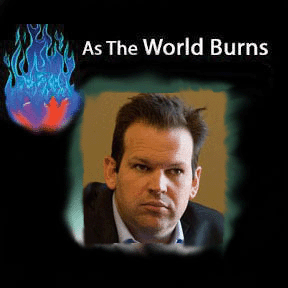 The Saturday Paper Mike Seccombe , 15 Feb 19,
 Just before 1pm on Tuesday, most media attention in Parliament House was focused on the government’s historic embarrassment on medical evacuations of asylum seekers. So, relatively few were there to witness another embarrassment, in the senate courtyard.
Its purpose was to promulgate the line that the traditional custodians overwhelmingly support the giant coalmine. To that end, Canavan, along with his National Party colleagues Michelle Landry and George Christensen, had invited a member of the W&J people to spruik the benefits of the mine. Continue reading
Heated exchange at Adani media event
https://www.sbs.com.au/news/heated-exchange-at-adani-media-event A press conference to showcase the support of indigenous traditional owners for Adani’s Carmichael coal mine has served to show divided opinions on the project.
A fiery war of words has broken out at a press conference designed to highlight the support of Indigenous traditional owners for Adani’s controversial Carmichael coal mine.
Spokesman for the Wangan and Jagalingou people of central Queensland, Patrick Malone, spoke up about the benefits of the project, including a boost to local employment alongside Resources Minister Matt Canavan at Parliament House in Canberra on Tuesday.
He stressed that traditional owners voted 294-to-1 in favour of establishing a land use agreement with Adani in 2016.
They did that because there are long-term benefits for Wangan and Jagalingou people,” Mr Malone told reporters.
But he was soon interrupted by fellow Wangan and Jagalingou representative Murrawah Johnson.
“Not appropriate,” Ms Johnson declared upon arriving at the scene.
Ms Johnson accused Mr Malone of having no right to represent her people, because of a native title claim still in dispute.
But Mr Malone rejected the view, lamenting that “loud mouth people” were overshadowing the majority view of traditional owners.
“Look after country,” Ms Johnson urged Mr Malone.
I know all about that,” he replied.
With the exchange showing no signs of cooling down, Senator Canavan swiftly wrapped up the conference, with security arriving to usher away the interrupters. They did that because there are long-term benefits for Wangan and Jagalingou people,” Mr Malone told reporters.
But he was soon interrupted by fellow Wangan and Jagalingou representative Murrawah Johnson.
“Not appropriate,” Ms Johnson declared upon arriving at the scene.
Ms Johnson accused Mr Malone of having no right to represent her people, because of a native title claim still in dispute.
But Mr Malone rejected the view, lamenting that “loud mouth people” were overshadowing the majority view of traditional owners.
“Look after country,” Ms Johnson urged Mr Malone.
“I know all about that,” he replied.
With the exchange showing no signs of cooling down, Senator Canavan swiftly wrapped up the conference, with security arriving to usher away the interrupters.
1 This month
17 October, Free Public Talk on Nuclear Issues in South Australia
David Noonan will speak on public interest concerns over the new Roxby Downs Indenture Act 2026 on BHP copper-uranium mining and ore processing in SA, and on how AUKUS may face SA with a High-Level nuclear waste agenda.
Dr Jim Green will discuss international developments in the field of nuclear power including ‘small modular reactors’ and Generation 4 ‘advanced’ nuclear reactor concepts.


Help Aunty Sue Protect Her Land and Sacred Sites From Destructive Rocket Testing.
.

Australians deserve the truth
about
AUKUS – https://aukuspublicinquiry.com/

PETITION – To: Prime Minister Anthony Albanese and the Australian Labor Government

of the week – Australians for War Powers Reform (AWPR)
To see nuclear-related stories in greater depth and intensity

