Australian government’s budget cuts threaten remote Aboriginal communities
Aboriginal communities under threat Ft.com December 26, 2014 Jamie Smyth in Sydney Dickie Bedford was born in the 1960s at a time when thousands of aboriginal people were being evicted from pastoral cattle stations. Half a century later a new generation of indigenous Australians faces a similar fate as budget cuts threaten to close hundreds of remote communities.
“They will turn us into fringe-dwellers again if they go ahead with these closures,” says Mr Bedford, executive director of the Marra Worra Worra aboriginal corporation in Western Australia.
“Withdrawing municipal services from these remote communities will force people to move into overcrowded hub towns where they are much more likely to encounter drugs, alcohol and family dysfunction,” he says.
Western Australia has warned that 150 of its 270 remote indigenous communities may have to close as the state cannot afford to pay for road, power, water or waste services. A further 60 aboriginal communities in South Australia are under threat as the federal and state government argue over who should fund basic services.
About 16,000 indigenous people live in these remote communities, which have received federal government funding for more than 50 years. Tony Abbott, Australia’s prime minister, has decided to phase out federal funding and shift responsibility to state governments following final one-off payments of A$90m (US$73m) to Western Australia and A$10m to South Australia………
In May, the federal government unveiled the toughest budget in two decades, which included a A$500m cut in aboriginal funding programmes, to tackle a $48.5bn budget deficit. Western Australia, which is heavily dependent on taxes from mining companies, is selling state assets and considering spending cuts.
Advocacy groups say aboriginal people, already the most marginalised group in society, are bearing the brunt of the tougher economic climate. They say the threat to close hundreds of communities harks back to an earlier era when indigenous people were forced from their land by white settlers following a court ruling that they must be paid a basic wage.
“Forcing aboriginal people to move from their communities is a form of cultural genocide,” says Tammy Solonec of Amnesty International Australia………..
The National Congress of Australia’s First Peoples, an advocacy group, has written to Mr Abbott urging him to intervene.
A federal government spokeswoman said the issue was a matter for states to settle.
South Australia’s government is resisting the federal government’s decision to withdraw services, accusing it of using “gun-toting” tactics to force states to accept “insulting” final payments from Canberra. ………http://www.ft.com/cms/s/0/f12f376c-81ba-11e4-b9d0-00144feabdc0.html#axzz3N84itvYv
Grim reality of government moves to get Aborigines off their homelands
Aboriginal communities under threat Ft.com Jamie Smyth in Sydney December 26, 2014 Dickie Bedford was born in the 1960s at a time when thousands of aboriginal people were being evicted from pastoral cattle stations. Half a century later a new generation of indigenous Australians faces a similar fate as budget cuts threaten to close hundreds of remote communities.
“They will turn us into fringe-dwellers again if they go ahead with these closures,” says Mr Bedford, executive director of the Marra Worra Worra aboriginal corporation in Western Australia.
“Withdrawing municipal services from these remote communities will force people to move into overcrowded hub towns where they are much more likely to encounter drugs, alcohol and family dysfunction,” he says.
Western Australia has warned that 150 of its 270 remote indigenous communities may have to close as the state cannot afford to pay for road, power, water or waste services. A further 60 aboriginal communities in South Australia are under threat as the federal and state government argue over who should fund basic services.
About 16,000 indigenous people live in these remote communities, which have received federal government funding for more than 50 years. Tony Abbott, Australia’s prime minister, has decided to phase out federal funding and shift responsibility to state governments following final one-off payments of A$90m (US$73m) to Western Australia and A$10m to South Australia………
In May, the federal government unveiled the toughest budget in two decades, which included a A$500m cut in aboriginal funding programmes, to tackle a $48.5bn budget deficit. Western Australia, which is heavily dependent on taxes from mining companies, is selling state assets and considering spending cuts.
Advocacy groups say aboriginal people, already the most marginalised group in society, are bearing the brunt of the tougher economic climate. They say the threat to close hundreds of communities harks back to an earlier era when indigenous people were forced from their land by white settlers following a court ruling that they must be paid a basic wage.
“Forcing aboriginal people to move from their communities is a form of cultural genocide,” says Tammy Solonec of Amnesty International Australia………..
The National Congress of Australia’s First Peoples, an advocacy group, has written to Mr Abbott urging him to intervene.
A federal government spokeswoman said the issue was a matter for states to settle.
South Australia’s government is resisting the federal government’s decision to withdraw services, accusing it of using “gun-toting” tactics to force states to accept “insulting” final payments from Canberra. ………http://www.ft.com/cms/s/0/f12f376c-81ba-11e4-b9d0-00144feabdc0.html#axzz3N84itvYv
Australian governments force Aborigines off their remote lands
 Cheap in the deep sense: the sorry business of Indigenous affairs The Conversation Alison Holland Senior Lecturer in Australian History at Macquarie University 16 December 2014,“……..It might be said that the Abbott government’s decision two months on to stop funding essential services in remote communities was one of the first real policy deliveries since that visit. This would be potentially disastrous for these communities, forcing them off country, escalating dislocation and exacerbating problems of health and well-being in communities already under significant threat.
It also has a flow-on effect as without Commonwealth financial support, the states would have to close the communities.
This is not only cheap policy, but it is deeply grounded in history. It rehearses a profoundly entrenched view in some channels of government that these communities cannot continue and are unviable in the long-term. In this sense, pouring in money is wasting resources better spent elsewhere. In an otherwise fraught policy landscape, cheapness has been one of the cold hard facts of Indigenous affairs………….
Commonwealth expenditure in Aboriginal affairs has historically been very poor when compared to the states and when compared to governments around the world who are similarly placed, like those of North America. The lowest levels of expenditure for much of the 20th century was by governments with the largest nomadic populations – that is, remote communities……….
The discussion at that 1937 conference was quite explicit in relation to the remaining “full-blood” people who, at that stage, were still the majority Indigenous population. The very strong inference was that we couldn’t afford them.
The direction of policy after the Second World War was to concentrate on assimilating those classified as “half-caste”. Most of the bureaucrats held the view that, if left to themselves, the “full-blood” Aborigines would simply die out……….
a history of extraordinary parsimony in this policy arena, particularly for remote communities. It also puts the Closing the Gap initiatives of the former Labor government into perspective. In 2008, the Labor government invested A$3.4 billion in Indigenous affairs in the Northern Territory across ten years to address chronic underfunding. Much of this was directed to remote communities.
Since the change of government, and despite being part of COAG’s national Aboriginal and Torres Strait Islander health plan, the Coalition government has reduced fundingsignificantly. It has rationalised 150 programs to five……….
If he really wants to avoid the failures of his predecessors and of being cheap in the deep sense, Abbott will need to restore funding and respect to remote communities. When in Gulkula in September, he was sitting with representatives of one of the oldest living cultures on earth. In the long-term, ensuring its health and survival might well be less expensive – for us all.https://theconversation.com/cheap-in-the-deep-sense-the-sorry-business-of-indigenous-affairs-34591
Pope Francis and Bishop Saunders on Australia’s inhumane Aboriginal policies
“Severing the ties of Aboriginal people from their land and thus their culture, spirituality and very foundation of their being, is unethical, immoral, un-Christian and heartless.”
Australia’s human rights record shambolic according to Pope Francis and Bishop Saunders http://thestringer.com.au/australias-human-rights-record-shambolic-according-to-pope-francis-and-bishop-saunders-9207#.VI8joNLF8nk by The StringerDecember 14th, 2014 Chairman of the Australian Catholic Social Justice Council, Bishop Christopher Saunders says Australia’s human rights record is being undermined by inhumane policies. Bishop Saunders pointed to the asylum seeker asylum policies which deny refugees sanctuary and the push by the Western Australian Government to close up to 150 of the State’s 274 homeland (remote) communities. He is also concerned that the South Australian Government may follow Western Australia’s lead and close as many as 100 communities. Continue reading
Uranium industry will NOT go ahead in Cape York land, as Aboriginals win land rights
 Olkola reclaim traditional Cape York land after three-decade struggle, Guardian, Joshua Robertson, 10 Dec 14 More than 6,300 square kilometres of former cattle grazing land in Queensland is formally handed back to Indigenous owners, spelling the end of uranium exploration in the area and the start of a quest to develop tourism opportunities One of the largest returns of land to traditional owners in Queensland’s history has killed off the prospect of uranium mining in a key part of Cape York.
The Olkola, who reclaimed more than 6,300 square kilometres of former cattle grazing land in a formal ceremony on Wednesday, are instead seeking business opportunities in adventure tourism.
Just over 1000 sq km of Olkola land is licensed for uranium exploration by French corporation Areva, which has spoken of north Queensland’s potential to match Kazakhstan as a source for nuclear fuel.
But the deal negotiated by the Olkola has forced Areva to give up its exploration licences in areas given over to a national park, and the clan has no intention of allowing mining elsewhere.
The traditional owners are instead in talks with a global adventure travel agency about a possible joint venture.
It comes just months after the Newman government began to accept uranium mining applications across the state with a view to ending a 25-year ban.
The Australian Conservation Foundation has praised the Olkola people’s move, along with their decision to give over almost a third of their land to a protected national park.
For Mike Ross, the chairman of the Olkola Aboriginal Corporation, the joy of reclaiming country after nearly 30 years of negotiations was tempered by the need to find viable ways for his people to make a living………http://www.theguardian.com/australia-news/2014/dec/10/olkola-reclaim-traditional-cape-york-land-after-three-decade-struggle
Audio: Push to develop Northern Australia linked to push to dismantle Aboriginal land rights
 Top End traditional owners fear land rights will be dismantled in push to develop the north (AUDIO) ABC Radio PM Sara Everingham reported this story on Thursday, December 11, 2014 MARK COLVIN: The Northern Land Council says it’s deeply concerned that the push to develop Northern Australia could dismantle hard-fought Aboriginal land rights in the Northern Territory.
A COAG taskforce met today in Canberra to nut out the detail of its review of Indigenous land administration as part of the white paper on developing Northern Australia.
Sara Everingham reports from Darwin.
SARA EVERINGHAM: In Kakadu National Park, about 80 traditional owners from across the Top End have spent the week in talks as part of the Northern Land Council’s full council meeting………………
The Northern Land Council doesn’t know what the review will look at but suspects it will explore greater use of 99 year leases on Aboriginal land.
The council also says it’s been informed by the Federal Government it will revisit an amendment to the Northern Territory Land Rights Act which would devolve powers of the land councils to smaller Indigenous corporations.
The deputy Land Council chairman John Daly says traditional owners must be consulted.
JOHN DALY: We’ve got a Prime Minister for Indigenous Australia and they put out press releases prior to them winning the elections that they would have no reviews, no amendments to the Land Rights Act and things like that, Native Title, without the consent of traditional owners and the land councils. ……http://www.abc.net.au/pm/content/2014/s4147070.htm?site=indigenous&topic=latest
Federal govt watering down Aboriginal land rights, betrayal by Minister for Aboriginal Affairs Nigel Scullion
Northern Land Council accuses Senator Nigel Scullion of breaking election promise on land rights, ABC News By the National Reporting Team’s Kate Wild 11 Dec 14 Australia’s largest Aboriginal land council has accused Minister for Aboriginal Affairs Nigel Scullion of breaking a promise that the Coalition, if it won government, would not review or amend the Land Rights Act.
Holding a copy of Senator Scullion’s press release, titled No changes to NT Land Rights and dated August 14, 2013, Northern Land Council (NLC) deputy chairman John Daly accused the Minister of proposing a review of land rights legislation without the consent of traditional owners.
“Prior to him getting in as the Minister, this here says he wasn’t going to do any reviews or anything like that without the consent of traditional owners and the land council,” he said.
Really there isn’t, and hasn’t been, any conversation with Aboriginal people about the future of the Land Rights Act.
Joe Morrison, NLC chief executive
“And this is just another broken promise from this government.”
The comments were made today at a full council meeting that Senator Scullion did not attend………..
NLC’s questions are ‘pressing for the nation’
NLC chief executive Joe Morrison said council members wanted to put questions to the Minister they believed were “pressing for the nation”.
These included Federal Government plans to water down the Land Rights Act, pressure on Aboriginal towns to sign 99 year leases, and the Federal Government’s use of Aboriginal money earned from mining royalties, he said.…………. Continue reading
Australian Aboriginal atomic test survivor speaks at Vienna Conference
TRANSCRIPT Speech by Sue Coleman-Haseldine http://www.icanw.org/campaign-news/australia/australian-test-survivor-to-speak-in-vienna/ – 8 December 2014 Rosemary Lester, who was originally going to speak here, became too ill to travel to Vienna. She sent me instead and said to “tell it as it is”.
I was born on Koonibba Aboriginal Mission in 1951. From east to west, Koonibba is in the middle of Australia but right down south where the desert meets the sea.
Atomic bomb tests began in the desert areas north of my birthplace in 1953 when I was two years old. First at Emu Fields and then Maralinga.
The area was picked because the British and Australian governments didn’t think our land was valuable. But Aboriginal people were still looking after and living off the land.
There are lots of different Aboriginal groups in Australia. For all of us our land is the basis of our culture. It is our supermarket for our food, our pharmacy for our medicine, our school and our church.
Aboriginal people have special places throughout Australia, including in the vast arid areas. Looking after these places is our religion.
Our old people remember the good life of hunting for wild game and collecting bush fruits. Life was healthy.
There were still Aboriginal people living and travelling this way in the Emu Field and Maralinga region when the bomb tests started.
The government was no good at ensuring everyone was safe.
Australia was even more racist then. At this time Aboriginal people did not even have the right to vote. The government really didn’t care what happened to Aboriginal people.
Many people died and became sick in the immediate test areas. So did the animals. We shouldn’t forget about the animals.
The first atomic bomb called “Totem 1” spread far and wide and there are lots of stories about the “black mist” it created, which killed, blinded and made people very sick.
The bomb tests continued for many years right until 1963. Big atomic tests that the British and Australian governments were proud of and then a whole lot of secret tests that the British did with plutonium.
These tests contaminated a huge area and everything in it but people hundreds of kilometres away were also impacted. This includes my family and the broader community where I live.
I remember older people talking about Nullabor dust storms. It was the fallout from the Maralinga tests.
We weren’t on ground zero, but the dust didn’t stay in one place. It went wherever the winds took it.
I noticed people dying of cancer, something that was new to us.
There’s a cemetery at Woomera which we call the children’s cemetery. It’s filled with children who died around the time of the tests. And these were just the non-Aboriginal children.
There’s no record of how many Aboriginal children died. The Aboriginals were not allowed to be buried in white cemeteries.
In 2006 I went to an Australian Nuclear Free Alliance meeting to learn more about radiation fallout. What I learnt devastated me. To find out that our bush foods were possibly contaminated was a real blow to me.
It was at these meetings I also learnt about other nuclear bombs. About other places where tests happened and also more about Japan during the war.
I also learnt that uranium mined in Australia was used in these weapons of destruction. To know that uranium from our country was devastating other countries and people was a horrible lesson for me. I decided to fight any kind of mining then.
There are too many cancer deaths in our Country. I believe it is caused from radiation contamination, but I can’t prove it. I think any kind of mining in our area would be digging up contaminated earth and sending it back to us on the north, north-west winds.
I am not the only one to notice the sickness and death that remains in this part of Australia. It doesn’t matter if you’re Aboriginal or not, or as I say Black, White or Brindle, everyone has a sad story about premature sickness and death in their families.
Cancer is the big one but it is also common for people to suffer from thyroid conditions. This is the case for myself and one of my granddaughters.
Fertility problems, still births, birth defects became more common at the time of the testing.
But even today we wonder if women have trouble because of the ongoing radiation in the area or genetic changes passed down through generations.
Not knowing the true impact of the nuclear tests causes a lot of anguish and we would like to have answers and hopefully find some solutions. We don’t want others to suffer as we have.
The bombs have destroyed a large part of Australia and despite several attempts it will never be safe or clean.
There are many Aboriginal people who cannot go back to their ancestral lands and their children and their children’s children and so on will never know the special religious places it contains.
Having whole displaced communities has also created confusion and conflict between Aboriginal groups. These are ongoing issues which cause stress and heartbreak.
Thank you for listening about our situation in Australia. We are telling the story so that our history is not forgotten but also to create a better future for all people, all over the world.
This is why we want nuclear weapons permanently banned and the uranium that can create them left in the ground.
If you love your own children and care for the children of the world, you will find the courage to stand up and say “enough”.
Always keeping in mind that the future forever belongs to the next generation.
Lest we forget: Aboriginal victims of Maralinga atomic bomb testing- theme for June19
 Australian atomic massacre still ignored By David T. Rowlands from Green Left Weekly issue 971 June 29, 2013
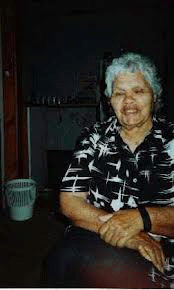 Lallie Lennon provided convincing testimony of the injuries suffered from the fall-out.
Nearly 60 years have passed since Totem 1, a British nuclear test in the Australian desert, was recklessly conducted in unfavourable meteorological conditions.Nuclear testing of any sort, even in the most “controlled” of circumstances, is inherently abusive, a crime against the environment and humanity for countless generations to come. Yet the effects of Totem 1 were particularly bad, even by the warped standards of the era.The mushroom cloud did not behave in the way it was supposed to. Instead of rising uniformly, part of it spread laterally, causing fallout to roll menacingly at ground level over a remote yet still populated corner of South Australia, sowing injury, illness and death in its wake.
The number of casualties is unknown because the secretive and unaccountable nuclear establishment has always declined to investigate the full impact of its own criminal negligence. But it has been suggested by investigators that perhaps 50 short-term Aboriginal fatalities resulted.
In addition to those who died, many others were exposed to harmful levels of radiation. The long-term health effects on these individuals have never been charted — but anecdotal reports of high cancer rates and horrendous birth defects in isolated “downwinder” communities have circulated.
At the time of the tests, it was well known by authorities that communities of Aboriginal people were close by. Yet the official attitude was that the concerns of a “handful of natives” could not be allowed to interfere with the “interests” of the British Commonwealth.
Imagine you are out with your family one morning when suddenly a loud explosion issues from the distant horizon. The ground rumbles and shakes, as though it were about to open up. Minutes later, a thick, churning dark dust cloud engulfs the surrounding desert countryside.
Terrified, with all your senses in recoil from these unnatural developments, you wonder if an event of apocalyptic proportions is taking place. And your troubles are only just beginning.
This is what happened to 22-year-old Yankunytjatjara woman Lallie Lennon and her three young children at Mintabie on October 15, 1953. A 10-kiloton device (roughly two-thirds the yield of the Hiroshima bomb) was detonated 180 kilometres away at Emu Field, near Maralinga.
Lallie and her son Bruce, aged 3, were covered in the gunpowder-smelling dust and smoke that came rushing through the trees with such intensity that it apparently created eclipse-like visibility conditions. “It went dark and dark,” recalled Lallie in 2006. “Dark — we couldn’t see anything. The place was black, you couldn’t see nothing.”
The levels of beta radiation contained in this toxic plume were so great that it felt like being “rolled in a fire”. The “kids were [ ing] … it was terrible … We was glad we was alive but we got sick. We were sicker and sicker.”
About a year later, both Lallie and her son Bruce developed a debilitating skin condition that involves the periodic eruption of oozing, agonising sores all over the body.
Lallie said: “It went away and then came back and the sores were getting bigger and bigger every time … I was in a mess after the sores.” Her two daughters, who were in a tent at the time the mist swept through, were spared the beta burns, but developed other symptoms consistent with radiological contamination.
Lallie’s story first achieved public recognition when she spoke about her experiences for a 1981 documentary, “Backs to the Blast”.
Shutting down Australia’s Aboriginal areas -(opening lands up for what?)
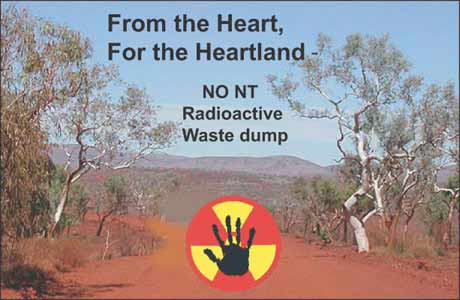 Shutting down Australia’s Aboriginal areas, Aljazeera, New funding laws threaten the existence of remote indigenous communities already facing profound social issues. Royce Kurmelovs 07 Dec 2014 Perth, Australia – The West Australian state government may bulldoze 150 remote indigenous communities that it says are too expensive to keep open under a new funding arrangement between federal and state authorities.
Canberra has offered each state a one-time, lump-sum payment to take over the responsibility of financing remote Aboriginal communities indefinitely.
In an ultimatum, Western Australia was offered $90m, enough to fund remote communities through to 2017.
But as of June 30, 2015, past federal funding agreements will end, effectively giving Western Australia authorities about seven months before they must start working out how to fund remote communities in the future – and which ones will have to close.
Similar arrangements have been made with South Australian, Queensland, Victorian and Tasmanian state governments.
All have so far remained silent on the details with the exception of South Australia, which rejected a $10m payment on the basis that it was not enough for the obligation being created.
South Australia’s Minister for Aboriginal Affairs and Reconciliation Ian Hunter warned if his government was forced to accept the new arrangement, 60 remote communities – home to 4,000 people – would have to close.
Futures in question
So far, Western Australian Premier Colin Barnett has taken a cautionary tone, telling Al Jazeera it is “still very early”, while admitting that community closures are inevitable……………
The fear is that changes to federal policy and funding arrangements that have raised the possibility of community closures only threatens to derail any achievements made to date.
That such closures may occur around the country is also what has lead the National Congress of Australia’s First Peoples (NCAFP) to label the issue one of the “most significant” facing Australia’s indigenous peoples to date.
“This is about our people’s right to stay on our land,” NCAFP co-chair Kirstie Parker told Al Jazeera. “People are very frightened that the days are numbered and their communities will be closed.”
In an effort to address the issue, Parker and her co-chair Les Malezer called on Prime Minister Tony Abbott to act in an open letter last week, but so far they have not received a response.
For others such as Tammy Solonec, Amnesty International Australia’s (AIA) indigenous peoples rights manager, there are serious questions about the Western Australia government’s ability to properly manage the transition………….
Lessons to be learned
The risk now is that the experience of Oombulgurri’s closure may be repeated across the country, and for Solonec this would be the worst case scenario.
“We can never let it happen again. If we’re going to talk about closing communities, we need to do it in a better way,” said Solonec.
What’s needed she said are “creative solutions” to actually solve the profound social issues within some remote communities, and prevent people being removed from their land.
Her view is echoed by Parker, who said self-determination is the key and closing down communities merely on the basis that they are “dysfunctional” will not solve problems, but only push them onto other communities.
“Our communities are left wondering about the future of our communities and of our children,” said Parker.
“This scenario doesn’t address the problems in our communities everyone knows are there, it doesn’t deal with the people. To do that you sit down and talk with them.” http://www.aljazeera.com/indepth/features/2014/12/shutting-down-australia-aboriginal-areas-2014124124749741868.html
Media excluded, Aboriginals protest, as Minerals Council meets in Darwin
 Traditional owners target Minerals Council HERALD SUN, NEDA VANOVAC AAP DECEMBER 04, 2014 ABORIGINAL traditional owners have heckled government and mining industry representatives at a Minerals Council summit, calling for an end to mining on their lands. ABOUT 30 traditional owners and family members drove to Darwin from Maningrida, with some driving all night to make the 1400km from Borroloola by morning.
Conrad Rory, a Yanyula and Garrawa man from Borroloola, told AAP the MacArthur River Mine near his community was having a detrimental impact on the tidal river. The mine’s independent monitor reported last year that 90 per cent of fish caught downstream of the mine exceeded maximum permitted concentrations of metals and isotopes as outlined by the national food standards guidelines.
“What we’re really hoping to accomplish is shutting down the mine,” Mr Rory said. “Since they diverted the river it’s been flowing really slow, the colour’s changed, we’ve found dead fish and crabs.”
Jackie Green, an elder from Borroloola, was critical of mine operators he saw as plundering Aboriginal land and then moving on………. Mr Green accused the government of separating families to obtain consent for mining on Aboriginal land.”They grab one Aboriginal person and take him aside and chuck a chocolate across his table and he eats that and other Aboriginal people don’t know what’s going on.”Five police cars were sent to monitor the small protest, and the doors to Darwin’s convention centre were locked.Media were barred from attending sessions with industry leaders such as Andrea Sutton, CEO of Energy Resources of Australia, and Sam Strohmayr, general manager of Glencore……… http://www.heraldsun.com.au/news/breaking-news/traditional-owners-target-minerals-council/story-fni0xqi4-1227144612565
For the Mirrar Aboriginal people, a new era may be opening up, if ERA’s Ranger uranium mine finally closes
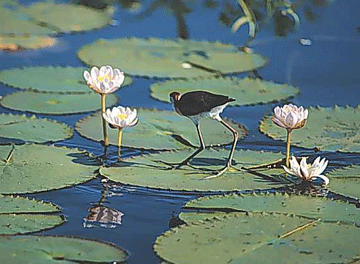 Uranium mining in Kakadu at a crucial point, SMH, 29 Nov 14 Peter Ker Resources reporter “……..place facing an uncertain future. Jabiru is a town in limbo. Four decades after arriving, uranium miner Energy Resources of Australia (ERA) will decide soon whether it will continue digging here. There is a chance it will choose not to, which will bring down the curtain on perhaps nation’s most controversial mine, Ranger.
Built on the faultlines of environmental and indigenous land rights policy, Ranger is at a defining moment. It has provided fuel to nuclear power stations of the world but the end of its working life is in doubt.
The end of mining at Ranger would be cause for celebration for some. Continue reading
Indigenous leaders’s at First Nations Summit for Freedom
Federal government cuts to Aboriginal legal services and frontline organisations and attempts by state and territory governments to water down land rights and other Indigenous legislation are also on the agenda
Indigenous leaders to meet at First Nations Summit for Freedom, Guardian, Helen Davidson, 27 Nov 14 Summit aims to reclaim Indigenous rights agenda and representation from a few high-profile voices First nations leaders and elders are holding a summit to establish a community-elected committee which would reclaim Indigenous rights and 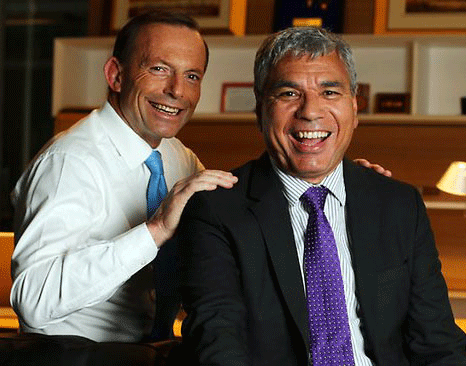 representation from a few high-profile voices.
About 100 people from across the country are expected to gather at the First Nations Summit for Freedom to discuss the major issues facing Indigenous people and address a feeling that the federal government is not speaking with Indigenous people when making decisions which have a direct impact on them.
The summit is being held on Thursday and Friday at the Old Telegraph Station in Mparntwe/Alice Springs. The site is the birthplace of the Aboriginal social activist Charlie Perkins.
“This is all about the local issues first and how the national agenda is responding to them, and how we’re not very happy about it,” said one of the summit organisers, Tauto Sansbury.
Sansbury pointed to attempts by the WA government to amend the Aboriginal Heritage Act, stripping traditional owners of a say over the cultural heritage value of their land and sacred sites, as well as a recent announcement that remote communities would likely be closed.
“The heritage act is having a big impact on Western Australia,” Sansbury, who is a long time Aboriginal advocate and was heavily involved in the royal commission into Aboriginal deaths in custody, told Guardian Australia.
“The closures of the communities over there … Aboriginal people are going to be removed off their land and there are suggestions that the SA government is thinking along the same lines.”
Federal government cuts to Aboriginal legal services and frontline organisations and attempts by state and territory governments to water down land rights and other Indigenous legislation are also on the agenda…………….http://www.theguardian.com/australia-news/2014/nov/27/indigenous-leaders-to-meet-at-first-nations-summit-for-freedom
Aboriginal struggles to save beautiful Kakadu from uranium mining
The Dog Catcher of Jabiru, About Place Journal, Margaret Spence 24 Nov 14 “……….Uranium was discovered in Kakadu in 1953 and for the next decade much of the ore was bought by British and American governments for the development of atomic weapons. If the Aborigines knew of the potential fate of their ancestral earth, their objections were overruled.
But the nineteen seventies were a period of change for civil rights, and Aboriginal people campaigned to have their lands returned to them. In stages, the Australian Federal Government acquired title to the tracts of land that had been taken over the years by private, non-Aboriginal settlers. The land was returned to Traditional Owners under the newly established Aboriginal Land Rights Act (Northern Territory) and most of it was leased to the Commonwealth to become the joint managed Kakadu National Park.
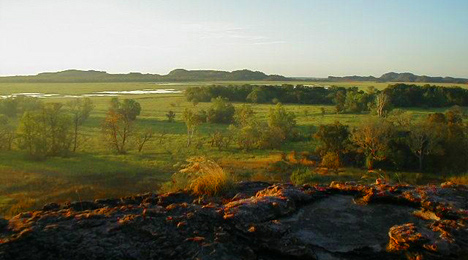
Three areas were excised from the National Park due to the presence of significant uranium deposits. While this land was granted to Traditional Owners as Aboriginal Land, the legal right to veto mining projects which the new laws provided was explicitly removed in the case of Ranger uranium mine and mining commenced there in 1981 against the clear opposition of the Mirarr Traditional Owners……… Continue reading
Western Australian government’s high-handed changes to Aboriginal Heritage Act anger traditional owners
Traditional owners rally against changes to WA Aboriginal Heritage Act, Guardian, Helen Davidson, 290 Nov 14 Proposed amendments could see owners stripped of say over sacred site listings, which will have lower standards than buildings Proposed amendments to the Aboriginal Heritage Act in Western Australia could see traditional owners stripped of any say over the heritage listing of their sacred sites in a lowering of standards compared to built heritage sites.
A representation of about 50 traditional owners from across Western Australia travelled to Perth to deliver a petition signed by 1,600 people calling for the amendment to be dropped and redrafted. Ten people also met with the Aboriginal affairs minister, Peter Collier, to discuss their concerns.
The proposed amendments would give the final say on the heritage value of cultural sites on Aboriginal land to the CEO and minister of the Department of Aboriginal Affairs, speeding up the approval process for mining and development applications. There would be no avenue for appeal by Indigenous groups, the delegation said.
They also said there has been no consultation with Indigenous people in the designing of the amendment, which has no requirement for an Indigenous person to be on the Aboriginal cultural materials committee and has removed a previous requirement for at least one anthropologist.
“We want the legislation removed, brought back to the table and properly negotiated and consulted on with Aboriginal people,” Simon Hawkins, CEO of the Yamatji Marlpa Aboriginal Corporation, told Guardian Australia.
“We want the legislation to reflect modern legislation in other states in terms of how they manage cultural heritage issues … even just brought up to the standard of built heritage legislation of WA, which has very strong controls on conservation management, protection, education on sites. Why is cultural Aboriginal heritage treated so differently and [with] such lower standards? We don’t understand that, it seems so unfair.”……..
The delegation follows a meeting of 250 traditional owners, elders and community members in Port Hedland in September, to which the minister was invited but did not attend…….
The chair of the Kimberley Land Council, Anthony Watson, was left still wary of the government’s plans after the meeting.
“We pushed the minister to try and have the discussion, but due to the timeframe it looks like they have their mind set [on introducing the bill]. It’s a very dangerous the position we’re in,” Watson told Guardian Australia.
“If the bill is getting pushed through, rushed through, without consultation then it’s discriminatory and there is going to be problems across our region for Aboriginal people.”……….http://www.theguardian.com/australia-news/2014/nov/20/traditional-owners-rally-against-changes-to-wa-aboriginal-heritage-act?utm_source=PoliticOz&utm_campaign=2cdc26cb18-PoliticOZ_21_November_2014&utm_medium=email&utm_term=0_673b6b002d-2cdc26cb18-302705445
1 This month
17 October, Free Public Talk on Nuclear Issues in South Australia
David Noonan will speak on public interest concerns over the new Roxby Downs Indenture Act 2026 on BHP copper-uranium mining and ore processing in SA, and on how AUKUS may face SA with a High-Level nuclear waste agenda.
Dr Jim Green will discuss international developments in the field of nuclear power including ‘small modular reactors’ and Generation 4 ‘advanced’ nuclear reactor concepts.


Help Aunty Sue Protect Her Land and Sacred Sites From Destructive Rocket Testing.
.

Australians deserve the truth
about
AUKUS – https://aukuspublicinquiry.com/

PETITION – To: Prime Minister Anthony Albanese and the Australian Labor Government

of the week – Australians for War Powers Reform (AWPR)
To see nuclear-related stories in greater depth and intensity

