How much will Australia’s nuclear submarines cost the taxpayer?
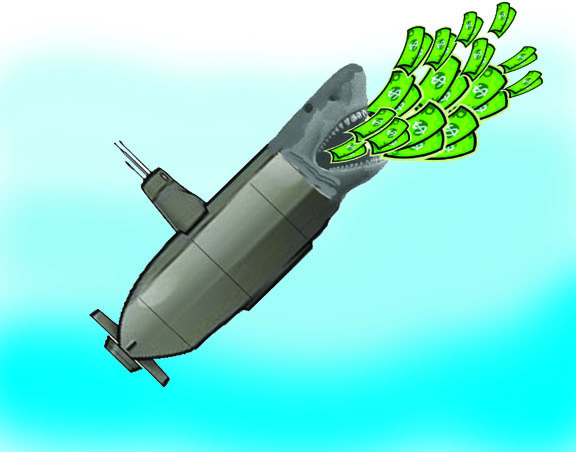
How much does a nuclear submarine cost?
Jessica YunFri, 17 September 2021 Is the new ‘AUKUS’ alliance to build Australia a fleet of nuclear-powered submarines battles growing criticism, a key question has emerged: how much do nuclear submarines actually cost?Before we get to that, what’s a nuclear submarine? It’s not considered a nuclear weapon, first of all. It all comes down to how it’s powered; a nuclear submarine works from its own miniature nuclear reactor, whereas conventional submarines use diesel-electric engines.In terms of how much they’ll cost, not even the Federal Finance Minister knows.
“Finalisation of those costs is something that will be assessed in [that] 12-18 month process we’re now embarking on with the UK and the US,” Finance Minister Simon Birmingham told ABC Radio National when asked about how much building the submarines would cost.
“The Prime Minister has acknowledged that it will likely cost more than what we had assessed for the conventionally powered submarines.”
Before the new AUKUS deal, Australia had a $90 billion contract with France to build 12 conventional submarines. To make way for the new defence pact, that deal has now been scrapped.
Opposition Leader Anthony Albanese has taken aim at the question marks around what this will cost Australian taxpayers.
“We know there are contracts in place already that will be breached. And we know there will be substantial compensation costs payable,” Albanese said. These ‘walk-away’ costs are estimated to be in the hundreds of millions.
“And Australian taxpayers are entitled to know, given that under this Government they began with arrangements with Japan, then arrangements with France, and now we have these arrangements with the United States and potentially the UK as well.”
What DO we know about the nuclear submarine deal and the costs so far?
T he new ‘AUKUS’ partnership will see Australia acquire a fleet of “at least eight” nuclear-powered submarines to “protect our national security interests” and “work with our partners across the region to achieve the stability and security of our region”, in Prime Minister Scott Morrison’s words………the new AUKUS deal means that we’ve torn up a $90 billion contract with France’s Naval Group to build 12 “Attack class” submarines, infuriating France along the way.
How much nuclear submarines cost around the world
The US Navy’s latest submarine model, the Virgina-class submarine, claims to have the latest tech in stealth, intelligence gathering and weapons system tech.
According to documents prepared for the US Congress, procuring a Virgina-class submarine is estimated to cost US$3.45 billion, or AU$4.73 billion, per boat.
Australia doesn’t currently have a domestic nuclear industry. SA Senator Rex Patrick told Yahoo Finance he expects each submarine will cost at least $5 billion to build.
Australian National University research fellow and nuclear science expert AJ Mitchell said there would be an “eye-watering cost” to constructing these high-tech watercrafts.
“Each nuclear submarine typically costs several billion dollars to build, and requires a highly skilled workforce with expertise in nuclear science,” Mitchell wrote in a new piece for The Conversation……… https://au.finance.yahoo.com/news/how-much-nuclear-submarine-cost-022130602.html
Too slow, too expensive: Why nuclear power makes no sense for Australia — RenewEconomy

Nuclear makes no sense economically and it makes no sense because we have better, cheaper and more viable energy alternatives right now. The post Too slow, too expensive: Why nuclear power makes no sense for Australia appeared first on RenewEconomy.
Too slow, too expensive: Why nuclear power makes no sense for Australia — RenewEconomy
As predictable as the sun rising in the east, or the Nationals having a leadership spill, Australia is once again facing a campaign from nuclear advocates to start a nuclear energy industry on our shores. This is a rabbit hole we have been down before and the basic facts haven’t changed – nuclear energy remains too expensive, too slow to build, and makes no sense for Australia.
It makes no sense economically and it makes no sense because we have better, cheaper and more viable energy alternatives right now. We should be pursuing the much cheaper alternative of firmed renewables that will reduce power bills for Australian households and businesses while also reducing Australia’s emissions. Nuclear is another
distraction obstructing us from realising our real need – affordable,clean and reliable energy.
20 reasons why the Lucas Heights unviable production of medical isotopes is a sham and a dud.

The claim by Australian Nuclear Science and Technology Organisation (ANSTO) that it requires additional storage
capacity for intermediate level nuclear or radioactive waste at its Lucas Heights operations is completely false and consequently unjustified in all respects.
REASONS
- The present storage capacity at Lucas Heights is more than adequate for many years and even decades – this is the view of the Australian Radiation Protection and Nuclear Safety Agency (ARPANA) as the regulator and licensing authority
- The main undertaking representing 80% of its total operations and activity by ANSTO at Lucas Heights is the
production of nuclear medicineThe main undertaking representing 80% of its total operations and activity by ANSTO at Lucas Heights is theproduction of nuclear medicine - Only some 10% of this production annually is for local use in Australia
- The remainder is sold overseas but it is a very limited market
- The predominant purchasers of this production of nuclear medicine are third world countries
- These countries cannot afford to pay ANSTO for this nuclear medicine and hence it is treated as additional foreign aid by Australia
- The manufacture of nuclear medicine even in fully and proper commercial circumstances is a large loss making proposition
- It is estimated from authoritative overseas research that revenue from isotope production for nuclear medicine would likely offset only approximately 10% to 15% of the costs of the reactor used for the production and this does not include all the other costs associated with the production
9. Added to this ANSTO is regarded by world standards as an extremely high cost manufacturer of nuclear medicine
- ANSTO is fully funded as to its existence and operations by the federal government
11. On top of this ANSTO has proved to be a less than efficient producer of nuclear medicine due to the instances of shutting down of its reactor at Lucas Heights
- When this has occurred ANSTO purchased the nuclear medicine isotopes from overseas which has proved to be more efficient and cheaper than local production
- It was reported that ANSTO received $238 million last year as its annual funding from the federal government
- ANSTO because of this funding has no incentive or need to achieve profitability particularly in its production of nuclear medicine which represents its major undertaking and operational activity
- In any case there is a strong move in medicine throughout the world away from using nuclear medicine in all diagnosis and treatment due to its harmful nature
- Some countries are virtually banning nuclear medicine both in its manufacture and its use locally and for export because of its inherent dangerous nature
- An alternative permanent disposal would be better.
- The indisputable conclusion internationally is that the use of nuclear medicine generated by reactors is rapidly declining to a level where its future production will no longer be viable
- In view of the foregoing there are no justifiable or valid reasons or pretext for :
(a) the continued production by ANSTO of nuclear medicine by using a nuclear reactor for whatever reasons at Lucas Heights or elsewhere in Australia;
(b) the continuing loss making production of nuclear medicine by ANSTO at Lucas Heights for export overseas;
(c) the need to increase the storage capacity at Lucas Heights for intermediate level waste generated by the production of nuclear medicine; and
20 No pretext for the establishment whatsoever of the nuclear waste management facility by the federal government at Napandee
Need to investigate ANSTO’s tax-payer funded, loss-making, unnecessary nuclear medicine production
Australian government watcher, 28 Aug 21, The production of isotopes for medical purposes by nuclear reactors is a declining industry due to its inherently dangerous and risky nature and its extremely high manufacturing costs
These isotopes are being replaced by cyclotron produced isotopes which are practically and completely free of any risk to the patients and can be produced by relatively easier and safer means at a greatly reduced costs
The only reason that isotopes produced by nuclear reactors are used for medical purposes is that their manufacture is highly and unrealistically subsidised by government grants as is the case with ANSTO in Australia
The rapid growth in the international use of cyclotron isotopes for medical therapies is making the production of isotopes by nuclear reactors obsolete
As a result the continued production of isotopes for medical purposes by ANSTO at Lucas Heights could be stopped
immediately with huge savings in government expenditure and no effect on the provision of medical therapies
There were also arguments within ANSTO against the proposed corporatising of the medical isotopes production since this would expose all of its problems including its obsolete and outdated status and the extremely high production costs
In addition there are concerns both externally and within ANSTO internally about the cost and marketing difficulties with the Synroc technology which is far from the initially promoted commercial success and has been overtaken in many countries by their own developed alternatives to reduce the volume of nuclear waste and treat it to make it suitable for long-term storage and eventual disposal
In view of this it is essential for a full and proper independent inquiry and investigation into ANSTO to determine the true situation and make practical and hopefully cost saving recommendations as to its future operations
No-one can get finance to build a uranium mine in Australia.

NO-ONE CAN GET FINANCE TO BUILD A URANIUM MINE IN AUSTRALIA https://www.ccwa.org.au/no_finance_toro?utm_campaign=nuclear_news172&utm_medium=email&utm_source=ccwa
BY K-A GARLICK JULY 26, 2021 CCWA nuclear-free campaigner Kerrie-Ann Garlick attended last week’s Toro meeting to raise concerns that the company’s most recent uranium proposal differs from its currently approved plan.
Toro Energy’s general meeting last Friday heard the death toll sounding on WA’s uranium hopefuls.
Toro Chair Richard Homsany told the meeting that no one can get finance to build a uranium mine in Australia. He also acknowledged that Toro’s conditional environmental approval for its stalled Wiluna project expires on January 9, 2022. From this date, Toro will not be able to mine without making project changes that would require further state government scrutiny and approval.
In 2017 the McGowan Labor government introduced a policy ban on uranium mining in WA but inherited four uranium mine proposals with existing approvals granted by the former Barnett government. By the end of January 2022, the current Ministerial approvals for all four of the states proposed uranium mines will expire if they do not commence mining.
Approval for Cameco’s Kintyre expired and was not renewed in March 2020, Vimy Resources Mulga Rock project approval expires in December 2021 and both Yeelirrie (Cameco) and Wiluna (Toro) are set to expire in January 2022. If any of these companies want to mine they will need to seek approval for amendments to Ministerial conditions. This may trigger a new assessment or a suite of other conditions being applied.
CCWA nuclear-free campaigner Kerrie-Ann Garlick attended last week’s Toro meeting to raise concerns that the company’s most recent uranium proposal differs from its currently approved plan. “Toro is now focused on developing a JV uranium project at Lake Maitland. This is completely separate from the existing approval for the Wiluna project and would require a whole new environmental assessment. It is our view that this could not be advanced because of the existing policy ban on uranium mining in WA.”
“The Wiluna uranium mine proposal is uneconomic and they don’t have the funding to develop it. There is almost no scenario in which the Wiluna uranium mine could be developed ahead of the approval expiry in January 2022”
“It is refreshing that the Toro Board are realistic about the current highly negative market conditions for uranium. No one is financing uranium mines and that is unlikely to change by January. It is increasingly likely that we will reach a point in January 2022 where there are no operating mines and no active approvals for uranium mining in WA,” Ms Garlick concluded.
New South Wales Productivity Commission slammed for recommending nuclear power while ignoring offshore wind,

NSW Productivity Commission slammed for recommending nuclear power while ignoring offshore wind, https://www.miragenews.com/nsw-productivity-commission-slammed-for-571554/
Maritime Union of Australia
The NSW Productivity Commission is under fire for recommending the NSW Government lift the state’s ban on nuclear power while ignoring proven, lower-cost renewable energy sources such as offshore wind.
Among 60 recommendations aimed at driving productivity and economic growth, the NSW Productivity Commission White Paper released this week proposed the ban on nuclear generation be lifted for small modular reactors.The same report made no mention of offshore wind generation, despite the proven technology producing a growing share of electricity around the world and several major proposals awaiting approval off the NSW coast.
This is despite the CSIRO’s most recent report on electricity generation costs showing that SMR nuclear reactors cost approximately $16,000 per kilowatt, nearly three times offshore wind. Recent UK analysis has found the cost of developing offshore wind is even lower.
The Maritime Union of Australia said it was staggering that the NSW Productivity Commission would recommend resources be thrown into small modular nuclear reactors — a technology that doesn’t yet exist — instead of cheaper, cleaner, proven technologies like offshore wind.“It is unbelievable that the NSW Productivity Commission would propose a major regulatory overhaul for a theoretical technology that doesn’t operate anywhere on earth, yet not even mention one of the fastest growing forms of energy generation,” MUA Deputy National Secretary Warren Smith said.
Rather than waste years debating a theoretical technology, which will come with huge costs and substantial safety concerns, the NSW Government should be getting on with supporting the development of reliable, cheap, and plentiful offshore wind resources.“The NSW Productivity Commission’s focus on an industry that doesn’t even exist, while ignoring a proven technology that can deliver power and jobs for NSW right now, shows an ideological pro-nuclear agenda has been put ahead of the state’s economic interests.“Small nuclear reactors have been promised for half a century, but as yet not one exists. Most countries with nuclear power are moving away from the technology, with new reactors running hugely over budget, requiring massive taxpayer subsidies, and locking in higher power prices for consumers.“In contrast, offshore wind technology continues to mature, delivering massive growth at ever-lower prices.
“Australia has the advantage of long coastlines close to population centres, along with highly skilled seafarers and offshore oil and gas workers who could be utilised to construct local wind projects.“The development of an offshore wind industry would also provide an opportunity to transition highly-skilled workers from fossil fuel industries into a clean, green alternative.“With the urgent need to reduce carbon emissions to address global heating, it’s absurd that the NSW Productivity Commission would suggest sitting on our hands for a decade in the hope a theoretical technology will magically fix the problem when we already have solutions available.“NSW has an opportunity to become a major exporter of clean, renewable energy, securing our economy for the future, but only if the Berejiklian Government takes immediate steps to support proven technologies.”
Small nuclear reactors for New South Wales ? – dirty, dangerous, and uneconomic
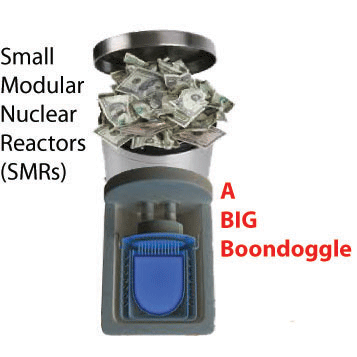
Expensive and dangerous: Nuclear doesn’t stack up https://www.miragenews.com/expensive-and-dangerous-nuclear-doesnt-stack-up-570069/m Electrical Trades Union
Lifting the ban on nuclear power generation in NSW using unproven small-scale reactors will only push up power bills, damage the environment and compromise safety, according to the Electrical Trades Union.
ETU National and NSW Secretary, Allen Hicks, said nuclear power would be hugely expensive compared to renewable energy, and that small nuclear reactors were still a pipe dream.
The recommendation around small scale reactors is one of 60 contained in the NSW Productivity Commission’s White Paper, which is supposedly designed to reboot the state’s economy.
“The Productivity Commission has lost the plot if it thinks small modular reactors, a technology that has been ‘just around the corner’ since the 1970’s but still doesn’t exist, is the answer to NSW’s productivity growth,” Allen Hicks said.
“Even if someone finally manages to build one that works, the electricity price forecast for their output is six times more expensive than renewables.
“Why does the Productivity Commission want NSW residents paying six times more for their electricity?”
“There are massive offshore wind projects waiting for federal approval off the NSW coast near Newcastle, Wollongong and Eden. Rather than pie-in-the sky nuclear nonsense we should get on with approving this clean energy and getting it into out grid.
The commission says lifting the ban would provide another source of firming capacity in the grid. But its own report admits “a wide degree of uncertainty” about small-scale nuclear reactors, mainly due to cost.
NSW Treasurer Dominic Perrottet said the government “will consider everything” in the report.
But Mr Hicks said the State Government must hit the stop button on nuclear power, as the business model for a dirty and dangerous technology did not stack up.
“Even if they improve the technology, a small modular reactor would take far too long to build, and we don’t have time to waste in the fight against climate change,” Mr Hicks said.
“Globally, most countries are moving away from nuclear power. Few new reactors are being built and nuclear companies are going bankrupt or facing financial distress.
Mr Hicks said the government should instead continue to focus on renewable energy.
“With a bit of foresight, some investment and some big thinkers, Australia is uniquely positioned in the world to become a renewable energy leader.
“Boosting the economy, providing more jobs, and dealing with climate change are big problems, but nuclear power is not the answer.”
Mulga Rock Uranium Project – VIMY’S MINE – UNWANTED AND UNECONOMIC
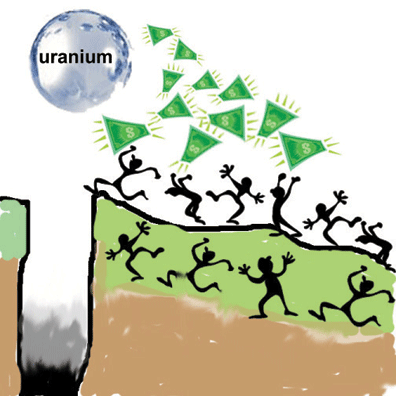
VIMY’S MINE – UNWANTED AND UNECONOMIC, https://www.ccwa.org.au/vimy_s_mine_unwanted?utm_campaign=nuclear_news164&utm_medium=email&utm_source=ccwa By Mia Pepper
Deputy Chair of the Mineral Policy Institute. BY KIM SMITH JUNE 02, 2021
Vimy Resources (aka Narnoo Mining) advertisement in Saturdays Kalgoorlie Miner is part of an extended last-ditch attempt to start a mine that is unwanted, uneconomic, does not have full and final approval or the financing needed to start mining.
Saturday’s ad suggests that Vimy will begin work at the site in Q4 2021. There are several critical elements for mining to commence that are not yet in place and are unlikely to be resolved by Q4 2021. The companies Mine Closure Plan and Mine Plan are not yet approved by the Department of Mines and previous attempts to have these plans approved have failed. There are also Works Approvals, export and other licenses and permits that are still required. The company does not have an Indigenous Land Use Agreement with the Upurli Upurli Nguratja Native Title claimant group – pre-empting mining without an ILUA drastically impacts that groups ability to negotiate or determine what should or shouldn’t happen on their country.
Perhaps the clearest pre-requisite to begin mining is a company’s Final Investment Decision and the finances to cover the capital costs. Without the ability to fund the project and meet the requirements of mining any ground-disturbing activities are pre-emptive and irresponsible. The capital cost for the Mulga Rock project is $493 million. Vimy’s March quarterly report shows Vimy raised over $18 million, since then they have raised a further $9 million. $27 million is a far cry from the $493 million needed to meet full capital costs. But it is enough to do some serious damage in the Yellow Sandplain Priority Ecological Community in the Great Victoria Desert, home to the endangered Sandhill Dunnart and other important vulnerable, migratory and priority species of flora and fauna. The company’s share value is down 97% since their inception in 2008 and has a long way to go to secure finance for a project that is just not economic. Until the company can demonstrate they have the capital funds to get the project off the ground they should not be allowed to embark on pre-emptive ground-disturbing activities.
One thing more dangerous than a uranium mine is an uneconomic uranium mine and ideologically driven company. Despite the lack of funding, final licenses and permits, an ILUA, social license and bipartisan support Vimy’s Mulga Rock project still presents a very real threat to the environment and the WA taxpayer. The WA government should make decisions based on evidence, not enthusiasm and should not facilitate this poorly considered project.
Australia/UK Free Trade Agreement will give corporations the right to sue governments.

Australia/UK Free Trade Agreement: What’s the Scam? https://www.michaelwest.com.au/australia-uk-free-trade-agreement-whats-the-scam/
by Michael West | May 31, 2021 The British Trade Minister has confirmed that corporations are likely to have the right to sue the Australian and UK governments if governments make laws which hit their profits. What’s the scam?
ISDS is the scam; Investor-State Dispute Settlement that is, clauses buried in “Free Trade” agreements, such as this one, which allow corporations to sue governments in obscure foreign tribunals. Australia’s most celebrated ISDS case was brought by tobacco giant Phillip Morris which sued Australia in Hong Kong when Australia introduced its wonderfully successful plain packaging laws.
“There are now over 1,000 known ISDS cases, with increasing numbers against health and environment laws, including laws to address climate change,” says Patricia Ranald convenor of the Australian Fair Trade & Investment Network (AFTINET).
“ISDS would give UK corporations the right to sue Australia over democratic legal changes in Australia. For example, British aged care company BUPA could claim compensation if the government follows the recommendations of the Royal Commission into Aged Care Quality and Safety and regulates for improved staffing levels and quality of care.”
Just another chapter in the saga of rising corporate power over democracy.
U.S. Energy Information reports uranium at lowest price since 2007
Uranium Week: Struggling With Low Prices
FN Arena Weekly Reports By Mark Woodruff May 25 2021, As the uranium spot price rose 2% for the week and 9% for the month, an EIA report revealed the lowest price paid since 2007 by owners and operators of US commercial nuclear plants
The US Energy Information Administration (EIA) released both its 2020 US Uranium Marketing Annual Report and its 2020 Domestic Uranium Production Report last week.
Despite covid roiling energy markets during 2020, the reports pointed to nuclear energy being a fundamental source of base load electricity generation (20%) with capacity factors steady at 94%, explains Canaccord Genuity. The broker believes coverage of future demand will continue to provide an impetus for a more active term market over 2021.
The EIA is responsible for collecting, analysing and disseminating energy information to inform policy making and efficient markets. It also adds to the public understanding of energy and its interaction with the economy and the environment.
The released reports in 2020 quantify developments in the US uranium industry, including decreased inventories, explains industry consultant TradeTech. They also showed an elevated aggregated contractual coverage rate among owners and operators of US civilian nuclear power reactors. Additionally, lower weighted average uranium prices and historically low uranium production were reported.
The Uranium Marketing Annual Report showed owners and operators of US commercial nuclear plants in 2020 purchased nearly 49mlbs uranium from US and foreign suppliers. These were transacted at a weighted-average price of US$33.27/lb, which represents a 1% increase in volume and a -7% decline in price compared to 2019 data. The weighted average price is the lowest price paid by owners and operators of US civilian power reactors since 2007.
Of the US deliveries, 76% were through longer-term contracts, averaging US$34.74/lb. As Canaccord notes, it’s always darkest before the dawn, with pricing failing to represent the marginal cost of production let alone the incentivisation price for restarts or new developments.
During 2020, 11.7mlbs or 24% of sales were on a spot basis, up from 10.5mlbs in 2019 and the highest since 2014. This illustrates that long-term contracts signed post-Fukushima (2011-2015) are starting to expire, explains Canaccord.
The report showed Australian and Canadian-origin uranium combined accounted for 42% of reported volumes by country of origin. Uranium purchased by owners and operators of US civilian power reactors from Russia again was the lowest weighted average price paid at US$25.73/lb, while purchases from Australia occupied the highest cost position at US$39.86/lb.;;;;;;;;;;;;;; https://www.fnarena.com/index.php/2021/05/25/uranium-week-struggling-with-low-prices/
Australia’s mining lobby exaggerates by $45 billion the taxes and royalties they pay
Mining lobby exaggerates taxes and royalties paid by $45 billion, Michaelo West Media, by Callum Foote | May 21, 2021,
The mining industry has exaggerated its contribution in taxes and royalties to Australian governments by an estimated $45 billion over the past 10 years. Callum Foote reports on the findings of an independent research project by Michael West Media.
The mining lobby and its “independent experts” from Deloitte Access Economics have routinely overcooked the contribution that mining companies make to Australia.
Michael West Media was commissioned to undertake an investigation into Australia’s mining royalty regime by the Neroli Colvin Foundation.
The report, A Fair Share?, found the mining lobby exaggerated by 19% its contribution to Australian government revenues through royalties and taxes for the period where government data has been made available, or an estimated $45 billion over the past decade.
The mining industry sold $2.1 trillion worth of Australian resources overseas in the past decade but Australian governments received less than a 10% return. The actual rate – 9.1% – covers royalty payments and taxes paid. If we consider only royalties, then the rate drops to 5.6% of the value of exported resources.
The mining industry regularly combines royalties and taxes but this is misleading when talking about its contribution to Australia.
Less than 10% of $2.1 trillion worth of Australian resources is perhaps not the “staggering” contribution as described by Resources Minister Keith Pitt earlier this week on the release of the latest Minerals Council report.
This is particularly the case given that the large mining houses are owned by foreign shareholders, so are the largest beneficiaries of Australia’s mineral wealth.
Michael West Media has found that, on average, mining companies make a 1654% revenue mark-up on Australian commodities………..
In Australia, all mineral commodities below the earth are owned by the Australian people. It is up to State and Federal governments to sell these commodities to mining companies that wish to extract and process them for selling. In accounting terms, royalties are deemed to be a “cost of goods sold”.
Just as a baker must buy raw flour from a mill and process it into bread to sell, royalties are the payment made by miners to the Australian people for the raw commodities that they then sell internationally.
Deloitte’s most recent report is more accurate than previous estimates of mining taxes and royalty payments. Michael West Media had contacted the firm for comment before it published this report because it was found that royalty and taxation figures were previously exaggerated by 33%, or $78 billion, for the period between 2010 and 2017………
The total export value of Australian commodities over the period, which is indicative of the revenue these companies have made from selling Australian resources overseas, is $2.1 trillion. This means that only 9.1% of the export revenue made by these companies has been paid to state and federal governments. ……………. https://www.michaelwest.com.au/mining-lobby-exaggerates-taxes-and-royalties-paid-45-billion/
Chinese-Australian uranium and rare earths mining company meets political opposition in Greenland
Left-wing party opposed to rare earth mining project wins Greenland election, A left-wing environmentalist party opposed to a controversial mining project won a clear victory in Greenland’s parliamentary election, according to results released Wednesday. https://www.france24.com/en/europe/20210407-left-wing-party-opposed-to-rare-earth-mining-project-wins-greenland-election 7 Apr 21,
With 36.6 percent of the vote, Inuit Ataqatigiit (IA) was ahead of Siumut, a social democratic party that has dominated politics in the Danish territory since it gained autonomy in 1979.
“Thank you to the people who trusted us to work with the people in the centre for the next four years,” IA leader Mute Egede said on KNR public television after the results were announced.
IA, which was previously in opposition, is expected to grab 12 out of the 31 seats in the Inatsisartut, the local parliament, up from eight currently.
But without an absolute majority, the most likely scenario is that IA joins forces with smaller parties to form a coalition. Siumut, which headed the outgoing government, was partly weakened by internal struggles. It gained 29.4 percent of the vote, still two percentage points higher than its results in the 2018 election.
The dividing line between the two parties was whether to authorise a controversial giant rare earth and uranium mining project, which is currently the subject of public hearings.
The Kuannersuit deposit, in the island’s south, is considered one of the world’s richest in uranium and rare earth minerals — a group of 17 metals used as components in everything from smartphones to electric cars and weapons.
IA has called for a moratorium on uranium mining, which would effectively put a halt to the project.
Divisions over Kuannersuit originally triggered the snap election in the territory after one of the smaller parties left the ruling Siumut coalition.
Opponents say the project, led by the Chinese-owned Australian group Greenland Minerals, has too many environmental risks, including radioactive waste.
Egede told KNR he would immediately start discussions to “explore different forms of cooperation” before forming a coalition government.
The 34-year-old, who has been a member of the Inatsisartut since 2015, took over the reins of the left-green party a little over two years ago.
Australian company Silex with Canadian company Cameco buys out GE-Hitachi Global Laser Enrichment LLC (GLE)
|
US government approves GLE restructure WNN, 19 January 2021 A proposed restructuring of GE-Hitachi Global Laser Enrichment LLC (GLE) has received the final key approval from the US government. The restructure will see Australian research and development company Silex Systems and Canadian company Cameco Corporation increase their holdings in the company to 51% and 49%, respectively.GLE has exclusive rights to commercially develop the SILEX laser isotope separation process technology under an agreement reached between GE (now GE-Hitachi) and Silex in early 2006. Cameco joined the project in mid-2008. GE-Hitachi in 2016 announced its decision to leave the venture, leading to GLE’s restructure. Silex and Cameco in December 2019 agreed to jointly purchase GE-Hitachi Nuclear Energy’s 76% interest for a total of USD20 million, and the three parties executed a binding Membership Interest Purchase Agreement (MIPA) for the restructure of GLE.
Silex yesterday said the US Department of the Treasury Committee on Foreign Investment in the United States (CFIUS) has approved the transaction under the terms of Section 721 of the Defense Production Act of 1950, after concluding that there are no unresolved national security concerns arising from the transaction. GLE earlier this month received notice from the US Nuclear Regulatory Commission (NRC) that it will be granted a stand-alone Facility Clearance, which will enable GLE to continue to operate under new ownership as a foreign owned entity, pursuant to closing of the MIPA…….. https://www.world-nuclear-news.org/Articles/US-government-approves-GLE-restructure |
|
Australia’s environmental scientists intimidated, silenced by threats of job loss
 Australia’s environmental scientists intimidated, silenced by threats of job loss, Michael West Media, by Elizabeth Minter | Jan 17, 2021 The silencing of environmental scientists, as revealed in a study late last year, profoundly damages our democracy, wastes taxpayers’ money, takes a huge personal toll, allows fake news to proliferate and short-changes the public. Elizabeth Minter reports. Australia’s environmental scientists intimidated, silenced by threats of job loss, Michael West Media, by Elizabeth Minter | Jan 17, 2021 The silencing of environmental scientists, as revealed in a study late last year, profoundly damages our democracy, wastes taxpayers’ money, takes a huge personal toll, allows fake news to proliferate and short-changes the public. Elizabeth Minter reports.
“I declared the (action) unsafe. I was overruled and … was told to be silent or never have a job again.” “We are often forbidden (from) talking about the true impacts of, say, a threatening process […] especially if the government is doing little to mitigate the threat.” “I was directly intimidated by phone and Twitter by (a senior public servant).” “… governments allow (industry) to treat data collected as commercial in confidence. This means experts most able to comment on the details of big mining and construction projects are hopelessly conflicted and legally gagged from discussing these projects in public.” “(Government) staff are rewarded or penalized on the basis of complying with opinions of senior staff regardless of evidence.” “I proposed an article in The Conversation about the impacts of mining […] The uni I worked at didn’t like the idea as they received funding from (the mining company).” All in a day’s workAll these comments, straight from the mouths of some of Australia’s most esteemed scientists, highlight the threats faced by ecologists, conservation scientists, conservation policy makers and environmental consultants, whether they are working in government, industry or universities. The scientists were responding to an online survey as part of a study conducted by academics Don Driscoll, Georgia Garrard, Alexander Kusmanoff, Stephen Dovers, Martine Maron, Noel Preece, Robert Pressey and Euan Ritchie. In an ironic twist, one of the research team’s initial members declined to contribute to the project for fear of losing funding and therefore their job. As the study’s authors note, scientists self-censor information for fear of damaging their careers, losing funding or being misrepresented in the media. In others, senior managers or ministers’ officers prevented researchers from speaking truthfully on scientific matters. This means important scientific information about environmental threats often does not reach the public or decision-makers, including government ministers. This information blackout, termed “science suppression”, can hide environmentally damaging practices and policies from public scrutiny. Survey methodology……….Ministers not receiving full informationSome 75% of the scientists surveyed reported having refrained from contributing to public discussion when given the opportunity – most commonly in traditional or social media. A small number self-censored conference presentations (9%) and peer-reviewed papers (7%). For scientists working in government, the main reasons they didn’t comment was because of attitudes of senior management (82%), workplace policy (72%), a minister’s office (63%) and middle management (62%). Fear of what would happen to their career prospects (49%) and concern about media misrepresentation (49%) also discouraged those working in government from speaking publicly. Almost 60% of scientists working in government and 36% of scientists in industry reported that internal communications were modified………… Critical conservation issues suppressedThe most common issue on which information was suppressed was threatened species. About half of industry and government scientists, and 28% of academics, said their commentary was constrained. Scientists working in government also reported not being able to comment on logging and climate change………….. The system is brokenOf those scientists who had spoken publicly about their research, 42% had been harassed or criticised for doing so. Of those, 83% believed the harassers were motivated by political or economic interests……. Change is neededAs witnessed by the past four years of Donald Trump’s presidency, it has never been more important to ensure that the public are exposed to facts and information from trusted sources……. The study was published late last year in Conservation Letters, a journal of the Society for Conversation Biology. https://www.michaelwest.com.au/australias-environmental-scientists-intimidated-silenced-by-threats-of-job-loss/ |
|
Can a new mine save BHP’s loss-making Olympic Dam?
 Can a new mine save BHP’s loss-making Olympic Dam? Peter Ker,Resources reporter
Nov 18, 2020 – There’s a school of thought at BHP that the best way to fix its loss-making Olympic Dam mine is with a bulldozer.
By demolishing the old smelter, refinery, acid plant and other surface infrastructure that so often cause the inconsistency at the mine, advocates say BHP could start again by spending a few billion dollars on world-class infrastructure to allow it to capitalise on Olympic Dam’s extraordinarily large copper, gold, silver and uranium resource….(Subscribers only)…. https://www.afr.com/companies/mining/can-a-new-mine-save-bhp-s-loss-making-olympic-dam-20201026-p568sn
1 This month

of the week – Australians for War Powers Reform (AWPR)
To see nuclear-related stories in greater depth and intensity
 Antinuclear