Superannuation funds are leaving investments on nuclear weapons
 Disarmament treaty drops bomb on super Disarmament treaty drops bomb on super funds investing in nuclear weapons, Michael West Media , by Margaret Beavis | Nov 2, 2020 Many superannuation funds exclude investment in “controversial weapons” but astoundingly this definition does not include nuclear weapons. However, this will change once the Nuclear Disarmament Treaty becomes international law, writes Dr Margaret Beavis. With two of the largest pension funds in the world already having divested, Australian funds are on notice. funds investing in nuclear weapons, Michael West Media , by Margaret Beavis | Nov 2, 2020 Many superannuation funds exclude investment in “controversial weapons” but astoundingly this definition does not include nuclear weapons. However, this will change once the Nuclear Disarmament Treaty becomes international law, writes Dr Margaret Beavis. With two of the largest pension funds in the world already having divested, Australian funds are on notice.
It would probably come as a surprise, and a disappointment, to most Australians to hear that some of their superannuation is invested in nuclear weapons. Especially given the strong community backing for nuclear disarmament, with two surveys in 2018 and 2020 (IPSOS) showing that between 71 and 79% of respondents supported Australia signing and ratifying the Treaty on the Prohibition of Nuclear Weapons. Yet the vast majority of superannuation funds have holdings in companies involved in the manufacture and maintenance of nuclear weapons. While many funds exclude investments in “controversial weapons”, astoundingly this definition often still allows nuclear weapons investment. But this is about to change. With the Treaty on the Prohibition of Nuclear Weapons (TPNW), which was endorsed by 122 countries at the United Nations in 2017, having just reached the milestone of 50 countries ratifying it, the treaty becomes international law in less than three months. Nuclear weapons, the worst of the weapons of mass destruction, will finally be on the same illegal footing as chemical and biological weapons. This means assistance of any sort, including financial assistance, towards nuclear weapons becomes illegal under international law. Only 26 companies support these weapons. Boeing, for example, the second largest weapons producer in the world, has contracts worth more than US$1.7 billion: building new nuclear weapons for the US, key components for the long-range nuclear Minuteman Intercontinental Ballistic Missiles system, sustaining the UK Trident II system and making tail-kit assemblies for the new B61 bombs. Divestment is accelerating. Globally, major investors are already ceasing their exposure to nuclear weapons activities. This includes two of the top five pension funds in the world, the Norwegian Government Pension Fund and ABP, which have divested from the 26 companies tied to nuclear weapons. Deutsche Bank and KBC are also divesting. In Japan, 16 banks (including three mega banks) have flagged ceasing investment in nuclear weapons companies. With accelerating divestment, the risks of holding nuclear weapons stocks increases. Superannuation funds in Australia are starting to consider the financial risks, reputational risks and ethical imperatives surrounding investments in nuclear weapons. Some, like Australian Ethical, Future Super and Bank Australia have already acted……… As with climate change, there is little point accumulating funds on behalf of the community if they contribute to the deaths of billions and a severely damaged future. Quit Nukes, an Australian-based campaign launched late last year, is working to get super fund portfolios out of the financing of nuclear weapons. The campaign members have met with senior executives at more than a dozen funds, the regulator APRA, several banks, index setters and a number of industry bodies. Blackrock, MSCI and other index setters have recognised the increasing demand from the public for ethical funds and have created products to suit. The full list of funds that have already acted is on the Quit Nukes website. Consumers are increasingly concerned about their funds being invested in destructive and unethical industries and super funds need to respond. https://www.michaelwest.com.au/disarmament-treaty-drops-bomb-on-super-funds-investing-in-nuclear-weapons/ |
|
|
$3 trillion and 880,000 jobs to be lost, if Australia continues inaction on climate change
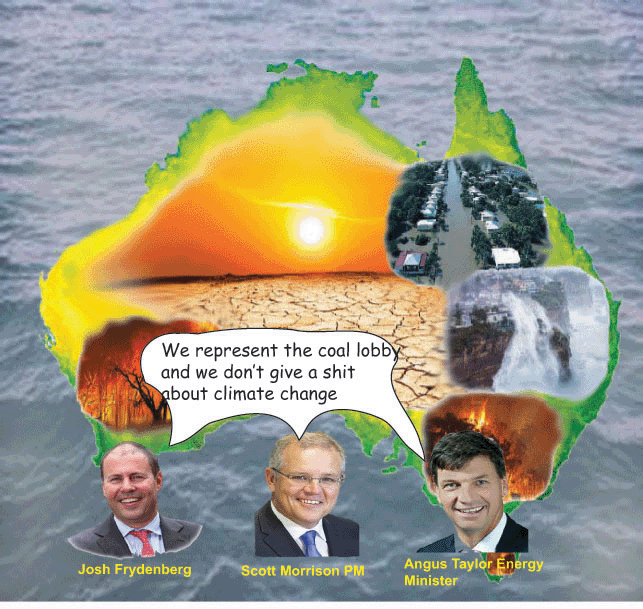 Australia will lose more than $3 trillion and 880,000 jobs over 50 years if climate change is not addressed, Deloitte says, ABC News, By Kathleen Calderwood– 1 Nov 20 The Australian economy will lose more than $3 trillion over the next 50 years if climate change is not addressed, according to a new report from Deloitte Access Economics.Key points: Australia will lose more than $3 trillion and 880,000 jobs over 50 years if climate change is not addressed, Deloitte says, ABC News, By Kathleen Calderwood– 1 Nov 20 The Australian economy will lose more than $3 trillion over the next 50 years if climate change is not addressed, according to a new report from Deloitte Access Economics.Key points:
The report found the economy could shrink by 6 per cent over the next 50 years and 880,000 jobs could be lost. Report author Pradeep Philip, who was a policy director for former prime minister Kevin Rudd, said there was also a lot to be gained if warming was kept below 1.5 degrees and Australia achieved net zero carbon emissions by 2050. “If we do act over the next few years then in just 50 years there is a benefit to the economy of $680 billion,” he said. “We’ll have an economy 2.6 per cent bigger, generating 250,000 jobs, so this tells us if you are pro-growth and pro-jobs then we need to act on climate change now……. Businesses ‘moving despite Government inaction’ Sheep grazier and chair of Farmers for Climate Action, Charlie Prell, says the pressure is already being felt in his industry, but opportunities are available to help agriculture businesses get by if climate change is addressed………. https://www.abc.net.au/news/2020-11-02/australian-economy-lose-$3-trillion-climate-change-inaction/12837244 |
|
|
Uranium: the mineral that never made sense now doesn’t even make dollars
 Uranium: the mineral that never made sense now doesn’t even make dollars, 20 Oct 20, News that BHP, the world’s biggest mining company, will not continue with the long planned multi-billion dollar expansion of its Olympic Dam uranium and copper project shows the clock is ticking on uranium, the Australian Conservation Foundation said today.
The planned expansion of the mine in northern South Australia enjoyed strong state and federal government support and was on Prime Minister Scott Morrison’s recent list of major projects to be fast-tracked.
“This move is further evidence of the deep market malaise surrounding uranium operations,” said Australian Conservation Foundation campaigner Dave Sweeney.
“Today’s announcement shows that political access, spin and favours cannot change the realities of an ore body or the global commodity market.
“BHP has made a basic, hard-headed business decision not to proceed with this project.
“The global uranium price has been hammered since the Fukushima nuclear disaster and it is unlikely to improve. The sector has scant social license and is increasingly embattled.
“Today’s decision by BHP, coupled with Rio Tinto’s exit from operations at the Ranger mine in Kakadu, shows the clock is ticking on uranium, the asbestos of the 21st Century.
“South Australia’s energy, employment and economic options should not be tied to a continued dependence on high impact, low certainty resource projects.
“South Australia is well placed to lead the nation in renewable energy tools, technology and thinking.
“This decision may be the pivot needed to shift to a secure, sustainable contemporary economy.”
For context or comment contact Dave Sweeney on 0408 317 812
BHP dumps its plan to expand Olympic Dam uranium mine
 BHP shelves $3.7bn expansion plan for Olympic Dam mine in SA for a second time
BHP has shelved a plan to spend $3.7 billion expanding the Olympic Dam copper and uranium mine – just months after the colossal project was put on a Federal Government fast-track. Cameron England, Business Editor, The Advertiser, 19 Oct 20,
BHP’s $3.7 billion expansion plans for the Olympic Dam mine have been abandoned.
The company had been looking at a Brownfields Expansion Project (BFX) which would have increased production from the current capacity of 200,000 tonnes of copper per year to as much as 300,000.
The project was one of a number of big ticket items earmarked for streamlined approval processes by the Federal Government in June in response to the COVID-19 pandemic and has major project status from the State Government……….
It is the second time BHP has scrapped plans for Olympic Dam. In August 2012, the company announced it had shelved its $30 billion expansion and would go back to the drawing board to find a cheaper alternative. Market conditions, subdued commodity prices and higher capital costs led to the decision eight years ago………
in its quarterly review released this morning, BHP said following more than 400km of underground drilling, which improved the knowledge of the ore body, it had decided to focus on incremental improvements, rather than a step change investment at the site.
“Following more than 400 km of underground drilling associated with the Brownfield Expansion (BFX) project studies, we have improved knowledge of the ore body’s variability,’’ the company said.
“This has provided challenges for the economics of the BFX project, and we have decided the optimal way forward for now is through targeted debottlenecking investments, plant upgrades and modernisation of our infrastructure.’………
BHP said Olympic Dam was performing well, and had posted its best quarterly performance in the past five years in the three months to the end of September.
“Over the next two years, our focus will remain on completing our asset integrity program to underpin more stable operations and copper production of more than 200 ktpa. We have a significant investment program in place to achieve that,’’ Mr Basto said.
“We will continue to study longer-term options for growth. Our enhanced understanding of the underground resources in the Southern Mine Area, promising results from Oak Dam and stronger foundations will help us unlock the full potential of Olympic Dam……..
In August, BHP announced Olympic Dam had made a full year loss before interest and tax of $US79 million, on revenues of $US1.463 billion. That was up from a loss the previous financial year of $US58 million on revenues of $1.351 billion.
China’s dramatic plan for switch to renewables – a warning to Australia’s fossil-fuel economy
 China just stunned the world with its step-up on climate action – and the implications for Australia may be huge, The Conversation, October 8, 2020, Hao Tan, Associate professor, University of Newcastle, Elizabeth Thurbon, Scientia Fellow and Associate Professor in International Relations / International Political Economy, UNSW, John Mathews, Professor Emeritus, Macquarie Business School, Macquarie University, Sung-Young Kim, Senior Lecturer in International Relations, Discipline of Politics & International Relations, Macquarie School of Social Sciences, Macquarie University China just stunned the world with its step-up on climate action – and the implications for Australia may be huge, The Conversation, October 8, 2020, Hao Tan, Associate professor, University of Newcastle, Elizabeth Thurbon, Scientia Fellow and Associate Professor in International Relations / International Political Economy, UNSW, John Mathews, Professor Emeritus, Macquarie Business School, Macquarie University, Sung-Young Kim, Senior Lecturer in International Relations, Discipline of Politics & International Relations, Macquarie School of Social Sciences, Macquarie University
|
|
Pretty despicable -tax breaks for company exporting weapons to Saudi Arabia, UAE.
Tax break for weapons exports to Mid-East countries accused of war crimes, Michael West Media, by Michelle Fahy | Oct 6, 2020 Australian weapons manufacturer Electro Optic Systems, with financial support from the federal and ACT governments, is capitalising on the ‘growth market’ of the Middle East, one of the world’s most volatile regions. Michelle Fahy reports.
As has been reported repeatedly, remote weapons systems manufactured by EOS are being exported to the United Arab Emirates and Saudi Arabia despite both countries being accused of war crimes. Numerous UN reports have detailed shocking human rights violations over the six years of the Yemen war.
After a shutdown due to Covid-19, EOS announced last month that it is exporting again.
EOS and the federal government have been asked repeatedly for proof that its weapons are not being used in Yemen. “Trust us,” is the standard response.
Assurances from a company chasing millions in profit and a government intent on catapulting Australia into the global top 10 of weapons exporters seem to be the best the public can expect in terms of accountability.
There is zero transparency when it comes to Australian weapons exports………..
Government support for EOS
EOS has received extensive government support, including an exemption from paying state payroll tax. Under questioning last November by the ACT Greens, Chief Minister Andrew Barr said the ACT Government provided support to EOS (PDF p44), “principally for its space industry related activity”. While EOS separates its space industry work from its weapons side, both companies operate in the same group under the same board……..
EOS has so far supplied the UAE and Saudi with its remote weapons systems. The systems are mounted on armoured vehicles and can incorporate a light cannon, machine gun, grenade launcher or anti-tank missile, which EOS does not manufacture. The system enables the weapon to be operated from inside the vehicle, which makes the soldier safer. It can identify targets and automatically aim the weapon, making the firing of the weapon faster and more accurate. In military parlance, the system enhances lethality. See it in action here.
The claim that it was not a weapons manufacturer may have been technically correct when asserted by EOS and Barr, but that is no longer the case.
Last month EOS announced it had moved into production with a new range of directed energy (laser) weapons. The weapons are being marketed by EOS as ‘drone kill’ technology (counter unmanned aircraft system or CUAS). EOS says “CUAS are entirely defensive systems”. The potential market is large. EOS has named its new range of weapons Mopoke, after the small native Australian owl.
EOS has not disclosed its list of interested customers for Mopoke, but industry insiders – such as AuManufacturing – have noted that its first customers are likely to come from the Middle East, given drone attacks on infrastructure there……….
EOS is now unequivocally a weapons manufacturer, and likely to soon start exporting its weapons to the Middle East.
Supplying weapons to war crimes accused
Melissa Parke, a lawyer, former federal Labor MP, and human rights expert, is one of three UN-appointed Eminent Experts on Yemen. Parke told SBS Dateline last year:
“No country can claim not to be aware of the violations being perpetrated in Yemen. To continue to provide weapons in the knowledge of such violations is both morally and legally hazardous.”
A former secretary of the Defence Department, Paul Barratt, has also stated his position on these weapon sales:
“Regardless of whether Australian-made weapons [are] crossing the border into Yemen, Australia now has a national policy which seeks and facilitates weapons sales with countries that stand accused of gross violations of human rights and likely war crimes. When did this particular trade in arms become official Australian policy? As a country that routinely asks other countries to abide by the rules-based international order, it would seem hypocritical, at best, that Australia is now willing to … make a profit from weapons sales to nations that are openly flouting this international order.”……….
In addition to ministerial lobbying, EOS Defence Systems has received federal financial support, including:
- $3.7 million from Defence between 2013 and 2016
- $41.5 million performance bond from Export Finance Australia (EFIC) (PDF p66)
The company has also gained from influential appointments to its board. Former Chief of Army, Peter Leahy, joined the EOS board in May 2009, just 10 months after retiring as army chief. In April 2016 Leahy was joined by former Chief of Air Force, Geoff Brown, less than 10 months after he had retired from the air force…… https://www.michaelwest.com.au/eos-weapons-export-transparen
Killing the virus comes at enormous cost — doing nothing will cost more.
Killing the virus comes at enormous cost — doing nothing will cost more.

|
Why harsh COVID-19 lockdowns are good for the economy https://www.abc.net.au/news/2020-09-21/why-harsh-covid-19-lockdowns-are-good-for-the-economy/12683486, By Ian Verrender
It has been a pile-on for the past few months as Team Australia has splintered right down the political divide.
Border closures in Western Australia and Queensland have been called out as unnecessary while the Victorian lockdown has been labelled an overreaction that has angered business leaders and drawn the ire of Prime Minister Scott Morrison. The restrictions, we are constantly told, are costing the nation dearly, delaying a return to normal activity and pushing out the timetable for an economic recovery. While some argue state governments are milking the pandemic for political gain, pointing the blame at regional and state governments for our current predicament ignores two important points. The first is that the restrictions have been imposed to limit the spread of a pandemic. It is the virus that is the fundamental cause, not the restrictions. And the second is that, while it’s almost impossible to measure the true cost of the lockdowns and the shutdowns, most critics look only at the costs and completely overlook the economic benefits the shutdowns have delivered. How could lockdowns have helped the economy?Here’s one good example. Continue reading |
‘Gas-led recovery’ may actually deter energy investment: Experts
|
‘Gas-led recovery’ may actually deter energy investment: Experts, The New Daily, Josh Butler, 16 SEp 20, Climate change and clean energy campaigners were left dismayed at the
federal government’s plans to spearhead a “gas-led recovery” from COVID-19, saying it will be ineffective and damage the prospects of meeting international emissions reduction commitments. Independent MP Zali Steggall claimed the Prime Minister’s announcement was “blackmailing private companies”, while even energy companies said the announcement – however well meaning –could actually lead to further uncertainty and less investment in the market. On Tuesday, PM Scott Morrison announced plans to lean heavily on the gas sector in the nation’s recovery from the pandemic, talking up the fuel’s potential to lower power prices and shore up reliability in the electricity grid. He also flagged the possibility of the commonwealth helping foot the cost for a new gas-fired power station in NSW, if the soon-to-be-closed Liddell plant is not replaced. But climate experts and clean energy campaigners are up in arms over the plan, which they say will be far more expensive and far worse for the environment than renewables. ….. Mr Bourne, a former regional president with BP Australasia, said gas was better for the environment than coal – but only marginally, when emissions linked to its extraction, production and transmission were factored in. “It’s not that much better than coal,” he said. The Australian Energy Council, representing major investors in power generation, said the government’s announcement may actually create more uncertainty and less investment in the sector – saying “even discussions and threats of intervention act as a deterrent”…… Labor’s shadow energy minister Mark Butler slammed gas as “the most expensive way to build new energy”……… https://thenewdaily.com.au/news/2020/09/15/gas-led-recovery-climate/ |
|
Australia’s nearly 2 $trillion costs by 2050 – if we continue climate change inaction
 Trillions up in smoke: The staggering economic cost of climate change inaction, New Daily, Ben Silvester, 8 Sept 20, Over the next 30 years, increasing economic damages from climate change will cost the Australian economy at least $1.89 trillion – or roughly 4 per cent of projected GDP each year – if current emissions policies are maintained.New research from the University of Melbourne reveals annual economic damages by 2038 will be comparable to the current estimated annual cost of COVID-19 in Australia. Trillions up in smoke: The staggering economic cost of climate change inaction, New Daily, Ben Silvester, 8 Sept 20, Over the next 30 years, increasing economic damages from climate change will cost the Australian economy at least $1.89 trillion – or roughly 4 per cent of projected GDP each year – if current emissions policies are maintained.New research from the University of Melbourne reveals annual economic damages by 2038 will be comparable to the current estimated annual cost of COVID-19 in Australia.
There have been many attempts at estimating the economic cost of climate change, but the researchers said this is the most detailed and globally comprehensive to date. The modelling covers 139 countries in four potential warming scenarios from now to 2100. The projections draw on a modelling framework in the journal Earth’s Future in 2018 and have been continually updated through adding data points for bushfires and other ecological events. “There is no model in the world that is nearly this computationally large,” said lead researcher Professor Tom Kompas of the university’s school of biosciences. “It’s as much as 10 times larger than standard basic models.” The detail built into the projections allowed researchers to drill down and discover how each country will be affected by rising temperatures at particular points in the coming century. Previous models could only provide average damages across large regions or the world as a whole…………. If this trajectory is maintained, the research found that the economic cost of climate change for Australia alone will total at least $1.89 trillion by 2050 and exceed $100 billion in annual damages by 2038. Professor Kompas described the impact of the coronavirus pandemic as “devastating”, but he said it also puts the huge economic threat of climate change into context. “By 2038, on average projections, climate change may well be dealing a COVID-sized blow to the Australian economy every year … [it] will imply more job losses, unemployment and deeper cuts in GDP. And those damages will continue to increase disproportionately year after year,” Professor Kompas said. Much of the economic damage will be from rising sea levels wreaking havoc on property, infrastructure and agriculture along the coast. It is calculated that damages of more than $992 billion over the next three decades, or more than $30 billion a year, on average, from sea level rise and storm surge alone. The modelling also predicts productivity losses of $261 billion as rising temperatures make it harder for certain crops to grow and for outdoor labourers to work, while losses in biodiversity total $277 billion with thousands of species at risk of extinction. “Many of these damages ramp up over time,” Professor Kompas said. But he said Australia is already getting a taste of what’s around the corner, the past “Black Summer” bushfires being an example. The researchers tallied up the damage to property, infrastructure and agriculture caused by the recent bushfires, assessing the cost at $48 billion. And with research suggesting Australia will have two more “megafires” before the end of the decade, Professor Kompas calculates that by 2050 bushfires will have cost the economy about $360 billion. The $1.89 trillion cost to the economy in the next 30 years is almost certainly an underestimate, he said. His research does not yet account for damage to Australia’s major environmental assets, pollution from burning fossil fuels, tourism losses and natural disasters other than bushfires……. https://thenewdaily.com.au/news/national/2020/09/10/economic-cost-climate-change/ |
|
Lithium for renewable energy technologies – a Covid recovery way for Australia
How Australia’s ‘white gold’ could power the global electric vehicle revolution
Miners and environmentalists have reached an uneasy truce over lithium – both agree Australia should be mining more of this key ingredient in renewable energy batteries, by Max Opray
”……….On the one side, environmentalists are engaging with a resources sector they distrust to nudge it towards lithium, an element which is used in batteries for electric vehicles and renewable energy storage systems due to its remarkably high energy density.
On the other, miners like Brown are suppressing scepticism of green causes to carve out a future in a world aiming to divest itself of fossil fuels.
Brown joined Altura Mining in 2009, and set about helping the small coal miner diversify into other resources as a way of hedging against headwinds facing the fossil fuel.
Lithium, hyped as the “white gold” of the 21st century, seemed a promising investment. But securing investors for Altura’s exploration tenements in the remote ochre deserts of the Pilbara proved challenging……..
Despite the urgency of the climate crisis, the attachment to coal runs deep for Australians like Brown, and leaving it behind wasn’t easy. ……..
The ‘white gold’ rush
Australia leads the world in lithium production and possesses an estimated 6.3m tons of lithium reserves.
The metal is fast becoming a geopolitical bargaining chip, as China, the US and other major powers jostle to secure access to an element expected to surge in demand as the global economy rapidly ramps up production of electric vehicles and renewable energy storage systems, not to mention lithium-ion mobile phone batteries.
The most common form of extraction in Australia is by crushing a hard rock called spodumene, and from that extracting lithium concentrate using a separation method that Brown says is similar to some coal processing systems.
Harry Fisher, senior consultant at business intelligence company CRU Group, believes the economic recovery from Covid-19 will be the moment the long-promised lithium rush finally gets underway.
“Governments continue to promote the merits of a ‘green recovery’, with EV subsidies being increased in Germany, France, UK and many others,” he says. “Policy is likely to continue to support demand.”
Australia has no formal green recovery plan, but Fisher suggests that might not matter if the rest of the world does.
Fisher forecasts that demand will grow to 830 kilotonnes by 2025, up from around 330 kilotonnes this year. In particular demand, Fisher says, is the spodumene that Australia specialises in…….
Altura will be a key supplier to Shanshan’s new lithium chemical plant in China, which plans to produce 25,000 tonnes per annum.
The deal came, says Brown, thanks to China’s two-year extension of state subsidies and tax breaks for electric vehicles until the end of 2022.
The subsidies were also cited by Pilbara Minerals, the operator of a neighbouring Pilgangoora lithium mine, as a reason for optimism.
Australia’s major competition in the global market is the “lithium triangle” of Bolivia, Chile and Argentina, which extracts the metal out of the region’s salt lakes……..
Elsa Dominish, research principal at the Institute for Sustainable Futures, said the environmental impact of lithium mining is similar to other forms of hard rock mining.
She says Australia has an opportunity to establish the world’s best practice for lithium mining by monitoring water and energy use, management of waste, and impact on sacred cultural sites.
Dominish emphasises that lithium’s footprint pales in comparison to the impact of coal. “In addition to emissions … coal mining is one of the most damaging forms of mining considering health and environmental impacts, particularly respiratory impacts from exposure to coal dust,” she says…….
When Adam Bandt assumed the Greens leadership in February, he immediately went to work spruiking a Green New Deal.
Bandt had even planned to visit the Greenbushes Lithium Mine in south-west WA, the largest hard rock lithium operation in the world, to sell the message of transitioning coal miners into jobs in new energy metals. The trip was called off due to the Covid-19 crisis.
Miners have long moved to where the resources are, and Queensland and New South Wales coal workers might need to relocate to the Pilbara for new lithium mining gigs. In the case of Greenbushes however, there is a coal mining community right on its doorstep.
Unions and the Western Australian government are pushing for a planned Greenbushes expansion to employ coal workers from the nearby Collie mine and power plant, in a bid to secure a future for them as the local coal industry withers away.
Industry analysts, lithium miners, and green groups also agree on something else: simply digging the lithium out of the ground and exporting it with minimal processing is a wasted opportunity.
According to the Million Jobs Plan report, produced by climate thinktank Beyond Zero Emissions, Australia earns only 0.5% of the value of its exported lithium ore, with the remainder going to overseas companies that further refine it and manufacture lithium-ion batteries.
South Australia, home to Tesla’s Big Battery, is developing battery manufacturing capacity, and BZE argues Western Australia could invest in lithium refinement, battery component manufacture, and recycling, to contribute towards 100,000 new jobs nationally by 2025. The state is already host to several processing facility projects.
Heidi Lee, project lead for the Million Jobs Plan, says the Covid-19 shutdown is a generational opportunity for the Australian government to set signals to unlock investment, such as a new renewable energy target………..
The coronavirus pandemic has devastated the economy but also presented a unique opportunity: to invest in climate action that creates jobs and stimulates investment, before it’s too late. The Green Recovery features talk to people on the frontline of Australia’s potential green recovery. https://www.theguardian.com/australia-news/2020/sep/10/how-australias-white-gold-could-power-the-global-electric-vehicle-revolution
BHP’s Uranium mine Olympic Dam makes a financial loss for second year running
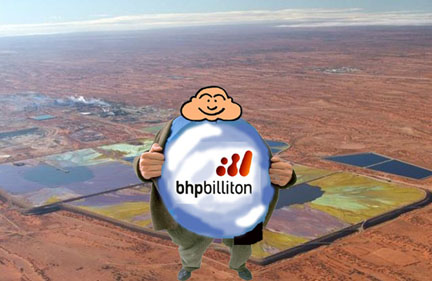 Olympic Dam records a second financial year loss, of US$79 million on revenue of US$1.46 billion in 2019-20. Giving a total three-year loss of approx. US$100 million on revenues of approx. US$4 billion, with last profit in 2017-18 fin yr of only US$39 million. Olympic Dam records a second financial year loss, of US$79 million on revenue of US$1.46 billion in 2019-20. Giving a total three-year loss of approx. US$100 million on revenues of approx. US$4 billion, with last profit in 2017-18 fin yr of only US$39 million.
Olympic Dam Mining revenues are at approx. only 2.5 per cent of total BHP corporate revenues, Not very convincing… Olympic Dam reports $US79 million loss, is on the lookout for new leader Olympic Dam’s turnaround story is not yet complete, with BHP’s mega mine posting another loss for the past financial year as it starts the hunt for a new leader. Cameron England, Business Editor, The Advertiser August 18, 2020 The Olympic Dam mine in South Australia’s Far North has increased its full year loss and is on the lookout for a new leader, global miner BHP has announced. In reporting its full year results, BHP said Olympic Dam, which produces copper, uranium, gold and silver, had made a full year loss before interest and tax of $US79 million, on revenues of $US1.463 billion. This is up from a loss the previous financial year of $US58 million on revenues of $1.351 billion. The mine last reported a profit, of $US39 million off revenues of $US1.255 billion in 2017-18, and has for many years underperformed in comparison with BHP’s high-margin assets such as Western Australian iron ore……… BHP also announced Laura Tyler – asset president Olympic Dam since 2018 – would be promoted to chief technical officer, and a new leader would be sought for the mine……. “A replacement for the Asset President Olympic Dam will be the subject a future announcement.’’In the interim, Justin Bauer, currently general manager surface development & planning, will become acting asset president…….. But the company is yet to give solid commitments around timelines, financial investments and job numbers for the expansion, as it continues work on internal feasibility studies. |
$6.6 trillion in annual GDP at risk as Asian climate warms – McKinsey Global Institute
 McKinsey sees $6.6 trillion in annual GDP at risk as Asian climate warms, https://www.smh.com.au/business/markets/mckinsey-sees-6-6-trillion-in-annual-gdp-at-risk-as-asian-climate-warms-20200813-p55ley.html By Bloomberg News, August 14, 2020 Lethal heatwaves, droughts, floods and typhoons will become more common in Asia-Pacific, which faces more severe potential impacts from climate change than many parts of the world, McKinsey & Co. researchers warn.Asia is particularly at risk because it has such a high number of poor people, who tend to rely more on outdoor work, living in areas most vulnerable to extreme increases in heat and humidity, McKinsey Global Institute said in a new report published on Thursday. By 2050, the loss of that labor could cost the region as much as $US4.7 trillion ($6.6 trillion) a year in GDP, about two-thirds of the global total at risk. McKinsey sees $6.6 trillion in annual GDP at risk as Asian climate warms, https://www.smh.com.au/business/markets/mckinsey-sees-6-6-trillion-in-annual-gdp-at-risk-as-asian-climate-warms-20200813-p55ley.html By Bloomberg News, August 14, 2020 Lethal heatwaves, droughts, floods and typhoons will become more common in Asia-Pacific, which faces more severe potential impacts from climate change than many parts of the world, McKinsey & Co. researchers warn.Asia is particularly at risk because it has such a high number of poor people, who tend to rely more on outdoor work, living in areas most vulnerable to extreme increases in heat and humidity, McKinsey Global Institute said in a new report published on Thursday. By 2050, the loss of that labor could cost the region as much as $US4.7 trillion ($6.6 trillion) a year in GDP, about two-thirds of the global total at risk.
The report underscores the economic risks of delaying investments that mitigate or adapt to climate change. The potential for widespread damage is similar to the region’s experience during the current pandemic, according to McKinsey. What we have seen is that countries, cities and people can take resolute actions and if we do take these actions and sustain them, we can cooperate globally and see positive outcomes,” said Oliver Tonby, McKinsey’s Asia chairman, who co-authored the report. The projections are based on a scenario in which the world fails to cut greenhouse gas emissions and Asia warms by 2 degrees Celsius. They show that by 2050, between 500 million and 700 million people living in places like India, Bangladesh and Pakistan could experience heatwaves that exceed the survivability threshold. The loss of outdoor labour during those times could shave off 7 per cent to 13 per cent off GDP in those three countries, resulting in losses of $US2.8 trillion to $US4.7 trillion across the whole of Asia on average per year, according to the report. Extreme precipitation events could rise three- or four-fold by 2050 in parts of Japan, China, South Korea and Indonesia, according to McKinsey. Increased riverine flooding could cause $US1.2 trillion in damage in Asia, about 75 per cent of the global impact. Conversely, as the earth warms, parts of southwestern Australia could spend more than 80 per cent of a decade in drought conditions by 2050 and regions of China could experience droughts 40 per cent to 60 per cent of the time. Climate change will also increase the likelihood of severe typhoon strikes from the Philippines and Vietnam to Northeast Asia. It will also create winners and losers, increasing surface water supply in parts of northern India and China while depleting reservoirs in Australia.
To face the business risks, Tonby said companies need to assess their exposure and take it into consideration when making plans. A significant opportunity lies in infrastructure development in Asia as the region is still rapidly urbanising. |
Australian government could create 76,000 jobs within three years if it invests more in renewables
 Climate Council unveils plan to create 76,000 jobs in three years, The New Daily, KellyReporterThe federal government could create 76,000 jobs within three years if it invests more in renewables, a new report has found.
In conjunction with economic consultants AlphaBeta, the Climate Council has released a 12-point plan to create 76,000 jobs while slashing emissions – recommending everything from restoring ecosystems to retrofitting public buildings.
“The job creation could start immediately and continue over three years. Federal, state and territory governments all have the opportunity to put these measures in train.”
By targeting 12 policy areas, state and federal governments could create employment for communities hit hardest by the COVID-19 economic crisis.
The 12 areas include large-scale projects such as installing wind and solar and investing in pilot-scale green hydrogen, as well as more localised initiatives such as accelerating construction of public transport and increasing the amount of tree canopy cover in urban areas. ………
Ms McKenzie said the plan would create jobs, cut energy bills and reduce Australia’s emissions.
And she said taxpayers wouldn’t have to foot the entire bill, as private investors have a big appetite for investment in renewables.
“We know renewable energy is the cheapest source of power. It can attract the most private investment,”…….. https://thenewdaily.com.au/news/2020/07/21/climate-council-job-creation-policies/
Despite Australia’s pro nuclear trolls, finance facts mean that nuclear power has no future

NUCLEAR PRICES ITSELF OUT OF THE FUTURE https://www.aumanufacturing.com.au/nuclear-prices-itself-out-of-the-future by Peter Roberts 16 July 2020,
I was at lunch the other day and out came the familiar theme – Australia should go nuclear to de-carbonise the economy.
Well, a just-released report from the NSW Parliament’s State Development Committee should put an end to such talk – it is just too expensive and problematic.
The report, detailed in Channel 9 media, found the cost of the two reactors being built in the US is now thought to be between $20.4 billion and $22.6 billion for each reactor.
In the UK the cost of two reactors being build has jumped seven-fold to $25.9 billion each.
And those being built in France and Finland are now costed at upwards of $17.7 billion each.
Cost over-runs and delays mean that big nuclear power plants are only going to be built where there are massive government subsidies.
And this is even before factoring in the cost of the odd Fukushima or Chernobyl.
This morning on social media the pro-nuclear trolls were out in force – people are living happily now at Chernobyl one said.
Well I vsisited Chernobyl 18 months ago and there is nothing normal about it.
Maintaining the remains of the reactors at Chernobyl consumes 10 per cent of Ukraine’s admittedly modest GDP, and the long term effects of radiation continue to be felt.
This is why nuclear proponents now talk about snazzy new small reactors which are going to be the next big thing.
The same story is unfolding in small reactor construction as large – cost over-runs, very few small reactors actually under construction, and the need for massive, yes there’s that word again, government subsidies.
We already know what the answer to our carbon crisis is – renewables. Wind and solar plus storage is already cheaper and getting cheaper every day.
The future is not nuclear.
Australia could create hundreds of thousands of jobs by accelerating shift to zero emissions – report
 could create hundreds of thousands of jobs by accelerating shift to zero emissions – report
Decarbonising the economy by investing in renewable energy, clean buildings, clean transport and manufacturing could help fight the recession, Guardian, Adam Morton Environment editor @adamlmorton, Mon 29 Jun 2020 Hundreds of thousands of jobs could be created in Australia by hurrying the shift to zero greenhouse gas emissions, a study backed by business and investment leaders has found.
The Australian Bureau of Statistics estimates 835,000 jobs have been lost since the coronavirus pandemic shutdown began in March. A report by Beyond Zero Emissions, an energy and climate change thinktank, says practical projects to decarbonise the economy could create 1.78m “job years” over the next five years – on average, 355,000 people in work each year – while modernising Australian industry.
Called the “million jobs plan”, it says further stimulus measures needed to fight the Covid-19 recession are “a unique opportunity to lay the foundations for a globally competitive Australian economy fit for 21st century challenges”.
The report focuses on proposals it says are already being planned and could create jobs by accelerating private and public investment in renewable energy, clean buildings, clean transport, manufacturing and land use that will happen in the years ahead anyway. Benefits would include improved air quality and new employment in regional areas.
Eytan Lenko, Beyond Zero Emissions’ interim chief executive, said the group had brought together investment, business and industry leaders to scope the best clean solutions that would drive productivity and growth.
“No one thought 2020 would turn out the way it has. We now have a unique opportunity to seize this moment, to retool, reskill, and rebuild our battered economy to set us up for future generations,” he said.
The plan would require hundreds of billions of dollars in investment. It says clean energy investors have indicated their willingness to spend on this scale, pointing to the more than $100bn of existing renewable energy projects proposed but yet to be built.
The report says Australia risks missing out on some of these opportunities, and others in electric transport, zero-carbon manufacturing and green steel, unless governments deliver policy certainty and help create an environment that encourages large clean investment deals. Reserve Bank research found the number of large-scale renewable energy projects reaching commencement fell about 50% last year after a record-setting 2018.
Beyond Zero Emissions says governments also have a role to play in direct investment in, for example, urgent transmission line projects to new renewable energy zones, the construction of energy-efficient social housing, and the introduction and expansion of electric buses and trains………. https://www.theguardian.com/australia-news/2020/jun/29/australia-could-create-hundreds-of-thousands-of-jobs-by-accelerating-shift-to-zero-emissions-report
1 This month
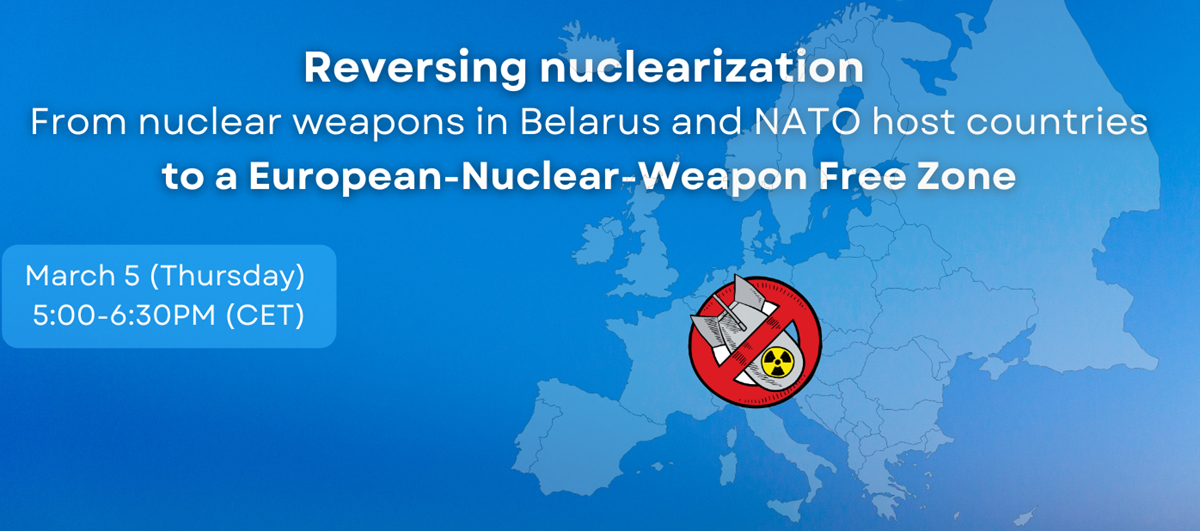
6 March -Online – Reversing nuclearization:
From nuclear weapons in Belarus and NATO host countries to a European-Nuclear-Weapon Free Zone
Mar 6, 2026 03:00 AM in Canberra, Melbourne, Sydney

of the week – Australians for War Powers Reform (AWPR)
To see nuclear-related stories in greater depth and intensity
 Antinuclear