Australian rare earths company Lynas has not solved its Malaysian radioactive waste problem
 Locals say market won’t buy Lynas’ recycled waste, Malaysia, By Shannon Teoh, January 26, 2012 KUALA LUMPUR, Jan 26 — Lynas Corp’s plans to recycle waste from its controversial RM2.5 billion rare earth plant in Kuantan into a commercial product will not be accepted by the market, local residents opposed to the refinery said today.
The Stop Lynas Coalition (SLC) and Save Malaysia Stop Lynas (SMSL) groups said in a joint submission to the government that the synthetic gypsum the Australian miner hopes to produces from its waste is the subject of an international safety campaign due to radiation fears. The use of phospho-gypsum plaster-board and plaster cement in buildings as a substitute for natural gypsum may constitute an additional source of radiation exposure to both workers and members of the public,” the document quoted from Internet-based environmental organisation Zero Waste America. Continue reading
Australian company involved in a nuclear power mess in Egypt
 As usual, trouble for Australian uranium, or nuclear-involved countries overseas, does not reach the Australian media. The troubles and losses of Paladin uranium company, over recent years, in Africa, have been ignored.
Likewise Australian company Worley Parsons has not suffered in the media, the embarrassment of its involvement with the fiasco that is Egypt’s new nuclear reactor
“WorleyParsons has the contract with the Egyptian Nuclear Power Plant Authority (NPPA) for a consultancy services contract to support the delivery of the first Egyptian Nuclear Power Plant…. a major milestone in the development of nuclear power generation in Egypt and WorleyParsons is very proud to be associated with the NPPA in this exciting project… It also demonstrates our leading position in the global nuclear new build arena.” – from Worley Parsons website
Soldiers and the demonstrators threw stones at each other and exchanged gunfire after the protesters demolished a wall surrounding the site, a security source and witnesses said…

 Radioactive material stolen from Egyptian power station: report Reuters Jan 19, 2012 CAIRO – Radioactive material has been stolen from a nuclear power station on Egypt’s Mediterranean coast that was the scene of violent protests last week, the state-run al-Ahram newspaper reported on Thursday.
A safe containing radioactive material at the Dabaa nuclear power plant, which is still under construction, was seized while another also containing radioactive material was broken open and part of its contents taken, the newspaper said. Continue reading
Extreme weather in Northern Territory bodes no good for uranium miner Energy Resources of Australia
 Australia’s ERA warns rains to hit uranium output again SYDNEY, Jan 12 (Reuters) – Energy Resources of Australia warned on Thursday that recent flooding caused by monsoon rains in northern Australia will continue to restrict its production of uranium in 2012.
Production at the company’s Ranger mine — which in previous years supplied as much as 10 percent of the world’s uranium — was halted by heavy rains in early in 2011 and did not resume until mid-June.
A second deluge in December that dumped record rains across parts of the tropical Northern Territory meant ERA would be unable to readily mine richer ores at the bottom of the lode, it said.
“As a result, access to the high grade ore located at the bottom of the pit will be delayed and is highly dependent on rainfall
experienced for the remainder of the 2011/2012 wet season,” said ERA, 68 percent owned by Rio Tinto but separately listed on the Australian bourse….. Analyst are expecting the company to show a loss on earnings before interest and tax of around A$61 million against a profit of A$68.4 million in 2010.
The stock has plummeted more than 80 percent in the last 12 months, in part due to negative sentiment toward uranium companies following the Fukushima nuclear disaster in Japan last March…..
http://af.reuters.com/article/energyOilNews/idAFL3E8CB8ZU20120111?pageNumber=2&virtualBrandChannel=0
Australia’s carbon tax can benefit commercial electricity consumers
 Australia’s Carbon Tax And Commercial Electricity Customers , Energy Matters, 4 Jan 12, “……..While carbon tax relief for Australian households has been well publicised, the situation for commercial customers has received less coverage.
Commercial electricity customers often pay a lower rate for power than residential users; so the carbon tax will in effect see electricity costs increase by a greater degree for some enterprises from July 1, 2012. According to some estimates, the jump could be as much as 19 percent for big power users.
In terms of government support, the manufacturing sector will be able to benefit from the $800 million Clean Technology Investment Program, which will provide grants to manufacturers to support investments in energy-efficient capital equipment and low-pollution technologies, such as commercial solar power systems. ….
Small businesses can also take advantage of the Solar Credits scheme to purchase a solar power system right now. For just a few thousand dollars, even an entry-level rooftop solar panel array can slash power bills by a significant amount. The Solar Credits rebate will be further reduced from July 1 this year.
Other forms of carbon tax relief will be available for small and large enterprises, the details of which can be viewed on the Australian Government’s Clean Energy Future web site.
The carbon tax isn’t the only power bill bogeyman on the horizon – frequent electricity price rises in the years ahead due to other factors will become the norm rather than the exception. For businesses in Australia, energy efficiency and the implementation of on-site alternative energy generation will become an increasingly pressing issue and an important part of maintaining profitable enterprises. http://www.energymatters.com.au/index.php?main_page=news_article&article_id=1966
Toxic spill might raise insurance costs for uranium transport from planned BHP new mine
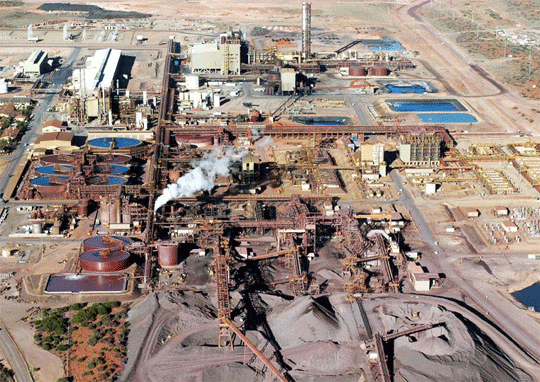 it was unclear whether the incident would raise premiums for miners
By far the biggest user of the railway will be BHP Billiton, which, if it approves its expected expansion of the Olympic Dam copper and uranium mine in South Australia, will run a train a day from the mine to Darwin. …..
OZ Minerals’ insurance claim for derailment loss may face complication over pollution BY: MATT CHAMBERS The Australian January 02, 2012 OZ Minerals may recoup through insurance some of the losses from the up to 1200 tonnes of copper concentrate that disappeared into the Northern Territory’s Edith River last week after a train derailed. In an announcement to the stock exchange on Thursday, OZ said the value of the lost concentrates was between $US7 million ($6.85m) and $US8m, or about 4 per cent of its 2010-11 underlying net profit of $189m. Continue reading
Chinese owned company to ship uranium concentrates to Shanghai
Australia’s Energy Metals to Ship Uranium Concentrates to Shanghai, Commodities and Futures 30 Dec11, By Esther Tanquintic-Misa | Australia will be soon seeing its first uranium concentrate shipment, after Chinese-owned Energy Metals signed an agreement to ship third-party uranium from Adelaide to its parent company in Shanghai.
China Guangdong Nuclear Power Co. (CGNPC) owns 60 per cent of Australian-listed Energy Metals. It is one of two Chinese companies authorized to import and export uranium in China, Energy Metals will export 150,000 pounds (68 tonnes) of uranium oxide concentrate to Shanghai at $53 a pound, no later than April 30, 2012.
Energy Metals, however, will not identify the seller of the $8 million shipment. Energy Metals said it is still discussing with CGNPC to sell the concentrate, where it expects to generate a profit from the sale. Before the Fukushima nuclear disaster affected uranium markets, Energy
Metals had received federal government approval to export third-party uranium.
Data from the Department of Foreign Affairs and Trade showed that since 2006, uranium expors to China have been controlled. The first was in 2008 by Energy Resources of Australia, while BHP made a trial in 2009. Uranium displacements from Australia last year reached a record 431 tonnes. However, this represents only 7 per cent of the 5,926 tonnes transferred, where half went to the US. http://au.ibtimes.com/articles/274333/20111230/australia-s-energy-metals-ship-uranium-concentrates.htm
Australian uranium companies in Namibia – uranium turning into a “lame duck”
 After Fukushima, suddenly the expected darling of local mining investment, has turned into a pariah. Both the Areva and Marenica statements refer to events after Fukushima, highlighting the uncertainty that has entered the industry since the nuclear disaster in Japan……
Perhaps it is a case of both Kalahari Mineral and Extract Resources taking what they can get and opting out of an industry that is fast turning into a lame duck. [or a dead cat – I haven’t got a picture of a lame duck]
Namibia Economist 16 Dec 11 When three major players in one industry, all announce substantial shifts in strategy and/or focus in a very short span, it signals a fundamental change in the underlying assumptions. These past two weeks saw one surprise after another as first Extract Resources, then Marenica, and finally Areva announced a dramatic turn in their strategies which probably points to a change of heart and a significant reappraisal of prospects and strategies. Continue reading
Asian investor gives financial boost to Australia’s renewable energy fund
 Renewable energy fund launched in Sydney, SMH, December 15, 2011 An Asian investor will match the federal government dollar for dollar as part of a $200 million scheme to help local renewable energy companies get started. The commonwealth earlier this year pledged to pump $100 million into Australia’s largest renewable energy venture capital fund….. http://news.smh.com.au/breaking-news-national/renewable-energy-fund-launched-in-sydney-20111215-1ow1i.html
Australia selling more of its (non radioactive) rice to Japan
Japan hungry for Aussie rice BY: SUE NEALES RURAL REPORTER The Australian December 06, 2011 AUSTRALIAN farmers are optimistic of boosting rice exports to Japan in the wake of its twin tsunami and nuclear disasters.
The Japanese government last month banned the sale of rice grown in the Onami district near the site of the Fukushima nuclear reactor meltdown in March after high levels of radioactive caesium were found in the food staple.
Three shipments each of 12,000 tonnes of Australian rice sold to Japan since April – already three times as much as last year – suggest it may require more imported rice this year.
As well, a recent study published in the National Academy of Sciences journal has concluded large tracts of arable land in northeastern Japan may not be safe for food production, including rice, for some time because of fallout from the radioactive cloud……http://www.theaustralian.com.au/news/health-science/japan-hungry-for-aussie-rice/story-e6frg8y6-1226214563570
Toro Energy looking for funds for Wiluna uranium project, but cautious about its future
TORO Energy will consider all project funding options as it moves towards developing Western Australia’s first uranium mine.. Adelaide Now, Christopher Russell December 01, 2011
Mr Hall told the company’s annual general meeting in Adelaide yesterday Toro estimated it will cost about $280 million to build the mine at Wiluna in south-central WA…..
Toro was looking for options to fund Wiluna, which would produce about 820 tonnes a year of uranium….. “In the current climate, the most likely method will be a joint venture partner who takes part-ownership in return for both funding and offtake of uranium….
Chairman Erica Smyth said the company was proceeding very cautiously……”We’re looking at all the options to finance this.” Both Dr Smyth and Mr Hall said the industry had been dealt a severe blow by the Fukushima disaster…. http://www.adelaidenow.com.au/business/toro-seeks-partners-for-280m-wa-mine/story-e6frede3-1226210632139
BHP Billiton trying to lock in huge new uranium mine by splurging money in advance of BHP Board’s decision?
$1.3 billion is a lot of money to spend on a project that might never come to fruition. It’s a common tactic, 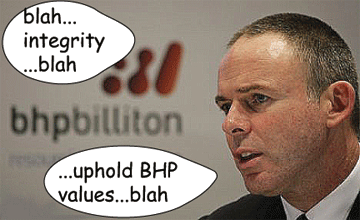 but one that could come unstuck. But then, I’ve always suspected that Marius Kloppers, Dean Dalla Valle, like many bigwigs might feel that they have plenty of BHP money to splash around – perhaps an old-fashioned case of more money than sense.
The international news is not encouraging for the uranium industry – though I note that Australia’s mainstream media just ignores facts like – the expensive mess of nuclear transport in France and Germany, – the anti nuclear political strength gathering in France, – the huge anti nuclear movement and other nuclear hindrances in India, -and the ever downward price of uranium. – Christina Macpherson
South Australia Parliament approves BHP Billiton Olympic Dam expansion, by:Sarah Martin, Adelaide Now, :The Advertiser, November 30, 2011, BHP Billiton will start spending $1.2 billion on equipment for the Olympic Dam expansion in coming weeks after winning final approvals from Parliament for the deal to proceed.
The head of the company’s uranium operations, Dean Dalla Valle, said the approval paved the way for the $30 billion mine to be SouthAustralia’s economic driver for the next 40 years, but gave no guarantees BHP Billiton’s board would approve the project in 2012. Continue reading
Australian Nuclear Science and Technology Organisation (ANSTO) buyng into the Thorium dream?
Anything to keep the nuclear industry alive?
Australian and Czech consortium announce thorium joint venture Australian Mining – Cole Latimer – 30 Nov 11 Arrangements will be discussed with the Australian Nuclear Science and Technology Organisation (ANSTO) which is responsible for monitoring the activity and … (Website was not available to me, – Christina Macpherson)
Australia’s uranium industry not really winning, despite Olympic Dam
 While the Olympic Dam mine expansion is proceeding, and the tiny Honeymoon mine has begun producing tiny amounts of uranium, there has been much to celebrate for anti-uranium campaigners this year:
* Uranium mining has been banned in the Arkaroola Wilderness Sanctuary in SA.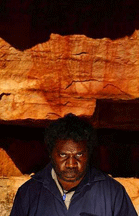
* A strong campaign has put in jeopardy the proposed Angela Pamela uranium mine in the NT. At various stages both the NT Labor government and the Country Liberal Opposition have opposed the mine.
* Traditional Owners have put an end to plans to mine the Koongarra deposit in the NT. Jeffrey Lee (at right) resisted uranium lobby $millions
* At least two proposed uranium mines in WA have been put on hold (and hopefully abandoned).
* The WA Labor Opposition has strongly reaffirmed its no-uranium policy.
* All the eastern states/territories maintain their bans on uranium mining.
* ERA has abandoned plans to use heap-leach uranium mining at Ranger in the NT (though it still has other plans to expand the mine).
* The extraordinary early-1980s film ‘Dirt Cheap’ – about the Ranger mine in the NT – has been updated and is being launched in November/December.
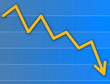 * Figures from the Bureau of Resources and Energy Economics show a 19% fall in the value of Australian uranium exports from 2009-10 to 2010-11. Uranium accounts for a paltry 0.3% of Australia’s export revenue and 0.03% of jobs in Australia.
The uranium industry is in denial, continuing to claim that the debate has been settled in Australia (in its favour) and making comparisonswith Saudi oil exports which distort reality by several orders of magnitude.
Energy farming an additional industry for rural Australia
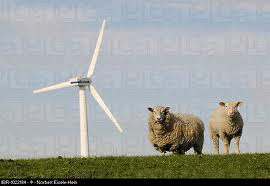 In Australia for many of us, isolation and lack of population limits such pursuits. Not so with renewable energy. It holds distinct advantages over traditional farming. It can be locally generated and locally used. We won’t face the market share and price squeezes that overseas competitors foist on us in other commodities.
I encourage state and federal politicians and bodies such as the National Farmers’ Federation and affiliated state representatives to lobby for renewable energy at ministerial level. After all it is a primary industry, no different to beef, sheep and viticulture.
Future in renewable energy, Weekly Times, 24 Nov 11 RENEWABLE energy is everybody’s concern, writes ROB NICHOLS Whether you believe the science on climate change or not, few would deny that a cleaner environment fuelled by renewable energy sources is a desirable goal. Far from threatening farming, this switch offers farmers and rural communities incredible opportunities.
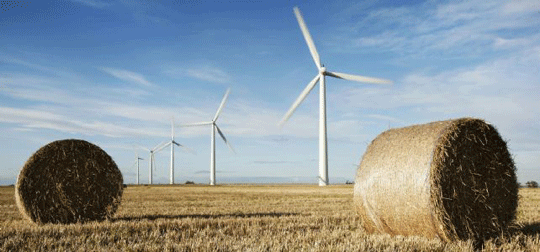
And these are big opportunities, as big as the opportunities afforded by fossil-fuel discoveries which have delivered spectacular fortunes to the world’s energy giants. After all, society’s insatiable desire for easier living and energy continues. Farmers have the resources – sun, wind, crops for biomass etc – plus the space to provide that energy.
Those resources can help us spread our financial risk, but we need to be quick. If we sit back and undervalue them, city and overseas investors will tap and rob our resources and export the financial gains away from our localities into the pockets of others. Failure to take control now will mean our businesses and communities will wither away and become irrelevant. Continue reading
Australian company SILEX’s laser uranium enrichment technology – risks of nuclear weapons proliferation
 many of the good things GE is using to make a case about Silex—less use of resources and electricity and increased efficiency—are actually negatives that make it easier for rogue states to hide clandestine plants…..methods for the production and use of nuclear materials that would be more difficult to detect,” the report states
New Uranium Enrichment Technology Alarms Aviation Week, By Kristin Majcher Washington 23 Nov 11 General Electric says it has successfully tested a faster, cheaper way to produce nuclear reactor fuel, and is planning to commercialize the technology by building a facility in Wilmington, N.C. While the prospect of saving resources to generate energy at a lower price sounds like a breakthrough, scientists are concerned that the top-secret method of enrichment that GE is using will indirectly elevate proliferation risks around the world, thus inspiring rogue states to develop their own laser enrichment facilities for nuclear
weapons.
The enrichment technology is the Separation of Isotopes by Laser Excitation (Silex). It was developed by Silex of Australia in 1992. The technology company USEC funded early research on Silex, but abandoned it in favor of focusing on centrifuge enrichment. In 2006, GE signed an exclusive agreement to commercialize and license the technology and spearhead further research and development. Continue reading
1 This month
7 April – WEBINAR – Australia and the Doomsday Clock – Preventing nuclear war through NoFirstUse and other policies
Online | Tuesday April 7, 4:00-5:30pm, Australian Eastern Time / 8:00-9:30am Central Europe Time
– Access the registration link
15 April – Zoom –Nuclear Power is Not the Solution
Apr 15, 2026 01:00 AM in Canberra, Melbourne, Sydney

Join the International Physicians for the Prevention of Nuclear War (IPPNW) on Tuesday, April 14th for a timely webinar exploring the risks associated with nuclear power and challenging the myth that it offers a simple, safe, carbon-free solution to the climate crisis

21 April Webinar: No Nuclear Weapons in Australia
Start: 2026-04-21 18:00:00 UTC Canberra, Melbourne, Sydney (GMT+10:00)
End: 2026-04-21 19:30:00 UTC Canberra, Melbourne, Sydney (GMT+10:00)
Event Type: Virtual
A virtual link will be communicated before the event.
Host Contact Info: australia@icanw.org

of the week – Australians for War Powers Reform (AWPR)
To see nuclear-related stories in greater depth and intensity
 Antinuclear