Judge denies Julian Assange a delay in extradition hearings

|
WikiLeaks founder Julian Assange denied delay to extradition hearing by London judge, https://www.abc.net.au/news/2019-10-22/wikileaks-founder-assange-in-court-to-fight-extradition/11625042 The full extradition hearing of WikiLeaks founder Julian Assange will go ahead in February 2020 after a London judge declined a request by his lawyers to delay proceedings by three months.
Key points:
The 48-year-old appeared in a packed court on Monday to fight extradition to the United States, where he faces 18 counts, including conspiring to hack into Pentagon computers and violating an espionage law. Britain’s former Home Secretary Sajid Javid signed an order in June allowing Assange to be extradited to the US, where authorities accuse him of scheming with former Army intelligence analyst Chelsea Manning to break a password for a classified government computer. He could spend decades in prison if convicted. Assange and his legal team said he needed more time to prepare his case, but failed to convince District Judge Vanessa Baraitser that a slowdown was justified. The full extradition is still set for a five-day hearing in late February, with brief interim hearings in November and December. Assange — clean shaven, with his silvery-grey hair slicked back — defiantly raised a fist to supporters who jammed the public gallery in Westminster Magistrates Court. After the judge turned down his bid for a three-month delay, Assange, speaking very softly and at times appearing to be near tears, said he did not understand the proceedings. He said the case was not “equitable” because the US government had “unlimited resources” while he did not have easy access to his lawyers or to documents needed to prepare his battle against extradition while confined to Belmarsh Prison on the outskirts of London. Lawyer Mark Summers, representing Assange, told the judge that more time was needed to prepare Assange’s defence against “unprecedented” use of espionage charges against a journalist. Mr Summers said the case has many facets and would require a “mammoth” amount of planning and preparation. He also accused the US of illegally spying on Assange while he was inside the Ecuadorian Embassy seeking refuge, and of taking other illegal actions against the WikiLeaks founder. “We need more time,” Mr Summers said, adding that Assange would mount a political defence. Mr Summers said the initial case against Assange was prepared during the administration of former president Barack Obama in 2010 but wasn’t acted on until Donald Trump assumed the presidency. He said it represented the US administration’s aggressive attitude toward whistleblowers. Representing the US, lawyer James Lewis opposed any delay to the proceeding. The case is expected to take months to resolve, with each side able to make several appeals of rulings. The judge said the full hearing would be heard over five days at Belmarsh Court, which would make it easier for Assange to attend and contains more room for the media. Assange’s lawyers said the five days would not be enough for the entire case to be heard. Health concerns for Assange Outside the courthouse, scores of his defenders — including former London mayor Ken Livingstone — carried placards calling for Assange to be released. Wikileaks editor-in-chief Kristinn Hrafnsson said it was a “big test case for journalism worldwide”. “This should be thrown out immediately because this is a total violation of a bilateral treaty between the US and the United Kingdom which basically states that you cannot extradite someone for political offences, and this is a political case,” he said. Regarding Assange’s health, Mr Hrafnsson said he was in a “stable condition” but was living in “de facto solitary confinement”. “After three or four weeks it starts to bite in and you can feel that he is suffering,” he said. Assange supporter Malcolm, who did not give his surname, told the ABC there was “not nearly enough” people actively campaigning for Assange’s freedom, and he wanted to see the whole street blocked at the next hearing. Another supporter accused the Australian government of failing to “defend their own citizen”. The crowd outside court was largely well-behaved but briefly blocked traffic when a prison van believed to be carrying Assange left court. |
|
14 Regional News Media join the campaign for press freedom

|
Australian Community Media joins fight for press freedom and your right to know, The Islander, 21 Oct 19, Today, Australian Community Media joins other media outlets in an unprecedented campaign to defend growing threats to freedom of the press in Australia.
The front pages of all 14 of ACM’s daily newspapers, like other leading newspapers around the country, have been symbolically censored to highlight the need to fight for the public’s right to know in the face of increasing attempts by government and government agencies to suppress information, prosecute whistleblowers and criminalise legitimate public interest journalism.
In your nation’s capital, the front page of The Canberra Times today features a redacted document and asks the question: “When government keeps the truth from you, what are they covering up?” The powerful message is repeated on the front pages of the Newcastle Herald, The Border Mail and, in Victoria, The Courier in Ballarat, The Standard in Warrnambool and the Bendigo Advertiser. Front-page news has also been censored in The Examiner and The Advocate in Tasmania as well as in NSW’s Illawarra Mercury, The Northern Daily Leader in Tamworth, The Daily Advertiser in Wagga Wagga, Bathurst’s Western Advocate, Dubbo’s Daily Liberal and the Central Western Daily in Orange. Australia’s Right to Know, a coalition of leading media organisations and industry groups including ACM, has launched a website, yourrighttoknow.com.au, to illustrate the dangers of increasing federal government secrecy, and to urge Australians to stand up for their right to know. The website showcases public interest journalism that has exposed banking malpractice, neglect and abuse in aged-care homes and the Australian Tax Office’s power to take money out of people’s bank accounts without their knowledge. The #righttoknow campaign will advertise across print, digital, radio and television, including commercials aired for the first time across all TV channels on Sunday night. The campaign follows June’s Australian Federal Police raids on the ABC and the home of News Corp journalist Annika Smethurst. Both media organisations are still awaiting confirmation of whether the journalists targeted will face prosecution. Research commissioned by the media coalition shows that while 87 per cent of Australians value a free and transparent democracy where the public is kept informed, only 37 per cent believe that it’s happening……..https://www.theislanderonline.com.au/story/6447711/its-time-to-fight-for-your-right-to-know/?cs=1777&fbclid=IwAR3Ae84LVpOPIrkyRGTee5XkyFqWCw-3w3aKzN_1B3s34nUVOTD-2yrlMPU |
|
Momentum grows for the rescue of Julian Assange
|
Growing calls for Australian government to defend Julian Assange https://www.wsws.org/en/articles/2019/10/19/assa-o19.html?
 fbclid=IwAR2smK6ChQzsIB7Ndld4N_No68RpVViDz5V-RH7qTiYfWmFWFdqkThOA-DQ fbclid=IwAR2smK6ChQzsIB7Ndld4N_No68RpVViDz5V-RH7qTiYfWmFWFdqkThOA-DQ
By Oscar Grenfell, 19 October 2019 Over the past week, several prominent public figures, including federal members of parliament, have called on the Australian government to fulfil its obligations to defend WikiLeaks’ publisher Julian Assange, including by taking steps to prevent his extradition from Britain to the US.The statements come in the lead-up to British extradition hearings in February, that will decide whether Assange is dispatched to the US. He faces a maximum sentence of 175 years in an American prison for exposing US war crimes and diplomatic intrigues. There are concerns within the Australian political and media establishment that the refusal of successive governments to defend Assange, an Australian citizen and journalist, has generated widespread anger and opposition. The fear in ruling circles is that if Assange is extradited, or if his parlous health continues to deteriorate, the latent support for him will coalesce into a political movement against the entire official set-up. In a statement to the House of Representatives on Wednesday, independent MP Andrew Wilkie declared that Assange is “an Australian citizen and must be treated like any other Australian. He was not in the US when he provided evidence of US war crimes in Iraq. He can’t possibly have broken their laws.” Wilkie said that if Assange is extradited to the US, he “faces serious human rights violations including exposure to torture and a dodgy trial. And this has serious implications for freedom of speech and freedom of the press here in Australia, because if we allow a foreign country to charge an Australian citizen for revealing war crimes, then no Australian journalist or publisher can ever be confident that the same thing won’t happen to them.” He concluded by stating: “Put simply, he must be allowed to return to Australia.” Wilkie, a former intelligence agent who resigned to speak out against “weapons of mass destruction” lies used to justify the illegal 2003 invasion of Iraq, has previously condemned the assault on democratic rights. In 2010 and 2011, he made statements and spoke at public events in defence of Assange. Alongside the Greens and a host of civil liberties organisations, however, Wilkie has largely remained silent about the WikiLeaks founder’s plight for a number of years and has boycotted all actions taken in his defence. Wilkie said that if Assange is extradited to the US, he “faces serious human rights violations including exposure to torture and a dodgy trial. And this has serious implications for freedom of speech and freedom of the press here in Australia, because if we allow a foreign country to charge an Australian citizen for revealing war crimes, then no Australian journalist or publisher can ever be confident that the same thing won’t happen to them.” He concluded by stating: “Put simply, he must be allowed to return to Australia.” Wilkie, a former intelligence agent who resigned to speak out against “weapons of mass destruction” lies used to justify the illegal 2003 invasion of Iraq, has previously condemned the assault on democratic rights. In 2010 and 2011, he made statements and spoke at public events in defence of Assange. Alongside the Greens and a host of civil liberties organisations, however, Wilkie has largely remained silent about the WikiLeaks founder’s plight for a number of years and has boycotted all actions taken in his defence. Joyce, a populist who has sought to build a base of support in rural areas, was well aware of the sentiments in favour of Hicks among workers in regional centres and country towns. He played a role in the sordid agreement brokered by Howard, which saw Hicks returned to Australia in 2007. Hicks was forced to serve out a bogus prison sentence in Australia and was banned for a year from speaking to the media. In comments to the media on Monday, former Labor foreign minister Bob Carr hinted at the concerns animating the comments in defence of Assange by such figures from within the political establishment. Carr told the Sydney Morning Herald that ordinary people would be “deeply uneasy” about the prospect of an Australian citizen being handed over to the “living hell of a lifetime sentence in an American penitentiary.” He criticised current Foreign Minister Marise Payne over her claim that she made “friendly” representations on behalf of Assange to US Secretary of State Mike Pompeo. Pompeo has denounced Assange as a “demon” who is not entitled to any democratic rights and labelled WikiLeaks as a “non-state hostile intelligence service.” Carr stated: “I think the issue will gather pace, and in the ultimate trial there will be a high level of Australian public concern, among conservative voters as much as any others.” In his strongest comments in defence of Assange yet, Carr declared: “We have an absolute right to know about American war crimes in a conflict that the Australian government of the day strongly supported. We wouldn’t know about them except for Assange.” Carr is no political innocent. During his decades in the Labor Party, he functioned as a secret informant for the US embassy, beginning in the 1970s. He was a leading minister in the Gillard Labor government which refused to defend the WikiLeaks founder and instead pledged to assist the US campaign against him. That Carr has spoken out now is a measure of the fears within the ruling elite that the defence of Assange will animate millions of workers, students and young people in the coming period. In keeping with the central role of Labor in the US-led pursuit of Assange, no prominent current figure in the party has joined the calls for him to be defended. When the WikiLeaks’ founder was illegally expelled from the Ecuadorian embassy and arrested by the British police in April, Labor MP Tanya Plibersek shared a Tweet denouncing his supporters as “cultists.” Julian Hill, a little-known federal backbencher representing a working-class electorate in outer Melbourne, is the only Labor MP to have spoken out. He told the Guardian on Thursday that Assange is “an Australian and, at the very least, we must be vigorously consistent in opposing extradition to countries where he might face the death penalty.” Prime Minister Scott Morrison responded this week by blandly declaring that Assange must “face the music” in the US. Senior government ministers have previously maligned Assange, repeating the lies concocted by the US intelligence agencies to discredit him. Liberal Senator James Paterson attempted to provide a more sophisticated argument for the government’s refusal to defend Assange, telling the Sydney Morning Herald last week that both Britain and the US were “rule-of-law countries.” Paterson piously stated: “This is not the case in many other countries in the world. Sadly, we know there are Australian citizens detained right now in China and Iran who are not facing free and fair legal systems … and the Australian government does have a greater obligation to assist those citizens.” The suggestion that the Australian government has a responsibility to defend its citizens in some jurisdictions, but not in others, is a legal fiction that has no basis in Australian or international legislation. Paterson’s statements, moreover, fly in the face of repeated warnings by United Nations officials and human rights organisations that Assange’s legal and democratic rights have been trampled upon by the British and US authorities. Paterson’s comments point to the real reason why successive Australian governments, Labor and Liberal-National alike, have joined the US-led vendetta against Assange. Their participation in the attacks against him has gone hand in hand with unconditional backing for the US alliance and support for Washington’s military build-up in the Asia-Pacific region, in preparation for war against China. The record demonstrates that no faith can be placed in any section of the political or media establishment to defend Assange or any democratic rights. All the official parties and institutions in Australia are implicated in the persecution of the WikiLeaks founder. They will take action only to the extent that they fear the political consequences if they do not. Workers, students and young people must be mobilised as part of an international movement demanding the immediate freedom of Assange and all class war prisoners. This is the only way that an Australian government will be forced to uphold its responsibility to prevent Assange’s extradition to the US and allow him to unconditionally return to Australia. |
|
Dick Smith, Julian Assange, and USA’s “outrageous” claim to “universal jurisdiction over every person on earth”.
|
Dick Smith lobbied US to drop Julian Assange extradition The campaign for the Morrison government to intervene gathered momentum on Monday after former deputy prime minister Barnaby Joyce lent his support to the WikiLeaks founder’s cause. Independent MP Andrew Wilkie also revealed that a multi-party parliamentary group to “agitate” for Mr Assange to be brought home to Australia would be launched in the coming weeks and would include some members of the Coalition government. In April, Mr Smith voiced concerns to Washington’s man in Canberra that Mr Assange could be charged under an “outrageous” US claim to “universal jurisdiction over every person on earth”. “Australians, like Americans, may have mixed opinions on Julian Assange, however, I believe the tide will turn if it appears an Aussie is being made a scapegoat for a security failure of the US intelligence services,” Mr Smith wrote in the letter seen by The Age and The Sydney Morning Herald. “I can assure you that many Australians will not readily accept that Mr Assange is being held responsible for such a serious security failure, as embarrassing as it may be.” He said it was “imperative to maintain the good relations” between Australia and the US, but Washington would “jeopardise” the relationship by asking its courts to “criminalise journalistic endeavours”. “I believe this will damage the reputation of the United States as an upholder of freedom of speech and a defender of human rights, and result in untold damage to the good relations between Australia and the American people.” Treasurer Josh Frydenberg said the government would not intervene in attempts by the US to have the 48-year-old Australian stand trial, where he faces a sentence of 175 years if found guilty of computer fraud and obtaining and disclosing national defence information……. Confidential government briefing notes, inadvertently released on email by the Prime Minister’s Office on Monday, gave “talking points” to MPs if they were asked about Mr Assange and his fight against extradition from Britain to the US. …. https://www.theage.com.au/politics/federal/dick-smith-lobbied-us-to-drop-julian-assange-extradition-request-20191014-p530lf.html |
|
Barnaby Joyce and former foreign minister Bob Carr urge stopping extradition of Julian Assange to USA
Barnaby Joyce joins calls to stop extradition of Assange to US, The Age, By Rob Harris, October 13, 2019 Former deputy prime minister Barnaby Joyce has joined calls for the Morrison government to try to halt Julian Assange’s potential extradition from Britain to the United States on espionage charges, as the WikiLeaks founder’s supporters intensify their campaign to bring him to Australia.
Mr Joyce joined former foreign minister Bob Carr in voicing concerns over US attempts to have the 48-year-old Australian stand trial in America, where he faces a sentence of 175 years if found guilty of computer fraud and obtaining and disclosing national defence information.
Also seeking to increase pressure on the federal government is actress Pamela Anderson, who is demanding to meet Prime Minister Scott Morrison to request he intervene in the case. She plans to visit Australia next month.
Assange’s supporters say they are increasingly concerned about his health and his ability to receive a fair trial in the US………
Mr Carr has challenged Foreign Minister Marise Payne to make “firm and friendly” representation to US Secretary of State Mike Pompeo, believing Australians would be “deeply uneasy” at a fellow citizen being handed over to the “living hell of a lifetime sentence in an American penitentiary”.
Mr Joyce, who in 2007 was the first Coalition MP to call for the then Howard government to act over the detention of Australian David Hicks in Guantanamo Bay, said his position was principled and he gave “no opinion of Mr Assange whatsoever”.
“If someone was in another country at a time an alleged event occurred then the sovereignty of the land they were in has primacy over the accusation of another nation,” Mr Joyce said.
“It would be totally unreasonable, for instance, if China was to say the actions of an Australian citizen whilst in Australia made them liable to extradition to China to answer their charges of their laws in China. Many in Hong Kong have the same view.”
Assange is serving a 50-week sentence in Belmarsh Prison in south-east London for bail violations after spending seven years inside the Ecuadorian embassy in London in a bid to avoid extradition to Sweden to answer allegations of rape and molestation in 2012.
In June, the then British home secretary, Sajid Javid, signed an extradition request after the US Justice Department filed an additional 18 Espionage Act charges over Assange’s role in obtaining and publishing 400,000 classified US military documents on the war in Iraq in 2010.
Mr Carr, the former NSW premier who served as foreign minister in the Gillard government, said he understood many people would have reservations about the “modus operandi” of Assange and his alleged contact with Russia.
Mr Carr said the Morrison government should make strong representations to the US on behalf of an Australian citizen who “is in trouble because he delivered on our right to know”.
“I think the issue will gather pace and in the ultimate trial there’ll be a high level of Australian public concern, among conservative voters as much as any others.”……..
Mr Carr said the Morrison government should make strong representations to the US on behalf of an Australian citizen who “is in trouble because he delivered on our right to know”.
“I think the issue will gather pace and in the ultimate trial there’ll be a high level of Australian public concern, among conservative voters as much as any others.”…….https://www.theage.com.au/politics/federal/barnaby-joyce-joins-calls-to-stop-extradition-of-assange-to-us-20191013-p53080.html
Pamela Anderson to confront Scott Morrison and plead for Australia to help Julian Assange
Pamela Anderson is on her way to Australia, and she’s challenging our Prime Minister on entry.
The former Baywatch superstar is headed to the Gold Coast next month to shoot a series of ‘Unexpected Situation’ commercials for Ultra Tune.
The ads are expected to air over summer, in conjunction with the 2020 Australian Tennis Open and Big Bash Cricket.
She’s no stranger to the land down under, after her affiliation with jailed Wikileaks founder and Australian, Julian Assange, gained world-wide attention.
Late last year, Anderson made a public plea on 60 minutes for Prime Minister Scott Morrison to do more to help. “Defend your friend, get Julian his passport back and take him back to Australia and be proud of him, and throw him a parade when he gets home,” Ms Anderson said.
Scott Morrison then told 1029 Hot Tomato’s Flan, Emily Jade and Christo that he’s had “plenty of mates who’ve asked me if they can be my special envoy to sort the issue out with Pamela Anderson.”
Ms Anderson called out the comments as ‘disappointing’, ‘smutty’, and ‘unnecessary’, and is now – a year later – wanting to address them face to face.
She’s announced she’ll again be petitioning him to intervene on Julian Assange’s behalf.
“What is also important to me about this visit is the opportunity to speak to the Australian people and petition Prime Minister Morrison to intervene on behalf of Australian citizen, Julian Assange, who is being made a scapegoat of and suffered inhumanely for disseminating factual information we all should know about.
“Mr Morrison made a series of personally, disparaging remarks about me and I’d like to challenge him to debate this matter in front of the Australian people,” Ms Anderson said in a recent statement.”
Sources of content : http://www.mygc.com.au/pamela-anderson-challenges-scott-morrison-ahead-of-australia-visit
Senator Sarah Hanson-Young defending the right to peacefully protest
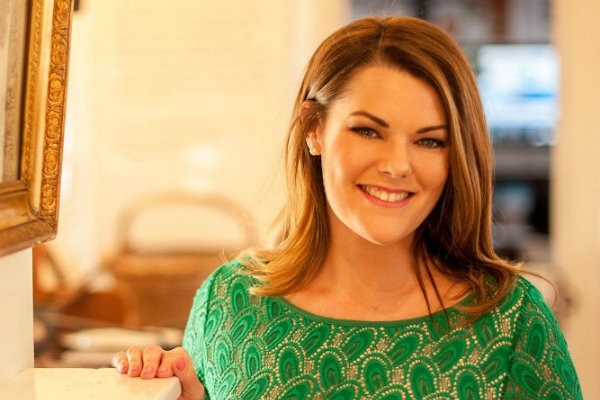
The right to peacefully protest is at the core of our democracy. Home affairs Minister Peter Dutton threat to cancel welfare payments of climate protesters is an attempt to silence their views and is completely inappropriate.
Rather than resort to serious threats and attempt to shut down community views, the Government should come up with a national plan for dealing with the climate crisis that we’re in.
Article: Peter Dutton opens door to cancelling welfare of climate protesters, The Australian:
https://www.theaustralian.com.au/…/4907f2938e9099f2f7db1680…
New involvement of Attorney General in press freedom
The order could shield News Corp’s Annika Smethurst and the ABC’s Dan Oakes and SamClark who were named in Australia Federal Police (AFP) warrants used during raids in June and have not yet been cleared of any criminal charges. The move, however, has ignited debate about an elected politician’s direct involvement in police matters and press freedom.
Now, Smethurst, Oakes and Clark can only be charged if the Attorney-General gives written consent to the charges. A directive was signed to the Commonwealth Director of Public Prosecutions (CDPP) in September, the details of which have only come to light this week. The decision follows legal challenges from both the ABC and News Corp Australia over the legitimacy of the raids and the warrants used.
“The direction means where the CDPP independently considers that there is a public interest in a prosecution for one of the relevant offences involving a journalist, the consent of the Attorney-General will also be required as a separate and additional safeguard,” Porter said in a statement.
“This will allow the most detailed and cautious consideration of how an allegation of a serious offence should be balanced with our commitment to freedom of the press.
“I have previously said that I would be seriously disinclined to approve prosecutions of journalists except in the most exceptional circumstances and would pay particular attention to whether a journalist was simply operating according to the generally accepted principles of public interest journalism.”
Porter hasn’t yet commented on the cases regarding Smethurst, Oakes or Clark.
An ABC spokesperson called the directive a ‘welcome step’, but said the organisation continues to look forward to the results of the two press freedom inquiries which have been triggered by the raids.
“The Attorney General’s directive is a welcome step. It is one plank in a raft of legislative reform that the ABC identified in its submissions to the two concurrent media freedom parliamentary inquiries,” said the spokesperson.
“The ABC looks forward to seeing the recommendations from those inquiries as well as an expeditious conclusion to the current AFP investigation into ABC journalists.”
“The direction issued by The Attorney General is unremarkable. They make the Commonwealth Department of Public Prosecution seek the Attorney General’s consent to take legal action against journalists in a few more instances but they offer no comfort for journalists disclosing information in the public interest that they are safe from prosecution for doing their job,” said Reid.
“This so-called safeguard falls a long way short of what media organisations are seeking to recognise the role of journalists to keep the public informed.”
The Law Council of Australia has also weighed in on the move, with president Arthur Moses SC citing grave concerns over the Attorney General’s involvement with press freedom.
“I have grave concerns that this sort of direction undermines the independence of the CDPP by requiring her to obtain the consent of the Attorney General before prosecuting an offence,” Moses said.
“What will enhance press freedoms in this country is a proper review of our laws to ensure that the actions of journalists doing their job as a watchdog of government are not criminalised and put at risk of prosecution.
“I have no doubt the Attorney General would act in good faith. But it puts the Attorney General – a politician – in the position of authorising prosecutions of journalists in situations where they may have written stories critical of his government.
“It creates an apprehension on the part of journalists that they will need to curry favour with the government in order to avoid prosecution. The media must be able to lawfully report on matters of public interest without fear or favour.
“Journalists should not need to fear prosecution because of a story that embarrasses government.”
Australia: Freedom of Information and the Nuclear Industry- theme for October 19
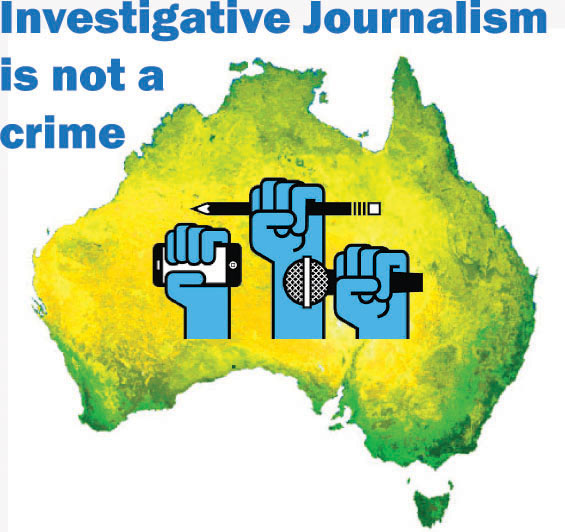
Australia’s press freedom is under threat as never before.
It’s always been pretty bad, with Murdoch media controlling at least 70% of media outlets, and with Liberal governments trying to strangle the ABC,
But now – it is at crisis point. We have an Australian citizen, Julian Assange, held in solitary confinement in London, for the crime of skipping bail. UK and complicit Australia want to have him extradited to USA, to face life imprisonment for ‘treason”. What was his “treason”? Publishing the facts, revealed by Bradley Manning, on USA military atrocities. i.e. investigative journalism. (Manning also in prison)
We also have federal police raiding ABC offices and a journalist’s home. We have draconian security laws, and prosecutions of whistleblowers Richard Boyle, David McBride and Witness K.
 Australia is fast developing a culture of press intimidation by government.
Has this anything to do with the nuclear industry? Not obviously directly. Not yet. But government and industry have always tried to see that the harms from uranium mining and nuclear bomb testing were covered up. Few Australians would have heard of the long term push by some politicians and defence industry personnel, for nuclear weapons.
As the global nuclear industry revs up its dishonest spin for “new nuclear”, and as climate change impacts this country, Australia is a sitting duck for the lie that “nuclear solves climate change”. And for the push for even more involvement in America’s nuclear weapons system. And for involvement in 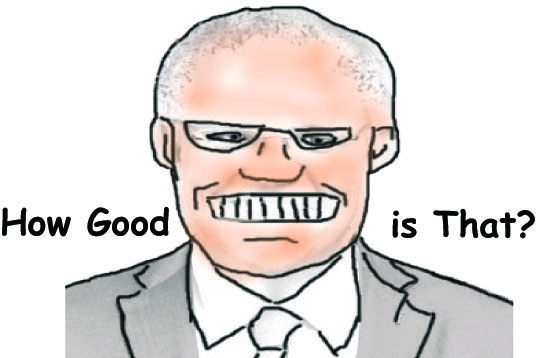 Trump’s Nuclear Weapons in Space programme.
We now have a government without any policy (unless you count “having a budget surplus” as a policy) Scott Morrison can’t forever shout “How good is that?” about everything. Journalists that criticise government actions are under scrutiny. It doesn’t bode well for any public policy area. And that certainly includes matters nuclear. more https://www.meaa.org/campaigns/press-freedom/
Julian Assange to remain behind bars
Julian Assange to remain behind bars due to ‘history of absconding’ SBS 13 Sep 19, The founder of Wikileaks has been told he will be kept in jail beyond September 22. Julian Assange has been told he will stay in prison after the custody period finishes on his current jail term because of his “history of absconding”.
In June, then home secretary Sajid Javid signed an order allowing Assange to be extradited to the US over computer-hacking allegations.
A 50-week jail term was then imposed in the UK after he jumped bail by going into hiding in the Ecuadorian embassy in London in 2012. He would have been released from HMP Belmarsh on September 22, Westminster Magistrates’ Court heard on Friday, but the 48-year-old Australian was told he will be kept in jail because of “substantial grounds” for believing he will abscond again……. Another administrative hearing will take place on October 11 following by a case management hearing on October 21, the court heard.
The final hearing in Assange’s extradition case is due in February……https://www.sbs.com.au/news/julian-assange-to-remain-behind-bars-due-to-history-of-absconding?cid=news:socialshare:twitter
‘All of us are in danger’: John Pilger delivers warning from Julian Assange
 Today, in further flagrant and conscious censorship, no British, Australian or American newspaper is carrying a report on Waters’ initiative and the rally.
Roger Waters and John Pilger make powerful defence of Julian Assange in London, WSWS 3 September 2019
Up to 1,000 people gathered last night in central London to hear internationally acclaimed musician Roger Waters deliver a musical tribute to imprisoned WikiLeaks’ publisher Julian Assange.
Performing outside the UK Home Office, just miles from Belmarsh Prison where Assange is being held as a Category A prisoner, Waters sang Pink Floyd’s iconic song “Wish You Were Here.” He was accompanied by guitarist Andrew Fairweather Low.
Supporters filled the forecourt and pavement on both sides of Marsham Street, many carrying banners and placards demanding Assange’s freedom and the release of imprisoned whistleblower Chelsea Manning. Spontaneous chants rang out, “Free, Free Julian Assange!” and “There’s only one decision: No extradition!”
John Pilger, a veteran filmmaker and investigative journalist and a personal friend of Assange, opened the event with an impassioned speech. Pointing in the direction of the Home Office, Pilger told the crowd: “The behaviour of the British government towards Julian Assange is a disgrace. A profanity on the very notion of human rights. It’s no exaggeration to say that the treatment and persecution of Julian Assange is the way that dictatorships treat a political prisoner.”
John Pilger, a veteran filmmaker and investigative journalist and a personal friend of Assange, opened the event with an impassioned speech. Pointing in the direction of the Home Office, Pilger told the crowd: “The behaviour of the British government towards Julian Assange is a disgrace. A profanity on the very notion of human rights. It’s no exaggeration to say that the treatment and persecution of Julian Assange is the way that dictatorships treat a political prisoner.”………
Pilger warned that Assange’s condition was a matter of grave concern. “I worry a great deal about him if he spends many months in Belmarsh,” he said. “The regime there is imposing a kind of isolation on him that is deeply psychologically wounding. He’s in a small cell in the hospital ward. They seem not to know what to do with him. Of course, what they should be doing is letting him out. He certainly should not be in a maximum-security prison.”…….
Underscoring the point made by Kristinn Hrafnsson about the mainstream media, no major British television station reported on the event on their evening news broadcasts. Today, in further flagrant and conscious censorship, no British, Australian or American newspaper is carrying a report on Waters’ initiative and the rally.
Via social media and publications such as the WSWS, however, reports and video of Waters’ performance, Pilgers’ speech and the statements of Gabriel Shipton are circulating widely and will be viewed by hundreds of thousands of people internationally over the coming days.
They are trying to break Assange “physically and psychologically”
Johnson explained to the WSWS that she “writes about the psychology of politics and social issues.” She has a background in media studies and sociology, and a PhD in the psychology of manipulating reality-perception.
Earlier this year, Johnson wrote an extensive five–partinvestigative series titled “The Psychology of Getting Julian Assange,” published on the New Matilda website. Johnson provided the following responses to a series of questions from the World Socialist Web Site earlier this week.
WSWS: John Shipton and John Pilger have recently detailed the punitive conditions of Assange’s detention in Belmarsh Prison. Could you speak about the way in which his isolation, and the denial of his right to access computers/legal documents is aimed at stymieing his defence against the US extradition request and increasing the psychological pressures upon him?
Lissa Johnson: If anyone takes a moment to imagine what it must be like to face the prospect of 175 years in a US prison, having already been subjected to nearly a decade of arbitrary detention and judicial harassment, knowing that you have no chance of a fair trial in the US, having been smeared in the media and branded a “terrorist” and enemy of the state, then that gives you an inkling of what Julian Assange was dealing with even before being placed under lockdown in Belmarsh prison. If you add to that having read hundreds of documents from Guantanamo Bay and knowing, in intimate detail, what the United States does to those it brands terrorists and enemies of the state, then Julian Assange’s reality becomes even clearer.
Now, with the full force of the US national security state bearing down on him, Julian Assange has been stripped of his most basic abilities to protect himself. Continue reading
Injustices to Julian Assange in British prison
Julian Assange: Deprivation of Justice and Double Standards in Belmarsh Prison, 21st Century Wire , AUGUST 28, 2019 BY
Alfred de Zayas, former UN Rapporteur, has described the actions of the British authorities in pursuit of Assange as “… contrary to the rule of law and contrary to the spirit of the law.” What we see on the surface is an illusion of British justice, masking a political agenda behind it.
Britain’s notorious Belmarsh Prison is now being presented as beacon of good governance, indicative of a fair and just society which equitable but firm with perpetrators. After carefully reviewing the case of Julian Assange though, there can be little doubt that placing the award-winning journalist in such a facility is nothing but the latest vehicle for his rendition to the US.
So far, Belmarsh has been fulfilling that state agenda.
Belmarsh as the state’s next weapon of choice
Judge Deborah Taylor sent Assange to category A Belmarsh prison for a bail-skipping offense, even though he’d demonstrated that he had good reason to skip bail. It is difficult not to conclude that the category A assignment was done so that he would be weak and vulnerable. In essence, Assange was sent to Belmarsh for 50 weeks for failing to turn up at a police station. There was no ongoing court case; he had no prior offenses; there were no charges; the Swedish investigation had been dropped. So skipping police bail was all the British government had. It should also be pointed out that Judge Taylor made a series of mistakes during the sentencing on 1st May, referring to rape charges in Sweden, which Assange corrected and which she then acknowledged were wrong. This indicates that Judge Taylor went into court at least uninformed, set in her mind that Assange had somewhere, somehow been charged with rape. This would seem to explain some of the reasoning behind Judge Taylor’s cruel sentencing, described by the United Nations Working Group on Arbitrary Detention as ‘disproportionate’ but also as furthering the arbitrary deprivation of Assange’s liberty. What’s more, it has been pointed out how several thousand people in the UK skip bail each year and are in now way subject to such harsh punishment.
Clearly, Judge Taylor had used narratives provided by the state in order to send Assange to a category A penitentiary, even though these narratives have been thoroughly debunked. …….
Following his assessment of Assange in May inside Belmarsh prison, Nils Melzer issued a statement detailing the conditions of dentention. Melzer was accompanied by two medical experts who specialize in the examination of possible victims of torture as well as the documentation of symptoms, both physical and psychological. On examining Assange Melzer observed the following:
“Most importantly, in addition to physical ailments, Mr. Assange showed all symptoms typical for prolonged exposure to psychological torture, including extreme stress, chronic anxiety and intense psychological trauma.“
In addition to these concerns, reports also indicate Assange is being medicated. Continue reading
Australian investigative journalist Mark Davis explodes the myths around Julian Assange
While the Internet was meant to democratise the transmission of information we see a few giant technology companies, Google, Facebook, and Twitter, have near total control of what is seen and shared.
The situation is even worse in Australia with two or three media companies and the same technology giants having control. And the Government of Australia has granted them ever wider market access to extend their monopolies.
Slowly, instance by instance, the malicious and deceitful smears of Julian Assange’s character have been exposed for what they are; an effort to destroy trust in a system of anonymous leaking that will educate everyone.
WikiLeaks’ threat to the powerful was recognised and every effort was, and is, being made to criminalise anonymous leaking, which would be akin to criminalising Gutenberg’s printing press, but there is not much chance this criminalisation will succeed.
It’s time to bring Julian Assange home. Torturing and punishing him has never been legitimate and serves absolutely no purpose.
Media dead silent as Wikileaks insider explodes the myths around Julian Assange, Michael West, by Greg Bean — 16 August 2019 – It is the journalists from The Guardian and New York Times who should be in jail, not Julian Assange, said Mark Davis last week. The veteran Australian investigative journalist, who has been intimately involved in the Wikileaks drama, has turned the Assange narrative on its head. The smears are falling away. The mainstream media, which has so ruthlessly made Julian Assange a scapegoat, is silent in response.
Australians need to rally in support of Julian Assange
 Dan Monceaux , The combined imperial crusade against Julian Assange involves a multi-pronged effort to erode his support base. As a supporter, I have experienced this first hand, with various individuals trying to influence my opinion of his character and work. I have used Wikileaks documents in submissions made to government and in forthcoming documentary film work. WL is an invaluable repository of information, ready for anyone interested to know how power “works” internationally.
In the wider public, Assange’s standing has been weakened by the media and hostile commentators fixating on rape allegations while overlooking the serious matters exposed in the contents of documents Wikileaks received from anonymous sources then elected to publish.
As it stands, Assange will most likely face a Grand Jury in the US, before which he can present no defence. He may then go to prison for life (for a cumulative sentence of 175 years under offences listed in the US’s Espionage Act) and may spend much of this in solitary confinement.
But what of those responsible for the wrong doing Wikileaks has exposed? Is this what justice looks like in the 21st century? People need to rally behind Assange now, more than ever.
1 This month

of the week – Disrupting War & Militarism in Oceania. Active solidarity. Radical practice.
 Antinuclear