Julian Assange: Deprivation of Justice and Double Standards in Belmarsh Prison, 21st Century Wire , AUGUST 28, 2019 BY NINA CROSS
Alfred de Zayas, former UN Rapporteur, has described the actions of the British authorities in pursuit of Assange as “… contrary to the rule of law and contrary to the spirit of the law.” What we see on the surface is an illusion of British justice, masking a political agenda behind it.
Britain’s notorious Belmarsh Prison is now being presented as beacon of good governance, indicative of a fair and just society which equitable but firm with perpetrators. After carefully reviewing the case of Julian Assange though, there can be little doubt that placing the award-winning journalist in such a facility is nothing but the latest vehicle for his rendition to the US.
So far, Belmarsh has been fulfilling that state agenda.
Belmarsh as the state’s next weapon of choice
Judge Deborah Taylor sent Assange to category A Belmarsh prison for a bail-skipping offense, even though he’d demonstrated that he had good reason to skip bail. It is difficult not to conclude that the category A assignment was done so that he would be weak and vulnerable. In essence, Assange was sent to Belmarsh for 50 weeks for failing to turn up at a police station. There was no ongoing court case; he had no prior offenses; there were no charges; the Swedish investigation had been dropped. So skipping police bail was all the British government had. It should also be pointed out that Judge Taylor made a series of mistakes during the sentencing on 1st May, referring to rape charges in Sweden, which Assange corrected and which she then acknowledged were wrong. This indicates that Judge Taylor went into court at least uninformed, set in her mind that Assange had somewhere, somehow been charged with rape. This would seem to explain some of the reasoning behind Judge Taylor’s cruel sentencing, described by the United Nations Working Group on Arbitrary Detention as ‘disproportionate’ but also as furthering the arbitrary deprivation of Assange’s liberty. What’s more, it has been pointed out how several thousand people in the UK skip bail each year and are in now way subject to such harsh punishment.
Clearly, Judge Taylor had used narratives provided by the state in order to send Assange to a category A penitentiary, even though these narratives have been thoroughly debunked. …….
Following his assessment of Assange in May inside Belmarsh prison, Nils Melzer issued a statement detailing the conditions of dentention. Melzer was accompanied by two medical experts who specialize in the examination of possible victims of torture as well as the documentation of symptoms, both physical and psychological. On examining Assange Melzer observed the following:
“Most importantly, in addition to physical ailments, Mr. Assange showed all symptoms typical for prolonged exposure to psychological torture, including extreme stress, chronic anxiety and intense psychological trauma.“
While the Internet was meant to democratise the transmission of information we see a few giant technology companies, Google, Facebook, and Twitter, have near total control of what is seen and shared.
The situation is even worse in Australia with two or three media companies and the same technology giants having control. And the Government of Australia has granted them ever wider market access to extend their monopolies.
Slowly, instance by instance, the malicious and deceitful smears of Julian Assange’s character have been exposed for what they are; an effort to destroy trust in a system of anonymous leaking that will educate everyone.
WikiLeaks’ threat to the powerful was recognised and every effort was, and is, being made to criminalise anonymous leaking, which would be akin to criminalising Gutenberg’s printing press, but there is not much chance this criminalisation will succeed.
It’s time to bring Julian Assange home. Torturing and punishing him has never been legitimate and serves absolutely no purpose.
Media dead silent as Wikileaks insider explodes the myths around Julian Assange, Michael West, by Greg Bean — 16 August 2019– It is the journalists from The Guardian and New York Times who should be in jail, not Julian Assange, said Mark Davis last week. The veteran Australian investigative journalist, who has been intimately involved in the Wikileaks drama, has turned the Assange narrative on its head. The smears are falling away. The mainstream media, which has so ruthlessly made Julian Assange a scapegoat, is silent in response.
Greg Bean likens the revolutionary work of Julian Assange to that of Johannes Gutenberg who invented the printing press. Government reaction, 580 years later, is similarly savage.
Five hundred and eighty years ago, Johannes Gutenberg introduced the printing press to the world. That single act created a free press which gave birth to the concept of freedom of speech. The two are inextricably linked; printing is a form of speech.
Gutenberg’s invention started the Printing Revolution, a milestone of the 2ndmillennium that initiated the modern period of human history including the Renaissance, the Reformation, the Age of Enlightenment, and the Scientific Revolution, and began the knowledge-based economy that spread learning to the masses.
Such mass communication permanently altered the structure of society. Removing control of information from the hands of the powerful and delivering it into the hands of the disempowered…….
Dan Monceaux , August 7 The combined imperial crusade against Julian Assange involves a multi-pronged effort to erode his support base. As a supporter, I have experienced this first hand, with various individuals trying to influence my opinion of his character and work. I have used Wikileaks documents in submissions made to government and in forthcoming documentary film work. WL is an invaluable repository of information, ready for anyone interested to know how power “works” internationally.
In the wider public, Assange’s standing has been weakened by the media and hostile commentators fixating on rape allegations while overlooking the serious matters exposed in the contents of documents Wikileaks received from anonymous sources then elected to publish.
As it stands, Assange will most likely face a Grand Jury in the US, before which he can present no defence. He may then go to prison for life (for a cumulative sentence of 175 years under offences listed in the US’s Espionage Act) and may spend much of this in solitary confinement.
But what of those responsible for the wrong doing Wikileaks has exposed? Is this what justice looks like in the 21st century? People need to rally behind Assange now, more than ever.
Code bans residents from taking notes or recording any part of meetings without prior agreement,Calla Wahlquist @callapilla 8 Aug 2019 Residents in small South Australian communities shortlisted for a proposed nuclear waste storage facility have been told if they want to attend community consultation meetings they have to sign a code of conduct that bans them from taking notes.
The shortlist for the proposed dump has been narrowed down to Lyndhurst or Napandee, in the Kimba shire area on the Eyre Peninsula, and Wallerberdina Station, which is near Barndioota in the southern Flinders Ranges.
If approved, it would be a permanent storage facility for low-level nuclear waste and provide temporary storage for intermediate level waste, including waste temporarily stored near the research reactor at Lucas Heights in Sydney.
The process has been stalled for more than 12 months because of a federal court challenge by Barngarla traditional owners, who hold native title over land adjacent to the two proposed Eyre Peninsula sites.
Barngarla Determination Aboriginal Corporation last month lost a federal court case arguing that a decision not to include native title holders in a local government poll gauging community support for the dump was in breach of the Racial Discrimination Act, but have appealed that decision to the full court.
A majority of Adnyamathanha traditional owners have also said they’re “totally opposed” to the facility being built at Barndioota.
Meetings of two local consultative committees, appointed by the federal industry department’s National Radioactive Waste Management Facility Taskforce (NRWMFT) as its main platform for ongoing community consultation, were put on hold while the court case was underway but have been scheduled to resume next week.
But locals have complained that a new code of conduct for people wishing to observe the Barndioota and Kimba consultative committee meetings is unnecessarily restrictive and makes it harder for the community to obtain up-to-date information and voice their concerns.
The code, seen by Guardian Australia, states that “observers” must be approved and cannot “take any notes, or record any part of the meeting … except with the prior agreement of the department, the independent convenor and all representative members of the committee”.
It also says they cannot “repeat or share the individual ideas or views of [committee] members,” and can’t repeat confidential information or try to interject in committee discussions.
“This agreement does not prevent you from discussing information shared during a BCC meeting unless it has been identified as confidential or sensitive,” it says. “The [convenor] may ask you to leave the meeting if you do not comply with this Code of Conduct.”
Farmer Dean Hooper, who has applied to attend the Barndioota meeting, said that restrictions on repeating confidential information and behaving respectfully were reasonable but other conditions placed on attending were “bullshit”.
“They are trying to keep it low and quiet and get this dump to happen as easily and quickly and quietly as possible,” he said.
Hooper opposes the dump and is a member of the Flinders local action group.
The NRWMFT said that the code of conduct concerned behavioural standards and that information in the meeting was not confidential, unless stated otherwise, and that the minutes of all meetings had been published online.
Committee members have also been restricted from discussing meetings with the media. Susan Andersson, a GP from Hawker who sits on the Bandioota committee, said the contract extension that committee members signed in March was “more restrictive” than the original contract and represented an apparent desire by the department to control public information.
NRWMFT general manager Sam Chard said the facility “will only proceed near a community that broadly supports it and which could provide an ongoing workforce”.
In a statement on Wednesday, she said that ballots of residents and ratepayers, like that attempted by Kimba before the federal court challenge, “remain one method that we intend to use to help inform if that necessary broad community support exists”.
People living outside the local government areas can make a submission.
Today the Senate voted for an inquiry into press freedom and whistle-blower protection showing that there are some in our Parliament who care about a frank and fearless media.
This week’s arrest of four French journalists highlights how badly we need to rethink press freedom in Australia.
This inquiry will get to the bottom of what has gone on and ensure a future for a free press in Australia.”
Adani protest: French journalists arrested while filming anti-coal activities, Guardian
Journalists charged with trespassing after filming Frontline Action on Coal activists include Hugo Clément, Ben Smee@BenSmee, Mon 22 Jul 2019 Four journalists working for the public television network France 2 have been charged with trespassing for filming a protest near the Abbot Point coal terminal, in north Queensland, targeting the operations of the Adani group.
The group of journalists includes Hugo Clément, a reporter well known in France for his documentaries about climate change and environmental issues.
Clément and a crew were arrested while filming anti-coal activists from the group Frontline Action on Coal, which early on Monday morning set up a blockade outside the Abbot Point port. About 20 members of the environmental group gathered outside the port entrance from 7am. Two locked themselves to a concrete barrel on the roadway.
In a statement Frontline Action on Coal said Clément and others were told by police they were “obstructing the railway” while filming the protests.
“Without warning, all four Frenchmen were immediately placed in handcuffs and put into police vehicles,” the statement said.
The group was taken to a police station in the nearby town of Bowen. They were released on bail on Monday afternoon and ordered to face the local magistrates court in September.
Clément said he spent several hours in a cell after being arrested while filming a protest, which included two demonstrators locking their hands inside a concrete barrel.
“We were just filming the action at the blockade of the highway and police came straight to us and arrested us without a word, without saying anything,” Clément said.
“They took us into a cell for seven hours.”
He said he and his crew, who work for French public broadcaster France 2, were charged with trespassing and released on conditional bail, which included that they not go within 20km of the Carmichael site.
“We didn’t understand why they arrested us because we weren’t doing anything wrong, we were just doing our jobs by filming the action,” he said.
Adani has set a dangerous precedent in requesting scientists’ names, The Conversation Samantha Hepburn, Director of the Centre for Energy and Natural Resources Law, Deakin Law School, Deakin University
July 17, 2019 A freedom of information request has revealed Adani sought the names of CSIRO and Geoscience Australia scientists involved in reviewing groundwater management plans related to its proposed Carmichael mine.
Adani argued it required a list of people involved in the review so as to have “peace of mind” that it was being treated fairly and impartially on a scientific rather than a political basis.
Ten days before Adani’s request, Geoscience Australia’s acting director of groundwater advice and data reportedly raised concerns that Adani had “actively searched/viewed” his LinkedIn profile and that of a colleague.
Significantly, Adani’s request to the government was made before CSIRO and Geoscience Australia had reported their review findings back to the Queensland government.
While the federal Department of the Environment and Energy reportedly declined to hand over the names, the fact the letter was sent in the first place is concerning. It fundamentally interferes with the capacity of individual scientists to provide clear and informed evaluation………..
The letter sent by Adani requesting the names of scientists was allegedly grounded in concerns about the possibility of anti-Adani activism by expert reviewers. Despite this, Adani made it clear that it was not explicitly alleging bias. Its objective, the letter said, was a desire to be “treated fairly and in a manner consistent with other industry participants”.
The real purpose of the letter
If Adani was seriously concerned about a breach of procedural fairness in the review of their groundwater management plan, it would have sought a judicial review. It did not – because there was no breach.
The scientists working at CSIRO and Geoscience Australia are all experts in their disciplines. They were engaged in the important process of determining whether Adani’s plan for managing groundwater around their mine would meet the environmental conditions of their mining licence. In other words, the scientists were doing their job…….
As Adani has not brought an action for judicial review, the substantive purpose of the letter appears to be, as suggested by CSIRO representatives, to pressure scientists and potentially seek to discredit their work. The potentially chilling effect is clear.
Concern about climate change is not bias
The profound concerns raised by climate change and fossil fuel emissions are shared by many scientists around the world. The reports prepared for the International Panel on Climate Change make it clear that coal fired electricity must drop to nearly zero by 2050 to keep warming within 1.5℃.
This shared concern does not make scientists political activists. Nor does it prevent scientists from acting fairly and impartially when reviewing a groundwater management plan.
An acceptance of climate science and even a belief that coal-fired energy should be decommissioned does not constitute bias. A reasonable bystander would expect most environmental scientists to be concerned about climate change…….
Young climate activists ‘most at risk’ of being spied on by AFP, New Daily, Cait Kelly, Reporter, 16 July 19 Children and young adults who go to protests are the most likely Australians to have their phones tracked and monitored by police, a prominent security analyst has warned in a submission to an inquiry cybersecurity laws.Dr Stanley Shanapinda of La Trobe University said that politically minded youth are “the most at risk” of having their digital footprint watched by the AFP.
“They’re the most at risk because of their social media habits, they’re a lot more vocal. As a community they’re the most likely to be targeted,” he told The New Daily.
Under the metadata laws passed in 2015 the Australian Federal Police force (AFP) has the power to view the metadata of citizens who are deemed as a risk to national security, up to two years old without a warrant.
Dr Shanapinda argues that both Liberal and National politicians have highlighted young climate change activists, Adani protestors and The Greens as threats.
“Senior members of the government have labelled the protest actions of the young people and the Greens … as threats to national security and the national economic interests, openly in national media,” he said.
During the federal election, Prime Minister Scott Morrison warned that The Greens are a greater political threat to national and economic security than Clive Palmer or Pauline Hanson.
Dr Shanapinda said that these concerns over Greens policies, and young protestors could open the door to party members and activists having their metadata watched.
“Opposing the Adani coal mine and protesting against it, on climate change on ideological bases, may therefore legally be categorised by the government as posing a threat to national security, if the government wanted to, because of its economic and job creation value,” Dr Shanapinda said.
Exclusive by Josh Robertson Adani demanded the names of all federal agency scientists reviewing its contentious groundwater plans so it could check if they were “anti-coal” activists, emails obtained under freedom of information show.
Key points:
Emails show Adani gave the federal environment department five days to provide the names of people from the CSIRO and Geoscience Australia involved in the review
Adani says it wrote to the department to request “assurance that individuals involved in any review processes were independent”
CSIRO’s Sam Popovski says “our scientists just want to get on and do their best job … without their social media being tracked”
The revelation has alarmed CSIRO staff representatives, who said it indicated Adani had “a deliberate strategy” to pressure scientists by searching for personal information it could use to try to “discredit their work”.
Emails obtained under freedom of information by environmental group Lock The Gate show Adani gave the federal environment department five days to provide “a list of each person from the CSIRO and Geoscience Australia involved in the review”.
“Adani simply wants to know who is involved in the review to provide it with peace of mind that it is being treated fairly and that the review will not be hijacked by activists with a political, as opposed to scientific, agenda,” the company told the department on January 25.
A department spokeswoman said it “consulted with CSIRO and Geoscience Australia about Adani’s request” but did not provide the names “as the advice on the plans was received from CSIRO and Geoscience Australia, rather than individuals within those agencies”.
Days before the demand, in a January 21 newspaper article Adani had questioned the independence of a scientist leading a Queensland review into the company’s bird conservation plan because he tweeted from a climate rally nine months earlier.
It proposed a “war” strategy including that Adani “not settle for government department’s dragging out decisions — use the legal system to pressure decision makers”.
It sends shockwaves through your life’: how the media raids will silence whistleblowers, Guardian Christopher Knaus@knausc 9 Jun 2019
Whistleblowers who revealed government wrongdoing already face jail. This week’s raids will only deter others from coming forward “……… The warrant listed David McBride as the police’s first subject of interest. McBride unleashed powerful forces when he decided to go public years ago with what he discovered as a military lawyer serving in Afghanistan.
Those forces have already exacted a crippling toll.
“[My ex-wife] would probably say – and I think there’s an element of truth in it – it killed David McBride,” he says. “The man that she married was killed by the defence force, and I’m someone who’s different.
“Doing something like this, taking on the whole government, it sends shockwaves through your life, and not much survives, really.”
Wednesday’s raid on the ABC prompted outrage among civil rights groups, transparency campaigners, journalists and unions. It came just a day after federal police searched the home of the News Corp reporter Annika Smethurst, searching for documents related to her coverage of proposed new surveillance powers for the Australian Signals Directorate. 2GB host Ben Fordham’s revelation about asylum seeker boats attempting to reach Australia from Sri Lanka is also the subject of a home affairs investigation, as the department attempts to identify his source.
The raids have not occurred in isolation. Multiple whistleblowers who revealed government wrongdoing are currently being pursued through the courts with alarming vigour.
The government is prosecuting Witness K and Bernard Collaery, who revealed an unlawful spy operation against Timor-Leste during oil negotiations. Richard Boyle, the tax office worker who revealed the government’s heavy-handed approach to recovering debts, faces a long stint in jail if convicted.
Assoc Prof Joseph Fernandez, a journalism lecturer at Curtin University, has spent years studying source protection and the Australian media. He says the consequences of this week’s raids are clear, regardless of whether journalists are charged.
“Such raids, regardless of what happens here to journalists or to others, will have an immeasurable censoring effect on contact people have with journalists,” Fernandez says.
“In my research in this area over the years, it was clear that even senior public servants are apprehensive about having contact with journalists, even about mundane things, in the wake of laws that enable the authorities to track down sources.”
The McBride matter had been bubbling away for some time before Wednesday’s raid. Guardian Australia understands police have been talking to the ABC since at least September, trying to find a way to access the documents without resorting to a very public raid. …….
7th June 2019 On behalf of the ABC, I have registered with the Federal Government my grave concern over this week’s raid by the federal police on the national broadcaster.
An untrammelled media is important to the public discourse and to democracy. It is the way in which Australian citizens are kept informed about the world and its impact on their daily lives.
Observance of this basic tenet of the community’s right to know has driven my involvement in public life and my career in journalism for almost five decades.
The raid is unprecedented – both to the ABC and to me.
In a frank conversation with the Minister for Communications, Cyber Safety and the Arts, Paul Fletcher, yesterday, I said the raid, in its very public form and in the sweeping nature of the information sought, was clearly designed to intimidate.
It is impossible to ignore the seismic nature of this week’s events: raids on two separate media outfits on consecutive days is a blunt signal of adverse consequences for news organisations who make life uncomfortable for policy makers and regulators by shining lights in dark corners and holding the powerful to account.
I also asked for assurances that the ABC not be subject to future raids of this sort. Mr Fletcher declined to provide such assurances, while noting the “substantial concern” registered by the Corporation.
There has been much reference in recent days to the need to observe the rule of law.
While there are legitimate matters of national security that the ABC will always respect, the ABC Act and Charter are explicit about the importance of an independent public broadcaster to Australian culture and democracy.
Public interest is best served by the ABC doing its job, asking difficult questions and dealing with genuine whistle-blowers who risk their livelihoods and reputations to bring matters of grave import to the surface. Neither the journalists nor their sources should be treated as criminals.
In my view, legitimate journalistic endeavours that expose flawed decision-making or matters that policy makers and public servants would simply prefer were secret, should not automatically and conveniently be classed as issues of national security.
The onus must always be on the public’s right to know. If that is not reflected sufficiently in current law, then it must be corrected.
As ABC Chair, I will fight any attempts to muzzle the national broadcaster or interfere with its obligations to the Australian public. Independence is not exercised by degrees. It is absolute.
Richard Flanagan 5 June 19 The Morrison government could not have signalled its turn to the new authoritarianism with any clearer message. In March of this year police union leaders warned that the Australian federal police was losing “its independence and integrity and must be separated from Peter Dutton’s home affairs portfolio”.According to the Australian Federal Police Association’s president, Angela Smith, there was a widely shared feeling across the AFP that the body had “lost autonomy”. “It’s an embarrassing situation,” Smith was quoted as saying. “We look the least independent police force in Australia.”
Even Rupert Murdoch’s News Corp, the cheerleaders of the re-election of the Morrison government, seemed in no doubt as to the political purpose of the raid on Smethurst two weeks after a federal election. It was, News Corp said in an official statement, a “dangerous act of intimidation”.
Implicit in News Corp’s statement is that this is not an act of policing, but an act of politics.
What are we to make of two raids in two days as anything other than a symptom of deeply disturbing developments at the heart of our democracy?Smethurst’s story was over a year old. It was about a plan to allow the National Signals Directorate, for the first time, to directly spy on Australians by “hacking into critical infrastructure”.
In a statement the AFP attempted to justify its raid on Smethurst by arguing the disclosure of “these specific documents undermines Australia’s national security”. But how can our knowing about a possible major change to our freedoms as citizens in any way threaten our national security? The AFP doesn’t tell us because there is no argument they can make, only an unfounded assertion that they can repeat, mantra-like.
If mass surveillance is brought in, how will we know about it? Is national security best served by the inevitable abuses of such a scheme about which we are never told and which would go unpunished? Would national security be enhanced or weakened were Mr Dutton to use such powers for political advantage or to enable political persecution without our knowledge?
And if we cannot know the truth of such fundamental matters, what security as a democracy do we have?
If one raid was “a dangerous act of intimidation” what are we to make of two raids in two days – the second of our national broadcaster – as anything other than a symptom of deeply disturbing developments at the heart of our democracy?
The story in this case was not one but two years old, a major exposé of how Australian special forces soldiers had killed unarmed men and children in Afghanistan. On what possible grounds is it a good thing to not know atrocities have been committed by our nation?
How is our national security threatened by revealing crimes done in our name? Surely we are best served as a nation by a military that we can be confident acts within certain boundaries that are deemed acceptable in war and does not go beyond them?
It was after all under Scott Morrison’s stewardship of the immigration portfolio that the notorious section 42 of the Border Force Act was enacted, allowing for the jailing for two years of any doctors or social workers who bore public witness to children beaten or sexually abused, to acts of rape or cruelty. The new crime was not crime, but the reporting of state-sanctioned violence on the innocent.
National security was invoked then to justify the enforcement of a national silence over what were no more or less than crimes.
And so it is again.
The consecutive timing of these acts represents not just a moment when a government crackdown on journalism began. The method may be to intimidate any whistleblower or journalist who would wish to reveal crimes committed by our government or in the name of our government.
But the aim is to suppress the truth.
And without the light of truth shining on what happens in public life we head into the darkness of oppression.
The Morrison government will soon seek to assume the high moral ground by diverting public discussion to the need for religious freedoms. But until I see Hillsong being raided by Dutton’s stooges, with the feds occupying their offices, accessing all their phone and computer records, I am not buying any of it.
This is a new government uninhibited, and it would now seem, unhinged. It does seem extraordinary that two cases, each of long standing, would immediately after an election, suddenly be activated to this level of public attention without ministerial knowledge.And yet, we have Dutton’s word it is not so. And were a news organisation subsequently to report, based on government documents, that the truth is otherwise, who knows who might come knocking on their door in the interest of national security?
Under his home affairs super ministry, Peter Dutton has more overt and covert power than any minister in our history. And this week officers of his ministry have been willing to use their powers recklessly against those practices that make us a democracy.
After the raids of the last two days, Australians would be justified in feeling fearful about their future. The politicians who might speak for us have long ceased to do so. And the journalists who still can, now risk everything if they publish political secrets that may be in our interests to know but are in our political masters’ to keep hidden.
The Morrison government could not have signalled its turn to the new authoritarianism that is poisoning so many other democracies with any clearer message. Get ready for the future, because it may already be here.
Sweden’s Uppsala District Court has found in favour of Assange: the court ruled NOT to detain Assange in absentia. The preliminary investigation can proceed without Assange’s extradition to Sweden. This was always the case as Assange has always cooperated with the investigation.
Suzie Dawson on Julian Assange’s mistreatment #FreeAssange
Assange won’t face charges over role in devastating CIA leak The decision surprised national security experts and some former officials, given prosecutors’ recent decision to go after the WikiLeaks founder on Espionage Act charges.
WikiLeaks founder Julian Assange will not face charges for publishing Vault 7, a series of documents detailing the CIA’s arsenal of digital code used to hack devices Politico, By NATASHA BERTRAND, 6/2/19
The U.S. Justice Department has decided not to charge Julian Assange for his role in exposing some of the CIA’s most secret spying tools, according to a U.S. official and two other people familiar with the case.
It’s a move that has surprised national security experts and some former officials, given prosecutors’ recent decision to aggressively go after the WikiLeaks founder on more controversial Espionage Act charges that some legal experts said would not hold up in court. ……
Prosecutors were stymied by several factors. First, the government is facing a ticking clock in its efforts to extradite Assange to the United States from the United Kingdom, where he is being held. Extradition laws require the U.S. to bring any additional charges against Assange within 60 days of the first indictment, which prosecutors filed in March, accusing Assange of helping former Army intelligence analyst Chelsea Manning hack into military computers.
WikiLeaks founder Julian Assange will not face charges for publishing Vault 7, a series of documents detailing the CIA’s arsenal of digital code used to hack devices | Daniel Leal-Olivas/AFP via Getty Images
The U.S. Justice Department has decided not to charge Julian Assange for his role in exposing some of the CIA’s most secret spying tools, according to a U.S. official and two other people familiar with the case.
It’s a move that has surprised national security experts and some former officials, given prosecutors’ recent decision to aggressively go after the WikiLeaks founder on more controversial Espionage Act charges that some legal experts said would not hold up in court. The decision also means that Assange will not face punishment for publishing one of the CIA’s most potent arsenals of digital code used to hack devices, dubbed Vault 7. The leak — one of the most devastating in CIA history — not only essentially rendered those tools useless for the CIA, it gave foreign spies and rogue hackers access to them.
Prosecutors were stymied by several factors.
First, the government is facing a ticking clock in its efforts to extradite Assange to the United States from the United Kingdom, where he is being held. Extradition laws require the U.S. to bring any additional charges against Assange within 60 days of the first indictment, which prosecutors filed in March, accusing Assange of helping former Army intelligence analyst Chelsea Manning hack into military computers.
Second, prosecutors were worried about the sensitivity of the Vault 7 materials, according to an official familiar with the deliberations over whether to charge Assange. Broaching such a classified subject in court risks exposing even more CIA secrets, legal experts said. The CIA has never officially confirmed the authenticity of the leaked documents, even though analysts widely believe them to be authentic……
UN rapporteur on torture: Julian Assange subjected to psychological torture
Assange a victim of torture and Australia shares blame, says UN expert, The Age, By Nick Miller May 31, 2019 London: Julian Assange has been subjected to intense psychological torture comparable to some of the gravest cases from “interrogation prisons” around the world, a United Nations expert says.He accuses the UK, US and Sweden of a “consistent failure” to protect Assange’s human rights – and Australia of a “glaring absence” where it should be helping one of its citizens…..
Nils Melzer, a Geneva-based former Red Cross lawyer and human rights expert who is now the UN special rapporteur on torture, spent four hours with Assange in Belmarsh in early May, assessing his psychological and mental state along with two medical specialists.
In a currently confidential report submitted to the British government on Monday, along with letters to the US, Swedish and Ecuadorian governments, Melzer concluded Assange “shows all the symptoms of someone exposed to prolonged psychological ill-treatment”.
“The evidence is overwhelming and clear,” Melzer said. “Mr Assange has been deliberately exposed, for a period of several years, to progressively severe forms of cruel, inhuman or degrading treatment or punishment, the cumulative effects of which can only be described as psychological torture.
“I condemn, in the strongest terms, the deliberate, concerted and sustained nature of the abuse inflicted on Mr Assange and seriously deplore the consistent failure of all involved governments to take measures for the protection of his most fundamental human rights and dignity.”
Melzer said the ill treatment was a combination of the way Assange was confined, isolated and persecuted while inside the Ecuadorean embassy, especially in his last year there, along with death threats and public accusations, the prosecutions pursued against him and the public statements made by US government officials as to how he should be dealt with.
Torture did not just include active efforts, but also covers a situation where a State is “aware your behaviour will have these consequences and not doing anything about it”, Melzer said.
“In 20 years of work with victims of war, violence and political persecution I have never seen a group of democratic States ganging up to deliberately isolate, demonise and abuse a single individual for such a long time and with so little regard for human dignity and the rule of law.”
Melzer told The Sydney Morning Herald and The Age that in his work with the UN and before in the field with the Red Cross he had seen people in rendition for interrogation after 9/11, and prisoners of war who had been ill-treated on a daily basis.
“But [Assange] is really something I’ve never seen in 20 years,” Melzer said. “I’ve seen atrocities in war areas that were physically more horrible but I’ve never seen a single person pursued so relentlessly and with so little foundation.
“[When I saw him] I immediately compared him to some of the graver cases in interrogation prisons in terms of his psychological reaction patterns. That’s what alarmed me so much.”
He said Assange’s treatment was “very close to the intentional, purposeful infliction of coercive measures to try to break him”.
Melzer said his visit on May 9 involved a three-hour psychological and physical assessment based on the “Istanbul Protocol”, a standard manual for assessing torture victims around the world.
Assange, unlike other prisoners, was exposed to multiple major pending legal proceedings with “so much political commotion”, and was not being given enough time to talk to his lawyers and get updates on his case. ……
Melzer said he had seen no sign of Australian assistance for Assange.
“Australia is a glaring absence in this case. They’re just not around, as if Assange was not an Australian citizen. That is not the correct way of dealing with that.”…..
After it was reported Assange had been taken to the hospital prison this week, the Australian government again got in contact with the prison to check on him.
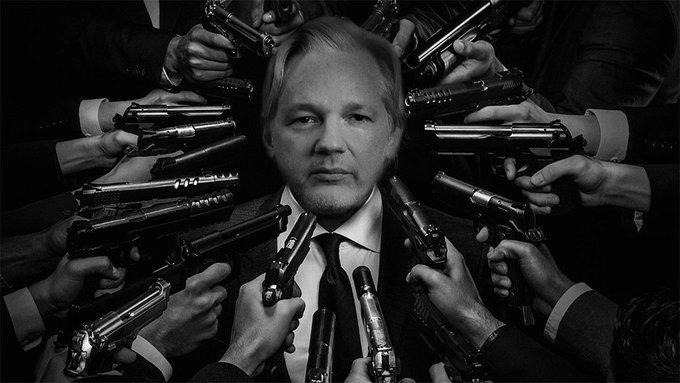
 Dan Monceaux , The combined imperial crusade against Julian Assange involves a multi-pronged effort to erode his support base. As a supporter, I have experienced this first hand, with various individuals trying to influence my opinion of his character and work. I have used Wikileaks documents in submissions made to government and in forthcoming documentary film work. WL is an invaluable repository of information, ready for anyone interested to know how power “works” internationally.
 Nuclear waste: residents near proposed dump told to sign draconian code of conduct, https://www.theguardian.com/australia-news/2019/aug/08/nuclear-waste-residents-near-proposed-dump-told-to-sign-draconian-code-of-conduct?CMP=soc_567&fbclid=IwAR3a-X8NHLloKNUaCpkAblZb7yhKDmDkiIkFgP9cVGiv232hfZec0-w_Xfk
 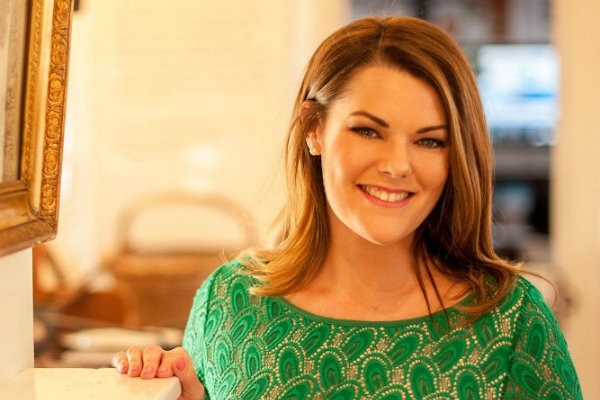 Press Freedoms – Matter of Public importance Senator Sarah Hanson-Young




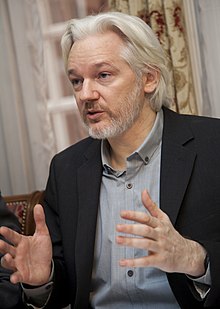


 Antinuclear