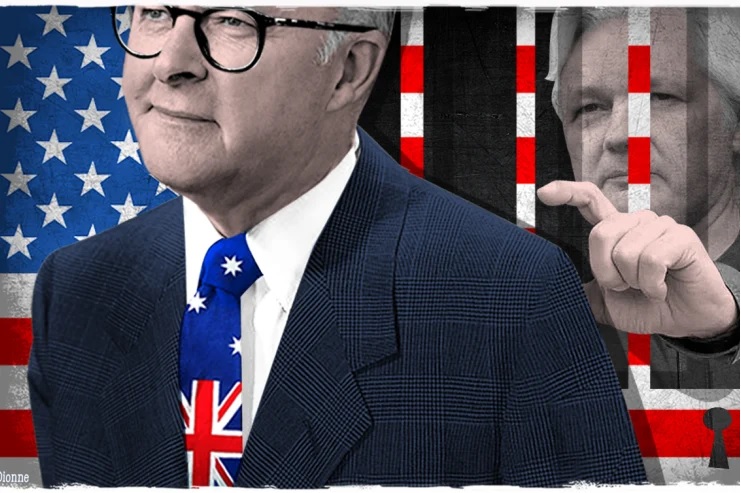
Educating the US Imperium: Australia’s Mission for Assange
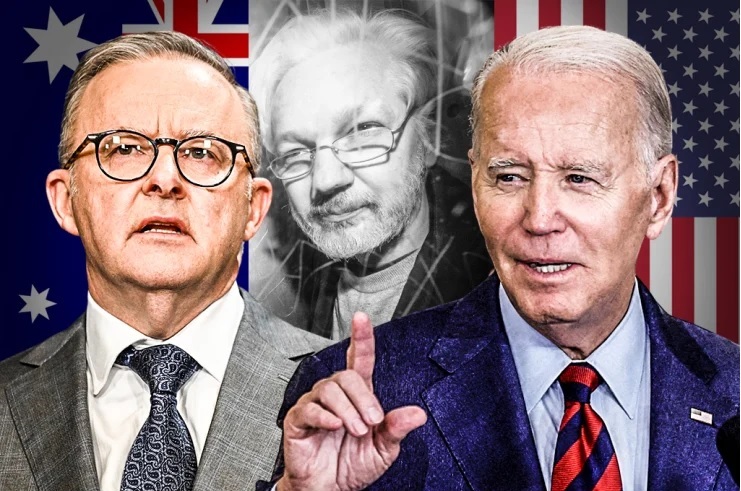
Then there is the issue of whether the delegation’s urgings will have any purchase beyond being a performing flea act. US State Department officials remain glacial in their dismissal of Canberra’s “enough is enough” concerns and defer matters to the US Department of Justice. The unimpressive ambassador Kennedy has been the perfect barometer of this sentiment: host Australian MPs for lunch, keep up appearances, listen politely and ignore their views. Such is the relationship between lord and vassal.
September 6, 2023 Dr Binoy Kampmark https://theaimn.com/educating-the-us-imperium-australias-mission-for-assange/
An odder political bunch you could not find, at least when it comes to pursuing a single goal. Given that the goal is the release of WikiLeaks publisher Julian Assange makes it all the more striking. Six Australian parliamentarians of various stripes will be heading to Washington ahead of Prime Minister Anthony Albanese’s October visit to test the ground of empire, maybe even plant a few seeds of doubt, about why the indictment against their countryman should be dropped.
That indictment, an outrageous, piffling shambles of a document comprising 18 charges, 17 based on that nasty, brutish statute, the Espionage Act of 1917, risks earning Assange a prison sentence in the order of 175 years. But in any instrumental sense, his incarceration remains ongoing, with the United Kingdom currently acting as prison warden and custodian.
In the politics of his homeland, the icy polarisation that came with Assange’s initial publishing exploits (former Australian Prime Minister Julia Gillard was convinced Cablegate was a crime) has shifted to something almost amounting to a consensus. The cynic will say that votes are in the offing, if not at risk if nothing is done; the principled will argue that enlightenment has finally dawned.
The Australian Prime Minister Anthony Albanese and the Opposition leader, Peter Dutton, agree on almost nothing else but the fact that Assange has suffered enough. In Parliament, the tireless work of the independent MP from Tasmania, Andrew Wilkie, has bloomed into the garrulous Bring Julian Assange Home Parliamentary Group.
The Washington mission, which will arrive in the US on September 20, comprises former deputy prime minister Barnaby Joyce, the scattergun former Nationals leader, Labor MP Tony Zappia, Greens Senators David Shoebridge and Peter Whish-Wilson, Liberal Senator Alex Antic and the competent independent member for Kooyong, Dr. Monique Ryan.
What will be said will hardly be pleasing to the ears of the Washington establishment. Senator Shoebridge, for instance, promises to make the case that Assange was merely telling the truth about US war crimes, hardly music for guardians from Freedom’s Land. Sounding like an impassioned pastor, he will tell his unsuspecting flock “the truth about this prosecution.”
Joyce, however, tried to pour some oil over troubled waters by insisting on ABC News that the delegates were not there “to pick a fight”. He did not necessarily want to give the impression that his views aligned with WikiLeaks. The principles, soundly, were that Assange had not committed any of the alleged offences as a US national, let alone in the United States itself. The material Assange had published had not been appropriated by himself. He had received it from Chelsea Manning, a US military source, “who is now walking the streets as a free person.”
To pursue the indictment to its logical conclusion would mean that Assange, or any journalist for that matter, could be extradited to the US from, say, Australia, for the activities in question. This extraterritorial eccentricity set a “very, very bad precedent”, and it was a “duty” to defend his status as an Australian citizen.
The Nationals MP also noted, rather saliently, that Beijing was currently interested in pursuing four Chinese nationals on Australian soil for a number of alleged offences that did not, necessarily, have a nexus to Chinese territory. Should Australia now extradite them as a matter of course? (The same observation has been made by an adviser to the Assange campaign, Greg Barns SC: “You’ve got China using the Assange case as a sort of moral equivalence argument.”)
Broadly speaking, the delegation is hoping to draw attention to the nature of publishing itself and the risks posed to free speech and the journalistic craft by the indictment. But there is another catch. In Shoebridge’s words, the delegates will also remind US lawmakers “that one of their closest allies sees the treatment of Julian Assange as a key indicator on the health of the bilateral relationship.”
Ryan expressed much the same view. “Australia is an excellent friend of the US and it’s not unreasonable to request to ask the US to cease this extradition attempt on Mr Assange.” The WikiLeaks founder was “a “journalist; he should not be prosecuted for crimes against journalism.”
While these efforts are laudable, they are also revealing. The first is that the clout of the Albanese government in Washington, on this point, has been minimal. Meekly, the government awaits the legal process in the UK to exhaust itself, possibly leading to a plea deal with all its attendant dangers to Assange. (The recent floating of that idea, based on remarks made by US ambassador to Australia Caroline Kennedy, was scotched by former British diplomat and Assange confidante Craig Murray in an interview with WBAI radio last week.) Best, then, to leave it to a diverse set of politicians representative of the “Australian voice” to convey the message across the pond.
Then there is the issue of whether the delegation’s urgings will have any purchase beyond being a performing flea act. US State Department officials remain glacial in their dismissal of Canberra’s “enough is enough” concerns and defer matters to the US Department of Justice. The unimpressive ambassador Kennedy has been the perfect barometer of this sentiment: host Australian MPs for lunch, keep up appearances, listen politely and ignore their views. Such is the relationship between lord and vassal.
In Washington, the perspective remains ossified, retributive and wrongheaded. Assange is myth and monster, the hacker who pilfered state secrets and compromised US national security; the man who revealed confidential sources and endangered informants; a propagandist who harmed the sweet sombre warriors of freedom by encouraging a new army of whistleblowers and transparency advocates.
Whatever the outcome from this trip, some stirring of hope is at least possible. The recent political movement down under shows that Assange is increasingly being seen less in the narrow context of personality than high principle. Forget whether you know the man, his habits, his inclinations. Remember him as the principle, or even a set of principles: the publisher who, with audacity, exposed the crimes and misdeeds of power; that, in doing so, he is now being hounded and persecuted in a way that will chill global efforts to do something similar.
What’s Behind Talk of a Possible Plea Deal for Assange?
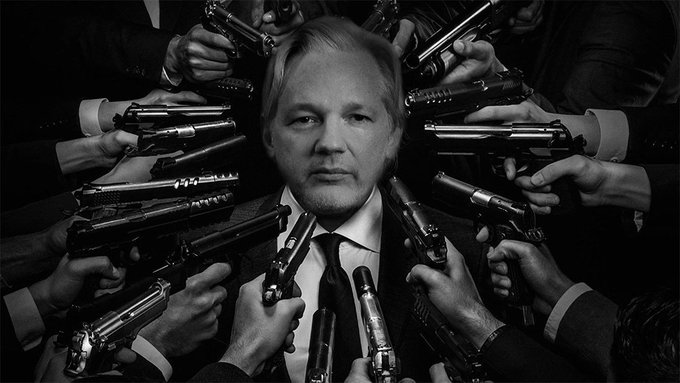
Were Assange to give up his legal battle and voluntarily go to the U.S. it would achieve two things for Washington:
1). remove the chance of a European Court of Human Rights injunction stopping his extradition should the High Court in London reject his last appeal; and
2). it would give the U.S. an opportunity to “change its mind” once Assange was in its clutches inside the Virginia federal courthouse.
Top U.S. officials are speaking at cross purposes when it comes to Julian Assange. What is really going on? asks Joe Lauria.
By Joe Lauria, Consortium News https://consortiumnews.com/2023/09/03/whats-behind-talk-of-a-possible-plea-deal-for-assange/
It was a little more than perplexing. U.S. Secretary of State Antony Blinken, on Australian soil, left no doubt about how his government feels about one of Australia’s most prominent citizens.
“I understand the concerns and views of Australians,” Blinken said in Brisbane on July 31 with the Australian foreign minister at his side. “I think it’s very important that our friends here understand our concerns about this matter.” He went on:
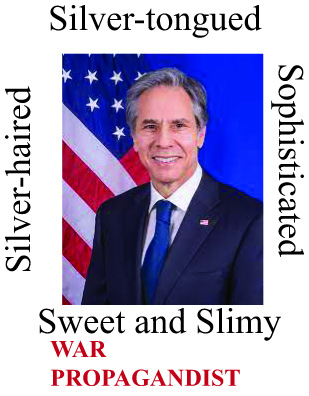
“What our Department of Justice has already said repeatedly, publicly, is this: Mr. Assange was charged with very serious criminal conduct in the United States in connection with his alleged role in one of the largest compromises of classified information in the history of our country. So I say that only because just as we understand sensitivities here, it’s important that our friends understand sensitivities in the United States.”
In other words, when it comes to Julian Assange, the U.S. elite cares little for what Australians have to say. There are more impolite ways to describe Blinken’s response. Upwards of 88 percent of Australians and both parties in the Australian government have told Washington to free the man. And Blinken essentially told them to stuff it. The U.S. won’t drop the case.
A few days before Blinken spoke, Caroline Kennedy, the U.S. ambassador to Australia and daughter of slain President John F. Kennedy, was also dismissive of Australians’ concerns, telling Australian Broadcasting Corporation Radio:
“I met with Parliamentary supporters of Julian Assange and I’ve listened to their concerns and I understand that this has been raised at the highest levels of our government, but it is an ongoing legal case, so the Department of Justice is really in charge but I’m sure that for Julian Assange it means a lot that he has this kind of support but we’re just going to have to wait to see what happens.”
Asked why she met with the parliamentarians at all, she said: “Well, it’s an important issue, it has, as I’ve said, been raised at the highest levels and I wanted to hear directly from them about their concerns to make sure that we all understood where each other was coming from and I thought it was a very useful conversation.”
Asked whether her meeting with the MPs had shifted her thinking on the Assange case, Kennedy said bluntly: “Not really.” She added that her “personal thinking isn’t really relevant here.”
Blowback
Australia has too often behaved as a doormat to the United States, to the point where Australia is threatening its own security by going along with an aggressive U.S. policy towards China, which poses no threat to Australia.
But this time, Blinken got an earful. Prime Minister Anthony Albanese reiterated that he wanted the Assange case to be dropped. Certain members of Parliament brusquely gave it back to Blinken.
Assange was “not the villain … and if the US wasn’t obsessed with revenge it would drop the extradition charge as soon as possible,” Independent MP Andrew Wilkie told The Guardian‘s Australian edition.
“Antony Blinken’s allegation that Julian Assange risked very serious harm to US national security is patent nonsense,” said Wilkie said.
“Mr Blinken would be well aware of the inquiries in both the US and Australia which found that the relevant WikiLeaks disclosures did not result in harm to anyone,” the MP said. “The only deadly behaviour was by US forces … exposed by WikiLeaks, like the Apache crew who gunned down Iraqi civilians and Reuters journalists” in the infamous Collateral Murder video.
As was shown conclusively by defense witnesses in his September 2020 extradition hearing in London, Assange worked assiduously to redact names of U.S. informants before WikiLeaks publications on Iraq and Afghanistan in 2010. U.S. Gen. Robert Carr testified at the court martial of WikiLeaks‘ source, Chelsea Manning, that no one was harmed by the material’s publication.
Instead, Assange faces 175 years in a U.S. dungeon on charges of violating the Espionage Act, not for stealing U.S. classified material, but for the First Amendment-protected publication of it.
Labor MP Julian Hill, also part of the Bring Julian Assange Home Parliamentary Group, told The Guardian he had “a fundamentally different view of the substance of the matter than secretary Blinken expressed. But I appreciate that at least his remarks are candid and direct.”
“In the same vein, I would say back to the United States: at the very least, take Julian Assange’s health issues seriously and go into court in the United Kingdom and get him the hell out of a maximum security prison where he’s at risk of dying without medical care if he has another stroke,” Hill said.
Damage Control
The fierce Australian reaction to both Blinken and Kennedy’s remarks appears to have taken Washington by surprise, given how accustomed to Canberra’s supine behavior the U.S. has become. Just two weeks after Blinken’s remarks, Kennedy tried to soften the blow by muddying Blinken’s clear waters.
She told The Sydney Morning Herald in a front-page interview published on Aug. 14 that the United States was now, despite Blinken’s unequivocal words, suddenly open to a plea agreement that could free Assange, allowing him to serve a shortened sentence for a lesser crime in his home country.
The newspaper said there could be a “David Hicks-style plea bargain,” a so-called Alford Plea, in which Assange would continue to state his innocence while accepting a lesser charge that would allow him to serve additional time in Australia. The four years Assange has already served on remand at London’s maximum security Belmarsh Prison could perhaps be taken into account.
Kennedy said a decision on such a plea deal was up to the U.S. Justice Department. “So it’s not really a diplomatic issue, but I think that there absolutely could be a resolution,” she told the newspaper.
Kennedy acknowledged Blinken’s harsh comments. “But there is a way to resolve it,” she said. “You can read the [newspapers] just like I can.” It is not quite clear what in the newspapers she was reading.
Blinken is Kennedy’s boss. There is little chance she had spoken out of turn. Blinken allowed her to put out the story that the U.S. is interested in a plea bargain with Assange. But why?
First, the harsh reaction in Australia to Blinken’s words probably had something to do with it. If it was up to the U.S. Justice Department alone to handle the prosecution of Assange, as Kennedy says, why was the Secretary of State saying anything about it at all? Blinken appears to have spoken out of turn himself and sent Kennedy out to reel it back in.
Given the growing opposition to the AUKUS alliance in Australia, including within the ruling Labor Party, perhaps Blinken and the rest of the U.S. security establishment is not taking Australia’s support for granted anymore. Blinken stepped in it and had Kennedy try to clean up the mess.
Second, as suspected by many Assange supporters on social media, Kennedy’s words may have been intended as a kind of ploy, perhaps to lure Assange to the United States to give up his fight against extradition in exchange for leniency.
In its article based on Kennedy’s interview, The Sydney Morning Herald spoke to only one international law expert, a Don Rothwell, of Australian National University in Canberra, who said Assange would have to go to the United States to negotiate a plea. In a second interview on Australian television, Rothwell said Assange would also have to drop his extradition fight.
Of course, neither is true. “Usually American courts don’t act unless a defendant is inside that district and shows up to the court,” U.S. constitutional lawyer Bruce Afran told Consortium News. “However, there’s nothing strictly prohibiting it either. And in a given instance, a plea could be taken internationally. I don’t think there’s anything wrong with that. It’s not barred by any laws. If all parties consent to it, then the court has jurisdiction.” But would the U.S. consent to it?
Were Assange to give up his legal battle and voluntarily go to the U.S. it would achieve two things for Washington: 1). remove the chance of a European Court of Human Rights injunction stopping his extradition should the High Court in London reject his last appeal; and 2). it would give the U.S. an opportunity to “change its mind” once Assange was in its clutches inside the Virginia federal courthouse.
“The U.S. sometimes finds ways to get around these agreements,” Afran said. “The better approach would be that he pleads while in the U.K., we resolve the sentence by either an additional sentence of seven months, such as David Hicks had or a year to be served in the U.K. or in Australia or time served.”
Assange’s brother, Gabriel Shipton, told the Herald his brother going to the U.S. was a “non-starter.” He said: “Julian cannot go to the US under any circumstances.” Assange’s father, John Shipton, told the same to Glenn Greenwald last week.
So the U.S. won’t be getting Assange on its soil voluntarily, and perhaps not very soon either. And maybe it wants it that way. Gabriel Shipton added: “Caroline Kennedy wouldn’t be saying these things if they didn’t want a way out. The Americans want this off their plate.”
Third, the U.S. may be trying to prolong Assange’s ordeal for at least another 14 months past the November 2024 U.S. presidential election. As Greenwald told John Shipton, the last thing President Joe Biden would want in the thick of his reelection campaign next year would be a high-profile criminal trial in which he was seen trying to put a publisher away for life for printing embarrassing U.S. state secrets.
But rather than a way out, as Gabriel Shipton called it, the U.S. may have in mind something more like a Great Postponement.
The postponement could come with the High Court of England and Wales continuing to take its time to give Assange his last hearing — for all of 30 minutes — before it rendered its final judgement, months after that, on his extradition. This could be stretched over 14 months. As Assange is a U.S. campaign issue, the High Court could justify its inaction by saying it wanted to avoid interference in the election.
According to Craig Murray, a former British diplomat and close Assange associate, the United States has not, despite Kennedy’s words last month, so far offered any sort of plea deal to Assange’s legal team. Murray told WBAI radio in New York:
“There have been noises made by the U.S. ambassador to Australia saying that a plea deal is possible. And that’s what the Australian Government have been pushing for as a way to solve it. What I can tell you is that there have been no official approaches from the American government indicating any willingness to soften or ameliorate their posihttps://www.youtube.com/watch?v=fnNjwQNV4Gction. The position of the Biden administration still seems to be that they wish to persecute and destroy Julian and lock him up for life for publishing the truth about war crimes …
So there’s no evidence of any sincerity on behalf of the U.S. government in these noises we’ve been hearing. It seems to be to placate public opinion in Australia, which is over 80% in favor of dropping the charges and allowing Julian to go home to his native country…
The American ambassador has made comments about, oh well, a plea deal might be possible, but this is just rubbish. This is just talk in the air. There’s been no kind of approach or indication from the Justice Department or anything like that at all. It’s just not true. It’s a false statement, in order to placate public opinion in Australia.”
Afran said a plea deal can be initiated by the Assange side as well. Assange lawyer Jennifer Robinson said in May for the first time on behalf of his legal team that they were open to discussion of a plea deal, though she said she knew of no crime Assange had committed to plead guilty to.
The U.S. would have many ways to keep prolonging talks on an Assange initiative, if one came, beyond the U.S. election. After the vote, the Justice Department could then receive Assange in Virginia courtesy of the British courts, if this the strategy the U.S. is pursuing.
Australia Agrees To Build US Missiles; US Dismisses Australian Concerns About Assange
The reason Blinken keeps repeating the word “risk” here is because the Pentagon already publicly acknowledged in 2013 that nobody was actually harmed by the 2010 Manning leaks that Assange is being charged with publishing, so all US officials can do is make the unfalsifiable assertion that they could have potentially been harmed had things happened completely differently in some hypothetical alternate timeline.
CAITLIN JOHNSTONE, JUL 30, 2023, https://www.caitlinjohnst.one/p/australia-agrees-to-build-us-missiles?utm_source=post-email-title&publication_id=82124&post_id=135542172&isFreemail=true&utm_medium=email
Two different news stories about US-Australian relations have broken at around the same time, and together they sum up the story of US-Australian relations as a whole. In one we learn that Australia has agreed to manufacture missiles for the United States, and in the other we learn that Washington has told Australia to go suck eggs about its concerns regarding the US persecution of Australian journalist Julian Assange.
The relationship between Australia and the United States is all the more clearly illustrated by the way they are being reported by Australia’s embarrassingly sycophantic mainstream press.
In a Sydney Morning Herald article published Friday titled “‘Hugely significant’: Australia to manufacture and export missiles to US,” the US-educated war propagandist Matthew Knott exuberantly reports on the latest development on Australia’s total absorption into the American war machine.
“Australia is set to begin manufacturing its own missiles within two years under an ambitious plan that will allow the country to supply guided weapons to the United States and possibly export them to other nations,” Knott reports,” adding that the “joint missile manufacturing effort is being driven by the war in Ukraine, which has highlighted a troubling lack of ammunition stocks in Western nations including the US.”
Knott — perhaps best-known for being publicly told to “hang your head in shame” and “drum yourself out of Australian journalism” by former prime minister Paul Keating over his virulent war propaganda on China — gushes enthusiastically about the wonderful opportunities this southward expansion of the military-industrial complex will offer Australians.
“As well as creating local jobs, a domestic missile manufacturing industry will make Australia less reliant on imports and provide a trusted additional source of munitions for the US,” Knott writes ecstatically in what has somehow been presented by The Sydney Morning Herald as a hard news story and not an opinion piece.
An article published the next day, also in The Sydney Morning Herald and also by Matthew Knott, is titled “Assange ‘endangered lives’: Top official urges Australia to understand US concerns”.
It’s not unusual to see this type of propagandistic headline designed to convey a specific message above Knott’s reporting on this subject; in 2019 he authored a piece which was given the bogus title “‘A monster not a journalist’: Mueller report shows Assange lied about Russian hacking”.
“The United States’ top foreign policy official has urged Australians to understand American concerns about Julian Assange’s publishing of leaked classified information, saying the WikiLeaks founder is alleged to have endangered lives and put US national security at risk,” Knott writes. “In the sharpest and most detailed remarks from a Biden administration official about the matter, US Secretary of State Antony Blinken said Assange had been involved in one of the largest breaches of classified information in American history and had been charged with serious criminal conduct in the US.”
Blinken’s remarks came during a press conference for the Australia–US Ministerial Consultations (AUSMIN) forum on Saturday, in response to a question asked by Knott himself.
Here are Blinken’s comments in full:
“Look, as a general matter policy, we don’t really comment on extradition matters, extradition proceedings. And so, I really would refer you to our Department of Justice for any questions about the status of the criminal case, whether it’s with regard to Mr Assange or the other person in question. And I really do understand and can certainly confirm what Penny said about the fact that this matter was raised with us as it has been in the past. And I understand the sensitivities, I understand the concerns and views of Australians. I think it’s very important that our friends here understand our concerns about this matter. And what our Department of Justice has already said repeatedly, publicly, is this, Mr Assange was charged with very serious criminal conduct in the United States in connection with his alleged role in one of the largest compromises of classified information in the history of our country. The actions that he is alleged to have committed risked very serious harm to our national security, to the benefit of our adversaries and put named human sources at grave risk, grave risk of physical harm, grave risk of detention. So, I say that only because, just as we understand sensitivities here, it’s important that our friends understand sensitivities in the United States.”
The reason Blinken keeps repeating the word “risk” here is because the Pentagon already publicly acknowledged in 2013 that nobody was actually harmed by the 2010 Manning leaks that Assange is being charged with publishing, so all US officials can do is make the unfalsifiable assertion that they could have potentially been harmed had things happened completely differently in some hypothetical alternate timeline.
In reality, Assange is being persecuted by the United States for no other reason than the crime of good journalism. His reporting exposed US war crimes, and the US wishes to set a legal precedent that allows for anyone who reveals such criminality to be imprisoned in the United States — not just the whistleblowers who bring forth that information, but publishers who circulate it. This is why even mainstream press outlets and human rights organizations unequivocally oppose his extradition; because it would be a devastating blow to worldwide press freedoms on what is arguably the single most important issue that journalists can possibly report on.
So here is Australia signing up to become the Pentagon’s weapons supplier to the south — on top of already functioning as a total US military/intelligence asset which is preparing to back Washington in a war with China, and on top of being so fully prostrated before the empire that we’re not even allowed to know if American nuclear weapons are in our own country — being publicly hand-waved away by Washington’s top diplomat for expressing concern about a historic legal case in which an Australian citizen is being persecuted by the world’s most powerful government for being a good journalist.
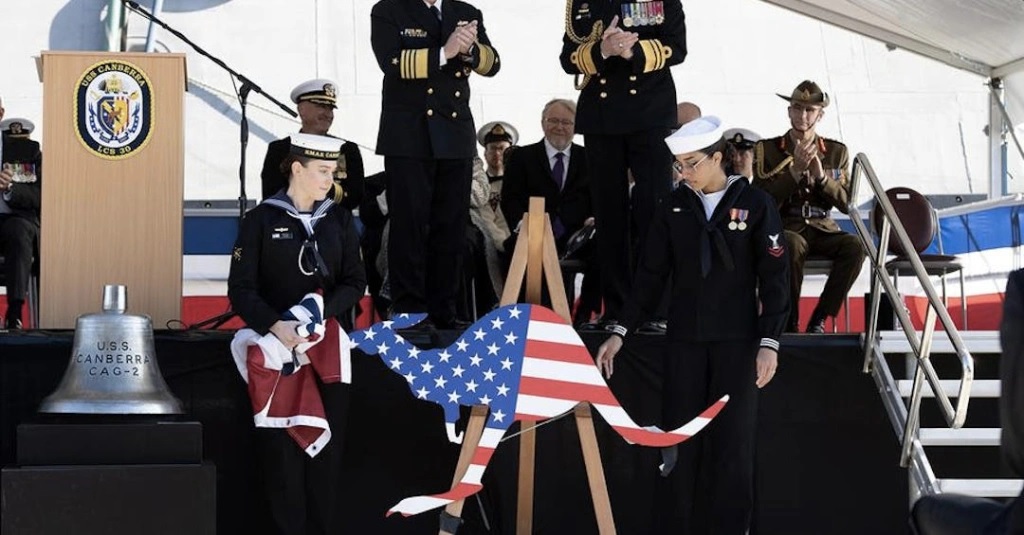
You could not ask for a clearer illustration of the so-called “alliance” between Australia and the United States. It’s easy to see that this is not an equal partnership between two sovereign nations, but a relationship of total domination and subservience. I was only half-joking when I wrote the other day that our national symbol should be the star-spangled kangaroo.
Australia is not a real country. It’s a US military base with marsupials.
US rejects Australian plea to drop Assange case

29 July 23, https://www.rt.com/news/580512-blinken-rejects-assange-australia/
Secretary of State Antony Blinken insisted that the WikiLeaks founder caused “serious harm” to US national security
US Secretary of State Antony Blinken has confirmed that Australia has raised the case of Julian Assange’s continued prosecution, but declared that Washington will not cease seeking the extradition of the former WikiLeaks boss and intends to try him for espionage.
Speaking alongside Australian Foreign Minister Penny Wong in Brisbane on Saturday, Blinken said that while he understands “the concerns and views of Australians,” Assange’s alleged actions “risked very serious harm to our national security, to the benefit of our adversaries, and put named human sources at grave risk – grave risk – of physical harm, and grave risk of detention.”
Assange, he said, was “charged with very serious criminal conduct” and had allegedly taken part in “one of the largest compromises of classified information in the history of our country.”
An Australian citizen, Julian Assange is currently being held in London’s Belmarsh Prison. He is fighting extradition to the US, where he faces 17 charges under the Espionage Act and potentially a 175-year prison sentence. Human-rights and press-freedom activists have demanded his release, citing his deteriorating mental and physical health, while Australian Prime Minister Anthony Albanese said in May that he was “working through diplomatic channels” to press the US into dropping the case.
The charges against Assange stem from his publication of classified material obtained by whistleblowers, including Pentagon documents detailing alleged US war crimes in Iraq and Afghanistan, and more than 250,000 diplomatic cables exposing US efforts to – among other things – spy on its allies and influence foreign elections.
While Assange did not personally steal these documents, he is nevertheless being prosecuted for espionage. He and his supporters argue that WikiLeaks’ publication of this material is protected by the First Amendment of the US Constitution.
“We have made clear our view that Mr Assange’s case has dragged on for too long,” Foreign Minister Wong said on Saturday. “We’ve said that publicly and you would anticipate that that reflects also the position we articulate in private.”
The extradition of Assange from Britain to the US was approved in 2020 by then-UK Home Secretary Priti Patel. The publisher lodged his final appeal against the decision in June, after all eight grounds of a previous appeal were rejected by a British High Court judge.
Responding to Blinken’s comments on Saturday, Assange’s brother, Gabriel Shipton, said that it is now up to Prime Minister Albanese to make a public appeal for Assange’s freedom, during his upcoming visit to the US.
If Albanese’s such a buddy of Biden’s, why is Assange still in jail?
An initial refusal from Biden is only an invitation to ask a second time, in a firmer voice
Bob Carr Bob Carr was NSW’s longest-serving premier and is a former Australian foreign affairs minister. 27 jul 23, https://www.theage.com.au/politics/federal/if-albanese-s-such-a-buddy-of-biden-s-why-is-assange-still-in-jail-20230721-p5dqci.html
Julian Assange is in his fourth year in Britain’s Belmarsh prison. If the current appeal fails, he will be shackled and driven off in a prison van and flown across the Atlantic on a CIA aircraft for a long trial. He faces likely life imprisonment in a federal jail, perhaps in Oklahoma.
In 2021, then opposition leader Anthony Albanese said, “Enough is enough. I don’t have sympathy for many of his actions, but essentially, I can’t see what is served by keeping him incarcerated.”
As prime minister, Albanese said he had already made his position clear to the Biden administration. “We are working through diplomatic channels,” he said, “but we’re making very clear what our position is on Mr Assange’s case.”
So we can assume that at one of his seven meetings with US President Joe Biden he has raised Assange, even on the fringes of the Quad or at one of two NATO summits. Or perhaps in San Diego when they launched AUKUS, under which Australia will make the largest transfer of wealth ever made outside this country. This $368 billion is a whopping subsidy to American naval shipyards and to the troubled, chronically tardy British naval builder BAE Systems.
But it clinches Australia’s reputation as a deliriously loyal, entirely gullible US ally. It gives President Biden the justification for telling Republicans or Clinton loyalists in his own party that he had no alternative but to end the pursuit of Assange. “Those Aussies insisted on it. They’re doing us all these favours … we can’t say no.”
In addition to the grandiose AUKUS deal, Biden could list other decisions by the Albanese government that render Australia a military stronghold to help US regional dominance while materially weakening our own security.
Candid words, but they aren’t mine. They belong to Sam Roggeveen of the Lowy Institute in this month’s edition of Australian Foreign Affairs. In a seminally important piece of analysis, Roggeveen nominated Australia’s decision to fully service six American B52 bombers at RAAF Tindal, in the Northern Territory, as belonging on that list. It is assumed these are aimed at China’s nuclear infrastructure such as missile silos. “It is hard to overstate the sensitivity involved in threatening another nation’s nuclear forces,” Roggeveen writes.
In his article, he reminds us we’ve also agreed to host four US nuclear subs on our west coast at something to be called “Submarine Rotational Force-West”. Their mission would be destroying Chinese warships or enforcing a blockade of Chinese ports.
The east coast submarine base, planned most likely for Port Kembla, will also directly support US military operations. It’s another nuclear target. As Roggeveen says, all these locations raise Australia’s profile in the eyes of the Chinese military planners designing their response in the event of war with the US.
In this context, I can’t believe the US president is not on the point of agreeing to the prime minister’s request to drop charges against Assange.
Apart from the titanic strategic favours, two killer facts help our case. One, former US president Barack Obama commuted the sentence of Chelsea Manning, who had supplied Assange with the information he published. The Yank is free, the Aussie still pursued.
Two, the crimes Manning and Assange exposed involved US troops on a helicopter gunning down unarmed civilians in Baghdad. They are directly comparable to the alleged Australian battlefield murders in Afghanistan we are currently prosecuting.
An initial refusal from Biden is only an invitation to ask a second time, in a firmer voice.
It’s possible to imagine an Australian PM – Fraser, Hawke, Keating, Howard or Rudd – being appropriately forceful with a US president. There would be an inflection point in their exchange – prime minister to president – when the glint-eyed Australian says, “Mr President, it’s gone on too long. Both sides of our politics are united. Your old boss commuted Chelsea Manning, an American, in the same case.”
A pause. A beat. Then the killer summation. “Mr President, I speak for Australia.”
Surely this counts.
I don’t believe the president can shake his head and say, “nope”, given all we have gifted – the potent symbolism of B52s, nuclear subs and bases on the east and west coast. It would look like we have sunk into the role of US territory, as much a dependency as Guam or Puerto Rico.
US counter-intelligence conceded during court proceedings there is no evidence of a life being lost because of Assange’s revelations. Our Defence Department reached the same view.
If Assange walks out the gates of Belmarsh into the arms of his wife and children it will show we are worth a crumb or two off the table of the imperium. If it’s a van to the airport, then making ourselves a more likely target has conferred no standing at all. We are a client state, almost officially.
Stella Assange at Sydney rally: “It’s not just Julian who has lost his freedom, but all of us”
The whistleblower noted the comments of Australian Labor Party Prime Minister Anthony Albanese, who has made extremely tepid statements expressing “concern” over Assange’s plight. Albanese has said that “enough is enough” in relation to the Assange case. He claims to have made private representations to the US and British governments on behalf of Assange, but has stopped far short of any public demand for the Australian journalist’s freedom.
Albanese has recently hinted at the prospect of a plea deal in the Assange case. Kenny forcefully rejected this course. “Is there a Hicks solution? Why should there be? He has not committed any crime. He should not be forced to plead to anything. We need our prime minister to stand up, not just say ‘enough is enough.’”
Oscar Grenfell@Oscar_Grenfell, 24 May 2023
Some 800 people attended a protest in Sydney yesterday morning demanding the immediate freedom of imprisoned WikiLeaks publisher Julian Assange. People came from across New South Wales and from around the country to attend the rally, which was one of the largest demanding Assange’s freedom yet, despite being held on a weekday.
Speaking at the demonstration, Stella Assange, Julian’s wife, declared that the protesters were “at the forefront of a global movement for justice. A global movement that converges on one man, but the meaning of which goes far beyond Julian’s freedom. It’s not just Julian who has lost his freedom, but all of us. Because in order to keep Julian in prison, they have had to corrupt their own rules and their own principles.”
Stella, visiting Australia for the first time, noted that her tour had initially been planned to coincide with a scheduled visit of US President Joe Biden. He had been set down to attend a summit of the warmongering and anti-China Quadrilateral Strategic Dialogue this week in Sydney.
Biden cancelled, however Stella proceeded with the visit. She explained the crucial importance of the fight within Australia to securing her husband’s freedom. Assange is detained in Britain and faces extradition to the US, where he would be tried on Espionage Act charges carrying 175 years imprisonment for exposing American war crimes.
Assange is an Australian citizen. Stella explained: “Julian’s case is a case of global importance. But you guys are at the centre of it because Julian is an Australian, he’s a country boy, and he’s from this country. That means that the key to securing Julian’s release lies with you.”
Assange’s supporters in Australia were part of a “global movement” involving millions of people all over the world, she said. There is a growing recognition, internationally, that “he’s in prison because he exposed the crimes of others. No decent human being will ever tolerate that. The only people whose interest remains Julian’s imprisonment, are the ones who are guilty and implicated in those crimes.”
Within Australia, there had been a “sea change.” Only a few years ago, there had been “radio silence” on Assange’s case. But increasingly it was being discussed in the media, as well as by official politicians. This, Stella stressed, was a consequence of the demands made by ordinary people and a protracted grassroots campaign.
This fight had to be deepened, she said. “You guys need to shout louder, fight harder, put the pressure on each of your representatives, make Julian’s situation visible everywhere, every day, on your cars, on your shirts. Every day you tell all your friends, you talk about it with your family… Make sure Julian remains top priority until he steps out of that prison. I think we’re near, we can achieve this together.”
Stella noted that it was her first time in Australia, but it would not be her last. “I will come back here, home with Julian, and our kids who are Australian citizens will come home too.”
John Shipton, Assange’s father, placed the persecution of Assange within a broader context. Brown University, in the United States, had recently published a report showing that there had been 4.5 million deaths in the Middle East following the 2003 invasion of Iraq. An earlier document, from the same institution, estimated that the predatory US-led wars in the region had displaced 38 million people.
Speaking of those US interventions Shipton condemned a “hegemon standing in a river of blood.” He emphasised the striving of ordinary people for “justice” and “humanity,” which would ultimately be victorious. Assange’s case and the fight for his freedom were integral to this broader struggle.
Gabriel Shipton, Assange’s brother, said: “If anything is to be taken from Julian’s persecution, it is that it has mobilised people all around the world… The fight gives meaning to Julian’s work. It has brought us all together here to fight for something that is so important to our Western democracies and that’s a free press. How can we make decisions about what our governments do in our name if we don’t know? It’s not possible.”
David McBride addressed the protest. A former Australian army lawyer, he faces life behind bars for blowing the whistle on Australian war crimes in Afghanistan. They included verified murders of civilians and prisoners and other violations of international law. For these offenses, McBride, the man who exposed them, is the first to face court proceedings.
“There’s a good chance that even though I reported murders and cover-ups, that I’m going to go to jail for the rest of my life… It’s not something I hang my head about. It’s something I’m proud of… We need to stand up, the future of the planet depends on it.”
The whistleblower noted the comments of Australian Labor Party Prime Minister Anthony Albanese, who has made extremely tepid statements expressing “concern” over Assange’s plight. Albanese has said that “enough is enough” in relation to the Assange case. He claims to have made private representations to the US and British governments on behalf of Assange, but has stopped far short of any public demand for the Australian journalist’s freedom.
McBride responded: “I say this to Anthony Albanese. Enough of you saying ‘enough is enough.’ It means nothing. Imagine if I had witnessed war crimes in Afghanistan, witnessed murder and cover-up… and all I said to them is ‘enough is enough.’ It’s not enough.” McBride called for Albanese to “step up to the plate” and secure Assange’s unconditional freedom.
Stephen Kenny, Assange’s Australian lawyer, issued the same demand. Kenny represented Australian citizen David Hicks, who was rendered to the American military prison in Guantánamo Bay as part of the “war on terror.” Hicks was eventually freed and returned to Australia, as the result of a powerful campaign led by his father Terry Hicks. David Hicks had been compelled to sign a plea deal, despite having committed no crime.
Kenny noted the parallels. “Like David Hicks, Julian Assange has not committed any crime at all. So why is he in jail?” The editors of other major publications, who were involved in WikiLeaks’ 2010 and 2011 releases, for which Assange is being prosecuted, remain at liberty. This, Kenny explained, made clear that the case against Assange was political and required a political solution.
He outlined some of the abuses of the British judiciary. This included placing Assange in a glass box at the back of his courtroom during the first extradition proceedings, denying him the right to participate in his own case. Assange’s lawyers, moreover, had filed their latest appeal in November. The British judges merely need to determine whether he has an arguable case, a process which Kenny said should take several days or at most a week. But six months on and this task has not been completed.
Albanese has recently hinted at the prospect of a plea deal in the Assange case. Kenny forcefully rejected this course. “Is there a Hicks solution? Why should there be? He has not committed any crime. He should not be forced to plead to anything. We need our prime minister to stand up, not just say ‘enough is enough.’”
The rally raised several political issues. Many of the speakers, importantly, emphasised the decisive role of mobilising ordinary people in the fight to free Assange.
Inevitably, the statements of Albanese and other Labor representatives have generated some hope within the Assange camp. But there is no indication, whatsoever, that Albanese is fighting for Assange’s freedom, behind closed doors or anywhere else. This week he refused to even meet with Stella Assange. Albanese was part of the Gillard Labor government, which in 2010 and 2011, played a central role in the initial stages of the persecution of Assange…….. https://www.wsws.org/en/articles/2023/05/25/rgzp-m25.html?fbclid=IwAR1yfKnxx-_FuaTf0qdcSzFjaiYawdDU8YzVOUBFX5GT0RrBI6gj61xvWCE
Hundreds rally against state government’s proposed increases to penalties for protesting
About 500 people have marched through the Adelaide CBD rallying against proposed changes to the state’s protest laws.
The state government proposed changes to laws that would strengthen penalties for obstructing public places in response to Extinction Rebellion protests last week.
A climate change protester was charged with obstructing a public place after she abseiled down Morphett Street bridge with a rope and was suspended over North Terrace, causing traffic delays.
Another four protesters were charged with offences, including property damage, after allegedly throwing paint at the Santos building.
The proposed changes to the Summary Offences Act — backed by the state opposition — would mean anyone who “intentionally or recklessly engages in conduct that obstructs the free passage of a public place” would face possible three months jail or a $50,000 fine.
Currently, there is no option for jail time and the maximum fine is $750.
“One of the amendments that I’m moving will be to add in a sunset clause to this bill so that it expires in 12 months time.
“We are also adding in a clause requiring a review after a 12-month period and I’ll also be introducing a reasonableness test so that people who are caught under this bill will have a possible defence.”
About 80 community groups, including Amnesty International Australia, have signed a letter calling on the government to withdraw the bill.
The organisations listed their support in a full-page advertisement taken out in Friday’s edition of The Advertiser titled Protect Our Right to Protest — Before It’s Too Late, which was authorised by the South Australian Council of Social Service.
‘Almost wartime measure’
The Law Society of South Australia and the South Australian Bar Association have also jointly written a strongly worded letter to the Attorney-General outlining a long list of concerns about the proposed new laws.
………………………………………. The legal bodies raised concerns about the legal wording of the proposed reforms which would significantly shift the onus of proof for the offence of obstructing a public place.
“The effect is that a person only has to turn their mind to the possibility that an obstruction will occur, even though the consequence is entirely unintended, to be found guilty of the offence,” the letter states………………………….. more https://www.abc.net.au/news/2023-05-26/hundreds-protest-against-anti-protest-laws/102396520
Assange and the Australian government’s persecution of alleged Afghan war crimes whistleblower
McBride will be the first person to face court over the war crimes of the Australian military in Afghanistan, i.e., for allegedly revealing them, not perpetrating them.
Ominously, Albanese stated: “A solution needs to be found… and Mr Assange needs to be a part of that of course.” The only way that Assange could be “part of a solution” to his case, is if he were to concede guilt as part of some sort of plea deal arrangement. If the US were to drop the charges, Assange’s “part” would simply be to walk out of prison a free man.
WSWS, Oscar Grenfell @Oscar_Grenfell, 10 May 2023
Over the past week, several prominent members of the Australian Labor government have feigned sympathy for WikiLeaks publisher Julian Assange. The most notable of these interventions was a statement made by Prime Minister Anthony Albanese, while he was in Britain for the coronation of King Charles.
Albanese and other Labor representatives have reiterated the vague comment that “enough is enough” in relation to the Assange case, and it has “gone on for too long.” Assange has been detained in a British prison for more than four years, and faces extradition to the US where he could be jailed for 175 years for exposing American war crimes in Iraq and Afghanistan.
The essential position of Albanese is that he has made comments to the British and US governments along these lines and that is all he can do. As the WSWS has previously noted, this is the antithesis of an aggressive diplomatic and legal campaign aimed at securing the freedom of a persecuted Australian citizen.
The refusal to take any concrete measures to ensure Assange’s release is bound up with Labor’s complete commitment to the US alliance, including Washington’s escalating preparations for war with China.
But that is not the sole issue. A key component of this program of war, with Labor overseeing the country’s largest militarisation in 80 years, is the suppression of anti-war opposition. That is evident in the persecution of Assange, but it is also apparent in several draconian “national security” cases that the Labor government is directly presiding over in Australia.
The most significant is the prosecution of David McBride. A former army lawyer, he is accused of leaking information exposing Australian war crimes in Afghanistan and other violations of international law in that protracted neo-colonial occupation.
The documents that the state claims McBride leaked included details of the potentially unlawful killings of ten Afghan men and boys by Australian Special Forces soldiers.
In one instance, a man and his son were shot dead by Special Air Service Regiment in September, 2013. Official reports indicated that the man had pointed a weapon at the Australian personnel. The leaked documents said that the man and the boy were found shot dead in their beds, indicating that they may have been executed in their sleep.
Other cases also involved children. Some of the documents indicated that prisoners were being killed, execution style, and then posthumously being accused of attempting to seize a weapon.
Most explosively, the files indicated awareness in the military command of a “warrior culture” among special forces that had gotten out of control and threatened breaches of the laws of war.
The publication of details from the files, by the Sydney Morning Herald and the Australian Broadcasting Corporation (ABC), triggered a series of inquiries into the actions of the defence forces in Afghanistan. This culminated in the 2020 release of an official Brereton Report, confirming “credible information” that the Special Forces had murdered 39 Afghan civilians and prisoners.
In other words, whoever leaked the documents in the years earlier provided the public with true information about war crimes that were being hidden from the population.
In June, 2019, the Australian Federal Police carried out an unprecedented raid on the Sydney office of the ABC, over its publication of the Afghan files. It was later revealed that one of the journalists involved in the story, Dan Oakes, had been threatened with national security charges, in what would have been an exact parallel to the Assange case.
That prosecution did not eventuate. But last month, a hearing of the Australian Capital Territory’s Supreme Court confirmed that McBride will stand trial in November. He is charged with “national security” offenses, including unauthorised disclosure of information, theft of commonwealth property and breaching the Defence Act. McBride has pleaded not guilty.
Confirmation that the case will proceed means that McBride will be the first person to face court over the war crimes of the Australian military in Afghanistan, i.e., for allegedly revealing them, not perpetrating them.
Only one soldier has been charged over the documented killings of civilians. He allegedly shot an unarmed Afghan boy at point blank range. That killing occurred in 2012. Footage of it was broadcast in early 2020 on national television, but the soldier was only charged last month. He will not be tried until next year and is out on bail.
Because McBride is charged with federal offenses, the Labor government and specifically its Attorney-General Mark Dreyfus can order an end to the prosecution.
McBride is an alleged whistleblower, whereas Assange is a publisher. But the essence of the case against both is that they should be imprisoned for decades for exposing war crimes. Labor claims it cannot free Assange, because he is subject to British “legal processes,” and is facing extradition to the US. Australia is “not a party” to those proceedings, they assert.
The McBride case gives the lie to these assertions. Labor could drop this prosecution whenever it wanted to. But, like the Biden administration with its pursuit of Assange, the Albanese government is intent on setting new precedents for the suppression of anti-war sentiment, amid an explosion of militarism and war.
There are other cases that Labor is presiding over……………………………………….
Labor is deepening an anti-democratic offensive targeting the civil liberties of the population, of which the US prosecution of Assange is an international focal point.
That underscores the fraud of claims that Labor is conducting “quiet diplomacy” on Assange’s behalf.
In the latest stage of this charade, members of a cross-party federal parliamentary grouping visited US ambassador to Australia Caroline Kennedy to discuss the Assange case. There is no indication that they came away with anything…….
Labor backbencher Julian Hill wrote on Twitter: “I thanked the Ambassador for her willingness to engage. Aside from the issues at stake in Julian Assange’s case, the delay in resolving it is an unwelcome distraction from AUKUS & our work with the US to confront the strategic challenges we face.”
Describing the 12-year state persecution of a journalist, which has brought him to the brink of death, as an “unwelcome distraction” is obscene. The reference to AUKUS is notable. Hill was speaking of the trilateral pact between Britain, the US and Australia, directed against China. The “strategic challenge,” is a veiled reference to the US confrontation with China.
In other words, Hill is arguing that the prosecution of Assange, an anti-war publisher, is a distraction from the US preparations for a new war. In reality, the two go hand-in-hand. One could not conceive of a more right-wing, warmongering argument, nominally in Assange’s defence.
In an interview with the ABC yesterday, Albanese restated his line of “enough is enough” in relation to Assange. He refused to indicate if the Labor government is even asking the Biden administration to end its prosecution of Assange.
Ominously, Albanese stated: “A solution needs to be found… and Mr Assange needs to be a part of that of course.” The only way that Assange could be “part of a solution” to his case, is if he were to concede guilt as part of some sort of plea deal arrangement. If the US were to drop the charges, Assange’s “part” would simply be to walk out of prison a free man.
The statements of Albanese and other Labor leaders are a transparent attempt by a government that has done nothing for his freedom to blunt the widespread public support for Assange. Most immediately, Assange’s plight is viewed as a “distraction,” to use Hill’s words, from the Quadrilateral Dialogue summit, to be held in Sydney later this month. Biden, together with the Indian and Japanese leaders, and Albanese, will gather to discuss the next stage of their preparation for war with China.
Only the naive and the credulous would believe that this warmongering cabal is about to extend a benevolent hand to someone who exposed their past crimes when they are preparing even greater ones. https://www.wsws.org/en/articles/2023/05/11/zljo-m11.html
Australian prime minister feigns concern for Assange but defends “national security” secrecy

Oscar Grenfell@Oscar_Grenfell 5 May 2023 https://www.wsws.org/en/articles/2023/05/06/ixnm-m06.html?pk_campaign=assange-newsletter&pk_kwd=wsws
Speaking to the Australian Broadcasting Corporation (ABC) this week, Labor Prime Minister Anthony Albanese gave his most extensive comments on the plight of Julian Assange since coming to office in May 2022. Albanese feigned concern for the WikiLeaks publisher, but defended the entire anti-democratic framework of “national security” secrecy under which he is being persecuted.
Albanese is in London for the coronation of King Charles. He is also holding discussions with the British government, centring on AUKUS, the aggressive militarist pact between the two countries and the US, aimed at preparing for war against China.
In the same city, Assange has been incarcerated in the maximum-security Belmarsh Prison for more than four years, most of that time on remand. The sole purpose of his detention is to facilitate a US extradition request. The American government is seeking to imprison Assange for up to 175 years for exposing its war crimes in Iraq and Afghanistan and its global diplomatic conspiracies.
Albanese’s comments have been presented widely as his “strongest” in defence of Assange. Throughout his prime ministership, Albanese has sought to avoid even mentioning the WikiLeaks publisher, even though Assange is an Australian citizen and the world’s most significant political prisoner.
Albanese’s long silence, which included his tenure as opposition leader, was clearly a product of political hostility to Assange and WikiLeaks. But as demands for the Labor government to defend Assange grew, Albanese and his colleagues changed tack. They could not speak openly about Assange, supposedly because that would compromise unspecified “quiet diplomacy” they were conducting on his behalf.
Documents obtained via freedom of information requests by lawyer Kellie Tranter have not turned up a single trace of this “quiet diplomacy.” That includes correspondence between the relevant Australian government bodies and its counterparts in the US and Britain.
In the ABC interview, Albanese repeated his refrain that “enough is enough” in relation to the Assange case and “this matter needs to be brought to a close.” These formulations are deliberately ambiguous. They do not even indicate how the case should be “brought to a close,” much less demand that the Biden administration drop the prosecution.
Albanese added: “It needs to be worked through, we’re working through diplomatic channels, we’re making very clear what our position is on Mr Assange’s case.” But again, it is not at all “clear” what the Labor government’s position actually is. Moreover, almost a year of purported “quiet diplomacy” has not altered the course of Assange’s persecution by one iota.
Asked about this, Albanese replied: “I know it’s frustrating. I share the frustration. I can’t do more than make very clear what my position is.” He claimed that the US government was “clear” on Labor’s position, but would not even commit to raising Assange when Biden visits Australia later this month.
Albanese expressed “concern” for Assange’s health, but did not indicate he would do anything about it. It is over three years since hundreds of doctors first warned that the deterioration of Assange’s medical condition could result in his death behind bars, and demanded he be released from Belmarsh Prison.
In the comments that some Assange supporters have presented as most hopeful, Albanese stated: “I think that when Australians look at the circumstances, look at the fact that the person who released the information [Chelsea Manning] is walking freely now, having served some time in incarceration but is now released for a long period of time, then they’ll see that there is a disconnect there.”
Again, this is miles away from a demand that the Biden administration end its prosecution, or a defence of a persecuted Australian journalist. It is more in the manner of, “it is unfortunate that this is occurring, but what can one do?”
That was, in fact, the entire thrust of Albanese’s remarks. Labor had raised the issue, he claimed, made its “position clear” and Assange’s fate was in the hands of Britain and the US. That is diametrically opposed to the repeated aggressive diplomatic and legal interventions Australian governments have previously mounted to free citizens imprisoned abroad.
The fraudulent character of Albanese’s purported defence of Assange was underscored by the fact that his comments were immediately endorsed by opposition Liberal Party leader Peter Dutton. Dutton, a former policeman, is an extreme right-wing figure, who speaks most openly for the repressive state forces that are seeking Assange’s destruction.
Above all, Albanese’s remarks were aimed at placating the growing public support for the WikiLeaks founder and subordinating it to a “quiet diplomacy” that could not be any quieter. Among some prominent Assange supporters, Albanese’s remarks have had their desired effect. They have proclaimed that the Labor government has now demonstrated its commitment to Assange’s freedom, presenting this as a fact to be celebrated.
Such positions, it must be stated, are a self-deluding fantasy that obstructs a genuine fight for Assange’s freedom, lets those involved in his persecution off the hook and creates favourable conditions for a US extradition. Unfortunately, it is not hard to envisage such individuals proclaiming one “victory” after another, right up until Assange is dispatched to his US persecutors.
Several questions must be posed: If Albanese were waging a determined struggle for Assange’s freedom, would he be fawning over King Charles and British Prime Minister Rishi Sunak, the figures who hold the key to Assange’s cell? Would he be preparing to roll out the red carpet for Biden when the US president visits Australia in several weeks? Would he not make demands of the British and US governments, as Australian administrations have when defending other persecuted citizens?
Those who promote the illusion that Assange’s freedom will be granted by one or another benevolent faction of the establishment, without any genuine political struggle, invariably detach the attempted US extradition from its broader political context.
As the WSWS has explained, the US is pursuing Assange, not only as an act of retribution. It is seeking to establish a precedent for the suppression of social and political opposition, especially opposition to war. This forms part of a broader turn to authoritarianism by governments around the world, amid the deepest crisis of the capitalist system since the 1930s.
The imperialist powers are preparing for another catastrophic world war. That is the significance of the US-NATO proxy war against Russia in Ukraine, along with Washington’s confrontation with China, which is viewed as the chief threat to American imperialist hegemony.
Australia, under Albanese, is on the frontlines of these war preparations. Last month, Labor endorsed a Defence Strategic Review, calling for Australia’s largest military build-up since World War II. The review is explicit that this is in preparation for a US-led war against China.
As in the last century, war is incompatible with democratic rights. It requires the suppression of anti-war opposition, because governments are aware that workers and young people are hostile to militarism, and that the program of war will intensify a resurgence of the class struggle that is already well underway.
This basic point was essentially made by Albanese himself.
Continue readingMultiple US Officials Confronted About US Assange Hypocrisy On World Press Freedom Day
CAITLIN JOHNSTONE, MAY 4, 2023
Wednesday was World Press Freedom Day, and it saw US Secretary of State Antony Blinken, White House Press Secretary Karine Jean-Pierre, and Deputy State Department Spokesman Vedant Patel confronted about the glaring hypocrisy of the Biden administration’s persecution of Julian Assange for the crime of good journalism.
During an appearance at a World Press Freedom event hosted by The Washington Post’s David Ignatius on Wednesday morning, Blinken was confronted by Code Pink activists Medea Benjamin and Tighe Barry demanding justice for Assange before being swiftly dragged off stage.
“Excuse us, we can’t use this day without calling for the freedom of Julian Assange,” said Benjamin, holding a sign saying “FREE JULIAN ASSANGE”.
The two were immediately rushed by many security staffers, and the audio from the stage was temporarily cut.
“Stop the extradition request of Julian Assange,” Benjamin can be heard saying.
“Two hours and not one word about journalist Shireen Abu-Akleh, who was murdered by the Israeli occupation forces in Palestine, not one word about Julian Assange,” said Barry.
“We’re here to celebrate freedom of expression, and we just experienced it,” said Ignatius without a trace of irony once the dissent had been silenced. He then returned to the subject of how bad and awful the Russian government is for imprisoning American journalist Evan Gershkovich.
Then during a White House press briefing on Wednesday afternoon, Karine Jean-Pierre was asked a question by CBS News’ Steven Portnoy that was so inconvenient the press secretary flat-out said she wouldn’t answer it.
“Advocates on Twitter today have been talking a great deal about how the United States has engaged in hypocrisy by talking about how Evan Gershkovich is held in Russia on espionage charges but the United States has Espionage Act charges pending against Julian Assange. Can you respond to that criticism?” asked Portnoy.
“What is the criticism?” asked Jean-Pierre.
“Well, the criticism is that — the argument is that Julian Assange is a journalist who engaged in the publication of government documents,” Portnoy replied. “The United States is accusing him of a crime under the Espionage Act, and that, therefore, the United States is losing the moral high ground when it comes to the question of whether a reporter engages in espionage as a function of his work. So can you respond to that?”
“Look, I’m not going to speak to Julian Assange and that case from here,” said Jean-Pierre.
And then she didn’t. She just dismissed Portnoy’s question without explanation, then babbled for a while about things Biden has said that are supportive of press freedoms, then again said “I’m not going to weigh in on comments about Julian Assange.”
This type of “I’m not answering that, screw you” dodge is a rare move for a White House press secretary. They don’t normally just come right out and say they refuse to answer the highly relevant and easily answerable question a reporter just asked; typically when the question is too inconvenient they’ll either word-salad a bewildering non-response, say the answer is the jurisdiction of another department, or say they’ll get back to them when they have more information. It’s not the norm for them to just wave away the question without even pretending to provide a reason for doing so.
But really, what choice did she have? As Wall Street Journal White House correspondent Sabrina Siddiqi recently acknowledged on MSNBC, the job of the White House press secretary is not to tell the truth, but to “stay on message and control the narrative.” There is nothing about the Assange case that is on-message with the White House narrative; just the other day Biden said at the White House Correspondents’ Dinner that “journalism is not a crime,” yet his persecution of Assange is deliberately designed to criminalize journalism.
There’s simply no way to reconcile the US government’s story about itself with its efforts to normalize the extradition and persecution of journalists around the world under the Espionage Act. If your job is to make the White House look good, the only way to respond to questions of US hypocrisy regarding the Assange case is not to respond at all.
Later in the press conference, Jean-Pierre responded to another reporter’s questions about press freedoms in China with an assurance that the Biden administration will “hold accountable the autocrats and their enablers who continue to repress a free, independent media.”
Also on Wednesday afternoon, AP’s Matt Lee cited the aforementioned Code Pink protest earlier that day to question Deputy State Department Spokesman Vedant Patel about Assange, and was met with a similar amount of evasiveness.
“So then can I ask you, as was raised perhaps a bit abruptly at the very beginning of his comments this morning, whether or not the State Department regards Julian Assange as a journalist who would be covered by the ideas embodied in World Press Freedom Day?” asked Lee.
“The State Department thinks that Mr. Assange has been charged with serious criminal conduct in the United States, in connection with his alleged role in one of the largest compromises of classified information in our nation’s history,” Patel replied. “His actions risked serious harm to US national security to the benefit of our adversaries. It put named human sources to grave and imminent risk and risk of serious physical harm and arbitrary detention. So, it does not matter how we categorize any person, but this is – we view this as a – as something he’s been charged with serious criminal conduct.”
“Well, but it does matter actually, and that’s my question. Do you believe that he is a journalist or not?” asked Lee.
“Our view on Mr. Assange is that he’s been charged with serious criminal conduct in the United States,” said Patel………………………………………………..
Okay. So, basically, the bottom line is that you don’t have an answer. You won’t say whether you think he is a journalist or not,” Lee replied.
Again, Patel was left with no safe answers to Lee’s questions, because of course Assange is indisputably a journalist. Publishing information and reporting that is in the public interest is precisely the thing that journalism is; that’s why Assange has won so many awards for journalism. Trying to contend that Assange is not a journalist is an unwinnable argument.
Later in that same press conference Patel was challenged on his claim that Assange damaged US national security by journalist Sam Husseini.
“You refer to WikiLeaks allegedly damaging US national security,” said Husseini. “People might remember that WikiLeaks came to prominence because they released the Collateral Murder video. And what that showed was US military mowing down Reuters reporters – workers in Iraq. Reuters repeatedly asked the US Government to disclose such information about those killings, and the US government repeatedly refused to do so. Only then did we know what happened, that the US helicopter gunship mowed down these Reuters workers, through the Collateral Murder video? Are you saying that disclosure of such criminality by the US government impinges US national security?”
“I’m not going to parse or get into specifics,” Patel said, before again repeating his line that Assange stands accused of serious crimes in a way that harmed US national security.
Journalist Max Blumenthal tweeted about Patel’s remarks, “According to this State Dept flack, Julian Assange’s jailing is justified because he ‘harmed US national security.’ But Assange is not an American citizen. By this logic, the US can kidnap and indefinitely detain any foreign journalist who offends the US national security state.”
It is good that activists and journalists have been doing so much to highlight the US empire’s hypocrisy as it crows self-righteously about its love of press freedoms while persecuting the world’s most famous journalist for doing great journalism. Highlighting this hypocrisy shows that the US empire does not in fact care about press freedoms at all, save only to the extent that it can pretend to care about them to wag its finger at governments it doesn’t like.
Assange exposed many things about our rulers during his work with WikiLeaks, but none of those revelations have been as significant as what he’s forced them to reveal about themselves in the lengths that they will go to to silence a journalist who tells inconvenient truths. https://caitlinjohnstone.substack.com/p/multiple-us-officials-confronted?utm_source=post-email-title&publication_id=82124&post_id=119185041&isFreemail=true&utm_medium=email
—
Free Julian Assange, member of our organisations – European Federation of Journalists
https://europeanjournalists.org/blog/2023/04/27/free-julian-assange-member-of-our-organisations/ Our Italian FNSI affiliates were visited today in Rome by Julian Assange‘s wife, Stella Morris. The Italian journalists’ union, at the initiative of its Campania branch, presented Julian Assange with an FNSI membership card. The European Federation of Journalists (EFJ) passed on the initiative to its affiliates in Europe: 18 of them decided to follow the Italian example and grant Julian Assange membership (or honorary membership) of their organisations. The EFJ and its affiliates once again call on the UK authorities to release Julian Assange.
Here is the joint appeal delivered to Stella Morris in Rome this morning:
We, the undersigned European unions and associations of journalists, join the International Federation of Journalists (IFJ) in calling on the US government to drop all charges against Julian Assange and allow him to return home to his wife and children.
We are gravely concerned about the impact of Assange’s continued detention on media freedom and the rights of all journalists globally. We urge European governments to actively work to secure Julian Assange’s release.
To show our solidarity, we declare Julian Assange a full member, an honorary member or a free member of our organisations.
Signed:
- Maja Sever, EFJ President and TUCJ President, Croatia
- Fabrizio Cappella, SUGC-FNSI Secretary, Italy
- Satik Seyranyan, UJA President, Armenia
- Borka Rudić, BHJA General Secretary, Bosnia & Herzegovina
- Hrvoje Zovko, HND President, Croatia
- Emmanuel Poupard, SNJ First General Secretary, France
- Emmanuel Vire, General secretary SNJ-CGT, France
- Tina Groll, dju in ver.di President, Germany
- Maria Antoniadou, JUADN President, Greece
- Laszlo M. Lengyel, HPU Executive President, Hungary
- Pavle Belovski, SSNM President, North Macedonia
- Luís Filipe Simões, SJ President, Portugal
- Darko Šper, GS Kum President, Serbia
- Dragana Čabarkapa, Sinos President, Serbia
- Zeljko Bodrozic, IJAS President, Serbia
- Petra Lesjak Tušek, DNS President, Slovenia
- Miguel Angel Noceda, FAPE President, Spain
- Urs Thalmann, impressum Director, Switzerland
- Tim Dawson, NUJ, United Kingdom
Washington Says “Journalism Is Not A Crime” While Working To Criminalize Journalism

There is no greater threat posed to world press freedoms than the one the US is presenting with its persecution of Julian Assange
Caitlin Johnstone https://caitlinjohnstone.substack.com/p/washington-says-journalism-is-not?utm_source=post-email-title&publication_id=82124&post_id=113393100&isFreemail=true&utm_medium=email 9 Apr 23
After a certain point criticizing the hypocrisy and contradictions of the US-centralized empire starts to feel too easy, like shooting fish in a barrel. But hell let’s do it anyway; the barrel’s right here, and I really hate these particular fish.
Russian security services have formally filed espionage charges against Wall Street Journal reporter Evan Gershkovich, who has been detained in Russia since his arrest last month. Gershkovich reportedly denies the spying allegations and says he was engaged in journalistic activity in Russia.
This news came out at the same time as a joint statement was published by Senate Majority Leader Chuck Schumer and Senate Minority Leader Mitch McConnell condemning Gershkovich’s detention as a violation of press freedoms.
“Let there be no mistake: journalism is not a crime,” the senators write. “We demand the baseless, fabricated charges against Mr. Gershkovich be dropped and he be immediately released and reiterate our condemnation of the Russian government’s continued attempts to intimidate, repress, and punish independent journalists and civil society voices.”
The use of the phrase “journalism is not a crime” is an interesting choice since the most common individual case you’ll hear it used in reference to is surely that of Julian Assange, who has been locked in a maximum security prison for four years while the US government works to extradite him for the crime of good journalism. Every pro-Assange demonstration I’ve ever been to has featured signs with some variation of the phrase “journalism is not a crime,” and any Assange supporter will be intimately familiar with that refrain.
So as an Assange supporter it sounds a bit odd to hear that slogan rolled out by two DC swamp monsters who have both enthusiastically supported the persecution of the world’s most famous journalist.
“He has done enormous damage to our country and I think he needs to be prosecuted to the fullest extent of the law. And if that becomes a problem, we need to change the law,” McConnell said of Assange after WikiLeaks published thousands of diplomatic cables in 2010.
“Neither WikiLeaks, nor its original source for these materials, should be spared in any way from the fullest prosecution possible under the law,” Schumer said in 2010.
“Now that Julian Assange has been arrested, I hope he will soon be held to account for his meddling in our elections on behalf of Putin and the Russian government,” Schumer tweeted when Assange was dragged from the Ecuadorian embassy in London almost exactly four years ago. (Assange has not been charged with anything related to Russia or the 2016 election, and allegations of collusion with Russia remain completely unsubstantiated to this day.)
These are two of the most powerful elected officials in the world, puffing and posing as brave defenders of press freedoms after having actively facilitated their government’s attempts to destroy those very press freedoms. Their government is working to extradite and imprison Assange under the Espionage Act for engaging in what experts say is standard journalistic activity, which will allow them to set a legal precedent in which any journalist anywhere in the world can be extradited and prosecuted for exposing US war crimes like Assange did.
There is no greater threat posed to world press freedoms than the one the US is presenting with its persecution of Julian Assange, a persecution which has been fervently endorsed by Schumer and McConnell and all the other Washington swamp creatures who are melodramatically rending their garments about Evan Gershkovich today.
Which is of course ridiculous. You don’t get to say “journalism is not a crime” while literally working to criminalize journalism. Those positions are mutually exclusive. Pick one.
It’s worthwhile to point out the hypocrisy of US empire managers, not because hypocrisy in and of itself is some uniquely grave evil but because it shows that these people do not stand for what they pretend to stand for. The US empire does not care about press freedoms, it cares about power and domination, and the noises it makes in support of journalism are only ever made as a cynical ploy with which to bludgeon disobedient foreign governments on the world stage.
Assange exposed many inconvenient facts about the US empire in his work with WikiLeaks, but none have been so inconvenient as what he’s exposed by forcing them to come after him and reveal their true face in their brazen persecution of the world’s greatest journalist.
Julian Assange – when “quiet diplomacy” means diddly squat

How could a conversation between President Biden, PM Albanese and PM Sunak, which he was in just two weeks ago, not be the most important kind of quiet diplomacy to use to free Julian Assange? And why wasn’t it used?
by Rex Patrick | Mar 31, 2023 | What’s the scam? https://michaelwest.com.au/julian-assange-when-quiet-diplomacy-means-diddly-squat/
Foreign Affairs Minister Penny Wong has all but confirmed in Parliament the government is doing nothing to bring the world’s foremost political prisoner home. What’s the scam with “quiet diplomacy”?
Despite claiming the government is deploying “quiet diplomacy” to urge the US to free Julian Assange, and despite the government committing to a $368b spend on submarines – the biggest transfer of public money in Australia’s history – to US and UK weapons makers, there is no evidence whatsoever that our elected representatives have even muttered one word on the matter.
Thursday at 2:14 pm, Senator Shoebridge stood up in question time and asked Senator Wong a question about Julian Assange. He asked whether Prime Minster Anthony Albanese had used the opportunity created by the March 14, AUKUS ‘Kabuki Show’ to lobby for the release of Assange.
Senator Wong did all things possible to avoid having to say “no.”
Shoebridge acknowledged the implied “no” when he asked further:
How could a conversation between President Biden, PM Albanese and PM Sunak, which he was in just two weeks ago, not be the most important kind of quiet diplomacy to use to free Julian Assange? And why wasn’t it used?
Wong again ducked and weaved and then said, “We are doing what we can between government and government, but there are limits to what that diplomacy can achieve.”
wo and half hours later, in the last working minute of the day that Parliament was set to rise until May, the Department of Foreign Affairs sent me the response to an FOI request for “all cablegrams sent between the Department of Foreign Affairs and Trade and the Embassy of Australia, Washington DC, since 24 November 2022 that relate to Julian Paul Assange”. They advised:
“Thorough searches conducted by the Consular Operations Branch and the United States, United Kingdom & Canada Branch found no documents.”
The scam is, that while the government purports to be working quietly in background on the release of Julian Assange, the reality is that they are doing nothing.
It’s disgraceful deceit.
Julian Assange’s Biggest Fight in Notorious Prison Isn’t Over Extradition
NewsWeek, BY SHAUN WATERMAN ON 01/27/23 “…………………………………………….. Assange’s physical and mental health have declined severely during more than a decade in confinement — first sheltering from U.S. authorities in the Ecuadorian embassy in London from 2012-2019, where he lived in two rooms and never left the building, and for the last almost four years, since he was dragged from the embassy by British police in April 2019, in Belmarsh fighting extradition.
…………………… The proceedings in London continue to drag on. It has been more than a year since the High Court cleared the way for his extradition and his appeal was filed in August. But the court continues to weigh it, with no deadline to reach a decision. Even if he loses, there remains the possibility of an appeal to the British Supreme Court, or to the European Court of Human Rights. Assange could be in the U.S. within months, but he might remain in Britain for years.
His family says that with uncertainty about his extradition hanging over him like the sword of Damocles, he has lost weight and become depressed and anxious.
A confinement of uncertain duration
The worst part about the confinement is having no idea when or how he would be able to leave, Stella Assange said. “It is the uncertain duration that makes it so hard to bear … It’s a kind of torture.”…………..
The uncertainty has exacerbated Assange’s physical and mental deterioration, his wife said. In October 2021, during a High Court hearing about his extradition, Assange, attending via video link from Belmarsh, suffered a “transient ischaemic attack” — a mini-stroke. He has been diagnosed with nerve damage and memory problems and prescribed blood thinners.
“He might not survive this,” she said.
As a remand prisoner, not convicted or sentenced, and facing extradition, not prosecution, Assange is an anomaly in Britain’s most secure prison — designed to hold “Category A” inmates such as IRA militants, jihadis and murderers. One of a tiny handful of unconvicted prisoners, prison regulations require him to be treated differently, his wife said.
“He’s supposed to be able to get visits every day, he’s supposed to be able to work on his case,” she said, “But that’s only on paper. The way the prison system works, it is more efficient to treat everyone like a Cat A prisoner rather than to try to adapt the rules for individuals. In reality, that just doesn’t translate at all.” She said Assange is allowed one or two legal visits, and one or two social visits each week.
In between visits, time can stretch. And the isolation has been hard on him……………………………..
Phone calls, his half-brother Gabriel Shipton told Newsweek from Assange’s native Australia, are limited to 10 minutes. “You’ll just be getting into it and click, it’s over.”
Neither the governor’s office at Belmarsh, nor the press office for the British Prison Service, responded to emails requesting responses to detailed questions.
A source of inspiration and power
Assange gets thousands of letters and parcels from all over the world, Stella Assange said, but the authorities interdict banned items, such as books about national security, paintings and other forbidden objects.
His father, John Shipton, told Newsweek from Australia that Assange draws a lot of inspiration and power from the letters that people write to him. During their phone conversations, he will often read snippets or recall memorable letters, Shipton said. “He loves getting them … You can hear him light up a bit” when he talks about them………………………………………… more https://www.newsweek.com/2023/02/10/julian-assanges-biggest-fight-notorious-prison-isnt-over-extradition-1774197.html
1 This month
To see nuclear-related stories in greater depth and intensity
– go to https://nuclearinformation.wordpress.com/


 Antinuclear