Leaked plan for huge gas subsidies
The Morrison government manipulates, to paint the coal industry as “clean” and “renewable”

The Clean Energy Finance Corporation has this awkward word “Clean”
The Australian Renewable Energy Agency has this awkward word “Renewable”
How can the those agencies put coal into those categories? With some difficulty.
My heart goes out to them, -like those poor gardeners in “Alice in Wonderland” – forced to paint red all the white roses , lest the Queen should cut off their heads.
Government looks to carbon capture for climate action, The Age By Mike Foley, May 19, 2020 The Morrison government is considering legislative changes to allow its clean energy agencies to fund carbon capture and storage from fossil fuel projects in a bid to unlock $2 billion of private investment to reduce greenhouse gases.
Energy and Emissions Reduction Minister Angus Taylor has accepted 21 of the 26 recommendations from an independent panel reviewing the $2 billion Emissions Reduction Fund, including all those relating to carbon capture and storage.
The panel, chaired by former Business Council of Australia president Grant King, said the government would attract more private investment in the Emissions Reduction Fund if legislation were amended to “enable a method to be developed for carbon capture and storage”.
The King report also recommended an “expanded, technology-neutral remit” for the Clean Energy Finance Corp (CEFC) and the Australian Renewable Energy Agency so they too could attract more private investment in a wider range of technologies outside renewables, such as coal or gas-fired power incorporating carbon capture and storage. This would be a significant change to the remit of the agencies, which were set up to promote the development of renewable wind and solar supplied to the electricity grid.
Carbon capture and storage, which has not yet been successfully implemented on a commercial basis, involves capturing carbon dioxide from industrial processes and transporting it to a suitable storage site for safe, long-term storage deep underground.
Mr Taylor said emissions reduction policy driven by “technology not taxes” would attract significant private investment.
“The government will target dollar-for-dollar co-investment from the private sector and other levels of government to drive at least $4 billion of investment that will reduce emissions across Australia,” he said in a statement accompanying the report’s release.
The Climate Solutions Fund was set up in 2015 with $2.5 billion funding under the Abbott government as an alternative to a carbon tax. It pays polluters to employ cleaner technologies and funds carbon capture through tree planting, soil carbon sequestration on farms and energy efficient systems in commercial properties, as well as methane capture from landfill and waste management.
Last year, the Morrison government topped up the fund with another $2 billion and rebadged it the Climate Solutions Fund. To date, it has issued 450 contracts to abate a cumulative 190 million tonnes of carbon at a total cost of $2.3 billion, or an average of $12 a tonne of carbon…….
Current legislation prohibits CEFC from investing in carbon capture and storage. But changing the legislation would enable the $1 billion Grid Reliability Fund to invest in new gas, hydrogen and coal projects relying on carbon capture.
….
Morrison govt plans to direct climate action measures to promote coal industry
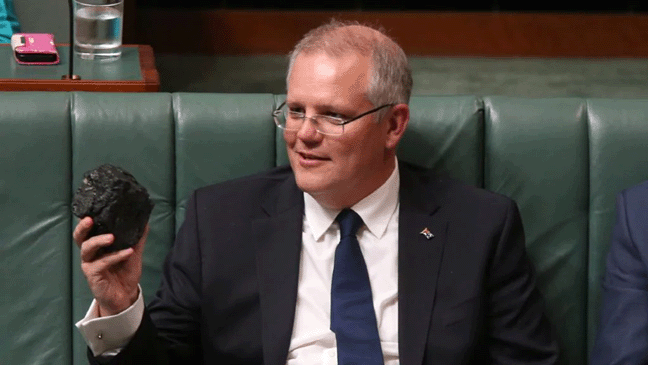 Coalition reveals new emissions reduction measures, including paying polluters to stay under cap
Morrison government also plans to allow businesses to bid for carbon capture projects via the $2.55bn emissions reduction fund Guardian Adam Morton Environment editor @adamlmorton 19 May 2020
Big polluters will be able to earn revenue by emitting less than their allocated limit under new emissionsThe Morrison government has promised new measures to reduce greenhouse gas emissions, including introducing an incentive scheme to allow big industrial polluters to earn revenue by emitting less than an agreed limit.
It also plans to allow businesses to bid for funding from its main climate policy, the $2.55bn emissions reduction fund, for projects that capture emissions and either use them or store them underground.
Angus Taylor, the energy and emissions reduction minister, said the government had agreed to 21 of 26 recommendations in a review headed by former Business Council of Australia president Grant King, who was charged with coming up with new ways to cheaply cut emissions.
The appointment in October of the panel of business leaders and policy experts was not publicly announced, and was seen by observers as an effective concession the emissions reduction fund, now rebadged as a climate solutions fund, was failing to cut national pollution………
Recommendations agreed by the government included allowing carbon capture and storage projects to qualify under the fund, a step the government said it had began consulting with industry on last month.
In a shift likely to be criticised by clean energy advocates, the government gave in-principle support for two agencies, the Australian Renewable Energy Agency (Arena) and the Clean Energy Finance Corporation (CEFC), to be given a “technology neutral remit” to support “the widest possible range of technologies that reduce emissions”. The Greens previously accused the government of planning changes to the CEFC to allow it to fund more fossil fuel projects……
Recommendations agreed by the government included allowing carbon capture and storage projects to qualify under the fund, a step the government said it had began consulting with industry on last month.
In a shift likely to be criticised by clean energy advocates, the government gave in-principle support for two agencies, the Australian Renewable Energy Agency (Arena) and the Clean Energy Finance Corporation (CEFC), to be given a “technology neutral remit” to support “the widest possible range of technologies that reduce emissions”. The Greens previously accused the government of planning changes to the CEFC to allow it to fund more fossil fuel projects…….https://www.theguardian.com/environment/2020/may/19/coalition-reveals-new-emissions-reduction-measures-including-paying-polluters-to-stay-under-cap
New climate models suggest that Australia could reach 7C temperature rise by 2100
Just how hot will it get this century? Latest climate models suggest it could be worse than we thought, The Conversation, May 18, 2020 , Michael Grose, Climate Projections Scientist, CSIRO, Julie Arblaster, Associate Professor, Monash University Climate scientists use mathematical models to project the Earth’s future under a warming world, but a group of the latest models have included unexpectedly high values for a measure called “climate sensitivity”.
Climate sensitivity refers to the relationship between changes in carbon dioxide in the atmosphere and warming.
The high values are an unwelcome surprise. If they’re right, it means a hotter future than previously expected – warming of up to 7℃ for Australia by 2100 if emissions continue to rise unabated.
A Covid-19 Green Recovery for Australia
Seizing the moment: how Australia can build a green economy from the Covid-19 wreckage, As the government prepares plans for economic recovery, investors and green groups alike say this is a once-only opportunity to move towards zero emissions
This is the first a new series, The Green Recovery, looking at the environmental challenges of a post-pandemic world, Guardian, by Adam Morton 13 May 20 There is a growing case that recovery from the coronavirus offers Australia a chance to succeed where it has failed for more than a decade: to break away from the climate wars and head in a new direction.
Here and overseas, the idea of helping jumpstart an economic rebuild after the pandemic-forced shutdown by also tackling the other great existential challenge of the time is gaining currency across the political spectrum.
It has been supported not just by climate activists and conservationists, but by industry, banks, energy companies, unions and major investors.
Kristalina Georgieva, the head of the International Monetary Fund, articulated the push in late April while addressing the heads of 30 countries at the annual Petersberg Climate Dialogue. She rejected the suggestion that the health crisis and the economic crash caused by the “great lockdown” that followed meant steps to fight the climate crisis should be paused.
“Nothing is further from the truth,” she said. “We are about to deploy a massive fiscal stimulus which can help us address both crises at the same time.
“If this recovery is to be sustainable – if our world is to become more resilient – we must do everything in our power to promote a green recovery. In other words, taking measures now to fight the climate crisis is not just a ‘nice-to-have’. It is a ‘must-have’ if we are to leave a better world for our children.”
Implicit in Georgieva’s call is that this may be a one-off opportunity to reduce greenhouse gas emissions and avoid what scientists warn would be a catastrophe for vast swathes of the planet.
Others agree. The German government has called for recovery programs to invest in future-proof jobs that would cut emissions, rather than return to business as usual. Britain has proposed an accelerated take-up of green technologies, saying it could have a profound impact on “our societies’ future sustainability, resilience and, ultimately, wellbeing”.
The idea of a green stimulus has been supported by governments in countries as diverse as Pakistan, Portugal, Canada and the United Arab Emirates, backed by major business energy giants including BP and Shell, and promoted by the World Bank, which has published a series of blog posts with detailed suggestions of how to respond.
Significant money supports this stance. Global investor groups representing members responsible for more than $55tn in assets warned governments to avoid focusing on short-term, big-emitting projects when backing clean growth, which could create jobs while improving things that have a less obvious monetary value – such as clean air. Again, the opportunity borne from crisis was central to the message. “The path we choose in the coming months will have significant ramifications for our global economy and generations to come,” the groups said in a statement……
States lead, federal government drags its feet
In Australia, the discussion about a green recovery did not begin as urgently as elsewhere, reflecting perhaps the country’s notoriously difficult climate politics and a media tendency to treat climate as a second-order issue unless it is the subject of a political fight.
That began to change last week. Industry groups the Smart Energy Council and Clean Energy Council hosted online summits on green recovery themes with attendances in the thousands. Speaking at both, Innes Willox, the chief executive of the Australian Industry Group, said recovery from the Covid-19 pandemic and setting a path for net zero were overlapping issues that should be dealt with together to boost growth.
The AIG is among a number of Australian interest groups, research organisations and experts working on what a sustainable rebuild could look like, built on evidence that renewable energy is now the cheapest source to invest in.
Just as striking as Willox’s call was that, across the two summits, every state and the ACT was represented either by a premier, energy minister or, in Tasmania’s case, state-owned clean energy agency. Queensland’s Annastacia Palaszczuk spoke about the potential to develop a battery manufacturing industry and claimed green hydrogen resources would eventually surpass the state’s liquefied natural gas exports. South Australia’s energy minister, Dan van Holst Pellekaan, praised his Labor predecessors for helping develop the state into a world leader in renewable energy generation (while taking a swipe at them over cost) and said he hoped the state would run on 100% clean electricity before 2030.
Fellow Liberal Matt Kean, from New South Wales, said his government was considering its electricity strategy and net zero plan in the wake of the pandemic to see what measures could be brought forward to support the economy. He said they would be subject to three tests: “Will they deliver decarbonisation? Will they deliver jobs? And will they deliver faster economic growth?”
On Thursday, the Tasmanian Liberal government went further, launching a draft renewables energy action plan for reaching 200% renewable energy generation by 2040, a goal that means the creation of a vast clean export industry. The state’s energy minister, Guy Barnett, said the shift to renewable energy was more important than ever in the wake of the pandemic.
“As a result of Covid-19, there are unprecedented challenges facing Australian households and industries. By seizing Tasmania’s immense potential, renewable energy can grow our economy, attract investment, create jobs and support Australia’s transition to renewable supply,” he said………
Practical solutions on the horizon
Australia listened to the science on coronavirus. Imagine if we did the same for coal mining
 Australia listened to the science on coronavirus. Imagine if we did the same for coal mining The Conversation, Matthew Currell Associate Professor in Environmental Engineering, School of Engineering, RMIT University, Adrian Werner, Professor of Hydrogeology, Flinders University, Chris McGrath, Associate Professor in Environmental and Planning Regulation and Policy, The University of Queensland, Dylan Irvine, Senior lecturer in hydrogeology, Flinders University -12 May 20,
We interrogated scientific evidence available to governments and Adani over almost a decade. Our analysis shows governments failed to compel Adani to fully investigate the environmental risks posed by its water plans, despite concerns raised by scientists.
There is also evidence the government approval decisions were influenced by the political climate and pressure exerted by members of government.
Our findings come as the Morrison government conducts a ten-yearly review of the Environmental Protection and Biodiversity Conservation (EPBC) Act. It is critical these laws – Australia’s most important environmental legislation – are reformed to put rigorous, independent science at the core.
Advice ignored
In mid-2019, the federal and Queensland governments approved groundwater management plans for Adani’s Carmichael coal mine. It granted the company unlimited access to groundwater in central Queensland’s Galilee Basin.
We and other experts warned the mine threatens to damage aquifers, rivers and ecosystems – in particular, the Doongmabulla Springs Complex. This system contains more than 150 wetlands which support rare plant communities found nowhere else on earth.
The springs are of major cultural significance to the Wangan and Jagalingou people.
We analysed the full suite of evidence on the groundwater plans from agencies and scientists with expertise in hydro-geology. The evidence, provided to state and federal environment ministers, spanned almost a decade and included at least six independent scientific reviews.
The evidence highlighted major shortcomings, and gaps in knowledge and data. For example – ………
Once-in-a-decade chance
Our analysis exposes flaws in how evidence informs major government decisions. It also shows why reform of the Environmental Protection and Biodiversity Conservation Act is so urgent.
The laws are currently under review. Many reputable organisations and scholars have proposed ways the legislation can better protect the environment, increase its independence from government and put science at the core.
Independent scientific committees, such as the federal IESC, are commissioned by governments to advise on mining proposals. We suggest such committees be granted greater powers to request specific data and studies from mining companies to address knowledge gaps before advice is issued.
Alternatively – or in addition – a new independent national commission should be established to oversee environmental impact assessments conducted by mining and other development proponents.
This commission should be empowered to interrogate and resolve key scientific uncertainties, free from political interference. Its recommendations to government should take into account a wide range of expert advice and public feedback.
This would not only improve the evidence base for decisions, but may also speed up assessments – ensuring more effective resolution of uncertainties that often lead to protracted conflict and debate about a mine’s impacts.
Such reform is urgently needed. Australia is suffering unprecedented water stress, environmental harm and declining trust in government.
Australian governments listened to the science when it needed to flatten the curve of COVID-19. The same approach is needed if we’re to preserve the places we love and the ecosystems we depend on. https://theconversation.com/australia-listened-to-the-science-on-coronavirus-imagine-if-we-did-the-same-for-coal-mining-138212
Coronavirus shows that international co-operation is essential, as it is for climate action
 Coronavirus hasn’t killed globalisation – it proves why we need it The
  Conversation Sunil Venaik Associate Professor of International Business, The University of Queensland, May 6, 2020 “………………… One person practising social distancing during the pandemic might think their effect is negligible. But coronavirus is highly infectious: on one estimate, a single person with coronavirus could eventually infect 59,000 others.
Similarly, many countries seek to avoid responsibility for taking climate action by claiming their contribution to the global problem is small. The Australian government, for example, repeatedly points out it contributes just 1.3% to the world’s emissions total.
But on a per capita basis, Australia is one of the world’s highest emitters. And as a rich, developed nation, we must be seen to be taking action on cutting emissions if poorer nations are expected to follow suit. So actions Australia takes will have major global consequences.
Act quickly
In the two months it took the virus to spread from China and become a global pandemic, other nations could have readied themselves by amassing test kits, ventilators and personal protective equipment. But many nations did not adequately prepare.
Of course the world has had a far longer time to adapt to and mitigate climate change. The time lag between emissions and their consequences is years, even centuries. There has been ample opportunity to take progressive and thoughtful corrective action against climate change. Instead, the crisis has been met with complacency.
Challenges ahead
As others have noted, a major supplier of swabs used for coronavirus testing is based in Italy, and a German company is a primary supplier of chemicals needed for the tests. Many counties rely on foreign suppliers for ventilators, and an Indian firm – the world’s largest vaccine manufacturer – says once a COVID-19 vaccine is ready for mass production, it will supply large volumes to the world, at low cost.
It’s clear that international cooperation is critical for effective mass testing and treatment for the virus. Nations must work together to improve production and distribution, and resources must be shared.
So too is cooperation needed to deal with the worldwide economic downturn. The global recovery will be long and slow if nations adopt sovereign mindsets, putting up barriers to protect their own economies.
With the coronavirus as with climate change, working together is best way to secure humanity’s safety, health and well-being. https://theconversation.com/coronavirus-hasnt-killed-globalisation-it-proves-why-we-need-it-135077
Australia’s govt betting on a fossil-fuel led recovery – despite expert advice on renewable energy
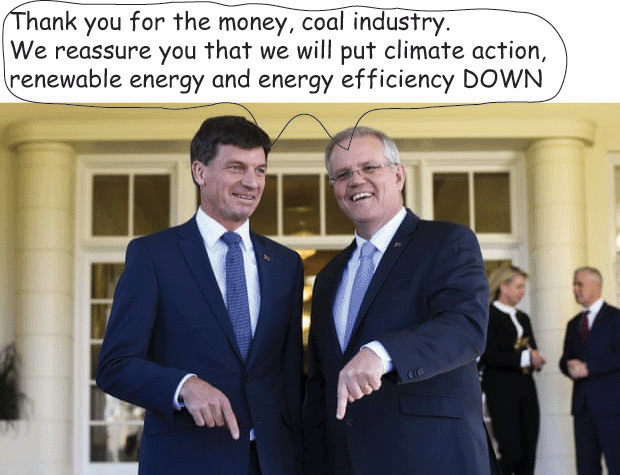 Trouble with gas: the Coalition is betting on the fossil fuel for recovery – but the sums don’t add up
The Australian government says gas is ‘essential’, but the global view is it’s the second-least desirable source of electricity Guardian, Adam Morton Environment editor @adamlmorton, Sun 3 May 2020 The agency that runs Australia’s electricity last week gave its verdict on how to deliver what would have seemed fanciful not that long ago – a power grid that within five years should at times be able to run on 75% wind and solar energy.
The Australian Energy Market Operator delivered a report on integrating renewable energy into the system with an optimistic message.
As described by its chief, New Yorker Audrey Zibelman, the technical capacity was already there, but markets and regulations would have to be adjusted. There were no “insurmountable reasons” why the grid could not take even higher levels of renewables, as it will need to for Australia to meet the Paris agreement goal of zero greenhouse gas emissions.
The minister in charge of both energy and cutting emissions, Angus Taylor, chose a different emphasis.
In a statement issued as the study was released, Taylor said it had highlighted the challenges of increased amounts of solar and wind given the system needed continuous inertia – support from constantly running “synchronous generation” – to ensure grid stability. He suggested that inertia could come from gas-fired power.
The market operator’s report does not mention gas generation, but the fossil fuel – often described as having half the emissions of coal, though recent studies have suggested it could be much more – is clearly on Taylor’s mind. A few days earlier he had given interviews to Nine newspapers to support the idea of a “gas-fired recovery” from the Covid-19 pandemic, suggesting it may be a focus of future economic stimulus measures……..
Andrew Grant, head of oil, gas and mining with London-based financial thinktank Carbon Tracker, says the global view of gas has flipped from it being seen as a cleaner fuel than coal, to it being the second-least desirable source of electricity. He points to analysis by the International Energy Agency that found global gas-fired power generation must begin to decline later this decade under a sustainable development scenario. “Better than coal is not exactly a ringing endorsement,” Grant says. …….
t there is little evidence that the Australian electricity grid will need more gas power. Last year, it provided about 9% of generation. The market operator assessment suggested this could fall to near zero in the second half of this decade before returning in a much smaller amount – less than a third of what it is now – in the 2030s if the grid was to run at lowest cost……
Simon Holmes à Court, senior advisor to the Climate and Energy College at the University of Melbourne, says the services needed for a secure power grid are increasingly available from sources other than gas, including government-backed large batteries and potentially through adjustments at wind or additions at solar farms……… https://www.theguardian.com/australia-news/2020/may/03/trouble-with-gas-the-coalition-is-betting-on-the-fossil-fuel-for-recovery-but-the-sums-dont-add-up
Why does the Morrison govt hear the experts on coronavirus, but ignore the experts on climate change?
|
Perhaps we should ditch the word entirely, and with it the forest of feel opinions about what governments “must” do to advance an author’s previously-held ideological positioning in the post-corona world. Imagine if we took just two lessons from the way Australian governments responded to the coronavirus: that good decisions are made when they consider the evidence and the best available expert advice; and that policy-making can accommodate reasonable differences of opinion, without becoming a “war”…… For six years now leading business, environmental, investor, union, farming and social welfare groups have been trying, largely in vain, to create a space for a sensible discussion about global heating, and to give Australian politicians a way to retreat from the self-defeating culture war that has scuppered all attempts at policy. They wouldn’t put it this way, but in effect the environmentalists, desperate for Australia to make some meaningful move towards reducing emissions, and the business groups, desperate for some kind of investment certainty, have been trying to save Australia’s politicians from themselves. The starting point for the Australian Climate Roundtable’s deliberations is that Australia needs to reach net zero emissions, and that delaying action just increases the cost of reaching that goal. Unremarkable propositions in any fact-based forum, but in some Coalition circles, still close to heresy. Now the roundtable, including its business members, argues that this post-corona reconstruction is a chance to speed up decarbonising the economy. The Business Council of Australia chief executive, Jennifer Westacott, argued in an opinion piece that the post-corona discussion should divest itself of “ideological constraints”. “In resuscitating our economy, we can tackle some of our most vexed problems. Every dollar we invest in energy should be a dollar towards a lower carbon economy and lower energy bills,” she wrote. And expert evidence about what might be possible has been flooding in by the day. The Australian Energy Market Operator this week released its long awaited “renewable integration study”, which found Australia could accommodate levels of up to 75% “instant” penetration of wind and solar in its main grid by 2025 – that we have the know-how, but need to update market and regulatory settings….. And then there was the advice from the International Energy Agency this week that renewable electricity will be the only energy source resilient to the biggest global energy shock in 70 years, triggered by the pandemic. …. – the latest Climateworks report released earlier this month found that net zero emissions by 2035 is possible in Australia, using technologies that are mostly already mature and available. The CSIRO’s roadmap released last year found there was no trade-off between economic growth and transitioning to zero emissions, and in fact strong action could lead to GDP growth, an increase in real wages and net zero emissions by 2050. …… https://www.theguardian.com/environment/commentisfree/2020/may/02/australia-listened-to-the-experts-on-coronavirus-its-time-we-heard-them-on-climate-change |
|

Govt scheme to underwrite gas, hydro and coal power needs investigation – Zali Steggall
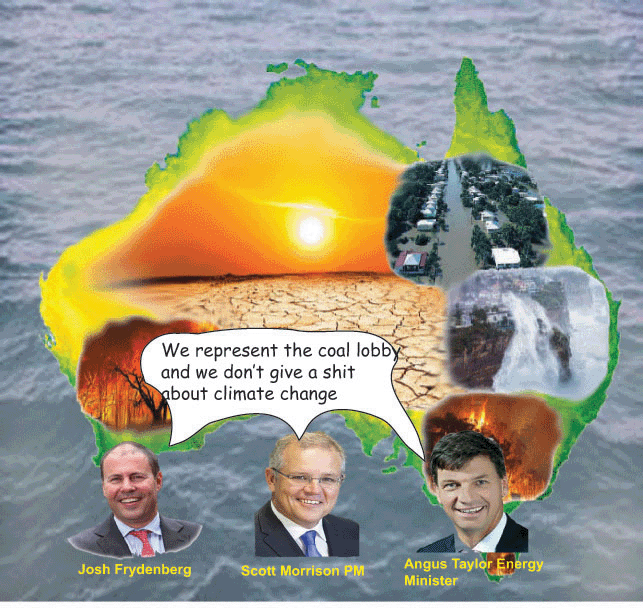 Zali Steggall calls for investigation of Coalition plan to underwrite gas, hydro and coal power
Independent MP says scheme lacks transparency and government has no authority to introduce it, Guardian, Adam Morton Environment editor @adamlmorton, Mon 27 Apr 2020 Independent MP Zali Steggall has asked the auditor general to investigate a Morrison government scheme to underwrite gas, hydro and coal power, saying it lacks transparency and citing legal advice that the Coalition had no constitutional or legislative authority to introduce it.
Announced in late 2018 after the government abandoned Malcolm Turnbull’s proposed national energy guarantee, the underwriting new generation investment (Ungi) scheme promises public support for new dispatchable power generation projects to increase competition in the electricity grid. Twelve projects have been shortlisted, including six pumped hydro plants, five gas generators and an upgrade to the Vales Point coal-fired power plant.
Steggall has written to the auditor general, Grant Hehir, asking him to consider investigating the program “as a matter of priority”. Her letter refers to research by The Australia Institute, a progressive thinktank, suggesting the program has no constitutional or legislative standing, no guidelines or criteria to assess projects, and its development and implementation did not follow a clear process.
She said despite these apparent flaws the government had shortlisted projects, started “advanced negotiations” to support gas-fired plants in Victoria and Queensland and entered a memorandum-of-understanding with the New South Wales government to support three projects in the state. ……
Steggall, who entered parliament last year on a climate action platform, said the focus on fossil fuels was questionable and there was little visibility of how and why the projects shortlisted for underwriting had been chosen….
“There’s just no transparency or accountability around this,” Steggall told Guardian Australia. “We’ve seen what happened with sport rorts. We’re talking about commonwealth money at a time when we know the economy has taken a hit due to coronavirus, and I think it should be properly investigated.”……https://www.theguardian.com/australia-news/2020/apr/27/zali-steggall-calls-for-probe-of-coalition-plan-to-underwrite-gas-hydro-and-coal-power
Australia’s climate experts urge govt to use rebuilding economy to combat global heating.
|
Climate scientists say coronavirus could be Australia’s golden opportunity— SBS News
Climate experts say the way Australia chooses to rebuild its economy after the COVID-19 pandemic will seal its climate change fate. BY CLAUDIA FARHART, 22 APR 20
Australian climate scientists are urging the government to recognise the similarities between the COVID-19 pandemic and climate change, arguing they could be the key to stopping global warming. Professor Matthew England from the University of New South Wales’ Climate Change Research Centre said acting early, listening to expert advice and mitigation were the keys to solving both crises.
While the coronavirus is posing a serious risk to millions of lives right now, Professor England said climate change will threaten even more lives over the next five decades. “We’ve seen all around the world that the nations ignoring the best advice of their scientists are suffering the most, and climate change is no different,” he told SBS News. “We have expert reports that have been tabled for the last three or four decades, but many nations are ignoring those, so I think that COVID-19 provides a wake up call for what happens if you do ignore the best scientific advice.”………
While these significant improvements in air and water quality are showing people around the globe what is possible when emissions are reduced, Professor England said it is not time to celebrate yet. Instead, he says Australia needs to recognise the opportunity COVID-19 presents to rebuild in a more environmentally friendly way. “This is going to be a major stall in the global economy, but out of this pandemic we’re certainly going to see a huge economic boom and it’s going to be a real chance to make that boom a low-carbon boom,” he said.
“To solve climate change, we actually need large scale innovation and the huge economic boom that is poised to happen out of this pandemic.” ‘Fight or flight’While COVID-19 has already killed at least 90,000 people, the World Health Organisation has warned that climate change will kill as many as 250,000 people per year by 2030………https://www.sbs.com.au/news/climate-scientists-say-coronavirus-could-be-australia-s-golden-opportunity |
|
PLanning for waterways – a vital need, as Australia’s river systems are affected by global heating
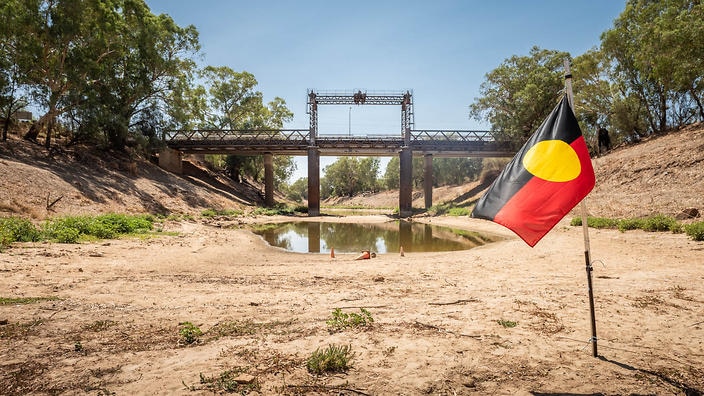 Australia’s inland rivers are the pulse of the outback. By 2070, they’ll be unrecognisable, The Conversation, Australia’s inland rivers are the pulse of the outback. By 2070, they’ll be unrecognisable, The Conversation, April 21, 2020 Zacchary Larkin, Postdoctoral Researcher in Environmental Sciences, Macquarie University, Stephen Tooth, Professor of Physical Geography, Aberystwyth University, Timothy J. Ralph, Senior Lecturer in Environmental Sciences, Macquarie UniversityInland Australia’s complex system of winding rivers, extensive wetlands, ancient waterholes and seemingly endless parched floodplains are rarely given more than a passing thought by many Australians who live on the coastal fringes. Yet these waterways are lifelines along which communities, agriculture and trade have flourished. Etched into the psyche of regional Australia, these river systems are the pulse of the outback. Before asking a local how things are going, peek over the bridge in town for an indication. When relaxing in the shade of an old river red gum alongside one of Australia’s lazy inland rivers, it’s natural to think of them as timeless and resilient to environmental change. Yet, these rivers evolved over millennia and continue to change over years and decades. And we already know from previous studies that future climate change is likely to reduce stream flow and water availability in drylands around the world. But what our new research has shown, for the first time, is that these declines in stream flow may trigger a dramatic change in the physical structure and function (the geomorphology) of Australia’s inland rivers. Meandering rivers and flat, wide floodplainsThe physical structure of a river depends on how much water flows through it, and the sediment that water carries. Reductions in water flow – as expected due to climate change – can lead to a build-up of sediment downstream. In extreme cases, this “silting up” can cause complete disintegration of river channels, where water flows out across the floodplain. Not all rivers are alike, and the rivers of the Murray-Darling and Lake Eyre basins (covering 1.8 million square kilometres) are particularly diverse. Many of these rivers and wetlands are internationally recognised for their hydrological and ecological importance. They range from large meandering rivers swollen by seasonal spring flows (the Upper Murray, Mitta Mitta, Kiewa, and Ovens rivers), to rivers that progressively get smaller until they become exhausted on flat, wide floodplains and disintegrate into large, boom-and-bust wetlands (the Lachlan, Macquarie, and Gwydir rivers). In the drier areas of central Australia, rivers typically persist as a string of isolated waterholes for years at a time, occasionally punctuated by very large floods (Warrego, Paroo, Diamantina, and Cooper Creek). A sobering futureFor Australia’s inland rivers, the average dryness, or “aridity”, of the catchment is the best predictor of what the overall structure and function of the rivers within look like. Compiling a range of climatic data, we modelled aridity for the Australian continent in 2070 under a relatively moderate climate change scenario. The results are sobering. Over the next 50 years, the arid zone – containing the areas of true desert – is projected to expand well into the Murray-Darling Basin and almost entirely envelope the Lake Eyre Basin. At the same time, the humid and dry subhumid fringes around the Great Dividing Range and coastal areas are expected to contract. This is concerning because the relatively wet western slopes of the Great Dividing Range are where many inland Australian rivers begin, with most of their water sourced in these smaller sub-catchments. Evolution of our inland riversThe impact of this projected drying pattern on Australia’s inland rivers is expected to be profound……. A parched futureWhile our research hasn’t investigated the potential ecological, socio-economic or cultural effects of structural changes, we can expect them to be very significant, and potentially irreversible. Many of Australia’s native aquatic and dryland flora and fauna are adapted to a highly variable climate regime, but there are limits beyond which these ecosystems cannot recover or survive. For example, seeds and invertebrate eggs can survive many years buried in dry soil waiting for a flood, but if water doesn’t come, eventually they won’t be viable. What’s more, extracting too much water from our inland river systems for agriculture or other uses will exacerbate the threats posed by a drying climate. Given the complexity and tensions surrounding water use and water sharing in Australia’s inland rivers, particularly in the Murray-Darling Basin, understanding how these critical systems might respond in the future is now more important than ever. Water is one of the most contested resources in Australia, and it’s the fundamentally important river and wetland ecosystems and agricultural industries that will bear the brunt of a drying climate. To make sure outback communities can continue to survive, it’s vital we protect their lifeline. Water resource planning must include consideration of climate change, as the projected changes will likely increase pressure on already vulnerable systems. https://theconversation.com/australias-inland-rivers-are-the-pulse-of-the-outback-by-2070-theyll-be-unrecognisable-136492 |
|
Bushfire Survivors for Climate Action taking legal action against NSW Environment Protection Authority
 ‘Kick them into action’: Fire group takes EPA to court over climate, SMH, By Peter Hannam, April 20, 2020 Lisa Roberts spent 25 years building a native plant business that was as sustainable as they come, with off-grid solar power and water harvesting, only to see it go up in flames in the recent bushfires.Her home and nursery in Wandella in southern NSW reduced to rubble, Ms Roberts fled to Canberra, powerless to act as fires threatened another venture in nearby Pialligo. Living in the smoke-choked capital also damaged her vocal cords, which have still not recovered. ‘Kick them into action’: Fire group takes EPA to court over climate, SMH, By Peter Hannam, April 20, 2020 Lisa Roberts spent 25 years building a native plant business that was as sustainable as they come, with off-grid solar power and water harvesting, only to see it go up in flames in the recent bushfires.Her home and nursery in Wandella in southern NSW reduced to rubble, Ms Roberts fled to Canberra, powerless to act as fires threatened another venture in nearby Pialligo. Living in the smoke-choked capital also damaged her vocal cords, which have still not recovered.
“A part of me totally rages at the world for its totally inadequate response to climate change,” Ms Roberts said. “Everybody’s safety is at risk.” That anger is being now channelled into a legal challenge against the NSW Environment Protection Authority. Bushfire Survivors for Climate Action, of which Ms Roberts is a member, began the suit last week with the NSW Environmental Defenders Office “to kick [the EPA] into action”, she said. EDO chief executive David Morris said the case, in the Land and Environment Court, would seek to force the EPA, which does not have a climate policy, to use its powers to keep communities safe from the increasingly severe impacts of a warming world. Mr Morris said the EPA was chosen as a test case among similar agencies nationally in part because of a section of the Protection of the Environment Operations Act 1997. That section requires the agency to “develop environmental quality objectives, guidelines and policies to ensure environment protection”. “It’s an opportunity for the EPA to recognise they have a legal obligation to take action,” he said. “They should have a policy and a plan to address the greatest threat to the environment.”…….. https://www.smh.com.au/environment/climate-change/kick-them-into-action-fire-group-takes-epa-to-court-over-climate-20200418-p54kzl.html
|
|
Amid climate change threat to the Murray Darling river system, the States haggle
|
No water, no leadership: new Murray Darling Basin report reveals states’ climate gamble, The Conversation
April 17, 2020 Daniel Connell, Research Fellow, Crawford School of Public Policy, Australian National University A report released today investigating how states share water in the Murray Darling Basin describes a fascinating contrast between state cultures – in particular, risk-averse South Australia and buccaneering New South Wales. Perhaps surprising is the report’s sparse discussion of the Murray Darling Basin Plan, which has been the focus of irrigators’ anger and denunciation by National Party leaders: Deputy Prime Minister Michael McCormack and NSW Deputy Premier John Barilaro. In general terms, the Murray Darling Basin Plan was originally intended to make water management in the Murray Darling Basin more environmentally sustainable. Its critics see it as a restraint on development, and complain it has taken water away from irrigators during a time of extreme drought. In response to McCormack and Barliaro’s criticisms of the plan in late 2019, federal water minister (and senior National Party figure) David Littleproud commissioned Mick Keelty as Interim Inspector General of MDB Water Resources. For the new report, Keelty investigated the changing distribution of “inflows” – water flowing into the River Murray in the southern states. Climate change has brought the inflow to just a trickle. This dramatic reduction over the past 20 years is what Keelty has described as “the most telling finding”. He also investigated the reserve policies under which the three states choose – or don’t choose – to hold back water in Hume and Dartmouth Dams to manage future droughts. Keelty says there’s little transparency or clarity about how much water states are allocated under the Murray Darling Basin Agreement (the arrangement for sharing water between the states which underpins the Basin Plan). This failure in communication and leadership across such a vital system must change. Sharing water across three statesOne major finding of Keelty’s inquiry is that the federal government has little power to change the MDB Agreement between the three states, which was first approved in 1914-15. Any amendment requires the approval of all three governments. To increase the volume of water provided to NSW irrigators, South Australia and Victoria would need to agree to reduce the volumes supplied to their own entitlement holders. That will not happen. Why has the agreement lasted so long? Over the past century it has proved robust under a wide range of conditions. Its central principle is to share water with a proportion-of-available-flow formula, giving each state a percentage of whatever is available, no matter whether it’s a lot, or not much. After receiving its share of the River Murray flows, each state is then free to manage its allocation as it wishes. …… Reliability of water supply What’s more, each state makes its own decision about how its state allocation is shared between its entitlement holders (95% of water goes to irrigators the rest supplies towns and industry). South Australia chooses to distribute a much smaller proportion to its entitlement holders than New South Wales. It also restricted the number of licences in the 1970s. That combination ensures a very high level of reliability in supply. Victoria took a similar approach…….. When climate change is taken into account these differences between the three states result in their irrigators having significantly different risk profiles. The climate change threat to the basin is very realDespite climate denial in the National Party, the threat is very real in the MDB. The report describes a massive reduction in inflows over the past 20 years, approximately half compared with the previous century. One drought could be an aberration, but two begins to look like a pattern. The report also suggests that in many cases irrigator expectations of what should be normal were formed during the wet period Australia experienced between the second world war and the 1990s. Added to this have been business decisions by many irrigators to sell their entitlements and rely on the water market, a business model based on what now seems like unrealistic inflow expectations. In effect, successive New South Wales governments – a significant part of the state’s irrigation sector in the southern part of the state and the National Party – gambled against the climate and are now paying a high price. In desperation, they’re focusing on alternative sources. This includes the water in Hume and Dartmouth held under the reserves policy of the two other states; environmental entitlements managed by the Commonwealth Environmental Water Holder; the very large volume of water lost to evaporation in the lower lakes in South Australia; and the possibility of savings resulting from changes to management of the system by the Murray-Darling Basin Authority. Failure in leadership and communicationFor reasons already outlined, the state reserves policy is not likely to change and use of the Commonwealth Environmental Water Holder environmental water entitlements would not be permitted under current legislation. Management of the lower lakes is being reviewed through another investigation so is not discussed in the report. The report also states that management of the MDB Authority is subject to regular detailed assessment by state governments, and they have assessed its performance as satisfactory. However the report was critical of the performance of all MDB governments with regard to leadership and communications suggesting that failures in those areas were largely responsible for the public concern which triggered its investigation. https://theconversation.com/no-water-no-leadership-new-murray-darling-basin-report-reveals-states-climate-gamble-136514 |
|
Study finds that New South Wales rivers, lakes and lagoons are warming twice as fast as ocean
|
NSW rivers, lakes and lagoons warming twice as fast as ocean, finds 12-year study ABC
By Amy Greenbank 16 Apr 20, Dominic Boyton’s Merimbula oyster farm in southern NSW has been in the family for four decades.
His father passed it onto him seven years ago but he’s worried about its future viability given the latest findings from the University of Sydney (USYD). Key points:
Researchers discovered the state’s coastal rivers, lakes and lagoons were warming twice as fast as the ocean. The average temperatures in those marine ecosystems were up 2.16 degrees Celsius, making breeding harder for some aquatic life. “Warmer waters could mean we’ll see oysters disappearing up the coast or a new outbreak of algae blooms and disease we haven’t seen before,” Mr Boyton said. Oysters, he said, were sensitive to heat and because they were difficult to relocate it put growers like him in a vulnerable position. The world-first study also posed a big problem for the state’s multi-million-dollar fishing and aquaculture industry, which underpinned the economies of many coastal towns. Marine biologist Elliot Scanes analysed 12 years of data from 166 NSW estuaries and found the composition of those waterways was shifting. “We didn’t expect it to be so fast,” he said.
Acidity also rose in all waterways and at the same time creeks and lagoons were becoming less salty. “This study is the first major evidence we have to show estuaries are changing on this scale,” Dr Scanes said. The marine biologists said coastal ecosystems were being forced to adapt and there would be winners and losers. While some species of fish and prawns are likely to be more resilient, shellfish like oysters could be badly affected…… https://www.abc.net.au/news/2020-04-14/nsw-inland-water-ways-warming-twice-rate-of-ocean-study-finds/12147462 |
|
1 This month

of the week – Australians for War Powers Reform (AWPR)
To see nuclear-related stories in greater depth and intensity
 Antinuclear