Dirty deed: Dutton’s nuclear scheme locks in 20 years of higher climate pollution

February 24, 2025 AIMN Editorial, Climate Council https://theaimn.net/dirty-deed-duttons-nuclear-scheme-locks-in-20-years-of-higher-climate-pollution/
Federal Opposition leader Peter Dutton is keeping Australians in the dark about his risky nuclear scheme. An explosive new report from Australia’s independent Climate Change Authority reveals the Federal Coalition’s nuclear scheme would see climate pollution blow out for more than 20 years, leading to up to 2 billion tonnes of additional climate pollution by 2050.
The Climate Council says Mr Dutton’s nuclear scheme risks locking Australia into worsening climate catastrophes, with no credible plan to cut pollution from coal, oil or gas.
Climate Council CEO Amanda McKenzie said: “Mr Dutton knows most Australians want their government to be making progress on climate action. But modelling from the Climate Change Authority shows his nuclear scheme would massively drive up climate pollution and put Australia in breach of its own national law, and international law. Mr Dutton himself has warned that failing to meet our global climate commitments would hurt our own economy and cost Australians jobs.
“The Coalition is out of step and out of touch with the majority of everyday Australians, who overwhelmingly voted for climate action at the last election and want to ditch climate pollution for clean power.”
Climate Councillor Greg Bourne said: “The Federal Coalition has spent the past three years actively blocking policies that cut climate pollution in our electricity, industrial and transport sectors, and now they’re trying to sell an energy scheme to Aussies that could add more than two billion tonnes of pollution and blow up our targets as a credible climate policy.
“Records show the Federal Coalition voted against capping pollution from big industrial polluters. They opposed cleaner and more efficient vehicles being made available to Australians by voting against the National Vehicle Efficiency Standard. And they opposed key policies for making clean energy more accessible, affordable and reliable like the Capacity Investment Scheme. The Coalition’s policies obstruct climate progress.”
Climate Council CEO Amanda McKenzie said: “Dutton’s risky nuclear scheme would burden our kids with more unnatural disasters, rising pollution and higher power bills. All Australians deserve a bright future. We need proven solutions like renewable power, backed by big batteries, that cut pollution now, not a reckless delay that locks us into climate catastrophe.”
Peter Dutton’s nuclear accounting trick #3: Hide the costs of keeping coal

Tristan Edis, Feb 21, 2025, https://reneweconomy.com.au/peter-duttons-nuclear-accounting-trick-3-hide-the-costs-of-keeping-coal/
This is part 3 of a five part series of articles examining the four accounting tricks that the Liberal-National Party employed in the costing of their energy plan to slow the roll-out of renewables and rely instead on nuclear power. The first article, which provides the overarching context is published here. Part 2 is here. Part 3 is here.
These four accounting tricks act to mislead voters that the Liberal-National Party could lower energy bills through a shift to nuclear when in reality it is likely to increase power bills.
This article focuses on accounting trick three of four: Hide most of the cost of replacing coal with nuclear to outside the time period considered in the costing.
It’s very important to note that the Coalition’s costing of its electricity system cuts out in the year 2051. It only accounts for costs incurred between 2025 to 2051 and anything after that date is ignored.
The LNP’s claim of a 44% saving does not represent the cost of two alternative systems for achieving near zero emissions once they are both completed to see how nuclear might reduce the cost of the system.
Instead, a heavy influence on the cost estimates in the model is the degree to which the scenarios can delay incurring costs in replacing the old, highly polluting and likely to be increasingly unreliable coal power plants.
How is this a problem?
Coal power stations are much like a car – they are exposed to extreme heat, pressure and general mechanical stress that means they wear out and become unreliable as they get old. That’s physics.
Many of us will have experience with an old car that has got to the point where it increasingly encounters mechanical problems and the mechanic is warning us that it really needs some major repairs but these would cost more than the car is worth.
At this point many of us can be tempted to take a gamble by putting off such repairs, and go for temporary, less costly patch-ups and hope the car keeps going. That will be a lot cheaper than buying a new car, at least for as long as we can keep the old car going. But it comes with the risk that it could leave us stranded with a broken-down car at an extremely inconvenient point in time and even pose a danger to our safety and that of others.
The Coalition’s modeled plan chooses to take that gamble with our electricity system. But it doesn’t account for the risks and potentially extreme costs this involves if the gamble goes wrong.
Clare Savage, the head of the Australian Energy Regulator has repeatedly warned that failing to replace aging coal plants risks both power system reliability and also affordability observing, “Coal can’t last until you have nuclear power available.”
The bulk of Australia’s operating coal power stations commenced operation more than 30 years ago. By the 2030’s these power stations, particularly in NSW and Victoria, will be close to, or exceeding, the point when coal power stations are typically retired from service. At this point they are likely to be increasingly unreliable and suffering from mechanical wear and tear that can even lead to dangerous explosions and fires that pose a serious risk to worker safety.
This is not theoretical – several Australian coal power stations have suffered from explosions and fires over the years. It’s also important to note that coal power stations over the next decade will face a level of output ramping to work around rooftop solar that is far more stressful than Australian coal plants have typically faced in the past.
Unless Peter Dutton has a secret plan to prioritise curtailment of rooftop solar in favour of coal generators, this is likely to get worse over time.
Now, the way that the consultant, Frontier, constructed Dutton’s costing is that they space out the cost of constructing new power stations as an annualised payment – a bit like how you’d purchase a new car not by paying for it upfront but rather by taking out a loan and then paying it back incrementally over time.
Except in this case the annualised payment for a new power station is spaced out over several decades and for nuclear it is 50 years. Meanwhile for the existing, very old power plants the original cost of constructing those plants is omitted from the annualised costs.
By pushing out the point at which they replace the old power stations with new ones until the 2040’s, the Coalition gets to hide much of the cost of the nuclear plants until towards the very back end of the projection period. We’ll still have to pay for these nuclear power stations well after 2051, but that’s conveniently left out of the costing period.
Meanwhile, in the scenario said to represent Labor Policy, the coal-fired power stations are replaced quite quickly, so the cost of the new, replacement power stations is taken into account across almost the entire time period considered in the model.
You can get a glimpse of how this works in a chart the modelling consultant provides of the annualised cost, which is provided below [on original] (they’ve refused to provide the actual underlying numbers in the chart).
The red solid line is the scenario the Liberal Party claims represents its policy. What the red line shows is that annualised costs grow only slightly up until 2039 with the one exception of a blip upward in 2036. But after 2039 costs grow very quickly.
This growth in costs – both the blip in 2036 and the rapid growth from 2040 onwards corresponds exactly to the timing of replacement of the old coal power plants with new nuclear power plants.
The nuclear plants aren’t really delivering any meaningful saving in the unit cost of energy relative to relying on renewables and storage. Instead, the savings are coming from the Liberal Party delaying the point at which the coal power plants are replaced.
No matter which party is in government, physics still takes its toll on power stations and very old ones will need to be replaced. This will incur costs no matter which technologies we chose to go with.
If we choose to take a gamble that we can string out the life of the old coal power stations, we might save some money in the short-run, but if it doesn’t work out the costs to electricity bills will be very severe.
While building power stations is costly, not having enough power stations is far more costly. We can see that cost through the fact that when coal power stations break down unexpectedly when supply is short then electricity prices typically spike to many multiples of the price needed to pay for a new power plant. That is tolerable if it happens only occasionally, but if frequent we would be far better off building the new replacement plant.
This becomes a particularly significant risk if we choose to go down the path of nuclear power stations. This is not just because we’ll have to wait longer for them to be built, but also because the nuclear industry has been hopeless at accurately estimating their construction timeframes and they come in such large chunks of capacity.
If a utility-scale battery plant comes in late it is unlikely to exceed a year delay, and they come in blocks of a few hundred megawatts. But nuclear power stations come in units of at least a thousand megawatts and can be more than 10 years late (as France has just experienced with its most recently built reactor).
This could create a no-man’s land where multiple coal units are repeatedly out of service and unable to provide reliable supply, but no one is prepared to step into the breach to invest in technologies that are reasonably quick to build. That’s because once the nuclear plant is eventually completed, financial returns in these fast-build power plants will be undermined.
Tristan Edis is director of analysis and advisory at Green Energy Markets. Green Energy Markets provides analysis and advice to assist clients make better informed investment, trading and policy decisions in energy and carbon abatement markets.
Carbon time bomb: Dutton’s nuclear plan will blow up Paris and emissions targets, CCA says

ReNew Economy Rachel Williamson, Feb 24, 2025
Choosing a nuclear power future over renewables will blow up Australia’s carbon emissions budget and create a carbon time bomb of up to 2 billion tonnes in extra greenhouse gases by 2050, a new analysis from the federal government’s Climate Change Authority says.
The analysis, released on Monday, poses a grim picture of what the nuclear future, as painted by Opposition leader Peter Dutton and analysed in a controversial and contested Frontier Economics’ report in December, would look like from an emissions perspective.
Extra emissions from the electricity sector alone would spike by a cumulative 1 billion tonnes come 2050, and this number would double when adding emissions from a broader economy unable to use zero-carbon electricity.
Australia would miss its 82 per cent emissions-free electricity target by more than a decade, reaching that target by 2042, and those emissions would also be consistent with global warming of 2.6ºC, rather than the 1.8ºC currently forecast for a renewables-led transition.
It will also ruin short term targets, causing Australia to miss its legislated 43% national emissions reduction target for 2030 by more than five percentage points, and still not achieving this level of reduction by 2035.
The Coalition plans to build nuclear plants at seven sites across Australia for an estimated $331 billion over 25 years. The locations are all old or current coal power plant sites of Mount Piper and Liddell in New South Wales, Loy Yang in Victoria, Tarong and Callide in Queensland, Port Augusta in South Australia, and Collie in Western Australia.
Retaining coal fired power stations to hold space for the first nuclear generators, which would come fully online in the late 2040s, means the worst years for emissions will be 2034-2040……………………………
“What comes next is the fork in the road we are in the middle of. The market knows we are on a renewables road, supported by storage and where needed, gas. The Opposition has proposed a nuclear diversion, which provides a dramatic shift in momentum and direction.”
The former NSW Liberal treasurer says the choice as to which road Australia takes – nuclear or renewables – is now “imminent” but the consequences of that choice can be estimated.
“We will find out soon what Australians think of this proposed change in direction for the country’s energy source. The RBA considers the pressures nudging prices up or down and it is the Climate Change Authority’s role to do the same for emissions,” Kean says.
Breaching commitments
The emissions bill from switching to nuclear means Australia will need to re-negotiate national and international commitments, including the legislated national target of reducing emissions by 43 per cent by 2030.
Australia can’t meet this target, due in just five years, if it chooses nuclear as economy-wide emissions would be about 34 million tonnes higher in 2030 than under the current trajectory.
Instead, Australia would hit an emissions reduction below 2005 levels of just 37.1 per cent.
New Paris Agreement targets for 2035 are due this year, although Australia has already formally missed the deadline to issue these and Opposition leader Peter Dutton says while he wants to keep Australia in the global agreement, he won’t participate in the target-led pathway that it mandates. ……………………………………………………………………………………The current renewables-first energy transition has its own challenges and the nuclear debate is a distraction from focusing on ways to deal with these and other energy-related problems, The Australia Institute research director Rod Campbell said in a statement.
……………….“Nuclear is a distraction that avoids scrutiny of Australia’s real climate problems.” https://reneweconomy.com.au/carbon-time-bomb-duttons-nuclear-plan-will-blow-up-paris-and-emissions-targets-cca-says/
Dutton’s HALF-BAKED plans for dealing with global heating and Australia’s energy future.
Dr Tony Webb, 20 February 25
Coalition’s plans for our energy future including Nuclear power plants are based on:
Delivering half the electricity anticipated as needed to power homes and industry
and transition to zero carbon emissions.
Assuming cost of building nukes in Australia which has no experience of doing this
will be about half what the most nuke-favourable evidence world-wide from
countries that do have the experience suggests is needed.
Assuming these can be built in less than half the time evidence suggests they take to
build.
Ignoring the evidence that current official radiation-induced cancer-risk-estimates,
on which standards for worker OH&S are based, are less than half what the evidence
from nuclear power plant workers in Europe and North America suggests is the
inevitable and unavoidable reality. Also, ignoring that the cardio-vascular and heart
disease risk from such exposures is double that expected and the childhood
leukaemia risk in the community near these plants has been similarly under-
estimated.
Not to mention that the coalition’s costings ignore the long-term costs of
decommissioning these plants, the management, and (perhaps . . . . Dutton dream
on!) eventually finding a solution for long-term storage (never ‘disposal’) of the
highly radioactive wastes –
Nor to mention the fact that state and federal legislation currently prohibits such
nuclear power plants and is unlikely to be overturned any time in the near future.
And – despite this overwhelming evidence that the whole silly idea is half-baked – in
fact a smokescreen for continuing climate denial and extending use of polluting and
planet life-threatening fossil fuels, inface of this the Coalition doubles down on it
with backing from sections of the media and the fossil fuel lobby.
And finally, we are so far only half-baked. Global warming is passing the climate
catastrophe 1.5 degree centigrade target and now heading to at least 3 degrees and
possibly more.
Is the world going nuclear? The hope and hype of nuclear as a climate solution.
“The industry is having some very good rhetoric, but it’s having a very poor reality. We’ve seen 30 countries say that they will triple nuclear (power) by 2050; we’ve seen 125 say they will triple renewables by 2045.”
By political reporter Tom Lowrey, 26 Jan 25
In short:
Momentum behind nuclear power as a part of the global solution to climate change has been growing, with the technology gaining more attention and interest.
But climate advocates point out that nuclear still has a poor reputation for being delivered late and hugely over budget.
What’s next?
The Coalition will continue to point to any international shifts towards nuclear power, to make its case for Australia’s adoption of the technology.
It’s been a difficult few decades for nuclear power.
Nuclear’s share as part of the global energy mix has been falling, and incidents like the Fukushima disaster in 2011 highlighted for many the risks of the technology.
Some countries started mothballing or shutting down plants, and many new projects were plagued by cost blowouts and delays.
But in the past few years there has been a remarkable turnaround.
Countries are pledging to help triple the production of nuclear power globally, and industry advocates are a growing presence at global climate summits.
The International Atomic Energy Agency, a United Nations body that advocates for peaceful use of nuclear technology, is forecasting substantial growth in the sector over coming decades.
And Australia is about to head into a federal election with the adoption of nuclear power at the centre of the political contest.
The Coalition argues Australia risks being left behind if it doesn’t get on board.
But others point out that while there is plenty of global interest in nuclear — and the as-yet unrealised promise of new technology such as small modular reactors — there is a lot more real money flowing into renewables, which are already transforming global energy grids.
Nuclear’s big global arrival
The COP29 climate summit held in Baku, Azerbaijan late last year was ostensibly dedicated to climate financing — that is, finding the money needed to fund a massive global effort to tackle climate change.
But it made headlines for a few different reasons.
One was that for the second year running, the global climate summit was being held in a country that derives most of its wealth from oil and gas. (Last year’s summit was held in the UAE).
Another was the growing presence of nuclear power.
Six more countries signed a pledge to triple nuclear’s global production by 2050, taking the total number of countries on board to 31.
They range from relatively small countries such as Moldova, through to major Australian allies like Canada, Japan, the UK and US.
All four of those larger countries have long-established nuclear industries.
Nuclear attracted plenty of attention, including headlines labelling it a “rising star” at the climate summit.
And there was an Australian presence in Baku ready to cheer it on.
Nationals MP David Gillespie, the retiring member for the NSW North Coast seat of Lyne, travelled to the summit (with some support from Coalition-aligned environment group Coalition for Conservation).
David Gillespie has been one of nuclear power’s longest and loudest supporters, chairing the “parliamentary friends of nuclear industries”.
He acknowledges that a “big slice” of the climate summit was devoted to renewable energy, and a lot of money and ambition is flowing into solar and wind.
But he said the shift in thinking on nuclear power at a global scale was clear to see………………………………..
But other Australians at the November conference say it is important not to overstate nuclear’s presence, and its place in the global net-zero effort.
Tennant Reed is the Director of Climate Change and Energy at the Ai Group, and is a veteran of COP climate summits.
He said the arrival of nuclear energy on the climate scene had certainly been noticeable……………..
He made the point that growth in nuclear power wasn’t a feature of the main negotiations at Baku, but nor was scaling up any other particular energy source.
Mr Reed said nuclear advocates were hosting events on the sidelines — and they were sensitive to one criticism in particular
“They’re all conscious — they have to show that they can deliver new projects ‘on time and on budget’,” he said.
“I must have heard that phrase 50 times from nuclear people………………………………
Mr Reed said much of the growth in nuclear power was coming from countries with established industries, and while others were expressing interest in setting up an industry, few had recently broken ground.
He said there was a much more obvious momentum in the roll-out of renewables.
“Wind and solar deployment, and especially solar at the moment, is taking off like a rocket,” he said………….Conservationists cast doubt
Some conservation groups have sought to push back on the rising prominence of nuclear power, seeing it as a threatening distraction in efforts to combat climate change.
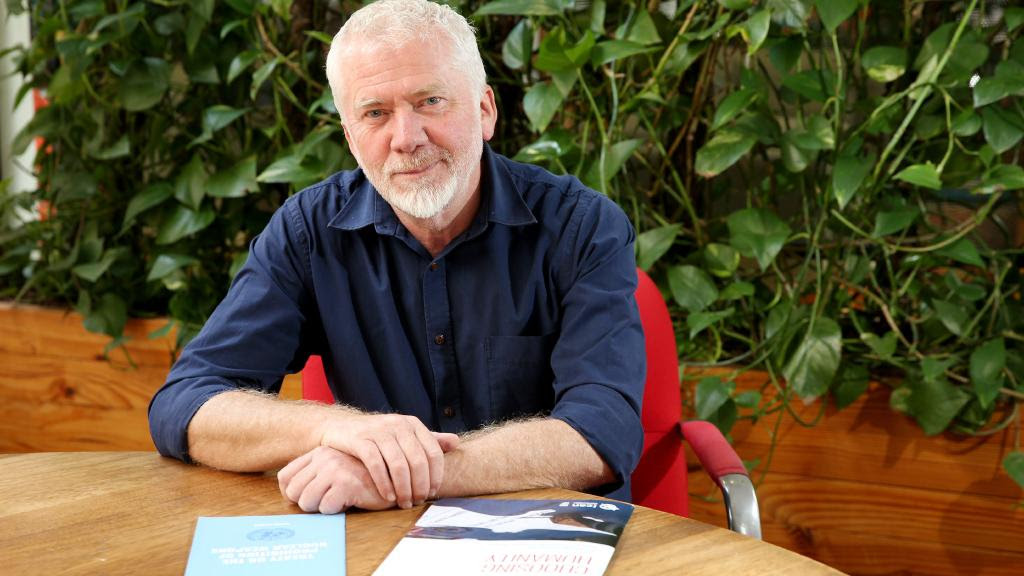
The Australian Conservation Foundation’s Dave Sweeney was also at the COP29 conference in Baku, and cast some doubt on nuclear’s future, at least compared to renewables.
“It’s one thing to have agreements and aspirations, it’s another to have projects and power,” he said.
“The industry is having some very good rhetoric, but it’s having a very poor reality. We’ve seen 30 countries say that they will triple nuclear (power) by 2050; we’ve seen 125 say they will triple renewables by 2045.”
And he argues part of the nuclear industry’s ambition is attracting public funding, in an effort to “de-risk” its projects.
“At meeting after meeting, they’ve spoken about the need for market reforms to de-risk nuclear projects,” he said.
“I think that is very bold code for ‘no-one wants to fund us, so we’re looking for the public purse’.”
https://www.abc.net.au/news/2025-01-26/is-the-world-going-nuclear-hope-or-hype/104856852
Los Angeles fire a wake up call for Australia
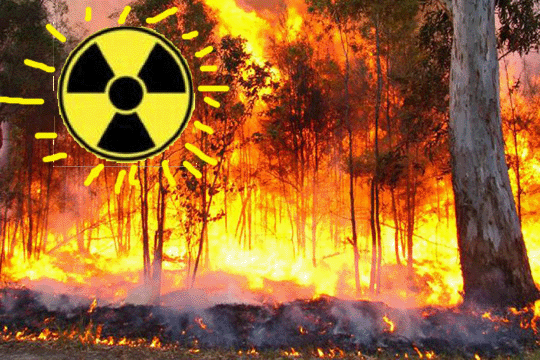
COMMENT. Let’s be aware of the danger to nuclear facilities. The Santa Susana Field Laboratory is located approximately 18 miles (29 km) northwest of Hollywood and approximately 30 miles (48 km) northwest of Downtown Los Angeles. The hot lab suffered a number of fires involving radioactive materials. For example, in 1957, a fire in the hot cell “got out of control and … massive contamination” resulted. A radioactive fire occurred in 1971, involving combustible primary reactor coolant (NaK) contaminated with mixed fission products. The 2018 Woolsey Fire began at SSFL and burned about 80% of the site.
In 2021, the three hour documentary In the Dark of the Valley depicted mothers advocating for cleanup of the site who have children suffering from cancer believed to be caused by the contamination. This could happen in Australia, if Peter Dutton’s foolish nuclear scheme ever came to pass.
January 9, 2025, Friends of the Earth Australia, https://theaimn.net/los-angeles-fire-a-wake-up-call-for-australia/
The fires currently tearing through Los Angeles are a reminder that Australia can no longer rely on northern hemisphere nations for water-bombing aircraft and firefighters during our summer.
“During our Black Summer, more than 1,000 people came from North America to assist in firefighting efforts. Australia recently sent multiple teams to assist with the fires in North America. This sharing of resources, including aircraft, firefighters and specialists, is how we fight fires in the 21st century” said Friends of the Earth campaigns co-ordinator Cam Walker. “And the fact that fires are raging in mid winter in the USA highlights that the world has entered a new phase – the era of the pyrocene – and that our old ways of fighting fires needs to change.”
Normally Australia leases up to six Large Air Tankers (LATs) which are each allocated to a specific state or territory, but which are shared around the country according to greatest need. While we need up to 7 LATs in a bad fire season, we only own one (which is owned by the NSW Rural Fire Service) and we now lease one year round.
The other planes are leased in after their post season maintenance in the northern hemisphere. They all come from North America and arrive in the country during the traditional ‘shoulder’ season. This shoulder is rapidly disappearing as planes are needed for larger sections of the year in each hemisphere.
“As fire seasons extend in both hemispheres, we face the risk of being unable to secure leases for LATs in coming years”.
There is a clear link between the current fires around LA and climate change. For instance, a 2016 study found climate change enhanced the drying of organic matter and doubled the number of large fires between 1984 and 2015 in the western United States (source: NOAA).
After the Royal Commission into Natural Disaster Arrangements that was held to reflect on the lessons of the 2019-20 Black Summer fire season, the commission recommended (Rec 8.1) that the federal government create ‘an Australian-based and registered national aerial firefighting capability, to be tasked according to greatest national need”. In responding to the commission, the federal government decided not pursue the possibility of Australia establishing its own fleet of LATs.
The commission also noted that “extreme weather has already become more frequent and intense because of climate change (and that) further global warming over the next 20 to 30 years is inevitable”.
Mr Walker continued: “In light of all the available science about longer and more intense fire seasons in both hemispheres and the increased difficulty of securing LATs on lease from North America, the federal government must commit to establishing an Australian owned fleet of LATs before the 2025/26 budget”.
The current federal government has taken firefighting capacity seriously and provided significant funding for water-bombing aircraft. With a review of aerial firefighting capability currently underway (expected to report back later this year) now is the right time to acknowledge the reality that we are facing and commit to buying a sovereign fleet of LATs that will be permanently based in Australia.
In addition to buying a fleet of publicly owned LATs, Australia must:
- Stop contributing to even worse global heating, which will continue to lengthen fire seasons and other negative climate change impacts. In the first instance it must stop exporting vast volumes of fossil fuels
- Fast track the development of new technology that will ensure rapid detection of new start fires
- Investigate establishing a national remote area firefighting team which could be deployed as needed to assist state and territory firefighting efforts.
A national remote area firefighting team. As fire threatens World Heritage Areas and national parks across the country, it is time to establish a national remote area firefighting team, which would be funded by the federal government and tasked with supporting existing crews in the states and territories.
Long fire seasons stretch local resources, and sometimes remote areas such as national parks need to be abandoned in order to focus on defending human assets. Having an additional, mobile national team that could be deployed quickly to areas of greatest need would help us protect the wonderful legacy of national parks and World Heritage Areas across the country.
This was recommended by a Senate inquiry after the devastating fires in Tasmania of 2016.
The polar playground for a suicidal species?
https://theaimn.net/the-polar-playground-for-a-suicidal-species/ 7 January 25
Where to begin on this mind-boggling story about epic changes on a very small planet?
Well, let’s begin on the fun part. The Australian Antarctic Program encourages some pretty innocuous recreational activities, plus of course, encouragement for tourists to come, and to learn about the polar world. So that’s OK, I suppose. But lately, in the news, there is growing concern that tourists, Australians in particular, are taking such a playful attitude to Antarctica, that they are risking their personal safety.
Interesting that the video above puts the blame on TikTok for encouraging the fun and danger. But tourism itself is good for increasing education about Antarctica. As long as individuals personally behave safely, that’s fine, isn’t it?
But what about planetary safety?
What Australians, and most of the world, learn about Antarctica, is that it’s pretty, and has penguins, Oh, and the ice is melting a bit, too. And that’s about it. The media does not trouble our complacent little minds with information about the thermohaline ocean circulation, the atmospheric circulation patterns, the carbon-sequestration of krill, the polar vortex…. Much too hard for us, in this cricket-tennis season.
Right now, Northern Europe and parts of the USA are experiencing extreme cold weather. No doubt some people would say that this disproves global heating, climate change. Alas, these extremes, emanating from the Arctic, by the polar vortex, are exacerbated by global heating. The polar vortex is a complex system, difficult to grasp, for the average news reader, so it is part of the whole poorly known, global climate system.
Antarctica is at the other end of the world – not connected to all this? Well, not if you ignore the global thermohaline circulation, among other things like sea level rise.
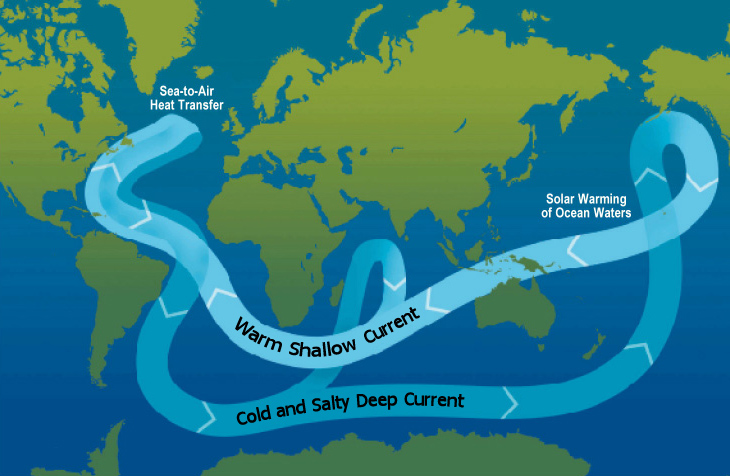
Global thermohaline circulation
Professor Elisabeth Leane, Professor of Antarctic Studies at the University of Tasmania says – What happens in Antarctica doesn’t stay in Antarctica. Its future will shape the future of the planet
Which brings me to the question of safety in relation to Antarctica – planetary, not just personal.
And here’s what the University of Tasmania says about it – Antarctica’s tipping points threaten global climate stability.
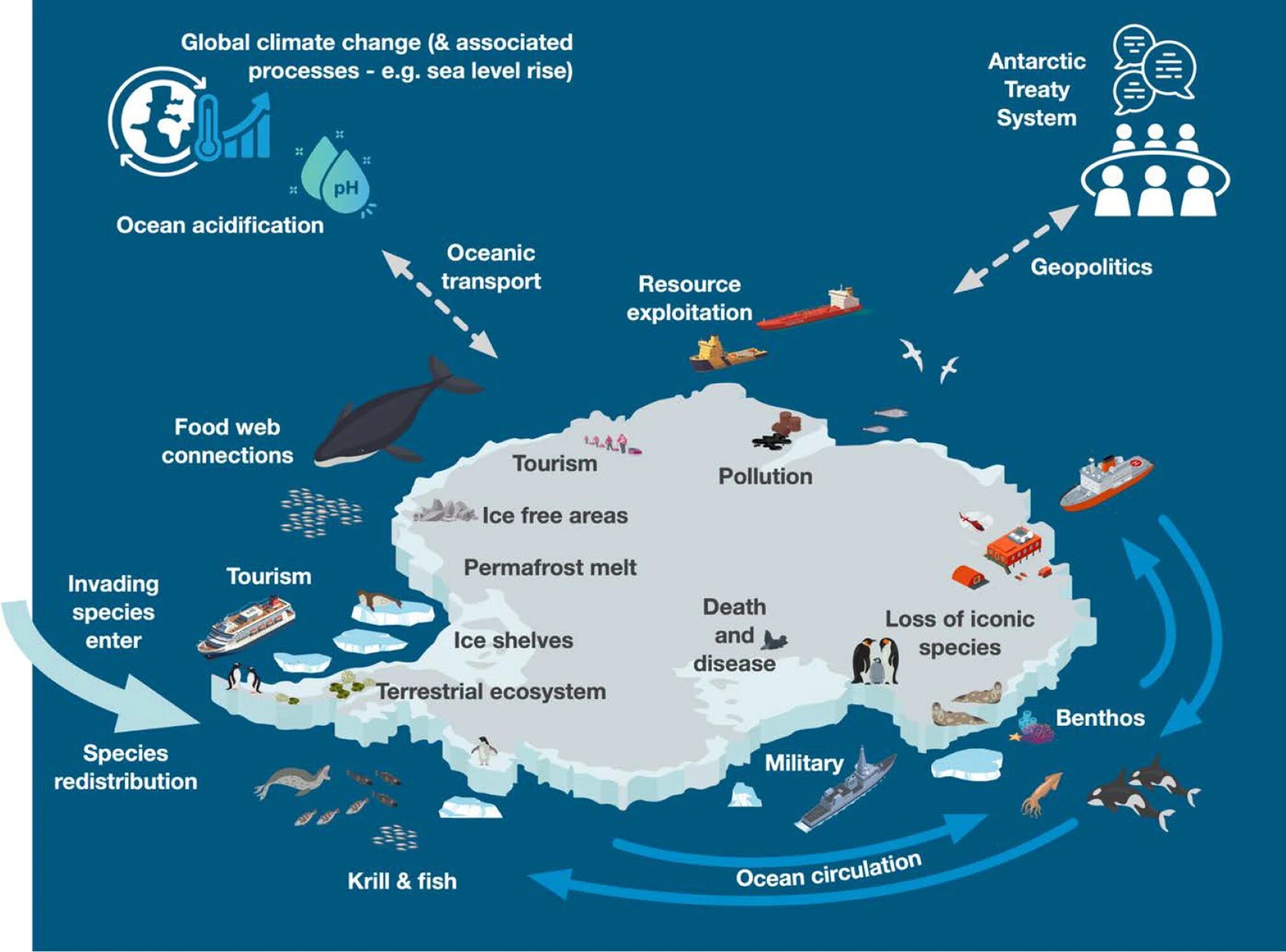
The map above is from the University of Tasmania’s report by international climate scientists . It identifies the various cascading tipping points and their interactions and pressures on the ecosystem.
For those who care about the climate change issue, and about Australia and the Antarctic, I would urge them to watch, and persist with, this brilliant report by climate researcher Paul Beckwith – https://www.youtube.com/watch?v=6WccDhnM8R8
Beckwith explains the potential tipping points identified by the study and their interrelationships , and adds the issue of sea ice loss. Critical issues are ice sheets, ocean acidification, ocean circulation, species redistribution, invasive species, permafrost melting, local pollution, chemical impacts, social impacts, local pollution and the Antarctic Treaty System. He goes on to explain with excellent graphics, the global thermohaline circulation, and then, in-depth, the records on sea ice, and then on to his detailed study on the tiny krill or light shrimp, and their global importance. Finally, Beckwith outlines the politics, the various national claims in the Antarctic Treaty System. The scientists’ conclusion – the urgent need for action on climate. Heavy stuff. Fascinating stuff. He finishes with a reminder of the unique role of that amazing critter the krill.
If you want a more concise discussion of the University of Tasmania’s December remarkable workshop of international marine scientists – go to Radio Ecoshock – World-changing Tipping Points – In Antarctica !
The “mainstream media” rarely covers climate change in any depth. For decades, the public has been informed very superficially on this life and death matter for our survival. The dedicated scientists produce their research results, but the media seem to find these too difficult, or too “political” to bother to report on them properly. The December 2024 “emergency summit” of international polar scientists in Tasmania barely got a mention in the Australian or international press.
You have to go to alternative media, to get any real insight into what is happening to the climate of our planet home. For decades now, Paul Beckwith has being producing his highly informative and wonderfully illustrated videos, on Youtube. Meanwhile Alex Smith has been doing the same sort of thing on radio and podcast, and print, – on Radio Ecoshock, which is heard in Australia on Community Radio 3CR.
In 2025, it is ever more urgent for people to wade through the morass of “social” media, and corporate media, and “alternative” media, to find the facts on climate change. Paul Beckwith and Radio Ecoshock are two examples of a rare and endangered human species – journalists who do their homework on climate change.
Scientists should break the ice
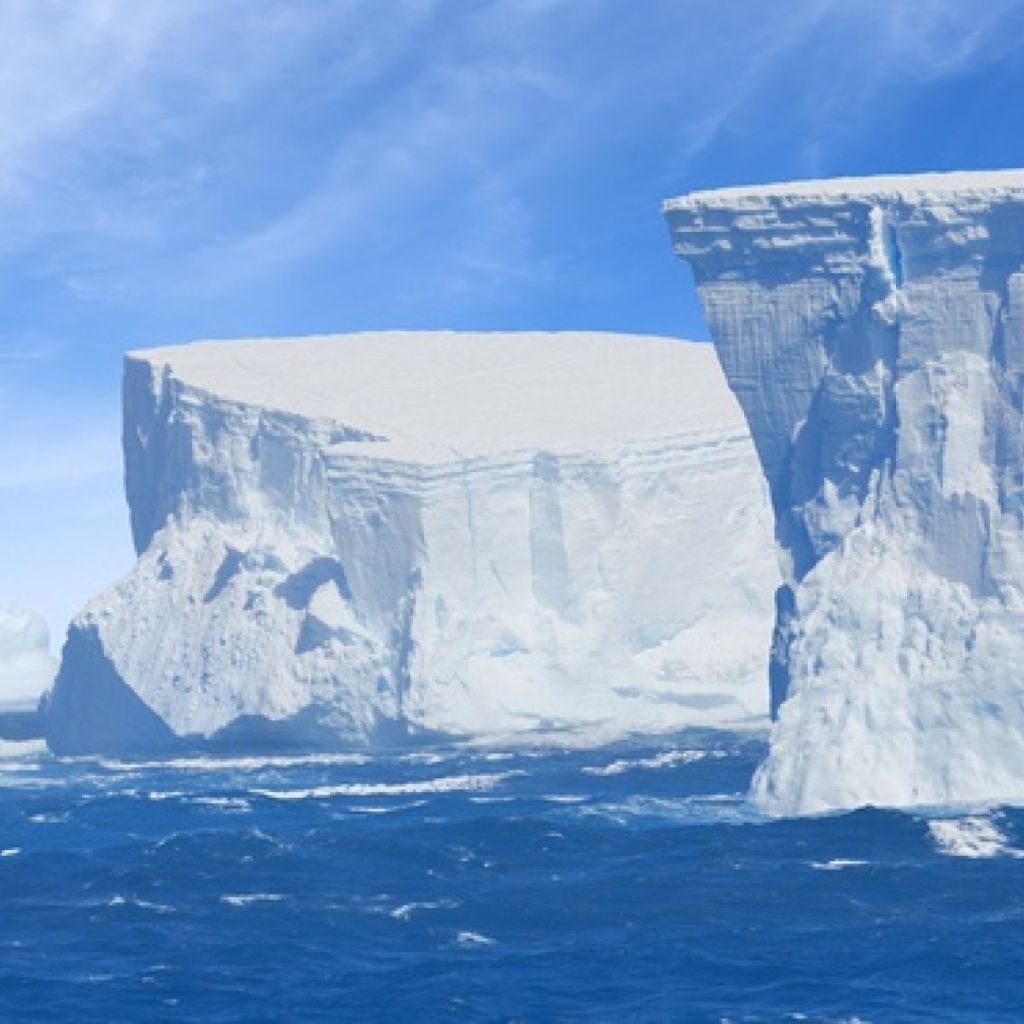
once the ice sheet slides into the ocean, there is no putting it back, even if all carbon emissions ended that day. The ice-sheet holds enough water to raise sea levels by 58 metres. Even if only half of it breaks off, it will be just a waiting game over just a few years for the ice to melt and for us to watch every coastal city on earth to be inundated. In our lifetime.
once the ice sheet slides into the ocean, there is no putting it back, even if all carbon emissions ended that day. The ice-sheet holds enough water to raise sea levels by 58 metres. Even if only half of it breaks off, it will be just a waiting game over just a few years for the ice to melt and for us to watch every coastal city on earth to be inundated. In our lifetime.
Crispin Hull, December 29, 2024
The 2024 award for the biggest disjoin between the importance of a story and the coverage it got must surely go to the science briefing on Antarctica and Sea-Level Rise published by the Australian Antarctic Program Partnership and the ARC Australian Centre for Excellence in Antarctic Science.
It came out in September. The ABC had some coverage, but it seemed to miss some essential points.
Here is what the new science tells us and how it is different from the older science.
The older science tells us that the amount of sea ice in Antarctica is shrinking, but not as badly as in the Arctic. Sea ice expands and contracts quite quickly according to air and sea temperature. So, a gradual reduction in sea ice will mean a gradual and comparatively small rise in sea levels.
This science should be moderately alarming, but the misinformationists in the fossil fuel industry can bat away public fears by saying not much is happening here and it will not happen in your lifetime, so carry on as usual.
This is standard stuff from fossil misinformationists: climate change is not happening, but if it is happening it is part of natural geologic forces and has nothing to do with human-generated carbon, and even if it is caused by human-generated carbon we can develop technologies to capture the carbon and safely store it away.
In short, they base their facts on their desired conclusion that they can continue to make profits from the emission of carbon until ecosystems and economies collapse. When it is too late.
Coming back to Antarctica, earlier science suggested that sea-ice contraction could be reversed if temperatures came down a bit. As it happens sea-ice is an important reflector of solar rays (and heat). Without the sea-ice you have dark ocean which absorbs the rays and increases the heat of the ocean. Nonetheless, it is still a probably reversible process.
Enter the new research. This is about the eastern Antarctic icesheet. Hitherto, this has given climate scientists much less cause for concern. This is because the eastern ice sheet has built up over land. It is anchored.
Unlike sea-ice it is not vulnerable to warmer water melting it.
Picture the land mass and a big thick ice sheet over it. The sea nibbles at the edge and even if the sea is a bit warmer it does not melt much ice. This is not like sea-ice where the warmer water is all around it melting it quickly. So, hitherto scientists have taken some climate solace in the fact that so much ice is safely tied up in the eastern Antarctic ice-sheet (more than 60 per cent of the world’s fresh water) and so will give us more time to slow and reverse the warming of the planet.
Enter the new research. Remove the image of a lump of land mass. Rather picture that the land mass has been forced down by the weight of the ice – heavier at the middle of the land mass and lighter at the edge.
The new science tells us that much of the eastern Antarctic ice-sheet is grounded below sea level. So, one the warmer sea waters get under it, the whole sheet becomes unstable and can slide into the ocean. And even if temperatures are made to fall, the tipping point would have been reached – the warmer sea would have run under the massive ice-sheet, undermining it and making its slide into the ocean inevitable.
And once the ice sheet slides into the ocean, there is no putting it back, even if all carbon emissions ended that day. The ice-sheet holds enough water to raise sea levels by 58 metres. Even if only half of it breaks off, it will be just a waiting game over just a few years for the ice to melt and for us to watch every coastal city on earth to be inundated. In our lifetime.
Once the ice sheet hits the ocean, it is the end of civilisation as we know it.
The ice cannot be put back.
The greater the potential damage the more you should do about it, even if you think the risk is small. This is why people go to a lot of effort to make their houses less exposed to bushfires and cyclones.
It may be that some billionaires might imagine they could set up doomsday retreats to avoid death, injury, and discomfort. They are dreaming. In those circumstances money means nothing and the profit-driven selfishness that drives unnecessarily extending the use of fossil fuel will be brushed aside by the maniac selfishness of those on a desperate if doomed survival mission.
Scientists must change stop their subdued, cautious approach to reporting climate change. It is understandable because scientists do not want to cause panic or unnecessary alarm. But the approach has just given the fossil industry endless free kicks. It is time for alarm and measured panic.
Scientists should stop being scared of publishing scary material in a scary way. It is time to tell people the reality of the biggest security, economic, and existential threat to humans on earth………………………. more http://www.crispinhull.com.au/2024/12/29/scientists-should-break-the-ice/?utm_source=mailpoet&utm_medium=email&utm_campaign=crispin-hull-column
World’s largest iceberg on the move again after months spinning on the spot
The iceberg is about three times the size of New York City and more than twice the size of Greater London
Rituparna Chatterjee, Independent 15th Dec 2024, https://www.independent.co.uk/climate-change/news/world-largest-iceberg-a23a-moving-antarctic-b2664564.html
The world’s largest iceberg is on the move again after decades of being grounded on the seafloor and more recently spinning on the spot, according to the British Antarctic Survey (BAS).
The mega A23a iceberg has broken free from its position north of the South Orkney Islands and is now drifting in the Southern Ocean, scientists said.
“It’s exciting to see A23a on the move again after periods of being stuck. We are interested to see if it will take the same route the other large icebergs that have calved off Antarctica have taken. And more importantly what impact this will have on the local ecosystem,” Dr Andrew Meijers, an oceanographer at the BAS, said.
The iceberg, known as A23a, split from the Antarctic’s Filchner Ice Shelf in 1986. But it became stuck to the ocean floor and had remained for many years in the Weddell Sea.
Scientists anticipate that A23a will continue its journey into the Southern Ocean following the Antarctic Circumpolar Current, which is likely to drive it towards the sub-Antarctic island of South Georgia. In that region it will encounter warmer water and is expected to break up into smaller icebergs and eventually melt.
The Coalition’s nuclear costings and their rubbery assumptions take us back to being a climate pariah

Nicki Hutley, Guardian 14th Dec 2024, https://www.theguardian.com/commentisfree/2024/dec/15/the-coalitions-nuclear-costings-and-their-rubbery-assumptions-take-us-back-to-being-a-climate-pariah
Despite a clever comms strategy, there are significant credibility issues around the assumptions on which the cost estimates are based.
The Coalition has moved a considerable way on climate and energy since Scott Morrisson brought a lump of coal into the parliament and told us not to be afraid. On Friday, the Coalition finally released the long-awaited details of the nuclear plan it will take to the election and, once again, asks us not to be afraid – of the price tag, the higher climate pollution and a range of other variables.
However, despite a clever comms strategy, there are significant credibility issues around the assumptions on which the cost estimates are based, and there are other critical issues that have been left unanswered. Australians have a right to consider all the issues they are being asked to vote on, with facts rather than political rhetoric. These issues can be broadly listed under three headings: the economics, the environment and the law.
The Coalition makes the point that many countries use nuclear power. It is true that 9% of global energy capacity comes from nuclear power, which the International Energy Agency (IEA) estimates could increase to about 11% if and when planned projects come online. But the world is voting with its feet, with the IEA reporting that around the world 560GW of new renewable power was installed in 2023, compared with 7.1GW of new nuclear. At COP29 in Baku this year, the conversations were not about whether to invest in renewables, but how to roll them out faster.
The primary reason the world is not embracing nuclear energy on a grand scale is simple: cost (although in Japan’s case, it’s also about safety).
The Frontier Economics report, which the Coalition is using to make its case, is written in an opaque way that makes direct comparisons difficult. Essentially, the report admits that the capital cost of nuclear is $10,000/kW, while solar and wind are $1,800 and $2,500 respectively.
So how is it that the Coalition’s modelling suggests that a world where nuclear makes up more than a third of the east coast energy grid could possibly be cheaper?
It’s easy to come up with the answer you want when you base your modelling on rubbery assumptions.
Firstly, we should appreciate that even a $10,000/kW estimate for nuclear is considerably optimistic if we look at the experience of comparable countries over the past decade. The cost at the off-cited Hinkley C plant in the UK has, to date, risen to $27,515/kW. Three others – France (Flamanville 3), Finland (Olkilutoto 3) and the US (Vogtle) – are between $15,000 and $16,900.
Delays have been a key factor in driving up the cost of nuclear power. The longer it takes to build and operate a plant, the higher the cost of finance. The Coalition believes we can overturn national and state legislation and acquire land and planning approvals virtually overnight. And then we’ll just install an ‘off-the-shelf’ nuclear power plant, ready to run.
By its own admission, having to tweak nuclear power plants so they operate at maximum safety and efficiency can blow out build times and costs. It beggars belief that the Coalition claims Australia, which has no nuclear energy capability, could ship, build and integrate into the grid with no challenges, with a 50,000-strong nuclear workforce appearing by magic.
There is no mention of the costs of extending the life of existing ageing coal-fired power stations, or the likelihood that these plants will increasingly fail as they reach end-of-life, raising energy costs as supply falls short and, increasingly, the likelihood of blackouts. And, apparently, nuclear waste can be transported and stored without cost
The Coalition also argues that, because wind and solar energy are not always “on”, we’ll need to build a lot more capacity, along with transmission and storage. It calls this “overbuild”, but its assumptions have overegged what that need might realistically look like, especially as battery storage becomes cheaper over time (unlike the experience of nuclear) and of longer duration.
Finally, to arrive at these rose-tinted costs, the Coalition has had to cut back on estimates of the amount of energy we will demand over the next two decades by almost half what the Australian Energy Market Operator says we need. That’s because it’s assumed we won’t worry about EVs or electrification. This is why the Coalition will undo Australia’s 2030 43% emissions reduction target, which we are set to get very close to, taking us back to our Morrison-era status of global climate pariah.
And this is the kicker. Under the Coalition’s plan, our modelling shows Australia’s domestic emissions will rise by around one billion – yes billion – tonnes, at a cost of $240bn to the economy, society and environment, based on Infrastructure Australia’s cost of carbon methodology.
The Coalition’s track record on climate and energy has always been poor. In this latest iteration supporting nuclear power, its credentials have been further diminished on climate, energy and the economy.
- Nicki Hutley is an independent economist and councillor with the Climate Council
Antarctica is in crisis and we are scrambling to understand its future

The last two years have seen unprecedented falls in the levels of sea ice around Antarctica, which serves as a protective wall for the continent’s huge ice sheets. Researchers are now racing to understand the global impact of what could happen next
By James Woodford, 2 December 2024
If all our fear and uncertainty over climate change could be distilled into a single statistic, then arguably it was delivered to an emergency summit on the future of the Antarctic last month.
Nerilie Abram at the Australian National University, Canberra, opened her presentation with a slide headlined “Antarctic sea ice has declined precipitously since 2014, and in July 2023 exceeded a minus 7 sigma event”.
Antarctica is in crisis and we are scrambling to understand its future.
The last two years have seen unprecedented falls in the levels of sea ice
around Antarctica, which serves as a protective wall for the continent’s
huge ice sheets. Researchers are now racing to understand the global impact
of what could happen next.
If all our fear and uncertainty over climate
change could be distilled into a single statistic, then arguably it was
delivered to an emergency summit on the future of the Antarctic last month.
Nerilie Abram at the Australian National University, Canberra, opened her
presentation with a slide headlined “Antarctic sea ice has declined
precipitously since 2014, and in July 2023 exceeded a minus 7 sigma
event”.
According to the US National Snow and Ice Data Centre, the 7
sigma event was the lowest maximum since records began in 1979. This year
was the second lowest, with Antarctic sea ice “stalling out” at a
maximum extent of 17.16 million square kilometres, or just 200,000 square
kilometres more than last year. Remarkably, that is 1.55 million square
kilometres below the expected average extent.
In other words, in the past
two years an area of ice nearly 6.5 times the size of the UK has
disappeared. Another way to imagine it is that the ring of sea ice that
forms every winter around the entire Antarctic continent has contracted by
an average of 120 kilometres, says Abram.
New Scientist 2nd Dec 2024
https://www.newscientist.com/article/2458211-antarctica-is-in-crisis-and-we-are-scrambling-to-understand-its-future/
‘Unprecedented’ climate extremes are everywhere. Our baselines for what’s normal will need to change

November 28, 2024 , https://theconversation.com/unprecedented-climate-extremes-are-everywhere-our-baselines-for-whats-normal-will-need-to-change-244298
Extreme temperature and rainfall events are increasing around the world, including Australia. What makes them extreme is their rarity and severity compared to the typical climate.
A region’s “climate” is defined by a 30-year average of mainly rainfall and temperature. Increasingly, these climate definitions have become less appropriate – we need to look at events over shorter time periods to gain a more accurate picture.
We can see this in the recent worldwide proliferation of extreme flooding and prolonged heatwaves.
Using southern Australia as a prime example, our newly published research in Academia Environmental Sciences and Sustainability shows that machine learning techniques can help identify key climate drivers, supporting a redefinition of climate in a warming world.
Increasing ‘flash’ events
In Australia, eastern coastal regions of Queensland and New South Wales continue to receive record downpours and flash floods, interspersed by dry periods of a few months to a few years.
In stark contrast, southern coastal regions are drying and facing more extreme heatwaves. With already parched vegetation and catastrophic fire dangers, this region is experiencing drought conditions due to decreased cool season rainfall and increased temperatures.
Notably, flash droughts and flash floods have adversely affected both agricultural crop yields and grazing pasture quality. Flash droughts greatly reduce moisture for germination. Flash floods ruin crops close to harvest time.
The problem with these “flash” events is just how difficult they are to forecast. To make more accurate seasonal and annual predictions for rainfall and temperatures, we need to update our climate models. But how do we know which climate drivers need to be included?
Seeking a new normal
To keep track of typical climate conditions and provide context for weather and climate forecasts, the World Meteorological Organization uses a set of data products known as climatological standard normals.
They define climate as averages of monthly, seasonal and annual weather-related variables such as temperature and rainfall, over consecutive 30-year periods.
Climate normals can be used to assess how typical of the current climate a particular event was in a given location. It’s how we arrive at temperature anomalies.
For example, to tell whether a year was relatively “hot” or “cool”, we look at the anomaly – the difference between the average temperature for the calendar year in question, compared to the climate normal.
But extreme variations are now occurring in periods of ten years or even shorter. Consequently, multiple increases and decreases can cancel each other out over a 30-year period. This would hide the large changes in statistics of weather variables within that period.
For example, large rainfall changes in average monthly, seasonal and annual amounts can be hidden within 30-year averages. Global warming often amplifies or diminishes the impacts of multiple climate driver phases within approximately ten-year periods. When averaged over 30 consecutive years, some information is lost.
What did we find?
Over the past decade or so, machine learning (where computers learn from past data to make inferences about the future) has become a powerful tool for detecting potential links between global warming and extreme weather events. This is referred to as attribution.
Machine learning techniques are simple to code and are well-suited to the highly repetitive task of searching through numerous combinations of observational data for possible triggers of severe weather events.
In our new study, machine learning helped us untangle the dominant climate drivers responsible for recent flash flood rainfall on the east coast of Australia, and a lack of rainfall on the southern coast.
Along the southern coast, the cool season from May to October is typically produced by mid-latitude westerly winds. In recent years these winds were farther away from the Australian continents, resulting in the recent drought of 2017–19 and flash drought of 2023–24.
In contrast, after the 2020–22 La Niña, the east coast continues to experience wetter conditions. These come from generally higher than average sea-surface temperatures off the east coast and Pacific Ocean, due to the presence of onshore winds.
Machine learning identified the dominant drivers of the scenario above: the El Niño-Southern Oscillation, the Southern Annular Mode, the Indian Ocean Dipole, and both local and global sea surface temperatures.
A key finding was the prominence of global warming as an attribute, both individually and in combination with other climate drivers. Climate drivers and their combinations can change with increasing global warming over shorter periods that contain extremes of climate. Hence, the use of 30-year periods as climate normals becomes less useful.
Finding regional attributes for better forecasting
Climate models often disagree on the climate drivers likely to be relevant to extreme events.
A key feature of machine learning is the ability to deal with multi-source data by identifying regional attributes. We can combine possible climate-driver predictors with high-resolution climate model predictions, especially after the climate model data are downsized to cover specific regions of concern. This can help with extreme event forecasting at a local scale.
Scientists are continuously developing new methods for applying machine learning to weather and climate prediction.
The scientific consensus is that global warming has dramatically increased the frequency of extreme rainfall and temperature events. However, the impacts are not uniform across the world, or even across Australia. Some regions have been more affected than others.
Currently there is no single alternative definition to the traditional 30-year climate normal, given the variable impacts across the planet. Each region will need to determine its own relevant climate time period definition – and machine learning tools can help.
Matt Kean says Australia must take ‘strong and decisive action’ on climate crisis despite Trump re-election

Chair of Climate Change Authority says ‘climate change waits for no one’ as pressure mounts on Coalition to dump net zero commitment.
Karen Middleton and Adam Morton, Thu 7 Nov 2024
The chair of the Climate Change Authority, Matt Kean, has declared Australia must take “strong and decisive action” to address the climate crisis despite Donald Trump’s return to the White House, arguing the world needs cheap renewable energy and the country can provide it.
Kean, a former News South Wales Liberal treasurer and energy minister, told Guardian Australia there were “enormous opportunities and benefits” in taking action to cut greenhouse gas emissions, no matter who was US president.
“We don’t know exactly what Trump will do, but climate change waits for no one and will spare no one and no country. That’s why we will continue to need to act – to take strong and decisive action to address this great challenge of our times,” he said.
“The world still needs cheap renewable energy, and the products that come with that, and Australia is in a very strong position to meet the world’s needs, and in doing so create huge jobs and prosperity for our country that we’ve never seen before
Kean said past evidence, including in Trump’s first term as president, showed states, territories and the private sector would continue to act. “I have no doubt that will continue to be the case,” he said
Anthony Albanese also recommitted to the government’s existing policies …………………………….
Initial advice from the authority found a 65-75% cut below 2005 levels would be “ambitious, but could be achievable”.
The government is not keen to reactivate the climate debate in Australia because the effects of climate change continue to generate anxiety in the community and Albanese is pushing a message of optimism about the future…………..
“But doing so because we see it as necessary if you are to be credible in achieving net zero whilst protecting Australia’s industrial base in the future
The Climate Council chief executive, Amanda McKenzie, emphasised the need for Australia to stay the course on the clean energy transition.
“During his first presidency, Trump tried to withdraw the US from climate diplomacy, but state and local governments powered ahead,” McKenzie said in a statement. “Countries and US states know the Trump playbook – and they’re determined to keep driving climate action forward……………. https://www.theguardian.com/australia-news/2024/nov/07/australia-liberal-national-coalition-net-zero-2050-commitment-donald-trump-us-election?utm_term=Autofeed&CMP=soc_568&utm_medium=Social&utm_source=Twitter#Echobox=1730983193
Matt Kean lambasts ‘wild fantasy’ of former Coalition colleagues to extend coal power and build nuclear plants
Climate Change Authority chair says Peter Dutton’s energy policy would drive up electricity bills and deter investment in renewables
Peter Hannam Economics correspondent, Guardian, 22 Oct 24
Extending the life of ageing coal-fired power stations before nuclear plants can be built is a “wild fantasy” that would deter near-term investment in renewables and push up power bills, according to Matt Kean, the Climate Change Authority chair.
The federal Coalition’s nuclear strategy was “an illiberal drive to intervene in the market-led energy transition [that had] been elevated from internet chatrooms and lobby groups to the national stage”, said Kean, a former energy minister in a Coalition government in New South Wales.
“The ‘delay-mongers’ have latched on to nuclear power despite the overwhelming evidence that it can only drive up energy bills, can only be more expensive, and can only take too long to build,” he told an AFR energy conference in Sydney on Tuesday.
“I suspect that even those arguing for nuclear don’t believe we’ll ever build one of these reactors in Australia … and certainly not in time to help manage the exit of coal from the system.”
The Albanese government appointed Kean, who has long advocated for more urgent climate action including by his then federal Liberal colleagues, to head the independent authority in June……………………………………………………… https://www.theguardian.com/australia-news/2024/oct/22/matt-kean-fantasy-coalition-energy-policy-coal-nuclear-power?fbclid=IwY2xjawGFBTtleHRuA2FlbQIxMQABHZOLw35JiI_0LOuO7ud0lCdaODH8ws-XTXtm6BjH-aQRT5FT8Ac8UKeUTQ_aem_yTUmsY_z33BOm66Ol9MkEA
Western Australia Statement: Nuclear is No Climate Solution
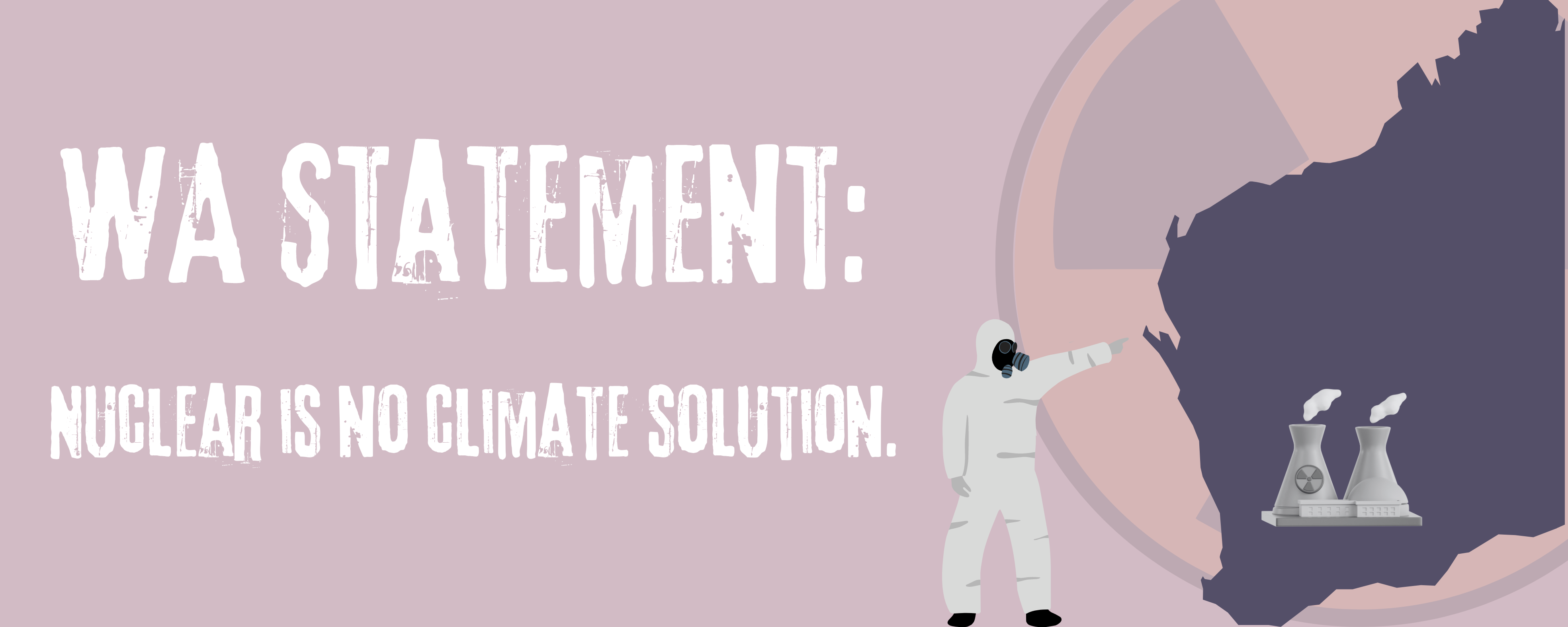
| SIGN THE STATEMENT Please take action to protect WA from the threat of nuclear power by signing the statement “Nuclear is No Climate Solution.” Please help grow the support to stop Dutton’s nuclear power push in the West. |
| Unlike other states WA does not have a prohibition on nuclear power. With the Federal election increasingly uncertain we face a very real risk of a Federal Coalition advancing nuclear power in WA. We are pushing the State government to legislate a prohibition as the best legal protection against a Federal Coalition who seek to impose nuclear power in WA and we need your help to get the WA government to act. |
Peter Dutton’s proposal for WA is to build Small Modular Nuclear Reactors (SMNRs) at the Muja Coal fired power station in Collie which is due to be closed in 2027. There are new developments in the region for hydrogen power steel recycling, wind farms and battery storage all feeding into the South West grid.
The irresponsible and reckless nuclear proposal for Collie undermines and derails climate action, creates uncertainty for renewable energy investors and locks in gas and fossil fuels for longer. We cannot underestimate how serious Peter Dutton is on nuclear power and we do not have time to delay climate action.
You can download a sign on sheet to collect signatures and send back to us Nuclear Free WA c/o CCWA PO Box 883, West Perth, WA 6872.
Thanks so much for helping grow the momentum to stop nuclear power in WA.
Mia Pepper
Nuclear Free WA Committee Member
1 This month

of the week – Australians for War Powers Reform (AWPR)
To see nuclear-related stories in greater depth and intensity
 Antinuclear