Australia’s extreme bushfires – forests might not recover
 Wildfires have spread dramatically—and some forests may not recover. An explosion in the frequency and extent of wildfires worldwide is hindering recovery even in ecosystems that rely on natural blazes to survive. https://www.nationalgeographic.com/science/2020/01/extreme-wildfires-reshaping-forests-worldwide-recovery-australia-climate/
|
BY JOHN PICKRELL, JANUARY 30, 2020, Pungent and damp, the so-called tall, wet forests of southeastern Australia are home to the tallest flowering plants on Earth. Eucalyptus regnans, the Latin name of the mountain ash, means “ruler of the gum trees”—which is fitting, given these giants can reach more than 300 feet high.
Many of Australia’s gum trees, particularly those in drier forest types, are famously able to tolerate fire, throwing out new buds and shoots within weeks of being engulfed in flames. But even these tenacious species have their limits. Old-growth forests of the mountain ash and a related species, the alpine ash, are among the gum trees that are less tolerant of intense blazes. In the state of Victoria, these trees had already been severely depleted by logging and land clearing. Now, the bushfires that have burned more than 26 million acres of eastern Australia in recent months are putting the forests at even greater risk. Some of the forests razed this year have experienced four bushfires in the past 25 years, meaning they’ve had no chance to recover, says David Lindenmayer, an ecologist at the Australian National University in Canberra. “They should be burning no more than every 75 to 125 years, so that’s just an extraordinary change to fire regimes,” he says. “Mountain ash need to be about 15 to 30 years old before they can produce viable amounts of seed to replace themselves following fire.” The loss of these dominant trees is a significant problem, since they provide vital habitat for threatened animal species such as the sooty owl, the giant burrowing frog, and a fluffy arboreal marsupial called the greater glider. (Also find out how Australia’s fires can create big problems for freshwater supplies.) |
|
Bushfire state of emergency in Australian Capital Territory (ACT)
Times 2nd Feb 2020, An inferno was raging near the Australian capital, Canberra, yesterday as a heatwave combined with high winds to prolong the country’s devastating bushfire season. The tiny Australian Capital Territory (ACT), between Sydney and Melbourne, declared a state of emergency as the fire, covering 140 square miles, threatened Canberra’s southern suburbs.
Drinking water threatened by forest fires
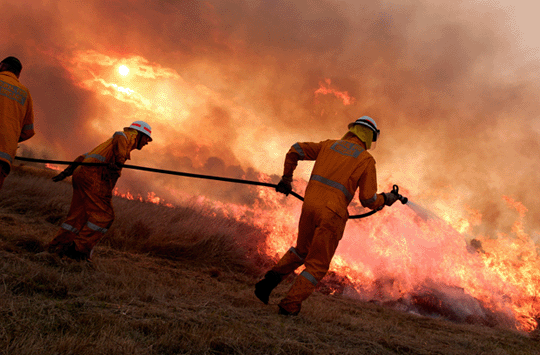 As forests burn around the world, drinking water is
  at risk https://www.westhawaiitoday.com/2020/01/31/features/as-forests-burn-around-the-world-drinking-water-is-at-risk/
In Australia’s national capital of Canberra, where a state of emergency was declared on Friday because of an out-of-control forest fire to its south, authorities are hoping a new water treatment plant and other measures will prevent a repeat of water quality problems and disruption that followed deadly wildfires 17 years ago.
|
“The forest area burned in Australia within a single fire season is just staggering,” said Stefan Doerr, a professor at Swansea University in England who studies the effects of forest fires on sediment and ash runoff. “We haven’t seen anything like it in recorded history.” The situation in Australia illustrates a growing global concern: Forests, grasslands and other areas that supply drinking water to hundreds of millions of people are increasingly vulnerable to fire due in large part to hotter, drier weather that has extended fire seasons, and more people moving into those areas, where they can accidentally set fires. More than 60% of the water supply for the world’s 100 largest cities originates in fire-prone watersheds — and countless smaller communities also rely on surface water in vulnerable areas, researchers say. Continue reading |
Australia’s options for climate change action

 What is ‘real’ action on climate change? SMH , What form would greater climate change action take – and what would it cost? By Staff reporters
What does climate action actually mean?
Climate change action takes two forms: mitigation, which means reducing greenhouse gas emissions at a rate fast enough to prevent massive damage to our environment in the future; and adaptation, which means bracing and preparing for the changes that are happening and which will intensify.
Adapting to climate change is essential and there are many ways to do so, such as beefing up emergency services and strengthening farms and infrastructure against fires, storms and rising sea levels.
But the source of the problem is the rising emissions that are trapping heat in the atmosphere and oceans. In Australia, emissions come from electricity, industry, transport and agriculture as well as other sectors.
If we are serious about tackling climate change, we must reduce emissions faster than we are doing now. That’s the view of the world’s leading scientific bodies as well as the key expert bodies in Australia, including the CSIRO and the Australian Academy of Science. Their advice is clear: Australia needs to be close to carbon neutral by the middle of the century.
It would be nice to be able to flick a switch and change to zero emissions next week. In practice, decarbonising the nation will be a long, complex process.
The Garnaut Review, led by senior economist Ross Garnaut almost a decade ago, is still the most comprehensive assessment of Australia’s options for climate change action. It drew on leading Australian research on bushfire impacts to forecast an increase in bushfire danger by 2020. On our current trajectory, we are on track to see catastrophic fire days increase by 300 per cent by the second half of this century.
The review outlines various types of policy that can help cut emissions, both “carrots” and “sticks”. There are public subsidies, such as government funding for wind and solar farms; or special tariffs to pay householders with solar panels. Then there are systems for making polluters pay, such as a carbon price implemented through a carbon tax or an emissions trading scheme. There are also policies that rely on regulating an industry, such as the now-abandoned National Energy Guarantee policy, under which companies would be required by law to use a mix of different technologies.
Several types of policy can operate at the same time. Australia had a carbon price from 2012 to 2014 before it was repealed after a change of government. Currently, it has some direct subsidies for emissions reduction projects but no mechanism for cutting greenhouse gases at the speed required.
The Garnaut Review found – and other studies, including by the OECD and by the Australian National University, have since agreed – that a carbon price coupled with an emissions trading scheme and a cap on greenhouse gas emissions would be the most effective and efficient way of cutting emissions.
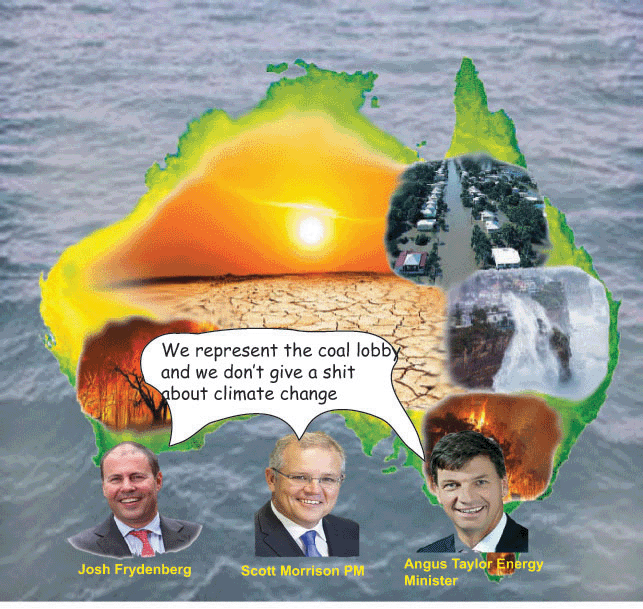
The Prime Minister, Scott Morrison, has ruled out a “carbon tax” or other action that would raise electricity prices or affect polluting industries. In the wake of the fires, Mr Morrison has flagged “resilience” and “adaptation” as the areas he wants to focus on……..
Australia currently has no mechanism for controlling its greenhouse gas emissions and may not meet its Paris commitments……. https://www.smh.com.au/national/what-is-real-action-on-climate-change-20200115-p53rok.html
#ScottyFromMarketing is dodging the need for real action on climate change
|
Climate change calls for action, not adaptation, SMH January 31, 2020 Judy Dillon, Garran ACT In the midst of our horrific summer, polls show the majority of people want to see urgent action on climate change, (”PM’s bushfire response must include climate change: experts”, January 30). We don’t want a focus on ”resilience and adaptation” or ”meeting and beating” pathetically low targets with the use of accounting tricks. Emissions are continuing to rise while the Morrison government uses weasel words to pretend they are doing something effective, all while handing billions to the fossil fuel industry.
The House of Representatives is scheduled to sit for a total of 72 days in 2020, so politicians have no time to lose. If they are not prepared to get on with the mammoth task of taking real and significant climate action in the interests of all Australians, and indeed the whole world, then they should get out of the way now so politicians who are so motivated can take their place. Quiet Australians have had enough – we will not be silent. –
– Peter Spencer, Castle Hill The PM is setting up an inquiry that avoids the real cause of of this and future bushfires – climate change. Once again, he gives the impression he is doing something when he is avoiding the real issue. Another opportunity wasted.
Adrian Owen, Killawarra , The PM now reluctantly concedes our continent is warming and drying. By saying the effects of the emissions already in the atmosphere will be felt for decades regardless of any action, he seeks to portray emissions mitigation as a lost cause. He must imagine the public will willingly surrender to warming beyond two degrees. His new focus on resilience and adaptation will lead to the absurd situation in which the coal industry will continue apace while federal government will spend money elsewhere to try to protect the rest of us from the ravages of a warming climate. –
– Mike Reddy, Vincentia After listening to Morrison talk about climate change action, I think his government is focused on hope. Hope that individuals keep putting solar panels up. Hope that the states keep pulling their weight. Hope that the rest of the world reduces its emissions. Hope that no one notices he is doing nothing. Hope that rising sea levels don’t swamp Waikiki.
Graham Lum, North Rocks Barilaro claims that Matt Kean’s comments on climate change are unhelpful and do not represent the whole of government. That may be so, but I suggest they do represent the views of the majority of Australians. -… https://www.smh.com.au/national/nsw/climate-change-calls-for-action-not-adaptation-20200129-p53vwp.html
|
|
Aboriginal peoples must be restored as custodians of Country
Research Fellow, University of Melbourne, January 31, 2020 In the wake of devastating bushfires across the country, and with the prospect of losing a billion animals and some entire species, transformational change is required in the way we interact with this land.Australia’s First Peoples have honed and employed holistic land management practices for thousand of generations. These practices are embedded in all aspects of our culture. They are so effective, so perfectly suited to this harshest of continents, that we are the oldest living culture in the world today.
A reintroduction of traditional land management is essential if we want to address the ecological crisis we now face.
Not just ‘consultants Continue reading
Adaptation to bushfires might not be achievable without stronger action to curb emissions
 (Cartoon above, courtesy of Independent Australia and Mark David)
Australia is ‘ground zero’ in climate crisis and must show leadership, top researchers say https://www.theguardian.com/australia-news/2020/jan/29/australia-is-ground-zero-in-climate-crisis-and-must-show-leadership-top-researchers-say Lisa Cox, Wed 29 Jan 2020, Adaptation to bushfires might not be achievable without stronger action to curb emissions, letter warns, Lisa Cox Australia’s current position as “ground zero” for both the impacts of climate change and policy uncertainty presents an opportunity for the country to emerge as a leader in responding to the climate crisis, according to Australian Research Council laureates.
In a letter signed by 80 ARC laureate fellows, some of Australia’s top researchers said claims strong action to cut emissions would be economically destructive have no basis and are not “consistent with Australia’s traditional optimism and ingenuity, nor with historical experience”.
“Reducing emissions is a global challenge that requires collective action,” the letter said.
“But Australia’s current visibility as ground zero for both climate impacts and climate policy uncertainty presents a unique opportunity for us to emerge as a leader on this challenge.”
The ARC laureate fellows are a small group of researchers selected by the ARC as the top researchers across all fields in Australia.
The letter, whose signatories include decorated academics in mathematics, science, economics, and language and culture, said the government’s focus on adapting to changed fire patterns “is not enough”.
It was written as the country’s unprecedented bushfire season continues, with emergency warnings in place on Tuesday for a fire burning in the Namadgi national park near Canberra.
“We welcome government actions to help current victims and improve adaptation to future fires, as well as its acceptance of a role for climate change in the catastrophe,” the letter said.
“But this is not enough, because the greenhouse gas amounts driving warming are still rising: the world is only at the beginning of the climate change phenomenon.”
The bushfire emergency has brought the Coalition government’s climate policies into sharp focus.
The prime minister, Scott Morrison, was criticised for his handling of the crisis through Christmas and early January, and for his failure to meet with former emergency chiefs who warned of the coming catastrophe last year.
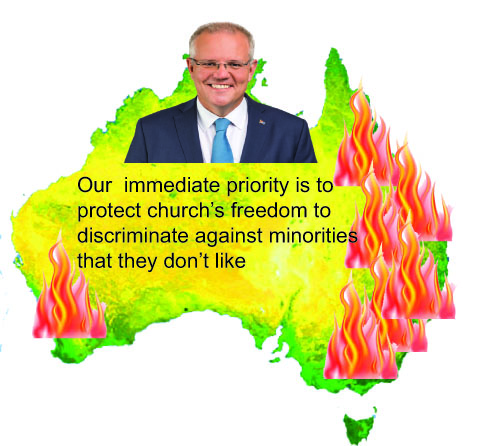
Morrison said this month that the government’s response to the increasingly visible effects of the climate crisis would be to address “adaptation and resilience” rather than strengthening policies to reduce emissions.
But the letter warns that without stronger action to curb emissions, the impacts of further temperature rises could be such that adaptation is not achievable.
“This dire outlook demands stronger mitigation of carbon emissions,” it said.
“Many argue that actions to achieve this would be economically destructive. This claim has no basis, nor is it consistent with Australia’s traditional optimism and ingenuity, nor with historical experience.”
They wrote that achieving net zero emissions was a large but achievable task, and “far less risky and irresponsible” than allowing continued global heating.
Australia faced international criticism as one of a handful of countries at the United Nations climate conference in Madrid in December that were responsible for thwarting a deal on the rulebook for the Paris climate agreement.
Australia is the only country that plans to use carryover credits from the Kyoto period to meet its targets under the Paris agreement.
In Australia, legal action over climate change is on the rise
A class action might be out of the question but climate change litigation, at least against companies, is on the rise.
Australia has so far had the second-highest number of climate cases globally after the United States and the nation’s financial regulators have been warning about an increase of litigation for years now.
On top of that, in 2016 a legal opinion by Noel Hutley QC and Sebastian Hartford-Davis identified climate change as a material financial risk to businesses. As a result, Australian company directors might be legally obliged to consider and report on the risks.
|
Climate activists and lawyers itching to sue Australia government, https://thenewdaily.com.au/news/2020/01/25/climate-change-class-action/ Cait Kelly
As Australia experiences the worst bushfire season on record there are growing calls for a class action against the federal government for the lacklustre response to climate change. Emboldened by a recent case in the Netherlands where citizens successfully mounted a class action against their government for its failure to act on the climate crisis, there are mounting calls to do the same here. One change.org.au petition to rally support for a class action has received more than 63,000 signatures. “The government has failed to increase its emissions targets,” it reads. “Failed to increase the renewable energy target and failed the people of Australia. “We are now witnessing the effects of the climate emergency first hand, and still the government sits on its hands.” But mounting a class action against the government over the issue is “uncharted territory” and highly complicated, said Australian Lawyers Alliance’s Greg Barns. “There is certainly a strong and compelling moral argument that government inaction, in the face of uncontradicted expert evidence warning about the increased risk of number or, and magnitude of fires, should compel it to pay compensation to those impacted by the fires,” he told The New Daily. One argument thrown around for a class action is the historical precedent taken after Black Saturday fires in which 173 people died. Continue reading |
Climate and the Coalition’s new denialism
Nick Feik, In recent months the federal government’s position on climate change has shifted. Not in policy terms: the change has been restricted to its rhetoric. It has a new strategy to avoid responsibility. Prime Minister Scott Morrison has become adept at evading questions on climate change and its links to bushfires and judging by his satisfied expression as he fronted up for ABC’s 7.30 recently, he remains confident he has a form of words that, like armour, journalists will be unable to penetrate…. (subscribers only – or buy the print version) https://www.thesaturdaypaper.com.au/opinion/topic/2020/01/25/climate-and-the-coalitions-new-denialism/15798708009296
Australia’s megafires a wake-up call on the climate-nuclear danger
the task of civil society is to organize more strongly in order to increase awareness regarding the link between the climate crisis and the vulnerability of nuclear facilities so that public opinion may begin to be altered and political powers may be pressured to begin an exit from the innately dangerous nuclear path.
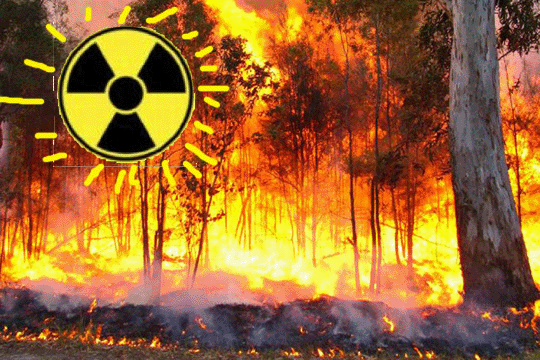
What Australia type fire may tell us about the possibility of nuclear disasters, https://www.dianuke.org/what-australia-type-fire-may-tell-us-about-the-possibility-of-nuclear-disasters/ JANUARY 22, 2020 Australia is one of the countries that have experienced extreme weather events, especially in the last decade due to the effect of global warming. According to experts, system interactions triggered global warming, and extinguishing fires has become impossible due to reduced water resources as a result of excessive evaporation and mismanagement of these resources in the last decade in the country. It is estimated that nearly 1.25 billion animal species and at least 27 people have lost their lives, in addition to annihilation of forests and vegetation due to the fires which could not be controlled for almost four months; other species are threatened with extinction and 1800 houses have reportedly burned down.
Unfortunately, the impact of the events is not limited to the period of their occurrence – while four months of carbon emissions, as much as the annual carbon emission amount to the atmosphere, there are scientific studies indicating that there may be an increase in various diseases, especially asthma, especially among children, with the air quality rising to nearly 21 times the dangerous level. Things could have been much worse if the fires had reached the region where uranium mines are located in Australia, which supplies 12% of the uranium fuel used in nuclear power plants operating worldwide; Australia however, has no nuclear power plant of its own. Continue reading
Former Prime Minister Turnbull scathing about #MorrisonFromMarketing, on the climate issue
Last year, The New Daily revealed the Prime Minister had embarked on a secret trip to Hawaii while fires were devastating Australian communities.
The former prime minister, who has a new book out this year, also slammed the US President Donald Trump for playing a “very destructive” role in the climate debate.
“Trump makes no bones about it. He says global warming is rubbish,” Mr Turnbull said.
“Trump is trying to put a brake on global action to reduce emissions. The lack of American leadership is extremely damaging.
Mr Turnbull also accused his own predecessor, Tony Abbott, of being the nation’s most prominent climate denier in Australian politics, who was joined by others in a shameful “war against science”.
“It is an extraordinarily irrational and self-destructive approach,” Mr Turnbull said.
“The right [wing] in the Liberal Party essentially operate like terrorists,” he said.
“Now I’m not suggesting that they use guns and bombs or anything like that, but their approach is one of intimidation.
“And they basically say to the rest of the party… if you don’t do what we want, we will blow the show up. Famously one of the coup leaders said to me, ‘you have to give in to the terrorists’.” https://thenewdaily.com.au/news/world/2020/01/23/malcolm-turnbull-scott-morrison-climate-denial/
Australia’s Finance Minister Mathias Cormann spruiks for coal and for Trump at Davos summit
 Davos 2020: Climate critics are wrong, says Matthias Cormann THE AUSTRALIAN, 22 Jan 2020
Finance Minister Mathias Cormann has declared global perceptions of Australia’s climate action are “false” as he defended both the coal industry and US President Donald Trump in front of world leaders at the Davos summit…. (subscribers only)
Australia’s billion of animal deaths – conservationists must not give up

|
Conservation scientists are grieving after the bushfires – but we must
not give up, The Conversation, January 21, 2020 Stephen Garnett,
Professor of Conservation and Sustainable Livelihoods, Charles Darwin
John Woinarski, Professor (conservation biology), Charles Darwin University,
Sarah Legge, Professor, Australian National University
That a billion animals may die as a result of this summer’s fires has horrified the world. For many conservation biologists and managers, however, the unprecedented extent and ferocity of the fires has incinerated much more than koalas and their kin.The scale of the destruction has challenged what is fundamentally an optimistic worldview held by conservationists: that with sufficient time, love and money, every species threatened by Australia’s 250 years of colonial transformation cannot just be saved from extinction, but can flourish once again. The nation’s silent, apocalyptic firescapes have left many conservation biologists grieving – for the animals, the species, their optimism, and for some, lifetimes of diligent work. So many of us are wondering: have lives spent furthering conservation been wasted? Should we give up on conservation work, when destructioncan be wrought on the environment at such unprecedented scales? The answer is, simply, no. Acknowledge the grief Federal government figures released on Monday showed more than half of the area occupied by about 115 threatened species has been affected by fire. Some of these species will now be at significantly greater threat of extinction. They include the long-footed potoroo, Kangaroo Island’s glossy black-cockatoo and the East Lynne midge orchid………. 1.action is an effective therapy for grief. There is plenty to do: assess the extent of damage, find and nurture the unburned fragments, and feed the survivors. The official recovery response has been swift. Victoria, New South Wales and now the Commonwealth have all issued clear statements about what’s happened and how they’re responding. The determination and unity among government agencies, researchers and conservation groups has been remarkable……. |
|
Bangladesh and Australia- both vulnerable to climate change – but will that stop the coal lobby?
 Despite climate impact, Bangladesh wants Australian coal to fire 29 new power stations, https://www.theage.com.au/politics/federal/rba-told-to-mobilise-all-forces-to-save-the-economy-from-climate-change-20200120-p53szi.html Bangladesh has been criticised for its ambitious plans to build 29 new coal-fired power stations, but its high commissioner to Australia believes the new projects could be an opportunity for greater trade between the two nations. 20 Jan 2020 , BY BRETT MASON SBS chief political correspondent Brett Mason reports from Dhaka, Bangladesh Despite climate impact, Bangladesh wants Australian coal to fire 29 new power stations, https://www.theage.com.au/politics/federal/rba-told-to-mobilise-all-forces-to-save-the-economy-from-climate-change-20200120-p53szi.html Bangladesh has been criticised for its ambitious plans to build 29 new coal-fired power stations, but its high commissioner to Australia believes the new projects could be an opportunity for greater trade between the two nations. 20 Jan 2020 , BY BRETT MASON SBS chief political correspondent Brett Mason reports from Dhaka, Bangladesh
Bangladesh’s high commissioner to Australia has urged the Australian government to consider new trade opportunities with the country, including the potential to supply it with 80 million tonnes of coal over the next five years. SBS News is currently in Bangladesh as part of a parliamentary learning tour organised by Save the Children. Speaking to SBS News ahead of the trip, Mohammad Sufiur Rahman said Bangladesh’s controversial plans to construct 29 new power stations over the next two decades would require a “huge quantum” of coal to power them. “We’ll have to source it from places, either Indonesia, or Australia, or maybe South Africa,” he said. Mr Rahman began spruiking the “enormous” export opportunity to the Australian media last year and doubled down on it in his interview with SBS News. “The quality and calorific value of Australian coal is much better in comparison to other sources,” he said. Climate impactBangladesh has the sixth-highest number of current and proposed coal-powered projects compared to the rest of the world, according to environmental advocacy group Market Forces. But the nation is also particularly vulnerable to climate change, with fears a projected half a metre sea-level rise by 2050 could leave 11 per cent of the country’s landmass underwater and 15 million people displaced. Continue reading |
Morrison says NSW minister “doesn’t know what he’s talking about.” Does Morrison? — RenewEconomy

Morrison misrepresents federal emissions targets and renewables investment while trying to chastise NSW energy minister Matt Kean over climate. The post Morrison says NSW minister “doesn’t know what he’s talking about.” Does Morrison? appeared first on RenewEconomy.
Morrison says NSW minister “doesn’t know what he’s talking about.” Does Morrison? — RenewEconomy
1 This month

of the week – Australians for War Powers Reform (AWPR)
To see nuclear-related stories in greater depth and intensity
 Antinuclear