 Heatwave set to blaze across Queensland for next few days, ABC News, By Aneeta Bhole and staff, 21 Dec 18, Scorching weather has been predicted over the next four days in Queensland, with temperatures set to soar over 40 degrees Celsius in the state’s western interior.
The Bureau of Meteorology (BOM) has predicted north-west and central-west Queensland will see temperatures of up to 43C, while the south-west of the state will reach close to 50C.
BOM meteorologist Nicholas Shera said forecasters were expecting low to severe heatwave conditions, with some extreme heatwave conditions in areas of north-west Queensland, the central-west, and especially in the south-west.
At 3:00pm on Wednesday, temperatures reached 42C in Longreach, 44C in Mount Isa and 48C in Birdsville.
“People should take all the precautions they need to avoid too much exposure to the heat,” Mr Shera said.
Mr Shera said despite their familiarity with high temperatures, it was important for people in the region to be cautious.
“In 2017 we saw quite a few temperatures in the low to mid-40s for much of western Queensland, and in 2016 we saw similar heatwaves as well,” Mr Shera said.
“But what’s interesting [this time] is we’re also seeing overnight lows in the hot 20s. For example, in Longreach we’re seeing a low of 29C, when you’d expect overnight lows to only be about 22C.”….. https://www.abc.net.au/news/2018-12-20/heatwave-weather-across-queensland/10634450
December 22, 2018
Posted by Christina Macpherson |
climate change - global warming, Queensland |
Leave a comment
 https://www.theguardian.com/environment/2018/dec/20/adani-ordered-to-pay-almost-12m-for-work-on-scrapped-carmichael-rail-line, Ben Smee
Judgment details how ‘payment difficulties’ emerged in contract between AECOM and Adani subsidiary Adani has been ordered to pay almost $12m owed to engineering firm AECOM for work on a scrapped rail line to the Carmichael coalmine.A judgment in the Queensland Building and Construction commission details how “payment difficulties” emerged in a contract between AECOM and an Adani subsidiary company. The 1,862-point commission adjudicationsays Adani had “anticipated” receiving government support that did not materialise, including a $1b federal loan to build the rail link between Carmichael and the Abbot Point port.
The loan was vetoed by the Queensland government in November last year. The contract to design the rail line was suspended about six months later.
Soon after AECOM lodged a claim with the QBCC alleging it was owed $20m for the work. Adani countered by offering $325,000.
The QBCC this week issued a detailed mixed ruling that Adani owes AECOM about $12m, plus interest. The ruling also reveals how the rail line, which has since been abandoned, suffered a series of setbacks.
These included Adani being unable to provide AECOM with access to properties to undertake design work, “expected government relaxations that did not materialise” and the veto of a loan from the Northern Australia infrastructure facility.
“[AECOM] argued that these difficulties resulted in delays … [and] a substantial change to [Adani’s] project delivery strategy, resulting in the suspension of the claimant’s services,” adjudicator Chris Lenz said.
Adani had previously said the Naif loan was “not critical” to its project. As the rail project struck “difficulties”, Adani was unsuccessfully attempting to find outside finance for the Carmichael project. Eventually the company changed tack, downscaling port, rail and mine plans and cutting costs to an extent it can self-finance Carmichael.
It announced last month Carmichael would go ahead without external finance, and that works at the site in the Galilee Basin are imminent. But several key approvals and processes remain outstanding; including some which will not be finalised by the federal election. Adani has sought to frame those approvals as formalities, and can undertake some works before those approvals being granted.
A recent federal court decision means a full-bench appeal by traditional owners, members of the Wangan and Jagalingou family council, will likely be heard in May next year. The Queensland government is understood to be waiting until the outcome of that case before extinguishing native title at the Carmichael site.
Guardian Australia has previously reported that access discussions with rail network operator Aurizon will likely take until September, and that those negotiations will need to settle who pays for line upgrades worth at least $100m.
Management plans for groundwater have not been approved. A recent government report said cumulative water impacts in the Galilee had been understated, and the ABC reported this week the CSIRO had flagged concerns about Adani’s groundwater dependent ecosystems management plan, which the Queensland government must approve, and for which there is no statutory timeframe.
No significant ground disturbance can occur until the groundwater plan is approved.
Adani said in a statement it had invested $3.3bn in its Australian businesses, “a clear demonstration of our capacity to deliver a financing solution for the mine and rail project, as well as meeting all financial obligations”.
“In September we announced a new narrow-gauge railway design solution for the Carmichael project to accelerate the delivery and reduce capital costs. We have already secured the necessary approvals and land-access agreements with landholders needed to build the line.
“We are working through [the] regulatory process with the network owner and once it is complete we will commence construction of the rail line.”
December 22, 2018
Posted by Christina Macpherson |
climate change - global warming, Queensland |
Leave a comment
Crispin Hull, DECEMBER 21, 2018 As Hyundai demonstrated its latest pollution-reversing hydrogen car in London this week, it is worth looking at how the policy impasse on climate-change – caused by the actions of the troglodyte right of the Coalition – threatens Australia’s economic well-being. We first have to understand the troglodytes’ beliefs by following the money trail.
It is wrong to assume that they believe that the climate is not changing or if it is that humans are not causing it and therefore coal is okay to use. Rather it is the other way around. Their financial backers in the coal industry want to be able to continue to profit from coal, therefore the troglodytes must either deny climate change is happening or that coal has anything to do with it.
Of course, proselytising and propaganda have caused a lot of people to believe that there is no human-made climate change, in the same way that people have been convinced of a religious belief that, say, God made the earth in a week a few thousand years ago. But it is not science.
It is difficult to shift belief. It is also difficult to change the selfish view that Australia can do little on its own. We should therefore look at economics and how much these beliefs will cost Australia in the near future.
The Coalition troglodytes should contemplate over this yet-again record-breaking hot summer how their dogged determination to stick with coal and other fossil fuels is denying Australia a leading role in new industries and billions in savings by using new technology.
Climate change aside, we should be embracing renewable energy from solar and wind with battery and hydro storage because they will make our lives materially better.
Hyundai’s hydrogen car is a good example. It splits hydrogen into two positively charged protons and two negatively charged electrons. The electrons are drawn off to run the car’s electric motor. Then they and the protons are combined with oxygen from the air to form harmless water.
The oxygen has to be free of pollutants, so the incoming air is filtered. The net result is that the hydrogen car removes as much pollutant from the air per kilometre as petrol and diesel cars emit.
Hydrogen-powered cars are driven by electric engines, just like ordinary electric cars, but their energy source is stored in hydrogen fuel cells. Other electric cars use batteries, usually lithium. Both need electric power, usually from the grid, to charge them.
These cars are already here, but in the next few years, sales will boom. We do not make any cars in Australia so we will be forced to follow international trends as petrol and diesel cars are phased out. They will go the way of the film camera with the onslaught of vastly cheaper and instantly satisfying digital cameras. It took about eight years for almost the whole of the world’s camera inventory to be replaced.
Electric cars have very few moving parts, not even a gearbox. They do not emit poisonous gases into the atmosphere. And even with Australia’s inexplicably high electricity prices are far cheaper to run than petrol or diesel cars.
A battery car uses about 18kWh of electricity for 100km, say $4. A hydrogen car uses about double that, and, incidentally, unless that improves it may mean that hydrogen cars do not take off, though hydrogen trucks and buses will still make sense. A petrol or diesel car, on the other hand, costs about $10 per 100km and requires much more servicing and lubricants than electric cars do.
But if the federal government is so scared of the coal lobby that it will not develop an innovative energy and transport policy Australians will not get these benefits, or get them later and at a greater cost.
Our national government should not be contemplating subsiding or owning new coal power plants but be leading the charge. It should not be passively waiting for industry, the states and individuals to take up the technology in a haphazard way. Our government should be promoting nationwide charging stations for electric cars.
At present Australia imports about 90 per cent of its liquid fuel for transport, at a cost of about $50 billion a year.
If the Coalition is really interested in jobs and growth and running the economy it would be helping Australian industry innovate with more renewables and better battery and other storage technologies.
We should be replacing the $50 billion worth of polluting fuel with electricity from our abundant sun and wind…….At present Australia imports about 90 per cent of its liquid fuel for transport, at a cost of about $50 billion a year.
If the Coalition is really interested in jobs and growth and running the economy it would be helping Australian industry innovate with more renewables and better battery and other storage technologies.
We should be replacing the $50 billion worth of polluting fuel with electricity from our abundant sun and wind. clarionledger.com http://www.crispinhull.com.au/
December 22, 2018
Posted by Christina Macpherson |
AUSTRALIA - NATIONAL, climate change - global warming |
Leave a comment
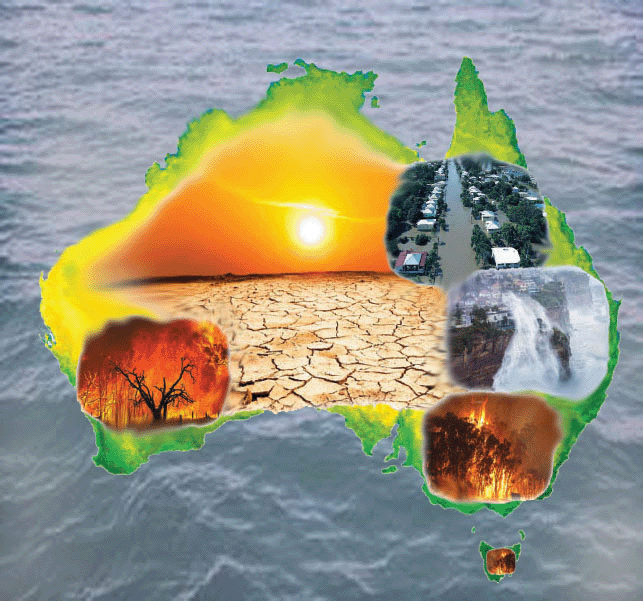
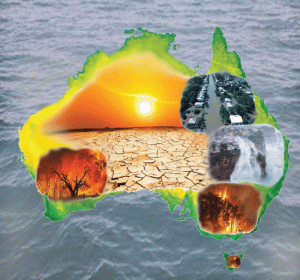 Australia experiencing more heat, longer fire seasons and rising oceans
State of the climate report points to a long-term increase in the frequency of extreme heat events, fire weather and drought, Guardian Lisa Cox
December 20, 2018
Posted by Christina Macpherson |
AUSTRALIA - NATIONAL, climate change - global warming |
1 Comment
 Coalition’s divide exposed at COAG energy meeting in Adelaide, ABC, By Casey Briggs 19 Dec 18, A meeting of Australia’s energy ministers had ended bitterly divided, with the country’s biggest Liberal-run state accusing the Commonwealth of blocking discussion on climate change. Coalition’s divide exposed at COAG energy meeting in Adelaide, ABC, By Casey Briggs 19 Dec 18, A meeting of Australia’s energy ministers had ended bitterly divided, with the country’s biggest Liberal-run state accusing the Commonwealth of blocking discussion on climate change.
|
|
|
December 20, 2018
Posted by Christina Macpherson |
AUSTRALIA - NATIONAL, climate change - global warming, politics |
1 Comment

State of the Climate: Thank goodness for ocean sinks currently holding more warming extremes at bay
Key points:
- Australia’s climate has now warmed by over 1 degree Celsius since 1910
- Oceans have now warmed by around 1C since 1910
- For the first time, the report draws attention to “compound extreme events” when multiple variables coincide
An extra two years has firmed-up the data to demonstrate that climate change is happening now.
Dr Helen Cleugh, the director of the climate science centre at CSIRO, said the last time the planet saw levels of CO2 this high was at least 800,000 years ago.
She said atmospheric CO2 is up 46 per cent since before the industrial era began in the 1750s.
“We know from our analysis that the cause of the increases in CO2 concentration is human activities, through burning of fossil fuels and through land use change,” Dr Cleugh said.
Ocean sinks
That CO2 is not just staying in the atmosphere.
“As a result of the increased greenhouse gases in the atmosphere we’ve actually got more energy in the Earth’s climate system, and it turns out that over 90 per cent of that extra energy has actually been taken up by the ocean,” Dr Cleugh said.
“Our oceans and land are performing an enormous ecosystem service at the moment because they’re taking up a lot of the anthropocentric [human-generated] CO2 emissions.”
The oceans take up the CO2 directly, removing it from the atmosphere, as well as absorbing heat from the atmosphere. The land also acts as a sink but to a lesser extent.
“That has two really important implications. The first is that it means that the oceans play a really important role in modulating the rate and pace of our changing climate. But the other is it leads to warming,” Dr Cleugh said.
A very live research question right now is will those oceans and land continue to take up CO2 into the future.
“At the moment we’re not seeing any evidence of the weakening of that sink.”
But Dr Cleugh said that models of our future climate suggest that the extra CO2 and heat would not be able to be taken up by the ocean forever.
A bit like sweeping dust under a rug, eventually only so much can fit.
“There are feedbacks that could lead to a weakening of those sinks, either on the land or in the ocean, and that would mean that warming in the atmosphere would proceed at a greater rate,” she said.
Dr Cleugh said it is a very important scientific question to understand the way that the oceans are behaving.
“It turns out the Southern Hemisphere oceans are particularly important in taking out heat and CO2. So it’s really important that we do that research in our own patch,” she said.
Oceans already feeling the heat
Ocean temperatures, already up by around 1 degree Celsius since 1910, has contributed to more and longer marine heatwaves.
The back-to-back bleaching of the Great Barrier Reef in 2016 and 2017 have been well canvased, but the changing ocean is meddling with other ecosystems.
The report states that the Eastern Australian Current — of Finding Nemo fame — is extending further south, encouraging warming in the Tasman Sea and extending the habitat of other species south.
As the ocean warms it is expanding, which is coupling with ice melts to raise sea levels.
The increased CO2 in the water has also lead to a 30 per cent increase in ocean acidity since the late 1800s.
“This has significant implications for our marine ecosystem and the ability of corals to regrow, so it actually is linked back to the coral bleaching,” Dr Cleugh said.
These changes are not happening evenly. Luckily for the Great Barrier Reef, so far it looks like the worst of the ocean warming acidification has happened to the south of Australia……..https://www.abc.net.au/news/2018-12-20/bom-csiro-biennial-state-of-the-climate/10631122
December 20, 2018
Posted by Christina Macpherson |
AUSTRALIA - NATIONAL, climate change - global warming |
1 Comment
Extreme heat wipes out almost one third of Australia’s spectacled flying fox population, ABC Far North , 20 Dec 18, By Sharnie Kim and Adam Stephen An extreme heatwave in far north Queensland last month is estimated to have killed more than 23,000 spectacled flying foxes, equating to almost one third of the species in Australia.
The deaths were from colonies in the Cairns area where the mercury soared above 42 degrees Celsius two days in a row, breaking the city’s previous record temperature for November by five degrees.
Ecologist, Dr Justin Welbergen from the Hawkesbury Institute for the Environment (Western Sydney University) is collating the numbers of bat deaths and said it was the second-largest mass die-off of flying foxes recorded in Australia and the first time it had happened to this species.
“These are certainly very serious wildlife die-off events and they occur at almost biblical scales,” he said……..https://www.abc.net.au/news/2018-12-19/heat-wipes-out-one-third-of-flying-fox-species/10632940
December 20, 2018
Posted by Christina Macpherson |
AUSTRALIA - NATIONAL, climate change - global warming, environment |
Leave a comment
 https://www.theguardian.com/commentisfree/2018/dec/17/the-legal-clause-which-could-allow-adani-to-sue-australiaPatricia Ranald Global corporations should not have special legal rights to undermine the policies of democratically elected governments. Mon 17 Dec 2018 .
Opposition leader Bill Shorten has stated again that a future Labor government should not cancel the Adani mine licence for environmental reasons because of “sovereign risk”.
All major banks and financial institutions have refused to fund the Adani project because of both financial and environmental risks, and there is a strong grassroots movement which has moved public opinion and resulted in Labour opposing any use of federal funds to support the project.
So the Adani project itself is regarded by investors as very risky. As prominent economist Saul Eslake has argued, its demise is unlikely to result in a sudden fall of more general investor confidence in Australia, which is what “sovereign risk” implies.
There is a bigger risk for a future government which might choose to cancel the licence. Adani could sue the Australian government for millions of dollars through the process known as Investor-State Disputes Settlement (ISDS), using the now terminated Australia-India Bilateral Investment Treaty.
ISDS gives giant global companies like Adani special legal rights that are not available to local companies to claim millions in compensation if they can argue that a law or policy has reduced the value of their investment, known as “indirect expropriation” and/or if they can claim that they were not properly consulted about the change in the law or policy.
The cases are heard by international tribunals that have been criticised by legal experts such as former High Court Chief Justice Robert French because they have no independent judges, no precedents and no appeals. There are now over 900 known cases and many are against health, environment, indigenous rights or other public interest regulation.
Even when governments win, they lose, because it takes years and millions of dollars to defend ISDS cases. The US Philip Morris tobacco company lost its claim for compensation for Australia’s 2012 plain packaging legislation in the Australian High Court. The company could not sue under the Australia-US Free Trade Agreement because the Howard government had not agreed to ISDS in that agreement. The company moved some assets to Hong Kong and used ISDS in a Hong Kong-Australia investment agreement to sue the Australian government. It took over four years for the tribunal to decide that Philip Morris was not a Hong Kong company. It took an FOI case to reveal that it cost the government $38m of taxpayer dollars in legal fees to defend the case.
The Australia-India treaty was terminated by India on March 23, 2017 but it has an extraordinary grandfather clause that means its provisions apply to investments made before that date for another 15 years. India, South Africa and a number of other countries have terminated all such investment treaties because of the risks and costs to governments from unfair tribunal decisions. Australia’s Productivity Commission has condemned ISDS for the same reasons, as did the previous Rudd-Gillard Labor government.
The European Court of Justice found recently that ISDS limits national sovereignty and that any trade agreement containing ISDS could not be negotiated by the European Commission, but had to be approved by each EU national parliament. Fearing rejection of ISDS, the EU has ceased including ISDS in its recent trade deals, including the one currently being negotiated with Australia
Current Labor policy opposes ISDS in trade and investment agreements because it “undermines fair competition, judicial independence and the Australian people’s sovereign right to legislate and implement policies in their interests through democratic processes”.
The cancellation of the Australia-India investment agreement in March 2017 means that Adani cannot claim compensation for investments made after that date. But under the 15-year grandfather clause, Adani could seek compensation for what it has claimed is the $3bn of investment made before March 2017 in preliminary costs including the Abbot Point port lease to export the coal.
Even the threat of an ISDS case can deter governments from taking action in the public interest. The New Zealand government deferred its plain packaging legislation for over four years until the Philip Morris ISDS case was over. Now it seems that Labor could be deterred from developing a policy against the Adani project because of the threat of ISDS.
This is yet another example of why Labor should implement its policy against including ISDS in all trade agreements, and remove it from current agreements like the TPP-11. Global corporations should not have special legal rights to undermine the policies of democratically elected governments. It would be a travesty of democracy if a government elected on the basis of majority support for regulation of carbon emissions and other action against climate change faced challenges from global companies aiming to frustrate their implementation.
• Dr Patricia Ranald is convener of the Australian Fair Trade and Investment Network and a research fellow at the University of Sydney
December 18, 2018
Posted by Christina Macpherson |
AUSTRALIA - NATIONAL, climate change - global warming, legal |
Leave a comment
COP24 sees Australia walk climate tightrope amid ‘Paris Rulebook’ deadlock, ABC Weather , By Ben Deacon 15 Dec 18 The COP24 Climate talks in Poland have been extended through the weekend, as nations remain deadlocked over how to implement the Paris agreement.
The aim of the annual United Nations conference is to determine what collective action the world takes on climate change. AUDIO: Australia walks climate talks tightrope (AM)
More than 100 ministers and more than 1,000 negotiators from around the globe have been hammering out the so-called ‘Paris Rulebook’ with an eye to defining how pledges will be put into action.
In the thick of it all has been the Australian delegation, which has been walking a tightrope between the Paris obligations and support for fossil fuels.
In a defining moment at COP24, protesters disrupted a pro-fossil fuel event on Monday that had been organised by the Trump administration.
On stage, the only non-American panellist at the event was Australia’s Ambassador for the Environment, Patrick Suckling.
“Fossil fuels are projected to be a source of energy for a significant time to come,” Mr Suckling said.
Fossil fuel event ‘damaged’ Australia’s credibility
The Director of the Climate & Energy Program at the Australia Institute, Richie Merzian, believes Australia jeopardised its influence in the COP process by appearing at the US event.
“Everyone picked up on the fact that Australia was on the panel with the Trump appointees,” Mr Merzian said.
“I think it even made the New York Times and the Washington Post.
“It really damaged, I think, Australia’s credibility here.”……. https://www.abc.net.au/news/2018-12-15/australia-walks-climate-tightrope-at-cop24/10623558
December 17, 2018
Posted by Christina Macpherson |
climate change - global warming, politics international |
Leave a comment
Are carbon emissions coming down in Australia? RMIT ABC Fact Check, 17 Dec1,
The claim During
a recent episode of the ABC’s Q&A program, former Liberal minister Amanda Vanstone claimed “emissions are coming down” in Australia.
Her comment came a few days before a major UN climate summit, COP24, held in Katowice, Poland.
Other panellists on Q&A contradicted Ms Vanstone, saying emissions were rising. This prompted many viewers of the program to call on RMIT ABC Fact Check to investigate Ms Vanstone’s claim.
The verdict
Ms Vanstone’s claim is misleading.
Latest federal government figures suggest that although greenhouse gas emissions have fallen over the past 10 years, emissions started trending upwards again about four years ago.
The upturn, since 2014, has coincided with the Abbott government’s removal of the carbon tax.
Also, while emissions from electricity production have been falling, the decrease has been outweighed over the past four years by rising emissions in other sectors of the economy, such as transport, where emissions are associated with increased LNG production for export……..
What’s going on with total emissions?
Over the year to June 2018, Australia’s total greenhouse gas emissions rose in each quarter, according to the report. Continue reading →
December 17, 2018
Posted by Christina Macpherson |
AUSTRALIA - NATIONAL, climate change - global warming |
Leave a comment
ABC by Josh Robertson 16 Dec 18
Key points:
- Adani demanding W&J pay $161,000 into the court to cover potential costs
- Miner wants Indigenous challenge
Adani has asked the Federal Court to throw out a legal challenge to its Queensland coal mine unless five traditional owners with little money can stump up more than $160,000.
The mining company applied for a court order to secure potential legal costs if it wins against Wangan and Jagalingou (W&J) representatives, who are seeking to overturn a crucial mine site land deal
……Lawyer Col Hardie for the W&J challengers told an earlier Federal Court hearing that legal bills were paid by the W&J traditional owners corporation through fundraising appeals to the public…….
In August, Federal Court judge John Reeves upheld Adani’s Indigenous land Use Agreement (ILUA) with the W&J, saying none of the grounds for challenging it had “any merit”.
Five W&J representatives who unsuccessfully argued it was a “sham” agreement — Delia Kemppi, Lester Barnard, Linda Bobongie, Adrian Burragubba and Lyndell Turbane — are appealing that ruling before the full bench of the Federal Court.
The court will hear Adani’s bid to make its opponents pay security on 18 December.
Last month, Adani announced it would “self-finance” the controversial project and was ready to begin building and operating a scaled-down mine.
But the company needs the ILUA to have the Carmichael mine site title converted to freehold and to carry out major works…….
Queensland Mines Minister Anthony Lynham said in September that Adani “needs to prove they can reach financial close [certainty] before we finalise processes for this project”.
He also said the Government recognised the rights of traditional owners to legally contest the ILUA.
The W&J mine opponents vowed to take their fight to the High Court.
Their solicitor Mr Hardie told the ABC: “My view is that Adani desperately want to have the appeal determined before there’s a change in Federal Government”…….https://www.abc.net.au/news/2018-12-14/adani-aim-quash-traditional-owner-challengers-over-money/10616732?fbclid=IwAR1v3RuVPidk994vhBJiqnRUSgRXKE6tw2Cgnsge7c7uHtzEzuRQQBt8RIM
December 17, 2018
Posted by Christina Macpherson |
aboriginal issues, AUSTRALIA - NATIONAL, climate change - global warming, legal |
Leave a comment
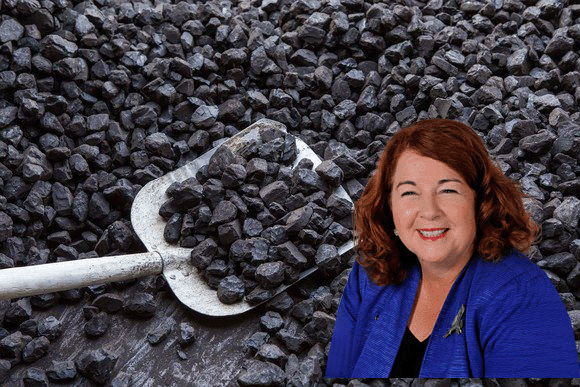
 ‘New energy future’: Minister touts Australia at climate summit, Brisbane Times, By Peter Hannam,13 December 2018 — Australia is moving “towards a new energy future”, powered by unprecedented investments in renewable energy, Environment Minister Melissa Price has told a summit in Poland even as the country earned a “fossil of the day award for its poor climate policies.
In a speech on Wednesday at the COP24 climate talks in Katowice, Ms Price said Australia was “committed to the Paris Agreement” and the development of a “robust rulebook” to implement the global pact agreed in 2015…….
Richie Merzian, a climate researcher with The Australia Institute, said Minister Price’s speech “relied almost entirely on policies her government tried to kill-off or water down”.
He also criticised the climate finance pledge, saying Prime Minister Scott Morrison “had trashed and cut support for UN’s key climate finance body, the Green Climate Fund”.
‘Fossil of the Day’
Australia’s policies also copped flak from The Climate Action Network, an alliance of 1300 environmental groups, which
declared the country “fossil of the day” for its four years of rising greenhouse gas emissions.
The network also raised the issue, first reported by the Herald, that Australia had “remained silent” about whether it planned to use any surplus from the Kyoto Protocol period – possibly 400 million tonnes worth – to count against its Paris target.
Ms Price’s Labor counterpart, Mark Butler, has also continued to not rule out the use of any Kyoto credits for its post-2020 targets.
“It’s not clear whether the so-called rulebook for the Paris Agreement will allow a carryover,” Mr Butler told Radio National on Thursday.
“If it does, we would have to consider any conditions about that,” he said, adding, “my bias is to steer very clear of cop-outs and accounting tricks when it comes to climate change policies.”
Greens climate spokesman Adam Bandt said: “It is disappointing that Mark Butler has left the door open to cooking the books to meet their Paris commitment. The analysis is clear that up to a quarter of Labor’s target could be met by fake Kyoto credits if they follow the Coalition and pull the same dodgy accounting tricks.” https://www.brisbanetimes.com.au/environment/climate-change/new-energy-future-minister-touts-australia-at-climate-summit-20181213-p50m3f.html
December 15, 2018
Posted by Christina Macpherson |
AUSTRALIA - NATIONAL, climate change - global warming, politics international |
Leave a comment
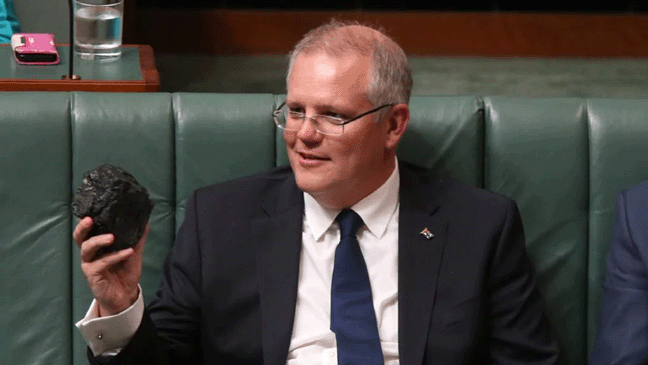
Coalition signals it will provide taxpayer support for new and existing coal plants. https://www.theguardian.com/environment/2018/dec/13/coalition-signals-it-will-provide-taxpayer-support-for-new-and-existing-coal-plants Katharine Murphy Political editor@murpharoo 13 Dec 2018
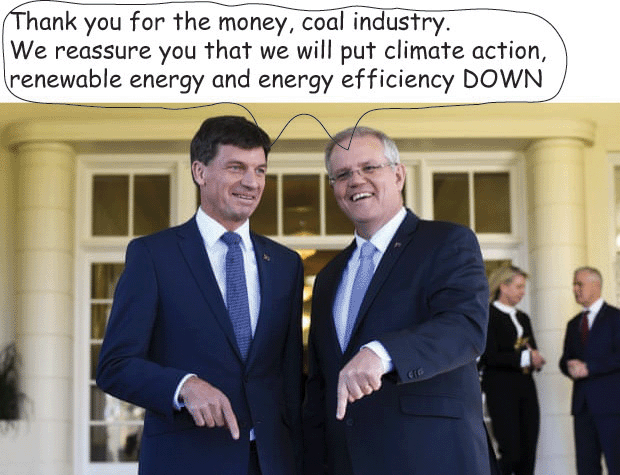
Morrison government specifies generation projects will need to be coal, gas, batteries or pumped hydro to be eligible for underwriting The Morrison government has sent a clear signal that it is prepared to provide taxpayer support for both new and existing coal plants, opening registrations of interest in its controversial new power generation underwriting program.
With the government accelerating to cover off major announcements before the Christmas break, the energy minister, Angus Taylor, will on Thursday use an event at a hydro power station in Tasmania to outline the terms of the new program and urge proponents to get their bids in over the summer break – before 23 January.
As well as finalising the criteria for the underwriting program, and calling for expressions of interest, the government is also expected to outline its response to the Ruddock review into religious freedom, and unveil its decision on Australian diplomatic facilities in Israel, before the end of the week.
Taylor will confirm on Thursday that the underwriting program – which has been criticised by business groupsand energy stakeholders – will potentially fund generation projects including new builds and brownfield projects, like upgrades or life extensions of existing coal generators.
Taxpayer support will be made available to projects through a range of financing options such as underwriting floor prices, underwriting cap prices, grants and loans – although the finalised program guidelines makes it clear that the amount of support available under each phase of the program, and the extent of taxpayer liability, will be capped.
The government has not published an upper limit on the size of eligible projects but the minimum eligible project size will be 30MW
The criteria makes it clear that the program is technology neutral but it also specifies that generation projects will need to be coal, gas, batteries or pumped hydro to be eligible for the government underwriting.
The document calling for expressions of interest does not supply any specific guidance on the emissions intensity of the projects. It says only that projects delivering an electricity product at a lower emissions intensity “will be deemed higher merit.”
It also makes clear the program will also be open to foreign investors in the event the proposal can clear Foreign Investment Review Board processes.
As to timing, the document suggests phase one is anticipated to commence in the first quarter of 2019 – which puts some of the decision making pre-election in the event the government goes to the polls in April.
Labor and the Greens are opposed to any taxpayer support for coal projects, and will continue efforts once parliament resumes next year to try and frustrate the Coalition’s program, potentially by attempting to amend the government’s “big stick” divestiture bill, which stalled in the final sitting week, to include a prohibition on power companies receiving commonwealth support.
As well as the underwriting, Taylor has also flagged the possible indemnification of projects from the future risk of a carbon price.
There is speculation around the energy sector that the government underwriting proposal could facilitate an extension of the Vales Point power station near Lake Macquarie in New South Wales. It is owned by Trevor St Baker, who was vocal during a stakeholder session last month convened to discuss the underwriting program.
Ahead of Thursday’s announcement, Taylor said: “This program will drive down electricity prices for householders by increasing competition and increasing supply in the market.”
He said the objective was to produce a pipeline of projects “that will allow us to bring targeted generation into the system in the right place at the right time”.
December 15, 2018
Posted by Christina Macpherson |
AUSTRALIA - NATIONAL, climate change - global warming, politics |
Leave a comment
Despite plummeting costs of renewables the government and the BCA insist that emissions reduction would be ‘economy wrecking’
Fresh from losing the economic fight about company tax cuts, the Coalition government is doubling down on an economic fight about renewable energy. And yet again, as they march into battle they have the Business Council of Australia as their key source of economic and political advice. What could go wrong?
The cost of renewable energy has fallen dramatically in the past 10 years and will continue to fall for years to come. By some accounts, new renewables with storage are already cheaper than coal fired power stations. Some argue that they aren’t quite there yet. But no one argues that in 30 years’ time a new coal-fired power station that has to buy coal will be able to compete with a solar farm that gets its sunshine for free.
Betting on the future cost of renewables is like catching a falling knife, but if there is one thing that unites the Coalition and the BCA it’s that they aren’t averse to self-inflicted wounds. At precisely the time when the costs of renewables and storage are plummeting and the world is meeting in Poland to discuss reductions in fossil fuel use, the Liberal government and the peak body for the biggest businesses in Australia are united in arguing that a 45% emissions reduction target by 2030 would be – in the words of BCA chief executive Jennifer Westacott – “economy wrecking”.
As with the failed campaign for company tax cuts, the nation’s prime minister is getting his talking points from the nation’s biggest lobbyists. In parliament last week Scott Morrison declared “a 45% target is economy wrecking”, adding to a scare-campaign designed to convince the Australian public that they have to choose between the environment they want for their kids and the jobs they want for them. It is sickening.
Not even the BCA’s own members believe the rhetoric of their peak body. Both Commonwealth Bank and Citi have renewable energy targets of 100% – Citi by 2020. Other BCA members like the CSIRO have put out a transition road map which includes 90% electricity generation from solar PV and wind by 2050 while maintaining reliability in the grid…………https://www.theguardian.com/commentisfree/2018/dec/13/scott-morrison-and-the-business-council-are-pushing-coal-but-on-what-evidence
December 15, 2018
Posted by Christina Macpherson |
AUSTRALIA - NATIONAL, climate change - global warming, politics |
Leave a comment
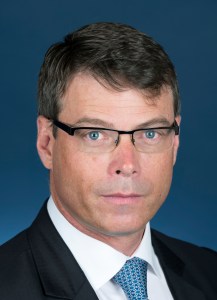 Climate Mobilisation Australia, 11 Dec 18, The Australian Ambassador for the Environment, Patrick Suckling, appeared on a panel for a US government side-event pushing clean coal technologies as climate solutions. The session on Monday 10 December was called: “U.S. Innovative Technologies Spur Economic Dynamism – Promoting innovative approaches”.
One must ask was Ambassador Suckling’s presence sanctioned at Ministerial level? His attendance on the panel is hardly good diplomacy for Australia, even given the Liberal Government support for coal and weak climate targets and climate policy.
After about 9 minutes the first speaker was disrupted and youth and civil society delegates unfurled a banner and made their own testimonies on the disruptive and dangerous nature of coal for health and climate.
They chanted “Keep it in the ground” and “Shame on you”, before leaving the session. After they left, there were very few people to listen to the myths being spouted of clean coal.
Watch the Facebook Livestream video of young delegates taking over the side event about 9 minutes in and making their own testimony on the fossil fuel industry.
The Australia Institute Director of Climate & Energy Program Richie Merzian was there to document the session in the tweets below.
“How could this be good for Australia? The Ambassador finding himself in the middle of the largest cultural battle at #COP24” remarks Richie Merzian…… https://www.facebook.com/groups/859848424161990/
December 13, 2018
Posted by Christina Macpherson |
AUSTRALIA - NATIONAL, climate change - global warming, politics |
Leave a comment









 Antinuclear