Fossocracy Australia: government of the people, by the fossil fuel companies for the fossil fuel companies
https://michaelwest.com.au/fossocracy-australia-government-of-the-people-by-the-fossil-fuel-companies-for-the-fossil-fuel-companies/. by Michael West and Callum Foote | Dec 30, 2022 |
Public subsidies for coal plants are merely the icing on the cake of a triumphant year for multinational fossil fuel corporations operating in this country. Michael West and Callum Foote report on Fossocracy Australia.
If democracy is government of the people by the people for the people, surely a government whose two major parties are financed by fossil fuel payments, and which returns the favour with favourable policies and billions in fossil fuel subsidies each year, can reasonably be labeled a fossocracy.
It might seem a cheeky term, but not an unreasonable one if you follow the money: record fossil profits and record fossil subsidies at a time when the cost of living is soaring, there is record demand for food relief and public housing, and the planet is warming.
This week’s publication of the annual Michael West Media Top 40 Tax Dodgers confirmed fossil fuel corporations once again as the biggest “leaners” on the public purse; and that, hard on the heels of the government’s sheepish admission there would be hundreds of millions of dollars in public subsidies for thermal coal plants operated by the likes of Rio Tinto and Origin Energy. That was quietly concocted amid the Christmas cheer to counter the modest moves by the Albanese government to cap gas and coal prices – instead of something robust such as a super profits tax or carbon exports levy.
It should be noted that Rio pays a lot of corporate income tax in Australia, but both Rio and Origin are still guilty of aggressive tax avoidance; the former with its Singapore hubs grift and the latter with its fake LNG sale.
Further to the organs of Australia’s fossocratic state is our very own Pravda, a fossil media duopoly of Rupert Murdoch’s News Corp and Nine Entertainment’s AFR, both of these funded by federal government subsidies and millions of dollars a year in fossil fuel industry advertising and sponsorships.
The fossil media literally, daily, rewrite the press releases and espouse the talking points of the fossil lobby with its publicly subsidised tax-free status: the Minerals Council of Australia and APPEA (both lobby groups are controlled by foreign corporations despite boasting the word “Australia” in their titles).
This barrage of propaganda is promptly telecast across the rest of the fossil media, from a gun-shy ABC to the subsidised airwaves of Sky News, talkback radio and Kerry Stokes fossil media Seven West.
How otherwise could it have possibly come about that the biggest LNG exporter in the world is importing gas back into Australia from overseas while the gas cartel of Shell, Exxon, Santos and Origin reaps record profits and claim “gas shortages on the East Coast”?
How else could it be that truly independent analysis of this mollycoddled gas cartel be routinely blocked from appearing in the fossil media, such as this from IEFFA’s Bruce Robertson?
How else could it be that Australia is a fossil pariah globally yet remains on track to frack the Beetaloo Basin which could blow out the country’s emissions out by another by 20%?
How can it be that the government is forking out billions in subsidies to foreign tax avoiders while poverty, the working poor and homelessness are all on the rise?
How else could the fossil media duopoly, straight-face, page one, run the hissy-fit by Santos boss Kevin Gallagher that the Albanese government’s modest gas cap measures are “Soviet-style” and risked Australia turning into Venezuela or Nigeria? So embarrassing was the rant that Santos didn’t even run it on its website but got the lapdogs of the fossil press to run it for them.
Once again, the MWM Top 40 is dominated by foreign-controlled fossil corporations paying little or no tax, yet the ATO annual transparency report upon which the figures are based is lagging, capturing mostly the profits and tax payments up until this time last year (December 2021).
Since then, with the war in Ukraine sending coal oil and gas prices into orbit, both revenue and profits have soared. (Indeed, the new government is tipped to have lucked into a Budget surplus this year thanks to precisely this.)
We will therefore see some of the worst offenders, the likes of Exxon, Energy Australia, Santos and Shell perhaps paying what will appear to be big licks of corporate income tax. It’s not about the size though, it is about the proportion.
Globally, Shell racked up a $25bn profit, Exxon $23bn, Chevron $18bn and Santos $1.2bn. That’s profit, not revenue. Locally, their subsidiaries are racking up double digit increases in revenue (not profit but revenue) and are now expected to be so glamorously profitable at the end of 2022, that when their December year profits are quietly released to the corporate regulator in late April, they will finally be seen to be paying some income tax.
A social licence?
So the question must be asked, again, what social licence do the fossil giants have to operate in Australia, given their lies and fear-mongering, their impact on the climate and failure to pay tax to fund roads, hospitals, schools and critical infrastructure?
When you consider that up to 80% of gas and 90% of coal is exported, and that the dazzling profits accrue to foreign shareholders … none.
And that is why they are buying their social licence, not by paying tax like the tobacco companies for instance, but by sporting sponsorships, hundreds of them from local nippers to first grade football and
In doing this, they are buying PR and advertising, paying for the image of a social contribution to Australia in lieu of paying tax.
Routinely, they pay “independent experts” to conduct “analysis” into their contribution, and dutifully, their fossil media clients reproduce their press releases.
But a dig into the actual numbers unearths the big lie.
The Big Lie
The claim by the Minerals Council and their experts (formerly Deloitte and now EY) is that the big mining companies provide over $43 billion in contributions to the Australian government every year in the form of royalties and taxes.
Keeping to one side for a moment that royalties are not taxes, they are the payments which companies make to the states to extract our resources, the fossil lobby has overcooked its contribution by more than $80bn over the years.
The Minister for Energy, Madeline King, has repeated these claims from the carbon lobby, that the mining industry made payments of $43.2 billion in company tax and royalties to Australian governments in a speech given at an NT Resources Week conference. The figures were repeated on ABC Radio without question.
The EY report, the latest that is, has – like Deloitte’s previous work – failed to disclose that up to 60% of the tax that they claim the mining industry pays to Australian governments is returned in the form of GST refunds.
They have included GST paid but not refunded. The false claims come at a critical time for the mining and energy sectors which are reaping record profits, partially at the expense of energy customers, and the minerals lobby is threatening a public campaign against the government if efforts are made to increase taxes and royalties.
As for the government, they are doing things, unlike the previous mob which had a penchant for words over action. The gas and coal caps are modest but you could argue politically savvy, even brave by recent standards.
Yet they are small steps, tiny steps, which do little curb the power and the influence of the fossil giants. Or to tax them properly, contain energy prices, or strike significant reform.
The solution then? Abolish fossil donations, enact media reform (rather than embracing continued subsidies) to attract a diversity of voices and detract from the relentless barrage of propaganda, and bring in a levy on carbon exports as per this excellent roadmap from another independent source Tim Buckley. And stay true to the pledge of no new fossil fuel projects, and up the ante to no fossil subsidies, none.
When the time comes to mend all the mining voids, to rehabilitate, the fossil brigade will have made their super profits and left.
Australia’s debt to the world greater given our ‘real’ carbon emissions
New data revealing Australia’s greenhouse gas emissions are much higher than reported means pressure is on the Federal Government to go beyond current commitments toward global climate action, writes professor Jeremy Moss.
Independent Australia, 24 Nov 22, THE RECENT Conference of the Parties to the United Nations Framework Convention on Climate Change (COP27) meeting in Egypt must ultimately be judged a failure.
While the inclusion of loss and damage in the final deal was a step forward, we can’t ignore that after nearly 30 years of COP the world still can’t agree to phase out fossil fuels as part of the agreements.
The 636 representatives of the fossil fuel industry who attended would be pleased with this outcome. Representatives from the fossil fuel industry outnumbered some countries’ delegates ten to one.
Australia’s Federal Government will claim it as a success. However, new data revealing Australia’s greenhouse gas emissions are much higher than reported means pressure is on to go well beyond current commitments.
Despite praise by U.S. envoy John Kerry on Australia’s climate “u-turn” for the Albanese Government’s commitment to a 43 per cent emission reduction target by 2030, after ten years of inaction, much more will be expected of Australia to play our part in preventing global climate breakdown.
When we hear the Government talk up its climate credentials, we need to bear in mind new data released by ClimateTRACE this week which shows that Australia’s domestic emissions were likely to have been 620 metric tons of carbon dioxide equivalent (Mt CO2-e) in 2021 — a figure more than 20 per cent higher than we reported to the United Nations Framework Convention on Climate Change (UNFCCC) of 488 Mt CO2-e.
Climate Justice Project describes the tracker thus:
‘The new emissions tracker ClimateTRACE uses satellite monitoring of more than 70,000 sites worldwide to produce real-time, facility-level #globalemissions inventories. The tracker, produced by a non-profit coalition, was launched by former U.S. Vice President Al Gore at COP27 in Egypt.’
This discrepancy by Australia is equivalent to roughly twice the volume of emissions from the agriculture sector of 77 Mt CO2-e.
Worse still is the continued contribution made by the fossil fuel export industry. Being one of the world’s largest suppliers of cheap tax-payer-subsidised fossil fuels is a major contribution to climate change.
No amount of “arms dealer defences” from governments and big corporations can mask the fact that supplying fossil fuels is a crucial part of the carbon equation and ought to be allocated some share of the blame.
In Australia’s case, the emissions from exported fossil fuels are double our domestic emissions and they have been rising steadily over the last five years. Those emissions are bigger than the emissions of the UK.
So, where does this leave us?
Firstly, we need to properly measure and account for all of our actual domestic emissions to combat our contribution………………………….more https://independentaustralia.net/politics/politics-display/australias-debt-to-the-world-greater-given-our-real-carbon-emissions,16997#.Y38CW-u8BQQ.twitter
Memo G20 – there is a greater enemy than China to fight
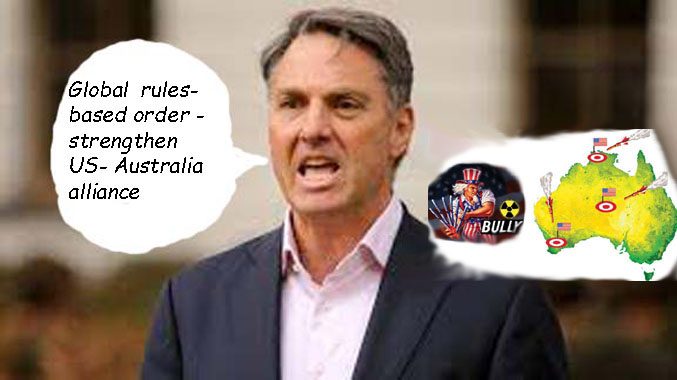
But Australia’s biggest diplomatic effort is going into creating a bifurcated world, preparing to fight another war for another imperial power, surrendering our sovereignty and our military in the process – and happy to remain in the rear on climate.
The Albanese Government shows no sign of changing course, plunging ahead with Australia’s biggest defence spend – submarines designed to sit off China’s coast as part of an offensive force – and hosting American long-range strategic bombers.
Michael Pascoe, The New Daily, 12 Nov 22,
When Earth faces an existential threat in the movies – aliens, rogue asteroids, that sort of thing – human beings unite to fight Armageddon.
Turns out real life isn’t like that.
Right now our quality of life and, for many millions, perhaps billions of people, their actual lives are in imminent danger. So what policy is Australia championing in the face of global disaster?
As a middle power that, in the past, has sometimes punched above its weight, what influence are we trying to exert to save the world? Unite and fight the killer aliens? Pool our talents to divert the asteroid? Nah.
We’re pushing for a hopelessly divided world, ignoring the real problem to fiddle about with less challenging matters, concentrating on supporting one superpower’s economic interests over another.
Tipping Points
Earth is approaching horrific climate change tipping points. It’s not a matter of an extra few tenths of a degree, some more monster bushfires and extra floods.
It’s about sudden collapse in the systems that sustain us.
But Australia’s biggest diplomatic effort is going into creating a bifurcated world, preparing to fight another war for another imperial power, surrendering our sovereignty and our military in the process – and happy to remain in the rear on climate.
The United States’ determination to exert its global primacy isn’t the main game. Much of the world understands that, but not our insular Anglosphere and certainly not the group think that pervades Canberra.
Once Australia hoped to be a bridge between the US and China. That hope was dashed by the gross ineptitude and crass stupidity of the Morrison government, leaping at the opportunity to out Sinophobe the Americans, locking Australia into America’s confrontational agenda.
The Albanese Government shows no sign of changing course, plunging ahead with Australia’s biggest defence spend – submarines designed to sit off China’s coast as part of an offensive force – and hosting American long-range strategic bombers.
“It makes sense to actually normalise the relationships,” Mr Albanese said before heading off to Asia for ASEAN and G-20 summits and, hopefully, a meeting with President Xi.
“We want to see a stabilisation in the relationship.”
Upping the ante
Upping the offensive weaponry ante seems a strange way of normalising a relationship while demanding China roll back the trade penalties imposed after Morrison’s diplomatic blundering. (And regarding Mr Albanese’s alleged “$20 billion” trade sanctions – the figure is bogus. Our wine industry has certainly been hurt, but our other commodity exports have had no trouble finding other markets paying just as well, if not better. Ask any coal miner.)
Back in the main game, climate change doesn’t seem to figure as a headline issue for Mr Albanese at the G20. And it seems not to be for US President Biden ahead of his meeting with President Xi. He is more interested in establishing rules for dividing the world.
Meanwhile, the COP27 climate change summit is underway in Egypt. All the news coming out of it ranges from bad to worse.
Joe Biden is dropping in on his way to Asia. Prime Minister Albanese is skipping it. The approaching climate change tipping points are a very real threat to Australia. Despite what you’re likely to hear on television and read in the mainstream newspapers, China is not.
We won’t be serious about climate change until it is seen as a human problem, not one with national borders. Like COVID, borders don’t register with greenhouse gases. One of the issues at COP27 is rich nations (high carbon intensity people) needing to pay to help poor nations (low carbon intensity people) move to sustainable energy.
Caught in bizarre inertia
Australians are among the world’s very worst polluters. Our previous and present governments prefer not to look at the problem like that, the Albanese government is content with being a little less worse on climate than the coalition governments of the previous nine years………… https://thenewdaily.com.au/opinion/2022/11/12/michael-pascoe-g20-china/
Climate change, not China, is Australia’s real security danger

The definitive case against nuclear subs The Saturday Paper, Albert Palazzo -adjunct professor at UNSW Canberra. He was a former director of war studies for the Australian Army. November 12, 2022 “……………………………………………………………. Too many security officials hold to the mistaken belief that China is the most significant threat Australia faces. In fact, climate change deserves the top spot. Climate scientists, United Nations officials and military commanders themselves, including current US Secretary of Defense Lloyd Austin, consider climate change an existential threat to survival. Any threat posed by China is much more limited. At worst, China’s challenge to the US-led world order could result in America’s withdrawal from the Western Pacific. Climate change could lead to the end of the human project and take countless other species down with us.
China represents, at most, a second-order threat, but it is China that draws the obsessive focus of much of the current generation of security thinkers. It does not make sense for Australia to invest so much in a weapon system that has no utility against the nation’s most dangerous threat, yet this is what is happening.
Advocates of nuclear-powered submarines also propose that constructing these vessels in Adelaide will help sustain a sovereign shipbuilding industry. In fact, the opposite is the likely result. Once in service these vessels will actually increase Australia’s dependence on the US and foreign contractors. This is because many of the sub’s critical components, weapons and systems will be made by foreign parties. Australian sailors might even need shadow US sailors to co-staff technical positions until Australia generates enough nuclear-savvy personnel of its own.
The government has announced it will invest between $168 billion and $183 billion in what it has called a national naval shipbuilding enterprise, with the goal of sustaining and growing a domestic shipbuilding capability and securing Australian jobs for the future. Such a capability is a noble goal, but what has been left unexplained is why it should be such a priority compared with foreign-dominated industries that are more critical to the nation’s future wellbeing.
Last summer, for example, Australian transport risked grinding to a halt as a result of the urea crisis, which led to a serious shortage of AdBlue, a vital diesel fuel additive. Without AdBlue, the nation’s fleet of long-haul trucks would have stopped moving, resulting in supermarkets running out of food, farmers not harvesting their crops and the mining industry coming to a halt. Yet there has been no talk of taxpayer-supported AdBlue production in Australia. Similarly, many medicines are imported, as are a host of important everyday items, such as baking powder and matches. Unlike shipbuilding, these industries apparently warrant no support.
If one wanted a truly sovereign defence industry, then the product that might mandate the level of support proposed for the subs is microchips. Virtually all military and civilian technology contains chips, yet Australia is happy to remain fully reliant on overseas suppliers for this most important of components. Establishing a domestic industry would require a huge subsidy, as well as additional investment in tertiary education and precursor manufacturing processes. Without these chips, however, no weapon system is truly sovereign.
So why the nuclear-powered subs, if they make so little sense? The obvious answer is to support the alliance. Instead of aiming for self-reliance, Australia has always preferred to seek the protection of a great power. But there is another reason: like a kid in a lolly shop, Australia has been given permission to buy the biggest treat on display. Nuclear-powered subs are one of America’s most closely guarded technologies. If Australia gets them, it will be a clear sign that, like Britain, we have been admitted to a very exclusive club, the inner sanctum of US security. What is missed, however, is that being in the inner sanctum generates a massive obligation – and some day that bill may fall due. https://www.thesaturdaypaper.com.au/opinion/topic/2022/11/12/the-definitive-case-against-nuclear-subs
Humanity’s Moment: A Climate Scientist’s Case for Hope by Joëlle Gergis
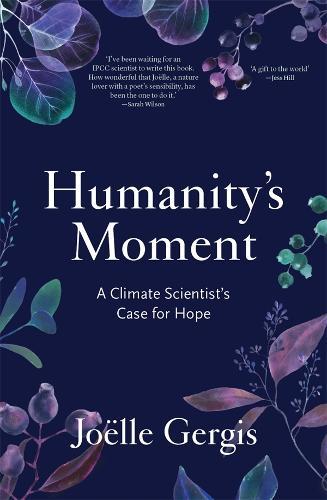
https://www.readings.com.au/review/humanity-s-moment-a-climate-scientist-s-case-for-hope-by-jo-lle-gergis# 1 Sept 22, If there is only one nonfiction book you read this year, it really should be this one. Its author, Joëlle Gergis, is one of Australia’s leading climate scientists and she believes this book is the most important one she will ever write.
Gergis has spent the last few years as a lead author working on the United Nations’ Intergovernmental Panel on Climate Change (IPCC) Sixth Assessment Report. This work (done on a voluntary basis and on top of her day job as a scientist and university lecturer) has radically changed her outlook on life; it has kept her awake at night and led to feelings of anxiety and despair. Before the IPCC process, Gergis had found she could remain relatively emotionally detached from her work, but the cumulative effect of compiling the latest science on climate change from all over the world was overwhelming. She wrote an article about her emotional response and was contacted by other climate scientists who felt the same but were too afraid to share their feelings lest it might compromise the image of a dispassionate, data-driven scientist. With this book, Gergis wants to humanise and reframe climate change as a ‘cultural issue’, and she manages to do this beautifully by blending personal narrative with a distillation of the science.
Divided into three parts – the head, the heart and the whole – the book first outlines the latest science in clear and straightforward language. This is ‘the head’ and it makes for incredibly grim reading. ‘The heart’ looks at our connection to nature across different cultures and how this has changed over time. Here, Gergis outlines the ongoing catastrophes caused by colonisation and capitalism. Finally, in ‘the whole’, Gergis imagines what we as a community can achieve. She looks at the important role of art and literature to inspire us and the necessity of heeding Indigenous knowledge if there is to be a brighter future. Many of the solutions already exist and Gergis’ ultimate hope with this book is that it will remind us how ‘human history is an endless tug-of-war for social justice. We are each part of an eternal evolutional force that can transform our world.’ The first step may just be to read this book.
Government to rewrite climate bill to win over Greens

The Age, By Mike Foley, July 25, 2022 , The Albanese government is promising to rewrite its signature climate reforms to secure support from the Greens including a change to make clear its target of 43 per cent emissions reduction by 2030 is a minimum that could be upgraded over time.
Labor’s concession on the eve of the first parliamentary session is a crucial bargaining play as the new government seeks support for its first major bill.
While the government previously stated that its 43 per cent target would not put a limit on its climate action, Greens leader Adam Bandt is concerned the original draft did not spell that out and could have acted as a cap on emissions’ reduction.
Labor has agreed to make clear in the bill that 43 per cent is a minimum only, but has stopped short of some of the Greens’ biggest demands, such as phasing out coal and gas exports, and it remains to be seen if this rewrite of the bill is enough to lure the minor party across the line.
Bandt told The Age and The Sydney Morning Herald the changes would be a starting point for negotiations.
“The Greens are pleased the government has listened to some of our concerns about the bill, and we are continuing negotiations about remaining issues, including the opening of new coal and gas mines,” he said.
The Greens want to set a target to cut emissions by 75 per cent by 2030 and hit net zero by 2035. Bandt has called Labor’s target “weak”.
A draft of the climate change bill obtained by The Sydney Morning Herald and The Age earlier this month revealed the proposed legislation was largely symbolic because it would only enshrine an emissions target and oblige the federal government to make an annual progress report to parliament.
Responding to the earlier draft, Bandt had demanded the Labor government “Dutton-proof” the targets against any future government’s plans to wind them back, calling for commitments to raise the ambitions to be written into the laws……………………………..
Labor’s bill is expected to come before the lower house on Wednesday where Labor has enough votes to pass it on its own. The bill is set to reach the Senate by September and because the Coalition has vowed to vote against the draft laws, Labor will need all 12 votes from the Greens plus one crossbencher, which will most likely come from ACT independent David Pocock who is open to Labor’s proposal.
Another change proposed by Labor would also insert the new emissions target into the objectives and functions of key agencies such as CSIRO, the Clean Energy Finance Corporation, Infrastructure Australia and the Australian Renewable Energy Agency.
Even if the Greens and the Coalition decide to block Labor’s bill, Labor can deliver its key measures to cut carbon emissions without new legislation by increasing renewable energy projects and capping industrial pollution.
The bill does not contain specific mechanisms to ratchet up emissions reductions, such as the use of existing safeguards mechanism to force tougher carbon pollution caps on the 215 biggest industrial polluters in the country…………….. https://www.theage.com.au/politics/federal/government-to-rewrite-climate-bill-to-win-over-greens-20220725-p5b4fn.html
Climate protesters criminalised as climate crisis escalates
Long-term environmental activist Bob Brown, Human Rights Watch and a network of grassroots campaigners have condemned the recent raids and police repression against climate protesters, joining in solidarity with a collective warning from 40 civil society organisations.
However, by criminalising protest, governments expose their allegiance to profit before the people. Rather than generate fear amongst us, this may just mobilise more people in defence of systems that threaten life on Earth.
Independent Australia. By Claire Burgess | 18 July 2022.
With anti-protest laws on the rise as our climate crisis worsens, activists are fighting back to raise awareness, writes Claire Burgess.
CLIMATE ACTIVISTS are increasingly using protest tactics that cannot be ignored. They are targeting Australia’s economic and political centres, contending that these systems built from colonial dispossession are responsible for climate destruction and inaction. Does this approach to bringing about change hold up empirically?
Is Australia a colonial and extractive-based climate pariah?
The extraction of “natural resources” is the backbone of colonial relations to the Earth — climate change is a symptom of this way of operating. The sixth International Panel on Climate Change (IPCC) report points to how marginalised communities, particularly Indigenous, disproportionately bear the burden and harm from climate change though they are the least responsible. Scholars now argue that climate action requires addressing the ongoing legacies of colonialism.
Australia’s current extractive regime has its roots in colonial systems of violence and dispossession of Aboriginal and Torres Strait Islander people. The political and economic system sits proudly upon scarred and damaged land that was never ceded. Mining giants continue to be prioritised by governments, such as coal mining company Adani over the land rights of Traditional Owners.
Politics and economics have been identified by the IPCC as major impediments to climate action. This is particularly evident in the contradiction of Australian mining companies becoming both global leaders in “green” economies while expanding coal and gas production. The plunder for capitalising on the economic opportunities of new green economies is the latest threat to the planet.
Despite all the talk about “green” growth, energy-related emissions have accelerated, reaching record highs in 2021. The only slowdown of emissions occurred during the COVID lockdown. Degrowth scholars highlight how the myth of progress continues to underpin market approaches to climate change. They remind us of the hard limits on the number of natural resources left that we can use.
Every ecosystem is under pressure. First Nations elders and scholars have also long called for designing systems based on ecological relationality with the Earth.
The signs of both planetary collapse and the knowledge of regenerative ways of being have long been available. It is the dominating, extractive-based system that is maladaptive to our planet — not us.
How has people-power shaped this country?
The goal of non-violent direct action (NVDA) is to draw attention to contentious practices and in doing so, exert pressure on targeted actors. In lutruwita/Tasmania during the Franklin Dam blockade, a total of 1,400 people were arrested and gaoled including federal and state parliament members.
This campaign led to a large area of wilderness being saved from development. Grassroots, direct action galvanised the environmental movement in Australia and these tactics continue to be used to defend wild places.
NVDA can encompass open or covert tactics from blockades, sit-ins and occupations to street protests. In gaining land rights, the occupation of land outside Parliament House for establishing the “Aboriginal Tent Embassy” sent a message to the public about the impacts of landlessness and dispossession. Resistance in the form of land defence continues today, in blockading extractive industries on Traditional Lands.
Perhaps because of this history, governments are responding to climate activists with nationwide legislative crackdowns in the form of anti-protest laws. The link between the protection of extractive industries, political power and government repression of protesters should concern all of us.
Long-term environmental activist Bob Brown, Human Rights Watch and a network of grassroots campaigners have condemned the recent raids and police repression against climate protesters, joining in solidarity with a collective warning from 40 civil society organisations.
However, by criminalising protest, governments expose their allegiance to profit before the people. Rather than generate fear amongst us, this may just mobilise more people in defence of systems that threaten life on Earth.
Is collective action commensurate to co-creating a sustainable future?.
…………………………………………………. Reclaiming our humanity in the face of planetary collapse is tapping into the one autonomous vehicle we have — our collective bodies. Speaking truth to power by drawing upon strategies that have worked in the past is an integral part of reimagining and bringing to life the regenerative future, one that we desperately need.
All we have is the Earth and each other https://independentaustralia.net/politics/politics-display/climate-protesters-criminalised-as-climate-crisis-escalates,16572
Slow, expensive and no good for 1.5° target: CSIRO crushes Coalition nuclear fantasy.

CSIRO says nuclear is too slow, too expensive, and its best prospects for a significant share of global generation are in weak climate targets. The post Slow, expensive and no good for 1.5° target: CSIRO crushes Coalition nuclear fantasy appeared first on RenewEconomy.
Slow, expensive and no good for 1.5° target: CSIRO crushes Coalition nuclear fantasy — RenewEconomy
Australia’s leading scientific research organisation, the CSIRO, has delivered a damming blow against the renewed push by the federal Coalition for nuclear power, saying it is expensive, and too slow to make a significant contribution to any serious climate targets.
The latest version of the CSIRO’s important GenCost report still ranks nuclear as the most expensive of existing technologies, and at least double or up to five times the cost of “firmed” wind and solar, including storage and transmission costs.
It has long been accepted that existing large scale nuclear is way too expensive and too inflexible to play any role in Australia’s future grid, but the pro-nuclear lobby has been pushing the idea of Small Modular Reactors, and has been putting intense pressure on the CSIRO to embrace it.
This argument has been taken up with vigour by the federal Coalition, which has responded to its electoral defeat by appointing a pro-nuclear advocate as energy spokesman, and intensifying its campaign against wind and solar that its members have described as “dole bludgers.”
The latest CSIRO GenCost report – which says that wind, solar and storage is clearly the cheapest option in Australia – points out that the intense pressure it received to lower its cost estimates for nuclear comes almost exclusively from ambitious vendors, and their proxies, who have nothing to show for their claims.
There are no SMRs in operation, and none are expected until 2029 at the earliest. CSIRO economist Paul Graham, the lead author of the report, says until the first SMRs are deployed it is not possible to find good evidence about the claims of the industry.
It is interesting to note that in the latest GenCost report, CSIRO notes that only one formal submission was received on nuclear, which argued that the cost estimates of nuclear SMR should be lower.
“Vendors seeking to encourage the uptake of a new technology have proposed theoretical cost estimates, but these cannot be verified until proven through a deployed project,” it says.
But perhaps the most damming part of the CSIRO report are what it says about the role of various technologies in differing climate scenarios.
It shows that the weaker the climate target, the greater the share of nuclear power. If countries are serious about achieving 1.5°C target, or even below 2°C, then nuclear is simply too slow to play a significant role, and its share of global generation falls significantly.
Graham puts it this way. If nuclear is to prosper, it will need huge licks of government support, and a significant carbon price. But if the world is aiming for the Paris climate targets and is willing to spend money to get there, then other technologies – mostly wind, solar and storage – will fill that gap.
“(Nuclear) needs some climate policy ambition,” Graham told RenewEconomy. “But if there’s too much climate policy ambition the other technologies run away with the cost reductions and nuclear can’t catch up.
“If it looks like we have to reduce emissions much faster, then it’s just too slow to contribute to that.”
This graph [on original] illustrates the point. Nuclear (in purple) has a share of around 10-12 per cent of global generation in the “current policies” scenario out to 2030. But this share diminishes out to 2050 in all three scenarios, and particularly those that seek to minimise average global warming.
The current policies scenario represents average global warming of around 2.6°C, while the Global NZE (net zero emissions) by 2050 aims for 1.5°C and the Global NZE post 2050 assumes around 1.7°C.
A huge Atlantic current is slowing down. If it collapses, La Niña could become the norm for Australia
 | |||
|
La Niña could become the norm for Australia https://www.abc.net.au/news/2022-06-07/la-ni%C3%B1a-could-become-the-norm-australia-ocean-current/101129980?sf257069088=1
Matthew England, Andréa S. Taschetto, and Bryam Orihuela-Pinto Climate change is slowing down the conveyor belt of ocean currents that brings warm water from the tropics up to the North Atlantic.
Our research, published today in Nature Climate Change, looks at the profound consequences to global climate if this Atlantic conveyor collapses entirely.
We found the collapse of this system — called the Atlantic meridional overturning circulation — would shift the Earth’s climate to a more La Niña-like state. This would mean more flooding rains over eastern Australia and worse droughts and bushfire seasons over southwest United States.
East-coast Australians know what unrelenting La Niña feels like. Climate change has loaded our atmosphere with moister air, while two summers of La Niña warmed the ocean north of Australia. Both contributed to some of the wettest conditions ever experienced, with record-breaking floods in New South Wales and Queensland.
Meanwhile, over the southwest of North America, a record drought and severe bushfires have put a huge strain on emergency services and agriculture, with the 2021 fires alone estimated to have cost at least $US70 billion.
Earth’s climate is dynamic, variable, and ever-changing. But our current trajectory of unabated greenhouse gas emissions is giving the whole system a giant kick that’ll have uncertain consequences — consequences that’ll rewrite our textbook
What is the Atlantic overturning meridional circulation?
The Atlantic overturning circulation comprises a massive flow of warm tropical water to the North Atlantic that helps keep European climates mild, while allowing the tropics a chance to lose excess heat. An equivalent overturning of Antarctic waters can be found in the Southern Hemisphere.
Climate records reaching back 120,000 years reveal the Atlantic overturning circulation has switched off, or dramatically slowed, during ice ages. It switches on and placates the European climate during so-called “interglacial periods”, when the Earth’s climate is warmer.
Since human civilisation began around 5,000 years ago, the Atlantic overturning has been relatively stable. But over the past few decades a slowdown has been detected and this has scientists worried.
Why the slowdown? One unambiguous consequence of global warming is the melting of polar ice caps in Greenland and Antarctica. When these icecaps melt they dump massive amounts of freshwater into the oceans, making water more buoyant and reducing the sinking of dense water at high latitudes.
Around Greenland alone, a massive 5 trillion tonnes of ice has melted in the past 20 years. That’s equivalent to 10,000 Sydney Harbours worth of freshwater. This melt rate is set to increase over the coming decades if global warming continues unabated.
A collapse of the North Atlantic and Antarctic overturning circulations would profoundly alter the anatomy of the world’s oceans. It would make them fresher at depth, deplete them of oxygen, and starve the upper ocean of the upwelling of nutrients provided when deep waters resurface from the ocean abyss. The implications for marine ecosystems would be profound.
With Greenland ice melt already well underway, scientists estimate the Atlantic overturning is at its weakest for at least the last millennium, with predictions of a future collapse on the cards in coming centuries if greenhouse gas emissions go unchecked.
The ramifications of a slowdown
In our study, we used a comprehensive global model to examine what Earth’s climate would look like under such a collapse. We switched the Atlantic overturning off by applying a massive meltwater anomaly to the North Atlantic, and then compared this to an equivalent run with no meltwater applied.
Our focus was to look beyond the well-known regional impacts around Europe and North America, and to check how Earth’s climate would change in remote locations, as far south as Antarctica.
The first thing the model simulations revealed was that without the Atlantic overturning, a massive pile-up of heat builds up just south of the Equator.
This excess of tropical Atlantic heat pushes more warm moist air into the upper troposphere (around 10 kilometres into the atmosphere), causing dry air to descend over the east Pacific.
The descending air then strengthens trade winds, which pushes warm water towards the Indonesian seas. And this helps put the tropical Pacific into a La Niña-like state.
The first thing the model simulations revealed was that without the Atlantic overturning, a massive pile-up of heat builds up just south of the Equator.
This excess of tropical Atlantic heat pushes more warm moist air into the upper troposphere (around 10 kilometres into the atmosphere), causing dry air to descend over the east Pacific.
The first thing the model simulations revealed was that without the Atlantic overturning, a massive pile-up of heat builds up just south of the Equator.
This excess of tropical Atlantic heat pushes more warm moist air into the upper troposphere (around 10 kilometres into the atmosphere), causing dry air to descend over the east Pacific.
The descending air then strengthens trade winds, which pushes warm water towards the Indonesian seas. And this helps put the tropical Pacific into a La Niña-like state.
The first thing the model simulations revealed was that without the Atlantic overturning, a massive pile-up of heat builds up just south of the Equator.
This excess of tropical Atlantic heat pushes more warm moist air into the upper troposphere (around 10 kilometres into the atmosphere), causing dry air to descend over the east Pacific.
At no time in Earth’s history, giant meteorites and super-volcanos aside, has our climate system been jolted by changes in atmospheric gas composition like what we are imposing today by our unabated burning of fossil fuels.
The oceans are the flywheel of Earth’s climate, slowing the pace of change by absorbing heat and carbon in vast quantities. But there is payback, with sea level rise, ice melt, and a significant slowdown of the Atlantic overturning circulation projected for this century.
Now we know this slowdown will not just affect the North Atlantic region, but as far away as Australia and Antarctica.
We can prevent these changes from happening by growing a new low-carbon economy. Doing so will change, for the second time in less than a century, the course of Earth’s climate history — this time for the better.
Matthew England is an Australian Research Council Laureate Fellow, Deputy Director of the Climate Change Resource Centre, and Chief Investigator in the ARC Centre of Excellence in Climate System Science at UNSW Sydney. Andréa S. Taschetto is an Associate Professor at UNSW Sydney and Bryam Orihuela-Pinto is a PhD candidate at UNSW Sydney. This piece first appeared on The Conversation.
Painful defeat of Australia’s right-wing Morrison government, as new Labor government vows action on climate change.

Anthony Albanese, Australia’s new Labor prime minister, vowed to end the
country’s “climate wars” after he ousted Scott Morrison’s conservative
government on Saturday night. For the first time in nearly a decade, the
Labor party will lead Australia after a general election that delivered a
bruising defeat to Mr Morrison’s Liberal-National coalition.
At the latest count on Sunday afternoon, Labor had won 72 seats – just four short of the
half-way mark required to form a majority government in the 151-seat lower
house. It is likely that they will have to go into coalition with
independents – who performed particularly well – or the Greens Party to get
over the line. Morrison suffered the most painful defeat at the hands of
climate-focused independent candidates in a string of once ultra-safe
conservative urban constituencies including
Josh Frydenberg, the deputy leader of the Liberal Party,
. So-called “teal independents”, campaigned on
demands for tougher action on climate change, a major political issue in
Australia, which has suffered severe drought, catastrophic bushfires and
major flooding in recent years. Labor intends to cut its emissions by 43
per cent within the decade, well in excess of the Liberal Party’s goal.
Telegraph 22nd May 2022
National Party set to dictate coalition policies on climate

Nats set to dictate Coalition policies
Senior Liberal and Nationals frontbenchers have acknowledged growing differences between urban and regional communities, as well as ongoing conflicts over climate change.
The ‘climate election’ we need to have
https://www.foe.org.au/the_climate_election_we_need_to_have 9 May 22, As pre polling opens for the 2022 federal election, climate change and the environment have been largely missing from the mainstream debate.
Yet what happens at this election will impact climate and environment, in a time where science makes it abundantly clear that we don’t have time to waste if we want to avoid catastrophic climate change.
Context
Why does climate and environment matter when there are so many pressing immediate issues, like the cost of living, health and employment?
- Global monthly average carbon dioxide (CO2) levels have reached above 420 parts per million (ppm) for the first time on record.
- Global temperatures have risen about 1C since 1900, overwhelmingly due to greenhouse gas emissions. In Australia, the average increase has been 1.4C. It has been linked to unprecedented bushfires, rainfall events that have caused catastrophic flooding and four mass coral bleaching on the Great Barrier Reef since 2016.
- There is scientific consensus about the risk of irreversible climate impacts if 1.5C of warming is passed for even a short period of time.
- Since colonisation, more than 100 native species have been made extinct and more than 1,900 Australian animals, plants and ecological communities are at risk of extinction.
- According to the Vote Compass surveys, climate change is the top issue for voters.
How do the parties rate on climate?
A key issue to look for in judging how seriously political parties take climate change is to look for their promised emission reduction targets.
The emission cuts the four major parties promise for 2030 are:
- Greens: 75%
- Labor: 43%
- Coalition (Liberal/ National): 26-28%
Recent research by Climate Analytics found neither major party had emissions reduction goals that lived up to the commitment that was made in the landmark 2015 Paris agreement, and strengthened in last year’s Glasgow climate pact, to aim to limit heating to as close as possible to 1.5C.
For reference, the Climate Analytics analysis found that Australia should cut its emissions by 57% by 2030 to be compatible with a 1.5C heating goal.
LIBERAL NATIONAL COALITION
According to analysis by Climate Analytics, the Morrison government’s climate change commitments are consistent with more than 3C of global heating, bordering on 4C, a level that would lead to catastrophic damage across the planet.
The Liberal’s environment and energy policies can be found here.
The Nationals don’t have a specific policy covering climate change. Climate change is not one of the Nationals top five priorities. You can find their policies here.
THE AUSTRALIAN LABOR PARTY
The ALP has reaffirmed its plans to cut Australia’s greenhouse gas emissions by 45% on 2005 levels by 2030, and ensure 50% of the nation’s electricity comes from renewable sources by 2030. Additionally, it has announced a long term target of net zero greenhouse gas pollution by 2050.
Labor’s climate target was found to be consistent with about 2C of heating above pre-industrial levels. Both would be expected to lead to the loss of tropical coral reefs, including the Great Barrier Reef, and a significant rise in the number of extreme heat events in Australia, assuming other countries took equivalent action.
The ALP’s climate platform can be found here.
The ALP’s environment policies can be found here.
THE AUSTRALIAN GREENS
The Greens say Australia should be cutting by 75% by 2030.
The Greens climate platform is available here.
THE CLIMATE INDEPENDENTS
The ‘teal’ independents largely support a climate bill proposed by Zali Steggall that includes a 60% target.
There are more than 22 candidates covered under the Climate 200 umbrella. They are self described as being ‘pro-climate, pro-integrity and pro-gender-equity Independent candidates’.
You can details on them, and their individual policies, here.
THE MICRO PARTIES
Be aware that many of the micro parties are deeply anti environment and opposed to government taking meaningful action on climate change. These include
Pauline Hanson’s One Nation (PHON is a climate change denialist party)- Clive Palmer’s United Australia Party
- The Liberal Democrats (who advocate for the deployment of nuclear power)
- Far right independents like those associated with ‘Australia One’ who have been focusing on harvesting anti-vaccine-mandate and anti-lockdown sentiment. The Australian Federation Party is conservative, anti-public health, and has no formal climate, energy, environment policies. There are many candidates running on a ‘Freedom platform’ against public health orders and vaccination mandates. Most of them have no climate or environment policies. This is a good (Melbourne focused) assessment of the policies of many micro parties.
Most of these groups hold climate denier/ anti environment positions. If you are considering voting for them, we urge you to check their policies on climate, energy and environment.
Scorecards
Friends of the Earth has not produced a scorecard for this election. Here are some links to other groups assessments.
Vote Climate. Available here.
Climate and Health Alliance. Available here.
Australian Religious Response to Climate Change. Available here.
Future of Antarctica’s Larsen C ice-shelf will have consequences for sea level rise world-wide
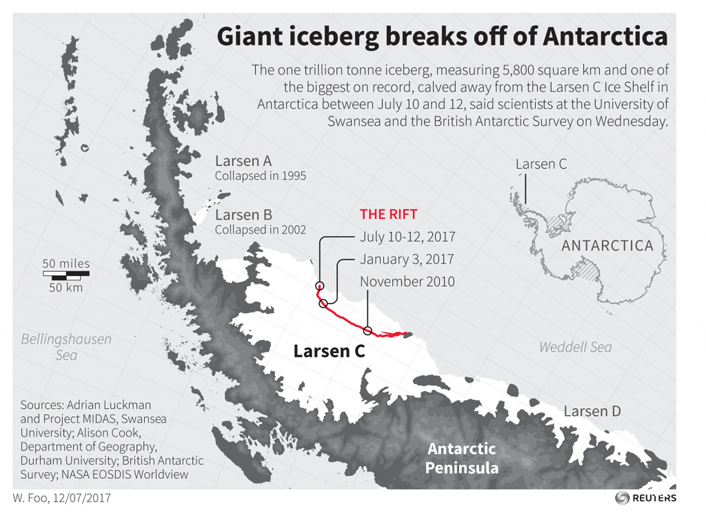
| Scientists know the surface of the Larsen C ice shelf in Antarctica is melting, making it vulnerable to collapse. For the first time, we can rank the most important causes of melting over the recent past. In a new two-part paper in Journal of Geophysical Research: Atmospheres, we show how the amount of energy reaching the ice from the sun is the dominant factor, followed by warm winds, clouds and weather patterns. These drivers of melting can interact and overlap to reinforce or counteract each other, so it is a complex picture. Understanding what is causing melting over Larsen C is vital as it will help predict the future of the ice shelf, which will have knock-on consequences for sea levels worldwide. In 2002, Larsen C’s neighbouring ice shelf, Larsen B, experienced melting so severe that it eventually caused the shelf to collapse completely. Larsen C restrains glaciers that contain enough ice to raise global sea levels by around 22mm. Carbon Brief 14th April 2022 https://www.carbonbrief.org/guest-post-ranking-the-reasons-why-the-larsen-c-ice-shelf-is-melting |
Antarctic heat – a horrifying reminder of the future with global heating
“Shocking,” said the Met Office head; “bonkers,” according to an Antarctic researcher. The heat at both ends of the planet this week has scientists straining for adjectives. 40°C above normal in Antarctica,
30°C hotter than usual in the Arctic.
With temperatures so much above anything on record, scientists had to confirm that, no, it isn’t a typo:
this is really happening.
Last week, the Conger ice shelf, which sits off the East Antarctic coast and is around 1,200 square kilometers across, collapsed completely. Ice sheets hold back the flow of ice into the sea.
“If they collapse, then ice flow from inland accelerates and leads to sea level rise,” said Andrew Mackintosh, a scientist at Monash University in Australia.
A natural reaction to such news is to fear the ice sheets might collapse entirely. If the West Antarctic ice sheet collapsed into theocean, global sea-levels could rise several metres – much faster and
further than expected – swamping coastal cities. That is not likely to happen soon, but the polar heat is a horrifying reminder of the stakes involved.
Independent 25th March 2022
https://www.independent.co.uk/climate-change/opinion/higher-food-prices-climate-crisis-b2043988.html
Gigantic Antarctic ice shelf collapses into the sea
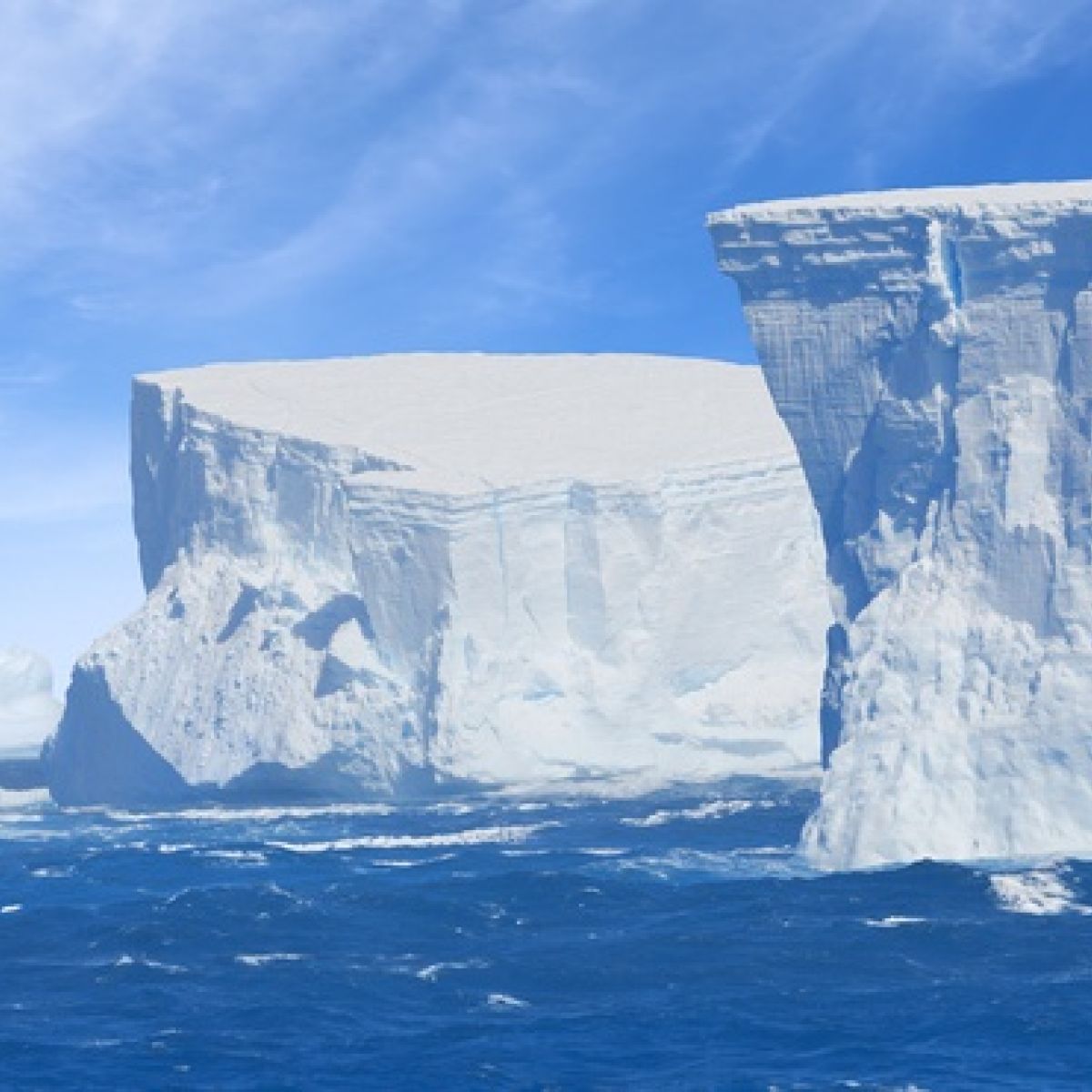
An ice shelf about the size of Rome has completely collapsed in EastnnAntarctica within days of record high temperatures, according to satellite data. The Conger ice shelf, which had an approximate surface area of 1,200 sq km, collapsed around 15 March, scientists said on Friday.
East Antarctica saw unusually high temperatures last week, with Concordia station hitting a record temperature of -11.8C on 18 March, more than 40C warmer than seasonal norms. The record temperatures were the result of an atmospheric river that trapped heat over the continent.
Guardian 25th March 2022
1 This month



Help Aunty Sue Protect Her Land and Sacred Sites From Destructive Rocket Testing.
.

Australians deserve the truth
about
AUKUS – https://aukuspublicinquiry.com/

PETITION – To: Prime Minister Anthony Albanese and the Australian Labor Government

of the week – Australians for War Powers Reform (AWPR)
To see nuclear-related stories in greater depth and intensity

