Race of the Century: Australia is in the box seat on climate and finance, here is the blueprint for victory

Michael West Media, by Tim Buckley | Jan 23, 2024
The global energy transition is the race of this century. The rewards are enormous. The risks too. This is an edited version of the submission by Tim Buckley and the Climate Capital Forum on how Australia can tackle the race to electrification and a clean economy.
The world is currently in a technology, trade and finance race as the global energy transition takes hold and we grapple with the growing impacts of climate change and climate risk.
For Australia, this is one of the biggest investment, employment and net export opportunities this century, but only if we proactively build a strategic national response proportional to the investment opportunity.
With China’s huge technology leadership and the US Inflation Reduction Act (IRA) providing upwards of a trillion dollars of incentives, “free global markets” are being heavily and rapidly disrupted. To avoid remaining a zero value-add “dig and ship” country servicing China and greater Asia, Australia must pivot quickly to investing in our own development, in partnership with global technology leaders.
This would require a major similar public policy shift at scale, the likes of which has not been seen in decades. It would not only set the right market signals but also strategically leverage the national balance sheet, and selectively provide public budget support to unlock and crowd-in private capital to enable large-scale investment to meet the challenge.
It is already possible to see the impacts and benefits of the IRA in the US: it is driving the energy transition across the country using a mix of policy initiatives – grants, loans, rebates, incentives, and other investments. Central are tax provisions with the dual function of saving families money on their energy bills while also building demand that accelerates the roll out of clean energy, clean vehicles, clean buildings, and clean manufacturing – all opportunities available to Australia with the right investment.
Petro-state Australia: risks of inaction
We know the growing risks associated with inaction. As one the three largest petro-states globally, Australia’s existing, outdated industry profile means failure to overcome the inertia of relying on fossil-fuels will undermine our economic security and sustainable growth.
Two likely consecutive budget surpluses have demonstrated this government’s financial credentials, accompanied by the rolling out of innovative and strategic building blocks, such as: the Safeguard Mechanism; the $20bn Rewiring the Nation fund; the $15bn National Reconstruction Fund (NRF); $4bn into the Critical Minerals facility; establishing the Net Zero Authority and the Climate Act 2023; and the 32GW Capacity Investment Scheme (CIS). And with the fossil-fuel hyper commodity price rises of 2022 slowly fading, general inflation in Australia is starting to moderate, as is the cost of living crisis.
The time is right for the government to broaden its focus to the electrification of everything across the economy and to strategically stimulate onshore value-adding of our resources; to process and build domestically and then export products with embodied decarbonisation to a growing global market. Australia has world leading and affordable renewable energy, and this creates a massive global competitive advantage, if we can harness this cost advantage to build out our capacity and help diversify global supply chains in zero emissions industries of the future.
The global competitors
Globally, multiple economies have released substantial government-backed fiscal packages to shore up their own industries. The US has laid out a massive trillion dollar subsidy through the Inflation Reduction Act (IRA) resulting in the crowding-in of up to US$3 trillion in private investment, the EU has a immense subsidy program in its Net Zero Industry Act (NZIA) and policies such as its Carbon Border Adjustment Mechanism (CBAM) to build domestic EU supply chains, Korea has its massive battery and EV public-private partnership program, Japan has its GX Roadmap and India has its Production Linked Incentive (PLI) funding.
This is all taking place alongside China’s finely-honed strategy to fund R&D and investment at an unprecedented pace and scale with a lack of regard for near term profitability at the individual sector level; this on top of it being the biggest buyer in the world of lithium, rare earths, iron ore, copper and nickel. And at the same time, it is in China’s national interest to flood in new global supply and push down imported commodities prices – those same commodities that Australia produces.
Decarbonising is also an energy security necessity. With next to zero domestic stockpiles of diesel and oil and increasing global supply chain challenges, Australia’s national security is best served by building local supply chains and renewable energy and non-fossil fuelled transport as well as to ensure decarbonised products have the right price signal in both local and international markets.
Profound economic reform and modernisation in Australia is needed, as is international collaboration.
Doing so will ensure that Australia is not just in the race, but that we are a front runner, leveraging our global competitive advantage of the rich natural resources, low population density and world-class renewables, the smarts of our people, the power of our world leading A$3.5 trillion superannuation base, the stability of our political system and our position as a trusted supplier of commodities at global scale.
CCF submission
The Federal budget position today is in rude financial health. After a decade of deficits under previous governments, careful and prudent management – and some good luck on international markets – the Australian government has delivered a very welcome massive fiscal surplus in 2022/23, which is set to be repeated again in 2023/24.
Building on the policy initiatives announced in 2023, we encourage the government to continue to develop programs such as the Capacity Investment Scheme – a clever and innovative low risk response that underwrites cash flows that will crowd-in A$40-50bn of private investment and leverage many state government programs already in place.
This submission builds upon previous recommendations in Climate Capital Forum’s September 2023 Discussion Paper – An Australian Response to the US IRA.
We provide recommendations for the May 2024 Budget by arguing for a strategic public interest response to the global economic changes commensurate with the massive opportunities in front of Australia; one that outlines how we can leverage our own decarbonising actions, illustrate the growing capacity across the economy, and help drive the global move to renewable energy and energy storage, consistent with the COP26 pledge to triple renewables and double energy efficiency by 2030 and the massive uplift in momentum the IEA Renewables 2023 details, noting China’s growing dominance in all these measures.
By making available an additional A$100bn investment of public capital and budget support over the coming decade well over A$200-300bn of private capital can be crowded in – through debt, infrastructure and equity, both domestic and via collaborative partnerships with strategic international technology and industry leaders. We need a “uniquely Australian” response to “complement not copy the priorities and plans” of the US IRA and other nations, as Treasurer Jim Chalmers said.
Provide capital funding that supports the public interest
Focus strategic investment through the development of a package of funding that builds an Australian renewable energy industry – including a value-adding critical minerals industry development package…………………………………………………………………………………………………………………………………………………………………………………………………………………………………….
About Capital Climate Forum
The Climate Capital Forum was established in December 2022. It brings together the investment, decarbonising, and philanthropy sectors as well as climate finance experts and NGOs to work with government, industry and stakeholders to advocate for ambition in Australia’s drive to become a renewable energy superpower. https://michaelwest.com.au/australia-climate-finance-race/
As earth records hottest year, Coalition digs in against climate action and renewables
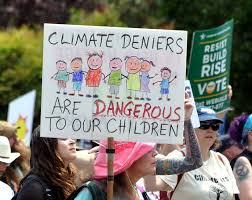
Pearls and Irritations, By Sophie Vorrath, Jan 23, 2024
The science is in. The European Union’s Copernicus Climate Change Service has overnight confirmed that 2023 was the earth’s warmest year on record: 0.16°C warmer than the previous record year (2016); 0.6°C warmer than the 1991-2020 average; 1.48°C warmer than the pre-industrial period.
The report from Copernicus notes that each month from June to December in 2023 was warmer than the corresponding month in any previous year, with July and August the warmest two months on record.
“2023 marks the first time on record that every day within a year has exceeded 1°C above the 1850-1900 pre-industrial level for that time of year,” the report says.
“Close to 50% of days were more than 1.5°C warmer than the 1850-1900 level, and two days in November were, for the first time, more than 2°C warmer.”
Furthermore, it is likely that a 12-month period ending in January or February 2024 will exceed 1.5°C above the pre-industrial level – the threshold climate scientists had hoped to limit global warming to through the sort of emissions reduction policies and actions they have been calling for for decades.
Around the world, the changing climate manifested itself in extreme heat waves in southern Europe, North America and China, devastating wildfires in Canada and Hawaii, record-breaking sea surface temperatures and record low sea ice extent around Antarctica.
Australia, remarkably, was the only continent that did not see large areas register record temperatures. But the impacts of global warming are no less evident.
Far North Queensland is picking up the pieces following a devastating cyclone and floods, while large parts of Victoria remain on flood watch after some regions experienced rainfall “higher than their 100-year rates” over 48 hours, according to the BOM. In Western Australia, a searing heatwave is on the cards.
“It’s not surprising, unfortunately,” prime minister Anthony Albanese said on Wednesday from Queensland, where he announced a $50 million federal support package for people affected by the state’s most recent extreme weather events.
“All of this is a reminder that the science told us that climate change would mean there would be more extreme weather events and they would be more intense. And unfortunately, we’re seeing that play out with the number of events that we’re having to deal with right around Australia.”
Climate Council research director Simon Bradshaw says the most alarming thing about the news from Copernicus is that 2023 broke heat records by such a considerable margin, with 2024 projected to be even hotter.
“We’re seeing how much more extreme our climate becomes as we approach the 1.5°C warming threshold,” he said on Wednesday.
“This is why we must limit future warming as much as possible by getting our emissions down fast by rapidly phasing out the burning of fossil fuels such as coal, oil and gas. We can’t keep stoking the fire if we want the room to cool down.”
But as the reality sinks in that 2023 shattered annual heat records and that the world looks like sailing past the safe climate zone hoped for by scientists, the federal Coalition has set to work walking back national emissions targets, railing against renewables and still – still! – banging on about nuclear.
On Wednesday, reports emerged that a majority of Liberal and National Party MPs will oppose taking a 2035 emissions reduction target to the 2025 election, arguing it will worsen the cost-of-living crisis for regional and vulnerable Australians.
“This is why we must limit future warming as much as possible by getting our emissions down fast by rapidly phasing out the burning of fossil fuels such as coal, oil and gas. We can’t keep stoking the fire if we want the room to cool down.”
But as the reality sinks in that 2023 shattered annual heat records and that the world looks like sailing past the safe climate zone hoped for by scientists, the federal Coalition has set to work walking back national emissions targets, railing against renewables and still – still! – banging on about nuclear.
On Wednesday, reports emerged that a majority of Liberal and National Party MPs will oppose taking a 2035 emissions reduction target to the 2025 election, arguing it will worsen the cost-of-living crisis for regional and vulnerable Australians
A survey by The Australian has found most Liberal MPs are privately opposed to any sort of 2035 target and didn’t see any point in putting a number to the Australian people.
Nationals MPs were more forthcoming with their views on the matter, with Barnaby Joyce, Colin Boyce, Keith Pitt, Matt Canavan and Bridget McKenzie on the record as rejecting “any target” or expressing serious reservations about adopting one, the Australian reports.
“There is also a smaller rump within the Nationals, including Senator Canavan and Mr Boyce, who want the Coalition to drop the current policy of net zero emissions by 2050,” the paper says
The context to this is that the latest climate science says 2050 net zero targets are now not enough to rein in global warming at the rate required to keep the planet safe and liveable. It has also been argued that such a distant target allows governments to take their time on policy – time they do not have.
Recent modelling by Monash University’s Climateworks Centre found Australia must move its net-zero emissions target forward by a decade to 2040 and cut national emissions by 68 per cent below 2005 levels by 2030 in order to have any hope of limiting warming to 1.5°C.
Federal Labor – which wants to get to 82 per cent renewables by 2030 – is under pressure to adopt a 2035 emissions target of more than 70 per cent, and is in consultation on the size of the interim target it has promised to bring to the 2025 election.
But the LNP is having none of it, preferring to believe that its constituents are unable to make the mental leap that “cost of living” might be intrinsically linked with the social, environmental and economic costs of ever increasing extreme weather events.
“I’m not confident the Labor Party’s current targets, let alone anything more ambitious, can be achieved without significant social and economic detriment to the nine million of us that don’t live in capital cities,” said McKenzie…………………………………………………………………
A National Rally Against Reckless Renewables is on the calendar for February 6 – federal parliament’s first sitting day for 2024 – with the Facebook page for the event promising “lots of great speakers,” including Joyce, Senator Jacinta Nampijinpa Price, David Gillespie MP, Senator Gerard Rennick, Senator Malcolm Roberts, and old mate Matt Canavan……………………………………..
But not all of the Coalition’s “people,” as Pitt claims regional Australians to be, are drinking this particular brand of Kool Aid.
“The impact of climate change on our communities is immediate and devastating,” said Major General Peter Dunn, a member of Emergency Leaders for Climate Action and former Commissioner for the ACT’s Emergency Services Authority on Wednesday.
“The urgency to stop relying on fossil fuels such as coal, oil and gas, which only worsen this crisis, has never been greater. The time has come for Australia to decisively move away from these harmful pollutants.”
Peter Lake, a northern NSW farmer and member of Farmers for Climate Action says the ongoing drought his farm is experiencing shows how climate change is continuing to make farming “unpredictable.”
“The sooner we get serious about reducing our burning of fossil fuels and start to reduce the amount of carbon dioxide going into our atmosphere the better,” he said on Wednesday.
For federal Labor’s part, it is now imperative that they move faster and with more ambition in the opposite direction to the Coalition and hold their nerve against what is bound to be a ramping up of anti-renewables propaganda……………… more https://johnmenadue.com/as-earth-records-hottest-year-coalition-digs-in-against-climate-action-and-renewables/
Coalition delivers the same old tired nuclear talking points at COP28

With a heavy sigh, Crikey once again delves into the most pointless ritual in Australian public policy — the nuclear energy ‘debate’.
CHARLIE LEWIS, DEC 11, 2023, https://www.crikey.com.au/2023/12/11/coalition-nuclear-energy-australia/
“Today I am happy to announce that a reelected Coalition government will, at its first COP after being returned to office, sign the nuclear pledge and return Australia to where it belongs, standing alongside its friends and allies,” opposition climate change and energy spokesman Ted O’Brien told world climate summit/increasingly dark joke at humanity’s expense COP28 on Saturday.
He pledged that a reelected Coalition government would triple nuclear energy output and overturn Australia’s nuclear energy moratorium, insisting “no nuclear, no net zero”.
And so, with a heavy sigh, Crikey once again delves into what our politics editor Bernard Keane has described as “the single most boring and ossified ritual in Australian public policy”.
A ‘sensible’ debate
It always starts with a demand for a “sensible” debate around the topic. Going back to John Howard’s years as prime minister (he called for this not once but twice) and to pick a handful of examples since: Then-foreign minister Julie Bishop in 2014, the then-assistant science minister Karen Andrews in 2015 and then-candidate Warren Mundine in 2019. Just last week, troublemaking former Labor minister Joel Fitzgibbon called on the Albanese government to end the ban on nuclear energy. This is not to mention a swathe of conservative media figures adding their voices to the choir over the years.
With dreary inevitability, Opposition Leader Peter Dutton reached for the old hymn book in his budget reply this year, arguing (all together now): “Any sensible government must consider small modular nuclear as part of the energy mix.”
Time is money and also money is money
As we’ve long reported — long, long reported — there are several barriers to nuclear power in Australia, primarily that the whole thing is incredibly expensive because Australia doesn’t have any nuclear infrastructure. As clean energy investor and man with a zeal for the teal Simon Holmes à Court, who was at O’Brien’s address, puts it, “it is a pretty easy pledge to sign because three times zero is zero”.
Nuclear power plants take a very long time to build — as Australia’s former chief scientist Alan Finkel told the Nine papers in August, it’s highly unlikely Australia could open a nuclear power plant before the early 2040s, a delay the country can ill afford if it is to dramatically reduce emissions as quickly as it needs to.
On top of this is the eye-watering price. According to research from the Department of Climate Change and Energy released in September this year, the cost of replacing coalmine sites with small nuclear reactors would be $387 billion.
Even former chair of the Australian Nuclear Science and Technology Organisation Dr Ziggy Switkowski, who undertook a review on the viability of nuclear power for the Howard government in 2007 and is a very big fan of nuclear energy, conceded in 2018 “the window for gigawatt-scale nuclear has closed”:
With requirements for baseload capacity reducing, adding nuclear capacity one gigawatt at a time is hard to justify, especially as costs are now very high (in the range of $5 billion to $10 billion), development timelines are 15+ years, and solar with battery storage are winning the race.
The tax that is not to be named
There is and always has been only one way, in the eyes of Australia’s most credible nuclear spruikers, for nuclear energy to compete with existing energy sources: impose a carbon price.
Switkowski’s 2007 review probably didn’t greatly please Howard, given it found that nuclear became viable compared with coal and gas only if there was a carbon price. Economist and Crikey contributor John Quiggin has also previously argued in favour of nuclear energy in Australia only if it is backed by a carbon price.
Ted O’Brien’s nuclear love-in at COP28 gets a brutal reality check.

Ed note. I was pretty surprised that Rafael Grossi who usually downplays all the risks of nuclear (safety, terrorism, weapons proliferation, wastes) went so far as to claim that nuclear is not even a financial risk !
Jim Green 11 December 2023, https://reneweconomy.com.au/ted-obriens-nuclear-love-in-at-cop28-gets-a-brutal-reality-check/—
The nuclear lobby has been out in force at the COP28 climate conference in Dubai. Their main initiative was a ‘declaration’ promoting a “global aspirational goal of tripling nuclear energy capacity from 2020 by 2050”, signed by 22 countries and supported by 120 companies.
The 22 countries are Bulgaria, Canada, the Czech Republic, Finland, France, Ghana, Hungary, Japan, South Korea, Moldova, Mongolia, Morocco, the Netherlands, Poland, Romania, Slovakia, Slovenia, Sweden, Ukraine, the UAE, the UK and the USA.
David Appleyard, editor of Nuclear Engineering International, did the math: “Now 2050 still sounds like a long way off, but to triple nuclear capacity in this time frame would require nuclear deployment to average 40 GW [gigawatts] a year over the next two and half decades. The cruel reality is that’s more than six times the rate that has been seen over the last decade.”
A dominant feature in the declaration — and all the nuclear lobbying surrounding COP28 — is the perceived need to find new methods of financing nuclear plants. In the words of the declaration, participants “commit to mobilize investments in nuclear power, including through innovative financing mechanisms”.
Nuclear power as a commercial venture is very nearly dead, and thus the participants “invite shareholders of the World Bank, international financial institutions, and regional development banks to encourage the inclusion of nuclear energy in their organizations’ energy lending policies”.
In a parallel initiative announced during COP28, the US plans to “jump start” the development of small modular reactor (SMR) exports despite the recent collapse of NuScale Power’s flagship project in Idaho. The US Export-Import Bank has approved a resolution to fund applications for the export of US SMR systems and components.
International Atomic Energy Agency director-general Rafael Grossi recently said — apparently without irony — that international financial institutions, development banks and private banks and investors should take a fresh look at the “winning” investment of financing new nuclear power plants.
In fact, US giant Westinghouse declared bankruptcy in 2017 following its disastrous reactor construction projects in South Carolina and Georgia; the British nuclear power industry went bankrupt years ago and was sold to the French, then the French nuclear industry went bankrupt and has been fully nationalised; South Korean utility KEPCO’s debt has climbed to A$224 billion; the Japanese nuclear industry is essentially a pile of ashes in the aftermath of the Fukushima disaster; and so on.
Ted O’Brien says a bunch of silly things
The federal Coalition’s shadow energy minister Ted O’Brien was the lead speaker at a forum on the sidelines of COP28 titled ‘Australia’s Nuclear Energy Potential: Joining the Global Journey’.
The forum also heard from representatives of the (so-called) Coalition for Conservation (which flew seven Liberal and National MPs to the summit), the World Nuclear Association, Emirates Nuclear Energy Corporation, the US Nuclear Industry Council; and an Italian SMR start-up called Newcleo.
O’Brien said that a Coalition government would sign the 22-nation declaration with its aspirational goal of tripling nuclear power capacity by 2050.
The Labor government last week joined more than 120 countries in backing a pledge to triple renewable energy and double the rate of energy efficiency by 2030 — a pledge opposed by the Coalition. O’Brien reiterated the Coalition’s opposition to the Labor government’s target of 82 per cent renewable power supply by 2030.
Speaking to The Guardian, former NSW treasurer Matt Kean said “obviously nuclear is a long way away” and Australia should back renewable energy now: “Who knows what might be available in another 20 years — we may have flying cars in 20 years — but that doesn’t mean you base your whole transport around it.”
O’Brien told the COP sideline forum that Australia’s legislation banning nuclear power is “bizarre”. That would be the legislation introduced by John Howard’s Coalition government and left untouched by the Abbott, Turnbull and Morrison Coalition governments over nearly a decade.
O’Brien said Australia’s track record on renewables is something to be “enormously proud of” without noting the Coalition’s decades-long efforts to slow the growth of renewables and to promote fossil fuel power generators.
He failed to mention that fellow Queenslander and Nationals leader David Littleproud recently said he wants a “pause” to the roll out of wind and solar and transmission links and a stop to the “reckless pursuit” of the government’s 82 percent renewables target by 2030.
O’Brien showed a photo of his children, whose existence apparently demonstrates his commitment to a low-carbon, environmentally sustainable future. In case anyone thought he was serious, he said that Australia needs more gas-fired power generation.
O’Brien said nuclear power is one of the fastest ways to decarbonise; that nuclear waste is “so miniscule”; that Australia should develop “capabilities in other areas of the nuclear fuel cycle”; that the Coalition was not interested in old nuclear but rather Generation 3+ (i.e. mostly non-existent) nuclear power; and that COP28 will be remembered as the “nuclear COP”.
World Nuclear Industry Status Report
The December 6 release of the World Nuclear Industry Status Report (WNISR) provided a welcome relief to all the nuclear nonsense at COP28, including O’Brien’s. For over 30 years, these annual reports have provided factual information that irritates the nuclear industry no end.
Continue readingAustralia backs Cop28 promise to triple renewables but not nuclear capacity pledge
More than 115 countries vow to triple renewable energy capacity by 2030 – though not China and India
Adam Morton and Katharine Murphy, Guardian, Sun 3 Dec 2023
Australia has backed a pledge at Cop28 climate summit to triple global renewable energy capacity and double the annual rate of energy efficiency improvements by 2030.
The climate change minister, Chris Bowen, said the Albanese government had joined 117 other countries in making the pledge, reiterating an agreement reached by G20 countries in September.
The renewable energy agreement was one of a series of headline declarations made as more than 100 global leaders arrived in the United Arab Emirates for the opening days of the two-week conference.
Anthony Albanese is not attending, and Bowen is not due to fly to Dubai until later this week for the event’s final week, when ministers will attempt to wrangle a consensus position on how to lift action to tackle the climate crisis in the face of rising geopolitical tensions. Australia was represented at the opening plenary by its climate change ambassador, Kristin Tilley.
Bowen said Australia had joined other major energy exporters, including the US, Canada and Norway, in supporting the renewables and energy efficiency push.
“We know that renewables are the cleanest and cheapest form of energy, and that energy efficiency can also help drive down bills and emissions,” he said in a statement. “For emissions to go down around the world, we need a big international push. Australia has the resources and the smarts to help supply the world with clean energy technologies to drive down those emissions while spurring new Australian industry.”
The renewable energy pledge was welcomed by climate campaigners and analysts. Tim Buckley, director of the independent think tank Clean Energy Finance, said it was excellent to see Australia backing the commitment. He said falling costs had made the transition to renewables “an entirely economically sensible and viable commitment”………………………………………………………………………..
Australia is the chair of the “umbrella group” of countries at the talks, which includes the US, UK, New Zealand, Canada, Ukraine, Israel and Norway. Bowen said he intended “to be quite an active chair” and that meant “bringing other countries with us” to help reach a consensus.
An initial draft Cop text released on Saturday listed included a range of expressions to be debated, including that either fossil fuels or coal should be “phased out” or “phased down”. The same applied to fossil fuel subsidies. Saudi Arabia, China and India have previously resisted calls to agree that all fossil fuels should be phased out.
Australia was also among more than 100 countries to back declarations pledging to strengthen climate action in healthcare and farming. It did not sign up to a commitment by 22 countries, including the US, Canada, Japan and Britain, to triple nuclear energy capacity by 2050.
The Albanese government is hoping to win support for Australia to host Cop31 in 2026 with Pacific countries, but it is unclear whether a decision will be made in Dubai. The UN climate process faces a more pressing decision on where next year’s annual summit will be held. It is due to be hosted in eastern Europe but Russia has blocked agreement on which country will take the reins.
Sydney smashes 1 October heat record as Victoria fights bushfires

Sydney has endured its hottest ever start to October on record as fire
danger warnings were issued across NSW – and as two bushfires threatened
campers and towns in eastern Victoria.
Guardian 1st Oct 2023
Antarctic sea-ice at ‘mind-blowing’ low alarms experts
2
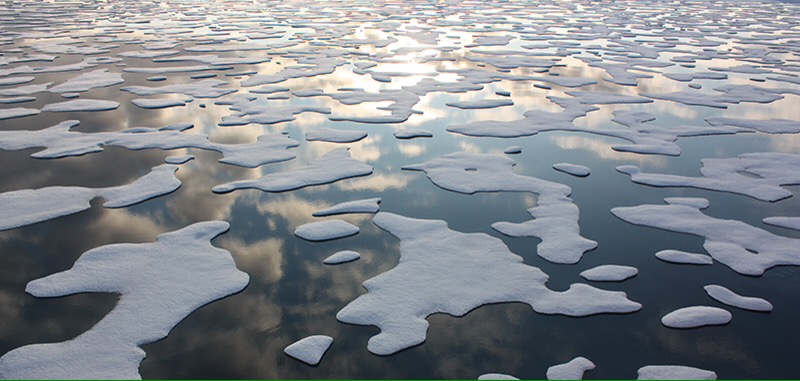
The sea-ice surrounding Antarctica is well below any previous recorded
winter level, satellite data shows, a worrying new benchmark for a region
that once seemed resistant to global warming. “It’s so far outside anything
we’ve seen, it’s almost mind-blowing,” says Walter Meier, who monitors
sea-ice with the National Snow and Ice Data Center. An unstable Antarctica
could have far-reaching consequences, polar experts warn. Antarctica’s huge
ice expanse regulates the planet’s temperature, as the white surface
reflects the Sun’s energy back into the atmosphere and also cools the water
beneath and near it. Without its ice cooling the planet, Antarctica could
transform from Earth’s refrigerator to a radiator, experts say.
BBC 17th Sept 2023
South-east Australia marine heatwave forecast to be literally off the scale.
Australia’s south-east could be in for a marine heatwave that is literally
off the scale, raising the prospect of significant losses in fishing and
aquaculture. The Bureau of Meteorology has forecast a patch of the Tasman
Sea off Tasmania and Victoria could be at least 2.5C above average from
September to February, and it could get hotter.
Guardian 27th Aug 2023
‘Bigger threat than China’: Defence leaders urge release of ‘scary’ climate report

“It’s a much bigger threat to our national security than a potential fight with China
“This is about transparency and keeping people informed.”
By Matthew Knott,, April 5, 2023 https://www.theage.com.au/politics/federal/bigger-threat-than-china-defence-leaders-urge-release-of-scary-climate-report-20230404-p5cxuf.html
A group of leading defence figures is urging the Albanese government to release a secret report on the national security risks of climate change even though its contents may alarm Australians.
Former Defence Force chief Admiral Chris Barrie said climate change posed a bigger risk to Australia than China’s rapid military build-up, and it was crucial to inform the public about the security implications of warmer temperatures, rising sea levels and increased natural disasters.
Potential impacts included famines caused by global warming, conflicts over access to scarce resources and the mass migration of people to Australia from vulnerable Asia-Pacific nations in the coming decades.
“We are worried about the possible collapse of societies because of starvation, a lack of fresh water and shortages of food supplies,” said Barrie, a member of the Australian Security Leaders Climate Group.
Barrie said he understood the Office of National Intelligence (ONI) had delivered a landmark report on external climate risks to the government in December but a declassified version had not been released to the public.
“I expect it might contain things that are a bit scary, but we’re adults and we are up for it,” he said. “This is about transparency and keeping people informed.”
As the government prepares to spend up to $368 billion on nuclear-powered submarines over the next three decades under the AUKUS pact, Barrie said: “I see climate change as an existential threat.
“It’s a much bigger threat to our national security than a potential fight with China or some other conflagration. Only a nuclear war could be more catastrophic.”
Labor went to last year’s federal election promising to deliver a strategic climate security threat assessment and put ONI director-general Andrew Shearer in charge of the project soon after taking government.
Barrie said famine helped trigger the 1917 Russian Revolution and the phenomenon could recur in other countries in coming decades as a result of global warming.
Australia’s large land mass and relatively small population would make it an attractive destination for people displaced by climate change, he said.
The retired navy officer, who led the Defence Force from 1998 to 2002, said Australians living on flood plains and in bushfire zones should also be informed about the domestic threats posed by climate change, which are believed to be examined in a separate report by the Office of National Intelligence.
Spokespeople for the Office of National Intelligence and the Department of Prime Minister and Cabinet declined to comment on whether a public version of the report, which is based on classified information, would be released.
The Australian Security Leaders Climate Group, which includes retired air vice-marshal John Blackburn and the Department of Defence’s former head of preparedness and mobilisation, Cheryl Durrant, said nations such as the United States and United Kingdom had released public versions of similar reports on the national security risks of climate change.
The federal government had also released declassified reports on threats such as cyberattacks and COVID-19 to help inform the public, they said.
US President Joe Biden’s director of national intelligence, Avril Haines, has described climate change as an urgent national security threat, saying it was likely to increase global political instability in future decades.
‘Extreme situation’: Antarctic sea ice hits record low

Damian Carrington 16 Feb 23
https://www.theguardian.com/world/2023/feb/15/antarctic-sea-ice-hits-record-low-climate-crisis
The area of sea ice around Antarctica has hit a record low, with scientists reporting “never having seen such an extreme situation before”. The ice extent is expected to shrink even further before this year’s summer melting season ends.
The impact of the climate crisis in melting sea ice in the Arctic is clear in the records that stretch back to 1979. Antarctic sea ice varies much more from year to year, which has made it harder to see an effect from global heating.
However, “remarkable” losses of Antarctic sea ice in the last six years indicate that the record levels of heat now in the ocean and related changes in weather patterns may mean that the climate crisis is finally manifesting in the observations.
Scientists were already very concerned about Antarctic ice. Climate models suggested as far back as 2014 that the giant West Antarctic Ice Sheet (WAIS), which sits on the continent, was doomed to collapse due to the levels of global heating already seen then.
The increasing loss of sea ice exposes ice sheets and their glaciers to waves that accelerate their disintegration and melting, researchers warned. A recent study estimated that the WAIS would be tipped into gradual collapse – and four metres of sea level rise – with a global temperature rise as low as 1C, a point already passed.
“I have never seen such an extreme, ice-free situation here before,” said Prof Karsten Gohl, from the Helmholtz Centre for Polar and Marine Research in the Alfred Wegener Institute, Germany, and who first visited the region in 1994.
Gohl, on board the research vessel Polarstern in Antarctica, said: “The continental shelf, an area the size of Germany, is now completely ice-free. It is troubling to consider how quickly this change has taken place.”
Prof Christian Haas, also at the Helmholtz Centre, said: “The rapid decline in sea ice over the past six years is quite remarkable, since the ice cover hardly changed at all in the 35 years before.”
Scientists at the National Snow and Ice Data Center in the US have also said a new record low has been set. They said Antarctic sea ice extent fell to 1.91m square kilometres on 13 February, below the previous record set on 25 February 2022.
Sea ice melts away in the Antarctic summer before starting to grow again as autumn arrives. “In past years, the annual minimum has occurred between 18 February and 3 March, so further decline is expected,” the NSIDC researchers said. “Much of the Antarctic coast is ice free. Earlier studies have linked low sea ice cover with wave-induced stresses on the floating ice shelves that hem the continent, leading to break up of weaker areas.”
The German scientists said the “intense melting” could be due to unusually high air temperatures to the west and east of the Antarctic peninsula, which were about 1.5C above the long-term average. Furthermore, there have been strong westerly winds, which increase sea ice retreat. The result is “intensified melting of ice shelves, an essential aspect of future global sea-level rise”, the researchers said.
Historical records also show dramatic changes in Antarctica, they said. The Belgian research vessel Belgica was trapped in massive pack ice for more than a year in the Antarctic summer 125 years ago, in exactly the same region where the Polarstern vessel is now sailing in completely ice-free waters.
Prof Carlos Moffat, at the University of Delaware, US, and recently returned from a research cruise in the Southern Ocean, told Inside Climate News: “The extraordinary change we’ve seen this year is dramatic. Even as somebody who’s been looking at these changing systems for a few decades, I was taken aback by what I saw.”
Former Australian PM Tony Abbott joins board of UK climate sceptic thinktank

Christina’s note: The mad monk rides again. Madder than ever. As he’s an enthusiastic promoter of the nuclear industry, it is puzzling that Abbott is still a climate denialist.
Nowdays, the nuclear industry pushes their lie that nuclear beats global heating. So a good nuclear zealot should believe in climate change.
Abbott says ‘we need more genuine science and less groupthink’ in announcing position at Global Warming Policy Foundation
Guardian. Graham Readfearn 7 Feb 23
The former Australian prime minister Tony Abbott has joined the board of a UK-based thinktank that has been highly critical of climate science and action on global heating.
Since its launch in 2009, the Global Warming Policy Foundation has become known for its consistent attacks on climate science, the risks of global heating and – more recently – policies to reach net zero greenhouse gas emissions.
The group, founded by the former Thatcher government treasurer Sir Nigel Lawson, is facing a complaint from three UK MPs and a not-for-profit campaign group accusing the GWPF of inappropriately claiming status as an educational charity while carrying out lobbying and skewed research.
Abbott said he was pleased to join the foundation “because it’s consistently injected a note of realism into the climate debate”………………
Dr Jerome Booth, the foundation’s chairman, said Abbott brings “a global perspective and policy insight at the very highest level” and he would help the group “to foster a culture of debate, respect and scrutiny in policy areas that are currently dominated by intolerance, high emotions, moral reasoning and confusion”.
Abbott is currently an adviser to the UK government’s Board of Trade. His name was raised last month as a possible replacement for the late senator Jim Molan in the upper house.
During his prime ministership between 2013 and 2015, Abbott drove to dismantle much of the country’s public policy architecture on climate change, successfully repealing a legislated price on carbon, defunding the independent Climate Commission but failing to dismantle the Climate Change Authority and the Australian Renewable Energy Agency.
In 2017, he flew to London to deliver the GWPF’s annual lecture, where he suggested natural factors could be to blame for global warming, that CO2 was a trace gas and hinted at a global conspiracy to tamper with temperature data to make global heating seem worse.
The foundation is seen as influential among some conservatives. Conservative MP Steve Baker resigned as a GWPF trustee when he became minister for Northern Ireland.
A group of Conservative MPs and peers – several with links to the foundation – have formed the Net Zero Scrutiny Group, which has used the GWPF’s work as part of its advocacy.
The GWPF’s non-charitable arm – the Global Warming Policy Forum – runs a project called Net Zero Watch, which claims to scrutinise climate and decarbonisation policies.
The foundation has several Australian links. As the Guardian reported, one of its earliest funders was Australian billionaire hedge fund manager Sir Michael Hintze, who last year was handed a seat in the House of Lords at the recommendation of the former UK prime minister Boris Johnson.
Four Australian climate sceptics sit on the GWPF academic advisory board, including mining industry figure Prof Ian Plimer and controversial marine scientist Dr Peter Ridd of the Institute of Public Affairs, an Australian thinktank known to promote climate science denial.
The late Cardinal George Pell also delivered a GWPF annual lecture in 2011.
Presenting a report last year, the GWPF’s director, Dr Benny Peiser, said: “It’s extraordinary that anyone should think there is a climate crisis.”
Last year three MPs – one each from Labor, the Greens and the Liberal Democrats – joined with a not-for-profit campaign group to complain to the UK’s Charity Commission.
The group questioned if the GWPF was breaking charity rules by commissioning unbalanced research and carrying out political advocacy from charitable funds……………….. https://www.theguardian.com/australia-news/2023/feb/07/former-australian-pm-tony-abbott-joins-board-climate-sceptic-thinktank-global-warming-policy-foundation
‘Save the only planet we have’: Tony Abbott joins climate-sceptic think tank
EMMA ELSWORTHY, FEB 07, 2023 https://www.theguardian.com/australia-news/2023/feb/07/former-australian-pm-tony-abbott-joins-board-climate-sceptic-thinktank-global-warming-policy-foundation
The former Australian PM says he has joined the Global Warming Policy Foundation, a UK think tank founded by a ‘climate denier-in-chief’.
Former prime minister Tony Abbott, who once compared taking action on climate change with killing goats “to appease volcano gods”, has joined the board of a UK climate-sceptic think tank founded by a politician dubbed “the climate denier-in-chief”.
Abbott said he was pleased to join the Global Warming Policy Foundation (GWPF), which “consistently injected a note of realism into the climate debate”, despite the charity spearheading the backlash against the UK government’s net-zero goal.
“All of us want to save the only planet we have, but this should not be by means which impoverish poorer people in richer countries and hold poorer countries back,” Abbott said of his appointment.
“Right now, in countries like Australia, the impact of climate policy is to make electricity less affordable and less reliable rather than perceptibly to cool the planet.
“We need more genuine science and less groupthink in this debate. That’s where the GWPF has been a commendably consistent if lonely voice.”
The GWPF was founded in 2009 by Thatcher-era chancellor Nigel Lawson, who reportedly resigned from the House of Lords last month. Described by UK Green Party co-leader Adrian Ramsay as the “climate denier-in-chief”, Lawson claimed that “global warming is not a problem” in a 2021 article written for The Spectator during the COP26 in Glasgow.
The foundation’s director, Benny Peiser, also made headlines for spurious statements, including that he found it “extraordinary that anyone should think there is a climate crisis” and that climate “alarmism” was driven by “scientists’ computer modelling rather than observational evidence”.
Despite Lawson’s apparent departure from politics, his foundation continues to cause a headache for UK Prime Minister Rishi Sunak. There has been outrage after a UK register of interests disclosure revealed Conservative MP Steve Baker accepted a £10,000 (A$17,464) donation from the chair of GWPF’s Net Zero Watch.
The campaign arm has urged the UK government to recommit to fossil fuels, commission a fleet of coal-fired power plants, and wind down wind and solar completely, while its alleged breaches of charity law were the subject of a complaint from three British MPs in October.
This isn’t Abbott’s first brush with the foundation. In 2017 he delivered an eyebrow-raising annual lecture that suggested climate change was “probably doing good; or at least, more good than harm”.
Abbott also claimed that photos from his electorate showed the sea level hadn’t risen. (The Bureau of Meteorology found last year that the rates of sea level rise to the north and south-east of Australia have been “significantly higher” than the global average for the past 30 years.)
“Contrary to the breathless assertions that climate change is behind every weather event, in Australia the floods are not bigger, the bushfires are not worse, the droughts are not deeper or longer, and the cyclones are not more severe than they were in the 1800s,” Abbott said at the time.
In an echo of Lawson’s claim that rising temperatures are “no bad thing: many more people die each year from cold-related illnesses than from heat-related ones”, Abbott suggested in 2017 that sweltering heatwaves are good, actually.
“There’s the evidence that higher concentrations of carbon dioxide (which is a plant food after all) are actually greening the planet and helping to lift agricultural yields,” he said. “In most countries, far more people die in cold snaps than in heatwaves, so a gradual lift in global temperatures, especially if it’s accompanied by more prosperity and more capacity to adapt to change, might even be beneficial.”
Heat is the biggest natural killer in Australia (and in the US) and has been for the past 200 years, with fatalities outstripping all other natural killers including bushfires, cyclones and floods. Research has found there were 36,000 deaths associated with heat in Australia between 2006 and 2017.
Population growth is not a good thing, it’s a bad thing.

All this enthusiasm for Australia to grow its population! Hasn’t anybody noticed that vast swathes of this continent are getting flooded? Then there have been vast swathes on fire – with hitherto unknown soaring fire temperatures.
And these events are happening in the green fringe around this vast land. With global heating, the centre, the most of this huge land will become too hot, too dry, for human habitation .
We’ll be flat out trying to sustain the population that we already have.
What catastrophes will it have to take, before homo-not-very-sapiens-at-all abandons the suicidal philosophy of endless growth?
SMH January 16, 2023
Growth of both population and the economy is the cause of most of Australia’s problems, not a solution, and does not align with majority Australian opinion (“Big Australia? Dream on”, January 14). Per capita, Australians already consume resources at a rate which, if extended to the whole world, would require four Earths to fulfil that demand, yet Michael Koziol, together with the political parties and most economists, seeks to grow our resource demand into an unsustainable and increasingly inequitable future. We need to curb our demands on nature, not expand them. The economy we must build is a very different one, in which we seek to satisfy real need, not an avalanche of artificially stimulated wants. John Coulter, Bradbury (SA)
Do we value ecological and economic sustainability and the wellbeing of future generations and ecosystems, or do we prioritise the short-term gains of rapid resource exploitation, consumption and waste disposal? The latter are not sustainable on a planet where the human ecological footprint far exceeds Earth’s renewable biocapacity and whose life-support functions are failing. Indeed, we have an extinction and ecosystem crisis in Australia that has prompted 240 leading scientists to call on the government to take strong protective action. Further, our State of the Environment Report named population growth as a factor causing this environmental destruction. A second criterion is surely human wellbeing. Is it enhanced by population growth? In Australia, it appears that wellbeing as measured by the Genuine Progress Indicator was greatest in about 1970 when the population was 15 million but has fallen since as the population has increased. We have to decide to halt the damage to our life-supporting ecosystems and our own wellbeing. Increasing the population will make it harder. Alan Jones, Narraweena
The State of Environment Report 2021 would be a good starting point for Michael Koziol and other Big Australia proponents, as it details the decline in our natural world, and lists population growth as one of the major causes. Immigration may have been beneficial 50 or more years ago, when our population was less than half of now, but in the current global environment, with 8 billion people, it would be foolish for Australia to increase our population – either through immigration or fertility programs – and still expect our remaining natural environment and quality of life to survive. The increasing costs of dealing with climate change disasters should also be factored in to any population discussion. Karen Joynes, Bermagui
Why do we have this obsession with increasing the population of Australia? Admittedly, we live in a large country, but it is mostly arid with a fragile ecosystem that has been badly treated by our sojourn here over the last 234 years. It is time we demanded that our land be protected from greed and stupidity. We do not need an excessively large population, apparently to keep the economy growing, we need a thoughtful government to ensure we have a country that is sustainable, a country which is nourished by care, responsibility and respect. And it had better be soon. Nola Tucker, Kiama https://www.smh.com.au/national/nsw/population-growth-is-not-a-good-thing-it-s-a-bad-thing-20230115-p5ccl7.html
Bushfire deaths and smoke-related healthcare costs predicted to rise in next few years
In the decade to 2030, more than 2,400 lives will be lost to bushfires in
Australia, with healthcare costs from smoke-related deaths tipped to reach
$110m, new modelling led by Monash University suggests. The lead health
economist with the university’s Centre for Medicine Use and Safety,
Associate Prof Zanfina Ademi, who headed the analysis, said it was
important to get a predictive picture of the bushfire situation in
Australia and its impact on health and the economy.
Guardian 2nd Jan 2023
Military join rescue effort as floods ravage outback
The military has been brought into South Australia to help with emergency
evacuations amid official forecasts that thousands of properties are
threatened by the state’s worst flooding in almost 70 years. Officials have
described the crisis as a slow-moving disaster, brought on by heavy
rainfall over the eastern Australian states of Queensland, New South Wales
and Victoria.
Times 1st Jan 2022
1 This month



Help Aunty Sue Protect Her Land and Sacred Sites From Destructive Rocket Testing.
.

Australians deserve the truth
about
AUKUS – https://aukuspublicinquiry.com/

PETITION – To: Prime Minister Anthony Albanese and the Australian Labor Government

of the week – Australians for War Powers Reform (AWPR)
To see nuclear-related stories in greater depth and intensity

