Murdoch’s News Corpse hasn’t seen the light on climate – they’re just updating their tactics —

Is News Corp really seeing the light on climate? More likely it’s pivoting to a modern style of greenwashing and delay, just like Morrison. .
What might reasonably seem like a surprising change of heart in News Corp’s stance on climate is actually a long-term tactical shift that has been occurring for at least a few years. Whatever policies they failed to destroy through their earlier campaigns, they will try and reframe through racist, nationalistic, technocratic and pro-business frames.
Whatever policies they can delay or destroy, they’ll simply keep running scare campaigns about, insisting that ‘the balance isn’t right’, and that the threat of climate action is greater than climate change, as they always have (in Australia, News Corp’s partnerships with Google and Facebook mean these campaigns to destabilise climate action are growing more powerful and more harmful every day). When the next federal election comes around, the “COSTS OF NET ZERO” scare campaigns will ramp up in Australia as they are in the UK, and News Corp will be at the forefront, pleading that acting too fast will cause catastrophe. Absolutely mark my damn words: this is what will happen.
Net zero by 2050 isn’t enough. We’ll know that the denialism has truly ended when organisations like News Corp treat the IPCC’s latest report like it’s real.
News Corp hasn’t seen the light on climate – they’re just updating their tactics, https://reneweconomy.com.au/news-corp-hasnt-seen-the-light-on-climate-theyre-just-updating-their-tactics/, 5 Sept 21, Have you heard the good news? One of the key institutions holding back climate action in Australia – Rupert Murdoch’s News Corporation – is suddenly on Team Climate Action! Today, the Sydney Morning Herald revealed that the company’s Australian outlets are set to launch a campaign urging “the world’s leading economies” to embrace a target of net zero emissions by 2050; to be fronted by columnist Joe Hildebrand. The details aren’t out yet, but I contend that we can comfortably predict what it will look like.
It will be a centrist, pro-business approach to climate action. It will make a show of dismissing the “hysterics” of climate activists, while urging governments, including Australia’s, to set distant, meaningless and non-binding climate targets. It won’t allow any room for emissions reductions in line with the 1.5C goals or the Paris agreement; no short-term meaningful targets or actions such as those highlighted in the IEA’s recent ‘net zero’ report. It won’t argue for a coal phase-out by 2030, or the end of all new coal, gas and oil mines in Australia, or a ban on combustion engine sales by 2030-2035; all vital actions if Australia is to align with any net zero target.
It’ll champion controversial technologies like CCS and fossil hydrogen. It’ll highlight personal responsibility: tree planting, recycling and electric vehicle purchases. It will not propose or argue in favour of any new policies; at least none that might reduce the burning of fossil fuels.
How can we know all this before we’ve seen the actual campaign? It’s easy – let me explain.
Done with denial
Here’s a remarkable statistic for you. In the month of August this year, global media coverage of climate saw its highest volume since the December 2009 Copenhagen climate meetings. That’s partly down to the release of the IPCC’s AR6 Working Group one report into climate change, six years in the making.
That report reiterated something extremely important: every single tonne of carbon dioxide does damage. Actions must be immediate and aggressive to align with the most ambitious pathways. Delay is deadly.
No media coverage records for Australia: coverage of climate change has dropped almost entirely off the radar relative to the high volumes of late 2019 and early 2020 (partly driven by the Black Summer bushfires).
During the Black summer bushfires of 2019-20, I did a few interviews about Australia with baffled and perplexed international reporters. “What is going on over there? Why did the people elect such a climate laggard?”. A key part of my response was to pin blame on Australia’s media industry. Mostly on News Corp, which dominates the country’s uniquely concentrated media landscape, and which is notorious for its heavily politicised climate views. In fact, a recent study quantified this in historical terms, analysing media coverage within Canada, New Zealand, the United Kingdom, the United States and Australia for its climate science accuracy.
By a comfortable margin, News Corp’s Daily Telegraph and the Courier Mail scored the second and fourth worst among every media outlet analysed between 2005 and 2019 (The Australian wasn’t included in the analysis). Australia has, in general, seen the least accurate climate science coverage from 2013 onwards, despite a general rising trend in scientific accuracy over the past decade. For a decade and a half, News Corp lied about climate science with the blatant aim of protecting the revenue streams of the fossil fuel industry, and protecting its political allies.
This is important as a historical study, but today, it’s increasingly irrelevant. As the study points out, the accuracy of climate science has essentially plateaued in media coverage, with outright denial consigned to the dustbin.
The authors highlights that “the terrain of climate debates has shifted in recent years away from strict denial of the scientific consensus on human causes of climate change toward ‘discourses of delay’ that focus on undermining support for specific policies meant to address climate change”. The fundamental goal is the same – staving off action – but the way it manifests is very different.
Delay is the main game
There are many substantial recent examples of this. A good one was the severe blackouts that spread across Texas in February this year, which were immediately blamed on wind power failures, alongside easily debunked claims that snows and ice were blocking solar panels and freezing up wind turbines in Texas and around the world.
This isn’t climate change denial: it’s “mitigation denial“. That is, a move away from denying the problem exists and towards decrying its solutions as utterly unacceptable. An important part of this performance is pretending to have a moment of having seen the light, but then continuing to commit the same acts of delay as before.
Murdoch’s The Sun, in the UK, did precisely this. In October 2020, The Sun launched a ‘Green Team‘ campaign that focused on ‘individual responsibility’ in the lead-up to COP26, to be held in Glasgow at the end of this year. It wasn’t long until they were celebrating their own victory in freezing fossil fuel taxes.
how it started how it’s going pic.twitter.com/p1ZVOnOKmX— Zach Boren (@zdboren) March 3, 2021
The UK’s Daily Express, another hyper-conservative outlet that ‘saw the light’, continues to publish articles attacking climate activism and, more significantly, framing climate action in an explicitly “eco nationalist” way, as UK writer Sam Knights highlights in this article in Novara media. He says,
“Make no mistake: these newspapers are not your friends. They are not your allies. Their politics are not in any way ecological. They are deeply racist, reactionary, right-wing publications. Their sudden interest in climate change is not to be celebrated – it is a terrifying indication of things to come:”
Last week, @GreenpeaceUK, @WWF, @nationaltrust, and @friends_earth signed up to the “green crusade” of the Daily Express. Just ten days later, the rightwing newspaper has already run two articles attacking Greta Thunberg… Surely these charities will now withdraw their support? pic.twitter.com/Xz5NcjLu8N
— Sam Knights (@samjknights) February 18, 2021
It’s notable that these examples seem to manifest in the UK, and less so in similar anglophone countries like Canada or the US or New Zealand. Those are led by centre-left parties and politicians, but the UK’s conservative embrace of climate action is surely a model that Australia’s PM Scott Morrison pines to replicate. Sure, the UK certainly is miles ahead of Australia in terms of climate action – but there remains a very significant gap between Boris Johnson’s climate policies and where the country actually needs to be to align with the carbon budget that its independent climate advisor body has laid out.
A technocratic, rich white country with a government more concerned with optics than doing what needs to be done to protect people from being hurt by fossil fuels. Morrison’s obviously inspired by the UK, but Australia’s conservative media outlets are increasingly inspired, too.
Net zero by sometime after I retire, please
This is all coming to a head at COP26. George Brandis, Australia’s attorney general, who once declared that “coal is very good for humanity indeed”, is now High Commissioner for Australia to the UK, and has significantly ramped up the broader greenwashing exercise that the government has been enacting over the latter half of last year and most of this one. As I wrote in RenewEconomy, that means creative accounting, dodgy charts and deceptive framing, all designed to paper over Australia’s significant failure to reign in emissions.
Morrison will almost certainly set a net zero by 2050 target before COP26, but it’ll be packaged with a collection of loop holes that allow for rising emissions in the short term. It is dawning on the government just as it is dawning on News Corp: the best way to protect the fossil fuel industry today is not to deny the science, but to pretend to accept it. This is not the end of climate denial. It’s evolution from a common ancestor.
That this effort will be lead by Joe Hildebrand is telling enough. His previous work on climate change does exactly what a centre-right campaign like this would be best at – decrying both sides as ‘hysterical’ while failing to propose anything meaningful or substantial.
This @Joe_Hildebrand piece is a near-perfect example of what I mean when I say that this is more about reassurance and excuses than it is about persuasion.
This is about figuring how to be internally okay with their own antagonism towards climate action.https://t.co/TLiiIVY2ih pic.twitter.com/k1HIoxUFIR
— Ketan Joshi (@KetanJ0) October 6, 2019
We can also see hints of what a conservative climate message looks like in a previous editorial from the more progressive News Corp outlet, NT News, which – of course – continues to host syndicated climate denial from the Sky News Australia channel. Ditto for News dot com.
This is News Corp’s northern territory outlet.
Note the ‘affordable’ – a reference to the conservative meme that decarbonisation is bad because it’s too expensive.
Even in accepting the need for action, they need to throw in messaging from previous fossil fuel advocacy. https://t.co/HifYmyX2R3
— Ketan Joshi (@KetanJ0) January 15, 2020
What might reasonably seem like a surprising change of heart in News Corp’s stance on climate is actually a long-term tactical shift that has been occurring for at least a few years. Whatever policies they failed to destroy through their earlier campaigns, they will try and reframe through racist, nationalistic, technocratic and pro-business frames.
Whatever policies they can delay or destroy, they’ll simply keep running scare campaigns about, insisting that ‘the balance isn’t right’, and that the threat of climate action is greater than the threat of climate change, as they always have (in Australia, News Corp’s partnerships with Google and Facebook mean these campaigns to destabilise climate action are growing more powerful and more harmful every day). When the next federal election comes around, the “COSTS OF NET ZERO” scare campaigns will ramp up in Australia as they are in the UK, and News Corp will be at the forefront, pleading that acting too fast will cause catastrophe. Absolutely mark my damn words: this is what will happen.
Net zero by 2050 isn’t enough. We’ll know that the denialism has truly ended when organisations like News Corp treat the IPCC’s latest report like it’s real. That is, when they acknowledge that every additional unit of greenhouse gases causes harm to life on Earth, and that actions to stop their release must be as fast as possible. That climate change is an emergency that requires rapid action to wind down the fossil fuel industry in a just and equitable way, and that its replacement must be grown to full size with just as much passion and urgency.
This campaign won’t look anything like that. We know what it will look like – and it won’t be anything surprising at all.
Wollemi Mine? Experts label Barilaro’s plan for new coal “corrupt”, unviable
 |
|
Wollemi Mine? Experts label Barilaro’s plan for new coal “corrupt”, unviable Michael West Media, By Callum Foote|September 3, 2021
The NSW government is pushing through new coal exploration areas in the state’s mid-west, which have been labelled unviable and “corrupt” by independent experts even as the G7 call a halt on all new coal mining reports Callum Foote.
It’s better known for its rare Wollemi Pine but in the grotesque tradition of aggressive fossil fuel development, even as the world pulls out of coal mining, it may now be known for its Wollemi Mine.
Rylstone, a small town in the Central Tablelands of NSW, 25 km from Mudgee, is under threat from a suite of proposed coal exploration areas that the NSW government has been trying to auction off since mid-last year.
Despite the NSW government’s attempts to cultivate a green brand, John Barilaro’s 2020 Strategic Statement on Coal Exploration and Mining in NSW has opened up productive farmland, adjacent to the world-heritage listed Wollemi national park to brand new coal exploration.
Together, the proposed new coal release areas will encompass over 10 thousand hectares of land in Hawkins and Rumker areas surrounding Rylstone. This comes after the federal and Northern Territory governments together opened a landmass totalling 110,000km sq to gas exploration in 2021 alone.
Expert analysis
The NSW Government’s support of new coal infrastructure makes little sense to Rod Campbell, Research Director at The Australia Institute, “as an economist, it seems inconceivable that a new thermal mine in Rylstone, that couldn’t begin operations till 2030 could be economically viable.” According to Campbell, the proposed exploration areas “only makes sense that it is either a political deal or corruption.”
The NSW Government might have a difficult time finding buyers for their coal exploration licences as coal miners rush to disinvest from the industry. BPH, the worlds largest miner, is currently trying to pay anyone US$275 million to take Mt Authur, the biggest thermal coal mine in Australia, off their hands. In a report to investors this year, BHP wrote down a further $2.2 billion on their thermal coal assets as they attempt to transition to “future-facing” commodities.
Campbell believes that “it seems incredibly unlikely any serious mining company would be interested in developing a mine in the region.” Any proposed development would not be operational till “at least the second half of this decade and would face intense opposition and be very hard to finance,” said Campbell. ……………. https://www.michaelwest.com.au/wollemi-mine-experts-label-barilaros-plan-for-new-coal-corrupt-and-unviable/
Australia’s business leaders want stronger climate policy, but nuclear lobby stooge Senator Matt Canavan wants Australia to boycott COP 26
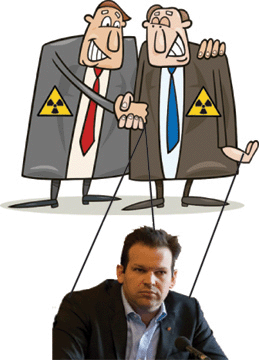
On Wednesday, Queensland Nationals Senator Matt Canavan called on Australia to boycott Glasgow, labelling the conference a “sham” in reaction to news that the nuclear industry has not been granted permission to host exhibits at the conference.
“They have banned nuclear technologies – reliable, emission-free power – from presenting. Climate change activism is not about changing the climate, it is about changing our politics. Australia should not bother going,” Senator Canavan tweeted.
Retiring Flynn MP Ken O’Dowd said Britain, the USA and Canada use nuclear power and he would “tend to agree” with Mr Canavan.
“Why would the Glasgow conference not want to discuss it? It should be one of the first items on the agenda,” Mr O’Dowd said.
Business urges government to take net zero pledge to UN climate talks, https://www.theage.com.au/politics/federal/business-urges-government-to-take-net-zero-pledge-to-un-climate-talks-20210831-p58nma.html By Mike Foley, September 2, 2021 Australia’s energy, business and oil and gas lobbies are joining calls from key international allies for Prime Minister Scott Morrison to set a net zero emissions deadline ahead of the United Nations climate conference in Glasgow this November.
But division within the federal government threatens to block the Prime Minister’s push for a commitment, with the Nationals still opposed to a deadline that is supported by every major farming group.
Senior officials from the European Union, Britain and US have urged Australia to set more ambitious goals. US presidential climate envoy John Kerry said scientists’ dire warnings over global warming placed more pressure on Australia.
Australia has pledged to reduce its greenhouse gas contribution by at least 26 per cent by 2030, based on 2005 emissions, but has not set a deadline to hit net zero emissions. Most other developed nations have committed to roughly halve their emissions by 2030 and reach net zero by 2050 or earlier.
But the government has not committed to greater action because the Nationals party, which has not yet backed a carbon-neutral deadline, has demanded to see the economic cost of greater climate action before signing up.
Mr Morrison says he wants to achieve net zero as soon as possible – “preferably by 2050.”
On Wednesday, Queensland Nationals Senator Matt Canavan called on Australia to boycott Glasgow, labelling the conference a “sham” in reaction to news that the nuclear industry has not been granted permission to host exhibits at the conference.
Australia’s petroleum lobby, its peak employer association, big power generators and investors from the booming clean energy industry say the government should head to the high-profile international climate talks armed with a 2050 commitment for carbon neutrality.
“They have banned nuclear technologies – reliable, emission-free power – from presenting. Climate change activism is not about changing the climate, it is about changing our politics. Australia should not bother going,” Senator Canavan tweeted.
Retiring Flynn MP Ken O’Dowd said Britain, the USA and Canada use nuclear power and he would “tend to agree” with Mr Canavan.
“Why would the Glasgow conference not want to discuss it? It should be one of the first items on the agenda,” Mr O’Dowd said.
However, former Nationals leader Michael McCormack said, in response to Mr Canavan, that Australia must be “at the table” in Glasgow.
“We have to be part of discussions, part of finding the way forward,” Mr McCormack said.
Australian Energy Council, which represents Australia’s largest electricity providers and major emitters including AGL, Origin and EnergyAustralia, backs a net zero deadline. Chief executive Sarah McNamara said the industry had a key role in climate action.
Settling on an economy-wide target will let us then decide the best ways to get there at the lowest cost and undoubtedly prompt a steady reduction in our emissions,” Ms McNamara said.
The Australian Industry Group chief executive Innes Willox said it was crucial government deliver on its promise to release a long-term strategy for climate change before Glasgow.
“(It) should include a clear long term national goal of net zero emissions by 2050 to guide government policy and private investment (and) medium term emissions reduction goals in line with the long-term goal and Australia’s peers,” Mr Willox said.
Australian Petroleum Production and Exploration Association also backed net zero by 2050 and said the industry was investing heavily to reduce emissions.
“Anyone reading the sobering report from the Intergovernmental Panel on Climate Change this week knows the world has no other option but to take practical steps to address the climate challenge,” an APPEA spokesman said.
Peak mining lobby the Minerals Council backs the Prime Minister’s current policy stance to reach net zero by as soon as possible and preferably by 2050. It called for Australia to open its carbon credit scheme, which pays private industry for emissions reduction, to international trading.
The council lodged a submission this week on the Japan-Australia Economic Partnership Agreement which said Japan’s commitment to decarbonise its economy provided a significant opportunity for the mining industry to supply “technologies of the future, including hydrogen with carbon capture storage”.
The Clean Energy Investor Group, which represents Macquarie Bank, Andrew Forest’s Squadron Energy and the world’s largest asset manager BlackRock said Australia would take an economic hit if it took weaker climate commitments to Glasgow.
Chief executive Simon Corbell said Australia should set an economy-wide net zero deadline of 2040 including a 2035 deadline for the electricity sector.
“This would only result in the cost of capital for clean energy projects in Australia remaining more expensive than other advanced economies,” he said.
The Investor Group of Climate Change, backed by funds managing $2 trillion of assets, said many nations had moved beyond net zero and were making more ambitious near term goals
“Australia risks being the only major advanced economy to not substantially and formally increase its 2030 target by Glasgow,” said policy director Erwin Jackson.
“Capital is mobile and will move to countries which deliver the best long-term returns. For long-term investors this is a net zero emission economy. Investors expect nations to demonstrate strong ambition to 2030 to get on an orderly pathway to net zero emission by 2050.”
Political bribes beat the planet as gas fracking gets public hand-outs
Beetaloo Boondoggle: political bribes beat the planet as gas fracking gets public hand-outs, Michael West Media, Michael West| August 26, 2021
As a block, the two major parties voted to give our money, public money, to corporations to drill for coal seam gas in the Northern Territory, to open up a gigantic new territory, the Beetaloo Basin, for fracking.
The latest capitulation to corporate profits came yesterday morning as both the Coalition and Labor opposed a disallowance motion in Parliament to prevent $50m in public grants going to gas explorers in the Northern Territory. It was yet another political capitulation for corporate bribery, gas company donations.
And so it was that they voted to wreck the planet for their own financial gain. They even voted for money over common sense; because Australia is the world’s biggest gas exporter already. We don’t need more gas, that’s a myth peddled by Australia’s most powerful lobby groups such as APPEA, in turn controlled by foreign fossil fuel corporations such as Shell and Exxon.
They voted to make a US billionaire richer. For, among the prospective winners from this act of political betrayal, is Tamboran Resources, a speculative explorer backed by a US shale-oil billionaire.1
That company, incredibly, is threatening to sue Michael West Media and gas analyst Bruce Robertson from IEEFA, for defamation. So, effectively, Parliament has voted to give money to a US billionaire threatening to sue a small independent journalism business in Australia for exercising free speech, threatening to soak up the time in the Australian courts attempting to muzzle journalists with the menace of making them bankrupt.
Another winner from the escapade is senior Liberal Party figure Paul Espie, whose Empire Energy is slated to get half of the $50m in funding from his Beetaloo Cooperative Drilling grant program.
This is not just a case of our politicians being bought off yet again by corporations, bribed to push through a policy which wrecks the planet, it is a case of them using our money, public funds to pay foreign interests to poison the water tables of the world’s driest continent, to contaminate our most precious resource.
Meanwhile, 2700 kilometres south-east at Narrabri in NSW, Santos has won its long battle against farmers and the local community to frack for gas.
Santos is a large political donor to both major parties……….. https://www.michaelwest.com.au/beetaloo-boondoggle-political-bribes-beat-the-planet-as-gas-fracking-gets-public-hand-outs/
Canberra Extinction Rebellion members convicted by ACT Magistrates Court for crimes during protests
Canberra Extinction Rebellion members convicted by ACT Magistrates Court for crimes during protests
Climate activists who admitted to offending during various protests earlier this month said they did so after exhausting legal avenues to avert the “already looming” threat of climate change that if not addressed would “kill the future of our children”.
Tasmania: Liberals vote down Greens climate emergency motion with Premier claiming it ‘frightens’ children
Tasmania
Liberals vote down Greens climate emergency motion with Premier claiming it ‘frightens’ children
Premier Peter Gutwein has accused the Greens of “frightening” children after the party attempted to move a motion declaring a climate emergency based on the findings of the latest Intergovernmental Panel on Climate Change report.–
Young people rebel on climate
The Age, Nicola Philp, 20 Aug 21,
Some young Australians are now so desperately unhappy with government inaction they feel being arrested and fined is actually less of a cost than the cost to their future if nothing is done.
”…………….the Geo Coral set sail into the ocean towards the King Island region this week to conduct seismic testing, so clearly our governments cannot be serious about their climate targets.
Such news, following the latest International Panel on Climate Change (IPCC) report, creates ever strengthening ripples of anxiety, particularly among our young people who fear for their future.
Some are now so desperately unhappy with government inaction and the cost on their future they feel being arrested and fined is actually less of a cost than the cost to their future if nothing is done. And so, some took to the water, while others chained themselves to fences and the ship itself.
These protesters want their governments to listen and look beyond the short-term dollar and career stepladder of politics. They are rightfully demanding that the current generations in charge consider what our actions will cost the futures of those still to come………
Governments showing such a broad lack of respect and care is beginning to have very significant consequences for the young and yet-to-be-born generations……….
The new push for a nuclear Australia

The government hasn’t wasted time in attempting to leverage nuclear energy’s supposed green credentials to shift public sentiment and open the door to overturning the moratorium.
A bomb in the basement’: The new push for a nuclear Australia, https://redflag.org.au/article/bomb-basement-new-push-nuclear-australia—Liz Ross, 20 July 2021
The Australian ruling class has long enthused about a nuclear-fuelled future. And as most of the rest of the world powers reduce their commitment to nuclear energy—Germany plans to shut down all of its nuclear plants by 2022, and only 16 percent of countries today have operational nuclear reactors—the Australian government wants to power up.
Australian governments have been nuclear supporters since the technology first emerged in the 1940s. The country had scientists involved in bomb research in the US during World War Two. During and after the war, in the wake of the horrors of Hiroshima and Nagasaki, it readily responded to UK and US requests for uranium, primarily for nuclear weaponry.
In his book Australia’s Bid for the Atomic Bomb, Wayne Reynolds spells out in detail the nuclear ambitions of wartime Labor Prime Minister John Curtin, his successor Ben Chifley and Liberal Party Prime Minister of the 1950s and ’60s Robert Menzies. He writes that many major projects of the postwar years, such as the Snowy Mountains scheme, were undertaken with a view to Australia becoming a nuclear state.
In 1952 the Australian Atomic Energy Commission was established to develop and train a cohort of researchers and workers to support a future nuclear industry. Defence and security planning also foresaw a central role for nuclear—the Australian air force, for example, purchased F-111 fighter jets precisely because of their nuclear weapons capability. The vision was not of an Australian state armed with nuclear weapons for defence, but one that could use such weapons to enhance its position as a regional imperialist power.
The main thing that has prevented the development of a nuclear industry in Australia is the anti-nuclear campaign and strong opposition from unions in the 1970s and ’80s. This campaign pushed state and federal governments to implement a moratorium on nuclear energy that has held ever since.
In recent years, however, there have been growing calls for the question to be revisited. Today’s nuclear proponents have a fresh angle for their propaganda campaign: a newly discovered concern about climate change. Though the Australian government refuses to commit to zero-carbon goals and pours billions into coal and gas, the need for improved sustainability is suddenly front and centre when it comes to arguments for nuclear power.
The government hasn’t wasted time in attempting to leverage nuclear energy’s supposed green credentials to shift public sentiment and open the door to overturning the moratorium. In August 2019 Energy Minister Angus Taylor set up a parliamentary inquiry—led by the Standing Committee on Energy and Environment—into “the prerequisites for nuclear energy in Australia”.
The result was a foregone conclusion because the Liberals hold four out of seven seats on the committee, although its two Labor members and the independent Zali Steggall wrote dissenting reports. “The Australian government”, the inquiry found, “should further consider the prospect of nuclear technology as part of its future energy mix”, and “consider lifting the current moratorium on nuclear energy … for new and emerging nuclear technologies”.
Recent reports suggest the government may be preparing to make good on these recommendations. “Morrison ministers lay groundwork for nuclear energy election plan”, read the headline of a 22 June article by Australian national editor Dennis Shanahan. According to Shanahan, “The option of taking a proposal for nuclear power in Australia to the next election has been considered in cabinet-level discussions as pressure grows within the Morrison government to prepare for a nuclear energy industry”.
“The top-level political and policy discussions including Liberal and Nationals ministers involved the argument that the moratorium on nuclear energy could be lifted in the decades ahead to cut greenhouse gas emissions and replace reliance on fossil fuels.”
Plans for a nuclear-fuelled Australia must be opposed. Nuclear is the “fool’s gold” solution to the climate crisis. As environmental scientist Mark Diesendorf says, “On top of the perennial challenges of global poverty and injustice, the two biggest threats facing human civilisation in the 21st century are climate change and nuclear war. It would be absurd to respond to one by increasing the risks of the other. Yet that is what nuclear power does”.
“The top-level political and policy discussions including Liberal and Nationals ministers involved the argument that the moratorium on nuclear energy could be lifted in the decades ahead to cut greenhouse gas emissions and replace reliance on fossil fuels.”
Plans for a nuclear-fuelled Australia must be opposed. Nuclear is the “fool’s gold” solution to the climate crisis. As environmental scientist Mark Diesendorf says, “On top of the perennial challenges of global poverty and injustice, the two biggest threats facing human civilisation in the 21st century are climate change and nuclear war. It would be absurd to respond to one by increasing the risks of the other. Yet that is what nuclear power does”.
The real motivation for the push for nuclear energy in Australia remains the same as it was in the 1950s and ’60s: the potential to develop nuclear weapons. The government, of course, isn’t prepared to say the quiet part out loud. Others, however, have no such qualms.
In an article published in the Financial Review in April, Patrick Porter—a professor of international security and strategy at the University of Birmingham—said what many in the Australian military and political establishment are no doubt thinking. In the context of growing instability in the region and the possibility of a war between the US and China, Australia should at least “create the option” to build its own nuclear arsenal, becoming “a latent nuclear state, with a so-called ‘bomb in the basement’: the ability to swiftly generate a deployable atomic arsenal if the world turns more threatening”.
A nuclear-armed Australia would be a disaster for workers here and around the world. It’s time to recapture the spirit of the anti-nuclear campaign of the 1970s and ’80s. And once again, if we’re to win we’ll need workers and unions at the forefront. Recent statements opposing the nuclear industry by the Electrical Trades Union and the Victorian branch of the CFMEU provide an example that other unions should follow.
Climate change has already hit Australia.
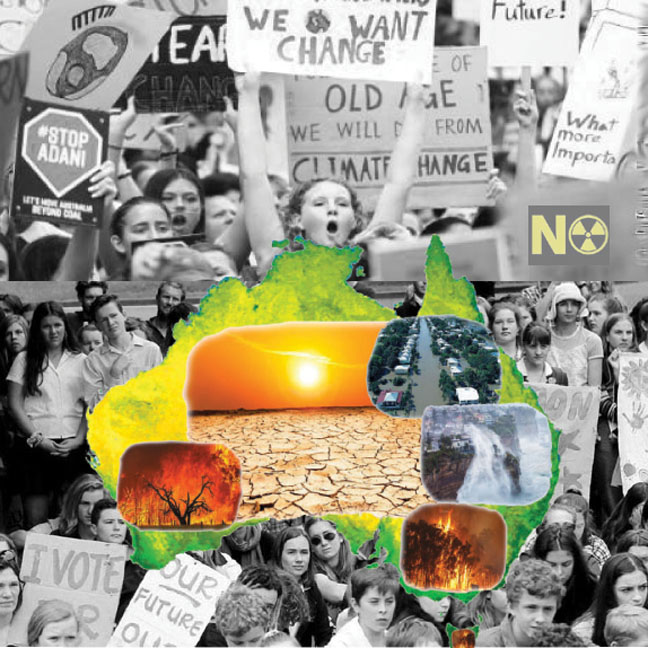
Climate change has already hit Australia. Unless we act now, a hotter, drier and more dangerous future awaits, IPCC warns https://theconversation.com/climate-change-has-already-hit-australia-unless-we-act-now-a-hotter-drier-and-more-dangerous-future-awaits-ipcc-warns-165396?utm_medium=email&utm_campaign=Latest%20from%20The%20Conversation%20for%20August%2010%202021%20-%202026619923&utm_content=Latest%20from%20The%20Conversation%20for%20August%2010%202021%20-%202026619923+CID_a4c10fc2998953c0ef465aaf49de1468&utm_source=campaign_monitor&utm_term=Climate%20change%20has%20already%20hit%20Australia%20Unless%20we%20act%20now%20a%20hotter%20drier%20and%20more%20dangerous%20future%20awaits%20IPCC%20warns
Michael Grose Climate projections scientist, CSIRO, Joelle GergisSenior Lecturer in Climate Science, Australian National University, Pep Canadell, Chief research scientist, Climate Science Centre, CSIRO Oceans and Atmosphere; and Executive Director, Global Carbon Project, CSIRO, Roshanka Ranasinghe, Professor of Climate Change impacts and Coastal Risk, 9 Aug 21,
Australia is experiencing widespread, rapid climate change not seen for thousands of years and may warm by 4℃ or more this century, according to a highly anticipated report by the Intergovernmental Panel on Climate Change (IPCC).
The assessment, released on Monday, also warns of unprecedented increases in climate extremes such as bushfires, floods and drought. But it says deep, rapid emissions cuts could spare Australia, and the world, from the most severe warming and associated harms.
The report is the sixth produced by the IPCC since it was founded in 1988 and provides more regional information than any previous version. This gives us a clearer picture of how climate change will play out in Australia specifically.
It confirms the effects of human-caused climate change have well and truly arrived in Australia. This includes in the region of the East Australia Current, where the ocean is warming at a rate more than four times the global average.
We are climate scientists with expertise across historical climate change, climate projections, climate impacts and the carbon budget. We have been part of the international effort to produce the IPCC report over the past three years.
The report finds even under a moderate emissions scenario, the global effects of climate change will worsen significantly over the coming years and decades. Every fraction of a degree of global warming increases the likelihood and severity of many extremes. That means every effort to reduce greenhouse gas emissions matters.
Australia is, without question, warming
Australia has warmed by about 1.4℃ since 1910. The IPCC assessment concludes the extent of warming in both Australia and globally are impossible to explain without accounting for the extra greenhouse gases in the atmosphere from human activities.
The report introduces the concept of Climate Impact-Drivers (CIDs): 30 climate averages, extremes and events that create climate impacts. These include heat, cold, drought and flood.
The report confirms global warming is driving a significant increase in the intensity and frequency of extremely hot temperatures in Australia, as well as a decrease in almost all cold extremes. The IPCC noted with high confidence that recent extreme heat events in Australia were made more likely or more severe due to human influence.
These events include:
the Australian summer of 2012–13, also known as the Angry Summer, when more than 70% of Australia experienced extreme temperatures- the Brisbane heatwave in 2014
- extreme heat preceding the 2018 Queensland fires
- the heat leading into the Black Summer bushfires of 2019-20.
The IPCC report notes very high confidence in further warming and heat extremes through the 21st century – the extent of which depends on global efforts to reduce greenhouse gas emissions.
If global average warming is limited to 1.5℃ this century, Australia would warm to between 1.4℃ to 1.8℃. If global average warming reaches 4℃ this century, Australia would warm to between 3.9℃ and 4.8℃ .
The IPCC says as the planet warms, future heatwaves in Australia – and globally – will be hotter and last longer. Conversely, cold extremes will be both less intense and frequent.
Hotter temperatures, combined with reduced rainfall, will make parts of Australia more arid. A drying climate can lead to reduced river flows, drier soils, mass tree deaths, crop damage, bushfires and drought.
The southwest of Western Australia remains a globally notable hotspot for drying attributable to human influence. The IPCC says this drying is projected to continue as emissions rise and the climate warms. In southern and eastern Australia, drying in winter and spring is also likely to continue. This phenomenon is depicted in the graphic below.[on original]
Climate extremes on the rise
Heat and drying are not the only climate extremes set to hit Australia in the coming decades. The report also notes:
- observed and projected increases in Australia’s dangerous fire weather
- a projected increase in heavy and extreme rainfall in most places in Australia, particularly in the north
- a projected increase in river flood risk almost everywhere in Australia.
Under a warmer climate, extreme rainfall in a single hour or day can become more intense or more frequent, even in areas where the average rainfall declines.
For the first time, the IPCC report provides regional projections of coastal hazards due to sea level rise, changing coastal storms and coastal erosion – changes highly relevant to beach-loving Australia.
This century, for example, sandy shorelines in places such as eastern Australia are projected to retreat by more than 100 metres, under moderate or high emissions pathways.
Hotter, more acidic oceans
The IPCC report says globally, climate change means oceans are becoming more acidic and losing oxygen. Ocean currents are becoming more variable and salinity patterns – the parts of the ocean that are saltiest and less salty – are changing.
It also means sea levels are rising and the oceans are becoming warmer. This is leading to an increase in marine heatwaves such as those which have contributed to mass coral bleaching on the Great Barrier Reef in recent decades.
Notably, the region of the East Australia Current which runs south along the continent’s east coast is warming at a rate more than four times the global average.
The phenomenon is playing out in all regions with so-called “western boundary currents” – fast, narrow ocean currents found in all major ocean gyres. This pronounced warming is affecting marine ecosystems and aquaculture and is projected to continue.
Where to from here?
Like all regions of the world, Australia is already feeling the effects of a changing climate.
The IPCC confirms there is no going back from some changes in the climate system. However, the consequences can be slowed, and some effects stopped, through strong, rapid and sustained reductions in global greenhouse gas emissions.
And now is the time to start adapting to climate change at a large scale, through serious planning and on-ground action.
Australia’s carbon emissions down 20% due to wide take-up of renewable energy

Telegraph UK, 29th July 2021, For Australia’s part, our experience with technology-orientated pathways
gives us confidence that with the right investments and partnerships, a prosperous net-zero world is well within our reach.
On the ground, our real-world rollout of renewables has made clear to Australian firms and families the immense benefits of investing in clean technology. Because of their embrace of our new energy future, Australia’s emissions are down over 20 per cent on 2005 levels and green technology continues to be taken
up at record levels right across our nation.
https://www.telegraph.co.uk/news/2021/07/29/technology-key-free-prosperous-net-zero-world/
Australian cities not prepared for the coming heatwaves- poor urban planning
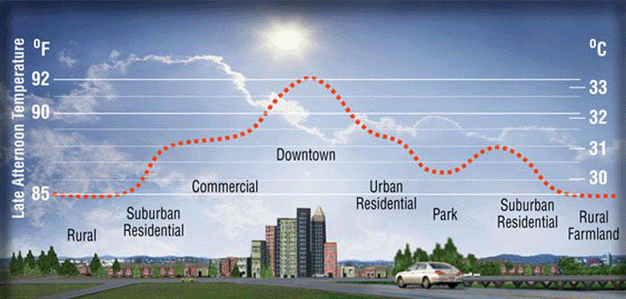
The heat is coming and we are not prepared for it.
It is not just that large houses on small blocks leave no room for trees,….. The little space left between them provides no room for recreation and serve to increase heat, with side-passages often home to air-conditioning systems that spew heated air across dividing fences.
When he looks at new developments on the fringes of Australian cities, Pfautsch says residents have been abandoned to wholly predictable heat extremes caused by global warming but exacerbated by poor planning regulation.
We’re ending up with dark-roofed, back-to-back, nose-to-front, housing suburbs on the outskirts of Melbourne. And if you add dark, asphalt and concrete surfaces you’re going to get really hot suburbs,”
Why a killer US heatwave points to a stifling future for our cities. Brisbane Times, By Nick O’Malley and Miki Perkins, July 17, 2021 It was the hellish evening temperatures that finally caused the authorities to start busing the homeless into heat shelters where they had access to fans, air-conditioning and water.
Three hours from sundown last Saturday the temperature in Las Vegas peaked at 47.2 degrees, equalling a record set in 2017. By dawn, the temperature had bottomed out at a stifling 34 degrees and begun to rise again.
One person was treated for burns after walking on a pavement and the homeless were bussed from an outdoor shelter to indoor cooling centres in response.
West of the city at Furnace Creek in Death Valley a temperature of 54.4 degrees was recorded. Experts are still checking the reading and debating over whether this was the hottest temperature ever recorded on earth.
In the town of Lytton in British Columbia, a Canadian heat record was set at the end of last month when the temperature hit 49.6 degrees and lingered up there over three days. Authorities attributed hundreds of deaths across the region to the heat, even before wildfire arrived and burnt most of the village to the ground, killing two more.
Before the flames approached one local, Lorna Fandrich, told the New York Times that she’d noticed green leaves dropping off the trees, apparently unable to tolerate the heat. On the coast to the west, millions of mussels and oysters cooked and died in superheated shallow waters.
From his home outside Sacramento Ken Pimlott, the recently retired head of Cal Fire, the agency responsible for fighting wildfires across the state of California, watched on with dread. The height of the northern fire season, he noted, has not even arrived yet.
These temperatures, Pimlott told The Sydney Morning Herald and The Age, are no longer outliers, but spikes in a new normal in a world not prepared to manage them.
The temperatures have already extended the North American fire season, causing exhaustion among crews who can’t get enough rest from the fire lines and difficulties in keeping up with maintenance demands on equipment. Aircraft once shared with nations like Australia were under greater demand as fire seasons overlapped, he said.
Pimlott’s dread was shared in Australia.
Dr Sebastian Pfautsch, a specialist on urban heat at Western Sydney University, says though Australian attention has drifted from the terrible summer of 2019 and 2020, he fears for the future of residents of some suburbs in Sydney and Melbourne.
The heat is coming, he says, and we are not prepared for it.
Stephen Livesley is an associate professor in forest sciences at the University of Melbourne, and an expert on the benefits of urban forests. “It’s possible we’re going to end up with large neighbourhoods which people in 20 or 30 years’ time will simply avoid,” he says.
This concern is not misjudged, says Professor Christian Jakob, a Monash University atmospheric scientist.
His analysis of the heatwave that struck North America shows that it originated with an unremarkable rainshower on the other side of the Pacific Ocean, not far from Japan.
The shower caused an atmospheric disturbance that in turn created what scientists call a Rossby wave, which was guided towards North America by the jet stream, amplifying as it travelled before breaking upon the shores of the Pacific Northwest.
There the wave caused a high-pressure system. As Jakob explains, air heats under pressure. On the ground, temperatures soared. What caused the temperatures to reach such extremes, though, and what made the system linger long enough to cause such misery and destruction beneath it, cannot yet be explained by science says Jakob.
Until better computer models are created all we can know is that as the climate heats due to global warming such heatwaves will in some areas increase in intensity and duration.
Areas particularly prone to the phenomenon include northern Europe, North America and south-eastern Australia, he says
On the day that Penrith became for a time the hottest place on earth, with temperatures hitting 48.9 degrees on January 4 last year, Keith Heggart’s air conditioner conked out by midday. The manual said it sometimes did that in extreme heat and recommended hosing it down, but due to bushfires water use was banned. Heggart and his young family closed windows against the smoke and the blinds against the sun and sheltered in the living room where a fan pushed around the hot air.
Watching the news from America these past few weeks, Heggart has fretted about the summers to come. His street in Penrith is older than others and there is some shade, some gaps between the houses, but when he looks at the new developments nearby, he despairs.
“There are no trees, there is no shade,” he says. “You could reach out your window and touch the house next door.
When he looks at new developments on the fringes of Australian cities, Pfautsch says residents have been abandoned to wholly predictable heat extremes caused by global warming but exacerbated by poor planning regulation.
Council areas such as Blacktown, Penrith and Campbelltown in Sydney and suburbs like Wollert, Mernda and Mickleham in Melbourne are compelled to absorb growing populations by state governments, but are failing to impose proper planning regulations. Strapped for cash, they have allowed property developers to shape the built environment, he says.
…….. It is not just that large houses on small blocks leave no room for trees, Pfautsch says. The little space left between them provides no room for recreation and serve to increase heat, with side-passages often home to air-conditioning systems that spew heated air across dividing fences.
But Pfautsch sees other wilful mistakes. Unshaded black roads absorb heat during the day only to radiate it at night, extending the heat of day into the evening. This contributes to the urban heat island effect.
Roofs, exterior walls and even driveways created by developers in currently fashionable dark shades serve to exacerbate the impact, he says.
But, according to Pfautsch, the problems begin even before the new suburbs are laid out, when developers clear new sites of all existing trees, ponds and watercourses to maximise space and save on construction costs.
What greenspace remains is often not connected to homes by shaded foot or bike paths.
“It is inhumane to expect people to live like this in the temperatures we anticipate,” he says. “I can’t say it more strongly than that.”………….
Overall, Melbourne lost 0.3 per cent of its canopy between 2014 and 2018. Almost 2000 hectares of trees were cut from the east and south-east, mostly at residential properties……….
We’re ending up with dark-roofed, back-to-back, nose-to-front, housing suburbs on the outskirts of Melbourne. And if you add dark, asphalt and concrete surfaces you’re going to get really hot suburbs,” he says. “When you have high-temperature events intersecting with urban heat islands, you have really, really high temperatures.”
According to Pfautsch, even a concerted effort to increase tree coverage in the suburbs most prone to the heat-island effect will only have limited impact in the years to come………
All this raises thorny questions of environmental and climate justice, Livesley says, as the suburbs most affected are often the most affordable.
“We are pushing some of the most vulnerable people in our society into these low tree, low services environments, with poor public transport infrastructure.”…………
In Mildura, a town near the border in north-west Victoria, temperatures have increased in line with worldwide heating trends. Between 1998-99 and 2018-19 the number of days each year where the temperature went above 35 degrees increased by about 20 days, and the number of heatwaves rose from six to nine.
For residents living in public housing – who faced huge bureaucratic hurdles to having air conditioners installed – recent summers have been a nightmare,………..
not only should we be tackling climate change, we should be totally re-imagining how we build our suburbs. https://www.brisbanetimes.com.au/environment/climate-change/why-a-killer-us-heatwave-points-to-a-stifling-future-for-our-cities-20210716-p58ae9.html
US and Allies’ military machine – out of Afghanistan (where it’s needed) and into the Pacific – against its new enemy – The Great Barrier Reef

War games on despite pandemic, threat to Great Barrier Reef https://www.greenleft.org.au/content/war-games-despite-pandemic-threat-great-barrier-reef, Kerry SmithJuly 16, 2021 Lurking off the coast of China’s eastern seaboard now are three United States aircraft carrier battle groups (each with about 30 support vessels).
They will be joined by a British aircraft carrier group and Australian and Canadian warships as part of biennial military exercises, which start on July 18 and last until the end of the month.
Talisman Sabre 2021 (TS21) will involve a US expeditionary strike group from the USS America, the amphibious assault ship based at Sasebo Naval Base in Japan, and 17,000 Australian, US and foreign troops in combined land, sea and air war exercises.
According to Stars and Stripes, for the first time, there will be live-fire training: the US Army will fire a Patriot missile defense system from Shoalwater Bay in Queensland at a pair of drone targets on July 16.
This is within the Great Barrier Reef Marine Park and other environmentally and culturally significant areas.
The war games will also take place in Darwin in the Northern Territory and Evans Head, New South Wales.
All are thousands of kilometres away from their home base, and provocatively close to the new declared enemy — China.
Forces from Canada, Japan, New Zealand and the Republic of Korea will take part and Australia-based personnel from India, Indonesia, France and Germany will observe.
Meanwhile, the ABC’s “defence correspondent” hyperventilated on July 14 that a solitary Chinese military ship, outside Australian territorial waters, poses a threat to national security.
The Independent and Peaceful Australia Network (IPAN) is concerned about both the war games and its impact on environmentally and culturally significant sites.
“TS21 will involve amphibious assaults, movement of heavy vehicles, use of live ammunition as well as the use of U.S. nuclear-powered and nuclear-weapon capable vessels,” IPAN spokesperson Annette Brownlie said.
“These activities are incompatible with the protection of the environment and, in particular, the Great Barrier Reef.
“During Talisman Sabre 2013, the US jettisoned four unarmed bombs on the Great Barrier Reef when they had difficulty dropping them on their intended target, Townshend Island,” Brownlie said.
The objective of Talisman Sabre is to further integrate the Australian military with the US — now ranked among the world’s worst polluters.
IPAN said the ADF did not engage in a Public Environment Report process for TS21 and has yet to release an environmental assessment for the areas in which TS21 will take place.
However, the Department of Defence did produce an environmental awareness video for visiting troops that promotes the military use of the Great Barrier Reef. The video reminds troops to consider the reef and not to litter.
“Talisman Sabre is a threat to the reef and to the environment. Putting out a video is a completely inadequate response,” Brownlie said.
This comes as federal environment minister Sussan Ley is lobbying to keep the Great Barrier Reef off the United Nations Educational, Scientific and Cultural Organization World Heritage Committee’s “in danger” list.
Despite a global pandemic, about 1800 foreign military personnel have arrived in Darwin to participate.
Military exercises put the Great Barrier Reef in danger
| |||

15 July 2021, The Independent and Peaceful Australia Network is greatly concerned about the impact of current warfare exercises on environmentally and culturally significant sites, such as the Great Barrier Reef.
Talisman Sabre 2021 (TS21) is currently taking place in Australia and will see 17,000 Australian, U.S. and foreign troops engaging in combined land, sea and air manoeuvres.
Exercises as part of TS21 will take place along the Queensland and New South Wales coastline, within the Great Barrier Reef Marine Park as well as other environmentally and culturally significant areas.
TS21 will involve amphibious assaults, movement of heavy vehicles, use of live ammunition as well as the use of U.S. nuclear-powered and nuclear-weapon capable vessels. These activities are incompatible with the protection of the environment and in particular the Great Barrier Reef.
This year, the ADF did not engage in a Public Environment Report process for TS21 and has not publicly released an environmental assessment for the areas in which TS21 will take place.
However, the Department of Defence did produce an environmental awareness video for visiting troops that promotes the military use of the Great Barrier Reef. The video reminds troops to consider the reef and not to litter.
Annette Brownlie, Chairperson of the Independent and Peaceful Australia Network: “Talisman Sabre is a threat to the reef and to the environment. Just putting out a video is a completely inadequate response to the active environmental management required to protect the vulnerable reef. Particularly as environment minister, Sussan Ley, is on an international lobbying campaign to keep the Great Barrier Reef off the UNESCO World Heritage Committee ‘in danger’ list.”
“The objective of Talisman Sabre is to integrate the Australian military further into the U.S. military, which is ranked among the world’s worst polluters and is the world’s greatest organisational consumer of oil.”
“Let us not forget that during Talisman Sabre in 2013, the U.S. jettisoned four unarmed bombs on the Great Barrier Reef when they had difficulty dropping them on their intended target, Townshend Island.”
Annette Brownlie, Chairperson of the Independent and Peaceful Australia Network: “Talisman Sabre is a threat to the reef and to the environment. Just putting out a video is a completely inadequate response to the active environmental management required to protect the vulnerable reef. Particularly as environment minister, Sussan Ley, is on an international lobbying campaign to keep the Great Barrier Reef off the UNESCO World Heritage Committee ‘in danger’ list.”
“The objective of Talisman Sabre is to integrate the Australian military further into the U.S. military, which is ranked among the world’s worst polluters and is the world’s greatest organisational consumer of oil.”
“Let us not forget that during Talisman Sabre in 2013, the U.S. jettisoned four unarmed bombs on the Great Barrier Reef when they had difficulty dropping them on their intended target, Townshend Island.” IPAN Media Liaison: 0428 973 324 or ipan.australia@gmail.com
Fears Antarctic glacier could melt faster as it speeds up and ice shelf ‘rips apart’

Fears Antarctic glacier could melt faster as it speeds up and ice shelf ‘rips apart’ ABC Science / ABC, By environment reporter Nick Kilvert, 12 June 21,
Antarctica’s Pine Island Glacier has started moving faster again, according to new research.
Key points:
- The glacier’s movement was stable between 2009 and 2017 but sped up between 2017 and 2020
- Researchers think the acceleration was caused by the glacier’s ice shelf ‘ripping apart’, reducing friction on the glacier
- They say it’s possible the ice shelf could break up in the next decade or two
Scientists said the glacier increased its rate of flow toward the Amundsen Sea in West Antarctica by 12 per cent between 2017 and 2020, in a paper published today in Science Advances.
This latest acceleration in flow speed and the mechanisms which caused it, mean the melting of the glacier could be “much more rapid” than previously expected, the researchers said
The Pine Island Glacier has contributed the most to sea-level rise from Antarctica over the past few decades, and holds enough water to raise global sea-levels by half a metre.
“What is worrying is that we weren’t expecting this much shelf loss from this part of the ice sheet,” said lead author Ian Joughin from the Polar Science Centre at the University of Washington…………….. https://www.abc.net.au/news/science/2021-06-12/glacier-pine-island-antarctica-ripping-apart/100197856
The unrealistic push for nuclear reactors helps the coal and gas industries to hang on
Nuclear power is a stalking horse for gas https://independentaustralia.net/environment/environment-display/nuclear-power-is-a-stalking-horse-for-gas,15174
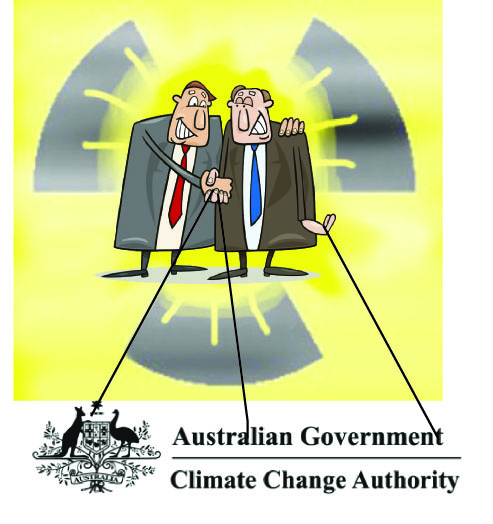
By John Quiggin | 9 June 2021, The recently appointed Chair of the Climate Change Authority, Origin Energy boss Grant King, has yet again raised the idea that nuclear energy is an important policy option for Australia.
This idea has been a staple of rightwing politics for years, in spite of (or rather because of) steadily accumulating evidence that solar PV and wind are the most efficient alternatives to carbon-based fuels.
Australia has had a long string of inquiries into nuclear power, going back to the Switkowski review in 2006. All have concluded that nuclear power is unlikely to be a feasible option for Australia any time soon.
The most recent comprehensive assessment was the South Australian Nuclear Fuel Cycle Royal Commission which concluded, in 2016, that nuclear power was unlikely to be commercially viable in the foreseeable future.
Meanwhile, the world has moved on from nuclear power. There are still around 50 nuclear plants under construction around the world, mostly way over time and over budget. But, outside China, there hasn’t been a new project committed since the UK Government committed to the Hinkley Point C reactor in 2013.
Hinkley Point C will almost certainly be the last nuclear plant built using the European EPR design. Two more, in France and Finland, are many years behind schedule, but will presumably be finished, or left unfinished, in the next couple of years. China built a couple of EPR reactors but hasn’t commissioned any more.
Other designs which seemed promising have also been abandoned. The AP1000, which once seemed to be the leading contender, sent its designers (Westinghouse) broke. The rights to the CANDU reactor, produced by Atomic Energy of Canada Limited, were sold for a pittance a decade ago. South Korea has stopped new nuclear construction, effectively killing off KEPCO’s APR-1400 design, though a few projects remain to be completed.
The result is that only two large-scale nuclear designs are available for new projects: Russia’s VVER-1200 and China’s Hualong One. Neither is approved for construction by Western authorities like the U.S. Nuclear Regulatory Commission. In view of concerns about safety standards and broader geopolitical tensions, neither is likely to be.
These points have been implicitly accepted in recent discussions of nuclear power. Large-scale nuclear reactors like those constructed over the last 50 years or so have quietly disappeared from discussion.
Instead, attention has been focused on the new idea of “small modular reactors” (SMRs). There is nothing new about small reactors. They are used routinely in nuclear submarines, for example. The problem is because they cannot capture economies of scale, small reactors are uneconomic as sources of electricity for general use.
The “modular” idea is that, if plants can be constructed in batches in a factory, economies in manufacturing will outweigh the loss of economies of scale.
This idea remains untested.

The leading contender for the construction of small modular reactors is Nuscale, which plans to build a prototype plant, consisting of 12 60 MW reactors by 2030. That’s a big blowout from the target date of 2023 announced in 2014 and from an even earlier target date of 2018, proposed around 2008.
In fact, the announced deployment data has been eight to ten years in the future ever since the project began in the early 2000s.
As well as constant delays, the Nuscale project has experienced the same cost escalation as larger nuclear projects. Over the past two years, the cost of the pilot project has risen from $3 billion to $6 billion, partly offset by a $1.4 billion injection from the U.S. Department of Energy.
Even if there are no further delays and cost escalation, it will take at least until 2035 before the pilot plant can be properly evaluated. The establishment of large scale manufacturing and the first installations in the U.S. will take at least ten more years. Even in the most optimistic scenarios, there is no prospect of SMRs operating in Australia before 2050.
To be fair, King couched his discussion in terms of options for the next 30, 40 or 50 years. But even Scott Morrison concedes that we should be aiming to reach zero net emissions by 2050. That entails completely decarbonising electricity generation well before 2050.
Nuclear power ceased to be a realistic option at least a decade ago. The only reason it keeps being raised is to obscure the necessity of a rapid and comprehensive shift to solar and wind energy. Nuclear power is not a realistic energy source. Rather, it has been a stalking horse for coal and more recently, gas.
It’s not surprising, therefore, to see it being promoted by a leading figure in the gas industry.
John Quiggin is Professor of Economics at the University of Queensland. His new book, The Economic Consequences of the Pandemic, will be published by Yale University Press in late 2021.
1 This month

of the week – Australians for War Powers Reform (AWPR)
To see nuclear-related stories in greater depth and intensity
 Antinuclear