Power, control and symbolic masculinity: How Freud might diagnose the pro nuclear lobby
ReNewEconomy, Giles Parkinson, Dec 19, 2024
When faced with arguments for nuclear power in Australia, many in the energy industry scratch their heads and wonder where they are coming from – the fossil fuel lobby, political ideology and other vested interests are often cited as the reasons, along with a hatred of renewables.
On close inspection, nuclear – at least in Australia – makes no sense on an economic, climate or even grid engineering and management perspective.
But maybe the problem runs deeper than that. John Poljak, a founder at Keynumbers and something of a data nerd (it appears) pondered the question and decided to ask ChatGPT for an answer.
“Australia’s nuclear debate is as polarising as it gets, with two starkly opposed camps,” Poljak writes on LinkedIn. “Let’s be honest – facts alone aren’t likely to sway minds here. So why not take a different approach and explore the deeper psychological forces at play?
So he asked ChatGPT why people might prefer nuclear over renewables.
“For a balanced perspective, I’ve also asked ChatGPT to explore the reverse scenario: Why might the ‘patient’ prefer renewables over nuclear? The answer might surprise you!”
Or, may be – if you have met some nuclear boosters – the answer won’t surprise you at all. We decided we couldn’t do any better than simply reprint the answers, as published on LinkedIn by Poljak.
See what you think. Despite the positive prognosis, we’re not convinced the pro-nuclear lobby is going to sign up for the recommended treatment.
Oh, and if you are interested in pursuing the issue further, here is another musical perspective on the Coalition nuclear proposal, from a group that call themselves the NEMChat Singers, Stake it on the Atom.
The subject group demonstrates a pronounced preference for nuclear energy over cheaper renewable alternatives. From a Freudian psychoanalytic perspective, this preference may be interpreted as stemming from underlying unconscious drives, particularly those related to power, control, and symbolic masculinity.
- The Symbolism of Nuclear Power: Nuclear energy serves as a potent phallic symbol – a technological manifestation of potency, authority, and industrial mastery. The size, complexity, and centralization of nuclear facilities mirror the patriarchal ideals of dominance, precision, and order. For individuals navigating the existential anxieties of middle age – such as waning virility, diminishing career dominance, and an encroaching sense of societal irrelevance – nuclear power provides an unconscious projection of strength and continuity.
Fear of Fragmentation (Dispersed Renewables): Renewable energy, particularly solar and wind, is decentralized, diffuse, and perceived as inherently “feminine” in its relationship to nature, fluidity, and “soft power.” To the Freudian psyche, this challenges the hierarchical, centralized models of energy production that resonate with a paternal superego. Renewables may unconsciously symbolize a loss of control and traditional authority, evoking latent anxieties about societal shifts away from rigid masculinity.
- Latency of Childhood Influences: Many members of this cohort were raised during the Cold War era when nuclear technology was framed as an apex of human achievement. Early life exposure to narratives of nuclear power as an emblem of progress and invincibility may resurface as repressed nostalgic idealization, leading to its advocacy in adulthood.
Treatment Recommendation
- Confrontation of Symbolic Associations: A structured exploration of the symbolic meanings attributed to nuclear versus renewable energy may help subjects recognize their emotional attachments. Psychoeducation regarding the symbolic neutrality of energy sources could loosen the phallic projections onto nuclear power.
Embrace of Decentralized Power Structures: Group therapy focused on reimagining control and security within decentralized systems (e.g., community-owned solar power) could facilitate emotional acclimatization to renewables. Subjects may benefit from recognizing renewable energy as a cooperative expression of resilience rather than a threat to hierarchical order.
- Midlife Reorientation Therapy: Addressing unconscious fears surrounding aging and obsolescence through therapy targeting generativity (Erikson’s stage of psychosocial development) can channel these drives into productive societal advocacy. Renewable energy can be framed as a forward-looking, legacy-building effort rather than a diminishment of traditional ideals.
Prognosis
With appropriate intervention, prognosis is favorable. By fostering awareness of the unconscious biases at play, subjects can transition from rigidly defending nuclear power as a symbolic “bulwark” to embracing renewables as an adaptive, generative solution for the future. Such a shift may alleviate underlying anxieties, promoting psychological reconciliation between their self-image and societal change…………………………………………………………………………………………………………………………….. more https://reneweconomy.com.au/power-control-and-symbolic-masculinity-how-freud-might-diagnose-the-pro-nuclear-lobby/
Amidst genocide and war, anti-Zionism protesters are demonised as ‘extremists’
Independent Australia, By Martin Hirst | 13 May 2024
As human rights experts warn of an ongoing genocide in Gaza, any opposition to Zionism is being egregiously labelled as extremism, Dr Martin Hirst writes.
STUDENT PROTESTERS around the world are being demonised by politicians, bureaucrats and the news media for taking a stand against genocide.
This is just an updated version of the moral panic playbook that conservatives use to demonise young people who don’t toe the establishment line.
In the last six weeks, student protests have exploded around the world on a scale not seen since the Vietnam Moratorium almost 60 years ago. These students are protesting against what human rights experts are not hesitating to call a genocide in Gaza.
This reporter knows some of the Australian leaders of these protests quite well, organising politically with them as a long-term member of Left-wing group Socialist Alternative and a writer for its newspaper, Red Flag.
We know that none of these outstanding young activists are antisemitic. We know they are better educated about Palestine from a contemporary and historical perspective than our Prime Minister and most politicians…………………………………………………
We know that these young people are on the right side of history.
We also know that attempts by political leaders, intelligence agencies, Zionist hacks, the police and some university administrators to brand these brave students as violent, dangerous and antisemitic is a bald lie.
It is the lie itself that is dangerous because it actually emboldens Zionist thugs to launch ever-more violent attacks on student encampments, causing injury and mayhem.
It is also dangerous because it is a serious attempt – carried out with planning and intent – to criminalise anti-genocide activists and to criminalise their right to political speech.
What is happening in Australia, across Europe and in the United States is the creation of a state of emergency based on these dangerous lies. Right in front of our eyes, pro-Israel elements of the ruling class are establishing the conditions for a new wave of moral panic.
Students are being demonised as the 21st-Century version of the “folk devil“. The protests are being compared to 1930s Germany – which most people who make this comparison know absolutely fuck-all about – and they are being used to launch a McCarthyite witch hunt against students and academics who stand up for Palestine.
There’s nothing new about moral panics — the phrase was coined by British sociologist Stanley Cohen in the 1970s to describe the clamour for the state to take action against “Mods” and “Rockers” — two rival youth subcultures that enjoyed different types of music.
Interestingly, the Pogroms against Jews that swept Europe in the 1920s were a form of moral panic…………………………………………………………………………………………………
A moral panic only works when those in power – who feel threatened by resistance from below – can enlist loyal handmaidens in the media to prosecute their case and amplify their fear-mongering. Now, these tactics of intimidation are aimed at silencing dissent and any vocal opposition to the Israeli slaughter in Gaza.
Make no mistake, it is happening. Take it seriously because the Zionists and the political establishment are taking it seriously……………………………………………………
Failed Liberal Minister Josh Frydenberg helped to produce a “documentary” helpfully explaining to Sky News audiences how Australia is sliding into Nazi-era pogroms because of the threat to civil order posed by the student encampments and the wider anti-genocide movement.
In the last week alone, there has been a slew of opinion columns and news pieces in The Australian slandering student encampments while ignoring the attacks mounted on them by Zionist thugs.
Andrew Bolt and the usual list of suspects are apoplectic with rage that university administrators haven’t (yet) moved to shut down the protests.
However, the universities are beginning to move. The administration at Monash University in Melbourne is demanding students remove ‘Zionists not welcome’ signs from around their encampment because of some spurious “legal advice” that it is vilification.
Police have been allowed to install surveillance cameras overlooking the Monash encampment. Vice Chancellors from the Group of Eight — Australia’s richest universities — have asked Attorney-General Mark Dreyfus to advise them if the slogans used in the encampments are “hate speech”.
This is particularly egregious because Dreyfus himself is a Zionist. Dreyfus declined to provide legal advice but urged people who feel offended to lodge complaints under Section 18a of the Racial Discrimination Act. …………………………………………………..
It is too early to tell where all of this will end, but we can confidently predict that the Labor Party will support Sarah Henderson’s call for a Senate inquiry.
Anthony Albanese is fuelling the moral panic with apparent joy. He is reported to have told a room full of senior Zionist elders and student leaders that he believes the campus protests are led by outside agitators.
Helpfully, he was able to name them too. It’s all “the Trots‘ fault”.
This is deeply ironic for two reasons:
Russian revolutionary leader Leon Trotsky was a Jew and when he fell foul of the Stalinist regime, his Jewish heritage was used against him to launch a moral panic that even spread to Australia and poisoned the minds of many good Communist Party members, including the artist Noel Counihan who famously called Trotsky a “fascist gangster”.
Albanese has also been demonised as a Trotskyist by Murdoch hacks and (former Liberal MP Bronwyn Bishop) “Kerosene Bronny“…………….. https://independentaustralia.net/politics/politics-display/amidst-genocide-and-war-anti-zionism-protesters-are-demonised-as-extremists,18594
Australia’s environmental scientists intimidated, silenced by threats of job loss
 Australia’s environmental scientists intimidated, silenced by threats of job loss, Michael West Media, by Elizabeth Minter | Jan 17, 2021 The silencing of environmental scientists, as revealed in a study late last year, profoundly damages our democracy, wastes taxpayers’ money, takes a huge personal toll, allows fake news to proliferate and short-changes the public. Elizabeth Minter reports. Australia’s environmental scientists intimidated, silenced by threats of job loss, Michael West Media, by Elizabeth Minter | Jan 17, 2021 The silencing of environmental scientists, as revealed in a study late last year, profoundly damages our democracy, wastes taxpayers’ money, takes a huge personal toll, allows fake news to proliferate and short-changes the public. Elizabeth Minter reports.
“I declared the (action) unsafe. I was overruled and … was told to be silent or never have a job again.” “We are often forbidden (from) talking about the true impacts of, say, a threatening process […] especially if the government is doing little to mitigate the threat.” “I was directly intimidated by phone and Twitter by (a senior public servant).” “… governments allow (industry) to treat data collected as commercial in confidence. This means experts most able to comment on the details of big mining and construction projects are hopelessly conflicted and legally gagged from discussing these projects in public.” “(Government) staff are rewarded or penalized on the basis of complying with opinions of senior staff regardless of evidence.” “I proposed an article in The Conversation about the impacts of mining […] The uni I worked at didn’t like the idea as they received funding from (the mining company).” All in a day’s workAll these comments, straight from the mouths of some of Australia’s most esteemed scientists, highlight the threats faced by ecologists, conservation scientists, conservation policy makers and environmental consultants, whether they are working in government, industry or universities. The scientists were responding to an online survey as part of a study conducted by academics Don Driscoll, Georgia Garrard, Alexander Kusmanoff, Stephen Dovers, Martine Maron, Noel Preece, Robert Pressey and Euan Ritchie. In an ironic twist, one of the research team’s initial members declined to contribute to the project for fear of losing funding and therefore their job. As the study’s authors note, scientists self-censor information for fear of damaging their careers, losing funding or being misrepresented in the media. In others, senior managers or ministers’ officers prevented researchers from speaking truthfully on scientific matters. This means important scientific information about environmental threats often does not reach the public or decision-makers, including government ministers. This information blackout, termed “science suppression”, can hide environmentally damaging practices and policies from public scrutiny. Survey methodology……….Ministers not receiving full informationSome 75% of the scientists surveyed reported having refrained from contributing to public discussion when given the opportunity – most commonly in traditional or social media. A small number self-censored conference presentations (9%) and peer-reviewed papers (7%). For scientists working in government, the main reasons they didn’t comment was because of attitudes of senior management (82%), workplace policy (72%), a minister’s office (63%) and middle management (62%). Fear of what would happen to their career prospects (49%) and concern about media misrepresentation (49%) also discouraged those working in government from speaking publicly. Almost 60% of scientists working in government and 36% of scientists in industry reported that internal communications were modified………… Critical conservation issues suppressedThe most common issue on which information was suppressed was threatened species. About half of industry and government scientists, and 28% of academics, said their commentary was constrained. Scientists working in government also reported not being able to comment on logging and climate change………….. The system is brokenOf those scientists who had spoken publicly about their research, 42% had been harassed or criticised for doing so. Of those, 83% believed the harassers were motivated by political or economic interests……. Change is neededAs witnessed by the past four years of Donald Trump’s presidency, it has never been more important to ensure that the public are exposed to facts and information from trusted sources……. The study was published late last year in Conservation Letters, a journal of the Society for Conversation Biology. https://www.michaelwest.com.au/australias-environmental-scientists-intimidated-silenced-by-threats-of-job-loss/ |
|
The ecological knowledge of indigenous peoples
Land managers in Australia have adopted many of the fire-control practices of the aborigines and have partnered with native people.
While the skill of aborigines with fire had been noted before the giant brushfires – early settlers remarked on the “park-like” nature of the landscape – and studied before, it’s taken on new urgency. That’s why Australian land managers have adopted many of the ideas and partnered with native people as co-managers. The fire practices of the aborigines are also being taught and used in other countries.
Scientists have looked to Australian natives for other insights into the natural world. A team of researchers collaborated with natives based on their observations of kites and falcons that fly with flaming branches from a forest fire to start other fires. It’s well known that birds will hunt mice and lizards as they flee the flames of a wildfire. But stories among indigenous people in northern Australia held that some birds actually started fires by dropping a burning branch in unburned places. Based on this TEK, researchers watched and documented this behavior.
Aboriginal people “don’t see themselves as superior to or separated from animals. They are walking storehouses of knowledge”
 Native Knowledge: What Ecologists Are Learning from Indigenous People https://e360.yale.edu/features/native-knowledge-what-ecologists-are-learning-from-indigenous-people
From Alaska to Australia, scientists are turning to the knowledge of traditional people for a deeper understanding of the natural world. What they are learning is helping them discover more about everything from melting Arctic ice, to protecting fish stocks, to controlling wildfires. APRIL 26, 2018
While he was interviewing Inuit elders in Alaska to find out more about their knowledge of beluga whales and how the mammals might respond to the changing Arctic, researcher Henry Huntington lost track of the conversation as the hunters suddenly switched from the subject of belugas to beavers.
It turned out though, that the hunters were still really talking about whales. There had been an increase in beaver populations, they explained, which had reduced spawning habitat for salmon and other fish, which meant less prey for the belugas and so fewer whales.
“It was a more holistic view of the ecosystem,” said Huntington. And an important tip for whale researchers. “It would be pretty rare for someone studying belugas to be thinking about freshwater ecology.”
Around the globe, researchers are turning to what is known as Traditional Ecological Knowledge (TEK) to fill out an understanding of the natural world. TEK is deep knowledge of a place that has been painstakingly discovered by those who have adapted to it over thousands of years. “People have relied on this detailed knowledge for their survival,” Huntington and a colleague wrote in an article on the subject. “They have literally staked their lives on its accuracy and repeatability.”
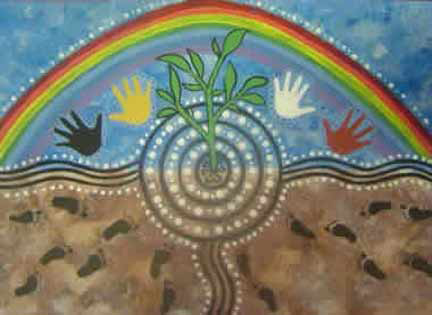
Tapping into this traditional wisdom is playing an outsized role in the Arctic, where change is happening rapidly.
29 September REneweconomy news
 RenewEconomy
-
Adani’s Whyalla 140MW solar plant set for construction in 2018Green industrial revolution continues at Whyalla, with Adani Group’s 140MW solar farm approved for construction.
-
Adelaide charged up as hub for electric vehiclesThe City of Adelaide is now a hub for South Australia’s electric vehicle charging network with eight fast charging stations opening today within a new dedicated EV parking area.
-
Hackett steps aside as chair, CEO of battery storage company RedflowHackett steps down from twin roles at Redflow as company focuses on new manufacturing facility and cutting costs.
-
AGL looks at 250MW battery storage plant for LiddellAGL outlines plans to install 250MW of battery storage at Liddell, and to invest in Bayswater upgrade, new gas generators, demand response, and huge amount of wind and solar to replace Liddell.
-
Goulburn Council floats solar PV as a way to cut water costsGoulburn Council to commission feasibility studies into installing floating solar on government water stores, to slash power costs.
-
Graph of the Day: Green Bond issuance to soon pass $100 billionGreen Bond issues expected to surpass $US100 billion for the first time in a single year in 2017.
Virtual reality film “Collisions” tells one Aboriginal man’s story of Maralinga nuclear bombing
Aboriginal man’s story of Maralinga nuclear bomb survival told with virtual reality By Alex Mann ABC News, 7 Oct 16 In an unlikely collision of cultures, state-of-the-art 3D film technology is bringing an Aboriginal man’s unique tale of nuclear bomb survival to audiences across Australia.
In the 1950s Nyarri Morgan was a young man, walking and hunting in South Australia’s northern deserts. His dramatic first contact with whites came when he witnessed a nuclear bomb explosion at the British testing site at Maralinga.
Now, as an old man, and with the help of director Lynette Wallworth and some technology, he is sharing his story in a film called Collisions that is screening in selected venues around Australia.
“It happened in a desert where people assumed there were very few people [and] there was not much life and not much to be lost,” Wallworth said.
“Every one of those assumptions was wrong.”
‘People still have that poison today’ As the radioactive dust fell, Mr Morgan walked an ancient trade route at the edge of the test site. He had no idea of what he was witnessing.
In making the film, Wallworth asked Mr Morgan what he thought he was seeing. “He said, ‘We thought it was the spirit of our gods rising up to speak with us’,” she said. “[He said] ‘then we saw the spirit had made all the kangaroos fall down on the ground as a gift to us of easy hunting so we took those kangaroos and we ate them and people were sick and then the spirit left’.”
Mr Morgan is sharing his story, in his words, so it won’t ever be forgotten. “After the explosion the fallout went north,” Mr Morgan said. “Powder, white powder killed a lot of kangaroos [and] spinifex [grass]. Water was on fire, that’s what we saw.”
Mr Morgan said water “died” but that he and the two men he was with drank the water, even though it was still hot. “The smoke went into our noses, and other people still have that poison today,” he said.
“We all poisoned, in the heart, in the blood and other people that were much closer they didn’t live very long, they died, a whole lot of them.” ‘In virtual reality everything becomes personal’………..http://www.abc.net.au/news/2016-10-07/aboriginal-mans-story-of-nuclear-bomb-survival-told-in-vr/7913874
Art exhibition Black Mist Burnt Country explores consequences of Maralinga atomic bomb tests
Black Mist Burnt Country is a national touring exhibition devised to commemorate one of the great crimes against this country – the wilful poisoning of the land and its people by the British Government with the active collusion of the Australian Government. The full extent of the British experiments with atomic weapons on Australian soil took decades to be fully exposed.
The nuclear tests took place over a number of years – starting at Monte Bello in 1952, rolling on to Emu Field and then Maralinga 60 years ago – yet it was not until the 1980s that a Royal Commission headed by James McClelland finally revealed the full extent of the poisoning of both land and people……..
Jessie Boylan’s photographs show both sides to the consequences of this crime. In one, Avon Hudson, the former RAAF officer who publicly exposed the extent of British culpability and Australian complicity, sits in his study, surrounded by cardboard boxes. In the other Yami Lester, who as a child was blinded by the mist, stands staring into the sun with his sightless eyes. Lester also appears in Belinda Mason’s Maralinga, an alarming 3D lenticular holographic photograph, that focuses on Lester’s open unseeing eye.
Trevor Nickolls’ painting Revenge of the Stormboy shows the little children caught in the wild chaos of nuclear devastation, and the sense of anger the wider Aboriginal community feels about what happened to the Anangu people, whose land was so lightly taken away from them.
Some of the most moving paintings are by Jonathan Kumintjarra Brown, who was born at the Ooldea Mission but stolen and raised in Melbourne and Sydney. When he was an adult he found his family at Yalata, where the Anangu people had been moved because of the tests. His painting Maralinga has the truth of the land partly obliterated by the bombs while a lizard’s skeleton represents the loss of life…….https://theconversation.com/black-mist-burnt-country-asks-what-remains-after-the-mushroom-cloud-66135
Maralinga: art exhibition raises the question- what has changed in pro nuclear activities?
 Art exhibition to mark 60th anniversary of nuclear testing in Maralinga asks what has changed ABC Central Victoria By Larissa Romensky , 22 Sept 16, A national touring exhibition of artwork marks 60 years after the British government exploded an atomic bomb in South Australia’s outback.
On September 27, 1956 the British government conducted its first atomic test at Maralinga.
In total, seven nuclear bomb blasts were detonated between 1956 and 1967 in the southern part of the Great Victoria Desert in South Australia followed by more than 600 “minor tests”.
These were not the first nuclear tests to be conducted in Australia, but the term Maralinga, an Aboriginal word for thunder, became the name associated with this chapter in Australian history.
Black Mist Burnt Country, is a national touring exhibition that revisits the events and its location through the work of more than 30 Indigenous and non-Indigenous artists.
Curator JD Mittman said the title refers to the “mysterious” black mist that hovered over the country after the first test at Emu Field in South Australia in 1953 that “badly” affected Aboriginal families at Wallatinna.
“[Yankunytjatjara man] Yami Lester testified that people got very sick, some died, and he lost his eyesight,” Mr Mittman said.
Burnt country was in reference to the enormous heat generated by an atomic bomb blast, 1,000 times hotter than the sun.
“The blast melts the ground to glass, also called Trinitide, after the Trinity test ," he said.
Inspired by Jonathan Kumintjarra Brown
Jonathan Kumintjara Brown was a member of the stolen generation and later in life connected with his family in South Australia and found out about the atomic testing of his traditional land.
Mr Mittman said the exhibition was originally inspired by the artist's work entitled Marilinga before the atomic test.
"The question that came to mind immediately was: if there's a work that depicts the country before the atomic tests then surely there must be work that is also about the period after or during the tests," he said.
The work in the exhibition spans seven decades from across the globe from the first atomic test in Hiroshima to the present day, from both private and public collections........http://www.abc.net.au/news/2016-09-21/exhibition-to-mark-60th-anniversary-of-nuclear-testing/7865192
Portrait of a nuclear whistleblower
Art exhibition to mark 60th anniversary of nuclear testing in Maralinga asks what has changed ABC Central Victoria By Larissa Romensky , 22 Sept 16 “….Portrait of a whistleblower
One of the exhibiting artists is Castlemaine’s Jessie Boylan who contributed her portrait of whistleblower Avon Hudson in his “room of archives”, surrounded by objects, newspaper articles, documents, and photos related to Maralinga.
“It’s a portrait of a man who has always stood by his convictions,” Boylan said.
In 1960 Mr Hudson was a 23-year-old RAAF leading aircraftman who arrived at Maralinga after the British had stopped testing the A-bombs and started the “minor trials”, which resulted in the scattering of plutonium, uranium and beryllium across the desert.
“He wasn’t aware of the dangers of working on that site and then it wasn’t until later on that he realised all of his mates where dying in their 20s,” Boylan said.
This prompted his disclosure to the media of what he had witnessed, and ultimately providing testimony to the royal commission into British nuclear testing in Australia.
“His life has been dedicated to advocating for nuclear veterans as well as the Anangu people of Maralinga, and becoming an advocate and activist about nuclear issues in Australia,” Boylan said.
Nuclear issue still relevant today
Mr Mittman hoped the exhibition would bring this chapter of Australian history to the attention of the Australian public and remind them that the nuclear issue was still relevant today.
“The country to a large degree is still contaminated; the traditional owners, even though they have been handed back the land, cannot live there,” he said.
“I mean you can pass through there but for generations to come this country has been damaged.”
He said the Australian story was not an isolated story and referenced nuclear testing around the world including Nevada, French testing in the South Pacific, and Russian testing in Kazakhstan to name a few.
With the current discussion around whether South Australia should build a high-level nuclear waste dump he said “the past is very much on people’s minds”.
“The nuclear threat still hasn’t gone away with the end of the Cold War; in fact experts say the situation is more precarious now than it ever has been before,” Mr Mittman said.
Black Mist, Burnt Country opens on September 24 at the National Trust SH Ervin Gallery, NSW and will tour nationally. http://www.abc.net.au/news/2016-09-21/exhibition-to-mark-60th-anniversary-of-nuclear-testing/7865192
1 This month
To see nuclear-related stories in greater depth and intensity
– go to https://nuclearinformation.wordpress.com/


 Antinuclear