Clean Energy Finance Corporation – its demise will stall investment and jobs
CEFC put on notice by new government Sky News September 18, 2013 The Clean Energy Finance Corporation hopes it may have a role to play under an Abbott government despite the coalition taking steps to dismantle the ‘green bank’ on its first day in office.
The coalition has set about implementing its promise to wind back the government-owned body tasked with investing in clean energy.Treasurer Joe Hockey has written to the CEFC requesting the cooperation of its board in suspending all further investments.
The Australian Greens slammed the move as illegal, claiming the coalition could not instruct the $10 billion CEFC to act against its legislated mandate.
The corporation has agreed not to approve any new investments but will continue meeting its existing legal and contractual obligations……. Australian Greens senator Richard Di Natale said the CEFC had been legislated to invest its funds and telling them to do otherwise without new laws in place showed a ‘complete disregard for the parliament’.
‘The fact that Tony Abbott believes he can instruct an independent statutory body to act against its legislated mandate … shows arrogance and hubris,’ Senator Di Natale said in a statement.
The CEFC was set up under the Gillard government’s carbon price package, and assigned $10 billion over five years to support renewable energy projects through loans, guarantees and equity investments. The corporation said it had invested $500 million on projects worth $2 billion, meaning it had generated four times its own outlay, and had no adverse impact on government net debt.
Some advocates of clean energy have expressed concerns that investment and jobs in the sector will stall without the certainty of funds provided the CEFC……..http://www.skynews.com.au/politics/article.aspx?id=907335
Pacific Hydro will go it alone, believing in its Portland Wind Project.
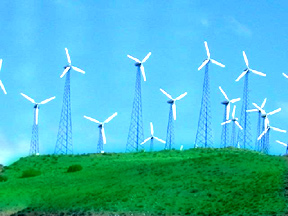 Clean energy providers bypassing the big power retailers CRIKEY, TRISTAN EDIS | SEP 17, 2013 Pacific Hydro’s wind farm will be financed without a big power retailer involved. Is this the future or just a last hurrah for the Clean Energy Finance Corporation? Pacific Hydro announced last week it will construct the 47 megawatts final stage of the Portland Wind Project. The size of the wind farm is nothing exceptional, but the way it is commercially structured is: this wind farm is one of very few constructed without a major energy retailer involved either as the owner, or as a 10-year-plus purchaser of the output.
Generally wind farms are developed with energy retailers involved. That’s because they substantially reduce the risk of the project by providing a fixed price for output, bypassing wholesale electricity and renewable energy certificate markets which can be extremely volatile………
Pacific Hydro has decided to take a punt that market fundamentals will eventually prevail. It’s worth noting they’ve done this with $70 million in finance from the Clean Energy Finance Corporation. The CEFC’s mandate includes adopting the presumption that politicians don’t fiddle with the law of the land.
Will other financiers be quite so brave now the CEFC has been ordered to shut down? http://www.crikey.com.au/2013/09/17/clean-energy-providers-bypassing-the-big-power-retailers/?wpmp_switcher=mobile
What would it mean to abolish the carbon price
 Why Tony Abbott wants to abolish the carbon price, The Guardian, byAlexander White Wednesday 18 September 2013 “…… In the twelve months since the carbon price was introduced in Australia, our nation has enjoyed nearly unparalleled economic prosperity: low inflation of 2.4 percent, strong growth in the stock market of 23 percent, record low unemployment of 5.8 percent, low interest rates of 2.5 percent (cash rate), strong terms of trade and most importantly a decrease in carbon emissions.
Carbon emissions from the highly polluting energy sector National Electricity Network fell by 7.4 percent in 2012-13. Renewable energy grew by around 30 percent in the same period. A great deal of the reductions in various sectors of the economy in carbon emissions are due to the price signals from the carbon price.
More importantly, from 2015 the Clean Energy Future Act would introduce a cap on carbon emissions, a policy tool of greater significance than the price alone.
If the carbon price were abolished, the cap on emissions would also be removed. Australia is already one of the world’s largest polluters and per capita there is almost no greater carbon emitter than Australia. The removal of the carbon price would give a signal to fossil fuel companies to continue expansions of dangerous coal projects and unconventional gas projects.
Numerous other environmental policies under Tony Abbott would contribute to a likely expansion of carbon emissions, including the abolition of the Clean Energy Finance Corporation, the devolving of environmental regulation to state governments, and the overturning of the world heritage listing for Tasmanian forests.
Australia would also be sending a very dangerous signal to the rest of the world, that as a major polluter Tony Abbott does not plan to contribute to a global solution to climate change. Australia is about to take the chair of the G20, a very influential role. The G20 potentially has an important role to play in providing leadership in reducing global carbon emissions. As a climate denier, it would be difficult for Tony Abbott or his foreign minister Julie Bishop to credibly contribute to multilateral climate discussions………http://www.theguardian.com/environment/southern-crossroads/2013/sep/18/tony-abbott-abolish-carbon-price
Wind farmers find the industry profitable and benign – no “wind farm syndrome”
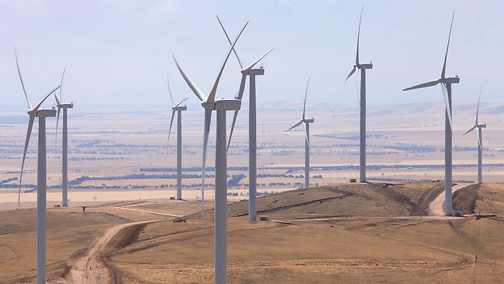 Wind turbine syndrome: farm hosts tell very different story The Conversation, Simon Chapman Professor of Public Health at University of Sydney 18 Sept 13 People who host wind turbines on their properties and derive rental income from wind energy companies have important stories to tell about living alongside turbines, but they’ve largely been absent from the debate on wind farms and health. Australian filmmaker and researcher Neil Barrett is finally giving this critical group a voice in his new short film, The way the wind blows, released today.
Turbine hosts at Waubra earn A$8,000 a year for each turbine on their land. In the bush, the expression that wind farms can “drought-proof a farm” is common: a land owner with ten turbines can wake up each morning comfortable in the thought that a tough year with poor rain or bad frosts can be ridden out, thanks to income from wind generation.
All of Barrett’s interviewees say they can hear the turbines but none say they are bothered by them or suffer from any health problems they attribute to the turbines. Continue reading
Ambitious community wind farm project for Fremantle?
 Fremantle Community Wind Farm , Pozible, By Claire Vanderplank, Raoul Abrutat, Louis Kent, Rowan Gallagher, Michael Fuller and Jamie Ally The Fremantle Community Wind Farm is an ambitious project to build 8 to 12 community-owned wind turbines along the breakwaters at Fremantle Port. With 8 turbines sized to fit within the port landscape, the project would produce enough electricity for 3300 average Australian homes.
We are so passionate about this project. It will produce clean energy and distribute profits locally. With Fremantle’s connection to the wind and water and its identity as a progressive city, the project has great potential to produce cultural and social capital. It also has educational and awareness-raising potential due to the prominent location. Check out our website and Facebook page for all the details.
The project is at a critical point in time; ready to go ahead however facing one key barrier, land access. The community’s voice is required to make it happen. There are too many myths and misperceptions blowing around regarding wind farms that are holding this, and other projects, back. We are on a mission to set things straight.
Exposing the garbage propaganda from the anti wind farm lobby
More than two-thirds of Australian wind farms including more than half of those with large turbines have never received a single complaint. Two whole states – Western Australia and Tasmania – have seen no complaints.
 Wind turbine syndrome: farm hosts tell very different story The Conversation, Simon Chapman Professor of Public Health at University of Sydney 18 Sept 13 “………Laurie and the Waubra Foundation have done all they can to spread concern about the harms they allege are caused by living near wind farms. One former Waubra resident has been particularly prominent, speaking emotionally at anti-wind farm meetings about how wind farms have ruined his health and caused his family to move to Ballarat, at great personal expense.
In a statement that would be of immense interest to Apple, Samsung and Nokia, he recently told a meeting in Barringhup that electricity generated by wind turbines started charging his cell phone without it being plugged in:
I’ve had my … mobile phone go into charge mode in the middle of the paddock, away from everywhere.
In 2012, he wrote a public submission to a parliamentary inquiry where he revealed he had suffered a serious head injury some eight years before the wind farm opened in 2010:
I have been in brain training care and rehabilitation for about ten years because of an unfortunate, unrelated accident.
Indeed, the most common health complaints voiced by complainants are problems such as disturbed sleep, anxiety, hypertension and normal problems of ageing that are very prevalent in all communities, regardless of whether they have wind farms. Continue reading
Community solar energy kicks off in a New South Wales pub at Boggabri
 Boggabri pub leads the way in community solar “revolution”http://reneweconomy.com.au/2013/boggabri-pub-leads-the-way-in-community-solar-revolution-33313 By Emma Fitzpatrick on 16 September 2013 A new community-based solar investment company has completed its first community-funded solar installation – at a pub in the heart of a NSW coal-mining region – and says it is revolutionising small scale solar power generation in Australian communities.
ClearSky Solar Investment works off trust-based investor model, planning to link local investors with high quality solar projects. The company is one of many eyeing up to several hundred community solar projects around the country. The company has completed its first project, a 15kW system at the Royal Hotel in Boggabri, NSW. The project, which comprises 60 250W Trina solar panels and a 15Kw SMA inverter, and was completed on June 10. It had about 10 investors, an agreed investor term of 7 years, and a planned total term yield of 171 per cent.
Under the model, investors own the modules and sell the output of the system to a local consumer – usually the landowner. Each project has a maximum of 20 investors and a minimum investment of around $2500 or $5000, depending on the size of the project and the number of investors. Continue reading
Adelaide’s 100% solar powered bus – a world first!
The World’s First 100% Solar Powered Bus http://www.energymatters.com.au/index.php?main_page=news_article&article_id=3945 17 Sept 13, The world’s first solar powered bus is located in Adelaide, South Australia – which makes it especially heaps good*.
Tindo – the name of Adelaide City Council’s electric solar bus – is the first in the world to be recharged using 100% solar power. Continue reading
Australia’s new Abbott government to axe or gut 12 renewable energy programs
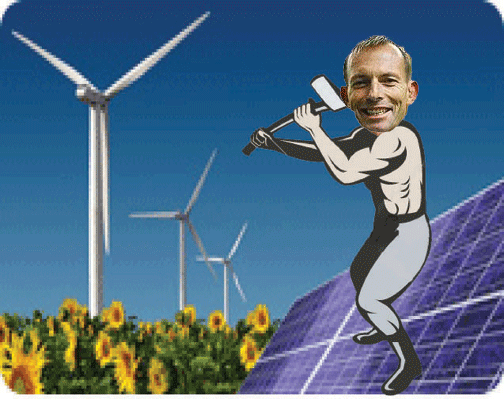 The Harvester Of Australian Renewable Energy’s Sorrow http://www.energymatters.com.au/index.php?main_page=news_article&article_id=3941 13 Sept 13, Now that the coal dust of the Coalition’s election win is starting to settle; the soon-to-be clean energy corpses are easier to see. It’s been a period of mourning for many with a stake in Australia’s renewable energy efforts; with Prime Minister-elect Abbott’s well-oiled scythe poised to ruthlessly slash its way through related programs.
Here’s a partial casualty list; victims of the war on a low-carbon future:
To be axed:
– Clean Technology Program
– Energy Efficiency Information Grants
– Clean Energy Skills package
– Clean Technology Focus for Supply Chain programs
– Connecting Renewables
– CEFC
– Climate Change Authority
– Climate Change Commission
– Geothermal and tidal elements of Direct Action.
To be gutted:
– “Million Solar Roofs” rebate to be halved and with a narrowed scope
– Money for the above to come out of ARENA’s budget
– Reports of a further $532M to be cut from ARENA
According to The Australian, 33 climate change related schemes run by seven departments and eight agencies will be collapsed into just three bodies run by two departments. Whether this will provide better efficiency or just more bottlenecks interfering with progress remains to be seen.
As is widely known, the Coalition Government has its sights set on bringing legislation to axe the carbon tax to the first sitting of new Parliament; but it also realises it may not get its wish until after the senate changes in July 2014 (and even then there is some doubt). Continue reading
Jobs to be lost as Australian COAL ition Government scraps green energy fund
 Green fund scrapped The Standard, By SEAN McCOMISH Sept. 13, 2013, A WIND farm near Portland is likely to be one of the final projects financed by a $10 billion government green bank set to be scrapped by an incoming Coalition government.
Pacific Hydro has received a $70 million loan from the Clean Energy Finance Corporation (CEFC) towards the $110 million wind farm comprising 23 turbines. Environmentalists have slammed the decision to scrap the corporation they argue will help the country meet the 20 per cent renewable figure by 2020 known as the Renewable Energy Target (RET).
Pacific Hydro boss Lane Crockett said the CEFC had been “pivotal in enabling the project to move forward”. Around 400 jobs are expected to come out of the construction that will take two years to complete. It’s likely the wind farm would have faced long delays if the CEFC hadn’t stepped in to help fund the last stage of the project.
Developers are also giving commitments to use locally-made components and towers. The corporation signed off on the loan before the government entered caretaker mode — a move that ensures the cash will still flow into the project.
The 47-megawatt wind farm covers two sites at Cape Nelson north and Cape Sir William Grant near Portland and according to Pacific Hydro will generate enough power for more than 31,000 Victorian homes — offsetting 180,000 tonnes of carbon pollution each year.
The first two stages of the project saw turbines established at Cape Bridgewater and Cape Nelson south in 2009.
……Scrapping the CEFC will make it harder for smaller companies to put up turbines. … The corporation has made pleas to incoming climate change minister Greg Hunt, arguing the corporation has been making good returns from the green loans. But Mr Hunt is unconvinced. ….http://www.standard.net.au/story/1773466/green-fund-scrapped/?cs=73
Solar Energy Companies continue to flock to Australia to take advantage of exposure to the sun
Solar energy reaches new milestone in Australia, hydrogen Fuel News 13 Sept 13“…………Report highlights contribution of solar power
The Australian Energy Market Operator has released a new report that aims to shed light on the contribution of solar energy systems to the National Electricity Market. According to the report, 1.6% of the National Electricity Market is comprised of solar power. The highest contributing state in the country is South Australia, where 3.7% of electricity production comes from rooftop solar systems installed at homes throughout the region.
Solar energy is expected to continue making strong progress in the country as more companies flock to Australia to take advantage of its constant exposure to solar radiation. Some of these companies have been working with the government to make solar energy more available to homeowners throughout the country. SunPower, a solar energy firm based in the U.S., recently came to the country to bring solar technology to homeowners. The company has partnered with Community First Credit Union to offset some of the financial aspects of solar energy adoption.
Wind energy also shows strong growth in the country While solar energy is making major progress in Australia, the country has shown strong support for other forms of clean power as well. Wind energy has also been experiencing some growth in recent years. The Australian Energy Market Operator recently released a report that wind energy accounts for approximately 27% of all electricity generated in South Australia. http://www.hydrogenfuelnews.com/solar-energy-reaches-new-milestone-australia/8513913/
New research dispels myth of economical “clean coal”
 Renewables Trump Coal + Carbon Capture And Storage http://www.energymatters.com.au/index.php?main_page=news_article&article_id=3930 8 Sept 13 UNSW researchers have compared fossil fuel and CCS with renewables and found coal fired electricity’s days may be numbered – the figures simply don’t stack up.
Government estimates of the prices for different generation technologies and fuels in 2030 were used in the research along with a number of possible future carbon and CCS prices.
The results demonstrate coal based electricity generation plus carbon capture and storage are likely to be not competitive with 100 percent renewable energy – and the same would apply to gas with CCS if gas pricing should hit export parity. Continue reading
Not economic for Australia to invest in unproven, high-risk, fossil fuel technologies
 University of NSW Study Pushes for Renewable Energy Over Coal http://au.ibtimes.com/articles/504152/20130906/university-nsw-study-pushes-renewable-energy-over.htm#.UivWvNJwonE By Vittorio Hernandez | September 6, 2013 4:07 PM EST
It would make more economic sense for Australia to pursue renewable energy rather than continue the use of coal, despite the possible availability of carbon capture and storage technology, according to a study by the University of New South Wales The basis of their study is a modeling, using a range of fossil fuel scenarios with carbon capture and storage compared with 100 per cent renewable electricity scenario based on commercially available wind, solar and biomass technologies.
The researchers then used 2010 hourly electricity demand and solar and wind data to determine the proper technology mixes for each scenario to balance demand and supply of electricity with the aim of having the same reliability as the current Australian National Electricity Market.
Prices were based on government estimates of different generation technologies and fuels in 2030, plus possible future carbon prices and carbon capture and storage prices.
“The research confirms that policies pursuing very high penetrations of renewable electricity, based on commercially available technologies, offer a reliable, affordable and low risk way to dramatically cut emissions in the electricity sector,” Business Spectator quoted University of NSW Associate Professor Mark Diesendorf of the Institute of Environmental Studies, one of the co-authors of the study.
The report concluded that it is not necessary to invest in new, expensive, unproven, high-risk, fossil fuel technologies. It added that reaching the rapid and deep cuts to greenhouse gas emissions necessary to avoid dangerous global warming is expected to be more difficult in the fields of transportation and agriculture than the electricity sector.
Speak out against wind power – urges Gina Rinehart, Australia’s richest woman
Rinehart calls for action against wind power BY:SARAH-JANE TASKER The Australian September 06, 2013 AUSTRALIA’S richest woman — Gina Rinehart — has urged people to speak out against wind power and for the country to address its debt by getting non-violent prisoners to pay to avoid jail and for governments to sell their art and decor.
Ms Rinehart, in her latest article in Australian Resources and Investment magazine, used a conversation she had with a Dutch cab driver to lead her argument about concerns around the use of renewable energy……http://www.theaustralian.com.au/news/nation/rinehart-calls-for-action-against-wind-power/story-e6frg6nf-1226712611162
Australian wind power a record in August
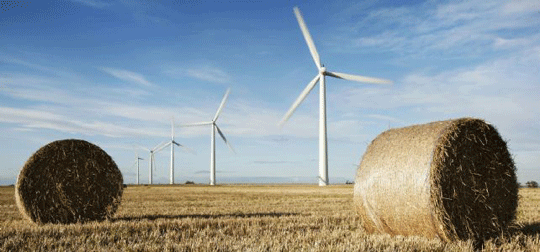 August A Record Month For Aussie Wind Power by Energy Matters, 5 Sept 13 South Australia, Victoria, Tasmania and New South Wales all broke records for wind power generation during August.
Helped along by blustery conditions during the week beginning August 11; the amount of power generated during the month was enough to power 155,000 homes for an entire year says the Clean Energy Council (CEC).
In South Australia, wind power provided just under 40 percent of the state’s electricity needs for the entire month.
“South Australia’s wind farms produced the lion’s share of the country’s wind power in August, but the new Macarthur Wind Farm in western Victoria is the largest in the Southern Hemisphere and provided a huge clean energy boost,” said CEC Policy Director Russell Marsh.
“These recent statistics add to results published by the Australian Energy Market Operator last week which showed that more than a quarter of South Australia’s power came from wind power over the last financial year.”…… http://www.energymatters.com.au/index.php?main_page=news_article&article_id=3925
1 This month

of the week – Australians for War Powers Reform (AWPR)
To see nuclear-related stories in greater depth and intensity
 Antinuclear