Australian government is keeping the Renewable Energy Target unchanged
Breaking: Canberra endorses status quo on renewables target REneweconomy By Giles Parkinson 21 March 2013 The Australian government has announced it endorses the Climate Change Authority’s recommendation that the fixed target of 41,000GWh be retained for the country’s Renewable Energy Target.
The decision was a crucial one for the renewables industry, which said that $18 billion of investment in wind and solar farms would be under threat if the government acceded to a push by some major generators and energy utilities to dilute the target. The generators, and utilities such as Origin Energy and EnergyAustralia, fear reduced earnings from their coal and gas fired generation if more renewables are deployed.
However, federal climate change minister Greg Combet said the CCA review had concluded there would be no benefit to consumers in reducing the target, and had argued that in the interests of investment certainty the target should be retained. Continue reading
Australia’s politicians cool on solar power, but public enthusiastic
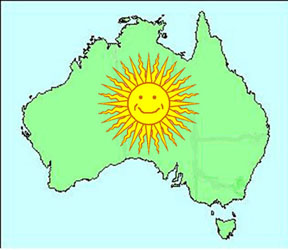 Solar-loving Australians want more action on renewables: survey http://reneweconomy.com.au/2013/solar-loving-australians-want-more-action-on-renewables-survey-30990 By Sophie Vorrath 19 March 2013 Where does Australia – with its abundant solar resource and expanses of and suitable for wind farms – rank in the global renewable energy production stakes? The answer: 31st. Surprising? Well, it was to the majority of respondents to a new national survey on renewable energy, two-thirds of whom had assumed their country would be ranked better than that.
The survey of 1,283 Australians – commissioned by WWF-Australia for Earth Hour, conducted by AMR Research and released today – has found that 87% of Australians want more action by all sectors, including government, to make Australia a top-10 global producer of renewable energy.
Rather less surprisingly, the survey also found that the average Australian is, by and large, more positive about renewable energy than the nation’s politicians – believing that renewable energy should account for 27 per cent of Australia’s total energy mix by 2020, rather than the current national target of 20 per cent renewables by 2020. Continue reading
Good riddance to Ted Baillieu, Victoria’s anti renewable energy Premier
The anti-wind campaign was viewed very much as “Ted’s show”, to the point where other government ministers would pass off their responsibility: It’s not my call, it’s Ted’s”
New Premier Dennis Napthine knows the wind industry and many Victorian wind jobs and has a track record of standing up for local manufacturing in the wind industry, and seeking to protect it from foreign imports.
“I think we can expect a more rational approach to wind industry, and more broadly renewable energy policy, whereas Ted Baillieu appeared to have a personal vendetta against renewable energy,” Wakeham said. Environment Victoria has a scorecard on Baillieu’s record on the environment and clean energy.
Why Baillieu’s exit could be good news for wind energy, REneweconomy By Giles Parkinson 7 March 2013 It is deeply 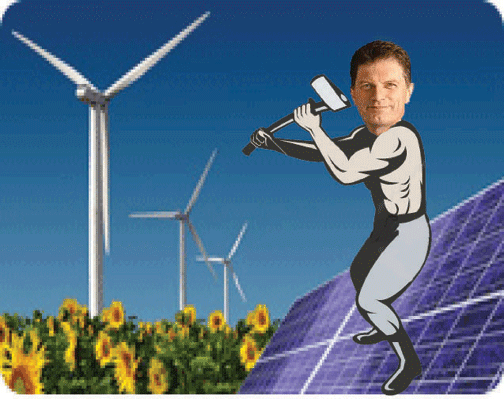 ironic that on the very day that Ted Baillieu made his shock decision to resign as Premier of Victoria, the latest economic data showed the state had officially entered a recession: the man who had turned his back on the burgeoning clean energy industry had left the state with a shrinking economy.
It’s a moot point whether embracing the wind industry would have kept Victoria out of recession – although Friends of the Earth estimates Baillieu’s anti-wind decisions cost around $887 million in lost or stalled investment, and the 650 direct jobs and a further 1,400 indirect jobs lost in the process would have been useful for a state suffering the highest unemployment rate in the country.
But Baillieu’s opposition to wind is a parable for our times. Economies are changing, whether politicians like it or not, or believe in climate change or not. The clean energy transition is a global phenomenon that has been embraced by nearly every company not dependent on fossil fuels, and is recognised as such by the leaders of the major economies – US, China, Japan and Germany.
Ideological opposition and the bestowing of favours to some rich landowners may stop a few turbines, but it is nothing more than just pissing into the wind. Baillieu was so entrenched in the past he even favoured digging up half the state and exporting the brown coal reserves. As Deutsche Bank pointed out this week, economies like China will likely soon not want our black coal, let alone the more polluting brown mud found in Victoria. Continue reading
Hunter Region in New South Wales ready to change towards renewable energy
 The Hunter is poised for energy innovation , Newcastle Herald, By Dr
Alan Broadfoot March 5, 2013 “….The Hunter generates over 60per
cent of the state’s electricity and is the largest regional economy in
Australia, with outputs last year totalling almost $37billion.
The region’s willingness for change is part of a growing push to
diversify and expand on our strengths.
Recent developments with hybrid power generation and renewable energy
show this transformative approach in the region. Continue reading
Wind farms benefiting rural areas
 Wind farms beneficial: Clean Energy Council http://www.abc.net.au/rural/news/content/201303/s3702991.htm According to recent research conducted by the Clean Energy Council, wind farming has reportedly generated more than $4 billion in investment in Australia since its introduction.
Much of this investment has been in rural and regional towns. Continue reading
Liberal candidate Angus Taylor, and noisy anti wind minority, are out of step with majority support for wind farms
 Angus Taylor, the Liberal candidate for the safe Liberal-held seat of Hume, which covers much of the district targeted by wind energy companies, including Mr Prell’s Crookwell property, has issued a policy paper challenging the renewable energy target, or RET
 Wind farm opponents in minority: proponent, Canberra Times, March 4, 2013John Thistleton
Grazier Charlie Prell says a noisy minority opposed to wind farms in the Canberra region does not represent more than 70 per cent of people in his shire who support them.
He chaired a meeting of 100 farmers, lawyers and earth-moving contractors at Yass last week with the aim of forming a landholders’ network to foster wind and solar farms. Continue reading
New solar panel safety regulations
New Solar Panel Fire Rating Regulations in Australia http://www.energymatters.com.au/index.php?main_page=news_article&article_id=3612 27 Feb 13 From July 16 this year, all makes and models of solar panels installed in Australia will need to have passed a new fire safety test. Continue reading
“Buyer Beware”: need for research in buying solar panels
From July 16 this year, all makes and models of solar panels installed in Australia will need to have passed a new fire safety test.
Energy Matters also offers a popular Solar Power Consumers Guide; a free 23 page electronic publication designed to help consumers select the right solar power system for their needs and avoid some of the potential pitfalls.
Consumer Affairs On Solar : ‘You Get What You Pay For’ http://www.energymatters.com.au/index.php?main_page=news_article&article_id=3620 4 March 13, Shoddy solar products are in the headlines again after a major solar company went into voluntary administration last week and news other companies are in the spotlight for issues relating to quality.
According to AdelaideNow, two “significant” companies with a presence in South Australia have been called into compulsory conciliation meetings after a number of complaints relating to workmanship and materials.
“People get what they pay for … people need to do their research,” said Consumer Affairs Commissioner Paul White, who noted some cases of relatively low-quality inverters and panels being installed. Continue reading
Solar air conditioning is the answer for Australians affected by extreme hot weather
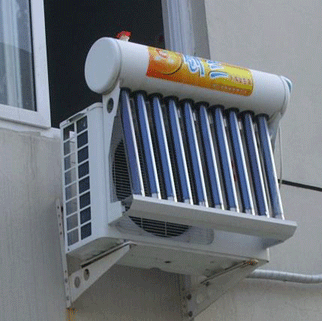 Grandparents Carking It In The Heat? Install Renewable Energy!, Clean Technica March 1, 2013 Ronald Brakels
World temperatures are rising, resulting in increasing mortality from heat stress. Or to put it another way, more people are dropping dead because it’s too damn hot. Unfortunately this is nothing new in Australia. Dropping dead from damn hotness has always been popular in these parts. Here in South Australia about 75 people currently die from it each year.
Other people building wind turbines or installing solar on their roofs can push down electricity prices for everyone and help prevent old people from dying when it’s too damn hot, but an excellent way to keep down electricity prices for the elderly is to put solar panels on the roofs of any old people whom you’d like to see continue to shuffle around on this mortal coil.
Rooftop solar is especially good for powering air conditioners as it produces the most electricity on hot, cloudless, summer days. It is particularly good for air conditioning when it faces west, or partially west, as then it can produce plenty of power all through the afternoon. It will produce less electricity when it’s cloudy, but it’s not so hot when it’s cloudy, so that’s not a real problem. And sure, it can still be hot after the sun goes down, but that’s not such a big deal if the house is already cool. No one is likely to die from it being too damn hot if they turn off their air conditioner at sunset.
For most Australians the feed-in tariff for new solar is now about 8 cents a kilowatt-hour. This means it will cost a person with a couple of kilowatts or more of rooftop solar perhaps 18 cents an hour to run a room air conditioner in a heat wave. Considering that ice-cream cones can cost $7.50 here, that’s a pretty good deal and only the most price sensitive of Australians would be too cheap to turn on the air conditioner at that cost.
As Australians reduce electricity use, Energy Australia gears up to fight renewable energy?
EnergyAustralia says one key focus of the coming year will be the managing the implications of reducing growth in energy demand,
Its other key focus, it says, will be on “policy advocacy”
 Australian energy utilities buffeted by winds of change, REneweconomy By Giles Parkinson 26 February 2013 The winds of change in the energy industry has struck at the heart of the earnings of another of the country’s big three utilities, EnergyAustralia, which has reported a 42 per cent slump in profits as a result of the changing dynamics in the sector – lower wholesale prices, greater uptake of solar, and other decentralised generation, and lower consumption from energy efficiency.
It may seem ironic that in a year when consumer electricity prices jumped so sharply that Australia’s biggest energy utilities should suffer such sharp falls in profit. But the other big trend to weigh on EnergyAustralia’s earnings was a cost-conscious public, who are either reducing consumption or producing it themselves, through rooftop solar. Continue reading
Mildura area(Victoria) to get revolutionary new solar spin cell project
 Solar Spin Cells To Be Manufactured Near Mildura http://www.energymatters.com.au/index.php?main_page=news_article&article_id=3609, 25 Feb 13, A major solar project has been announced for north-west Victoria’s large-scale industrial hub at Thurla, south of Mildura. SIL Global Limited (SILG) has acquired a 20-acre site at Thurla Industrial Park and a licence to manufacture solar products for the US technology developer V3Solar Corporation.

Construction of the manufacturing and assembly plant will begin this year says President of V3 Solar, Michael Neistat.
“The facility will enable production of spin cells for the second stage of the SILG solar power generation plant. The plant will allow us to implement our plan to build a solar generation plant comprising 800,000 spin cell units – the largest power station of its type in the world.”
The Thurla Industrial Park is evolving as a hub for large-scale industrial development in north west Victoria and the estate’s developer, Col Beasley, says the new interest from solar heralds what will be the strongest year of employment and economic growth in the park’s history.
“The new players in the solar field are going to be the catalyst for a lot of other industries going in out here,” he said. “It’s exciting that the vision we had when we started the industrial estate is starting to come together now.”
The Thurla Industrial Park has attracted a strong mix of industrial and technology clients, due mainly to its location and large lot sizes.
“We’re getting more and more inquiries. It’s been surprisingly strong and seems to be generated mostly by these solar announcements and by our location as a cross-road between Melbourne, Sydney and Adelaide,” Mr Beasley said.
Thurla Industrial Park is located at Red Cliffs in Victoria’s Sunraysia region, 16 km south of Mildura and 544 km north-west of Melbourne.
Queenslanders to get huge hike in electricity prices – but they can still go solar
 Electricity Bills In Queensland To Jump 21% http://www.energymatters.com.au/index.php?main_page=news_article&article_id=3608 25 Feb 13, Electricity bills in Queensland look set to rise again from July 1 for households and businesses; with low consumption households feeling the biggest effects.
A draft determination by the Queensland Competition Authority shows an increase in annual bills for average households on Tariff 11 of $253 a year.
Businesses in Queensland will bear the burden of a 12% – 16% rise.
The main components in the increase are related to network costs followed by retailer costs.
Households that have been particularly energy efficient will be punished under the proposed increases.
“Previously, the Tariff 11 service charge has been too low and the usage charge has been too high. So low-use customers have not been paying enough to
cover the costs of their supply and high-use customers have been paying more than the cost of their supply,” says the QCA
“This is changing, so that customers’ bills better reflect the costs of their electricity use. As a result, low consumption customers will see a high percentage increase in their bill as the fixed service fee is increased.”
The QCA is seeking feedback on the draft determination and its Final Determination will be released by the end of May 2013.
The added financial burden could see more households making the switch to solar; particularly among the 42,000 Queenslanders who were approved for the 44c feed in tariff last year; but are yet to install a system.
According to data from national solar provider Energy Matters, applicants that gained approval for the 44c feed in tariff last year could miss out on over $70,000 in financial benefits over the life of a 5kW solar power system if they fail to have an array installed by the deadline.
Energy Matters states applicants do not have to purchase their system from the solar company noted on the original application. With a rush on installation bookings expected to start soon, the company encourages applicants to call Energy Matters on 133 SUN (133 786) for further details.
For those who didn’t receive approval for the 44c, installing solar is still an effective way to reduce electricity bills. For example, Energy Matters states a 3kW system installed in Queensland can provide $1,066 – $1,470 in electricity bill savings annually.
Western Australia: Greens show a practical plan for transition to renewable energy
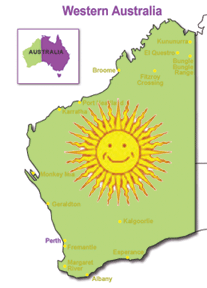 Renewable energy could have a major impact on Western Australia http://www.hydrogenfuelnews.com/renewable-energy-could-have-a-major-impact-on-
 western-australia/859050/ BY
– FEBRUARY 21, 2013
State could reach 100% energy sustainability through solar and windWestern Australia is one of the largest energy consumers in the world. The state relies heavily on fossil-fuels, such as coal, but has been working to adopt renewable energy in recent years. According to the Greens, the state can meet its energy needs in a variety of ways that do not involve the use of fossil-fuels. The document released by the Greens highlights solar thermal and storage technologies as an adequate way for the South West Interconnected System. Western Australia’s expansive energy utility, to break away from fossil-fuels. Another option is to use photovoltaic solar energy systems and wind energy.
Costs of renewable energy considered viableThe cost for solar and wind energy has dropped significantly over the past two years. The Greens suggest that no major advances in technology are required for Western Australia to reap the economic benefits of adopting renewable energy. According to the political party, renewable energy in the region can range from $208 to $221 per megawatt-hour. This estimation represents a $60 billion upfront cost for the state to expand its use of solar and wind energy. The cost may be high, but the Greens suggest that it is significantly lower than the costs associated with a continued focus on fossil-fuels.
Politics likely to dictate future of renewable powerAs Australia’s smallest political party, the Greens have limited influence over the adoption of renewable energy throughout the country. This is particularly problematic because renewable energy is often made into a political issue rather than one of sustainability or economics. The Greens study of renewable energy and its potential to help Western Australia reach 100% energy sustainability has, nonetheless, generated a fair amount of hype in the political space.
Renewable energy yes! including household rooftop solar – says University of Queensland
Renewable energy critical for competitive Australian power system- University of Queensland, 22 Feb 13, An immediate investment in multiple energy technologies is vital for meeting carbon abatement targets and building a robust power system, a new study from the Global Change Institute at The University of Queensland has found.
• The resilience of Australia’s power system is currently poor (better only than India and South Africa) and is not compensated by low electricity costs.
• Even with a high carbon price, the power system is not on-track to cut emissions by 80%, in line Australia’s 2050 emissions targets*.
• There is no cost premium associated with shifting from ‘business-as-usual’ to renewable, distributed generation and carbon capture and storage. There is, however, evidence of a cost premium for shifting away from coal.
• Australia will benefit from investment in large-scale renewable energy projects to operate alongside coal in the foreseeable future and eventually replace the role of coal.
• Consumer action must not be overlooked and will be an integral part of any successful model, however an in-depth study into the effect of distributed generation (eg household rooftop solar panels) on the distribution network is urgent and overdue. ….. http://www.uq.edu.au/news/?article=25857
Engineers Australia (IEAust) wants greater greenhouse cuts, and a big shift to renewable energy
Engineers Australia Advocates 80 Per Cent Reduction in Greenhouse Gas Emissions http://designbuildsource.com.au/engineers-australia-advocates-80-per-cent-reduction-in-greenhouse-gas-emissions By Marc Howe, 19 Feb 13, A submission by Engineers Australia (IEAust) to the Australian Renewable Energy Agency (ARENA) endorses ambitious new targets for reductions in the country’s greenhouse gas emissions by mid-century.
The new benchmarks target a reduction of 25 per cent of greenhouse gas emissions by 2020 and 80 per cent by 2050 based on 2000 levels. These declines are believed to be necessary for Australia to make a meaningful contribution to international efforts to keep emissions within 450 ppm of equivalent carbon dioxide (CO2-e), and ensure that global average temperature gains are kept within two degrees Celsius.
In addition to supporting the new set of targets, the Sustainable Engineering Society strongly advocates a stricter target of 350ppm CO2-e, due to uncertainty over whether the 450ppm target will be sufficient to limit worrying gains in global temperature levels.
The professional engineering body also supports the concomitant shift to renewable energies that such ambitious reductions in CO2 emissions will necessitate. Continue reading
1 This month

of the week – Australians for War Powers Reform (AWPR)
To see nuclear-related stories in greater depth and intensity
 Antinuclear