Carbon tax plan helped attract world’s largest solar maker to Australia
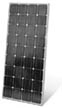 World’s largest solar maker opens office in Australia Radio Australia September 17, 2011 The world’s largest maker of solar panels says Australia’s carbon tax is one of the factors that has attracted it to the country.
The US-based First Solar opened its doors in Australia this month, planning to be a major supplier of solar panels for large-scale power projects. The company says costs of panels are coming down quickly but government incentives will be necessary for another five years….. SNOWDON: If the forecasts are right, solar energy will deliver half the world’s electricity production within fifty years. Australia’s target is 20 per cent renewable energy by 2020, a policy that encouraged the world’s biggest solar panel maker to open a sales and engineering office in Sydney a week ago. And the carbon tax while not essential, helped….
Government incentives he says will be necessary for another five years, after which the industry should be established…..
Solar energy lacks national plan, Australian govt slow to help
 The Australian solar industry is battling to ensure that government support for large-scale development holds up, following a string of setbacks for a rooftop solar sector that has seen subsidies withdrawn or reduced across the nation…..
Australia needs national plan for large solar, says industry, Recharge 13 Sept 11, Australia risks missing its potential in large-scale solar without a stable policy and planning regime to underpin a steady pipeline of projects, the country’s renewables industry association has warned.
Launching its Large-scale Solar Policy Roadmap, Australia’s Clean Energy Council (CEC) calls on the country’s policy-makers to capitalise on the interest the federal government’s A$1.5bn ($1.6bn) Solar Flagships programme has generated among international investors. Continue reading
As solar energy costs fall, Australia needs to act fast developing solar expertise
 the potential role of solar is quite impressive. It could be a trillion dollar market or more within a decade or two, and the world’s biggest energy technology companies are jostling for position. As Mark Twidell, from the Australian Solar Institute points out, solar is the only technology where costs are falling rapidly – most others are static or rising…..
Australian solar thinks big, Climate Spectator,Giles Parkinson, 9 Sept 11, More than 100 aspiring developers of large-scale solar plants will join financiers, policy makers and NGOs in Melbourne for yet another solar summit today – anxious to learn how they can stop meeting like this and actually go out and build stuff. Continue reading
Costs of solar energy in Australia dropping, competitive with coal
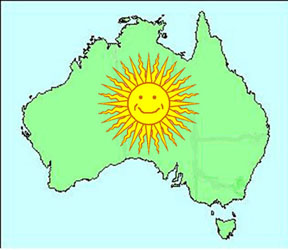 Australia, Solar Costs Actually Compete with Coal Calfinder (USA) 9 Sept 11, Solar energy. Solar panels. Solar affordability. We’ve talked about it a lot. And for good reason—solar energy is emerging more and more into the social consciousness as a great alternative for coal and other exhaustible energy. Places all around the world are finding that the cost of solar energy is dropping. Especially in Australia.
Solar power generated by photovoltaic cells has created such a drop in cost for solar energy in Australia that the energy source has become incredibly cheap. In fact, these cells produce power for as little money as coal-derived electricity.
To find out how much solar costs in your area, click here.
Such a drop in cost, says the Australian Photovoltaic Association, has allowed solar to finally rival coal. The idea is called grid parity, where the government itself has begun to rethink pricing models and availability of solar paneling.
That’s saying a lot. But these solar panels are doing a lot. Across the country, governments are abandoning the concept of paying people for the power that their solar cells generate.
Despite the controversial feed-in tariffs, blamed largely for the country’s rapid rise in electricity costs, solar panels are generating electricity so cheaply that the solar source has become competitive with coal—even without subsidies, according to Photovoltaic Association spokeswoman Dr. Muriel Watt…. http://solar.calfinder.com/blog/news/australia-solar-costs/comment-page-
Australia’s carbon tax stimulates foreign investment in renewable energy
 We think its a tremendous advantage. We’ve been long supporters of the carbon tax and we think the package the government has come up with will be pretty effective. It seems to be the most economically efficient way to reach any given target.
Foreign company interest in Australian renewable energy, Radio Australia September 7, 2011 , Some of the world’s biggest companies are getting involved in Australia’s renewable energy sector. Large investments are being made in solar technology at a time when the debate around climate change and carbon schemes is highly politicised. Continue reading
Queensland’s solar tariff helps create $3.5 billion in new investment
 Queensland’s tariff, which pays 45c per kWh, had helped thousands to access clean power…“[Queensland will avoid] going down the path of other states in collapsing their schemes and causing such dislocation amongst a somewhat new and still vulnerable part of the economy.”….Current policies to promote renewable energy in Queensland would create $3.5 billion in new investment and 3500 new jobs.
Solar cuts are ‘foolish’: Roberston – Narooma News, GRAHAM READFEARN, 06 Sep, 2011 Queensland Energy Minister Stephen Robertson has accused other state governments of being “foolish and shortsighted” for cutting payments to promote solar energy.Mr Robertson told the Ecogen renewable energy conference in Brisbane yesterday that recent decisions in Victoria and New South Wales to cut back payments for homeowners with solar power would damage the industry. Continue reading
Wind power a financial winner for South Australian farmers
 they will receive about $15,000 per year for each turbine on their properties. Each turbine requires about half a hectare of space. A wheat crop on the same amount of land would yield about $300
Farmers to reap more from wind than crops, Adelaide Now, Katrina Stokes , September 01, 2011THIRTY Yorke Peninsula landowners will reap an average of $90,000 a year to host wind turbines on their land in a $1.3 billion development.Residents have embraced the proposal that will 180 wind turbines on farms near Ardrossan and provide 25 per cent of the state’s daily energy needs. Continue reading
Victoria’s Professor Maria Forsyth’s research team – developing solar storage
 Can we store solar energy for when the sun doesn’t shine?, The Age, 30 Aug 11, A question for Professor Maria Forsyth”….one of Australia’s top researchers with an Australian Research Council Laureate Fellowship, Professor Forsyth and her research team are developing battery technologies and materials so industries can capture green energy and store it, too….
“..we’re looking at it more from a point of view of stationary applications — so any small industry that can generate its own power on-site, and has storage capacity and capability, doesn’t have to rely on the grid….
How soon could these materials be available?
I have a desire to see the first generation of these devices available within three years. In five to 10 years, we should be getting towards the high-quality end of these devices. But it does require industry involvement — worldwide, and especially in Australia.
Tasmania already 86% renewable energy, but going for 100%
Renewable energy push, The Mercury, DAVID KILLICK | August 30, 2011 TASMANIA should become Australia’s renewable energy state, producing 100 per cent of its own needs and selling clean power to rest of the nation by 2020, a report recommends. The state should also aim to become a proving ground for the new generation of electric and hybrid vehicles, the Tasmanian Renewable Energy Industry Development Board report says.
The board yesterday handed its advice to the State Government on a Tasmanian renewable energy strategy with recommendations including more funding for clean power projects on the Bass Strait islands…. Tasmania generates 86 per cent of its energy from renewable sources and last year was a net exporter of energy for the first time via the Basslink cable…http://www.themercury.com.au/article/2011/08/30/257231_tasmania-news.html
Cockburn City Council, Western Australia, shows how renewable energy and efficiency, can be done economically
Since 2001, the council has reduced carbon dioxide emissions by about 330,000 tonnes……
City of Cockburn climate change strategy leading by example, Science Network Western Australia , Chris Thomas, 24 August 2011 THE City of Cockburn has scored one of the 2011 National Awards for Local Government, recognising its work in climate change and sustainability. “Our energy-efficiency and renewable energy projects have resulted in reduced operating costs, reduced dependence on grid-supplied electricity and reduced vulnerability to electricity price increases.” —Ms Harrison.
The WA council first made a commitment to reducing greenhouse gas emissions in 1996 and now spends $650,000 each year on renewable energy systems, research, new technology and community engagement. Continue reading
Silex, a supposedly solar company deeply involved in the nuclear industry
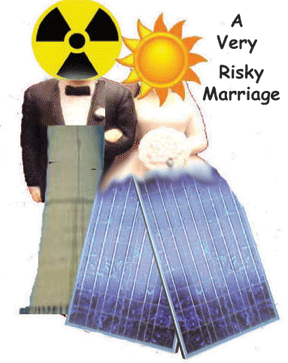 progress hinges on a world-leading uranium processing method called laser enrichment.
The technology has been acquired by a heavy-hitting US consortium of nuclear companies, Global Laser Enrichment, which has completed a testing program.
(repeating this item, lest we forget Australia’s involvement – C.M.)
Heavy weather for nation’s solitary solar-panel maker, The Australian, TIM BOREHAM , July 18, 2011 AS the head of Australia’s only solar-panel maker, Silex Systems’ Michael Goldsworthy sticks to script and welcomes the pending carbon tax and accompanying billion-dollar renewable subsidy programs that will benefit companies such as Silex….. Continue reading
Australia’s Northern Territory seeking to have 20 renewable energy hub towns
Energy hubs planned for outback, NT News, ALYSSA BETTS | August 19th, 2011, PLANS are afoot to execute one big leap for Territory-kind-renewable energy hubs to free the bush of the tyranny of distance, diesel and degraded roads. Chief Minister Paul Henderson wants each of the 20 Territory growth towns to become independent energy hubs, using, in particular, solar technology. He is in Canberra for a Council of Australian Governments shindig and will today pitch the vision. Continue reading
Nuclear energy a dead cat, as solar will take over
Is nuclear an option? It is difficult to see how the nuclear power industry will cope with falling solar prices and increased perceptions of risk following the Fukushima accident. Solar and wind power will soon put the nuclear power construction industry out of business.
Solar energy is vast, ubiquitous and indefinitely sustainable. There will never be a major solar accident, there’s minimal waste disposal issues, and we will never go to war over solar energy.

 Solar will force coal and nuclear out of the energy business The Conversation, by Andrew Blakers, 18 August 2011, A solar energy revolution is brewing that will put the coal and nuclear industries out of business. Solar is already reaching price parity with coal in many parts of Australia. In contrast to coal and nuclear, solar is fully sustainable and safe. Solar is now an established industry that is growing very rapidly. Continue reading
Australian power companies skimmimg money from renewable energy schemes
A mean, green power scheme, Daily Telegraph, Geoff Chambers August 15, 2011 GREEDY power companies are using a federal government green scheme to skim cash from customers already struggling with increased bills.
The state’s biggest electricity utilities recently blamed price hikes of up to 18.1 per cent on the demand to buy green credits. Attempting to justify why electricity prices needed to rise by that much, the energy retailers said they would be required to pay $40 for every solar certificate issued to customers.
Instead, they are only paying $19 market rates for those certificates, virtually pocketing the difference, about $50 per family.
Fluctuations in the green credit market have pushed prices from the government standard $40 to just $19. Energy retail wholesalers are buying up green credits, obtained through rooftop solar panels and energy-efficient hot water systems, directly from solar installers, electricians and plumbers at lower rates.
TruEnergy, AGL and Origin Energy all lifted their bills to pay for green credits bought from small businesses.
Climate Change opposition spokesman Greg Hunt has called for a national solar summit to fix the solar industry “chaos” and blamed Labor’s energy policies for mammoth bill increases.
“It’s resulted in higher electricity prices and Labor is doing nothing to help people with their skyrocketing power bills or small solar businesses who’ve been caught out by this scheme and are losing hundreds of thousands of dollars,” Mr Hunt said. A spokesman for Minister Greg Combet said he would not use his legislative powers to change the $40 price…..http://www.dailytelegraph.com.au/news/sydney-nsw/a-mean-green-power-scheme/story-e6freuzi-1226114799464
Exciting new development for renewable energy in Australia’s Northern Territory
 Centre for Renewable Energy launched at CDU, Power Engineering, 08/12/2011, By Dr. Heather Johnstone ,Chief Editor, Charles Darwin University (CDU), based in Northern Territory, Australia, has launched a new renewable energy research facility. Australia’s minister for climate change, Karl Hampton, said: “This new centre will be the backbone of renewable energy development in the Territory. The Territory has many potential sources of renewable energy and is already attracting significant investment interest in its solar, tidal and geothermal energy possibilities.
“The centre will work with government, the private sector and the community to drive the research, development and uptake of these projects. “The Centre for Renewable Energy will be the key institution in spearheading initiatives under the Northern Territory Government’s Climate Change Policy, including sourcing 20 per cent of wholesale electricity from renewable sources by 2020.”
Professor Glover, vice chancellor of CDU, said the Centre will develop and evaluate new renewable energy and low emissions technologies for their commercial application. He said: “The hybrid integration of renewable and low emissions applications in the Territory’s remote and regional communities will be a priority.”– http://www.power-eng.com/articles/pei/2011/08/centre-for-renewable-energy-launched-at-cdu.html
1 This month
7 April – WEBINAR – Australia and the Doomsday Clock – Preventing nuclear war through NoFirstUse and other policies
Online | Tuesday April 7, 4:00-5:30pm, Australian Eastern Time / 8:00-9:30am Central Europe Time
– Access the registration link
15 April – Zoom –Nuclear Power is Not the Solution
Apr 15, 2026 01:00 AM in Canberra, Melbourne, Sydney

Join the International Physicians for the Prevention of Nuclear War (IPPNW) on Tuesday, April 14th for a timely webinar exploring the risks associated with nuclear power and challenging the myth that it offers a simple, safe, carbon-free solution to the climate crisis

21 April Webinar: No Nuclear Weapons in Australia
Start: 2026-04-21 18:00:00 UTC Canberra, Melbourne, Sydney (GMT+10:00)
End: 2026-04-21 19:30:00 UTC Canberra, Melbourne, Sydney (GMT+10:00)
Event Type: Virtual
A virtual link will be communicated before the event.
Host Contact Info: australia@icanw.org

of the week – Australians for War Powers Reform (AWPR)
To see nuclear-related stories in greater depth and intensity
 Antinuclear