Allume’s box costs $490 upfront for every apartment whose connection is housed within, so $4900 if 10 units in a block sign up to get solar power. The startup then charges $4.99 per apartment per month for access to its billing application programming interface, which includes a direct debit service.
Clean Energy Finance Corporation to repeat solar success in battery storage
 CEFC plans to repeat solar success in battery storage, REneweconomy, By Sophie Vorrath on 2 March 2017 Clean Energy Finance Corporation chair, Jillian Broadbent, says Australia’s energy system can safely accommodate significantly higher levels of renewable energy, as long as this was “planned and coordinated” with the rollout of smart technologies, including demand management and battery storage.
Speaking on the subject of Australia’s Energy Future, at a conference hosted by UTS, ISF and BNEF on Thursday, Broadbent outlined the kind of technological solutions the green bank would be backing to help achieve what the PM likes to call the “energy trifecta” of security, sustainability and affordability.
Notably, after a month in which the Malcolm Turnbull and his Coalition has relentlessly campaigned in favour of CEFC being used to finance clean coal, clean coal was not on her list.
Instead, Broadbent used the Sydney event to highlight the organisation’s plans to fast-track the roll-out of large-scale energy storage in Australia, in the same way its $250 million large-scale solar financing program boosted big solar development by bringing down costs.
“We’re close to finalising the transactions under our (large-scale solar) program, and we’re seeing falling technology costs,” she told the conference.
“Now we’re looking to have the same impact with large-scale storage, also working alongside ARENA to support the accelerated deployment of batteries and pumped hydro.
“Just this week we had a roomful of investors meet with 10 clean energy entrepreneurs seeking finance in our first Innovators Demo Day. One strong theme was the focus on the integration of sustainable energy production and storage at the household level, fortifying the grid’s stability and making energy more affordable.”
Further focuses for CEFC funds, Broadbent said, would include strengthened transmission infrastructure, behind-the-meter solutions, innovative business models to get more value from distributed energy resources, and frequency control services including hardware, data collection and control software……http://reneweconomy.com.au/cefc-plans-repeat-solar-success-battery-storage-78533/
Solar farms to benefit farmers in Geelong, Ballarat and Bendigo areas
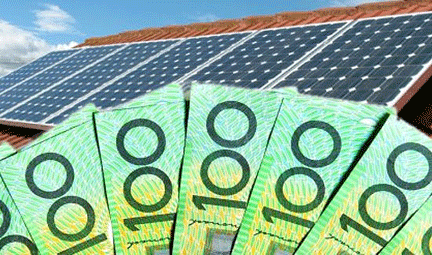 Solar farms: ‘Farming sun, instead of wheat’ http://www.weeklytimesnow.com.au/news/national/solar-farms-farming-sun-instead-of-wheat/news-story/339cad050ebf0e75d5eb373eeed8d160 KATH SULLIVAN, The Weekly Times March 2, 2017
THREE solar farms with the ability to generate enough electricity to power Geelong, Ballarat and Bendigo will be built in northwest Victoria this year.
A $500 million investment by Australian-owned Overland Sun Farming and London-based Island Green Power will see construction at Wemen, Iraak and Yatpool.
Two hundred jobs are expected to be created in the construction phase, which will begin in the second quarter.
Each solar farm is expected to begin producing energy from January 1 next year.
Overland chief executive Brett Thomas said he had worked with landholders and local government for three years to develop the plans.
He said each farm would cover up to 300ha, with farmers paid for use of the land — typically wheat and grazing country — for up to 30 years. “It provides a strong off-farm income for farmers,” Mr Thomas said, likening the project to primary production.“We’re farming sun, instead of wheat,” he said.
Mr Thomas described the technology as “relatively simple, the same as roof tops” however solar panels would use mechanical trackers to move east to west and follow the sun.
Mildura Development Corporation chair Jenny Grigg described the project as “massive” for the region.“It’s a great regional development opportunity,” Ms Grigg said.She said she expected that up to $30 million would be spent in the local economy during the construction phase of the farms.
National Australia Bank now investing in renewable energy in Europe, US and UK
 NAB taps offshore green bond market for 1.1GW of solar, wind, REneweconomy, By Sophie Vorrath on 2 March 2017 National Australia Bank has broadened its renewable energy investment reach to the European, US and UK markets, with the issuance this week of a €500 million ($A690 million) green bond, targeting what the bank describes as “strong investor demand” for solar and wind energy projects.
The bond, issued on Thursday, will refinance renewable energy and low carbon transport projects and assets in the UK, Europe, Australia and the Americas, including wind and solar energy assets with an expected installed capacity of more than 1GW.
It is the third bond of its kind to be issued by NAB, but marks the first issuance of an offshore green bond by an Australian bank, and the biggest ever green bond from an Australian issuer.
And it takes the bank’s total funds committed to the financing of renewable energy generators, globally, to more than $1 billion since October 2016, the bank says.
In 2014, NAB became the first Australian lender to jump into the booming green bond market, with the issue of a certified $150 million climate bond targeting a portfolio of 17 wind and solar projects.
As we reported here at the time, the largely renewable-focused exercise was a huge success, with strong investor demand doubling the size of the bond to $300 million within hours.
NAB it says its second green bond was also met with strong investor demand, and the order book well oversubscribed……http://reneweconomy.com.au/nab-taps-offshore-green-bond-market-for-1-1gw-of-solar-wind-48807/
Comments on the FINAL REPORT – SOUTH AUSTRALIAN SEPARATION EVENT- Australian Energy Market operator (AEMO)

After all the negative comments from State and Federal politicians and the media about renewable energy not providing synchronous generation I find it ironic that this “event” was 99% related to synchronous thermal (coal and gas) electricity generators. Ill-informed comment from politicians and journalists exposes the subjective ideological underpinning of these commentators.
Dennis Matthews 1 Mar 17, INTRODUCTION The AEMO report (, 1 DECEMBER 2016) is shockingly (!) written.
It’s full of jargon and acronyms with no easy way of finding what the acronyms mean. We could be forgiven for thinking that AEMO publications are intended to be read only by industry experts rather than concerned consumers.
Its charts are frequently unreadable, with minute characters used to label the axes, the axes overcrowded with labels, and five figure labels such as 200.00 where 200 would have sufficed.
The continual use of the words “incident” and “event” are reminiscent of the nuclear industry’s description of its many serious accidents and failures.
AEMO has uncovered gross inadequate performance by the electricity industry from electricity transmission to fossil fuel electricity generation to systems needed to maintain the integrity of the overall generation-distribution-transmission system. At no stage is there even a hint that severe penalties should be incurred by those responsible. I suspect, even if there were penalties that these would be recovered through increased prices. Competition is almost totally lacking in the industry.
At no stage was the cause of the “separation event” (failure of the Heywood interconnector from Victoria to SA) the fault of wind or solar electricity generators, quite the opposite. Wind powered electricity generators contributed 6% to power supply and the interconnector failure led to the shutdown of 2 wind farms in Victoria.
The following discussion uses the same section notation as the AEMO report.
1. OVERVIEW Continue reading
Victorian government more than doubles solar-feed-in tariff
 Victoria solar feed-in tariff more than doubles to 11.3c/kWh, REneweconomy,By Giles Parkinson on 28 February 2017 More than 130,000 solar households in Victoria will benefit from a steep increase in their solar feed-in tariff in 2017/18, and will receive a minimum 11.3c/kWh for their exports back to the grid, up from 5c/kWh currently.
The hefty increase announced by the Essential Services Commission on Tuesday is the result of a big rise in wholesale prices, and the Victoria Labor government’s instruction to include an implicit carbon price, network benefits and environmental benefits into the tariff. Continue reading
Study finds that 100 per cent ‘off the shelf’ renewable energy network is affordable
 100 per cent renewable energy network affordable, secure and ‘off the shelf’: study, ABC News, AM By Caroline Winter, 27 Feb 17, Australia can build an affordable and secure electricity network with 100 per cent renewable energy, using existing technologies, according to research by the Australian National University (ANU).
So how would it work?
The study details plans for a zero-emissions grid which would rely on wind and solar technology, supported by pumped hydro storage.
It could be set up with inexpensive, currently available, “off the shelf” products and eliminate the need for coal and gas-fired power……
Professor Andrew Blakers from the ANU said wind and solar can be that replacement, with the support of off-river pumped hydro, where reservoirs at different altitudes can be used to store and generate power……..http://www.abc.net.au/news/2017-02-27/100-per-cent-renewable-network-possible/8306482
Plan for solar panels accessible to flat dwellers
Startup Allume lets solar panels be ‘shared’ by strata dwellers, AFR by Michael Bailey, 1 Mar 17 Providing solar power to apartments is an expensive and onerous problem which a Melbourne startup claims to have cracked.
Allume, a 2016 graduate of the Melbourne Accelerator Program, is patenting a 50 centimetre by 25 centimetre box its founders say. will allow solar power to be distributed and billed to individual apartments, without the expense of changing the building’s existing metering infrastructure.
Apartment residents wanting solar power have to date had two options, according to Allume co-founder Cameron Knox.
They could band together to install an ’embedded network’, where one meter channels electricity to the whole apartment block. However this requires everybody in the block to agree to sign up, and involves a “regulatory overhead” that renders most installations unviable………
Individual apartment owners could also connect to their own panels but even if their neighbours agreed to grant them the roof space, Mr Knox said the upfront cost of wiring a single flat would exceed $3000 and likely lead to inefficient use of the panel, with a much longer ‘payback period’ than that enjoyed by owners of standalone houses.
Under Allume’s system, not every apartment owner has to sign up and an installation is usually viable with as little as six customers, Mr Knox said.
In return residents get access to solar power for an average 16 cents per kilowatt hour, compared with the average retail power cost of 24 cents/kWh. The purchaser – whether it be the body corporate, or an external financier – is charged only the wholesale cost of the power and makes enough margin for the ‘payback period’ on Allume’s deal to range between six to eight years.
“Solar power purchase agreements typically last for 25 years, so that’s a lot of years of free revenue stream,” said Mr Knox.
Allume worked with the Australian Energy Regulator to get a ‘retail exemption licence’ allowing it to sell energy to landlords, who can then on-sell to tenants…… http://www.afr.com/leadership/entrepreneur/startup-allume-lets-solar-panels-be-shared-by-strata-dwellers-20170228-gun689#ixzz4a2ajEQB2
Global battery storage industry to fight Australia home bans
REneweconomy By Giles Parkinson & Sophie Vorrath on 24 February 2017 The world’s biggest battery manufacturing brands and clean energy lobby groups have signalled they will fight proposed new guidelines and recommendations that could effectively ban battery storage units from inside homes and garages, saying the restrictions are over the top and don’t conform to international standards.
Standards Australia is believed to be preparing the release of new standards that would effectively force most battery storage units to be put in a free-standing and fireproof enclosure, possibly adding thousands of dollars to the cost of installation and making it uneconomic.
As a precursor to that move, Queensland workplace regulators unveiled new recommendations last week that suggested no battery storage units be installed inside homes and garage or adjoining sheds, and instead be put in separate enclosures.
The restriction appears to apply to all battery storage units, and not just lithium chemistries
Some in the industry have branded the suggestions as ridiculous…….http://reneweconomy.com.au/global-battery-storage-industry-fight-australia-home-bans-52711/
World-first digital energy marketplace for rooftop solar launched by Australian consortium

The consortium is launching two pilot projects in the ACT and on Victoria’s Mornington Peninsula, each involving around 5,000 households. The projects are also being overseen by a reference group that includes the Australian Energy Market Operator, the Australian Energy Market Commission and Energy Consumers Australia.
Australian consortium launches world-first digital energy marketplace for rooftop solar https://www.theguardian.com/sustainable-business/2017/feb/23/australian-consortium-launches-world-first-digital-energy-marketplace-for-rooftop-solar
Pilot program will allow homeowners to tap into a network of ‘virtual’ power stations made up of smart grids of rooftop solar and batteries, Guardian, Bianca Nogrady, 24 Feb 17, With that challenge in mind, in 2016, GreenSync got together with electricity network operators United Energy and ActewAGL, energy tech startup Reposit Power, and energy retailer Mojo under the auspices of the Australian Renewable Energy Agency’s A-Lab; an initiative that the Arena chief executive, Ivor Frischknecht, describes as an “innovation sandbox”. Arena contributed $450,000 towards the total project cost of $930,000.
What they came up with has yet to be done anywhere in the world: a network of “virtual” power stations made up smart grids of rooftop solar panels and batteries. Continue reading
South Australia’s Spencer Gulf ideal for pumped hydro energy storage –
“If a project of this scale, a pumped hydro project of this scale, had been available recently in South Australia, there wouldn’t have needed to been the load shedding that occurred there,” Mr Turnbull said.
Pumped hydro power station ideal for SA Spencer Gulf site, EnergyAustralia says http://www.abc.net.au/news/2017-02-22/pumped-hydro-power-in-spencer-gulf-energy-australia/8292596 PM By Khama Reid A desert site at the top of Spencer Gulf in South Australia is perfect for a pumped hydro venture, EnergyAustralia chief executive Catherine Tanna has said.
 What is pumped hydro?
- Power is generated by releasing sea water from a top dam, through a turbine, into a lower dam
- During times of plentiful energy on the network, seawater is pumped up into the top dam, like charging a battery
- The top dam would hold about eight hours of power which can be switch on at short notice
Backed by federal funding, the company and its partners will investigate the proposal further, with hopes it could be operational by the end of the decade.
“What’s required is to find a site, obviously being pumped hydro, that has water, but we also look for a site that has the right geography and topography … elevation, but also a site that has proximity to transmission,” Ms Tanna said.
Using $450,000 received from the Australian Renewable Energy Agency, the company will look at whether it is feasible to put a 100 to 200-megawatt power station close to Port Augusta and Whyalla. Continue reading
Shorten speaks out f or Labor’s 50% renewable energy target
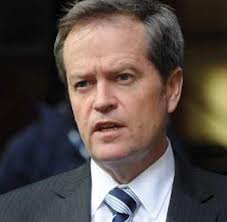 Shorten goes on front foot over 50% renewables ‘target’, The Conversation, Professorial Fellow, University of Canberra February 22, 2017 Australia could be the “energy capital of Asia” but instead it is going backwards, Bill Shorten will say in a speech on Thursday, vigorously defending Labor’s target of 50% of Australia’s electricity coming from renewables by 2030.
As the government floats the prospect of help for cleaner-coal power stations and attacks Labor for committing too strongly to renewables, Shorten will say that to achieve the ALP’s 50% target much more private investment in renewable generation and technology will be needed than the amount required to get to the legislated Renewable Energy Target (RET). The RET is for 23.5% of Australia’s electricity generation in 2020 to come from renewable sources.
He will say that what is required is an emissions-intensity scheme (EIS) for the electricity sector, ongoing support for research and investments in renewable energy technology, and a plan to modernise the National Electricity Market.
The speech comes as an Essential poll this week found nearly two-thirds (65%) approved of Labor’s target of 50%; 18% disapproved. Support for the policy was 55% among Coalition voters.
After much debate last week about the precise nature of Labor’s 50% commitment – whether it was a “goal” or a “target” – Shorten will take a more assertive line. “Forget the word games – 50% renewables by 2030 is Labor’s target, our goal, our objective and our aspiration,” he will say.
“We can be the energy capital of Asia. And if Australia nails the energy question, we will collect a growth dividend that can set us up for the century.
“But despite the prize on offer, despite all our natural advantages, we’re not just stuck in the gates – we are going backwards.
“When the Coalition came to office and declared war on the RET scheme, investment in large-scale renewables fell by 88% in one year.
“After being rated one of the four most attractive destinations in the world for renewable energy investment in 2013, we now don’t even crack the top ten.
“In the last three years, the world has added nearly three million jobs in renewables energy – and Australia has lost 3000,” Shorten will say, speaking at Bloomberg…….
The first and most important step to provide that certainty and to assist the transition to renewable energy is to establish an EIS for the electricity sector, he will say. An EIS rewards energy generators that produce pollution levels lower than a set benchmark.
An EIS would drive investment in new sources of energy – renewables but also gas, Shorten will say.
“An EIS doesn’t rely on taxpayer funding or government officials making investment decisions. It leaves both decisions and funding to the private sector, to the market,” he will say. “It will reduce power bills and reduce pollution.”
Malcolm Turnbull has ruled out an EIS despite the preliminary report of the Finkel inquiry into future security of the national electricity market giving it a positive nod…….https://theconversation.com/shorten-goes-on-front-foot-over-50-renewables-target-73460
Plans for massive pumped hydro energy storage project in South Australia
EnergyAustralia outlines plans for 100MW pumped hydro plant in SA http://reneweconomy.com.au/energyaustralia-outlines-plans-for-100mw-pumped-hydro-plant-in-sa-68973/ By Sophie Vorrath on 21 February 2017 Having chalked up three major solar power purchase agreements in as many months, EnergyAustralia is talking large-scale energy storage this week, in a briefing with the federal government on the potential for a massive pumped hydro project in the renewables rich state of South Australia.
EnergyAustralia managing director Catherine Tanna, along with the company’s executive for energy, Mark Collette, were in Sydney on Tuesday updating the Cabinet Energy Committee on the progress they have made, along with their research partners Melbourne Energy Institute and Arup Group, investigating the viability of a pumped hydro energy storage plant using seawater.
In a statement on Tuesday, Arup Group said that the proposed South Australia project would have the capacity to produce around 100MW of electricity with six-to-eight hours of storage – the equivalent of 60,000 home battery systems, EnergyAustralia says, but at “one-third of the cost.”
Pumped hydro, one of the oldest and most basic and low-cost forms of energy storage, converts electrical energy into potential energy by pumping water up to the top of a hill, storing it there in a reservoir, and then using it when needed to generate electricity at very high efficiency.
Most recently in Australia, it has been linked with a ground-breaking project being developed by Genex Power, which proposes to convert an old gold mine into a 330MWh pumped hydro storage project, to go alongside a 150MW solar PV array.
But its potential for Australia has come into sharper focus in recent months, as governments and electricity market operators grapple with the problem of how to support the smooth transition of electricity networks to renewable energy generation. Continue reading
Poll shows that majority of Australians support Labor’s renewable energy goal
More than 70% believe Coalition not doing enough on energy – poll
Guardian Essential survey shows a clear majority supports Labor’s goal of sourcing 50% of energy from renewables by 2030, Guardian,
A majority of voters surveyed in the latest Guardian Essential poll supports Labor’s renewable goal, suggesting Coalition attacks are not working. Guardian, Katharine Murphy, 21 Feb 17, More than 70% of voters think the Turnbull government is not doing enough to ensure affordable, reliable and clean energy for Australian households and businesses – and a clear majority also supports Labor’s goal of sourcing 50% of energy from renewable sources by 2030.
The latest Guardian Essential poll suggests that the Turnbull government’s relentless partisan attacks on Labor’s 50% renewable energy policy, and its concerted efforts early in the new political year to position itself as the party of cheaper and more secure power, haven’t yielded the desired result.
The poll shows 71% of the sample think the federal government is not doing enough to ensure affordable, reliable and clean energy – and only 12% rate the current effort as satisfactory.
Even among their own constituency, Liberal and National voters, 62% of the sample said the government was not doing enough.
When asked about the ALP’s aspirational goal to source 50% of energy from renewable sources by 2030, 65% of voters registered their approval of the concept.
The policy – which has been repeatedly branded reckless and ideological by the prime minister – won strong majority approval from both Labor and Green voters. Coalition voters were also more likely to approve of the target than disapprove.
The political campaign by the government hasn’t moved the dial in any significant way. Attitudes to the policy have changed little since it was unveiled by Bill Shorten in 2015.
Voters were also divided about whether or not Australia should build new coal-fired power stations but a clear majority opposed the idea. Forty-five per cent of the sample said it was a bad idea and 31% supported building new coal-fired power stations.
The people positive about the idea of building new coal-fired power stations were Liberal/National voters (47%),men (39%) and people aged 65 and over (53%)……
Most voters are also attributing power blackouts in South Australia to failures of the energy market in responding to extreme weather events (45%), rather than to problems with too many windfarms……https://www.theguardian.com/australia-news/2017/feb/21/more-than-70-believe-coalition-not-doing-enough-on-energy-poll
Solar towers with storage beat coal on just about all fronts.
Why new coal? Solar towers + storage beats it on all counts http://reneweconomy.com.au/why-new-coal-solar-towers-storage-beats-it-on-all-counts-16080/ By Giles Parkinson on 21 February 2017
The US-based developers of the world’s leading solar tower and storage technologies has expressed surprise that Australia’s federal government is pursuing “new coal” plants, saying that solar towers with storage beats coal on just about all fronts.

Tom Georgis, the head of international development for SolarReserve, says solar towers and storage can match and beat coal on capability – providing baseload and flexible generation – and match new coal on cost, and provide zero emissions output as a bonus.
“This is just not a direction that financial markets are heading in,” Georgis told RenewEconomy in an interview on Tuesday, during a visit to Australia, where the company is hoping to build a $700 million, 110MW solar tower and storage facility in Port Augusta, and in other states too.
“In our opinion it is almost backward looking,” Georgis said, adding that carbon capture and storage in electricity generation is unproven and not cost-effective, and coal generation needs to take account of the impact of mining, and of emissions.
The Australian energy industry, including fossil fuel generators, have reacted to the Coalition’s push for new coal plants with a mixture of surprise and disbelief, saying any such plant is “uninvestable”.
Bloomberg New Energy Finance has estimated costs at between $138/MWh and more than $200/MWh, and significantly higher with CCS. It and others say estimate emissions reductions are grossly over-estimated.
SolarReserve says its own technology costs are “well under ” coal, even without CCS. It has been coy about its costs in Australia, having never built a plant here before, although CEFC executive director Simon Brooker told a Senate inquiry this month that a cost of around $150/MWh was being talked about for a first of its kind plant. Costs would then fall quickly as others are built.
SolarReserve is believed to be participating in a South Australian government tender for 75 per cent of its electricity needs, competing mostly with new gas stations and existing mothballed ones. It has talked with both the CEFC and ARENA.
Interestingly, Engie, the owner of the mothballed Pelican Point gas station near Adelaide considered to be its biggest rival in the tender, reportedly told the same inquiry on Monday that running the generator would not be economic, even with a government contract, because of the cost and availability of gas.
This may have prompted S.A. energy minister Tom Koutsantonis to say some positive things about solar towers and storage last week. Both the federal Coalition and Labor have promised to help promote solar towers, but have done nothing since the election.
Georgis says SolarReserve has already beaten gas generators on price in a tender in Chile last year, and is confident it can beat new gas generation in Australia too. Its main issue lies in the length of a contract, which will be crucial in its ability to secure finance.
Georgis again underlined the capability of solar towers and storage, and its ability to provide baseload power, power on demand, bulk storage, and use its steam turbines to provide the ancillary services normally delivered by fossil fuel generation.
He says battery storage will make sense for short-period needs, and as a cheaper option to network upgrades and for accompanying solar in distributed generation, but battery storage could not deliver or compete on price for bulk storage.
Pumped hydro was also unlikely to provide a “baseload” option, and was reliant on arbitrage opportunities (pumping water up hill while prices were low, and generating power when prices were high) to make it economic. Solar towers, on the other hand, had zero fuel costs.
Australia’s Energy Minister For Coal blackens the name of wind and solar power
Frydenberg on blackouts: No mention of failing network, gas, software, REneweconomy, By Giles Parkinson on 21 February 2017 Federal energy minister Josh Frydenberg has put the blame for recent blackouts in South Australia directly on the state’s high penetration of wind and solar, and attributed no blame to network faults, storms or failing gas plants.
In a speech on energy security to the right-leaning Sydney Institute on Monday night, Frydenberg listed four black-out events that had hit South Australia since and including the “unprecedented” state-wide outage on September 28.
 He made no mention of the fierce storms, the falling power lines, the network faults that caused outages in December and February, or the role of gas plants that sat idle, or had to shed capacity because of the heat and other technical faults.
Nor did he mention the software glitch that meant 90,000 households, rather than 30,000, suffered power cuts in South Australia earlier this month when demand hit record highs.
Instead, Frydenberg pointed only to the roles of wind and solar, both of which he said were producing at a fraction of their capacity when the rolling blackouts were implemented.
“This means that the days of easily forecastable supply are over,” he said. “Nowhere was this more clear than during the last South Australian blackout, when 90,000 consumers lost power.”
An Australian Energy Market Operator report last week said the cause of the problem was bad forecasting, not just of supply, but of demand. It was caught short when demand spiked and could not wake a gas generator from its slumber.
Another 300MW of gas capacity was unavailable because it was broken – with half of it failing in the hours before the blackout. Wind energy was producing twice as much power as had been forecast a day earlier. Solar was the only local generation that produced exactly as predicted.
As AEMO told the Senate inquiry last week: “It is going back to the unforced and unplanned outages that eroded our reserves at that time in such a short period of time.
“Yes, we knew the wind would drop-off and we knew the solar would drop-off at a particular time, but our reserves were fine up until the point when we had forced outages.” i.e. the gas plants.
Frydenberg also spoke of South Australia’s price spikes, but made no mention of similar price spikes in Queensland and South Australia.
Indeed, average wholesale electricity prices in coal-dependent Queensland so far this month have average $301/MWh, nearly 50 per cent more than South Australia last July ($201/MWh), when network supplies from Victoria were restricted by an upgrade and which helped trigger the Coalition’s anti-renewable campaign.
In February this year, NSW has averaged $214/MWh while South Australia has averaged $210/MWh. In January, average wholesale prices in Queensland were at $197/MWh, while in South Australia they averaged just $84/MWh.
AEMO, in its report, has insisted that it is not the nature of wind energy or solar that have contributed to the various blackouts. Frydenberg, however, is having none of it….http://reneweconomy.com.au/frydenberg-on-blackouts-no-mention-of-failing-network-gas-software-19688/
1 This month
Chernobyl: The Lost Tapes – A good documentary on Chernobyl on SBS available On Demand for the next 3 weeks– https://www.sbs.com.au/ondemand/tv-program/chernobyl-the-lost-tapes/2352741955560
15 April – Zoom –Nuclear Power is Not the Solution
Apr 15, 2026 01:00 AM in Canberra, Melbourne, Sydney

Join the International Physicians for the Prevention of Nuclear War (IPPNW) on Tuesday, April 14th for a timely webinar exploring the risks associated with nuclear power and challenging the myth that it offers a simple, safe, carbon-free solution to the climate crisis

21 April Webinar: No Nuclear Weapons in Australia
Start: 2026-04-21 18:00:00 UTC Canberra, Melbourne, Sydney (GMT+10:00)
End: 2026-04-21 19:30:00 UTC Canberra, Melbourne, Sydney (GMT+10:00)
Event Type: Virtual
A virtual link will be communicated before the event.
Host Contact Info: australia@icanw.org

of the week – Australians for War Powers Reform (AWPR)
To see nuclear-related stories in greater depth and intensity
 Antinuclear