EnergyAustralia to invest $1.5 billion in new wind and solar projects
 EnergyAustralia’s $1.5bn for renewables
 http://www.heraldsun.com.au/business/breaking-news/energyaustralia-puts-15bn-in-renewables/news-story/e1fbf5f408e5405adfc0adc7a263448c
The electricity provider has committed to buying 500 megawatts of power from wind and solar plants, more than doubling the amount of energy it can source from renewables.
It said on Wednesday it had bought the output from a planned 42.6 megawatt solar farm at Manildra in central west NSW, which will be able to power 14,000 homes per year when completed in 2018.
Managing director Catherine Tanna said EnergyAustralia was looking to lead the development of cleaner energy even though it owns two of the biggest coal power stations in the country. “These are the projects which will come to underpin energy supply in Australia as coal-fired power plants are retired,” she said in a statement. EnergyAustralia plans to ink a 13-year agreement with the Manildra farm by the end of December.
The company already has the rights to more than 450 megawatts of electricity from wind farms in New South Wales, Victoria and South Australia. EnergyAustralia’s pledge comes after Origin Energy inked a 15-year contract in March with the Moree Solar Farm in northern NSW, which can power 24,000 homes.
Sydney students pioneer a shared solar and battery system for apartment block
Stucco students install one of Australia’s first shared solar and battery systems for apartment block, 702 ABC Sydney ,By Amanda Hoh, 8 Dec 16, After 18 months of “bureaucracy” and jumping through regulatory hoops, the students of Sydney’s Stucco apartments have finally achieved their goal of spearheading a “solar revolution”.
The social housing apartment block in Newtown has become one of the first multi-dwelling buildings in Australia to install a shared solar and battery storage system.
Last week 30 kilowatts of solar panels were placed on the roofs and 36 batteries set up in the building totalling 42.3kW storage capacity. The solar system will now provide 80 per cent of the residents’ energy needs, with the remainder of electricity drawn from the grid. Each student is expected to save up to $35 a month on their electricity bill. “As poor uni students, that difference in a bill makes a huge difference,” Sarah King, Stucco committee president, resident and social work student, said.
“There’s also the great feeling of using green clean energy as opposed to dirty coal.

“As a cooperative, it’s quite empowering to have your own locally sourced power system, otherwise you’re quite vulnerable to what electricity companies are going to charge you. Stucco is a cooperative, not-for-profit housing complex for low-income students from Sydney University. There are 40 residents in the eight units who each pay about $90 in weekly rent. As a cooperative, the students self-manage the property, which is part-owned by the university and the Department of Housing.
How do students pay for solar? A software system was put in place to manage and analyse the energy output from each unit, meaning the Stucco committee now acts as its own energy retailer and issues electricity bills to the residents. For the energy consumption that is provided by solar, the students are charged a maximum of 10 cents during off-peak times and up to 40 cents during peak use.
They are currently in pricing talks with various commercial energy retailers for when the building draws from the grid.
The cost of the project totalled $130,000, with the solar technology costing $97,000……..The students received an $80,000 grant from the City of Sydney.
The remainder of the cost was made up from 25 years’ worth of sinking funds and “grassroots community efforts” of voluntary contributions and pro-bono work……The solar and battery system is expected to take about six to seven years to pay for itself, although Mr Janse Van Rensburg said the long-term gain and savings far outweighed the cost of the system…..The students have started a crowdfunding campaignto help rebuild the administration and sinking funds.
Calls for more solar as household tariffs dumped There are 1.6 million solar systems installed across the country; mainly in free-standing owner-occupied homes and in lower to medium income suburbs.
According to Claire O’Rourke from community-based organisation Solar Citizens, Stucco is “a pioneering project”, particularly as it was conceived by a housing cooperative.
“We’ve had a lot of anecdotal reports from apartment owners who have tried to get this [a multi-apartment dwelling solar and battery system] in place but have failed,” Ms O’Rourke said……..
“The real opportunity is in cities where there are more apartments and renters…….
The Solar Bonus Scheme in New South Wales ends on December 31, which means solar households will no longer receive a feed-in tariff when they redirect energy back into the electricity network. Solar Citizens is lobbying the Government for a mandated minimum tariff to pay solar owners.”Going solar now is the best way to save for the long term, because solar panels will last 20 to 25 years, batteries will last for a decade,” Ms O’Rourke said.
“Landlords and renters everywhere should be inspired by this project [Stucco] and look at starting up similar projects that help them save money and spearhead that revolution we want to see.” http://www.abc.net.au/news/2016-12-08/stucco-student-housing-installs-shared-solar-battery-system/8103298
New 116-turbine wind farm for the Wimmera, Victoria
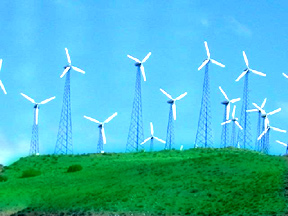 Wind farm: 116-turbine farm gets tick of approval
 http://www.weeklytimesnow.com.au/news/national/wind-farm-116turbine-farm-gets-tick-of-approval/news-story/9748769c22c8e976b78e65e2c9907195 KATH SULLIVAN, The Weekly Times December 7, 2016
  ONE of Victoria’s most expensive wind farms will be built in the Wimmera, after the State Government approved its planning application.
The $650 million, 116-turbine farm at Murra Warra, north of Horsham, was approved by Planning Minister Richard Wynne after no objections were received.
“We are paving the way for more investment and jobs in the wind sector and it’s great to see Murra Warra come online and deliver a boost to the region,” Mr Wynne said.
Project operator RES said the farm would create more than 600 jobs during construction, 15 ongoing jobs and remove more than one million tonnes of greenhouse gas emissions a year from Victoria’s energy sector.
It is expected to generate enough energy to power 252,000 homes. RES is working with 18 families, across more than 4250ha, who are expected to receive lease payments for the turbines.
RES also manages a 75-turbine wind farm under construction at Ararat.
Australia can get to zero emissions, as rooftop solar booms
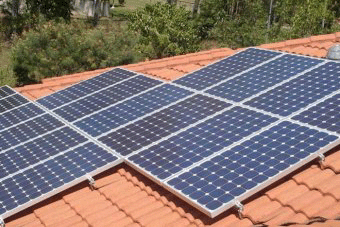 Households to power up to half Australia, zero emissions within reach: CSIRO, The Age, Adam Morton , 6 Dec 16
As the Coalition backs away from a pledge to consider a climate change policy that the energy industry says it needs, a new study is projecting a rapidly growing mass electricity generator for Australia in the decades ahead: the public.
Consumers using rooftop solar panels and batteries will produce between a third and half of Australia’s electricity by mid-century if the right policies are introduced, according to a roadmap from the CSIRO and power and gas transmission body Energy Networks Australia.
The two-year analysis also found an emissions intensity scheme for the electricity sector – a form of carbon trading that was to be considered by a government climate policy review until that plan was abandoned on Tuesday afternoon – would be the cheapest way to cut carbon dioxide emissions.
It suggests it could save customers $200 a year by 2030, while helping create a reliable electricity grid with zero emissions by 2050. Energy Networks chief John Bradley said a low-cost shift to zero emissions would depend on a national climate and energy plan with bipartisan support.
“By contrast, carbon policy which could change dramatically at every election, or differs in every state, is a recipe for a high-cost and less secure electricity service,” Mr Bradley said.
His call for the Coalition and Labor to come together on climate policy echoes that made by bodies representing energy generators and major industrial companies.
The Electricity Network Transformation Roadmap forecasts that up to 10 million households and small businesses would have solar panels, battery storage, smart homes and electric vehicles if pricing and incentives were changed to better reflect demand. This would “transform the grid into a platform more like the internet, where customers can trade and share energy”.
It recommends an emissions intensity scheme for power stations be introduced by 2020, following a similar call by the Climate Change Authority, now dominated by Coalition-appointed board members.
On Tuesday, Environment and Energy Minister Josh Frydenberg backed away from saying the government would consider this sort of scheme as part of a wide-ranging departmental review of climate policy next year. A handful of Coalition backbenchers, including Cory Bernardi and Craig Kelly, had called for any form of carbon pricing to be rejected…….
The report found thermal plants, including coal and gas fossil fuels, would be critical in balancing intermittent renewable energy in the years ahead, but would eventually be replaced by technologies using battery storage and biomass.
Getting there would present significant technical, economic and regulatory challenges. It would transform the system away from its original design – large centralised power stations – to a much more decentralised network.
It said a coordinated plan for 2050 could:
- Make average annual household bills $414 less than they otherwise would have been.
- Cut network costs to consumers by 30 per cent.
- Avoid $16 billion in spending on poles and wires.
- Lead to customers with solar panels, battery storage and electric vehicles earning $2.5 billion a year from network businesses.
The roadmap comes ahead of the Friday release of an interim report into electricity reliability led by chief scientist Alan Finkel, commissioned after South Australia suffered a statewide blackout in September. http://www.theage.com.au/federal-politics/political-news/households-to-power-up-to-half-australia-zero-emissions-within-reach-csiro-20161206-gt4ztf.html
Finkel review of the National Electricity Market – an opportunity to learn from Germany
The terms of reference for the Finkel review recognise the need to integrate energy and climate policy in Australia.
What can Australia learn from Germany’s remarkable energy transition?, https://theconversation.com/what-can-australia-learn-from-germanys-remarkable-energy-transition-69648 The Conversation, December 5, 2016 The Australian government is reviewing our electricity market to make sure it can provide secure and reliable power in a rapidly changing world. Faced with the rise of renewable energy and limits on carbon pollution, The Conversation has asked experts what kind of future awaits the grid.
The Finkel review of the National Electricity Market is an opportunity to consider how Australia can transition its electricity system to be less carbon-intensive.
Germany’s energy transition is often held up as an incredible success story. Starting from a sector relying predominantly on fossil fuels and nuclear energy in the 1990s, renewable energy now provides about 30% of Germany’s electricity.
Germany is on track to achieve its 80% renewable target by 2050. This transformation has been the result of a range of policy measures.
The depth and breadth of these legal and regulatory reforms can provide valuable lessons for Australia. Continue reading
Canberra shows off its renewable energy success
 Canberra’s renewable energy facilities host open day, Canberra Times, Stephen Jeffery , 5 Dec 16 Canberra’s renewable energy providers threw their doors open on Saturday to showcase the ways the ACT and southern NSW are helping to reduce carbon emissions.
The Renewable Energy Trail, celebrating 2016 Renewable Energy Day, took Canberrans and tourists to sites across the ACT and surrounding areas of NSW. The day kicked off, under appropriately sunny skies, at the Mount Majura Solar Farm, which began operations this year.
A bus took visitors to Canberra Institute of Technology’s Renewable Energy Skills Centre of Excellence and Renewables Battery Test Centre, before moving on to the “Big Dish” at the Australian National University, a display of electric vehicles in Tuggeranong, and Googong Dam’s mini hydroelectric facility.
A separate bus ventured into NSW, touring the Woodlawn Bioreactor and wind farm.
ACT Environment Minister Mick Gentleman and Climate Change Minister Shane Rattenbury officially opened the event…..The Renewable Energy Trail was held in the same week a report found the ACT well ahead of other Australian states and territories in emission reduction targets.
The ACT also won the Carbon Disclosure Project’s award for “Best Renewable Target” during the week. http://www.canberratimes.com.au/act-news/canberra-life/canberras-renewable-energy-facilities-host-open-day-20161203-gt39xt.html
Public submissions on renewed call for ACT Jupiter wind farm
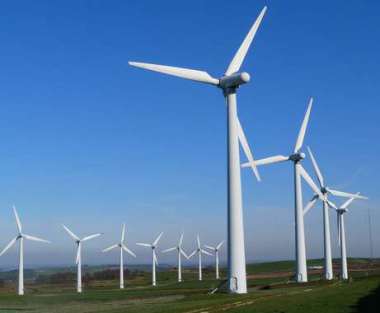 Second time lucky? Jupiter wind farm application lodged again, Canberra Times, 4 Dec 16 Katie Burgess
The company behind the controversial Jupiter wind farm has taken another swing at getting the green light to build 88 wind turbines near Canberra, a year after NSW officials sent them back to the drawing board.
The NSW Department of Planning and Environment struck out EPYC’s application to build the wind farm five kilometres out of the Tarago township last October, after it found the company had not sufficiently addressed environmental and community concerns.
But the joint Australian-Spanish venture has come back to the NSW Department of Environment and Planning with a revised proposal, which has now opened for public consultation.
While the original Jupiter wind farm proposal was to build 100 turbines across 25 rural properties, the new one outlines plans to build 88 turbines across 23 rural properties.
EPYC project manager Ibrahim Eid said the revised environmental impact statement included consultation with community members up to three kilometres away.
But residents of the surrounding regions have vowed to once again fight the proposal, which EPYC has been trying to get off the ground since 2014………
The wind farm will be within 15 kilometres of two operational wind farms, one approved wind farm and a solar farm.
The environmental impact statement acknowledged there could be wind turbines within two kilometres of properties not part of the farm.
It also stated there were 43 threatened fauna species, including the glossy black cockatoo and the spotted-tail quoll, however the turbines, substations and other ancillary buildings would be built on cleared paddocks.
The company will carry out targeted ecological surveys to determine where each wind turbine will sit.
Public submissions on the proposed wind farm close in February. http://www.canberratimes.com.au/act-news/second-time-lucky-jupiter-wind-farm-application-lodged-again-20161130-gt1f9j.html
Rooftop solar energy boom, but warnings on quality
there are companies out there using the rebate wind-down as a “scare tactic” to convince people to invest now. And a lot of these companies, Morris warns, will be pedalling poor quality and “dumb” solar.
The CEC, meanwhile, launched a new campaign “advising people buying solar panels to look for an Approved Solar Retailer to make sure they get the best possible quality and service – and avoid getting a bad deal.”
Another rooftop solar boom – this time with warnings http://reneweconomy.com.au/another-rooftop-solar-boom-time-warnings-35846/By Sophie Vorrath on 1 December 2016 Record low solar panel prices, combined with the ratcheting-down or removal of federal and state policy levers, are sparking a boom in Australia’s residential and commercial solar markets, while also prompting warnings to consumers to avoid the lure of cheap and nasty solar products – and installers. Retailers and wholesalers in the solar PV market have reported experiencing “unprecedented demand” in the month of November, which looks set to continue into December, the first month of the Australian summer. Continue reading
Need to examine Australia’s electricity system – Victorian network fault
 Vic network fault causes outages in South Australia, conservatives blame renewables, REneweconomy By Giles Parkinson on 1 December 2016 A major fault on the Victorian transmission network overnight caused power outages in South Australia for up to an hour, and forced the Portland smelter in Victoria to also go offline.
The Australian Energy Market Operator (AEMO) said that at 01:33 AEDT on December 1, the South Australian power system separated from Victoria, due to an unknown issue on the Victorian transmission network
“The root cause still under investigation,” AEMO said, but added “it is important to note that this event was not related to the Black System event in South Australia on September 28.”
It is believed that the fault lay in an Ausnet feeder line to the Heywood Interconnector in Western Victoria, when a transmission line conductor “hit the ground.”…….
questions have been raised about the decisions by the market operator, which chose to take no preventative measures, and for many underlined the fragility of a centralised grid, and the risks of storms, bushfires and other outages on an elongated network.
It has led to calls for a think about the design of electricity markets, and a push to localised grid and local renewable generation. AGL CEO Andrew Vesey, and many others, said the best security could be offered by more localised generation, and that meant renewable energy, and more storage. http://reneweconomy.com.au/vic-network-fault-causes-outages-in-south-australia-conservatives-blame-renewables-84808/
Smart planning now will enable reliable renewable electricity
Reliable renewable electricity is possible if we make smart decisions now, The Conversation, December 1, 2016 The Australian government is reviewing our electricity market to make sure it can provide secure and reliable power in a rapidly changing world. Faced with the rise of renewable energy and limits on carbon pollution, The Conversation has asked experts what kind of future awaits the grid…….
Findings from research overseas and in Australia show people are more likely to die during power outages. This is because of the increased risk of accidents, extreme cold or heat, food poisoning and communications breakdowns that can delay emergency responders.
So whatever our electricity grid looks like in the future, it will need to be reliable………
The cost of reliability
Our recent research took a highly conservative approach to testing the cost question.
We assumed that there would be no future improvements in technology from what is currently viable and no future decrease in electricity demand. We also used renewable resource supply (sunshine and wind) from 2010 because this was one of the most challenging years for renewables.
Our findings indeed showed that strategies to manage the variability of renewable resources were effective in a 100% renewable energy mix of rooftop solar, wind, large-scale solar, hydro and biofuels.
In one scenario, for instance, current demand could be matched with supply at a cost of producing electricity around 20c per kilowatt hour (the current levelised cost of coal-fired electricity is 7.8-9.1c per kWh), with overall installed capacity of 162 gigawatts (2.5 to 3 times what is installed today), relatively low transmission losses and with less than 20% wasted electricity.
The interconnected eastern Australian transmission grid would need to be 2.5 times the current size, and would need to be linked to the grids in Western Australia and the Northern Territory.
Recent developments look positive for renewables
But recent developments mean that the costs and constraints for reliable renewable energy are not likely to be as conservative as our scenario.
Battery storage has benefited from rapid improvements in technology even in the short period since our research in 2015. Significant battery storage could even mean a restructuring of our largely centralised (big power stations) network to a more decentralised one that includes rooftop solar panels and battery storage.
Decentralisation of power generation opens up the possibility of using waste heat from power generation in buildings to reduce power demand (such as tri-generation).
Our research also indicates that investing in more dispatchable technologies can reduce wasted energy, the cost of energy, the grid expansion required, and overall generation capacity.
With the price of renewables decreasing, the transition to renewables may have benefits for power producers and power consumers.
Future constraints and opportunities for renewable energy are uncertain, but we can’t wait for perfect certainty before we plan and act. In Australia we have some of the world’s leading experts in the field with a range of sophisticated modelling capabilities at hand. These assets could be the foundation of collaboration with policymakers to transition to reliable renewable energy. https://theconversation.com/reliable-renewable-electricity-is-possible-if-we-make-smart-decisions-now-68585

Australian solar power technology sold to China, by CSIRO
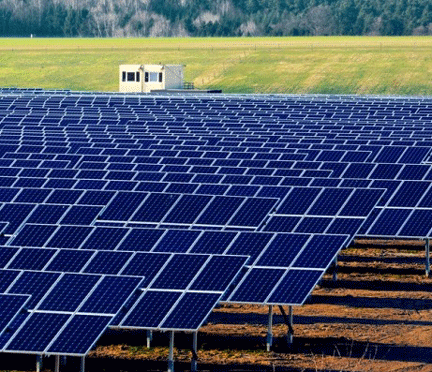 CSIRO sells concentrated solar power technology to China, The Age, Marcus Strom , 28 Nov 16 The CSIRO on Tuesday will sign a technology licensing agreement with a Chinese solar company that could reap millions of dollars in royalties for the national science and industry organisation. The deal with Beijing-based Thermal Focus will allow the company to bid for business in the burgeoning Chinese market for concentrated solar power using Australian-designed technology.
China aims to build infrastructure that produces 1.4 gigawatts of concentrated solar power by 2018, increasing this to 5GW by 2020.
“To put that into perspective, Australia has 50GW capacity in all its power stations,” said Wes Stein, CSIRO’s chief energy research scientist. John Grimes, of the Australian Solar Council, said: “This is a significant commercial opportunity, perhaps worth hundreds of millions.” CSIRO chief executive Larry Marshall said: “This partnership takes our climate mitigation focus to a global stage.”
Minister for Industry, Innovation and Science Greg Hunt said: “Australia is a leader in clean energy technology and this partnership is an important step in realising this advantage.”
The partnership will be signed at the Asia-Pacific Solar Research Conference at the Australian National University. Phil Hearne
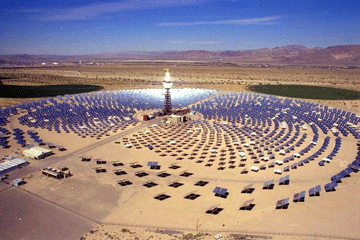
Concentrated solar power, or solar thermal, uses mirrors to focus the sun’s energy into a collector. At collected temperatures of 560 degrees, that energy is then stored in molten nitrate salts in large thermal tanks. This can then generate superheated steam to drive turbines for electricity generation for weeks.
CSIRO’s patented technology uses smaller mirrors of about five square metres, known as heliostats, and field-control software to direct the solar energy. The technology was pioneered at the CSIRO’s energy centre in Newcastle. The solar thermal team has grown to more than 30 scientists and engineers.
Mr Stein said: “The big difference with photovoltaic cells is that our technology has storage embedded at a lower cost than batteries.”
A CSIRO spokesman said the licensing agreement covered a technology transfer payment with recurring royalties for the number of heliostats installed……
John Grimes at the Australian Solar Council said: “CSP with storage is the missing link in China’s renewable energy market.” Mr Grimes said what gave this deal credibility was that the Chinese had delivered on their plans in renewables. “Already China has installed 120GW of solar photovoltaic cells,” he said. “It really is a world leader in this field.” Its commitment was partly due to a combination of environmental concerns, cost effectiveness and air-quality pressures in cities, Mr Grimes said.
There are no commercial plants operating concentrated solar thermal technology in Australia. He said this was because government leadership in Australia had been lacking.
However, there are some companies working towards this: Vast Solar, SolarReserve and SolarStor, which is backed by former Liberal leader John Hewson.
SolarStor plans to build a concentrated thermal plant near Port Augusta, South Australia, as does US firm SolarReserve.
The solar deal comes a day after an interim report by a Senate committee recommended all Australian coal mines close by 2030.
The retirement of coal-fired power stations report committee is chaired by Greens senator Larissa Waters. Its final report will be handed down on February 1. http://www.theage.com.au/technology/sci-tech/csiro-sells-concentrated-solar-power-technology-to-china-20161128-gsz8gh.html
Western Australian town to host large renewable energy grid
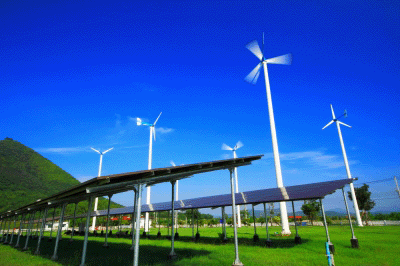 Kalbarri to host what could be Australia’s largest renewable energy grid http://www.watoday.com.au/wa-news/kalbarri-to-host-what-could-be-australias-largest-renewable-energy-grid-20161128-gsz4n5.html A $10 million renewable energy-powered microgrid which has the potential to be the largest in the country will be developed in Western Australia’s Midwest.
The coastal town of Kalbarri is currently supplied by a 140 kilometre long rural feeder line, which experiences outages due to environmental factors.
The microgrid will combine wind and solar power with a large-scale battery and Energy Minister Mike Nahan said the project will be closely looked at to see how the technology could benefit other towns in WA.
“This is a game changer for regional communities who rely on power from a long feeder line, which is subject to environmental factors that can cause outages,” Dr Nahan said.
“The project, which has the potential to be Australia’s biggest renewable microgrid, will consider all generation options and take into account the community’s desire for a renewable solution.””
Western Power will seek expressions of interest from next month with construction expected to begin in 2017.
Solar thermal plant is the best solution for Port Augusta
 Port Augusta can show the world what just transition for workers looks like https://www.theguardian.com/commentisfree/2016/nov/21/port-augusta-can-show-the-world-what-just-transition-for-workers-looks-like Sharan Burrow
A solar thermal plant in Port Augusta is the best fit for providing both jobs and clean energy. It only needs political will to work Port Augusta, a country town of 14,000 people in South Australia, could have been a perfect example. For 68 years, coal-fired power stations and the local mines generated jobs for 400 workers and provided power for South Australia.
This is the story of a community, its power station workers and their union taking their plan for jobs and solar thermal power to state and federal government, and to global energy giants in France and the United States, demanding a just transition for the people of Port Augusta, demanding a zero carbon future for people everywhere.
The coal-fired power station was on borrowed time. Worried about air quality and environmental health, the community looked for alternative plans for energy, industry and jobs.
Five years of work – during which all options were considered – resulted in a decision that a solar thermal plant was the best fit for both a clean energy base and for skills transfer for existing energy workers.
A feasibility study and three companies interested in constructing this renewable alternative added further cause for optimism.
Even the political support appeared to line up, a promise of funding support before a national election, state government support, and a local mayor backing in his community and workers and their unions with environmental activists singing in tune.
For a moment, Port Augusta held its breath. The plan was in place. A source of energy that would allow workers to transfer from the defunct coal-fired power station. A company willing to build, the community behind it, the workers having hope for a future.
So why are they still waiting?
The missing ingredient is a shared sense of urgency to get the job done, leaving the community and governments out-manoeuvred by corporate greed.
The power station owner, Alinta, deserted its workers and the community in a shocking decision to close years ahead of public commitments. More than 250 workers are potentially stranded.
A dishonest company is nothing new; a company that takes no responsibility for the community from which they have drawn a loyal workforce that made their profits for them is sadly a global tale but where is the rescue team?
A standoff on what comes first, a contract or investment security, seems to be the villain. A standoff between layers of government with a missing procurement contract for purchasing energy from the company willing to invest in the solar thermal plant and a start-up clean tech grant.
SOUTH AUSTRALIA’s RENEWABLE ENERGY IS UNDER ATTACK!
 Victoria’s Yes2Renewables campaign is expanding to South Australia. Individuals and renewables campaign groups such as Friends of the Earth Adelaide’s Clean Futures Collective, Solar Citizens, Climate Emergency Action Network, and Australian Youth Climate Coalition are joining together to defend renewables in SA.
South Australia is a renewable energy success story. The state is fast approaching 50% renewables and has booming solar, energy storage, and wind power sectors.
This success has made South Australia public enemy #1 for the fossil fuel lobby, who will do anything to stop our transition to 100% renewables.
In July, the fossil fuel lobby and their boosters in the media blamed renewable energy for price spikes caused by big coal and gas copanies gaming the market. And in September they blamed a blackout on renewables rather than the obvious cause: a one-in-fifty-year storm.
The fossil fuel lobby is prepared to sacrifice South Australian jobs, investment in regional communities, and our climate to protect their own interests.
In Novermber, community members met up at The Joinery in Adelaide to kick off a grassroots campaign to defend South Australia’s renewable energy leadeship. For more info, visit https://yes2renewables.org/
Queensland’s solar hub in sunny Western country
 Solar energy: Sunny western Queensland to become a hub for power farms, ABC News, 6 Nov 16 By Lucy Murray Western Queensland is becoming a major hub for solar energy, with the state’s largest solar power farm soon to go online near Barcaldine and construction of another major project about to get underway in Longreach.
Six solar projects partially funded by the Australian Renewable Energy Agency (ARENA) were either recently completed or being built across Queensland.
Construction is expected to begin on another six projects next year.
With construction of the 25 megawatt (MW) Barcaldine solar farm now finished, work is underway to connect the 79,000 panels to the state’s electricity grid with about 580 kilometres of cable.
It will feed the grid with the capacity to power more than 8,000 homes once finished by mid-December, enough to light up Barcaldine 11 times over.
A short distance away, work will soon begin on the 15MW Longreach Solar Farm.
Canadian Solar was successful in the last round of ARENA funding and will begin construction on the project early next year……http://www.abc.net.au/news/2016-11-06/queensland-biggest-solar-farm-set-to-go-online/7975060
1 This month



Help Aunty Sue Protect Her Land and Sacred Sites From Destructive Rocket Testing.
.

Australians deserve the truth
about
AUKUS – https://aukuspublicinquiry.com/

PETITION – To: Prime Minister Anthony Albanese and the Australian Labor Government

of the week – Australians for War Powers Reform (AWPR)
To see nuclear-related stories in greater depth and intensity

